
In This Article
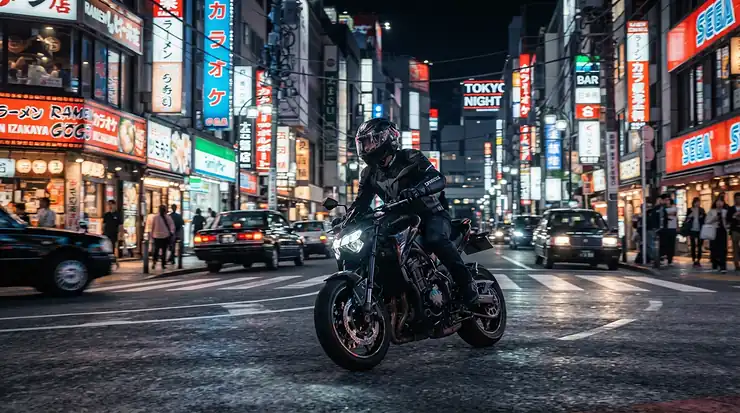
A motorcycle riding jacket with armor for naked bike riders is a ventilated, abrasion-rated jacket with removable impact protectors at the shoulders, elbows, and back. It is built to handle the constant wind blast and upright posture of a fairing-free motorcycle. It balances airflow, certified protection, and an adjustable fit that stays put at speed.
Here’s the thing about naked bikes. There’s no fairing, no windscreen worth mentioning, and nothing between your chest and 70 mph of air. On a Triumph Street Triple, a Yamaha MT-09, or a Kawasaki Z900, your jacket is the fairing. A jacket that flaps, balloons, or lets its armor wander is not just annoying. It is a protection problem, because armor that has slid off your elbow protects nothing.
Mesh solves the heat. Armor solves the impact. Fit solves the part everybody forgets. The tricky bit is finding all three in one motorcycle riding jacket with armor for naked bike riders without spending a month’s rent. If you want the broader backstory on how protective riding clothing evolved, Wikipedia’s overview of motorcycle personal protective equipment is a solid primer.
I dug into spec sheets, certification details, and aggregated reviewer feedback for seven real jackets across budget, mid-range, and premium tiers. None of this comes from hands-on testing. It is a spec-driven, review-informed analysis, and I’ll tell you plainly where the evidence is thin. Let’s get into it.
Quick Comparison: 7 Armored Mesh Jackets at a Glance
| Jacket | Tier | Armor Headline | Best For |
|---|---|---|---|
| Klim Induction Pro | Premium | Level 2 shoulders/elbows, Level 1 back | Riders in hot climates who want AA-rated durability |
| REV’IT! Tornado 4 H2O | Mid-range | Level 2 shoulders/elbows | Year-round commuters who meet rain |
| Dainese Air Frame 3 | Mid-range | Level 2 shoulders/elbows, back sold separately | Sport-leaning commuters who like a trim cut |
| Alpinestars T-GP Plus R v4 Airflow | Mid-range | Level 1 shoulders/elbows, back protector choice | Riders who want a race-style fit and airbag compatibility |
| Icon Mesh AF CE | Budget-plus | Full D3O set, level not specified | Value-minded daily riders |
| HWK Mesh Motorcycle Jacket | Budget | Removable CE armor, level claims vary | First-year riders on a tight budget |
| DUHAN Mesh Shirt Jacket | Budget | Listed as CE Level 2, seven pieces | Hot-weather layering on a minimal budget |
The table shows a pattern: Level 2 shoulders and elbows are no longer reserved for premium price tags. If your priority is protection per dollar, the REV’IT! Tornado 4 H2O and the Dainese Air Frame 3 deliver Level 2 limb armor in the mid-range. The Klim Induction Pro is the one to beat if abrasion durability matters most. The budget three need more homework on certification labels, which I’ll cover below.
💬 Just one click — help others make better buying decisions too!😊
Top 7 Motorcycle Riding Jackets With Armor for Naked Bike Riders: Expert Analysis
1. Klim Induction Pro — hottest-weather protection in the lineup
The Klim Induction Pro is built around Karbonite mesh, an industrial-grade nylon mesh paired with Cordura overlays and perforated goat leather at the elbows and shoulders. Klim lists it as CE AA certified to EN 17092-3.
In plain English, AA means the abrasion-critical zones were tested against a simulated slide at roughly 43 mph. Most mesh jackets don’t clear that bar. Armor is D3O CE Level 2 at the elbows and shoulders, with a Level 1 Viper back pad. On a naked bike, where your shoulders and back take the airflow first, the stretch panels and extensive venting matter more than any marketing label.
Based on the spec comparison, this is the jacket for riders who commute daily in genuinely hot places. One retailer reviewer praised the airflow, even over an airbag vest. Another noted that a Level 2 back protector would have completed the set at this price.
Pros:
- ✅ AA abrasion rating in a full-mesh chassis
- ✅ Level 2 D3O shoulders and elbows
- ✅ Adjustable elbow armor, removable pads
Cons:
- ❌ Back protector is Level 1 only
- ❌ Premium price for a summer-only jacket
Price range: roughly $450-$550. Worth it if you ride 200+ days a year, because the cost-per-ride drops fast.
2. REV’IT! Tornado 4 H2O — the only one here that handles rain
The REV’IT! Tornado 4 H2O builds the torso, underarms, and underarm sleeves from mesh, then adds a removable Hydratex waterproof-breathable layer and a snap-in thermal liner. It is three jackets in one.
CE Level 2 armor sits at the shoulders and elbows, with an AA classification, and the jacket is prepared for a Level 2 back protector. Confirm whether the back pad ships in the box before you order. GearJunkie’s review called the package a strong deal partly because of that Level 2 limb armor, and noted the denser fabric in the slide zones.
Here’s what to weigh: on a naked bike, a waterproof liner doubles as a windproof layer on chilly mornings. That gets you shoulder-season use out of a jacket that would otherwise sit in the closet from October to March. The tradeoff is bulk. You’ll need somewhere to stash the liners in July.
Pros:
- ✅ Level 2 shoulders and elbows with AA class
- ✅ Waterproof and thermal liners come out
- ✅ Real mesh on torso and underarms
Cons:
- ❌ Liners are bulky to carry when removed
- ❌ Back protector status needs checking
Price range: around $350-$400. Strong value if your commute includes weather.
3. Dainese Air Frame 3 — trim cut with jacket-to-pants zip
The Dainese Air Frame 3 is a sport-and-commuting mesh jacket with adjustment at the neck, waist, and wrists, plus anti-floating sleeve adjusters. That last detail is gold on a naked bike, where baggy sleeves flap in the airstream.
Per CycleGear’s listing, the jacket carries CE Level 2 composite shoulder and elbow protectors, EN 17092 Class A certification, and a full connection zip for Dainese pants. A removable windproof liner extends its season. The back protector is sold separately in G1 or G2, depending on size, so budget for that.
Candidly, Class A is the lowest certified abrasion tier. It suits lighter, hotter riding rather than high-speed highway work. A retailer reviewer also noted that the front panels lack breathable mesh and that the arms ran baggy. That is a real strike against it in heat.
Pros:
- ✅ Level 2 shoulder and elbow protectors
- ✅ Anti-floating sleeve and waist adjusters
- ✅ Jacket-to-pants connection zip
Cons:
- ❌ Back protector costs extra
- ❌ Front panels less breathable than rivals
Price range: around $280-$330. Fair value, but only once the back protector is factored in.
4. Alpinestars T-GP Plus R v4 Airflow — race fit with airbag-ready cut
The Alpinestars T-GP Plus R v4 Airflow leans sporty: pre-curved arms, a tighter cut, and abrasion-resistant poly fabric with airflow zones. It is also Tech-Air 5 and Tech-Air 3 ready, so you can add an airbag system later.
Armor is Nucleon Flex Plus at the shoulders and elbows, listed at Level 1 on most retailer pages. Some listings mention Level 2 elbow protection, so verify on the label. Alpinestars lets you choose a Level 1 or Level 2 back protector, including Level 2 Nucleon options. That makes this a jacket you build, not just buy.
For riders hunched over a Street Triple or Z900, pre-curved arms mean the sleeves don’t ride up when you reach the bars. A detachable thermal liner adds shoulder-season range. I couldn’t verify written customer reviews for this exact model, so I won’t pretend otherwise. CycleGear’s editors did name the T-GP Plus R V4 Airflow their best overall mesh jacket.
Pros:
- ✅ Pre-curved sport cut for aggressive posture
- ✅ Tech-Air airbag compatibility
- ✅ Choice of Level 1 or Level 2 back protector
Cons:
- ❌ Shoulder and elbow armor mostly Level 1
- ❌ Sport cut runs trim on broader frames
Price range: roughly $250-$350 depending on retailer. Good value, especially for riders considering an airbag.
5. Icon Mesh AF CE — most protection per dollar under $200
The Icon Mesh AF CE ships with a complete set of D3O impact protectors at the shoulders, elbows, and back, wrapped in 300D polyester and Iron Weave mesh. It adds adjustable arm and waist straps, reflective trim, and YKK zippers.
The certification is EN 17092-4 Class A. That’s the entry level for abrasion, so think of this as a hot-weather commuter jacket, not a track-day shell. The listing doesn’t state a Level 2 armor claim, so treat the armor as Level 1-class unless the label says otherwise.
What the spec sheet won’t tell you, but reviewers note: it runs small. The sport fit is slightly tapered, and buyers with a fuller build commonly recommend sizing up. Retailer reviews average 4.5 out of 5 across roughly 75 reviews, which is a healthy sample for a jacket in this class.
Pros:
- ✅ Full D3O shoulder, elbow, and back set included
- ✅ Adjustable arms and waist for wind control
- ✅ Strong retailer rating from a sizable review pool
Cons:
- ❌ Class A abrasion rating only
- ❌ Sizing runs small
Price range: roughly $160-$200. Excellent value for casual daily riding.
6. HWK Mesh Motorcycle Jacket — Amazon budget favorite, verify the armor
The HWK Mesh Motorcycle Jacket pairs 3D mesh panels with removable CE armor at the shoulders, elbows, and back. It tops several 2026 budget roundups, partly for its large review base.
Here’s where I have to be straight with you. Those roundups disagree about the armor level. One cites Level 2 back protection with Level 1 elsewhere, another cites Level 2 honeycomb protectors, and several simply say “CE armor.” Those are third-party listicles of uneven quality, so don’t treat them as gospel. A reviewer of HWK’s pants reported that the included pads were only Level 1 and worth replacing, a good reason to inspect the jacket’s labels the day it arrives.
Plan on this as a platform: a decent mesh shell today, with a $50-$80 armor upgrade tomorrow if the stock pads aren’t what you want.
Pros:
- ✅ Mesh coverage at an entry-level price
- ✅ Removable armor makes upgrades easy
- ✅ Large buyer base means plenty of sizing feedback
Cons:
- ❌ Armor level claims are inconsistent
- ❌ No verified abrasion class found
Price range: budget tier, so check current price. Good starter value, with upgrades expected.
7. DUHAN Mesh Shirt Jacket — lightest layer, Level 2 on paper
The DUHAN Mesh Shirt Jacket is a shirt-style mesh jacket listed with CE Level 2 armor and seven protective pieces. That’s a rare spec at this price, and it explains why roundups keep featuring it.
Rare specs deserve scrutiny. A 2018 BikeSocial review of Duhan trousers found the supposed CE armor carried no CE marks, so it was almost certainly uncertified. That was a different product and an older test, but it is the right instinct for any budget buy: confirm the CE stamp and EN number on each pad before you ride. If the stamp is missing, treat the armor as foam.
On a naked bike, a shirt-weight mesh jacket flaps hard at highway speed unless it’s cinched. Expect to spend time with the adjusters, and expect to layer it over a base layer for chafe control.
Pros:
- ✅ Listed Level 2 armor, seven pieces
- ✅ Very light and airy in summer heat
- ✅ Extremely low entry price
Cons:
- ❌ Certification needs hands-on verification
- ❌ Shirt cut can flap at speed
Price range: budget tier, so check current price. Good for hot, low-speed riding if the armor checks out.
Top 7 Comparison: Specs, Price Ranges, and Review Signals
| Jacket | Armor (as listed) | Abrasion Class | Approx. Price Range | Review Signal | Best For |
|---|---|---|---|---|---|
| Klim Induction Pro | L2 shoulders/elbows, L1 back | AA | $450-$550 | Praised airflow | Hot-climate daily riders |
| REV’IT! Tornado 4 H2O | L2 shoulders/elbows | AA | $350-$400 | Called a good deal by GearJunkie | Rain-prone commuters |
| Dainese Air Frame 3 | L2 shoulders/elbows | A | $280-$330 | Mixed on front ventilation and fit | Sport-cut commuters |
| Alpinestars T-GP Plus R v4 Airflow | L1 shoulders/elbows (verify) | Check label | $250-$350 | No verified reviews found | Airbag-curious riders |
| Icon Mesh AF CE | D3O set, level unstated | A | $160-$200 | 4.5/5, ~75 reviews | Value seekers |
| HWK Mesh Motorcycle Jacket | CE, level disputed | Unverified | Budget, check price | Large review base | First-year riders |
| DUHAN Mesh Shirt Jacket | Listed L2 | Unverified | Budget, check price | Little verifiable data | Layered hot-weather riding |
Looking at the grid, the Klim Induction Pro and REV’IT! Tornado 4 H2O are the only two where both the armor level and the AA class are confirmed. The Icon Mesh AF CE is the sweet spot for riders who prioritize review confidence over spec-sheet bragging. Treat the bottom two rows as “verify on arrival” purchases.
✨ Don’t Miss These Exclusive Deals!
🔍 Take your naked bike riding to the next level with these carefully selected jackets. Click on any highlighted item to check current pricing and availability. These jackets will help you build safer, cooler commutes you’ll actually look forward to!
How to Choose a Motorcycle Riding Jacket With Armor for Naked Bike Riders
Choosing a motorcycle riding jacket with armor for naked bike riders comes down to seven checks. Work through them in order, and you’ll skip most expensive mistakes.
- Confirm the abrasion class. Look for “EN 17092” with a letter. AA beats A for highway speeds, and unlisted classes should raise suspicion.
- Read the armor label. Level 1 or Level 2, and the EN 1621 standard. If the pads carry no markings, treat them as padding.
- Check coverage at all five zones. Shoulders, elbows, and a back protector, whether included or sold separately.
- Judge mesh coverage. More open mesh means more airflow, but less skin protection from fabric alone.
- Test the adjusters. Waist, upper arms, and cuffs need to cinch down against wind blast.
- Try the fit in a riding crouch. Sleeves shouldn’t ride up and the collar shouldn’t choke you with your helmet on.
- Consider your season. A removable liner stretches a jacket across more months.
Independent testing is worth a look too. Australia’s MotoCAP program rates jackets on impact protection, abrasion, burst resistance, breathability, and comfort, which cuts through marketing gloss.
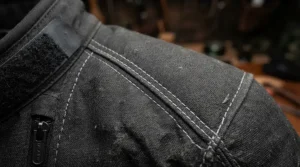
CE Level 2 Armored Mesh Jacket vs. Level 1: Is the Upgrade Worth It?
A CE Level 2 armored mesh jacket sounds like an obvious win, and mostly it is. But let’s unpack why, and where it isn’t.
Limb protectors are tested under EN 1621-1. Level 1 allows an average transmitted force up to 35 kN, while Level 2 caps it at 20 kN. Back protectors, tested under EN 1621-2, work on a tighter scale: 18 kN for Level 1 and 9 kN for Level 2. Lower numbers mean less force reaching your bones.
The tradeoff is thickness and stiffness. Some riders find Level 2 pads bulkier, particularly in a slim sport cut. For stop-start city riding, Level 1 can be acceptable. For highway-speed naked bike work, where a fall at 60 mph is a different animal entirely, I’d lean Level 2 at the shoulders, elbows, and back whenever the budget allows.
CE Level 2 Armor: What the Rating Does and Doesn’t Tell You
CE Level 2 armor is a lab result, not a force field. It means the pad transmits less force in a controlled strike test than Level 1 does. It doesn’t guarantee protection in every crash angle, and it says nothing about whether the pad stays where you need it.
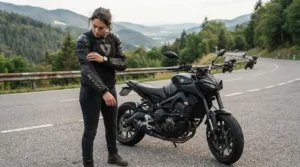
That is where fit and adjusters come back in. A Level 2 elbow pad sitting two inches south of your actual elbow does very little. Check that pockets hold armor in position, that elbow armor can be adjusted, and that your back protector sits high enough to cover your spine without riding up when you lean forward.
Also remember that armor ages. Foam and viscoelastic compounds can compress and harden over years of heat and flexing. Replace pads after any crash, and consider replacing them as they stiffen.
Abrasion Resistance Rating: AA vs. A Explained
An abrasion resistance rating tells you how long the fabric survives a slide. Under EN 17092, the main classes run AAA, AA, and A, with B and C covering lighter garments or armor holders.
RevZilla’s explainer on Class AA describes the Darmstadt test: material in the highest-risk zones is spun against concrete at a speed simulating roughly 43 mph for AA. It passes if no hole larger than 5 mm opens. AAA simulates roughly 75 mph.
Here is the honest bit. A mesh jacket built from open weave will rarely reach AAA, and many land at A or AA. The Klim Induction Pro and REV’IT! Tornado 4 H2O reach AA, while the Dainese Air Frame 3 and Icon Mesh AF CE sit at A.
Also note that ratings degrade with damage, heat, harsh washing, and age. And a 2025 RideApart summary of MotoCAP data reported that an older Dainese mesh jacket, the Air Frame D1, scored poorly on abrasion in most zones. That’s a different model from the Air Frame 3, but it’s a reminder that ventilation and abrasion pull in opposite directions.
Airflow Mesh Panels: Where the Cooling Actually Happens
Airflow mesh panels only cool you if air can reach your skin and exit. On a naked bike, with no fairing to divert the wind, that part works almost too well, and the panel layout decides everything.
Look for mesh on the chest, back, and upper arms, plus a base layer that doesn’t trap sweat. The Klim Induction Pro vents the chest, back, arms, sides, and shoulders. The REV’IT! Tornado 4 H2O meshes the torso and underarms but wraps the rest in a denser shell for abrasion zones. One reviewer of the Dainese Air Frame 3 missed breathable mesh on the front panels, so panel placement isn’t equal across jackets.
A catch worth knowing: on very hot days, airflow at highway speeds can feel like a hair dryer rather than a fan. Riders in extreme heat often prefer a moisture-wicking base layer so the mesh is cooling damp fabric rather than blowing hot air across dry skin.
Ventilated Summer Riding Jacket for Commuting: What Actually Matters
A ventilated summer riding jacket for commuting has a different job from a weekend canyon jacket. You’re stuck in traffic at 5 mph, then flying down the interstate at 65. You need airflow in both situations, plus pockets for your keys and a collar that won’t saw at your neck when you check your shoulder.
For stop-and-go heat, open mesh chest panels are the priority. The Icon Mesh AF CE delivers that cheaply. For commutes that include morning chill, the REV’IT! Tornado 4 H2O layers up. And for sport-leaning commuters, the Dainese Air Frame 3 pairs a trim cut with jacket-to-pants zipping.
Don’t overlook reflectivity. Several jackets here include reflective trim, which helps at dawn and dusk. And think about parking-lot reality: you’ll be peeling this jacket on and off, so easy zippers and a lining that doesn’t catch on your shirt save daily annoyance.
Adjustable Fit Motorcycle Jacket With Removable Liner: The Season-Stretcher
An adjustable fit motorcycle jacket with removable liner is the closest thing riding gear has to a Swiss Army knife. Adjusters at the waist, upper arms, and cuffs lock the jacket down against wind. The liner decides whether you can use it in April or only in August.
The REV’IT! Tornado 4 H2O is the best example here, with a snap-in thermal liner and a separate waterproof layer. The Dainese Air Frame 3 offers a removable windproof liner and anti-floating sleeve adjusters. The Alpinestars T-GP Plus R v4 Airflow includes a detachable thermal lining.
Practical tip: adjust the waist first, then the upper arms, then the cuffs. Check each with your arms stretched toward the bars. If the jacket still balloons at speed, the problem is probably the size, not the straps.
Benefits vs. Traditional Alternatives
| Option | Airflow | Impact Protection | Best For |
|---|---|---|---|
| Armored mesh jacket (e.g., Icon Mesh AF CE) | Excellent | Good, depending on level | Hot-weather naked bike riders |
| Full leather jacket | Low to moderate | Typically high abrasion | Aggressive riders in moderate heat |
| Armored hoodie or casual jacket | Moderate | Varies widely | Style-conscious city riders |
| Regular street clothes | Excellent | None | Nobody, honestly |
Mesh wins on airflow, leather wins on slide resistance, and casual armored jackets win on looks. For a naked bike in summer, a certified armored mesh jacket hits the best balance of cool and covered. If you ride fast on open roads, a leather-and-mesh hybrid might serve you better than pure mesh. Riders who need a low-profile look should compare armored hoodies, but check their abrasion classes first.
Price Range & Value Analysis
| Tier | Typical Range | What You Get | Best For |
|---|---|---|---|
| Budget | Under $100 (check current price) | Mesh shell, basic armor, verification needed | HWK Mesh Motorcycle Jacket, DUHAN Mesh Shirt Jacket buyers testing the waters |
| Mid-range | $160-$400 | Better fit, reliable certification, liners | Icon Mesh AF CE, Dainese Air Frame 3, REV’IT! Tornado 4 H2O |
| Premium | $450-$550 | AA rating, Level 2 limb armor, durable mesh | Klim Induction Pro for daily riders |
If you ride 150 days a year, a $500 jacket costs a few dollars per ride over three seasons. A $100 jacket that needs a $70 armor upgrade lands in similar territory, with less abrasion margin. The sweet spot for most riders is the middle tier, where certification is documented and the armor is real.
Transformation Guide: Setting Up and Breaking In Your Jacket (First 30 Days)
Amazon listings don’t tell you how to set up a jacket. Here’s a practical rollout.
Day 1: inspect and fit. Remove every pad. Check each for CE marks and an EN 1621 number. Reinsert them with the correct orientation, and make sure elbow pads can be moved to align with your actual elbows. Put the jacket on with your helmet and gloves, then sit on the bike.
Day 1: adjust in riding posture. Reach for the bars, tuck your chin, and tighten the waist adjusters until the jacket stops riding up your back. Cinch upper-arm straps next, and then the cuffs so air can’t blow up your sleeves.
Week 1: short rides. Test highway speeds on a quiet road. Notice where wind catches, and re-adjust. Shirt-style mesh jackets often need extra tightening.
Weeks 2-4: layer test. Try a moisture-wicking base layer. If you’re in extreme heat, a damp base layer can feel dramatically cooler than none. Pack the liner somewhere handy for an early-morning ride.
Ongoing care. Remove armor before washing, use mild soap, and air dry away from direct heat, since harsh washing can degrade fabric performance.
Transformation Guide: Three Real-World Rider Scenarios
Scenario 1: the 12-mile daily commuter. You ride a Yamaha MT-07 to an office with no shower, through summer traffic. You want airflow, but you also need pockets and a jacket that survives parking lots. The Icon Mesh AF CE covers the basics at a friendly price, though you’d size up if your build is fuller. If your commute includes surprise rain, step up to the REV’IT! Tornado 4 H2O and keep the waterproof layer in a tail bag.
Scenario 2: the weekend canyon rider. You own a Triumph Street Triple, you lean hard, and you care about armor level. The Alpinestars T-GP Plus R v4 Airflow fits the aggressive crouch with pre-curved arms and offers a Level 2 back protector option. If budget allows, the Klim Induction Pro adds AA abrasion and Level 2 limb armor.
Scenario 3: the first-year rider. You’re on a budget, you want certified armor, and you aren’t sure how much you’ll ride. The HWK Mesh Motorcycle Jacket gets you moving, provided you verify the armor labels. Plan a Level 2 armor swap after your first few months if the stock pads disappoint.
Common Mistakes When Buying an Armored Mesh Jacket
The biggest mistake is trusting a listing without checking the label. “CE armor” can mean Level 1, Level 2, or occasionally nothing certified at all. Always check the EN number printed on the pads themselves.
The second mistake is buying a size too loose. On a naked bike, extra fabric becomes a sail. Armor drifts, sleeves flap, and the jacket becomes tiring after an hour.
Third, riders skip the back protector. Many mesh jackets ship with foam inserts or leave the back to you, and the spine is exactly where you want certified protection. Finally, don’t confuse abrasion class with armor level. A Level 2 elbow pad sitting inside a thin shell does nothing if the fabric tears in the first slide.
Frequently Asked Questions
❓ How much should I spend on a motorcycle jacket with armor?
❓ Can I upgrade the armor in a budget mesh jacket?
❓ Do armored mesh jackets work in the rain?
❓ Should I size up in a sport-cut jacket?
❓ How do I check that armor is really CE certified?
Final Verdict: Which Jacket Should You Buy?
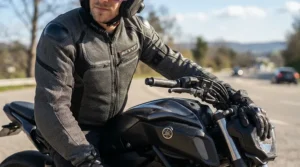
Naked bike riding is glorious, but it asks a lot from your gear. The best motorcycle riding jacket with armor for naked bike riders protects your shoulders, elbows, and spine, moves air without ballooning, and adjusts tight enough to stay put at highway speed.
If you want proven, all-around quality, the Klim Induction Pro leads on abrasion class and armor level. The REV’IT! Tornado 4 H2O is the smartest buy for commuters who meet weather. The Dainese Air Frame 3 and Alpinestars T-GP Plus R v4 Airflow suit riders who like a sport cut, with extras to budget for. The Icon Mesh AF CE is the value pick with the most reviewer confidence, while the HWK Mesh Motorcycle Jacket and DUHAN Mesh Shirt Jacket are budget gambles worth taking only if you verify the armor yourself.
Keep your expectations realistic, too. A research review published by SWOV found that protective clothing is unlikely to prevent serious injury in high-impact crashes. It can, however, reduce road rash, burns, skin and muscle stripping, and some broken bones. That’s worth a lot, but it’s no substitute for a helmet, gloves, boots, and sensible riding.
✨ Ready to gear up?
🔍 Click on any highlighted jacket above to check current pricing and availability, and ride cooler and safer this season! 🏍️
Recommended for You
- Bluetooth Helmet Communicator For Sport Riders: 7 Proven Picks 2026
- Sport Bike Style Electric Moped For Adults: 7 Best Picks 2026
- Full Face Helmet For Electric Sport Bike Riders: 7 Best Buys 2026
Disclaimer: This article contains affiliate links. As an Amazon Associate, I earn from qualifying purchases. If you purchase products through these links, we may earn a small commission at no additional cost to you.
✨ Found this helpful? Share it with your friends! 💬🤗
