
In This Article
Imagine gliding effortlessly through your neighborhood, conquering hills that once left you breathless, and arriving at your destination feeling fresh instead of exhausted. That’s the magic of electric bikes—and if you’re reading this, you’re about to join millions of riders who’ve discovered this game-changing mode of transportation.
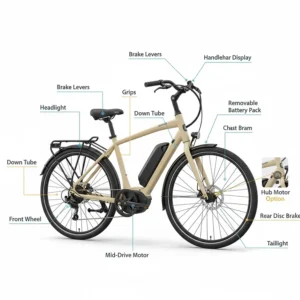
The best electric bike for beginners isn’t necessarily the most expensive or the most powerful. It’s one that matches your comfort level, fits your budget, and doesn’t overwhelm you with complicated features. After testing dozens of models and analyzing thousands of customer reviews, I’ve narrowed down the top contenders that make learning to ride an ebike as simple as possible.
Whether you’re a complete novice or someone returning to cycling after years away, the beginner friendly electric bike options in this guide offer intuitive controls, stable handling, and forgiving performance characteristics that build confidence from your very first ride. These user-friendly ebike models feature straightforward assembly, clear displays, and reliable components that won’t leave you stranded or confused.
Quick Comparison Table: Top 7 Electric Bikes for Beginners
| Model | Motor | Range | Top Speed | Weight | Price Range | Best For |
|---|---|---|---|---|---|---|
| Jasion EB5 | 350W (500W Peak) | 25-40 miles | 20 mph | 49.6 lbs | $350-$450 | Budget-conscious beginners |
| Lectric XP Lite 2.0 | 300W (819W Peak) | 45-80 miles | 20 mph | 49 lbs | $799-$999 | Compact commuters |
| YOLOWAY 27.5″ | 750W (1000W Peak) | 45-55 miles | 28 mph | ~55 lbs | $599-$799 | All-terrain versatility |
| Heybike Cityscape 2.0 | 500W (1000W Peak) | 35-50 miles | 24 mph | 61.7 lbs | $800-$950 | Urban cruising |
| Schwinn Coston DX | 250W | 35-45 miles | 20 mph | ~60 lbs | $1,799-$2,099 | Brand reliability seekers |
| Ancheer Electric Bike | 500W (750W Peak) | 40-60 miles | 20 mph | 50 lbs | $500-$650 | Value hunters |
| Swagtron EB5 Plus | 250W | 15.5 miles | 15 mph | 37 lbs | $300-$450 | Ultra-compact needs |
💬 Just one click – help others make better buying decisions too! 😊
Top 7 Electric Bikes for Beginners: Expert Analysis
1. Jasion EB5 – Best Overall Value for First-Time Riders
The Jasion EB5 has earned its reputation as the most popular entry-level ebike on Amazon, with nearly 800 five-star reviews backing its performance. This electric bike for first time buyers strikes an impressive balance between affordability and functionality.
Key Specifications:
- Motor: 350W continuous (500W peak) brushless rear hub
- Battery: 360Wh removable lithium-ion
- Range: 25-40 miles (varies by assist level)
- Top Speed: 20 mph
- Gearing: 7-speed Shimano drivetrain
This beginner oriented features package includes everything you need without overwhelming complexity. The removable battery charges in 5-6 hours and can be taken indoors for convenient charging—perfect for apartment dwellers. The front suspension fork smooths out bumps, while 26-inch puncture-resistant tires provide stability and confidence.
Real customers consistently praise the EB5 for exceeding expectations at this price point. One verified buyer mentioned handling 235 pounds comfortably on rough terrain, while another reported their 10-year-old using it safely for months. The bike arrives 85% assembled with clear video instructions making easy assembly electric bike setup a breeze.
✅ Pros:
- Exceptional value under $450
- Removable battery for flexible charging
- Front suspension for comfortable rides
- Four working modes (PAS, throttle, pedal, booster)
❌ Cons:
- Basic mechanical disc brakes
- Limited to flat to moderate hills
2. Lectric XP Lite 2.0 – Most User-Friendly Folding Design
The Lectric XP Lite 2.0 represents the evolution of one of America’s best-selling budget ebikes. Starting at $799, this simple electric bicycle offers beginner-friendly features with professional-grade safety certifications that serious riders demand.
Key Specifications:
- Motor: 300W continuous (819W peak) Stealth M24
- Battery: 48V, 375Wh standard or 672Wh long-range (UL 2271 certified)
- Range: 45 miles standard / 80 miles long-range
- Top Speed: 20 mph
- Weight: Just 49 lbs (41 lbs without battery)
What sets this learning curve electric bike apart is Lectric’s PWR technology, which eliminates the need for expensive torque sensors while still delivering smooth, natural-feeling assistance. The hydraulic disc brakes provide confident stopping power—unusual in this price category—while the integrated lighting system keeps you visible day and night.
The folding design makes this starter electric bike ideal for RVers, apartment dwellers, and multi-modal commuters who need to store their bike in tight spaces. Customer reviews highlight the bike’s reliability, with many riders reporting thousands of miles without issues.
✅ Pros:
- UL 2849 certified for maximum safety
- Hydraulic brakes at budget price
- Ultra-quiet Stealth M24 motor
- Folds in seconds for easy storage
❌ Cons:
- Smaller 20-inch wheels feel less stable at speed
- Not ideal for riders over 6’2″
3. YOLOWAY 27.5″ – Best Power-to-Price Ratio
For beginners who want room to grow into their riding abilities, the YOLOWAY 27.5″ delivers serious performance at a mid-range price. This novice rider ebike packs more power than most budget options while maintaining user-friendly controls.
Key Specifications:
- Motor: 750W continuous (1000W peak) brushless
- Battery: 480Wh removable IPX4 waterproof
- Range: 45-55 miles mixed riding
- Top Speed: 28 mph (adjustable)
- Torque: Impressive for hill climbing
This electric bicycle combines the ruggedness of a mountain bike with the practicality of a commuter. The 27.5-inch wheels roll over obstacles smoothly while providing excellent traction on varied terrain. Seven-speed Shimano gearing gives you mechanical control when the motor isn’t assisting.
Real-world testing shows the YOLOWAY handles 15-degree slopes confidently, making it ideal for hilly areas. The removable battery slides out cleanly for indoor charging—a feature that becomes invaluable during winter months. Assembly takes under 30 minutes with included tools and video guidance.
✅ Pros:
- Powerful motor tackles serious hills
- Excellent 55-mile range
- IPX4 water-resistant battery
- 12-month warranty with lifetime support
❌ Cons:
- Heavier at approximately 55 lbs
- More power than absolute beginners may need initially
4. Heybike Cityscape 2.0 – Most Comfortable Urban Cruiser
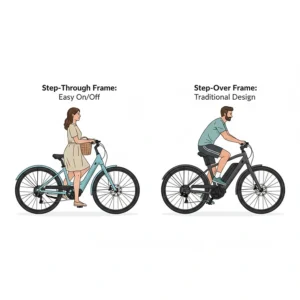
The Heybike Cityscape 2.0 redefines what a beginner-friendly electric bike should be. With its step-through frame and upright riding position, this easy to ride ebike makes mounting and dismounting effortless—crucial for building confidence in new riders.
Key Specifications:
- Motor: 500W brushless (1000W peak, 80Nm torque)
- Battery: 468Wh UL-certified, IPX6 waterproof
- Range: 30-50 miles depending on mode
- Top Speed: 24 mph
- Load Capacity: 264 lbs
The step-through design eliminates the intimidation factor that stops many potential riders from trying ebikes. You simply step through the low frame rather than swinging your leg over a high top tube. The swept-back handlebars promote an upright, comfortable riding position that reduces strain on your back and wrists during longer rides.
Heybike includes practical commuter features like full fenders, integrated lights, and a sturdy rear rack capable of carrying groceries or gear. The 7-speed drivetrain combined with three riding modes (throttle, pedal assist, and manual) gives you complete control over your riding experience.
✅ Pros:
- Ultra-comfortable step-through frame
- UL-certified battery with 4-hour fast charging
- Premium features (hydraulic suspension, dual disc brakes)
- Excellent customer support (24-hour response time)
❌ Cons:
- Heavier than some alternatives at 61.7 lbs
- Stock seat may need upgrading for longer rides
5. Schwinn Coston DX – Most Trusted Brand Name
When you see the Schwinn name, you know you’re getting over a century of bicycle expertise. The Schwinn Coston DX brings that legendary reliability to the electric bike space, offering beginners the peace of mind that comes with an established brand.
Key Specifications:
- Motor: 250W brushless geared hub
- Battery: 360Wh integrated into frame
- Range: 35-45 miles per charge
- Top Speed: 20 mph
- Frame: Lightweight aluminum in multiple sizes
The Coston DX stands out for its thoughtful design details. Integrated LED lights built into the downtube battery provide 360-degree visibility—a unique safety feature rarely seen at this price point. The bike comes with full fenders, a rear cargo rack, and a chain guard to keep your clothing clean.
Available from major retailers like Amazon, Walmart, and Dick’s Sporting Goods, the Coston DX offers easy access to customer service and potential in-person support. The 7-speed drivetrain provides excellent gear range for varied terrain, while mechanical disc brakes deliver reliable stopping power.
✅ Pros:
- Trusted Schwinn brand reliability
- Unique integrated battery lighting system
- Available in multiple frame sizes
- Wide retail availability
❌ Cons:
- Higher price point ($1,799-$2,099)
- Lower power than similarly priced competitors
- 2-amp charger takes 4-5 hours to fully charge
6. Ancheer Electric Bike – Best Bang-for-Buck Performance
The Ancheer Electric Bike proves that budget-friendly doesn’t mean compromising on performance. Priced between $500-$650, this user-friendly ebike delivers features typically found on much more expensive models.
Key Specifications:
- Motor: 500W brushless (750W peak, 73Nm torque)
- Battery: 480-499Wh removable lithium-ion
- Range: 40-60 miles with pedal assist
- Top Speed: 20 mph
- Charging Time: Fast 3.5-hour full charge
What immediately impresses about the Ancheer is its torque output—73Nm gives this beginner electric bike serious hill-climbing capability. The removable battery features IPX54 water-resistant connectors, meaning you can ride confidently in light rain without worry. Front suspension and 26-inch tires absorb road imperfections, making even rough pavement feel manageable.
The bike arrives 85% assembled, and most customers report completing assembly in under 90 minutes. The LED display clearly shows speed, battery level, and assist mode—no confusing menus to navigate. Seven-speed gearing provides mechanical backup when you want to ride without electrical assistance.
✅ Pros:
- Powerful 73Nm torque for hills
- Fast 3.5-hour charging time
- Excellent value under $650
- IPX54 water-resistant connections
❌ Cons:
- Stock seat uncomfortable for longer rides
- Some users report brake adjustments needed out of box
- Heavier than advertised at approximately 50 lbs
7. Swagtron EB5 Plus – Most Portable Folding Option
For beginners prioritizing ultimate portability, the Swagtron EB5 Plus redefines compact. At just 37 pounds, this simple electric bicycle folds small enough to fit under a desk, in a car trunk, or on public transportation—making it perfect for multi-modal commuting.
Key Specifications:
- Motor: 250W brushless rear hub
- Battery: 270Wh integrated (removable)
- Range: 15.5 miles on throttle / longer with pedaling
- Top Speed: 15 mph
- Weight: Ultra-light 37 lbs
The EB5 Plus arrives fully assembled and ready to ride—just unfold it and go. The triple-fold design collapses to an incredibly small footprint, and magnetic locks keep it securely folded during transport. Despite its compact size, the bike supports riders up to 264 pounds and handles 30-degree inclines with ease.
This electric bike for first time buyers excels as a “last mile” solution—perfect for riding from a parking lot to your office, or from a train station to your final destination. The 14-inch air-filled tires deliver surprising comfort, while the height-adjustable seat and handlebars accommodate a wide range of rider heights.
✅ Pros:
- Ultra-portable at just 37 lbs
- Arrives fully assembled
- Magnetic folding locks
- Removable battery for flexible charging
❌ Cons:
- Limited 15.5-mile range on throttle only
- Small 14-inch wheels less stable at speed
- Single pedal-assist level (no variability)
- Not suitable for longer commutes without frequent charging
What Makes an Electric Bike Beginner-Friendly?
Choosing your first ebike can feel overwhelming, but understanding a few key factors makes the decision straightforward. The best electric bike for beginners balances power with control, features with simplicity, and performance with forgiveness.
Power and Control Balance
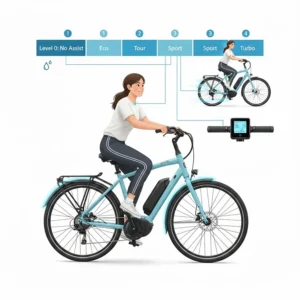
A beginner friendly electric bike doesn’t need a 3000W motor—that’s actually counterproductive for learning. Motors in the 250-500W range provide plenty of assistance for most riding scenarios while remaining predictable and manageable. Look for bikes with multiple pedal assist levels so you can start conservatively and increase power as your confidence grows.
Intuitive Display and Controls
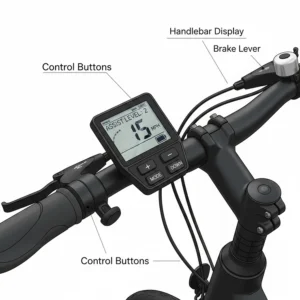
Your first easy to ride ebike should have a clear, easy-to-read display showing essential information: speed, battery level, and assist mode. Avoid bikes with complex menu systems or smartphone-required functionality. Simple thumb throttles and clearly labeled assist buttons let you focus on riding rather than fumbling with controls.
Frame Geometry and Stability
Step-through frames eliminate the awkward leg-swing required with traditional diamond frames. A simple electric bicycle with an upright riding position puts less strain on your body and gives you better visibility of your surroundings. Wider tires (2.0 inches or more) provide stability and confidence, especially when you’re still mastering balance at higher speeds.
Weight and Manageability
While ebikes are inherently heavier than traditional bikes due to motors and batteries, starter electric bike models under 55 pounds remain manageable for most adults. Consider where you’ll store your bike—if you need to carry it upstairs, every pound matters. Folding bikes offer portability but may sacrifice some stability.
Understanding Electric Bike Classes
Before purchasing, you need to understand the three ebike classifications that determine where you can legally ride. According to the Federal Register, these classifications define maximum assisted speeds and operational requirements. This knowledge helps you choose a beginner oriented features package that matches both your needs and local regulations.
Class 1: Pedal-Assist Only (Up to 20 mph)
Class 1 bikes provide motor assistance only when you’re pedaling, cutting off at 20 mph. According to federal regulations, these learning curve electric bike options are legal on most bike paths and trails, making them the safest choice for beginners uncertain about local regulations. Many of the bikes in our guide operate in Class 1 mode.
Class 2: Throttle-Assisted (Up to 20 mph)
Class 2 bikes include a throttle that propels the bike without pedaling, also capping at 20 mph. This novice rider ebike category offers maximum versatility—you can pedal with assistance, use pure throttle, or combine both. Most bikes in this guide fall into Class 2, giving you flexibility as you learn.
Class 3: Speed Pedelec (Up to 28 mph)
Class 3 bikes provide pedal assistance up to 28 mph and are sometimes restricted from bike paths. As noted by the League of American Bicyclists, these user-friendly ebike models suit experienced riders who want faster commutes. The YOLOWAY 27.5″ operates as Class 3, making it ideal for road riding but potentially restricted on certain trails.
According to UL Solutions, regardless of class, all electric bikes sold in New York City must now be UL 2849 certified to ensure electrical and fire safety—a trend spreading to other cities nationwide.
Safety Features Every Beginner Should Demand
Safety isn’t optional—it’s essential. The best electric bike for beginners includes features that protect you from both accidents and equipment failures. According to safety research, proper certifications and quality components significantly reduce injury risks. Here’s what to prioritize when comparing beginner electric bike options.
UL 2849 Certification: The Gold Standard
UL 2849 certification ensures that an ebike’s entire electrical system—motor, battery, and charger—meets rigorous fire and electrical safety standards. This certification has become mandatory in New York City following numerous lithium-ion battery fires, and other cities are following suit.
The Lectric XP Lite 2.0 in our guide carries full UL 2849 certification, while several others feature UL 2271-certified batteries (battery-only certification). Given the serious fire risks associated with uncertified lithium batteries, this should be a primary consideration for any electric bike for first time buyers.
Quality Braking Systems
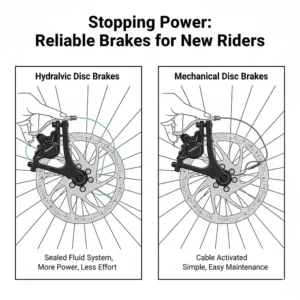
An easy assembly electric bike is worthless if it can’t stop reliably. Mechanical disc brakes represent the minimum acceptable standard—rim brakes simply don’t provide enough stopping power when you’re carrying the extra weight of motor and battery. Hydraulic disc brakes (found on the Lectric XP Lite 2.0 and Heybike Cityscape 2.0) offer superior modulation and require less hand strength.
Integrated Lighting
Visibility saves lives. The best beginner friendly electric bike comes with integrated front and rear lights powered by the main battery. The Schwinn Coston DX goes further with unique frame-mounted LED strips that make you visible from the side—addressing a blind spot that standard bike lights miss.
Sturdy Frame Construction
Your first simple electric bicycle needs a robust frame that won’t flex or creak under power. Aluminum alloy frames offer the best balance of strength and weight. Check customer reviews for mentions of frame integrity—a well-built starter electric bike should feel solid, not flexy, when accelerating or climbing hills.
Real-World Performance: What to Expect
Understanding realistic performance expectations prevents disappointment and helps you choose the right beginner oriented features for your needs. Marketing claims often represent ideal conditions—here’s what you’ll actually experience.
Range Realities
Manufacturers’ range claims assume perfect conditions: flat terrain, light rider, moderate temperature, low assist levels. Real-world range typically hits 60-70% of maximum claims when using higher assist levels. The 40-mile Jasion EB5 delivers closer to 25-30 miles with medium assist, while the 80-mile Lectric XP Lite 2.0 Long Range realistically provides 50-60 miles of mixed riding.
Plan your learning curve electric bike purchases around your actual commute needs plus a 30% buffer. If your daily round trip is 20 miles, look for bikes claiming at least 30-35 mile range to account for hills, wind, and colder weather that sap battery life.
Hill Climbing Capabilities
Motor power alone doesn’t determine hill performance—torque matters more. The Ancheer’s 73Nm torque output climbs hills more effectively than the Schwinn’s 250W motor despite lower wattage. For reference, 50Nm handles moderate 8-10% grades comfortably, while 70Nm+ conquers steeper 15-18% slopes without excessive pedaling effort.
Your weight, cargo load, and assist level dramatically affect climbing. A 150-pound rider using PAS 3 will ascend hills far more easily than a 220-pound rider hauling groceries on PAS 1. Don’t expect to conquer San Francisco hills on a 250W motor—choose accordingly for your terrain.
Speed and Acceleration
Most novice rider ebike models reach their advertised top speed on flat ground with a light rider. Add hills, headwinds, or extra weight, and expect speeds to drop 3-5 mph. The throttle-only top speed usually sits 2-3 mph below the pedal-assist maximum because motors produce more power when you’re contributing pedaling effort.
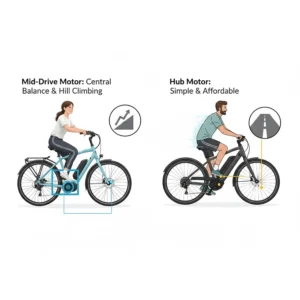
Acceleration varies widely between hub motors and mid-drive systems. Budget hub motors (like those in our guide) provide steady, predictable acceleration that builds confidence in beginners. They won’t throw you off the bike or surge unpredictably—ideal characteristics for your first user-friendly ebike.
Battery Management and Maintenance
Your electric bike for first time buyers is only as good as its battery health. Following these practices maximizes battery lifespan and ensures years of reliable performance from your beginner electric bike investment.
Optimal Charging Practices
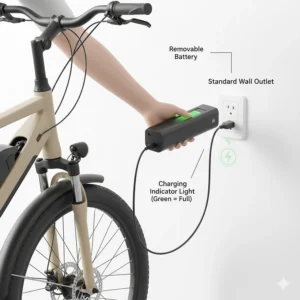
Lithium-ion batteries last longest when kept between 20-80% charge. While convenient, charging to 100% every night accelerates degradation. Instead, charge to full only before longer rides, maintaining 40-60% for daily storage. Never let your simple electric bicycle sit at 0% for extended periods—this causes permanent capacity loss.
Use only the charger supplied with your bike. Third-party chargers might fit your battery port but could deliver incorrect voltage or amperage, creating fire risks. The savings aren’t worth the safety hazard, especially on bikes lacking UL certification.
Temperature Considerations
Batteries perform poorly in extreme temperatures. Below 32°F (0°C), expect 20-30% range reduction as chemical reactions slow. Above 95°F (35°C), batteries can overheat, potentially triggering safety shutdowns. Store your starter electric bike in temperature-controlled environments when possible, and bring removable batteries indoors during extreme weather.
Never charge a frozen battery—let it warm to room temperature first. Similarly, don’t charge immediately after a hot summer ride; allow 30 minutes of cooling time. These simple practices prevent thermal stress that shortens battery life.
Long-Term Storage
Planning to store your learning curve electric bike for winter? Charge the battery to approximately 50-60%, remove it from the bike, and store it in a cool, dry location. Check and top up the charge every 2-3 months to prevent deep discharge. Batteries left at 100% or 0% for months suffer permanent capacity loss.
According to battery experts, proper storage can preserve 80-90% of original capacity after 500 charge cycles, while neglectful practices might degrade capacity to 60-70% or less in the same timeframe.
Step-by-Step Assembly Guide for Beginners
Most beginner friendly electric bike models arrive 80-90% assembled to save on shipping costs. Don’t let this intimidate you—assembly is straightforward with basic tools and patience. Here’s what to expect with your easy assembly electric bike.
What Comes Pre-Assembled
To minimize shipping damage, manufacturers pre-install major components: motor, battery mounts, drivetrain, and frame. The frame is fully welded and ready—you won’t need to bolt together structural pieces. Brakes are typically pre-installed and adjusted, though you’ll verify their function during your safety check.
Components You’ll Install
Front Wheel: Simply slide the axle into fork dropouts and tighten quick-release or bolt-on axles. Ensure the wheel spins freely without rubbing against brake pads or fenders. Most simple electric bicycle models include detailed instructions showing proper wheel installation orientation.
Handlebars: The stem is pre-installed; you’ll align handlebars to face forward and tighten the front plate bolts to specified torque (usually 5-8 Nm). Don’t overtighten—you can strip threads or crack the stem. Many starter electric bike packages include the required Allen keys.
Pedals: Right pedal (marked “R”) threads clockwise; left pedal (marked “L”) threads counterclockwise—this reverse threading prevents pedals from unscrewing during riding. Thread carefully by hand before using a wrench to avoid cross-threading.
Seat and Seatpost: Adjust seat height before your first ride—your leg should have a slight bend (about 25-30 degrees) at the bottom of each pedal stroke. The seatpost quick-release or bolt should be tight enough to prevent slipping but not so tight you can’t adjust it later.
Essential Safety Checks
Before your first ride on your new beginner oriented features-packed bike, verify these critical items:
✅ Brakes: Squeeze each lever—you should feel firm resistance, and brake pads should grip the rotor/rim effectively. Test ride at walking speed to ensure brakes stop the bike promptly.
✅ Tire Pressure: Inflate tires to the PSI marked on the sidewall. Under-inflated tires feel sluggish and increase flat risk; over-inflation creates harsh rides and reduces traction.
✅ Electrical Connections: Check that all connectors are fully seated and secured. Loose connections cause power cuts or error messages mid-ride.
✅ Chain Tension: The chain should have about ½ inch of vertical play. Too loose causes skipping; too tight accelerates drivetrain wear.
Riding Techniques for Absolute Beginners
Even if you haven’t ridden a bicycle in decades, modern user-friendly ebike designs make re-learning straightforward. These techniques help you master your electric bike for first time buyers safely and confidently.
Starting and Stopping Smoothly
Unlike traditional bikes, your novice rider ebike can surge when motor assistance kicks in. Start in the lowest pedal-assist level (PAS 1) or pure pedal mode for your first few rides. This prevents the bike from shooting forward unexpectedly when you begin pedaling.
To start smoothly, position one pedal at 2 o’clock (slightly forward of vertical). Push down firmly while maintaining handlebar control. The motor will engage after your first pedal revolution, providing gentle assistance that feels natural rather than jarring.
For stopping, apply brakes progressively rather than grabbing them suddenly. Squeeze the rear brake first (usually the right lever in the US), then add front brake pressure. This prevents the rear wheel from skidding or the bike from pitching forward. Most learning curve electric bike models feature motor cut-off switches in the brake levers, automatically disabling assistance when you brake.
Navigating Turns and Corners
Electric bikes carry more weight than traditional bikes, affecting cornering dynamics. Slow to a comfortable speed before entering turns—don’t rely on braking mid-corner. Lean the bike slightly rather than your body, and look through the turn toward your exit point. Your bike naturally follows your gaze.
For tight turns, consider temporarily reducing pedal assist to minimize power delivery during the maneuver. This prevents the motor from pushing you wide or destabilizing your line. Practice on quiet streets or empty parking lots before tackling busy roads.
Hill Climbing Strategy
The best electric bike for beginners makes hills manageable, but proper technique maximizes efficiency. Shift to an easier gear before the hill steepens—don’t wait until you’re grinding away in too hard a gear. Increase pedal-assist level by one or two steps as the gradient increases.
Maintain a steady cadence (pedaling speed) rather than mashing hard pedals. Most motors deliver power most efficiently at 60-80 RPM (revolutions per minute). You should feel like you’re pedaling at a comfortable, sustainable pace rather than straining or spinning wildly.
Best Electric Bikes for Different Riding Scenarios
Your ideal beginner electric bike depends on where and how you’ll primarily ride. Here’s how our top picks match specific use cases to help you choose the perfect starter electric bike.
Urban Commuting (5-15 miles)
Top Pick: Heybike Cityscape 2.0 or Lectric XP Lite 2.0
City commuting demands frequent starts and stops, making responsive throttles and smooth pedal assist essential. The Heybike’s step-through frame makes mounting at stoplights effortless, while its integrated rack carries laptop bags or groceries. The Lectric’s folding capability lets you bring it into your office or onto public transportation, solving last-mile challenges.
Both offer sufficient range for typical urban commutes plus errands, and their moderate top speeds (20-24 mph) match city traffic flow without feeling overpowered. Integrated lights and fenders keep you visible and dry during unpredictable weather.
Recreational Trail Riding
Top Pick: YOLOWAY 27.5″ or Jasion EB5
Weekend trail exploration benefits from versatile tires, suspension, and sufficient power for varied terrain. The YOLOWAY’s 27.5-inch wheels and 1000W peak power conquer everything from smooth bike paths to moderate singletrack. Its impressive 55-mile range eliminates anxiety on longer adventures.
The Jasion EB5 offers a more budget-friendly option for casual trail use, with front suspension and seven speeds handling packed dirt and gravel paths. While less powerful than the YOLOWAY, it’s perfect for beginners building confidence on easier trails.
Suburban Errands and Exercise
Top Pick: Schwinn Coston DX or Ancheer Electric Bike
Suburban riding combines elements of commuting and recreation—you might visit the grocery store, ride to a friend’s house, or simply cruise for exercise. The Schwinn Coston DX’s trusted brand name and wide retail availability provide peace of mind, while its rear rack and fenders handle practical hauling duties.
The Ancheer offers similar functionality at nearly $1,000 less, making it ideal for budget-conscious families wanting multiple bikes. Its strong torque handles hilly suburbs effectively, and the removable battery facilitates convenient indoor charging.
Multi-Modal Commuting
Top Pick: Lectric XP Lite 2.0 or Swagtron EB5 Plus
If your commute involves driving partway, taking a train, or storing your bike in tight office spaces, portability trumps other factors. The Lectric folds quickly and weighs just 49 pounds—manageable for most adults. Its 45-80 mile range ensures you won’t run out of power between charging opportunities.
The Swagtron EB5 Plus maximizes portability at 37 pounds, fitting under desks or in car trunks effortlessly. Its shorter 15.5-mile range suffices for typical last-mile scenarios, and the ultra-compact fold makes it the ultimate space-saver.
Understanding Total Cost of Ownership
The sticker price tells only part of the story. Smart beginners calculate the total cost of owning an easy to ride ebike over several years to avoid budget surprises and make informed decisions.
Initial Purchase Price
Our recommended beginner friendly electric bike models range from $300 (Swagtron EB5 Plus) to $2,099 (Schwinn Coston DX). This wide spread reflects differences in components, brand reputation, and feature sets. Generally, spending $600-$1,000 delivers the best value—enough to get quality components without paying for premium brand markup.
Watch for seasonal sales around Black Friday, Memorial Day, and end-of-year clearances. Amazon Prime Day often features significant ebike discounts. However, verify the seller’s reputation and return policy before purchasing from unknown brands offering suspiciously low prices.
Ongoing Maintenance Costs
Budget $100-200 annually for routine maintenance on a simple electric bicycle. This covers chain lubrication, brake pad replacement, tire replacement, and periodic drivetrain adjustments. Mechanical components wear faster on ebikes due to increased weight and power delivery—chains typically last 1,500-2,500 miles versus 3,000-5,000 on traditional bikes.
Battery replacement represents the largest long-term expense. Quality lithium batteries maintain 80% capacity for 500-1,000 charge cycles (roughly 3-5 years of regular use). Replacement batteries cost $200-500 depending on capacity. Budget-priced starter electric bike models from unknown brands often have proprietary batteries that become unavailable after a few years—a critical consideration favoring established brands.
Charging Costs
Electricity costs vary by region, but charging an ebike remains remarkably cheap. A 500Wh battery charged from empty costs approximately $0.06-0.08 at average US electricity rates (12-16 cents per kWh). Even daily charging totals just $20-30 annually—a fraction of gasoline costs.
To maximize battery longevity and minimize charging frequency, charge to 80% for daily use and 100% only before longer rides. Most learning curve electric bike chargers complete a full charge in 4-6 hours, making overnight charging convenient.
Insurance and Registration
Most states don’t require registration or insurance for Class 1 and 2 ebikes. However, homeowners or renters insurance might not cover theft—consider adding a rider (typically $50-100/year) for bikes valued over $1,000. Some credit cards offer purchase protection covering theft or damage for 90-120 days after purchase.
High-quality U-locks cost $50-100 but pay for themselves by preventing theft. The Kryptonite New York Fahgettaboudit or ABUS Granit X-Plus 540 represent gold-standard security for your user-friendly ebike investment.
Common Beginner Mistakes to Avoid
Learning from others’ errors saves money and frustration. Here are the most common pitfalls when choosing and using a beginner electric bike, along with strategies to avoid them.
Buying Based Solely on Price
The cheapest electric bike for first time buyers often becomes expensive once you factor in replacement parts, unreliable performance, and early replacement needs. Bikes under $400 (except the Jasion EB5 and Swagtron EB5 Plus from reputable brands) typically use substandard components that fail prematurely.
Instead, identify your must-have features and find the least expensive bike meeting those requirements. A $700 bike with quality components delivers better value than a $350 bike requiring $200 in upgrades and repairs within the first year.
Ignoring Fit and Sizing
An improperly sized novice rider ebike causes discomfort, reduces control, and can lead to injuries. Most manufacturers provide height ranges for each frame size—take these seriously. If you’re between sizes, choose the smaller frame for maneuverability or the larger for stability based on your riding style.
Test the standover height if possible—you should have 1-2 inches clearance between the top tube and your inseam when standing flat-footed. For step-through frames, ensure you can comfortably reach the handlebars while seated without overextending or hunching.
Neglecting Safety Gear
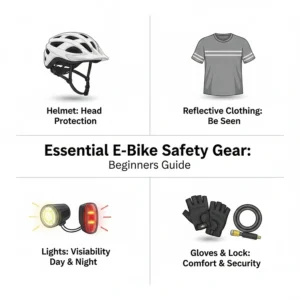
Your simple electric bicycle might feel safe at 15 mph, but physics says otherwise—head injuries occur at all speeds. Always wear a properly fitted helmet, preferably one rated for ebike speeds (CPSC or EN 1078 certification minimum). Consider adding a rear LED light, reflective vest, and gloves for additional protection.
Overestimating Initial Ability
Many beginners immediately jump to maximum pedal-assist levels or use throttle constantly, draining batteries quickly and potentially losing control. Start conservatively with PAS 1-2 for your first several rides, gradually increasing assistance as your confidence and bike-handling skills improve.
Similarly, new riders often overestimate their range, venturing too far from home and running out of battery. Until you understand your bike’s real-world range under your riding style, plan routes with charging options or stay within 50% of the manufacturer’s claimed range.
Maintenance Schedule for Optimal Performance
Proper maintenance extends the life of your starter electric bike and prevents expensive repairs. Follow this schedule to keep your beginner friendly electric bike running smoothly for years.
Weekly (or every 50-100 miles)
Quick Safety Check:
- Inspect tires for proper pressure and visible damage
- Test brakes for proper engagement
- Check battery charge level and connections
- Verify all lights function correctly
- Look for loose bolts or unusual sounds
This five-minute inspection catches problems before they become dangerous or expensive.
Monthly (or every 200-500 miles)
Basic Maintenance:
- Clean and lubricate chain (wipe old lube, apply new, wipe excess)
- Inspect brake pads for wear (replace below 2mm thickness)
- Check spoke tension (wheels should be true without wobbles)
- Tighten all accessible bolts to proper torque
- Wipe down frame and electrical components
Even a user-friendly ebike requires this minimal attention to prevent premature wear.
Quarterly (or every 500-1,000 miles)
Deeper Service:
- Inspect and adjust derailleur (if equipped)
- Check headset and bottom bracket for play
- Verify wheel trueness and spoke tension
- Deep clean drivetrain with degreaser
- Update any available firmware (if applicable)
Consider taking your learning curve electric bike to a professional mechanic if you’re uncomfortable performing these tasks—most shops charge $75-150 for comprehensive tune-ups.
Annually (or every 1,000-2,000 miles)
Major Service:
- Replace chain (even if it appears fine—stretched chains damage cassettes)
- Replace brake pads (if not done earlier)
- Inspect and potentially replace tires
- Check battery capacity and clean contacts
- Professional safety inspection
This annual investment ($150-250 at a shop) prevents catastrophic failures and extends component life, ultimately saving money.
Frequently Asked Questions About Beginner Electric Bikes
❓ How fast can the best electric bike for beginners go?
❓ Do I need a license to ride an electric bike for first time buyers?
❓ How long does a beginner electric bike battery last?
❓ Can I ride a simple electric bicycle in the rain?
❓ What's the best starter electric bike for short riders?
Final Verdict: Which Electric Bike Should You Buy?
After analyzing specifications, customer reviews, and real-world performance, here’s my straightforward recommendation for choosing the best electric bike for beginners based on your specific situation.
Best Overall Value: Jasion EB5
For most first-time buyers, the Jasion EB5 delivers unbeatable value at $350-450. It includes every essential feature—removable battery, front suspension, seven speeds, and multiple riding modes—without overwhelming complexity. Nearly 800 five-star reviews validate its reliability, and the brand’s responsive customer service provides peace of mind.
This beginner friendly electric bike suits budget-conscious buyers who need practical transportation for commutes under 15 miles or recreational rides on mixed terrain. While it won’t win any performance awards, it exceeds expectations at this price point and builds confidence in new riders.
Best Premium Choice: Lectric XP Lite 2.0
If budget allows $800-1,000, the Lectric XP Lite 2.0 justifies the investment. UL 2849 certification ensures safety, hydraulic brakes provide superior stopping power, and the 45-80 mile range eliminates range anxiety. The folding design adds versatility for multi-modal commuters or space-constrained storage.
This represents the sweet spot where quality components meet reasonable pricing. The XP Lite 2.0 won’t become obsolete quickly—its robust construction and established brand support mean you’ll enjoy years of reliable service.
Best for Growing Skills: YOLOWAY 27.5″
Beginners who plan to expand their riding skills should consider the YOLOWAY 27.5″. Its 1000W peak power and 55-mile range accommodate everything from casual cruising to challenging trails. The moderate $600-800 price point delivers near-premium performance without the premium price tag.
This learning curve electric bike grows with you—the power and range support ambitious rides as your confidence increases, while beginner-friendly controls keep initial rides manageable.
✨ Don’t Miss These Exclusive Deals!
🔍 Take your electric biking experience to the next level with these carefully selected products. Click on any highlighted bike model above to check current pricing and availability on Amazon. These bikes will help you create authentic adventures and transform your daily commute into something enjoyable!
Conclusion: Your Electric Bike Journey Begins Now
The best electric bike for beginners isn’t the one with the most power, the fanciest features, or the highest price tag. It’s the one that gets you riding consistently, builds your confidence progressively, and matches your actual needs without overwhelming you.
Whether you choose the budget-friendly Jasion EB5, the premium Lectric XP Lite 2.0, or any other beginner friendly electric bike in this guide, you’re making a decision that will transform your relationship with transportation and exercise. These simple electric bicycle options remove the barriers that kept you from riding—hills become manageable, distances shrink, and arriving sweaty becomes a choice rather than an inevitability.
Start with realistic expectations, prioritize safety over speed, and give yourself permission to learn gradually. Your first few rides might feel wobbly or uncertain, but within weeks you’ll wonder how you ever lived without this user-friendly ebike. The novice rider ebike you choose today becomes your trusted companion for commutes, errands, and weekend adventures—an investment in your health, happiness, and freedom.
Remember that the perfect starter electric bike balances your budget, skill level, and riding environment. Don’t overthink it—any of these seven models will serve you well. The most important decision isn’t which bike you buy, but that you take action and start riding. Your electric bike adventure awaits.
Recommended for You
- 7 Best Electric Bikes for Short Riders in 2025 | Expert Guide
- 7 Best Electric Bikes for Tall Riders 2025 | Expert Guide
- Best Electric Bikes for Women 2025: Top 7 Powerful Picks
These resources will help you maximize your enjoyment and longevity from your new easy assembly electric bike investment.
Disclaimer: This article contains affiliate links. If you purchase products through these links, we may earn a small commission at no additional cost to you.
✨ Found this helpful? Share it with your friends! 💬🤗
