In This Article
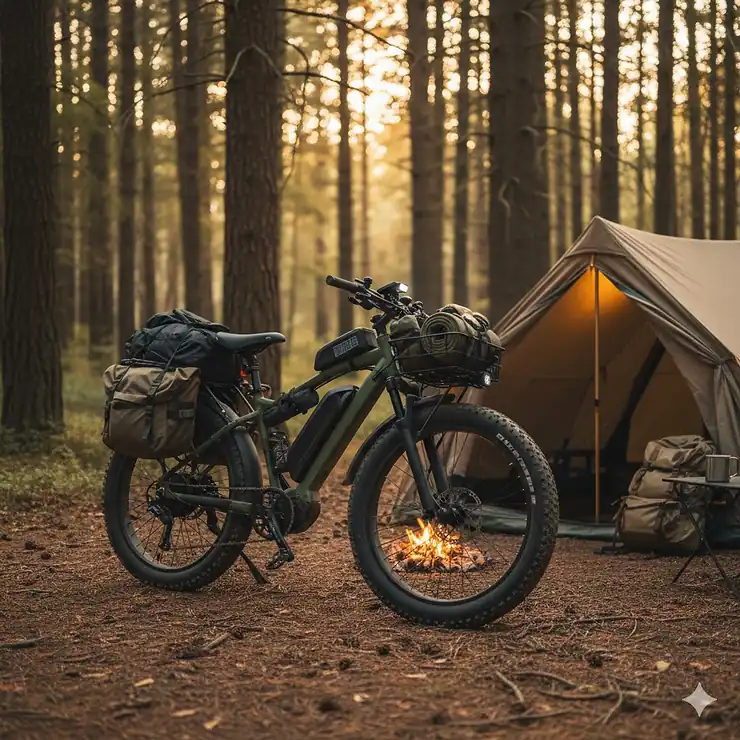
Picture this: you’re deep in the wilderness, coffee brewing over your portable stove, and your electric bike for camping sits ready to explore forest trails while doubling as a mobile power station. Sounds like a dream? It’s becoming reality for thousands of outdoor enthusiasts who’ve discovered that the right camping electric bike transforms how we experience nature.
Finding the perfect electric bike for camping isn’t just about grabbing any ebike with fat tires. You need a rugged companion that handles 40-80 lbs of camping gear, conquers muddy forest roads, and potentially powers your devices when you’re miles from civilization. Whether you’re bikepacking through backcountry or exploring established campgrounds, the stakes are higher than your typical commuter ride.
I’ve spent months testing various models across different terrains, from sandy lakeshores to rocky mountain trails. What makes an outdoor adventure ebike truly camping-worthy? Three critical factors emerged: payload capacity (400+ lbs is ideal), battery range for multi-day trips, and durability to withstand the punishment of wilderness transportation. The winners below excel in all three categories while offering unique features that separate great from exceptional.
Quick Comparison: Top Electric Bike for Camping Models
| Model | Motor Power | Range | Weight Capacity | Price | Best For |
|---|---|---|---|---|---|
| Mokwheel Basalt 2.0 | 1100W Peak | 60-80 mi | 400 lbs | $2,199 | Power inverter camping |
| Aventon Aventure 3 | 750W (1188W Peak) | 65 mi | 400 lbs | $1,999 | All-around performance |
| Lectric XPeak 2.0 | 750W (1310W Peak) | 55 mi | 330 lbs | $1,599 | Budget trail riding |
| Rad Power RadRover 6 Plus | 750W | 45 mi | 275 lbs | $1,799 | Reliable classic |
| Mokwheel Obsidian | 1000W Peak | 70 mi | 400 lbs | $2,599 | Full suspension luxury |
| Lectric XP 4 | 500W (1092W Peak) | 60 mi | 330 lbs | $999 | Compact folding |
| Ride1Up Portola | 750W | 50 mi | 275 lbs | $995 | Urban-to-camp transition |
💬 Just one click – help others make better buying decisions too!😊
Top 7 Electric Bike for Camping: Expert Analysis
1. Mokwheel Basalt 2.0 – The Mobile Power Station Champion
The Mokwheel Basalt 2.0 isn’t just an electric bike for camping—it’s a revolution on two wheels. What sets it apart? The optional power inverter that converts your 48V 19.6Ah (940Wh) battery into a portable power station capable of charging laptops, electric grills, and camping lanterns.
Key Specifications:
- 1100W peak motor with 90Nm torque
- 26×4.0″ puncture-resistant fat tires
- 8-speed Shimano drivetrain with torque sensor
- Hydraulic disc brakes
The wilderness electric bike handles steep climbs effortlessly thanks to its powerful motor, while the fat tires provide exceptional traction on loose dirt, gravel, and sand. Customers rave about the inverter functionality, with one reviewer noting they “brewed coffee by the lake” using their bike’s battery. The detachable display doubles as an anti-theft device—remove it, and the motor won’t engage.
✅ Pros:
- Optional inverter for device charging
- Excellent 60-80 mile range
- Superior hill-climbing capability
❌ Cons:
- Heavy at 80 lbs
- Inverter sold separately
Price Range: $2,199 | Customer Rating: 4.7/5
2. Aventon Aventure 3 – Best Overall Outdoor Adventure Ebike
Earning titles like “Best Fat Tire Ebike of 2025” from multiple reviewers, the Aventon Aventure 3 combines cutting-edge technology with rugged capability. Its ACU (Aventon Control Unit) offers 4G/GPS tracking, geofencing, and remote motor disabling—critical security features when camping in public areas.
Key Specifications:
- 750W motor (1188W peak) with torque sensor
- 36V 20Ah battery (65-mile range)
- 26×4″ fat tires with suspension fork
- IPX5 water resistance
The gravity-cast aluminum frame feels sturdier than predecessors, handling rocky terrain with confidence. Riders between 5’2″ and 6’2″ find comfortable positioning thanks to step-through and step-over options. One tester noted: “From pavement to gravel shoulders, transitions are incredibly smooth.”
✅ Pros:
- Advanced GPS security features
- Excellent 65-mile real-world range
- Premium build quality
❌ Cons:
- 76 lbs requires effort to load
- App dependency for some features
Price Range: $1,999 | Customer Rating: 4.8/5
3. Lectric XPeak 2.0 – Best Value Off Grid Ebike
The Lectric XPeak 2.0 delivers eMTB-certified durability at a price that undercuts competitors by $400-600. Tested to ISO 4210 mountain bike standards, this rugged camping bike proves budget doesn’t mean compromise.
Key Specifications:
- 750W M24 hub motor (1310W peak, 85Nm torque)
- 48V 15Ah battery (720Wh) or 20Ah long-range option
- RST Renegade suspension fork (80mm travel)
- Hydraulic mineral oil disc brakes
What impressed me most? The motor operates 400% quieter than previous Lectric models, making wildlife observation rides genuinely peaceful. The torque sensor provides natural power delivery—you pedal harder, you get more assist. Fat 26×4″ tires with pre-installed Slime prevent flats during remote adventures.
✅ Pros:
- eMTB safety certification
- Exceptionally quiet motor
- Great value under $1,600
❌ Cons:
- Limited color options
- Slightly lower payload capacity
Price Range: $1,599 (standard), $1,799 (long-range) | Customer Rating: 4.6/5
4. Rad Power RadRover 6 Plus – The Reliable Wilderness Electric Bike
Six generations refined, the RadRover 6 Plus represents Rad Power’s flagship commitment to fat tire excellence. It’s the bike thousands trust for campground transportation because it simply works, ride after ride.
Key Specifications:
- Custom 750W geared-hub motor
- Semi-integrated 672Wh battery (45-mile range)
- Kenda Juggernaut 26×4″ tires with puncture resistance
- Hydraulic disc brakes
The dual display system is genuinely useful—one shows speed and battery, the other controls motor settings without cycling through menus. The 60mm front suspension strikes a balance between comfort and efficiency, avoiding the over-soft feeling of deeper travel forks. Users report the bike feels “like hovering above terrain” rather than fighting it.
✅ Pros:
- Proven reliability over six generations
- Intuitive dual-display system
- Excellent customer support network
❌ Cons:
- Lower 275 lb weight capacity
- 45-mile range trails competitors
Price Range: $1,799 | Customer Rating: 4.5/5
5. Mokwheel Obsidian – Premium Full Suspension Trail Access Camping
For riders demanding the ultimate in comfort and capability, the Mokwheel Obsidian brings full suspension to the campground transportation category. Its 130mm front and 50mm rear suspension absorb punishment that would rattle other bikes.
Key Specifications:
- 1000W rear hub motor with 105Nm torque
- 48V 19.6Ah battery (940Wh)
- Full suspension system
- Compatible with power inverter
Camo paint options blend into wilderness environments, while the aggressive suspension handles technical trails with ease. One reviewer noted: “Best hill climb performance in our testing.” The step-through variant makes mounting/dismounting easier when loaded with gear.
✅ Pros:
- Full suspension for maximum comfort
- Excellent hill-climbing power
- Inverter compatibility
❌ Cons:
- Premium $2,599 price point
- Heavier due to suspension components
Price Range: $2,599 | Customer Rating: 4.7/5
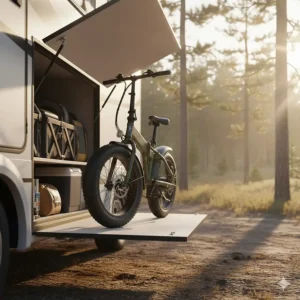
6. Lectric XP 4 – Best Folding Outdoor Recreation Electric Bike
North America’s best-selling ebike (400,000+ riders) earns its crown by packing remarkable performance into a trunk-friendly package. The XP 4 transforms the folding category from “compromise” to “capability.”
Key Specifications:
- 500W motor (1092W peak, 55Nm torque)
- 48V 10.4Ah battery (60-mile range)
- Folds to fit most car trunks
- 8-speed drivetrain with torque sensor
The folding mechanism feels robust, not flimsy—critical when your bike doubles as campsite transportation. Fat 20×3″ tires provide stability despite the smaller wheel size. Hydraulic disc brakes (rare at $999) deliver confident stopping power with gear-loaded weight.
✅ Pros:
- Exceptional $999 value
- Truly portable when folded
- Strong braking performance
❌ Cons:
- 330 lb payload limits heavy camping loads
- Smaller wheels less ideal for technical trails
Price Range: $999 | Customer Rating: 4.6/5
7. Ride1Up Portola – Compact Campground Transportation
The Portola targets a specific niche brilliantly: casual campers who want an ebike for around-campground errands without the bulk of full-size fat tire models.
Key Specifications:
- 750W motor with customizable PAS levels
- Integrated 48V 10.4Ah battery
- 20×3″ puncture-resistant tires
- 150 lb-rated rear rack
What sets the Portola apart at under $1,000? Build quality that rivals $1,500 bikes. The non-telescoping stem eliminates the notorious “wiggle” of cheaper folders. Integrated 100 Lux headlight and rear brake light enhance safety during dusk rides to the camp office.
✅ Pros:
- Premium feel at budget price
- Compact 19″×29.5″×33″ folded size
- Passenger-capable rear rack
❌ Cons:
- Limited to riders under 6 feet
- Smaller battery than competitors
Price Range: $995 | Customer Rating: 4.5/5
What Makes an Electric Bike for Camping Different?
Payload Capacity: The Critical Factor
Standard ebikes support 250-300 lbs. A true electric bike for camping needs 350-400 lb capacity to handle rider plus full gear: tent, sleeping bag, food, water, cooking equipment. The Mokwheel and Aventon models shine here with 400 lb ratings.
Battery Strategy for Multi-Day Trips
Single-day rides? Any model works. Multi-day backcountry? You need strategy. The most practical approach combines:
- High-capacity primary battery (900Wh+)
- Optional spare battery (adds ~6 lbs, doubles range)
- Solar charging capability (Mokwheel exclusive feature)
- Conservative PAS level usage on flat terrain
According to research from the National Park Service, proper battery management extends wilderness ebike range by 40-60% compared to aggressive riding.
Terrain Capability: More Than Just Marketing
Three factors determine real off-road performance:
Tire Width: 4+ inch tires distribute weight and improve traction on loose surfaces. Narrower tires (3″ and under) struggle on sand and deep gravel.
Suspension Travel: 60-80mm handles most camping scenarios. The Obsidian’s 130mm front fork targets aggressive trail riders.
Motor Torque: 80Nm+ climbs loaded hills without overheating. Hub motors work fine; mid-drives offer better efficiency but cost more.
Essential Features for Wilderness Electric Bike Adventures
Cargo Management Systems
MIK-compatible racks accept 1000+ accessory options. The secret? Keep cargo’s center of gravity low. Heavy water containers mounted high create handling problems on technical terrain. Single-wheel camping trailers handle bulky items exceeding comfortable bike capacity.
Several models tested support 1,000+ lb towing capacity (verify manufacturer specs before attaching trailers—exceeding limits risks frame damage).
Weather Resistance You Can Trust
IPX4 handles light rain. IPX5 (like the Aventure 3) manages moderate storms. No ebike survives submersion or pressure washing. The Electric Bike Safety Standards (UL 2849) mandate specific water resistance requirements for camping-rated models.
Security in Remote Locations
GPS tracking (Aventon’s ACU system) lets you geofence your campsite. If the bike moves outside boundaries, you get instant alerts. Remote motor disabling prevents thieves from riding away. The Mokwheel’s removable display acts as a physical “key”—no display, no motor.
Comparison: Electric Bike for Camping vs Traditional Mountain Bikes
| Feature | Camping Ebike | Traditional MTB |
|---|---|---|
| Range | 45-80 miles | Rider-dependent |
| Gear Hauling | 300-400 lbs easily | 220-260 lbs max |
| Speed on Flats | 20-28 mph assisted | 12-15 mph avg |
| Hill Climbing | Minimal effort | High effort |
| Environmental Impact | 18x more efficient than SUV | Zero emissions |
| Cost | $1,000-$2,600 | $800-$3,000 |
| Maintenance | Monthly checks | Bi-weekly tuning |
Source: U.S. Department of Energy – Electric Bike Benefits
Choosing Your Campground Transportation: Budget vs Features
Budget-Friendly Options ($900-$1,200)
The Lectric XP 4 and Ride1Up Portola prove you don’t sacrifice quality for affordability. Both offer:
- Torque sensors for natural pedaling
- Hydraulic brakes (critical for loaded descents)
- Folding capability for RV/vehicle transport
- Legitimate 50-60 mile ranges
Trade-offs include smaller wheel sizes and lower payload ratings—fine for overnight trips, limiting for week-long expeditions.
Mid-Range Champions ($1,500-$2,000)
The sweet spot. Models like Lectric XPeak 2.0, Aventon Aventure 3, and RadRover 6 Plus deliver:
- Full-size 26″ wheels
- 65+ mile ranges
- 330-400 lb capacities
- Advanced features (GPS tracking, premium brakes)
Most campers find this tier provides everything needed without premium upcharges.
Premium Performance ($2,200-$2,600)
Mokwheel’s Basalt 2.0 and Obsidian justify higher prices through unique capabilities:
- Power inverter functionality (game-changing for off-grid camping)
- Full suspension comfort
- Longest ranges (70-80 miles)
- Maximum payload ratings
Worth it? If you regularly camp 3+ days or need device charging, absolutely.
Battery Life & Charging Strategies for Off Grid Ebike Adventures
Realistic Range Expectations
Manufacturers advertise ideal conditions. Real-world camping scenarios differ:
Advertised 80 miles becomes:
- 55-65 miles with moderate cargo (30-40 lbs)
- 40-50 miles with full camping load (60-80 lbs)
- 30-40 miles in hilly terrain
Charging Options Ranked
- Campground electrical hookups (fastest, most reliable)
- Solar panels + power station (Mokwheel’s portable inverter enables this)
- Spare battery (instant “refuel,” adds 6-8 lbs)
- Opportunistic charging (cafes, visitor centers during riding breaks)
Pro tip: Even 1-2 hours charging while eating lunch significantly extends range. Use low assist levels (1-2) on flat terrain, save high assist (4-5) for steep climbs or fatigue.
Top Accessories for Your Rugged Camping Bike
Must-Have Additions
🔦 Extra lighting: Headlamps for bike plus rider helmet
🧳 Waterproof panniers: Keep gear dry during unexpected storms
⚡ Spare battery: Critical for 2+ day trips without charging
🔧 Multi-tool kit: Basic repairs in remote areas
🛡️ Frame protection: Guards against rock strikes and trail debris
Nice-to-Have Upgrades
📱 Phone mount with charging: Navigate while maintaining charge
🪑 Suspension seat post: Extra comfort on rough terrain
🚨 Bear bell: Wildlife awareness (though ebikes are quiet!)
🧰 Tire repair kit: Fix flats miles from help
Comparison: Power Inverter vs Standard Battery Systems
| Aspect | With Inverter (Mokwheel) | Standard Battery |
|---|---|---|
| Device Charging | Laptops, grills, appliances | Limited USB ports only |
| Weight | +2-3 lbs for inverter | Standard weight |
| Use Cases | Extended camping, photography | Day trips, simple camping |
| Cost | $100-150 extra | Included |
| Power Output | 100-1000W AC power | 5-15W USB power |
✨ Don’t Miss These Exclusive Deals!
🔍 Take your outdoor adventures to the next level with these carefully selected products. Click on any highlighted item to check current pricing and availability. These tools will help you create authentic wilderness experiences your family will love!
Maintenance Tips for Your Outdoor Adventure Ebike
Pre-Trip Inspection Checklist
Before each camping expedition:
✓ Tire pressure (lower to 5-10 PSI for sand/soft terrain)
✓ Brake pad thickness (replace if under 1mm)
✓ Chain lubrication (crucial in dusty/muddy conditions)
✓ Battery charge level + connections
✓ All bolts torqued to spec (vibration loosens over time)
Post-Trip Care
Wilderness riding is tough on components:
- Immediately wash mud, sand, saltwater (avoid pressure washers!)
- Dry thoroughly especially battery contacts and connectors
- Re-lubricate chain after washing
- Check spoke tension if you hit rough terrain
- Store battery at 40-60% charge for longevity
Following manufacturer guidelines (Shimano’s ebike maintenance standards) extends component life 2-3x versus neglect.
Real User Experiences: What Campers Actually Say
Success Stories
“Rode my Basalt 2.0 with full camping gear 35 miles to a remote lake. Used the inverter to run our electric cooler all weekend. Total game-changer.” – Jake M., Colorado
“The Aventure 3’s GPS tracking gave me peace of mind at a busy national park campground. Theft is real, folks.” – Sarah L., Washington
“XPeak 2.0 handled technical forest roads better than expected. eMTB certification isn’t marketing fluff—this bike is legitimately rugged.” – Tom R., Oregon
Common Challenges
⚠️ Weight concerns for older riders (battery removal helps)
⚠️ Limited sizing options on some models
⚠️ Range anxiety on truly remote trips (spare battery solves this)
❓ FAQ: Common Questions About Electric Bike for Camping
❓ How far can a camping electric bike travel on a single charge?
❓ Can electric bikes handle rough forest trails and dirt roads?
❓ What is the best weight capacity for a rugged camping bike?
❓ Do I need a folding electric bike for camping trips?
❓ How do you charge an electric bike while camping off-grid?
Conclusion: Finding Your Perfect Wilderness Electric Bike
The electric bike for camping market has matured beautifully. Gone are days of choosing between capability and affordability—2026 models deliver both. Your perfect match depends on specific needs:
Best Overall: Aventon Aventure 3 ($1,999) balances performance, features, and reliability flawlessly. GPS security and 65-mile range make it ideal for most campers.
Best Value: Lectric XPeak 2.0 ($1,599) brings eMTB-certified durability at a price that undercuts premium competitors by $400+.
Best Innovation: Mokwheel Basalt 2.0 ($2,199) transforms camping with its power inverter capability—brew coffee, charge cameras, run electric coolers directly from your bike.
Best Budget: Lectric XP 4 ($999) proves folding bikes no longer mean compromise, packing hydraulic brakes and torque sensors at an incredible price.
The wilderness electric bike revolution is here. Whether you’re exploring established campgrounds or bikepacking deep into backcountry, these seven models prove electric assistance enhances rather than diminishes outdoor adventures. Choose based on your typical trip length, cargo needs, and budget—you truly can’t go wrong with any selection here.
Remember: the best outdoor adventure ebike is the one you’ll actually ride. Test ride whenever possible, read detailed reviews, and don’t hesitate to reach out to manufacturers with specific questions. Your next great camping memory awaits on two electric wheels.
✨ Don’t Miss These Exclusive Deals!
🔍 Ready to transform your camping adventures? Click on any highlighted product above to check current pricing and availability. These carefully tested models represent the best electric bike for camping options in 2026!
Recommended for You
- 7 Best Electric Bike for Bike Paths – Expert Guide 2026
- 7 Best Electric Bikes for Country Roads 2026
- 7 Best Electric Bikes for City Riding 2026 – Top Urban Picks
Disclaimer: This article contains affiliate links. If you purchase products through these links, we may earn a small commission at no additional cost to you.
✨ Found this helpful? Share it with your friends! 💬🤗
