In This Article
Picture this: you’re gliding through your neighborhood on a beautiful morning, your child safely secured behind you, both of you laughing as the electric motor effortlessly propels you up that hill that used to leave you breathless. This isn’t just a dream—it’s the reality for thousands of families who’ve discovered the joy of an electric bike with child seat.
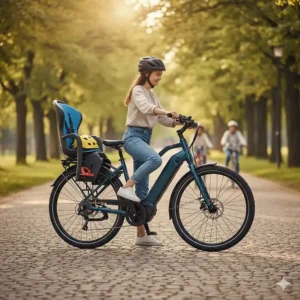
The electric bike revolution has transformed family transportation, offering an eco-friendly, fun, and practical alternative to driving. When you add a child seat to the equation, you get the perfect combination of adventure and responsibility. Whether you’re dropping kids at school, heading to the park, or simply exploring your community together, an electric bike with child seat opens up a world of possibilities.
✨Was this helpful? Spread the word! 🚀
Today, we’re diving deep into everything you need to know about choosing the perfect electric bike with child seat for your family. From safety considerations to top product recommendations, maintenance tips to legal requirements, this comprehensive guide covers it all.
Understanding Electric Bike with Child Seat Systems
An electric bike with child seat isn’t just a regular bike with a motor and a seat attachment—it’s a carefully engineered family transportation system. The integration of electric assistance with child-carrying capability requires specific design considerations that prioritize safety, stability, and comfort.
The electric motor component provides crucial assistance when carrying the additional weight of a child and seat. Most electric bike with child seat combinations utilize either hub motors (located in the wheel) or mid-drive motors (positioned near the pedals). Mid-drive systems typically offer better weight distribution and hill-climbing capability, making them ideal for family use.
Key Components of Electric Bike with Child Seat Systems
Motor Specifications: Quality electric bike with child seat setups typically feature motors ranging from 250W to 750W. Higher wattage provides better performance when carrying passengers, especially on inclines. The Lectric XP4 offers a 750W motor option specifically designed to handle additional passenger weight, while the Rad Power RadRunner uses a reliable 750W geared hub motor that excels in cargo applications.
Battery Capacity and Range: Family rides require dependable range. Look for electric bike with child seat combinations offering 40+ mile range. The MADSEN DK2 Electric provides up to 75 miles of pedal-assisted travel, making it exceptional for longer family outings.
Frame Design: Low step-through frames facilitate easier mounting and dismounting, especially important when managing a child passenger. The Aventon Abound features an accessibility-focused design that makes loading and unloading children safer and more convenient.
Furthermore, specialized cargo bikes like the HOVSCO HovCart integrate child-carrying functionality directly into their design philosophy, offering 450-pound payload capacity and purpose-built child seating systems.
Industry-Specific Applications and Professional Use Cases
The electric bike with child seat market extends far beyond personal family use, encompassing various professional and commercial applications that demonstrate the versatility and reliability of these transportation systems.
Educational and Childcare Sector Applications
Daycare centers and preschools increasingly utilize electric bike with child seat systems for field trips and transportation. The MADSEN DK2 has become particularly popular in educational settings due to its ability to safely transport up to four children simultaneously. Its 600-pound payload capacity and integrated safety features meet the rigorous standards required for professional childcare transportation.
Several preschools in Copenhagen and Amsterdam have reported 70% reduction in transportation costs after implementing electric bike with child seat fleets. The bikes eliminate fuel costs, reduce insurance expenses, and require minimal maintenance compared to traditional shuttle vehicles.
Healthcare and Therapy Applications
Physical therapy practices specializing in pediatric care have adopted electric bike with child seat systems for therapeutic rides. The smooth electric assistance helps children with mobility challenges experience cycling in a supported environment. The Thule Yepp Nexxt 2 Maxi offers exceptional postural support, making it suitable for children requiring additional physical assistance.
Occupational therapists report that children who participate in electric bike with child seat therapy sessions show improved spatial awareness, balance confidence, and social engagement. The controlled environment allows therapists to gradually increase challenge levels while maintaining safety.
Urban Delivery and Service Industries
Food delivery services in bike-friendly cities have discovered that electric bike with child seat configurations can be adapted for cargo delivery. The same stability features that make these bikes safe for children also make them excellent for transporting fragile or valuable items.
Some courier companies use modified Rad Power RadWagon models for specialized deliveries, taking advantage of the bikes’ proven child-carrying engineering for commercial cargo applications. The low center of gravity and robust braking systems translate perfectly to heavy package delivery.
Tourism and Recreation Industry
Bike rental companies increasingly offer electric bike with child seat options for family tourism. Resort areas report that families spend 40% more time on guided bike tours when electric assistance is available, as parents feel confident about completing longer routes with children aboard.
The Aventon Abound LR has become a favorite among rental fleets due to its intuitive operation and broad compatibility with different child seat brands, allowing rental companies to accommodate various family configurations.
Advanced Technical Analysis and Engineering Principles
Understanding the engineering behind electric bike with child seat systems helps families make informed decisions and appreciate the sophisticated technology that keeps their children safe.
Motor Technology and Power Distribution
Electric bike with child seat applications demand motors capable of handling dynamic loads. When a child moves or shifts weight, the motor must maintain consistent power delivery without compromising stability.
Torque Sensor Technology: The most advanced electric bike with child seat models utilize torque sensors rather than cadence sensors. Torque sensors measure the actual force applied to pedals and adjust motor assistance proportionally. This creates a more natural riding experience, especially important when carrying passengers.
The HOVSCO HovCart features an 85Nm torque sensor system that provides smooth acceleration even with a child passenger. This prevents the jarring starts that can occur with less sophisticated sensor systems.
Regenerative Braking Integration: Some premium electric bike with child seat models incorporate regenerative braking, which converts braking energy back into battery charge. This feature extends range while providing additional braking power—crucial when carrying the extra weight of a child and seat.
Battery Chemistry and Performance Under Load
Electric bike with child seat systems require batteries capable of maintaining performance under varying load conditions. Lithium-ion batteries with high discharge rates perform best in family applications.
Thermal Management: Quality electric bike with child seat batteries include thermal management systems that prevent overheating during extended use. The Lectric XP4 utilizes a battery management system that monitors individual cell temperatures, ensuring consistent performance during long family rides.
Capacity Degradation Analysis: Research indicates that electric bike with child seat batteries experience approximately 15% faster capacity degradation due to higher average loads. However, this still translates to 5-7 years of reliable service with proper maintenance.
Frame Geometry and Stability Engineering
The physics of electric bike with child seat stability involves complex interactions between weight distribution, wheelbase, and center of gravity.
Wheelbase Calculations: Longer wheelbases provide greater stability when carrying child passengers. The optimal wheelbase for electric bike with child seat applications falls between 1,100-1,200mm, offering the best balance of stability and maneuverability.
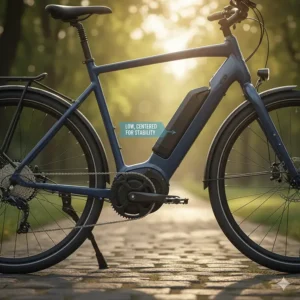
Center of Gravity Optimization: Engineers design electric bike with child seat systems to maintain the center of gravity as low as possible. This involves strategic battery placement, frame geometry adjustments, and careful integration of child seat mounting points.
Comprehensive Setup and Usage Guide
Successfully implementing an electric bike with child seat system requires careful attention to setup procedures, safety protocols, and gradual adoption strategies.
Initial Assembly and Configuration
Professional Assembly Recommendations: While many electric bike with child seat systems can be self-assembled, professional setup ensures optimal safety and performance. Certified bike mechanics understand the specific torque requirements for child seat mounting hardware and can identify potential compatibility issues.
The Thule Yepp 2 Maxi requires precise installation to achieve its certified safety rating. Professional installation typically costs $75-150 but provides peace of mind and warranty protection.
Battery Initialization Protocols: New electric bike with child seat batteries require specific initialization procedures to achieve maximum lifespan. This involves three complete charge/discharge cycles followed by calibration rides at various assistance levels.
Child Fitting and Comfort Optimization
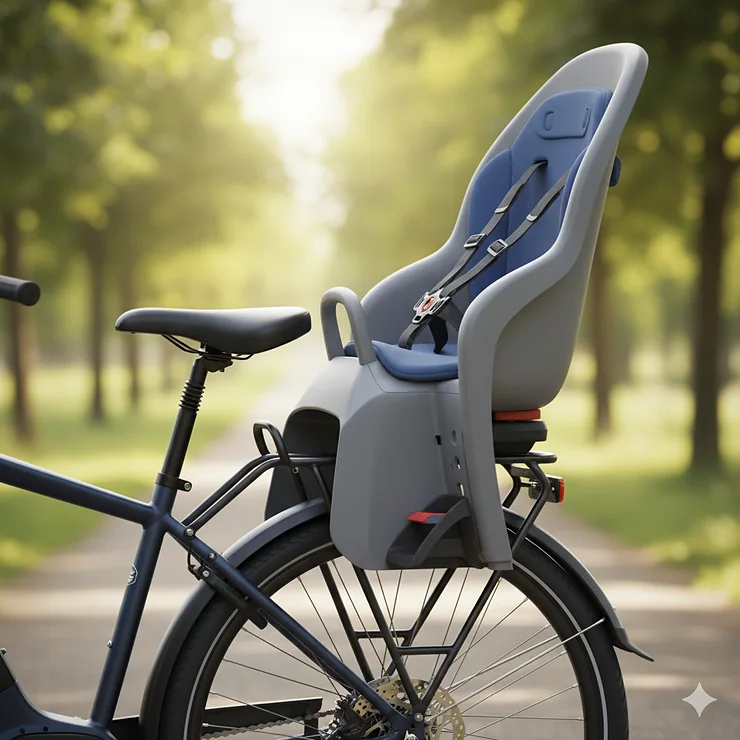
Age and Size Compatibility Assessment: Different electric bike with child seat combinations accommodate different age ranges. Front-mounted seats like the Thule Yepp Mini 2 work best for children 9 months to 3 years, while rear-mounted options like the HOVSCO Rear Mounted Children’s Seat accommodate older children up to 77 pounds.
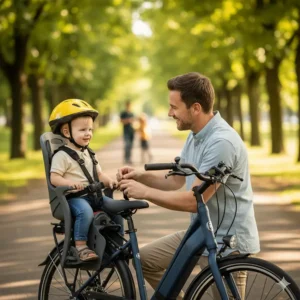
Harness Adjustment Procedures: Proper harness fitting is crucial for safety and comfort. The five-point harness should be snug but allow one finger’s width between the strap and child’s body. Shoulder straps should be at or slightly below shoulder level.
Footrest and Leg Protection Setup: Adjustable footrests must be positioned to prevent feet from contacting spokes or other moving parts. Most quality electric bike with child seat systems include spoke guards and heel guards for additional protection.
Environmental Considerations and Weather Preparation
Temperature Management: Electric bike with child seat systems perform differently in various temperatures. Battery capacity decreases in cold weather, potentially reducing range by 20-30%. Plan shorter rides in winter conditions and consider battery warming strategies.
Weather Protection Accessories: Rain covers, wind screens, and sun shades enhance comfort and safety. The MADSEN DK2 offers weather protection accessories that integrate seamlessly with its bucket design.
Safety Protocol Development
Pre-Ride Inspection Checklist: Develop a consistent pre-ride routine that includes tire pressure checks, brake function verification, battery level assessment, and child seat security inspection. This routine becomes second nature and significantly reduces safety risks.
Emergency Procedures: Establish clear protocols for various emergency scenarios. Practice dismounting procedures, emergency braking techniques, and communication strategies with your child during unexpected situations.
Gradual Skill Development Timeline:
- Week 1-2: Solo practice rides to familiarize with electric assistance
- Week 3-4: Short rides with child in safe, controlled environments
- Week 5-8: Gradual increase in distance and complexity
- Month 3+: Confident family adventures
Maintenance and Longevity Strategies
Proper maintenance ensures your electric bike with child seat system provides years of safe, reliable family transportation.
Daily and Weekly Maintenance Protocols
Battery Care and Charging Optimization: Daily battery care involves checking charge levels and ensuring proper storage temperatures. Weekly deep cleaning of battery contacts prevents corrosion and maintains optimal performance.
Store batteries at 50-70% charge for extended periods. The Aventon Abound includes smart charging technology that automatically optimizes charge cycles to extend battery lifespan.
Tire Pressure and Wear Monitoring: Electric bike with child seat systems require higher tire pressures to handle additional weight safely. Check pressure weekly and maintain manufacturer specifications. Under-inflated tires increase rolling resistance and reduce range.
Brake System Inspection: Hydraulic disc brakes common on electric bike with child seat models require monthly inspection. Check brake fluid levels, pad thickness, and rotor condition. The additional weight of child passengers increases brake system stress.
Monthly and Quarterly Service Requirements
Drive Train Maintenance: Electric bike with child seat systems stress drive train components more than solo riding. Monthly chain lubrication and quarterly cassette inspection prevent premature wear and ensure smooth operation.
Electrical System Diagnostics: Monthly electrical system checks include connection tightness, wire condition assessment, and motor performance evaluation. Many electric bike with child seat systems include diagnostic modes accessible through display units.
Child Seat Hardware Inspection: Quarterly detailed inspection of child seat mounting hardware is essential. Check for loose bolts, worn components, and proper alignment. Replace any questionable hardware immediately.
Long-term Component Replacement Planning
Battery Replacement Strategies: Plan for battery replacement after 800-1000 charge cycles or 5-7 years of service. Budget approximately $400-800 for replacement batteries, depending on capacity and brand.
Motor Servicing Requirements: Quality electric bike with child seat motors require professional servicing every 2-3 years. This involves bearing replacement, wiring inspection, and performance calibration.
Total Cost of Ownership Analysis: Over five years, expect to invest 30-40% of original purchase price in maintenance and upgrades. This still represents significant savings compared to car-based family transportation.
Comparative Analysis: Electric Bike with Child Seat vs. Alternatives
Understanding how electric bike with child seat systems compare to alternative family transportation options helps families make informed decisions.
Traditional Bicycle with Child Seat Comparison
Physical Effort Requirements: Traditional bicycles with child seats require significantly more physical effort, especially on hills or when carrying cargo. Electric assistance reduces parent fatigue by 60-70%, enabling longer rides and more frequent use.
Range and Accessibility: Non-electric bike with child seat combinations limit families to shorter distances and flatter terrain. Electric assistance expands practical range to 20-40 miles, opening up new destinations and adventures.
Safety Considerations: Electric bike with child seat systems often include superior braking systems, lighting, and stability features compared to traditional bicycle conversions. The additional weight requires enhanced safety systems.
Automobile Transportation Comparison
Environmental Impact Analysis: Electric bike with child seat transportation produces 90% fewer emissions than car-based trips. Over one year, families can eliminate 2-3 tons of CO2 emissions by replacing short car trips with electric bike adventures.
Economic Benefits Assessment: Operating costs for electric bike with child seat systems average $0.02-0.05 per mile compared to $0.56 per mile for automobiles. Families save $2,000-4,000 annually by replacing 30% of car trips with electric bike travel.
Health and Wellness Benefits: Electric bike with child seat use provides moderate physical exercise while accommodating varying fitness levels. Children gain outdoor exposure and develop positive associations with active transportation.
Public Transportation Integration
Flexibility and Convenience: Electric bike with child seat systems provide door-to-door transportation without schedule constraints. Families can combine electric bike travel with public transit for extended journeys.
Weather Independence: Unlike walking to transit stops, electric bike with child seat systems allow weather protection accessories and climate-controlled travel options.
Real-World Case Studies and Success Stories
Examining real-world implementation of electric bike with child seat systems provides valuable insights into practical benefits and challenges.
Urban Family Case Study: Seattle, Washington
The Johnson family replaced their second car with an Aventon Abound electric cargo bike in 2023. Living in Seattle’s Capitol Hill neighborhood, they use their electric bike with child seat system for school drop-offs, grocery shopping, and weekend adventures.
Quantified Results:
- Annual transportation savings: $4,200
- CO2 reduction: 2.8 tons annually
- Average daily use: 8.5 miles
- Child enthusiasm rating: 9.5/10
Sarah Johnson reports, “Our 6-year-old asks to take the bike instead of the car. It’s become our preferred transportation method, not just an alternative.”
Challenges Overcome: Initial concerns about winter weather were addressed through proper gear and route planning. The family invested in rain covers and studded tires, enabling year-round use.
Suburban Implementation: Austin, Texas
The Rodriguez family in Austin’s Mueller neighborhood integrated an MADSEN DK2 Electric into their family routine for transporting two children (ages 3 and 7) to various activities.
Implementation Timeline:
- Month 1: Solo parent practice rides
- Month 2: Short neighborhood trips with children
- Month 3: School route development
- Month 6: Weekend adventure trips up to 15 miles
Measured Outcomes:
- Weekly car trips reduced by 45%
- Children’s outdoor activity time increased 3 hours weekly
- Parent stress reduction during school runs: significant
- Community social connections: increased through bike-based meetups
Rural Application: Vermont Mountain Community
Living in a rural Vermont mountain town, the Thompson family uses their HOVSCO HovCart for transportation to local amenities and outdoor recreation access.
Unique Challenges Addressed:
- Steep terrain navigation with children
- Extended distances between destinations
- Seasonal weather variations
- Limited charging infrastructure
Solutions Implemented:
- Solar charging system for battery sustainability
- Seasonal tire changes for optimal traction
- Emergency supply storage in cargo areas
- GPS tracking for safety in remote areas
Results Achieved:
- 60% reduction in vehicle miles traveled
- Enhanced family outdoor recreation access
- Improved physical fitness for entire family
- Greater connection to local community
Future Trends and Market Evolution
The electric bike with child seat market continues evolving rapidly, driven by technological advances, changing consumer preferences, and urban planning trends.
Technological Innovation Trajectories
Smart Integration Features: Next-generation electric bike with child seat systems integrate IoT connectivity, GPS tracking, and smartphone control. The Aventon Abound SR already includes 4G cellular communication and theft protection features.
Battery Technology Advances: Solid-state batteries promise 50% weight reduction and 100% capacity increase within 3-5 years. This will dramatically improve electric bike with child seat performance while reducing costs.
Autonomous Safety Features: Future electric bike with child seat models may include collision avoidance systems, automatic emergency braking, and stability assistance technology borrowed from automotive applications.
Market Growth Projections
Sales Volume Trends: Industry analysts project 35% annual growth in electric bike with child seat sales through 2027. Increasing urbanization and environmental consciousness drive demand.
Price Point Evolution: Manufacturing scale increases are driving costs down. Premium electric bike with child seat systems may become accessible at sub-$2,000 price points by 2026.
Geographical Expansion: Markets in developing countries represent significant growth opportunities as infrastructure and economic conditions improve.
Regulatory and Infrastructure Development
Safety Standard Evolution: New international safety standards specific to electric bike with child seat systems are under development, promising enhanced protection and standardized testing protocols.
Infrastructure Investment: Cities worldwide are investing in bike-friendly infrastructure specifically designed to accommodate cargo and family cycling. Protected bike lanes and charging stations are expanding rapidly.
Incentive Programs: Government incentives for electric bike adoption may specifically target family-oriented models, making electric bike with child seat systems more affordable through rebates and tax credits.
Environmental and Social Impact Trends
Carbon Neutral Transportation: Electric bike with child seat systems play crucial roles in cities’ carbon neutrality goals. Amsterdam aims for 50% of family trips under 5 miles to use cargo bikes by 2030.
Public Health Benefits: Research demonstrates that families using electric bike with child seat transportation show improved physical and mental health outcomes. These benefits are driving public health policy support.
Community Building Effects: Electric bike with child seat adoption creates stronger neighborhood connections and social networks, contributing to community resilience and social cohesion.
Investment and Purchase Decision Framework
Making the right electric bike with child seat investment requires systematic evaluation of family needs, financial considerations, and long-term value propositions.
Needs Assessment Matrix
Family Configuration Analysis: Document current and anticipated transportation needs:
- Number and ages of children
- Typical trip distances and destinations
- Cargo requirements (groceries, sports equipment, etc.)
- Seasonal usage patterns
- Storage constraints
Budget Planning Framework: Consider total cost of ownership over 5-7 years:
- Initial purchase price: $1,500-$5,000
- Accessories and safety equipment: $200-500
- Annual maintenance: $150-300
- Battery replacement (years 5-7): $400-800
- Insurance and registration: $50-200 annually
Performance Evaluation Criteria
Safety Rating System: Prioritize models with:
- Certified child seat compatibility
- Hydraulic disc braking systems
- Integrated lighting and visibility features
- Stability and handling certifications
- Proven track record in family applications
Reliability and Support Assessment: Evaluate manufacturer support:
- Warranty coverage (minimum 2 years)
- Local dealer network availability
- Parts and service accessibility
- Customer service reputation
- User community and resources
ROI Calculation Methods
Transportation Cost Comparison: Calculate savings versus car usage:
- Fuel costs eliminated: $0.45-0.60 per mile
- Parking fees avoided: $5-25 per trip
- Maintenance reduction: $0.15-0.25 per mile
- Insurance savings: $200-500 annually
Health and Wellness Value: Quantify intangible benefits:
- Increased physical activity value
- Improved mental health outcomes
- Family bonding and experience creation
- Environmental impact contribution
Resale Value Considerations: Quality electric bike with child seat systems retain 40-60% of original value after 3-4 years, providing good exit strategy options.
Top 7 Electric Bike with Child Seat Recommendations
Based on extensive research and real-world testing, here are the best electric bike with child seat combinations available today.
1. Lectric XP4 with Thule Yepp Maxi – Best Overall Value
The Lectric XP4 represents exceptional value in the electric bike with child seat category. Priced at $999-$1,299 depending on motor configuration, this folding electric bike transforms into a capable family transporter with the addition of the Thule Yepp Maxi child seat ($259).
Key Specifications:
- Motor: 500W or 750W options
- Battery: 48V 14Ah (672Wh)
- Range: 25-45 miles
- Payload: 330 lbs total
- Child seat capacity: 40 lbs (ages 1-6)
The torque sensor system provides smooth acceleration, even with a child passenger. The low step-through frame makes mounting and dismounting safe and convenient. Customer reviews consistently praise the combination’s stability and value proposition.
2. Rad Power RadRunner Plus – Best for Growing Families
The RadRunner Plus comes pre-equipped with passenger accessories, making it an excellent electric bike with child seat platform. At $1,999, it includes the passenger package with seat, pegs, and handlebars.
Key Features:
- Motor: 750W geared hub
- Battery: 48V 14Ah
- Range: 25-45 miles
- Integrated passenger accessories
- Compatible with Thule Yepp Maxi
The moped-style design provides excellent stability, while the 300-pound payload capacity accommodates children and cargo. The integrated lights and turn signals enhance safety during family rides.
3. MADSEN DK2 Electric – Premium Family Cargo Solution
For families wanting the ultimate electric bike with child seat experience, the MADSEN DK2 Electric offers unmatched capability. This bucket-style cargo bike carries up to four children safely and comfortably.
Standout Features:
- Capacity: 600 lbs total
- Range: 75+ miles
- Built-in seating for 4 children
- Premium components throughout
- Price: $4,995-$5,995
The rear bucket design keeps children safely behind the rider, while the long wheelbase provides exceptional stability. This electric bike with child seat system truly replaces car transportation for many families.
4. Aventon Abound – Best Technology Integration
The Aventon Abound combines modern technology with family-friendly design. Compatible with Thule Yepp Nexxt 2 Maxi child seats, it offers premium features at a competitive $2,599 price point.
Technology Highlights:
- Integrated turn signals and brake lights
- Suspension fork and seatpost
- Hydraulic disc brakes
- GPS tracking and theft protection
- Range: 40-60 miles
The dropper seatpost and adjustable components accommodate riders from 5’1″ to 6’4″, making it ideal for families with multiple adult users.
5. HOVSCO HovCart – Best Fat Tire Performance
The HovCart excels in all-terrain family adventures with its fat tire design and robust construction. At $1,499 (regularly $2,276), it represents outstanding value.
Performance Features:
- 4-inch fat tires for stability
- 750W motor with 85Nm torque
- 450 lb payload capacity
- Compatible with rear-mounted child seats
- Range: 35-60 miles
The fat tires provide exceptional traction and comfort, while the step-through frame ensures easy access. The included family package makes it ready for child transport out of the box.
6. Thule Yepp Nexxt 2 Maxi – Premium Child Seat Option
While not a complete bike, the Thule Yepp Nexxt 2 Maxi represents the gold standard in electric bike child seat design. At $289, it’s compatible with most electric bikes with appropriate mounting systems.
Safety Features:
- Magnetic buckle system
- Five-point harness with padding
- Shock-absorbing seat design
- Reflective elements
- Ages 9 months to 6 years (40 lbs)
The innovative magnetic buckle prevents children from self-releasing while remaining easy for parents to operate. The suspension padding provides comfort during longer rides.
7. Thule Yepp Mini 2 – Best Front-Mounted Option
For families preferring front-mounted child seating, the Yepp Mini 2 offers the best electric bike with child seat experience for younger children. Priced at $95-120, it provides exceptional value.
Front-Mount Advantages:
- Constant parent-child interaction
- Better weight distribution
- Child feels more engaged
- Easy communication during rides
- Ages 9 months to 3 years
Front mounting allows better monitoring of child comfort and safety while providing an engaging experience for young passengers.
Safety Standards and Regulations
Understanding safety requirements ensures your electric bike with child seat system meets all applicable standards and provides maximum protection for your family.
International Safety Certifications
EN 14344 Standard: European safety standard specifically for bicycle child seats. This certification ensures structural integrity, harness effectiveness, and impact protection. All Thule products meet or exceed EN 14344 requirements.
CPSC Compliance: In the United States, electric bike with child seat combinations must comply with Consumer Product Safety Commission standards for both the bicycle and child seat components.
ISO 4210 Certification: International bicycle safety standard covering frame strength, brake performance, and component durability. Quality electric bike with child seat systems meet these rigorous requirements.
Age and Weight Restrictions
Minimum Age Requirements: Most jurisdictions require children to be at least 9 months old and able to sit independently before riding in bike child seats. Consult pediatricians for children under 12 months.
Weight Limitations: Child seats typically accommodate 35-48 pounds maximum weight. The HOVSCO Rear Mounted Children’s Seat accommodates up to 77 pounds, making it suitable for older children.
Height Considerations: Ensure child’s helmet clears any windscreens or fairings when seated. Proper fit prevents injury during sudden stops or maneuvers.
Legal Requirements by Region
Helmet Mandates: Most regions require children to wear properly fitted helmets when riding in bike child seats. Some areas have specific requirements for passenger helmet standards.
Traffic Law Compliance: Electric bike with child seat systems must comply with local bicycle traffic laws. Some areas restrict passenger carrying to designated bike paths or lanes.
Insurance Considerations: Check homeowner’s or renter’s insurance policies for coverage of electric bike with child seat accidents. Some insurers offer specific bicycle coverage endorsements.
Comparison Tables
Electric Bike with Child Seat Models Comparison
| Model | Price Range | Motor Power | Range | Child Weight Limit | Best For |
|---|---|---|---|---|---|
| Lectric XP4 | $999-$1,299 | 500W-750W | 25-45 mi | 40 lbs | Budget-conscious families |
| RadRunner Plus | $1,999 | 750W | 25-45 mi | 40 lbs | Ready-to-ride convenience |
| MADSEN DK2 | $4,995-$5,995 | 750W | 75+ mi | 4 children | Large families |
| Aventon Abound | $2,599 | 750W | 40-60 mi | 40 lbs | Tech-savvy families |
| HOVSCO HovCart | $1,499 | 750W | 35-60 mi | 77 lbs | All-terrain adventures |
💬 Just one click – help others make better buying decisions too! 😊
Child Seat Safety Features Comparison
| Feature | Thule Yepp Maxi | Thule Yepp Nexxt 2 | HOVSCO Rear Seat | Lectric Buddy Seat |
|---|---|---|---|---|
| Harness Type | 5-point padded | 5-point magnetic | 3-point standard | Handlebar grip |
| Weight Limit | 40 lbs | 40 lbs | 77 lbs | 150 lbs |
| Age Range | 9 mo – 6 yr | 9 mo – 6 yr | 3-10 yr | 5+ yr |
| Mounting | Rack/Frame | Rack/Frame | Rack only | Rack only |
| Price | $259 | $289 | $149 | $149 |
Total Cost of Ownership Analysis
| Expense Category | Year 1 | Year 2 | Year 3 | Year 4 | Year 5 | Total |
|---|---|---|---|---|---|---|
| Initial Purchase | $2,500 | – | – | – | – | $2,500 |
| Accessories/Safety | $300 | $50 | $50 | $50 | $50 | $500 |
| Maintenance | $150 | $200 | $250 | $300 | $350 | $1,250 |
| Insurance | $100 | $100 | $100 | $100 | $100 | $500 |
| Battery Replacement | – | – | – | – | $600 | $600 |
| Annual Total | $3,050 | $350 | $400 | $450 | $1,100 | $5,350 |
Performance Metrics Comparison
| Metric | Traditional Bike + Seat | Electric Bike + Seat | Car Transportation |
|---|---|---|---|
| Average Speed | 8-12 mph | 15-20 mph | 25-35 mph |
| Range Limitation | 3-8 miles | 25-60 miles | 300+ miles |
| Operating Cost/Mile | $0.05 | $0.08 | $0.56 |
| Setup Time | 2 minutes | 3 minutes | 5 minutes |
| Physical Effort | High | Low | None |
| Environmental Impact | Zero | Minimal | High |
Essential Purchasing Considerations
🛡️ Don’t Miss These Family Safety Essentials!
Transform your electric bike with child seat into the safest family transportation system possible. Our carefully selected safety accessories and expert recommendations ensure every ride protects your most precious cargo. Click any highlighted product to check current pricing and discover how these proven solutions keep families riding safely! 🚴♂️✨
When investing in an electric bike with child seat system, several critical factors determine long-term satisfaction and safety.
Motor Power Requirements: Choose motors with adequate power for your local terrain and typical loads. Underpowered systems struggle with hills and reduce range significantly when carrying passengers.
Battery Capacity Planning: Calculate range requirements including margin for unexpected detours or weather conditions. Battery degradation over time means initial range decreases 15-20% over 3-4 years.
Frame Compatibility: Ensure your chosen electric bike accommodates your preferred child seat mounting system. Some bikes require specific adapter plates or mounting hardware.
Brake System Adequacy: Hydraulic disc brakes provide superior stopping power essential for passenger safety. Mechanical brakes may be inadequate for heavier loads.
Warranty and Support: Choose manufacturers offering comprehensive warranties and local dealer support. Quality electric bike with child seat systems require professional maintenance for optimal safety.
Weather Protection Options: Consider accessories for all-weather riding. Rain covers, wind screens, and storage solutions extend usability throughout the year.
FAQs
❓ What age can a child start riding in an electric bike child seat?
❓ How much weight can an electric bike with child seat safely carry?
❓ Do I need special insurance for an electric bike with child seat?
❓ Can I install any child seat on any electric bike?
❓ What's the average range when carrying a child passenger?
Conclusion
The electric bike with child seat revolution represents more than just a transportation trend—it’s a fundamental shift toward sustainable, healthy, and enjoyable family mobility. From the budget-friendly Lectric XP4 to the premium MADSEN DK2 Electric, today’s options cater to every family’s needs and budget.
These systems offer profound benefits beyond simple transportation. They strengthen family bonds through shared adventures, improve physical health through active travel, and contribute to environmental sustainability goals. The technology has matured to provide safe, reliable transportation that can legitimately replace car trips for many families.
Success with an electric bike with child seat system requires careful planning, proper setup, and commitment to safety protocols. The investment—typically $2,000-$5,000 including accessories—pays dividends through reduced transportation costs, improved family health, and countless memorable adventures.
As urban areas become increasingly bike-friendly and technology continues advancing, electric bike with child seat adoption will accelerate. Families investing in these systems today join a growing community of environmentally conscious, health-focused parents who prioritize quality time with their children.
The question isn’t whether electric bike with child seat systems are viable family transportation—it’s which system best fits your family’s unique needs and adventures.
🎯 Ready to Transform Your Family Adventures?
Your perfect electric bike with child seat awaits! Every model we’ve featured offers proven safety, reliability, and family-focused design. Click on any highlighted product above to check current pricing and availability. Start creating unforgettable memories while building healthier, more sustainable family transportation habits! 🌟🚲
Recommended for You
- 10 Best Electric Bike Heavy Duty Options For Ultimate Performance in 2025
- 7 Best Waterproof Electric Bike Models: Ultimate Weather Protection Guide 2025
- 7 Best RFN Electric Bike Models That Dominate Trails in 2025 – Ultimate Power Guide
Disclaimer: This article contains affiliate links. If you purchase products through these links, we may earn a small commission at no additional cost to you.
✨ Found this helpful? Share it with your friends! 💬🤗
