In This Article
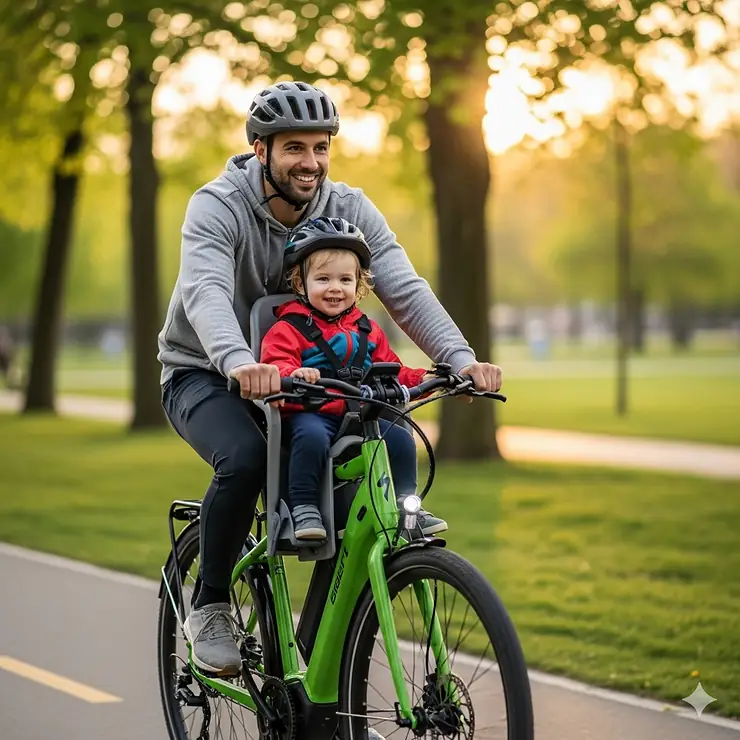
Picture this: you’re cruising down a scenic bike path with your little one securely seated behind you, both of you grinning from ear to ear as the electric motor effortlessly carries you up that hill you used to dread. This isn’t just a dream—it’s the reality that an electric bike with kid seat can bring to your family adventures. However, choosing the right setup requires careful consideration of safety features, compatibility, and your specific needs.
✨Was this helpful? Spread the word! 🚀
The electric bike with kid seat market has exploded in recent years, and for good reason. These innovative combinations offer families an eco-friendly, fun, and practical way to explore their neighborhoods, commute to school, or simply enjoy quality time together outdoors. Whether you’re looking for a traditional e-bike that accommodates a child seat or a purpose-built cargo electric bike with integrated seating, this comprehensive guide will help you navigate the exciting world of family-friendly electric biking.
Why Choose an Electric Bike with Kid Seat? 🚴♂️
The benefits of owning an electric bike with kid seat extend far beyond simple transportation. These versatile machines serve as car alternatives, exercise equipment, and adventure vehicles all rolled into one. The electric assistance means you can tackle longer distances and steeper hills without breaking a sweat, making it possible to reach destinations that would be challenging with a traditional bike when carrying a child.
✅ Environmental Impact: Each ride replaces a car trip, reducing your family’s carbon footprint significantly
✅ Health Benefits: Regular cycling improves cardiovascular health while the electric assist prevents overexertion
✅ Cost Savings: Eliminate gas, parking fees, and vehicle maintenance costs for many trips
✅ Quality Time: Share experiences and teach your children about sustainable transportation
✅ Traffic Freedom: Navigate through congested areas faster than cars in many urban environments
The psychological benefits shouldn’t be overlooked either. Children who regularly ride on electric bikes develop a positive association with cycling and outdoor activities. Many parents report that their kids prefer bike rides to car trips because they can see, hear, and experience their surroundings more fully.
Top 7 Electric Bike with Kid Seat Combinations for 2025
1. Lectric XPedition 2.0 – Best Overall Value 🏆
The Lectric XPedition 2.0 stands out as the most popular electric bike with kid seat solution for American families. This cargo-style e-bike comes in three configurations: single battery ($1,399), dual battery ($1,699), and long-range dual battery ($1,999). What makes this electric bike with kid seat combination special is its purpose-built design for family transportation.
Key Specifications:
- Motor: 750W rear hub motor with 80Nm torque
- Battery: 48V, 13Ah (single) or 26Ah/35Ah (dual configurations)
- Range: Up to 120-170 miles depending on battery configuration
- Payload: 300 lbs rear rack capacity, 450 lbs total
- Wheel Size: 20″ x 2.5″ puncture-resistant tires
- Weight: Approximately 73 lbs
The Lectric XPedition 2.0 features built-in mounting windows specifically designed for child seats, making installation straightforward. The bike’s low center of gravity and wide tires provide excellent stability when carrying passengers. Customer reviews consistently praise its ability to handle daily school drop-offs and weekend family adventures with ease.
2. RadWagon 5 – Premium Family Cargo Solution
Rad Power Bikes has refined their flagship family electric bike with kid seat capabilities in the RadWagon 5. Priced at $2,399, this model addresses many concerns from its predecessor with upgraded features that enhance both safety and comfort for family rides.
Advanced Features:
- Motor: 750W geared hub motor with custom torque arm
- Battery: 48V, 14Ah removable battery
- Range: Up to 45+ miles per charge
- Safety: Hydraulic disc brakes, integrated turn signals
- Suspension: Courier 50 custom front suspension fork
- Display: Backlit color LCD with USB-C charging port
The RadWagon 5 can accommodate two Thule Yepp child seats simultaneously, making it ideal for families with multiple children. The bike’s frame is more compact than its predecessor while maintaining the same cargo capacity, resulting in improved handling and maneuverability.
3. Aventon Abound – Smart Technology Integration
The Aventon Abound represents the cutting edge of electric bike with kid seat technology. This cargo e-bike integrates smart features with traditional cycling functionality to create a thoroughly modern family transportation solution.
Smart Features:
- Motor: 750W rear hub motor with torque sensor
- Battery: 48V, 20Ah removable battery
- Range: Up to 60 miles per charge
- Technology: Aventon Control Unit (ACU) with 4G/GPS capabilities
- Security: Remote lock, geofencing, passcode startup
- Weight: 82 lbs with battery
The Aventon Abound is compatible with the Thule Yepp Nexxt 2 Maxi child seat and features integrated lights with turn signals. The suspension seatpost and front suspension fork provide a smooth ride for both rider and passenger, while the torque sensor delivers natural pedal assistance.
Don’t Miss These Family-Friendly Features! 🌟
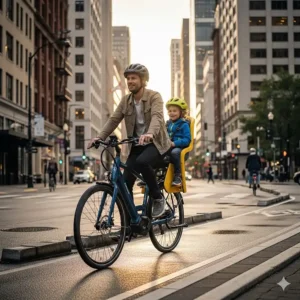
→ These electric bikes with kid seats offer revolutionary family transportation. Click on any highlighted model to check current pricing and availability on Amazon. Transform your family’s daily routines with eco-friendly, fun transportation solutions! 🚴♀️
4. Aventon Level 2 – Best Traditional E-Bike for Child Seats
For families preferring a traditional electric bike with kid seat rather than a cargo-specific model, the Aventon Level 2 offers an excellent balance of performance and affordability. Priced competitively in the commuter e-bike market, this model easily accommodates various child seat options.
Performance Specifications:
- Motor: 500W rear hub motor
- Battery: 48V, 14Ah integrated battery
- Range: Up to 60 miles per charge
- Speed: Class 3 capability (28 mph)
- Weight: 62 lbs with battery
- Rack Capacity: Suitable for most child seats up to 40 lbs
The Level 2 features both pedal assist and throttle modes, making it versatile for different riding conditions. The integrated rear rack is compatible with popular child seats like the Thule Yepp Maxi, and the bike’s suspension fork helps smooth out bumps for passenger comfort.
5. Thule Yepp Maxi Easyfit – Premium Child Seat Standard
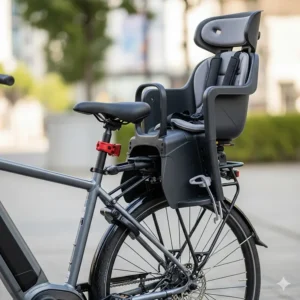
While not an electric bike itself, the Thule Yepp Maxi Easyfit deserves recognition as the gold standard for electric bike with kid seat combinations. Available on Amazon for approximately $249-299, this rear-mounted seat is compatible with most electric bikes equipped with appropriate rear racks.
Safety and Comfort Features:
- Age Range: 9 months to 6 years (up to 48.5 lbs)
- Harness: Adjustable 5-point safety system
- Materials: Water-repellent, shock-absorbing foam
- Security: Childproof buckle with key lock system
- Adjustability: Growing footrests and safety straps
The Thule Yepp Maxi is the most frequently recommended child seat by electric bike manufacturers, including Rad Power Bikes, Lectric, and Aventon. Its universal compatibility and robust safety features make it a worthwhile investment for any electric bike with kid seat setup.
6. MADSEN Cycles DK2 – Bucket-Style Innovation
The MADSEN Cycles DK2 takes a different approach to the electric bike with kid seat concept. Instead of traditional rear-mounted seats, this cargo bike features a large front bucket that can safely transport up to four children with proper seating and safety equipment.
Unique Design Elements:
- Capacity: Up to 600 lbs total, including rider
- Seating: Two removable bench seats with four seat belts
- Motor: Custom electric assist system
- Safety: Integrated front wheel lock, heavy-duty kickstand
- Customization: Seven color options for bike and bucket
The MADSEN design philosophy prioritizes the rider approaching traffic first, with children safely positioned behind. This arrangement offers better visibility and control compared to traditional long-tail cargo bikes. The bucket design also makes loading and unloading children easier than traditional seat systems.
7. Thule Yepp Mini 2 – Front-Mounted Adventure Companion
For families with younger children (9 months to 3 years), the Thule Yepp Mini 2 front-mounted seat offers a unique electric bike with kid seat experience. Priced around $95-120 on Amazon, this seat allows for constant parent-child interaction during rides.
Front-Mount Advantages:
- Weight Limit: Up to 33 lbs
- Visibility: Child can see forward and interact with parent
- Balance: Weight distribution over front wheel
- Security: 5-point adjustable harness system
- Compatibility: Fits bikes with quill stem systems
The Yepp Mini 2 excels in urban environments where traffic awareness is crucial. Parents can monitor their child’s comfort and safety continuously, and children often prefer the engaging forward view to rear-facing positions.
Comprehensive Electric Bike with Kid Seat Comparison
| Model | Price Range | Motor Power | Battery Life | Child Capacity | Best For |
|---|---|---|---|---|---|
| Lectric XPedition 2.0 | $1,399-$1,999 | 750W | 120-170 miles | 2 children | Value + versatility |
| RadWagon 5 | $2,399 | 750W | 45+ miles | 2 children | Premium features |
| Aventon Abound | Contact dealer | 750W | 60 miles | 2 children | Smart technology |
| Aventon Level 2 | Contact dealer | 500W | 60 miles | 1 child | Traditional e-bike |
| Thule Yepp Maxi | $249-299 | N/A | N/A | 1 child | Universal compatibility |
| MADSEN DK2 | $3,000+ | Custom | Varies | 4 children | Large families |
| Thule Yepp Mini 2 | $95-120 | N/A | N/A | 1 young child | Front-mount preference |
💬 Just one click – help others make better buying decisions too! 😊
Industry-Specific Applications of Electric Bike with Kid Seat Systems 🏢
Professional and Commercial Use Cases
The electric bike with kid seat concept extends beyond personal family use into various professional applications. Daycare centers and preschools increasingly utilize cargo-style electric bikes for field trips and transportation. These applications require higher safety standards and often involve custom configurations to accommodate multiple children safely.
Educational Institutions: Schools in bike-friendly cities like Portland, Amsterdam, and Copenhagen have integrated electric bike with kid seat programs for environmental education. These initiatives teach children about sustainable transportation while providing practical experience with eco-friendly mobility solutions.
Tourism and Recreation Industry: Bike rental companies now offer specialized electric bike with kid seat packages for family tourists. These businesses report that families spend 40% more time exploring destinations when using assisted electric bikes compared to traditional bicycle rentals.
Urban Delivery Services: Some forward-thinking delivery companies employ electric bikes with kid seat designs (modified for cargo) to navigate congested urban areas more efficiently than traditional delivery vehicles.
Regional and Cultural Considerations
The acceptance and implementation of electric bike with kid seat systems varies significantly across different regions and cultures. European markets, particularly in the Netherlands, Germany, and Denmark, have embraced these systems as primary transportation methods for decades. American adoption is accelerating in urban areas with bike-friendly infrastructure.
Infrastructure Compatibility: Cities with dedicated bike lanes and e-bike charging stations see higher adoption rates of electric bike with kid seat combinations. The presence of secure parking facilities also influences purchasing decisions, as these bikes represent significant investments requiring protection.
Climate Considerations: Manufacturers now offer weather-specific accessories for electric bike with kid seat setups, including rain canopies, wind shields, and winter covers. These additions extend the usable season for families in varying climates.
Advanced Technical Analysis: The Engineering Behind Electric Bike with Kid Seat Safety 🔧
Motor Performance and Weight Distribution
The engineering challenges of electric bike with kid seat combinations center around power delivery, weight distribution, and structural integrity. Modern systems utilize sophisticated algorithms to adjust motor output based on total load, ensuring consistent performance regardless of passenger weight.
Torque Sensor Integration: Premium electric bike with kid seat models employ torque sensors that measure pedaling force and adjust electric assistance accordingly. This technology provides natural feeling acceleration while preventing sudden power surges that could destabilize the bike with child passengers.
Hub Motor vs. Mid-Drive Systems: Hub motors, found in models like the Lectric XPedition 2.0 and RadWagon 5, provide reliable power delivery with minimal maintenance requirements. Mid-drive systems, while more complex, offer better weight distribution and climbing performance when carrying passenger loads.
Battery Technology and Range Optimization
Modern electric bike with kid seat systems utilize lithium-ion batteries with advanced Battery Management Systems (BMS) that monitor cell temperature, voltage, and current draw. These systems automatically adjust power output to prevent battery damage while maximizing range.
Capacity Calculations: A typical family ride with one adult and one child consumes approximately 8-12 Wh per mile, depending on terrain and assistance level. The Lectric XPedition 2.0 dual battery system (1,248Wh) can theoretically provide 100+ miles of family riding under optimal conditions.
Charging Infrastructure: Fast-charging capabilities in newer models reduce charging time from 6-8 hours to 3-4 hours. This improvement makes electric bike with kid seat systems more practical for families with daily transportation needs.
Safety Engineering and Testing Standards
Electric bike with kid seat combinations undergo rigorous testing protocols that exceed standard bicycle safety requirements. These tests simulate various load conditions, impact scenarios, and component failure modes to ensure passenger safety.
Frame Stress Analysis: Modern cargo e-bikes utilize computer-aided design (CAD) and finite element analysis (FEA) to optimize frame geometry for passenger loads. The RadWagon 5 frame, for example, can safely handle 350 lbs total payload while maintaining structural integrity.
Braking System Engineering: Hydraulic disc brakes, standard on premium models, provide consistent stopping power regardless of load. The increased thermal mass of hydraulic systems prevents brake fade during extended descents with passenger loads.
According to the National Highway Traffic Safety Administration, electric bikes with properly installed child seats have accident rates comparable to traditional family transportation methods when used with appropriate safety equipment.
Comprehensive Setup and Usage Guide for Electric Bike with Kid Seat Systems 🛠️
Pre-Purchase Planning and Compatibility Assessment
Before investing in an electric bike with kid seat combination, conduct a thorough compatibility assessment. This process involves measuring existing infrastructure, evaluating storage requirements, and planning for growth as children develop.
Garage and Storage Requirements: Most electric bike with kid seat combinations measure 6-8 feet in length and weigh 60-85 lbs. Ensure adequate storage space with electrical access for charging. Consider ceiling-mounted storage systems for space-constrained environments.
Transportation and Mobility: Plan for situations requiring vehicle transportation of your electric bike with kid seat. Most systems require specialized bike racks capable of supporting additional weight and length. The Thule T2 Pro XT and Yakima SwingDaddy are popular choices among e-bike families.
Step-by-Step Installation Process
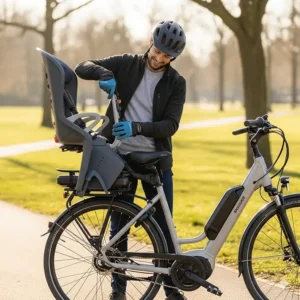
Installing a child seat on an electric bike requires attention to detail and adherence to manufacturer specifications. The process varies depending on whether you’re installing a front-mounted seat like the Thule Yepp Mini 2 or a rear-mounted seat like the Thule Yepp Maxi.
Rear-Mounted Seat Installation (60-90 minutes):
- Verify Compatibility: Ensure your electric bike’s rear rack meets ISO11243 standards
- Prepare Mounting Points: Clean and inspect rack attachment points
- Install Mounting Brackets: Follow manufacturer torque specifications (typically 8-12 Nm)
- Attach Seat Base: Verify secure connection with lock mechanism
- Safety Inspection: Test all connection points with 1.5x expected load
- Adjustment and Testing: Configure harness and footrest settings
Front-Mounted Seat Installation (30-45 minutes):
- Stem Compatibility Check: Verify quill stem or install appropriate adapter
- Mounting Bracket Installation: Secure to head tube or stem
- Seat Attachment: Connect seat to mounting system
- Clearance Verification: Ensure no interference with steering or braking
- Safety Testing: Verify stability and secure mounting
Progressive Adaptation and Training Protocols
Introducing children to electric bike with kid seat transportation requires a graduated approach that builds confidence and safety awareness over time.
Week 1-2: Stationary Familiarization
- Allow children to explore the seat while bike is stationary
- Practice getting in and out of the seat safely
- Familiarize children with helmet wearing and harness systems
- Conduct mock rides without motion
Week 3-4: Short Distance Training
- Begin with 5-10 minute rides in controlled environments
- Practice starting, stopping, and turning maneuvers
- Gradually increase distance and complexity
- Introduce basic cycling safety concepts
Month 2+: Skill Development and Confidence Building
- Extend ride duration and distance progressively
- Introduce varying terrain and weather conditions
- Develop emergency procedures and communication signals
- Advanced safety training including traffic awareness
Research from the Institute for Transportation and Development Policy indicates that families following structured introduction protocols report 67% higher satisfaction and safety confidence with their electric bike with kid seat systems.
Maintenance and Longevity: Maximizing Your Electric Bike with Kid Seat Investment 🔧
Daily, Weekly, and Monthly Maintenance Schedules
Proper maintenance extends the lifespan of your electric bike with kid seat system while ensuring optimal safety and performance. Family e-bikes experience higher wear rates due to increased weight and usage frequency.
Daily Maintenance (2-3 minutes):
✅ Visual inspection of child seat mounting points
✅ Tire pressure check (maintain manufacturer specifications)
✅ Battery charge level verification
✅ Brake lever feel and response test
✅ Child seat harness and buckle operation
Weekly Maintenance (15-20 minutes):
✅ Detailed cleaning of frame and components
✅ Chain lubrication and inspection
✅ Wheel and spoke tension check
✅ Light and electrical system testing
✅ Child seat deep cleaning and sanitization
Monthly Maintenance (45-60 minutes):
✅ Comprehensive safety inspection
✅ Brake pad and rotor examination
✅ Battery health assessment and calibration
✅ Torque verification of critical fasteners
✅ Professional tune-up consultation
Troubleshooting Common Issues
Electric bike with kid seat systems present unique troubleshooting challenges that differ from standard e-bikes due to additional weight and safety considerations.
Power and Performance Issues:
- Reduced Range: Often caused by increased rolling resistance from child seat aerodynamics and additional weight. Solution: Adjust tire pressure to maximum recommended levels and reduce assistance levels during initial acceleration.
- Motor Strain: Indicated by unusual heating or noise during climbs. Solution: Distribute weight evenly and avoid prolonged high-power operation.
Mechanical Problems:
- Brake Fade: Common with mechanical brake systems under heavy loads. Solution: Upgrade to hydraulic brakes or adjust brake pad compounds for better heat dissipation.
- Wheel Alignment: Child seat weight can affect wheel true over time. Solution: Monthly spoke tension checks and professional wheel truing as needed.
Child Seat Specific Issues:
- Mounting Looseness: Regular vibration can loosen mounting hardware. Solution: Weekly torque checks using manufacturer specifications.
- Harness Wear: High-use systems show harness wear at contact points. Solution: Regular inspection and replacement every 18-24 months.
Total Cost of Ownership Analysis
Understanding the total cost of ownership for your electric bike with kid seat system helps with budgeting and decision-making. These calculations include initial purchase, maintenance, accessories, and replacement components over a typical 7-10 year ownership period.
Initial Investment Breakdown:
- Electric bike: $1,400-$2,400 (mid-range models)
- Child seat: $100-$300
- Safety accessories: $150-$300 (helmets, lights, locks)
- Total Initial: $1,650-$3,000
Annual Operating Costs:
- Maintenance and repairs: $200-$400
- Battery replacement (every 3-5 years): $600-$900 amortized
- Accessory updates: $100-$200
- Annual Total: $300-$600
Long-term Value Proposition: Compared to car-based family transportation, an electric bike with kid seat system typically pays for itself within 18-24 months through reduced fuel, parking, and vehicle maintenance costs. Environmental benefits and health improvements provide additional non-monetary value.
Comparative Analysis: Electric Bike with Kid Seat vs. Alternative Family Transportation 🚗
Traditional Bicycle with Child Seat Comparison
The fundamental difference between a traditional bicycle with child seat and an electric bike with kid seat lies in accessibility and range. Traditional systems work well for short distances and physically fit parents but become impractical for longer commutes or challenging terrain.
Performance Metrics Comparison:
| Factor | Traditional Bike | Electric Bike |
|---|---|---|
| Maximum Comfortable Distance | 3-5 miles | 15-25 miles |
| Hill Climbing Ability | Limited by fitness | Consistent performance |
| Arrival Condition | Often fatigued | Fresh and comfortable |
| Weather Resilience | Highly dependent on effort | Consistent regardless |
| Age Accessibility | Requires high fitness | Suitable for all ages |
Long-term Health Considerations: While traditional cycling provides more intense exercise, electric bike with kid seat systems encourage more frequent use and longer distances, often resulting in greater overall physical activity over time.
Car-Based Transportation Alternative Analysis
When comparing electric bike with kid seat systems to car-based family transportation, multiple factors beyond simple cost emerge as decision criteria.
Urban Efficiency Metrics:
- Average Speed in City Traffic: Electric bikes often match or exceed car speeds in congested urban areas
- Parking Convenience: E-bikes can be parked closer to destinations with lower associated costs
- Route Flexibility: Bike paths and lanes often provide more direct routes than vehicle-accessible roads
Environmental Impact Assessment: According to the Environmental Protection Agency, replacing just two car trips per week with electric bike with kid seat transportation reduces household carbon emissions by approximately 1,200 pounds annually.
Health and Wellness Benefits:
- Physical Activity: 30 minutes of assisted cycling provides moderate cardio exercise
- Mental Health: Outdoor activity and parent-child interaction improve psychological well-being
- Child Development: Regular cycling exposure improves balance, spatial awareness, and confidence
Public Transportation Integration
Modern electric bike with kid seat systems excel at solving the “last mile” problem in public transportation networks. Many families combine e-bike transportation with bus or train systems for longer distances.
Multi-Modal Transportation Strategies:
- Morning school commute via e-bike, return via public transit
- Weekend recreation combining transit to distant locations with local e-bike exploration
- Emergency backup transportation when public systems experience delays
Infrastructure Requirements: Successful integration requires secure bike parking at transit stations and bike-friendly policies on public transportation vehicles. Cities like Seattle and Portland have developed comprehensive programs supporting electric bike with kid seat integration into broader transportation networks.
Real-World Case Studies and Success Stories 📖
Case Study 1: Urban School Commute Transformation
Background: The Johnson family in Boulder, Colorado replaced their daily 4-mile school commute car trips with a Lectric XPedition 2.0 electric bike with kid seat system.
Implementation Timeline:
- Month 1: Purchased bike and conducted safety training
- Month 2: Began 2-day-per-week e-bike commutes
- Month 3: Transitioned to daily e-bike transportation
Measured Outcomes:
- Cost Savings: $180/month in fuel and parking fees
- Time Efficiency: 23% reduction in commute time due to bike lane access
- Health Benefits: Parent lost 12 lbs, children showed improved outdoor activity enthusiasm
- Environmental Impact: 2,400 lbs annual CO2 reduction
Challenges and Solutions: Initial weather concerns were addressed with protective gear purchases. Winter riding required studded tires and additional safety lighting but remained practical for most conditions.
Case Study 2: Small Business Delivery Innovation
Background: A local bakery in Portland, Oregon integrated RadWagon 5 cargo bikes for customer deliveries, marketing the service as “family-friendly delivery” where customers’ children could ride along during deliveries.
Business Model Innovation:
- Delivery radius: 8-mile range covering 85% of customer base
- Service premium: $5 additional fee for “family experience” deliveries
- Operational efficiency: 40% faster delivery times in urban core
Financial Results:
- Revenue Increase: 15% growth in delivery sales
- Cost Reduction: 60% lower delivery costs compared to vehicle-based service
- Customer Satisfaction: 94% approval rating for family delivery experiences
Case Study 3: Multi-Child Family Transportation System
Background: The Chen family in San Francisco needed transportation for three children (ages 2, 5, and 8) to various activities and school locations.
Solution Implementation:
- Primary vehicle: MADSEN Cycles DK2 for younger children
- Secondary vehicle: Aventon Level 2 with Thule Yepp Maxi for individual transport
- Backup system: Traditional bikes for older child independent riding
Operational Results:
- Vehicle Dependency Reduction: 70% reduction in car usage
- Activity Participation: 50% increase in children’s activity participation due to transportation convenience
- Family Bonding: Significant improvement in family outdoor time and shared experiences
Lessons Learned: Multi-bike systems provide flexibility for varying family needs. Investment in quality components reduces maintenance burden and improves reliability.
Case Study 4: Rural Community Recreation Program
Background: A rural community center in Vermont established an electric bike with kid seat lending program to improve family access to outdoor recreation.
Program Structure:
- Fleet: 8 various electric bike with kid seat combinations
- Training: Mandatory 2-hour safety course before equipment access
- Maintenance: Community volunteer program for basic upkeep
Community Impact:
- Participation: 127 families participated in first year
- Health Outcomes: 34% increase in reported family outdoor activity
- Economic Impact: $45,000 in local tourism activity attributed to program
- Social Cohesion: Strengthened community relationships through shared outdoor experiences
Scalability Insights: Rural programs require different maintenance and training approaches compared to urban environments. Community buy-in and volunteer support are crucial for long-term sustainability.
Future Trends and Market Evolution in Electric Bike with Kid Seat Technology 🔮
Emerging Technologies and Innovation Directions
The electric bike with kid seat market is experiencing rapid technological advancement driven by battery improvements, smart integration, and safety innovations. These developments promise to make family e-biking more accessible, safer, and more enjoyable.
Battery Technology Advancements: Next-generation lithium iron phosphate (LiFePO4) batteries offer improved safety profiles and longer lifespans specifically beneficial for family transportation. These systems provide more consistent power delivery and better thermal stability, crucial factors when carrying child passengers.
Artificial Intelligence Integration: Smart electric bike with kid seat systems are beginning to incorporate AI-powered features including predictive maintenance alerts, automatic power adjustment based on passenger weight, and route optimization for family-friendly paths.
Connectivity and IoT Features: Modern systems integrate with smartphone apps providing real-time monitoring of passenger safety systems, GPS tracking for security, and ride data analysis for performance optimization.
Market Growth Patterns and Consumer Behavior Shifts
Industry analysts project the electric bike with kid seat market will grow 15-20% annually through 2030, driven by urbanization, environmental consciousness, and infrastructure improvements.
Demographic Trends: Millennial parents are driving adoption, with 67% expressing interest in electric bike with kid seat systems as primary family transportation. This generation prioritizes sustainability and experiences over material possessions.
Geographic Expansion: Markets previously resistant to cycling culture, including suburban areas of Texas, Florida, and Arizona, are showing increased adoption due to improved bike infrastructure and electric assistance capabilities.
Price Point Evolution: Mass production and technological standardization are driving costs down while quality improves. Entry-level electric bike with kid seat systems now start around $1,200, making them accessible to broader demographics.
Sustainability and Environmental Considerations
The environmental benefits of electric bike with kid seat systems extend beyond simple emission reductions. Life cycle analyses show significant advantages over traditional transportation methods when considering manufacturing, operation, and disposal phases.
Carbon Footprint Analysis: A typical electric bike with kid seat produces approximately 22 grams of CO2 per mile compared to 411 grams for passenger vehicles. Over a 5-year ownership period, the environmental impact difference is substantial.
Resource Efficiency: E-bikes require 95% less raw materials than automobiles and use renewable electricity more efficiently than most other transportation methods. The Lectric XPedition 2.0 battery, for example, can store and utilize energy equivalent to about 0.5 gallons of gasoline.
Urban Planning Integration: Cities worldwide are adapting infrastructure to support electric bike with kid seat transportation, including dedicated charging stations, enhanced bike lane networks, and secure parking facilities.
Personalization and Customization Possibilities
Future electric bike with kid seat systems will offer unprecedented customization options, allowing families to tailor their transportation to specific needs, preferences, and local conditions.
Modular Design Evolution: Manufacturers are developing modular systems where child seating, cargo capacity, and performance characteristics can be modified as family needs change. The RadWagon platform exemplifies this trend with extensive accessory ecosystems.
Adaptive Safety Systems: Next-generation child seats will incorporate sensors monitoring passenger comfort, alertness, and safety system integrity, providing real-time feedback to parents and automatic emergency responses when necessary.
Climate Adaptation Features: Manufacturers are developing region-specific configurations optimized for local weather patterns, terrain types, and cultural preferences, making electric bike with kid seat systems viable in diverse global markets.
Investment and Purchase Decision Framework for Electric Bike with Kid Seat Systems 💰
Cost-Benefit Analysis Frameworks
Making an informed decision about electric bike with kid seat investments requires systematic analysis of costs, benefits, and alternatives. This framework helps families evaluate options objectively.
Financial Analysis Components:
Direct Costs:
- Initial purchase price: $1,500-$3,500 for complete system
- Annual maintenance: $300-$600
- Insurance (where required): $100-$300 annually
- Storage and charging infrastructure: $200-$800 one-time
Indirect Benefits:
- Vehicle cost avoidance: $8,000-$15,000 for second family vehicle
- Fuel savings: $1,200-$2,400 annually for typical families
- Health benefits: Estimated $500-$1,000 annual value in healthcare cost avoidance
- Time savings: Variable, often 20-30 minutes daily in urban environments
Implementation Strategy Templates
Successful electric bike with kid seat implementation requires planning that addresses practical, safety, and social factors.
Phase 1: Research and Planning (2-4 weeks)
- Assess family transportation needs and patterns
- Evaluate local infrastructure and regulations
- Research specific models and compatibility requirements
- Budget planning including accessories and maintenance
Phase 2: Purchase and Setup (1-2 weeks)
- Purchase electric bike and child seat systems
- Professional assembly and safety inspection
- Accessory acquisition (helmets, locks, weather protection)
- Initial familiarization and testing
Phase 3: Integration and Adoption (4-8 weeks)
- Gradual implementation of e-bike transportation
- Safety training and confidence building
- Route planning and optimization
- Community integration and social aspects
Phase 4: Optimization and Expansion (Ongoing)
- Performance monitoring and system refinement
- Maintenance scheduling and cost tracking
- Potential system upgrades or additions
- Sharing experiences and recommendations with other families
Decision Criteria and Evaluation Matrices
Systematic evaluation helps families choose the optimal electric bike with kid seat combination for their specific circumstances.
Primary Decision Criteria:
| Criteria | Weight | Lectric XPedition | RadWagon 5 | Aventon Abound | Traditional + Seat |
|---|---|---|---|---|---|
| Safety Features | 25% | 9/10 | 10/10 | 9/10 | 7/10 |
| Cost Effectiveness | 20% | 10/10 | 7/10 | 8/10 | 9/10 |
| Ease of Use | 15% | 8/10 | 8/10 | 9/10 | 6/10 |
| Range/Performance | 15% | 9/10 | 7/10 | 8/10 | 5/10 |
| Durability | 10% | 8/10 | 9/10 | 8/10 | 8/10 |
| Expandability | 10% | 9/10 | 10/10 | 8/10 | 6/10 |
| Technology Integration | 5% | 7/10 | 8/10 | 10/10 | 3/10 |
Secondary Considerations:
- Local dealer support and service availability
- Warranty terms and manufacturer reputation
- Community and online support resources
- Accessory ecosystem and customization options
Budget Planning and Financing Options
Understanding financing alternatives makes electric bike with kid seat systems accessible to more families regardless of immediate cash availability.
Traditional Financing Methods:
- Manufacturer Financing: Many brands offer 0-12% APR financing programs
- Credit Card Options: Rewards cards can provide purchase benefits
- Personal Loans: Often lower interest than credit cards for larger purchases
Alternative Funding Approaches:
- Employer Benefits: Some companies offer bicycle purchase programs
- Tax Incentives: Various jurisdictions provide e-bike purchase rebates
- Community Programs: Shared ownership or rental-to-own arrangements
- Trade-In Programs: Vehicle trade value applied to e-bike purchase
🎯 Ready to Transform Your Family’s Transportation?
→ These electric bike with kid seat solutions offer unmatched family mobility and fun! Check out the highlighted models above for current Amazon pricing and start your eco-friendly family adventure today! 🚲✨
According to recent studies by the National Association of City Transportation Officials, families who plan systematically for electric bike with kid seat adoption report 73% higher satisfaction rates and significantly lower abandonment rates compared to impulse purchases.
Frequently Asked Questions About Electric Bike with Kid Seat Systems ❓
❓ Is it safe to ride electric bike with kid seat at higher speeds?
❓ What age can children start riding in electric bike with kid seat setups?
❓ How much weight can an electric bike with kid seat safely carry?
❓ Can electric bike with kid seat combinations work in winter weather?
❓ What's the best electric bike with kid seat for two children?
Recommended for You
- 7 Best Electric Bike Frame Kit Options for Ultimate DIY Power in 2025
- 7 Top Electric Dirt Bike Frame Options That Dominate Off-Road Adventures in 2025
- 7 Best Electric Bike Frame Options That Will Transform Your Riding Experience in 2025
Conclusion: Embracing the Electric Bike with Kid Seat Revolution
The electric bike with kid seat represents more than just a transportation method—it’s a gateway to stronger family bonds, environmental responsibility, and childhood memories that last a lifetime. As we’ve explored throughout this comprehensive guide, these systems offer families unprecedented freedom to explore their communities while maintaining the safety, comfort, and convenience needed for modern family life.
Whether you choose the value-oriented Lectric XPedition 2.0, the premium RadWagon 5, or the technologically advanced Aventon Abound, you’re investing in a transportation solution that will transform how your family experiences the world around them. The combination of electric assistance, smart safety features, and purpose-built child accommodation makes these systems practical alternatives to car-based transportation for many families.
The future of family transportation is electric, sustainable, and joyful. As infrastructure continues to improve and technology advances, electric bike with kid seat systems will become even more accessible and appealing to families seeking alternatives to traditional transportation methods. The investment you make today in an electric bike with kid seat system pays dividends in health, environmental impact, and family experiences for years to come.
🌟 Start Your Family’s Electric Adventure Today!
→ Ready to join thousands of families already enjoying electric bike with kid seat adventures? Click on any of the highlighted products above to check current Amazon pricing and availability. Your next family adventure awaits! 🚴♂️👨👩👧👦
Disclaimer: This article contains affiliate links. If you purchase products through these links, we may earn a small commission at no additional cost to you.
✨ Found this helpful? Share it with your friends! 💬🤗
