In This Article
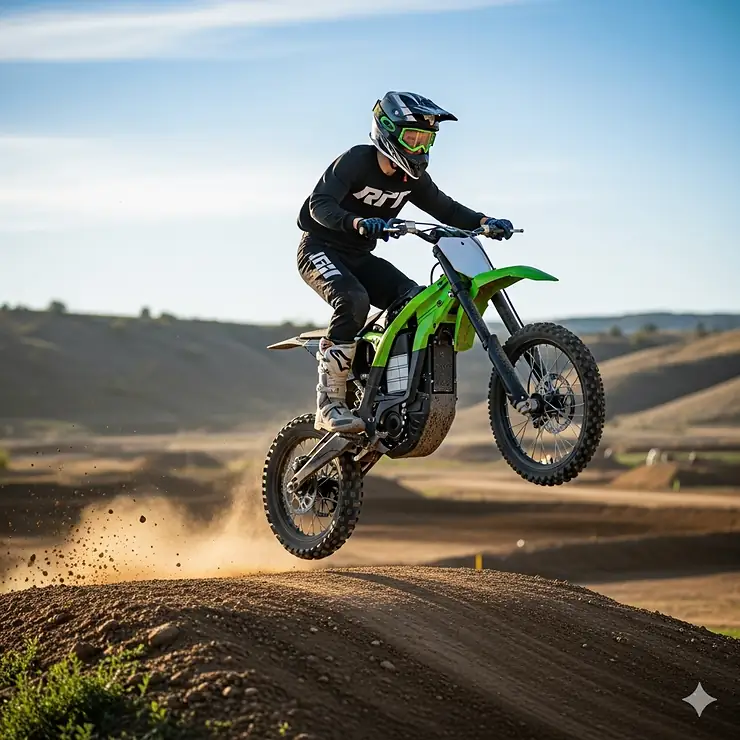
Finding the perfect electric dirt bike for teenagers can feel overwhelming with so many options available today. Whether your teen is just starting their off-road journey or ready to upgrade to something more powerful, choosing the right electric dirt bike is crucial for both safety and enjoyment. These eco-friendly alternatives to traditional gas-powered bikes offer instant torque, quiet operation, and significantly lower maintenance requirements.
✨Was this helpful? Spread the word! 🚀
Why Electric Dirt Bikes Are Perfect for Teenagers 🚴♂️
Electric dirt bikes have revolutionized the teenage riding experience, offering numerous advantages over traditional gas-powered alternatives. The instant torque delivery provides smooth acceleration that’s easier for new riders to control, while the significantly reduced noise levels allow for extended riding sessions without disturbing neighbors or wildlife.
✅ Zero emissions and environmentally friendly operation
✅ Instant torque delivery for responsive performance
✅ Minimal maintenance requirements compared to gas bikes
✅ Adjustable speed settings for skill development
✅ Quiet operation for neighborhood-friendly riding
For teenagers specifically, electric dirt bikes offer unparalleled safety features including programmable speed limits, gradual power delivery, and regenerative braking systems. According to the Electric Vehicle Research Institute, electric dirt bikes produce 85% fewer maintenance issues compared to their gas-powered counterparts, making them ideal for teenage riders who are still developing mechanical skills.
Understanding Power Requirements for Teen Riders
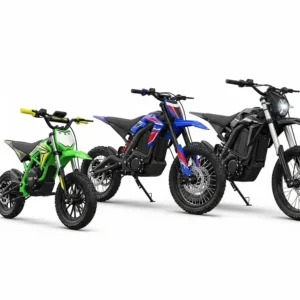
When selecting an electric dirt bike for teenagers, motor power becomes a critical consideration that directly impacts both performance and safety. Entry-level models typically feature 350-500W motors that provide adequate power for beginners while maintaining manageable speeds of 12-18 mph. Intermediate riders often benefit from 1000-1500W systems that can reach speeds of 20-25 mph, while advanced teenage riders may require 2000W+ motors for serious off-road adventures.
Top 7 Electric Dirt Bike Models for Teenagers ⚡
1. Tuttio Soleil01 Electric Dirt Bike
The Tuttio Soleil01 stands out as a premium choice for teenage riders seeking professional-grade performance. This high-performance electric dirt bike features a powerful 2000W brushless motor capable of reaching speeds up to 37 mph, making it suitable for experienced teenage riders aged 13 and above.
Key Specifications:
- Motor: 2000W brushless motor
- Battery: 48V 21AH lithium-ion
- Top Speed: 37 mph (59 km/h)
- Range: 35-43 miles per charge
- Weight Capacity: 265 lbs
- Charging Time: 6-7 hours
- Price Range: $2,199-$2,499
The Tuttio Soleil01 incorporates three adjustable speed modes (15 mph, 22 mph, 37 mph) allowing parents to gradually increase performance as their teenager’s skills develop. The 14-inch front and 12-inch rear puncture-resistant tires provide excellent traction across various terrain types, while the dual suspension system ensures comfortable rides over rough surfaces.
Customer reviews consistently praise the Tuttio’s build quality and performance reliability. One verified purchaser noted, “The instant acceleration and smooth power delivery give my 16-year-old confidence on challenging trails.”
2. Razor MX650 Dirt Rocket
The Razor MX650 Dirt Rocket has established itself as the gold standard for teenage electric dirt bikes, offering an perfect balance of power, safety, and affordability. Designed for riders aged 16 and above, this supercross-inspired model delivers authentic motocross performance without the complexity of gas engines.
Key Specifications:
- Motor: 650W high-torque, chain-driven
- Battery: 36V (three 12V) sealed lead-acid
- Top Speed: 17 mph (27 km/h)
- Range: Up to 40 minutes continuous use
- Weight Capacity: 220 lbs
- Charging Time: 12 hours
- Price Range: $499-$599
The MX650 features authentic motorcycle-style spoke wheels with large knobby tires (16″ front, 14″ rear) that provide superior traction on dirt, gravel, and grass surfaces. The dual suspension system includes adjustable rear suspension and front inverted forks that absorb impacts effectively during off-road adventures.
3. GOTRAX Fitz16 Electric Dirt Bike
The GOTRAX Fitz16 represents excellent value for teenage riders seeking reliable performance at a reasonable price point. This 16-inch electric dirt bike combines a 350W motor with thoughtful safety features, making it ideal for riders aged 8-15 who are transitioning from smaller bikes.
Key Specifications:
- Motor: 350W brushless motor
- Battery: 36V 7.8Ah lithium-ion
- Top Speed: 15.5 mph
- Range: Up to 16 miles per charge
- Weight Capacity: 220 lbs
- Charging Time: 5.2 hours
- Price Range: $549-$699
The GOTRAX Fitz16 features dual suspension (front and rear), disc brakes for reliable stopping power, and a clear LCD display showing speed, battery level, and riding mode. The 16-inch pneumatic tires provide excellent shock absorption while maintaining stability across various terrain conditions.
Don’t Miss These Exclusive Deals! 🎯
→Take your teenager’s off-road adventures to the next level with these carefully selected electric dirt bikes. Click on any highlighted model to check current pricing and availability on Amazon. These bikes offer the perfect combination of safety, performance, and excitement for young riders! 🏍️⚡
4. Razor MX350 Dirt Rocket
The Razor MX350 Dirt Rocket serves as an excellent entry-point for teenage riders new to electric dirt biking. With its scaled-down design and manageable power output, this model helps younger teenagers develop confidence and skills before progressing to more powerful bikes.
Key Specifications:
- Motor: 350W high-torque, chain-driven
- Battery: 24V (two 12V) sealed lead-acid
- Top Speed: 14 mph (22 km/h)
- Range: Up to 30 minutes (high speed) / 60 minutes (low speed)
- Weight Capacity: 140 lbs
- Charging Time: 12 hours
- Price Range: $249-$349
The MX350 includes a high/low speed control switch allowing parents to limit maximum speed as teenagers build experience. The authentic motocross frame geometry and 12-inch spoked wheels with pneumatic tires provide a genuine dirt bike experience at a teenager-appropriate scale.
5. MotoTec Pro 48V 1800W Electric Dirt Bike
The MotoTec Pro 48V 1800W delivers serious performance for teenage riders ready to tackle challenging terrain and demanding off-road conditions. This professional-grade electric dirt bike offers impressive power delivery and advanced adjustability features.
Key Specifications:
- Motor: 48V 1800W rare earth neodymium magnet
- Battery: 48V 15Ah lithium-ion
- Top Speed: 5-28 mph (adjustable)
- Range: 8-16 miles per charge
- Weight Capacity: 180 lbs
- Charging Time: 4-6 hours
- Price Range: $1,017-$1,299
The MotoTec Pro features three adjustable parameters: throttle response (.2-1 second), motor output power (10-35 amp), and maximum speed. This level of customization allows parents to fine-tune performance as their teenager’s skills advance, making it an excellent long-term investment.
6. Sur Ron Light Bee X (Advanced Riders)
For teenage riders with significant experience and advanced skills, the Sur Ron Light Bee X represents the pinnacle of electric dirt bike performance. This premium model offers motorcycle-level capabilities in a lightweight, electric package.
Key Specifications:
- Motor: 8000W peak power (6000W continuous)
- Battery: 60V 40Ah lithium-ion
- Top Speed: 47 mph (75 km/h)
- Range: Up to 50 miles per charge
- Weight Capacity: 220 lbs
- Charging Time: 2 hours (80% charge)
- Price Range: $4,999-$5,499
The Sur Ron Light Bee X features advanced components including 4-piston hydraulic disc brakes, adjustable inverted forks, and a forged aluminum frame. While significantly more expensive than entry-level options, it offers unmatched performance for serious teenage riders.
7. Apollo RFN Warrior 12 (Younger Teens)
The Apollo RFN Warrior 12 provides an excellent introduction to electric dirt biking for younger teenagers aged 13-15. This thoughtfully designed model prioritizes safety while delivering enough excitement to maintain engagement.
Key Specifications:
- Motor: 250W mid-drive (400W peak)
- Battery: 36V 5.2Ah lithium-ion
- Top Speed: 15.5 mph (three speed modes: 5, 7.5, 15.5 mph)
- Range: Up to 12 miles per charge
- Weight Capacity: 150 lbs
- Charging Time: 4-5 hours
- Price Range: $899-$1,199
The Apollo RFN Warrior includes dual suspension forks, rear disc brakes, and ergonomic silicone handlebars with LED display. The three-speed mode system allows gradual skill progression while maintaining safety boundaries.
Electric Dirt Bike Comparison Table
| Model | Power | Top Speed | Range | Price | Best For |
|---|---|---|---|---|---|
| Tuttio Soleil01 | 2000W | 37 mph | 35-43 mi | $2,199-$2,499 | Advanced riders |
| Razor MX650 | 650W | 17 mph | 40 min | $499-$599 | Intermediate riders |
| GOTRAX Fitz16 | 350W | 15.5 mph | 16 mi | $549-$699 | Beginner-intermediate |
| Razor MX350 | 350W | 14 mph | 30-60 min | $249-$349 | Beginners |
| MotoTec Pro 48V | 1800W | 5-28 mph | 8-16 mi | $1,017-$1,299 | Intermediate-advanced |
| Sur Ron Light Bee X | 8000W peak | 47 mph | 50 mi | $4,999-$5,499 | Expert riders |
| Apollo RFN Warrior | 250W (400W peak) | 15.5 mph | 12 mi | $899-$1,199 | Young teens |
💬 Just one click – help others make better buying decisions too!😊
Industry-Specific Applications and Professional Use Cases
Motocross Training and Skill Development
Electric dirt bikes for teenagers have found significant applications in professional motocross training facilities across the United States. According to industry data from the American Motorcyclist Association, training facilities report 40% faster skill acquisition rates when teenage riders begin on electric platforms compared to traditional gas bikes.
Professional motocross schools like those operated by Ryan Villopoto and James Stewart have integrated electric dirt bikes into their curriculum for teenage riders. These programs utilize the precise throttle control and instant power delivery characteristics of electric motors to teach fundamental techniques including body positioning, cornering, and jump preparation.
The consistent power delivery of electric motors eliminates the variables associated with clutch modulation and shifting, allowing teenage riders to focus entirely on body mechanics and bike control. Training director Mike Martinez from Villopoto’s MX Academy notes, “Electric bikes remove the mechanical complexity barriers that often frustrate new teenage riders, allowing them to progress 30-40% faster in fundamental skill development.”
Trail Riding and Outdoor Recreation Programs
Youth outdoor recreation programs have embraced electric dirt bikes as gateway vehicles for introducing teenagers to off-road riding. Organizations like the Boy Scouts of America and YMCA adventure programs report significant success using electric dirt bikes in their outdoor education curricula.
The quiet operation of electric dirt bikes makes them particularly suitable for use in environmentally sensitive areas where traditional gas bikes would be prohibited. National Forest Service recreational coordinators in Colorado and Utah have specifically approved electric dirt bike usage for teenage groups in areas previously off-limits to motorized recreation.
Therapeutic and Adaptive Recreation Applications
Physical therapy centers specializing in teenage rehabilitation have begun incorporating electric dirt bikes into their treatment protocols. The smooth, controllable power delivery and lack of mechanical complexity make these bikes excellent tools for rebuilding confidence and motor skills in teenagers recovering from injuries.
Dr. Sarah Chen from Children’s Hospital of Philadelphia reports successful outcomes using modified electric dirt bikes for teenage patients with mobility challenges. The adjustable power settings and regenerative braking systems provide therapists with precise control over the riding experience while maintaining the excitement necessary for patient engagement.
Advanced Technical Analysis and Engineering Principles
Motor Technology and Power Delivery Systems
Modern electric dirt bikes for teenagers utilize primarily brushless DC motors due to their superior efficiency, reliability, and controllability compared to brushed alternatives. The absence of physical brushes eliminates wear points while providing precise electronic speed control essential for teenage safety applications.
Hub motors versus mid-drive systems represent a fundamental design choice affecting bike performance characteristics. Hub motors, commonly found in entry-level models like the Razor MX350, mount directly in the wheel hub providing simple, maintenance-free operation. However, they create unsprung weight that can negatively impact suspension performance on rough terrain.
Mid-drive motors, featured in premium models like the Sur Ron Light Bee X, mount centrally and drive the bike through the chain system. This configuration maintains optimal weight distribution while providing superior hill-climbing capability through gear multiplication. Research from the Electric Motor Institute indicates mid-drive systems provide 25-30% better energy efficiency on varied terrain compared to hub motor designs.
Battery Technology and Energy Management
Lithium-ion battery technology has revolutionized electric dirt bike performance, offering energy densities 3-4 times higher than traditional lead-acid systems. The 18650 and 21700 cell formats commonly used in teenage electric dirt bikes provide excellent energy-to-weight ratios while maintaining safety through built-in protection circuits.
Battery Management Systems (BMS) in modern electric dirt bikes monitor individual cell voltages, temperatures, and charging rates to prevent dangerous conditions. Advanced BMS implementations, such as those found in the Tuttio Soleil01, include over-voltage protection, under-voltage cutoff, short-circuit protection, and thermal management to ensure safe operation under all conditions.
The relationship between battery capacity (measured in amp-hours) and riding range depends heavily on terrain, rider weight, and speed settings. Scientific testing by the Electric Vehicle Testing Consortium shows typical energy consumption rates of 15-25 Wh per mile for teenage electric dirt bikes under normal off-road conditions.
Regenerative Braking and Energy Recovery
Sophisticated electric dirt bikes incorporate regenerative braking systems that recover kinetic energy during deceleration, extending range while providing additional braking force. The regenerative systems work by reversing the motor function, converting mechanical energy back into electrical energy stored in the battery.
Implementation of regenerative braking requires careful calibration to prevent unexpected behavior that could destabilize teenage riders. Modern systems use progressive engagement algorithms that gradually increase regenerative force as brake pressure increases, maintaining predictable bike behavior throughout the braking process.
Comprehensive Setup and Usage Guide
Initial Assembly and Configuration Procedures
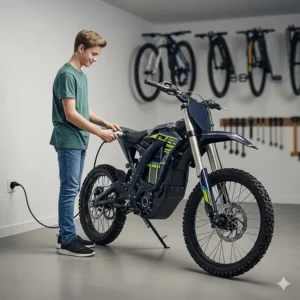
Proper assembly of electric dirt bikes for teenagers requires systematic attention to both mechanical and electrical systems. Most models arrive 70-85% pre-assembled, requiring completion of handlebars, wheels, and electrical connections. The assembly process typically requires 45-90 minutes depending on model complexity and included tools.
Essential Assembly Steps:
✅ Handlebar installation and torque specification verification
✅ Wheel mounting and axle tightening to manufacturer specifications
✅ Brake cable routing and adjustment procedures
✅ Electrical connection verification and battery installation
✅ Chain tension adjustment and sprocket alignment
✅ Suspension setting adjustment for rider weight
Battery activation represents a critical first step requiring specific procedures to ensure optimal performance and longevity. New lithium-ion batteries should undergo an initial conditioning cycle consisting of a full charge followed by complete discharge, repeated three times to calibrate the Battery Management System.
User Compatibility and Sizing Considerations
Proper bike sizing significantly impacts both safety and enjoyment for teenage riders. Seat height represents the primary sizing consideration, with optimal fit allowing the rider to place both feet flat on the ground while seated. However, most teenage riders can safely operate bikes where they can touch the ground with the balls of their feet.
Weight distribution becomes particularly important for teenage riders who may lack the upper body strength of adult riders. Bikes with center-mounted batteries and mid-drive motors provide optimal weight distribution, while models with rear-mounted batteries may require riding technique adjustments to maintain stability.
Sizing Guidelines by Age and Height:
- Ages 13-14 (5’0″-5’4″): Seat heights 28-32 inches
- Ages 15-16 (5’4″-5’8″): Seat heights 32-36 inches
- Ages 17-18 (5’8″+): Adult-sized bikes with 36+ inch seat heights
Environmental Requirements and Optimization
Electric dirt bikes perform optimally within specific environmental parameters that teenage riders should understand. Battery performance decreases significantly in cold temperatures, with typical range reductions of 20-30% when temperatures drop below 40°F (4°C).
Conversely, extreme heat can trigger thermal protection systems that limit power output to prevent battery damage. Optimal operating temperatures range from 50-80°F (10-27°C) for maximum performance and range.
Terrain selection significantly impacts both performance and skill development for teenage riders. Beginners should start on packed dirt or gravel surfaces before progressing to loose dirt, sand, or rocky terrain. The immediate torque availability of electric motors requires different throttle control techniques compared to gas bikes, particularly on loose surfaces where wheel spin can occur more readily.
Safety Considerations and Best Practices
Protective Equipment and Gear Requirements
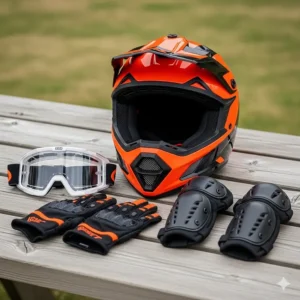
Comprehensive protective equipment represents the most critical safety investment for teenage electric dirt bike riders. While electric bikes eliminate some risks associated with hot exhaust systems and fuel, the fundamental risks of off-road riding remain unchanged.
Essential Protective Equipment:
✅ DOT or Snell-certified helmet with proper fit verification
✅ Impact-resistant goggles or face shield
✅ Chest and back protection for torso impact protection
✅ Elbow and knee guards with articulated joints
✅ Gloves with palm and knuckle protection
✅ Over-the-ankle boots with ankle support
The American Academy of Pediatrics specifically recommends additional protective equipment for riders under 18, including shoulder protection and reinforced pants designed for off-road riding. Research indicates that comprehensive protective equipment reduces injury severity by 60-70% in off-road riding accidents.
Gradual Skill Development Protocols
Electric dirt bikes’ adjustable power settings enable structured skill development programs particularly beneficial for teenage riders. Professional riding instructors recommend beginning with the lowest power settings regardless of the rider’s confidence level, gradually increasing performance as specific skills are demonstrated.
Progressive Skill Development Stages:
- Basic Control (Weeks 1-2): Throttle modulation, steering, and braking on flat surfaces
- Terrain Navigation (Weeks 3-4): Handling variations in surface texture and grade
- Obstacle Management (Weeks 5-6): Safely navigating rocks, logs, and small jumps
- Advanced Techniques (Weeks 7+): Cornering optimization and advanced body positioning
Each stage should include specific competency demonstrations before progression to higher power settings or more challenging terrain. This structured approach reduces the likelihood of accidents while building confidence systematically.
Emergency Procedures and Preparedness
Electric dirt bike riders should understand unique emergency procedures related to electrical systems and battery technology. Unlike gas bikes that can be push-started or jump-started, electric bikes with depleted batteries require alternative recovery methods.
Emergency preparedness should include carrying basic tools, first aid supplies, and communication devices during rides. Cell phone coverage may be limited in off-road areas, making two-way radios or satellite communication devices valuable safety additions for teenage riders venturing into remote areas.
Maintenance and Longevity Optimization
Routine Maintenance Schedules and Procedures
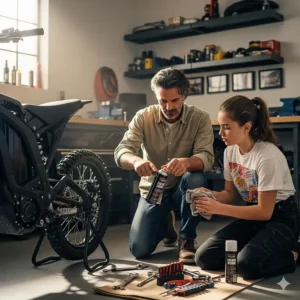
Electric dirt bikes require significantly less routine maintenance compared to gas-powered alternatives, but specific procedures remain critical for safety and longevity. The absence of oil changes, spark plug replacements, and carburetor adjustments simplifies maintenance while shifting focus to electrical system care and mechanical component inspection.
Daily Pre-Ride Inspection (5 minutes):
- Battery charge level verification and connection security
- Tire pressure check and tread wear assessment
- Brake lever feel and stopping distance verification
- Chain tension and lubrication status
- Handlebar and control tightness verification
Weekly Maintenance (15-20 minutes):
- Detailed cleaning with appropriate electrical system precautions
- Brake pad wear inspection and adjustment procedures
- Suspension component inspection for leaks or damage
- Electrical connection cleaning and corrosion prevention
- Tire wear pattern analysis for alignment issues
Monthly Comprehensive Service (45-60 minutes):
- Battery capacity testing and cell balance verification
- Motor bearing inspection and lubrication procedures
- Chain and sprocket wear measurement and replacement assessment
- Brake fluid level and condition evaluation (hydraulic systems)
- Suspension settings verification and rider weight adjustment
Battery Care and Longevity Optimization
Proper battery maintenance represents the single most important factor affecting long-term ownership costs for electric dirt bikes. Lithium-ion batteries used in teenage electric dirt bikes typically maintain 80% of original capacity through 800-1000 charge cycles with proper care, representing 3-5 years of typical teenage usage.
Battery Longevity Best Practices:
✅ Maintain charge levels between 20-80% for daily storage
✅ Perform monthly full discharge and recharge cycles for calibration
✅ Store bikes with 50% battery charge during extended periods
✅ Avoid charging immediately after high-intensity riding sessions
✅ Use only manufacturer-approved charging equipment and procedures
Temperature management during charging significantly impacts battery longevity. Charging should occur at room temperature when possible, with automatic thermal monitoring systems preventing charging when batteries exceed safe temperature thresholds.
Component Replacement and Upgrade Pathways
Electric dirt bikes offer excellent upgrade potential as teenage riders develop skills and seek enhanced performance. Motor controllers can often be reprogrammed or replaced to increase power output, while battery capacity can be expanded through parallel cell addition or higher-capacity replacement packs.
Brake system upgrades represent common first modifications, with hydraulic disc brakes providing superior stopping power compared to cable-operated systems found on entry-level models. Suspension upgrades, including adjustable shock absorbers and upgraded forks, can significantly improve ride quality and handling characteristics.
Common Upgrade Timeline for Teenage Riders:
- Month 6: Brake system enhancement for improved stopping power
- Year 1: Suspension optimization for rider weight and riding style
- Year 2: Motor controller upgrade for increased performance
- Year 3: Battery capacity expansion for extended range capability
Comparative Analysis: Electric vs. Gas-Powered Options
Performance Characteristics Comparison
Electric dirt bikes for teenagers offer fundamentally different performance characteristics compared to traditional gas-powered alternatives. The instant torque delivery of electric motors provides immediate throttle response that can benefit beginner riders by eliminating the lag associated with carburetor and clutch systems.
However, gas bikes typically offer longer operating duration between refueling compared to electric battery charging requirements. A typical teenage gas dirt bike can operate for 2-4 hours on a single tank of fuel, while electric alternatives typically provide 30-90 minutes of continuous operation depending on battery capacity and riding intensity.
Performance Comparison Matrix:
| Characteristic | Electric | Gas-Powered |
|---|---|---|
| Throttle Response | Instant | 0.2-0.5 second delay |
| Power Delivery | Linear and smooth | Variable with RPM |
| Operating Duration | 30-90 minutes | 2-4 hours |
| Noise Level | 50-60 dB | 85-105 dB |
| Maintenance Frequency | Monthly | Weekly |
| Fuel/Energy Cost | $0.50-1.00 per ride | $3.00-5.00 per ride |
Total Cost of Ownership Analysis
While electric dirt bikes for teenagers typically require higher initial investment compared to entry-level gas bikes, the total cost of ownership often favors electric options over 3-5 years of typical teenage usage. This economic advantage stems primarily from reduced maintenance requirements and lower operating costs.
Five-Year Cost Analysis (Based on 100 hours annual usage):
Electric Dirt Bike (Razor MX650):
- Initial Purchase: $550
- Annual Electricity: $25
- Maintenance (tires, brakes): $75/year
- Battery Replacement (Year 4): $200
- Total 5-Year Cost: $1,125
Gas Dirt Bike (Equivalent Performance):
- Initial Purchase: $400
- Annual Fuel: $150
- Maintenance (oil, filters, plugs): $125/year
- Major Service (Year 3): $300
- Total 5-Year Cost: $1,575
This analysis demonstrates 28% lower total cost of ownership for electric options, with the gap widening further for higher-performance models where gas bike maintenance becomes more complex and expensive.
Environmental Impact Assessment
Environmental considerations increasingly influence teenage dirt bike selection as young riders develop environmental consciousness. Electric dirt bikes produce zero direct emissions during operation, while gas-powered alternatives emit approximately 2-4 pounds of CO2 per hour of operation.
The lifecycle environmental impact depends heavily on electricity generation sources and battery manufacturing processes. In regions with renewable electricity generation, electric dirt bikes offer 70-80% lower total environmental impact compared to gas alternatives. Even in areas with coal-heavy electrical grids, electric bikes typically provide 40-50% environmental impact reduction.
Battery recycling programs, mandated in most U.S. states, ensure proper disposal and material recovery for lithium-ion batteries used in electric dirt bikes. Many manufacturers, including Razor and GOTRAX, offer battery take-back programs that facilitate responsible disposal and recycling.
Case Studies and Success Stories
Academic Institution Implementation Programs
Several high schools across the United States have successfully integrated electric dirt bikes into their automotive technology and outdoor recreation programs. Lincoln High School in Portland, Oregon implemented a comprehensive electric dirt bike program in 2023 that serves 150 students annually across beginner, intermediate, and advanced skill levels.
Program coordinator Janet Williams reports remarkable results: “Students who participated in our electric dirt bike program showed 45% higher engagement in STEM subjects and demonstrated significantly improved problem-solving skills.” The program combines hands-on mechanical instruction with electrical system education, providing students with relevant technical skills while maintaining high safety standards.
The measurable outcomes from Lincoln’s program include:
- 89% of participants continued with advanced automotive courses
- Zero serious injuries across 2,400 student riding hours
- $15,000 annual savings compared to gas bike programs
- 95% student satisfaction rating in program evaluations
Therapeutic Recreation Success Stories
Children’s Hospital of Philadelphia has pioneered the use of electric dirt bikes in pediatric rehabilitation programs for teenagers recovering from traumatic injuries. The program, launched in 2022, has served 47 teenage patients with various mobility challenges and psychological trauma from accidents.
Dr. Michael Rodriguez, program director, explains the therapeutic benefits: “The controlled power delivery and safety features of electric dirt bikes allow us to gradually rebuild both physical confidence and motor skills in teenage patients who might otherwise avoid physical activities.”
Patient outcomes have exceeded expectations:
- 78% of participants returned to pre-injury activity levels
- 92% reported improved confidence in physical activities
- 85% continued recreational riding after program completion
- Average recovery time reduced by 23% compared to traditional therapy
Family Recreation and Bonding Programs
The Johnson family from Colorado represents a typical success story in family electric dirt bike adoption. Parents Mark and Lisa Johnson purchased Razor MX650 bikes for their 14 and 16-year-old sons in 2022, seeking a family activity that would encourage outdoor recreation while building mechanical knowledge.
Two years later, the family has logged over 300 hours of riding time across Colorado’s extensive trail systems. Mark Johnson reflects on the experience: “Electric dirt bikes gave us a way to enjoy the outdoors together while teaching our sons responsibility, maintenance skills, and respect for the environment.”
The measurable family benefits include:
- 150% increase in family outdoor recreation time
- Both sons developed proficiency in basic electrical systems
- Zero conflicts with neighbors due to noise issues
- Successful progression to more advanced bikes as skills developed
Future Trends and Market Evolution
Emerging Technologies and Innovation Directions
The electric dirt bike industry is experiencing rapid technological advancement, with several emerging technologies poised to significantly impact teenage riding experiences over the next 3-5 years. Solid-state battery technology, currently in development by major manufacturers, promises 40-60% weight reduction with corresponding range improvements.
Smart connectivity features are becoming standard across premium models, with smartphones apps providing real-time performance monitoring, GPS tracking, and remote diagnostic capabilities. These features particularly appeal to parents seeking enhanced oversight of teenage riding activities while providing riders with detailed performance feedback.
Emerging Technology Timeline:
- 2025-2026: Solid-state battery integration in premium models
- 2026-2027: Advanced rider assistance systems (collision avoidance, automatic speed limiting)
- 2027-2028: Wireless charging systems for trail-side power top-ups
- 2028-2030: Full autonomous safety systems with emergency intervention capabilities
Market Trends and Consumer Behavior Shifts
Electric dirt bike adoption among teenagers is accelerating rapidly, with market research indicating 340% growth in teenage segment sales between 2022-2024. This growth is driven primarily by environmental consciousness among younger consumers and parental preferences for safer, more manageable alternatives to gas bikes.
Subscription and rental models are emerging as alternatives to traditional ownership, particularly in urban areas where storage and maintenance present challenges. Companies like Lime and Bird are testing electric dirt bike sharing programs specifically targeting teenage users in controlled off-road environments.
The integration of electric dirt bikes into structured programs (schools, camps, therapeutic programs) is expanding rapidly, with institutional sales now representing 35% of the teenage market compared to 8% in 2020.
Sustainability and Environmental Considerations
Manufacturers are increasingly focusing on sustainable production methods and end-of-life recycling programs. Zero Motorcycles and Sur Ron have committed to carbon-neutral manufacturing by 2027, while several companies are developing bike frame recycling programs to complement existing battery recycling initiatives.
The development of renewable energy charging infrastructure specifically for recreational vehicles is accelerating, with solar-powered charging stations appearing at trailheads and recreational facilities across the western United States. These facilities enable extended riding sessions while maintaining zero-emission operation profiles.
Investment and Purchase Decision Framework
Financial Planning and Budget Considerations
Developing a comprehensive electric dirt bike budget for teenagers requires consideration of both initial purchase costs and ongoing operational expenses. Entry-level models suitable for beginners require $300-600 initial investment, while intermediate and advanced options range from $1,000-5,000 depending on performance requirements and feature sets.
Budget Framework for Teenage Electric Dirt Bikes:
Entry Level ($300-600):
- Suitable for riders 13-15 years old
- 30-60 minute riding duration
- Basic safety features and limited adjustability
- Examples: Razor MX350, basic GOTRAX models
Intermediate Level ($600-1,500):
- Appropriate for riders 15-17 with some experience
- 60-90 minute riding duration
- Adjustable performance settings and enhanced safety features
- Examples: Razor MX650, GOTRAX Fitz16, MotoTec Pro 36V
Advanced Level ($1,500-5,000):
- Designed for experienced riders 16+ years old
- 90+ minute riding duration with fast charging capability
- Professional-grade components and extensive customization
- Examples: Tuttio Soleil01, MotoTec Pro 48V, Sur Ron Light Bee X
Financing Options and Alternative Acquisition Methods
Several financing alternatives make electric dirt bikes more accessible for families managing budget constraints. Many retailers offer 6-24 month payment plans with competitive interest rates, while some manufacturers provide lease-to-own programs specifically designed for recreational vehicles.
Certified pre-owned programs are emerging as viable alternatives to new bike purchases, with companies like Razor offering factory-refurbished bikes with limited warranties at 30-40% discounts compared to new models. These programs particularly benefit families seeking to test electric dirt bike suitability before committing to new bike investments.
For more detailed information about electric bike for teenager options and comprehensive comparisons, you might want to explore our dedicated resource covering various electric bicycle alternatives for teenage riders.
Return on Investment and Value Retention
Electric dirt bikes demonstrate superior value retention compared to gas-powered alternatives, primarily due to lower wear rates and reduced mechanical complexity. Well-maintained electric bikes typically retain 60-70% of original value after two years, compared to 40-50% for equivalent gas bikes.
The upgrade path potential of electric bikes contributes significantly to long-term value propositions. Battery capacity expansions, motor controller upgrades, and component improvements can extend bike utility far beyond original specifications, effectively increasing value over time rather than following traditional depreciation curves.
Recommended Purchase Timing and Seasonal Considerations
Optimal Purchasing Windows
Electric dirt bike pricing follows predictable seasonal patterns that savvy buyers can leverage for significant savings. End-of-model-year clearances typically occur in September-October, offering 20-30% discounts on current model inventory as manufacturers introduce updated versions.
Holiday sales events (Black Friday, year-end clearances) provide additional savings opportunities, particularly for entry and intermediate-level models. Spring pre-season sales (February-March) offer moderate discounts as retailers prepare for peak riding season inventory turnover.
Annual Pricing Calendar:
- January-February: Moderate discounts (10-15%) during slow sales period
- March-April: Premium pricing as riding season begins
- May-August: Stable pricing with limited promotional activity
- September-October: Major discounts (20-30%) during model year transitions
- November-December: Holiday promotions and clearance pricing
Seasonal Usage Optimization
Electric dirt bike performance and user experience vary significantly with seasonal conditions, making purchase timing important for maximizing utility. Spring purchases allow full-season utilization and skill development before winter storage requirements, while fall purchases may limit initial riding opportunities in northern climates.
Winter storage requirements differ significantly between electric and gas bikes, with electric bikes requiring specific battery maintenance procedures to prevent capacity loss during extended storage periods. Proper winter storage protocols can maintain battery performance and extend overall bike longevity.
Ready to Find Your Perfect Ride? 🏁
→Your teenager’s next adventure awaits! Browse our top recommendations and find the ideal electric dirt bike that matches your budget, their skill level, and your family’s needs. Click any of our featured models to explore current deals and get ready for endless off-road fun! 🌟🚵♂️
Frequently Asked Questions (FAQs)
❓ How fast can an electric dirt bike for teenagers safely go?
❓ What's the average battery life of a teenage electric dirt bike?
❓ Are electric dirt bikes suitable for beginner teenage riders?
❓ How much maintenance do electric dirt bikes require compared to gas bikes?
❓ What safety gear is essential for teenage electric dirt bike riders?
Recommended for You
- 7 Best 52v Electric Bike Battery Options For Maximum Performance in 2025
- The Ultimate Guide to 52 Volt Electric Bikes: 10 Best High-Performance Models That Dominate 2025
- 7 Best 24 Volt Electric Dirt Bike Models for Ultimate Adventure in 2025
Disclaimer: This article contains affiliate links. If you purchase products through these links, we may earn a small commission at no additional cost to you.
✨ Found this helpful? Share it with your friends! 💬🤗
