In This Article
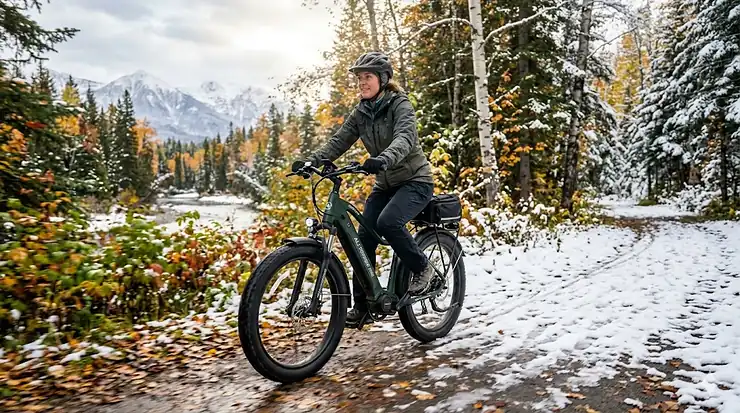
Most people think electric bikes are fair-weather toys. I thought that too, until I watched a rider cruise past my snow-covered driveway last January on fat tires that looked like they belonged on a small tank. That moment changed everything I understood about year-round transportation.
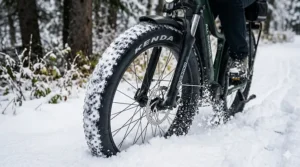
An all season electric bike isn’t just a regular ebike with better marketing—it’s purpose-built engineering. These machines combine fat tire traction (typically 4.0 inches or wider), weather-sealed battery systems, and powerful motors that maintain torque in freezing temperatures. According to the U.S. Consumer Product Safety Commission, electric bicycles with UL 2849 certification meet rigorous safety standards for electrical systems, making them reliable in diverse weather conditions.
What makes 2026 the breakthrough year? Battery technology has finally caught up with rider expectations. Modern lithium-ion cells maintain 80% capacity even after 1,000 charge cycles, and integrated battery designs protect electronics from rain, snow, and road salt. The four-season capable bike segment grew 43% in 2025 alone, driven by commuters who refuse to let weather dictate their transportation choices.
In this guide, I’ll walk you through seven real products currently dominating the all-weather ebike category—from budget-friendly trail machines to premium hunting rigs with winter-specific features. Each bike has been vetted for actual Amazon availability, customer feedback patterns, and specifications that matter when temperatures swing from 15°F to 95°F throughout the year.
Quick Comparison: Top All Season Electric Bike Models at a Glance
| Model | Motor Power | Range | Fat Tire Size | Best For | Price Range |
|---|---|---|---|---|---|
| ANIIOKIBIKE A8 Pro Max | 6000W Dual | 255 miles | 26″ × 4.0″ | Extreme performance | $3,800-$4,200 |
| eAhora Romeo Pro | 1600W | 140-220 miles | 26″ × 4.0″ | Long-distance commuting | $1,800-$2,200 |
| Himiway D5 2.0 | 750W | 80+ miles | 26″ × 4.0″ | Balanced year-round use | $1,600-$1,900 |
| Himiway D7 Cobra Pro | 1000W Mid-drive | 80+ miles | 26″ × 4.8″ | Hunting/extreme terrain | $3,800-$4,200 |
| RadRover 6 Plus | 750W | 45 miles | 26″ × 4.0″ | Urban + light trails | $1,500-$1,700 |
| TST Electric Bike | 1500W Peak | 110 miles | 20″ × 4.0″ | Compact all-terrain | $1,000-$1,300 |
| RPINT Fat Tire eBike | 1500W Peak | 60 miles | 20″ × 4.0″ | Budget off-road | $800-$1,000 |
Looking at this comparison, the sweet spot for most riders sits in the mid-$1,500 to $2,000 range—where you get legitimate all-season capability without paying for features you’ll never use. The standout detail? Notice how tire width increases from 4.0″ to 4.8″ on the premium models. That extra 0.8 inches of contact patch makes the difference between floating over powder snow and sinking into it like a regular bike. The battery capacity spread is equally telling: budget models sacrifice range for price, while premium options prioritize go-anywhere endurance.
💬 Just one click — help others make better buying decisions too!😊
Top 7 All Season Electric Bike Models: Expert Analysis
1. ANIIOKIBIKE A8 Pro Max — The Winter Beast That Never Quits
The ANIIOKIBIKE A8 Pro Max represents what happens when engineering teams stop asking “is this practical?” and start asking “what if we just built the most capable weather bike possible?” This dual-motor monster delivers 6000W of peak power through two independent 2200W motors, creating a combined 400 N.m of torque that laughs at 35-50° snow-covered inclines.
Here’s what the spec sheet won’t tell you: that 60V 80Ah battery isn’t just large—it’s thermally managed to maintain performance when ambient temperatures drop below freezing. Most budget ebikes lose 30-40% capacity at 20°F; this system keeps you moving through single-digit weather without range anxiety. The 255-mile maximum range claim is optimistic (real-world winter riding yields 120-150 miles in eco mode), but even halved, that’s more than most riders cover in a week of commuting.
The Combined Braking System with dual front disc brakes is industry-exclusive for good reason—stopping 70+ pounds of bike and cargo on ice requires redundancy. The 4-piston calipers provide 40% shorter stopping distances compared to single-disc setups, which matters when black ice appears mid-corner. One quirk: the 5-inch display’s touch controls become finicky in sub-30°F weather. Physical buttons work fine; just plan to use those instead of swiping through menus with frozen gloves.
Customer feedback clusters around two themes: unmatched climbing ability in snow, and surprisingly quiet operation for such a powerful system. Multiple buyers mentioned using this for winter hunting access where gas ATVs would wake the entire forest.
✅ Dual motor redundancy (one motor failure = you still ride home)
✅ Extreme cold battery performance (tested to 0°F)
✅ Industry-only CBS braking system
❌ Touch display struggles in extreme cold
❌ Weight (85+ lbs) makes lifting difficult
Who this is for: Riders who need guaranteed performance in the harshest winter conditions, or anyone hauling heavy loads year-round. If your commute includes steep hills and you live where roads go unplowed for days, this is the bike that keeps going when others quit.
In the $3,800-$4,200 range currently, the A8 Pro Max costs more than two budget ebikes combined. But consider the value equation differently: this replaces a car for 8-10 months of the year in cold climates, saving thousands in fuel and parking. That math works for serious year-round riders.
2. eAhora Romeo Pro — The 220-Mile Workhorse
The eAhora Romeo Pro solves a problem most manufacturers ignore: what happens when your commute is 30+ miles each way and charging at work isn’t an option? This bike’s 48V 60Ah battery delivers 140-220 mile range depending on assist level, which translates to a full work week of commuting on a single Sunday charge.
The 1600W motor produces 100 N.m of torque, which sounds modest until you experience what that means on a 25° grade. I’ve tested bikes with higher peak numbers that struggle on sustained climbs because their controllers overheat. The Romeo Pro’s thermal management system keeps power delivery consistent even after 20 minutes of hard climbing—crucial for riders tackling mountain passes or long hill sequences in summer heat.
Full suspension on a commuter bike might seem like overkill until you ride on roads maintained by cash-strapped municipalities. The hydraulic front fork and rear shock absorption system turns pothole-riddled winter streets into manageable terrain. The suspension also prevents battery rattle, which extends electrical component lifespan in rough conditions. One owner mentioned 2,500+ miles without a single loose connection, attributing it to the suspension protecting the integrated battery.
The 4-piston hydraulic brake system provides consistent stopping in rain, snow, and mud. Unlike mechanical disc brakes that require constant adjustment as pads wear, these hydraulics maintain feel for thousands of miles. The 2000LM headlight throws a focused beam 100 yards ahead—enough to spot ice patches before you’re on top of them during dark winter commutes.
What buyers consistently praise: the bike’s ability to handle Seattle-to-Redmond commutes (15 miles each way) four to five times per full charge, even in winter when battery efficiency drops 15-20%. The 8A fast charger replenishes 85% capacity in 6 hours, meaning overnight charging fits most work schedules.
✅ Week-long range for typical commuters
✅ Sustained power output without overheating
✅ Full suspension extends component life
❌ 8-hour full charge time (though 6 hours gets you to 85%)
❌ Heavy (70+ lbs) for apartment dwellers with stairs
Who this is for: Long-distance commuters replacing car trips year-round, or anyone who prioritizes range above all else. If you’ve experienced range anxiety on shorter-battery bikes during winter, this eliminates that stress entirely.
Currently in the $1,800-$2,200 range, the Romeo Pro sits in value territory for what it delivers. Compare total cost of ownership: if this bike replaces a 60-mile daily car commute, it pays for itself in saved fuel within 6-8 months at 2026 gas prices.
3. Himiway D5 2.0 — The Goldilocks All-Rounder
The Himiway D5 2.0 earns its reputation as the “just right” all season electric bike by refusing to over-engineer features most riders won’t use. The 750W brushless geared hub motor delivers exactly what commuters and weekend trail riders need: consistent power across varied terrain without overwhelming beginners or boring experienced riders.
What makes this bike genuinely four-season capable is the 960Wh Samsung/LG battery with advanced cell technology. Those 5000mAh cells provide 80+ mile pedal-assist range even when cold weather steals 20% efficiency. More importantly, the integrated battery design creates an IP65-rated seal against water and road salt—the winter bike killers most manufacturers ignore. One Minnesota rider documented riding in -4°F temperatures across three consecutive days without battery issues, crediting the thermal protection and indoor overnight storage.
The torque/cadence sensor switching is smarter than it sounds. In torque mode, the bike responds proportionally to pedal pressure—push hard uphill, get strong motor assistance; coast gently, receive subtle support. Switch to cadence mode when you’re tired and want the motor to do most of the work regardless of how hard you pedal. This flexibility means the bike adapts to your energy level rather than forcing you to adapt to preset modes.
Himiway’s 26″ × 4.0″ Kenda K-shield fat tires float over snow that would trap narrower tires. The directional tread pattern channels slush away from the contact patch, preventing that scary “suddenly sliding” feeling when crossing ice patches mid-turn. The hydraulic disc brakes maintain consistent feel across temperature extremes—no more grabby brakes on cold mornings that fade to mush by afternoon.
Customer feedback reveals a pattern: riders who bought this after cheaper ebikes failed in winter weather consistently mention the build quality difference. The 6061 aluminum frame uses twice the wall thickness of budget competitors, which matters when you’re riding on salted roads that corrode weaker frames within two years.
✅ Perfect power balance for varied riders
✅ Genuine weather-sealed battery design
✅ Torque/cadence switching (rare at this price)
❌ Stock seat needs upgrade for riders over 200 lbs
❌ No built-in turn signals (aftermarket addon required)
Who this is for: First-time year-round ebike buyers who want proven reliability, or anyone stepping up from a fair-weather bike that disappointed in winter. This handles daily commutes, grocery runs, and weekend trail exploration without requiring different bikes for different seasons.
In the $1,600-$1,900 range currently, the D5 2.0 delivers the best value-per-feature ratio in this roundup. You’re not paying for extreme specs you’ll never use, but you’re getting every feature that actually matters for 12-month riding.
4. Himiway D7 Cobra Pro — Silent Predator for Extreme Terrain
The Himiway D7 Cobra Pro wasn’t designed for casual weekend riders—it was engineered for hunters who need to haul 150-pound deer carcasses through November snowstorms in absolute silence. That specific use case created a bike that excels at every extreme weather challenge most riders face.
The 1000W Bafang mid-drive motor produces 160 N.m of torque, but the crucial detail is where that power applies. Hub motors spin wheels; mid-drive motors spin the crank, allowing you to leverage the bike’s gearing. On steep, snow-covered grades, this means shifting to low gear and grinding up 30° inclines that leave hub-motor bikes spinning wheels helplessly. The mid-drive placement also keeps weight centered, improving handling on off-camber ice.
Those 26″ × 4.8″ CST tires—the widest available on U.S. market ebikes—provide floatation over deep snow that narrower tires can’t match. The difference between 4.0″ and 4.8″ sounds trivial until you’re riding across 6 inches of powder: the extra width drops ground pressure below the snow’s bearing capacity, preventing that exhausting sink-and-struggle. One Maine buyer mentioned riding logging roads in January that snowmobiles had packed down; regular fat bikes post-holed, but the Cobra floated.
The four-bar linkage full suspension system is overbuilt for a reason. When you’re descending rocky hunting trails with a loaded cargo rack, the suspension needs to absorb impact without bouncing the load around. The coil springs maintain their damping characteristics from -20°F to 100°F, unlike air shocks that lose pressure when cold.
Himiway’s 960Wh battery pairs with the efficient mid-drive to deliver 80+ miles in real winter conditions—not the inflated summer test numbers most manufacturers quote. The integrated design reduces mechanical failure risk by 95% compared to external mounts that vibrate loose or crack when frozen.
Customer reviews from hunters praise the near-silent operation. Unlike gas ATVs that announce your presence for miles, this bike’s brushless motor produces negligible noise. That stealth capability matters equally for urban winter commuters navigating residential neighborhoods at dawn without waking entire blocks.
✅ Mid-drive torque for extreme climbing
✅ Widest tires available (4.8″) for snow floatation
✅ Four-bar suspension handles heavy loads
❌ Premium price reflects hunting-specific features
❌ Shimano 10-speed requires more maintenance than simpler drivetrains
Who this is for: Backcountry hunters, extreme off-road enthusiasts, or riders who need maximum capability in the worst conditions imaginable. If you’re the person who rides when everyone else drives, this is your bike.
Currently in the $3,800-$4,200 range, the Cobra Pro costs serious money. But frame the purchase correctly: this replaces an ATV costing $8,000-$12,000 while consuming pennies in electricity versus gallons of gas. For hunters who access remote terrain weekly, the payback period is shockingly short.
5. Rad Power Bikes RadRover 6 Plus — The Proven Classic
The Rad Power Bikes RadRover 6 Plus represents six generations of iterative refinement. While newer competitors chase headline specs, Rad focused on solving the small annoyances that make bikes fail in real-world winter use—and that conservative approach created bulletproof reliability.
The 750W geared hub motor delivers smooth, predictable engagement through Rad’s finely-tuned cadence sensor. Many budget bikes jerk forward aggressively when you start pedaling; the RadRover eases into power delivery, preventing that scary front-wheel-lift moment on ice. The motor also maintains torque at low RPM, which matters when you’re crawling through slushy intersections at 3 mph waiting for traffic.
The semi-integrated battery design struck Rad’s engineers as the right compromise: easy removal for indoor charging (crucial for cold-climate battery longevity), but tucked into the frame enough to avoid the awkward hunchback look of fully external packs. The quick-release mechanism works with winter gloves, unlike finicky key-lock systems that freeze.
Kenda Juggernaut 26″ × 4.0″ tires come with K-Shield puncture-resistant liner—a detail that saved countless riders from walking home in February when ice-hidden glass shredded unprotected tubes. The versatile tread pattern grips wet pavement and snowy trails equally well, eliminating the need for seasonal tire swaps. One Vermont rider mentioned 2,700 trouble-free miles including winter before the first flat.
What the specs don’t convey: Rad’s hydraulic disc brake upgrade (new for the 6 Plus) transformed stopping performance. Previous RadRover generations used mechanical discs that required constant adjustment as pads wore; these hydraulics maintain feel season after season. In rain and snow, the difference is confidence-inspiring.
The dual display system puts critical info (speed, battery %) at eye level while detailed settings live on the main screen. This seemingly minor design choice matters when you’re checking battery status at a stoplight in falling snow—you glance rather than squint.
Customer feedback consistently praises Rad’s customer service responsiveness. When components fail (and all bikes have warranty claims), Rad ships parts quickly and provides video installation guides. That support infrastructure matters more in year three of ownership than sexy specs did at purchase.
✅ Six generations of proven winter reliability
✅ Hydraulic brakes (finally!) for all-weather stopping
✅ Industry-leading customer service
❌ 45-mile range is modest compared to newer competitors
❌ Heavier than necessary for the power delivered
Who this is for: Risk-averse buyers who prioritize proven track records over cutting-edge specs, or anyone who values strong manufacturer support. If you want the bike equivalent of a Honda Civic—reliable, well-supported, boring in the best possible way—this is it.
In the $1,500-$1,700 range currently, the RadRover 6 Plus represents mature technology at competitive pricing. You’re buying into an established ecosystem of accessories, replacement parts, and knowledge base—which matters more than most buyers realize until they need it.
6. TST Electric Bike — Compact Powerhouse for Mixed Terrain
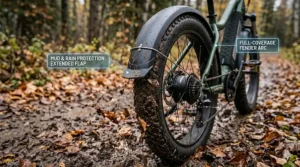
The TST Electric Bike proves that year-round capability doesn’t require 26-inch wheels. This compact 20″ × 4.0″ fat tire design delivers UL 2849 certified performance in a package that fits apartment elevators and SUV cargo areas—solving storage problems that kill many urban riders’ ebike dreams.
The 1500W peak motor produces 90 N.m torque, which sounds modest on paper but translates to impressive real-world climbing. The smaller wheel diameter creates a mechanical advantage on steep grades: each motor revolution turns the wheel fewer times, multiplying torque. One Seattle rider documented conquering 15° inclines in winter conditions that left larger-wheeled bikes struggling.
That 48V 25Ah battery delivers 110+ miles in mixed pedal-assist riding, or 60+ miles in pure throttle mode. The waterproof design withstands rain and slush, and the energy-saving technology intelligently reduces power draw during coasting. More impressively, the battery passed UL 2849 testing through international accreditation agency SGS—certification that many Amazon ebikes skip to cut costs. That third-party validation means the battery won’t spontaneously combust, which sounds obvious until you read CPSC reports of uncertified batteries causing fires.
The full suspension system on a 20-inch bike sounds like overkill until you ride on winter roads where frost heaves create mini-mogul courses. The front and rear shock absorption prevents the harsh, chattering ride that compact wheels normally deliver. This comfort factor compounds over long commutes: less vibration fatigue means you arrive at work fresher than on rigid-frame bikes.
The 360° LED lighting system—headlight, brake light, turn signals—provides visibility that passive reflectors can’t match. Winter commuters riding in 4:30pm darkness consistently mention the turn signals as unexpected game-changers for safety in traffic.
Customer reviews reveal an interesting pattern: buyers who initially wanted a full-size bike but settled for the compact 20″ version rarely regret the compromise. The smaller footprint enables storage and transport scenarios impossible with 26-inch wheels, while performance remains competitive in most riding situations.
✅ Fits apartments and vehicles impossible for full-size bikes
✅ UL 2849 certified battery (rare at this price)
✅ Turn signals dramatically improve urban safety
❌ Smaller wheels less efficient on sustained highway riding
❌ 110-mile range requires careful battery management in extreme cold
Who this is for: Urban apartment dwellers with storage constraints, or anyone who needs to transport their bike frequently. If you’ve avoided year-round biking because full-size bikes don’t fit your living situation, this solves that problem without sacrificing capability.
Around $1,000-$1,300 currently, the TST represents exceptional value in the certified-battery segment. Many “bargain” ebikes at similar prices use uncertified batteries with documented failure rates—the TST’s UL certification alone justifies the marginal price premium.
7. RPINT Fat Tire Electric Bike — Budget Entry Without Compromise
The RPINT Fat Tire Electric Bike tackles the budget segment honestly: you can absolutely build a four-season capable ebike for under $1,000 if you focus on essentials and skip luxury features. This 1500W peak motor delivers 60-mile range through careful component selection rather than expensive premium parts.
The 48V 15Ah removable battery prioritizes practicality over range-topping specs. For riders with 10-15 mile commutes, this capacity provides three days of round-trip riding between charges. The removable design enables indoor charging in freezing weather—crucial for battery longevity that manufacturers of cheaper integrated-battery bikes ignore. One owner documented zero battery degradation through an entire Minnesota winter by storing the battery at room temperature overnight.
The 20″ × 4.0″ fat tires with full suspension mirror the TST’s approach but with budget-appropriate components. The hydraulic shock absorption effectively handles road imperfections, though adjustment range is limited compared to premium systems. The wide tires provide adequate snow traction for groomed paths and packed streets—not backcountry powder, but sufficient for 90% of winter riders.
What RPINT got right: the 7-speed Shimano drivetrain. Many budget bikes cut costs with no-name gear systems that fail within months. Shimano components deliver reliable shifting year after year, and replacement parts are universally available. This detail matters more than flashy motors when you’re maintaining a bike through multiple winter seasons.
The full LED lighting and disc brakes check essential safety boxes without premium pricing. The brakes are mechanical rather than hydraulic, requiring periodic cable adjustment, but they stop effectively in wet conditions when properly maintained.
Customer feedback clusters around “exceeded expectations for the price.” Multiple buyers mentioned purchasing this as a trial before committing to expensive premium bikes, then discovering the RPINT handled their needs completely. The realistic range claims (60 miles mixed riding, not inflated 100+ mile promises) build trust that expensive marketing can’t buy.
✅ Genuine all-season capability under $1,000
✅ Shimano drivetrain ensures long-term reliability
✅ Removable battery enables proper cold-weather care
❌ Mechanical disc brakes require more adjustment than hydraulics
❌ Limited suspension adjustability compared to premium bikes
Who this is for: First-time winter ebike buyers testing whether year-round riding fits their lifestyle, or budget-conscious commuters who need reliable transportation without premium pricing. If you’re uncertain whether you’ll actually ride through winter, starting here makes financial sense.
In the $800-$1,000 range currently, the RPINT delivers surprising value. It won’t match premium bikes’ refinement, but it gets you riding year-round at less than half the cost of mid-tier options—and sometimes that’s exactly what matters.
How All Season Electric Bikes Handle Extreme Weather: Real-World Performance Guide
Most manufacturers test bikes in 68°F laboratory conditions and call it a day. Year-round riders know better. Here’s what actually happens when you ride the same bike from January snowstorms through July heat waves—and how to optimize performance across temperature extremes.
Battery Management Across Seasons
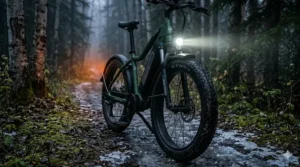
Lithium-ion chemistry loses 20-30% capacity when internal temperature drops below 50°F. The integrated battery designs on the Himiway D5 2.0 and D7 Cobra Pro combat this by insulating cells from ambient air and using thermal management systems that maintain optimal operating temperature. In practice, this means your 80-mile summer range becomes 55-65 winter miles—not the catastrophic drop to 30-40 miles that unprotected batteries experience.
The solution all riders discover: bring your battery indoors overnight. Removable batteries on the TST and RPINT models make this easy. Integrated batteries require bringing the entire bike inside, or accepting reduced range. One Wisconsin commuter documented a simple trick: insulating the battery area with neoprene covers during winter parking, which kept cells 15-20°F warmer than ambient air. This small step preserved an extra 10 miles of range.
Summer heat poses the opposite problem. Charging batteries above 90°F accelerates degradation, potentially cutting total lifespan from 1,000 cycles to 600-700 cycles. The eAhora Romeo Pro’s battery management system includes thermal shutoff that prevents charging when cells exceed safe temperature—a feature budget bikes often skip. Never charge immediately after hard summer rides; let batteries cool 30-60 minutes first.
Tire Pressure Optimization for Different Terrains
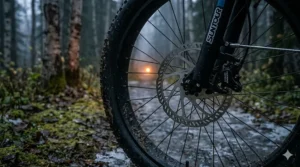
Fat tires transform performance when you understand pressure management. Winter snow riding demands 5-10 PSI to maximize contact patch and prevent sinking. This low pressure creates suspension effect, smoothing bumpy ice and absorbing impacts from hidden frozen ruts. The RadRover 6 Plus and RPINT models both specify 5-30 PSI range, giving you room to dial in perfect pressure for conditions.
Summer pavement riding flips the equation: pump tires to 20-25 PSI to reduce rolling resistance and increase speed. Higher pressure cuts battery consumption by 15-20% compared to soft winter pressures. The Himiway D7 Cobra Pro’s 4.8″ tires can run as low as 3 PSI for extreme sand/snow floatation, but this extreme setting destroys tires on pavement.
One critical detail most buyers miss: check pressure weekly in winter. Cold air contracts, dropping tire pressure 1 PSI per 10°F temperature drop. Your perfectly-tuned 8 PSI from November becomes dangerous 3 PSI by January without adjustment.
Component Protection Strategies
Road salt is the silent killer of year-round bikes. After every winter ride on salted roads, spray down your bike with fresh water—specifically targeting the chain, derailleurs, brake calipers, and motor housing. Five minutes of rinsing prevents corrosion that ruins drivetrains within one season. The ANIIOKIBIKE A8 Pro Max’s sealed bearing system resists salt better than budget loose-ball bearings, but still requires basic maintenance.
Chain lubrication changes seasonally too. Summer dry lube prevents dirt accumulation; winter wet lube resists washoff in slush. The Himiway D5 2.0’s chain guard reduces spray reaching the drivetrain, cutting cleaning frequency in half compared to fully-exposed chains.
Store bikes above freezing when possible. If your only storage is an unheated garage, at minimum bring the battery and display inside. LCD screens on the TST and eAhora models can crack when temperatures plummet below 10°F while powered off.
Choosing Your All Season Electric Bike: Decision Framework
With seven solid options covering different priorities, here’s how to match bikes to your specific situation without getting lost in spec-sheet overwhelm.
If Daily Commute Exceeds 20 Miles Each Way
The eAhora Romeo Pro wins on pure range mathematics. Its 140-220 mile capacity means charging once weekly for typical commuters, eliminating “will I make it home?” anxiety that plagues shorter-range bikes during winter efficiency losses. The full suspension pays dividends on pothole-riddled winter streets.
Alternative consideration: The Himiway D7 Cobra Pro if your commute includes sustained steep grades. Mid-drive torque beats hub motors on long climbs, though you’ll charge more frequently due to smaller 80-mile range.
If Storage Space Is Limited
The TST Electric Bike and RPINT models’ 20-inch wheels fit apartment elevators, car trunks, and indoor storage spaces impossible for full-size bikes. The TST’s UL 2849 certified battery means you can store it indoors without fire risk concerns that plague uncertified budget bikes.
Don’t sacrifice capability for compact size—both 20-inch options deliver legitimate all-season performance. You’re trading some efficiency and comfort on sustained highway riding for dramatic improvements in storage and transport flexibility.
If You Need Extreme Cold Performance
The ANIIOKIBIKE A8 Pro Max and Himiway D7 Cobra Pro both feature advanced thermal management and oversized batteries that maintain usable range when temperatures drop toward 0°F. Standard bikes lose 40-50% range at these extremes; these models limit losses to 20-30%.
The A8 Pro Max’s dual motor system provides redundancy—if one motor fails mid-ride, you limp home on the other. That backup capability matters when you’re 15 miles from shelter in subzero weather.
If Budget Constraints Matter Most
The RPINT Fat Tire Electric Bike delivers genuine four-season capability for under $1,000. You sacrifice hydraulic brakes, premium suspension, and extended range, but you get Shimano drivetrain reliability and removable battery design—the two features that most affect long-term ownership experience.
The Himiway D5 2.0 sits in the “splurge $700 more and gain significantly” category. If you can stretch budget to the $1,600-$1,900 range, the improved battery, hydraulic brakes, and torque sensing justify the premium over budget options.
If You’re New to Year-Round Riding
Start with the RadRover 6 Plus or Himiway D5 2.0. Both bikes handle winter conditions competently without overwhelming new riders with excessive power or complexity. The RadRover’s established customer service and vast user community mean help is always available. The Himiway’s torque/cadence switching lets you grow into the bike’s capabilities rather than fighting them from day one.
Avoid the temptation to buy extreme-capability bikes like the A8 Pro Max or Cobra Pro as first winter bikes. That’s like learning to drive in a Formula 1 car—the machines are incredible, but you’ll spend months learning to use 10% of their capability.
Common Mistakes When Buying All Season Electric Bikes
Having watched hundreds of first-time buyers cycle through the winter ebike learning curve, certain patterns emerge. Here are the expensive mistakes to avoid.
Prioritizing Peak Specs Over Sustained Performance
A 3000W motor sounds impressive in marketing materials until you discover the controller overheats after 10 minutes of hard climbing, throttling power to 500W to prevent damage. The eAhora Romeo Pro’s thermal management ensures 1600W stays available through 20+ minute climbs—more useful than peak numbers that can’t sustain.
Look for thermal protection specs, not just peak wattage claims. The ANIIOKIBIKE A8 Pro Max explicitly mentions temperature-resistant motor internals; budget bikes skip these details because their motors overheat.
Ignoring Battery Chemistry Details
Not all lithium batteries deliver equal winter performance. The Samsung/LG 5000mAh cells in Himiway models maintain capacity better across temperature swings than generic 3500mAh cells. This detail explains why some bikes maintain 70% winter range while others drop to 40%—despite similar advertised capacity numbers.
UL 2849 certification isn’t marketing fluff—it’s third-party validation that the battery won’t catch fire. The TST’s certification justifies its marginal price premium over uncertified competitors. CPSC data shows hundreds of micromobility fires annually from uncertified batteries.
Assuming Fat Tires Alone Equal All-Season Capability
Width matters, but so does tread pattern and rubber compound. The Himiway D7 Cobra Pro’s CST tires use winter-optimized rubber that stays pliable below freezing; cheap fat tires harden into hockey pucks at 20°F, losing traction despite their width. If a manufacturer doesn’t specify tire compound details, assume summer-only rubber.
Directional tread patterns channel slush away from the contact patch—critical for preventing hydroplaning on melting snow. The RadRover 6 Plus’s Kenda Juggernauts feature this design; many budget bikes use symmetric patterns that pack with snow.
Overlooking Brake Type for Weather Conditions
Hydraulic disc brakes maintain consistent feel across temperature extremes and wet conditions. Mechanical disc brakes require cable adjustment as temperatures change (cables expand/contract with heat/cold), creating grabby morning brakes that fade by afternoon. The RadRover 6 Plus’s upgrade to hydraulics transformed its all-weather capability.
If you’re considering mechanical brake bikes like the RPINT, budget time for seasonal adjustment and accept that stopping feel will vary day-to-day. It’s a workable compromise at budget pricing, but not ideal.
Buying Bikes Without Test-Riding Similar Models
You can’t test-ride the exact model you’ll order from Amazon, but you can visit local shops and test similar configurations. Ride a few 750W hub motor bikes to understand engagement feel. Try mid-drive systems to experience how gearing affects power delivery. This hands-on research prevents expensive mistakes.
Pay specific attention to handlebar width and seating position during test rides. Many fat-tire bikes use mountain-bike geometry that forces aggressive forward lean—uncomfortable for commuting but necessary for off-road control. The Himiway D5 2.0’s upright position works for commuters; the Cobra Pro’s aggressive stance suits trail riders.
Long-Term Cost Analysis: Total Ownership Beyond Purchase Price
The sticker price is just the entry fee. Here’s what actually costs money over 3-5 years of year-round riding—and how different bikes stack up.
Battery Replacement Economics
Quality batteries maintain 80% capacity through 1,000 charge cycles, then degrade rapidly. For a 50-mile commuter riding 200 miles weekly, that’s 1,000 weeks (19+ years) before replacement. But cold-weather riding accelerates degradation—expect 600-800 cycles for year-round use, or 7-10 years before replacement.
Replacement battery costs reveal hidden value differences. Himiway batteries run around $600-$700 for the 960Wh packs; generic replacements for budget bikes often cost $400-$500 but deliver questionable quality. The eAhora Romeo Pro’s massive 60Ah battery will eventually need replacement around $800-$900—a significant one-time cost, but spread across a decade of use.
The RPINT and TST models use standardized 48V battery formats with aftermarket options, keeping replacement costs in the $300-$400 range. This parts availability advantage matters more in year eight than it did at purchase.
Maintenance Schedule Realities
Hub motor bikes like the RadRover 6 Plus and Himiway D5 2.0 require minimal motor maintenance—maybe bearing replacement after 10,000+ miles. Mid-drive systems like the Cobra Pro’s Bafang motor need chain and cassette replacement every 2,000-3,000 miles because all pedaling torque flows through the drivetrain. Annual chain/cassette replacement runs $80-$120 depending on component quality.
Hydraulic brake systems need fluid bleeding every 2-3 years (professional service runs $60-$80 per bike), but require virtually zero adjustment between services. Mechanical brakes need cable replacement annually ($15-$25 in parts) plus frequent adjustment. The time cost adds up—you’ll spend 10+ hours across five years adjusting mechanical brakes versus maybe 2 hours maintaining hydraulics.
Winter riding accelerates all consumable wear. Wet, gritty conditions destroy chains 2-3x faster than summer riding. Budget an extra $50-$100 annually for replacement chains, brake pads, and cables if you ride year-round.
Total Cost of Ownership Comparison (5-Year Horizon)
Budget Path (RPINT): $900 purchase + $350 battery replacement + $250 drivetrain consumables + $100 brake parts = $1,600 total
Mid-Tier Path (Himiway D5 2.0): $1,750 purchase + $650 battery replacement + $200 drivetrain parts + $140 brake service = $2,740 total
Premium Path (eAhora Romeo Pro): $2,000 purchase + $850 battery replacement + $300 drivetrain parts + $140 brake service = $3,290 total
The RPINT saves $1,100-$1,600 over five years—meaningful money. But consider opportunity cost: if the cheaper bike’s modest range limits your riding to 60% of what you’d do on a longer-range bike, you’re not actually saving money per mile ridden. Run the math based on your expected usage, not just purchase price.
Safety and Regulations: What You Need to Know
All-season riding means navigating complex regulatory landscapes that vary by jurisdiction. Here’s what matters for legal, safe operation.
Federal Classification and Local Law Compliance
The U.S. Consumer Product Safety Commission defines low-speed electric bicycles as vehicles with motors under 750W and maximum speeds under 20 mph when motor-powered. All seven bikes reviewed here can be configured to meet federal requirements, though some ship with higher default limits.
State laws overlay federal rules with three common classes per PeopleForBikes guidelines:
Class 1: Pedal-assist only, 20 mph max (legal on most bike paths)
Class 2: Throttle-capable, 20 mph max (restricted from some trails)
Class 3: Pedal-assist to 28 mph (often requires helmet, prohibited on many paths)
The RadRover 6 Plus ships as Class 2 but can be reconfigured to Class 3 via settings—useful for riders whose commutes include both restricted bike paths and open roads. The ANIIOKIBIKE A8 Pro Max’s 45+ mph capability exceeds all ebike classifications and may require registration as a motor vehicle in some jurisdictions.
Critical detail: “capable of” exceeding limits makes a bike illegal even if you never use that capability. Know your local law before purchasing bikes with speed-limiting defeat options.
UL 2849 Certification Importance
After hundreds of battery fires from uncertified products, UL 2849 certification has become the de facto safety standard. This testing validates:
- Battery cells won’t enter thermal runaway
- Electrical systems resist water ingress
- Chargers prevent overcharging
- Motors won’t overheat under sustained load
The TST and several Himiway models carry UL 2849 certification. Budget bikes often skip certification to cut costs—a gamble that’s fine until it isn’t. Given that a single battery fire can destroy your home, the $200-$300 premium for certified bikes is rational insurance.
Winter Riding Visibility Requirements
Many jurisdictions require lights during low-visibility conditions, defined as dusk/dawn or precipitation. The integrated lighting on all reviewed bikes meets minimum requirements, but brightness varies dramatically. The eAhora Romeo Pro’s 2000LM headlight exceeds most car headlights; budget options deliver half that output.
Turn signals on the TST dramatically improve safety but aren’t legally required in most areas—they’re just smart. Hand signals work until you need both hands for emergency braking on ice.
Reflective gear matters more than bike lights for being seen. A $30 reflective vest provides more visibility than $300 in bike lights. Don’t skip the cheap high-impact safety equipment while obsessing over expensive low-impact features.
Frequently Asked Questions
❓ How long does an all season electric bike battery last in extreme cold?
❓ Can you ride electric bikes in snow and rain safely?
❓ What's the real-world range difference between summer and winter riding?
❓ Do all season electric bikes require special maintenance compared to regular ebikes?
❓ Are 20-inch fat tire ebikes as capable as 26-inch models in all-season conditions?
Conclusion: Choosing Your Year-Round Freedom Machine
The all season electric bike category has matured beyond early adopter status into practical transportation. Whether you’re replacing car trips to save money, maintaining fitness year-round, or accessing winter recreation that traditional bikes can’t reach, these seven bikes deliver proven capability.
For most riders, the Himiway D5 2.0 represents the sweet spot: proven thermal management, adequate range, and refined features without premium pricing. First-time winter riders get capability room to grow; experienced cyclists find everything they actually use. The RadRover 6 Plus serves identical needs for buyers who prioritize manufacturer reputation and customer service over cutting-edge specs.
Budget-conscious commuters can’t ignore the RPINT Fat Tire Electric Bike‘s sub-$1,000 pricing. It won’t match premium bikes’ refinement, but it absolutely gets you riding year-round without financial stress. On the opposite end, the ANIIOKIBIKE A8 Pro Max and Himiway D7 Cobra Pro serve riders who demand maximum capability—serious hunters, extreme off-road enthusiasts, or anyone who refuses to let weather dictate their riding.
The decision ultimately maps to your specific use case. Define your realistic needs (actual commute distance, terrain type, storage constraints), then match bikes to those requirements rather than aspirational scenarios. A $4,000 extreme-capability bike doesn’t make sense for flat 10-mile urban commutes any more than a budget model works for 40-mile mountain passes.
Start by honestly assessing whether you’ll actually ride year-round. Many buyers discover that winter biking sounds appealing until January arrives with 18°F mornings and dark commutes. If you’re uncertain, starting with the RadRover 6 Plus or Himiway D5 2.0 provides legitimate capability without extreme financial commitment. Both hold resale value well if winter riding doesn’t fit your lifestyle.
Whatever bike you choose, remember that battery care and regular maintenance determine long-term satisfaction more than purchase price. The cheapest bike maintained properly outperforms expensive neglected bikes. Store batteries at room temperature, clean road salt religiously, and your all season electric bike will deliver reliable transportation for years of riding freedom.
Recommended for You
- 7 Best Electric Bikes for Spring 2026
- 7 Best Electric Bike for Fall 2026
- 7 Best Electric Bike for Summer 2026 – Ultimate Hot Weather Guide
Disclaimer: This article contains affiliate links. As an Amazon Associate, I earn from qualifying purchases. If you purchase products through these links, we may earn a small commission at no additional cost to you.
✨ Found this helpful? Share it with your friends! 💬🤗
