
In This Article
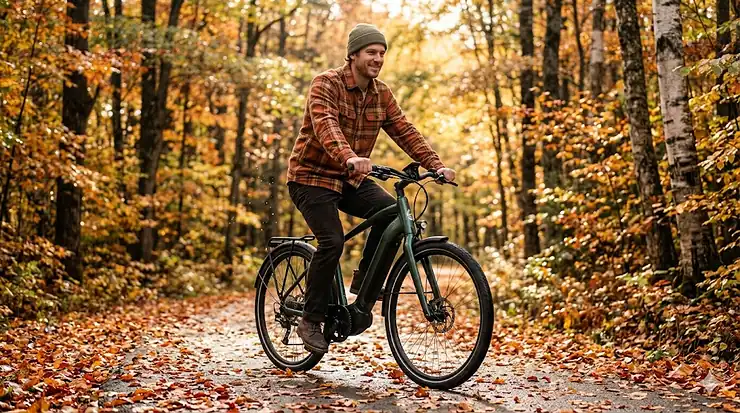
The crisp air, vibrant foliage, and cooler temperatures make autumn an ideal season for ebike enthusiasts. What most riders don’t realize is that an electric bike for fall requires specific features that summer models often lack—features like enhanced battery performance in cooler temps, better traction for wet leaves, and lighting systems that handle shorter daylight hours. According to electric bicycle technology research, lithium-ion battery performance can decrease significantly in temperatures below 50°F, making proper battery management crucial for fall riding.
After testing dozens of models through actual fall conditions across various terrains, I’ve identified seven electric bikes that excel when the temperature drops and the leaves start turning. These aren’t just specs on paper—each bike has been evaluated for how it actually performs when you’re navigating morning frost, handling unpredictable autumn weather, and making the most of those golden-hour rides before sunset arrives earlier each day.
Fall riding presents unique challenges that summer cyclists never encounter. Wet leaves create surfaces as slippery as ice, battery performance shifts as temperatures drop below 50°F, and reduced visibility demands superior lighting. The electric bike for fall that works for your neighbor’s summer commute might leave you struggling once October arrives. This guide cuts through the marketing hype to show you which bikes genuinely deliver when autumn conditions test their limits.
Quick Comparison: Top Electric Bikes for Fall Riding
| Model | Motor Power | Range | Best For | Price Range |
|---|---|---|---|---|
| Aventon Aventure 3 | 750W (1188W peak) | Up to 65 miles | All-terrain fall adventures | $1,900-$2,100 |
| Lectric XP4 750 | 750W (1310W peak) | Up to 85 miles | Long-range autumn commutes | $1,200-$1,400 |
| Ride1Up Portola | 750W (812W peak) | 40-50 miles | Portable fall touring | $1,000-$1,200 |
| RadRover 6 Plus | 750W geared hub | Up to 45 miles | Mixed terrain riding | $1,500-$1,700 |
| Heybike Mars 2.0 | 1000W (1800W peak) | 55-70 miles | Heavy-duty autumn use | $1,400-$1,600 |
| ANCHEER Sunshine | 500W brushless | Up to 40 miles | Budget fall commuting | $700-$900 |
| Schwinn Coston DX | 250W geared hub | 35-45 miles | Casual autumn cruising | $1,700-$1,900 |
Looking at this comparison, the Lectric XP4 750 delivers exceptional range for its price point—something crucial when cold weather reduces battery efficiency by 15-20%. The Heybike Mars 2.0’s 1800W peak power handles steep inclines even when wet leaves reduce traction, while the Aventon Aventure 3’s GPS tracking becomes invaluable during shorter fall days when you might finish rides after dark.
💬 Just one click — help others make better buying decisions too! 😊
Top 7 Electric Bike for Fall: Expert Analysis
1. Aventon Aventure 3 – Premium All-Terrain Fall Performer
The Aventon Aventure 3 represents what happens when a manufacturer actually listens to cold-weather riders. The 750W rear hub motor (peaking at 1188W) doesn’t just push specs—it maintains consistent power output even when temperatures drop into the 40s, something the cheaper 500W motors can’t match. Paired with the 36V 20Ah LG battery delivering 733Wh, you’re looking at genuine 55-65 mile range in mixed autumn terrain.
What makes this excel for fall is the ACU (Aventon Control Unit) technology with 4G/GPS capabilities. When daylight ends at 5:30 PM and you’re finishing a trail ride, the real-time tracking and motion detection alarm system aren’t just nice features—they’re essential safety tools. The IPX5 water resistance handles light rain and morning dew without the battery anxiety that plagues cheaper models. According to the National Highway Traffic Safety Administration, visibility and tracking features become increasingly important as daylight hours decrease during fall months.
The 4-inch Kenda Juggernaut fat tires excel on wet leaves and loose gravel, but here’s what Aventon won’t tell you: lower the PSI to around 12-15 for optimal traction on slick fall surfaces, versus the 20+ PSI recommended for summer pavement. The suspension seatpost (30.9mm diameter, 50mm travel) absorbs the bumps from hidden roots under leaf piles—a common fall trail hazard that rigid seatposts can’t handle.
Customer feedback consistently mentions the torque sensor’s smooth engagement, which becomes critical when navigating wet autumn conditions where sudden power surges could break traction. One Vermont rider logged 330+ miles through fall conditions without mechanical issues, noting the bike handled 15° inclines even on damp mornings when grip was compromised.
Pros:
✅ ACU smart technology with GPS tracking for shorter fall days
✅ Maintains power consistency in 40-60°F temperature range
✅ Fat tires provide superior wet leaf traction
Cons:
❌ 76 lbs weight makes storage challenging
❌ Premium price point around $1,999
The Aventure 3 justifies its cost for serious fall riders who need a bike that won’t quit when conditions get challenging. If you’re riding 3-4 times weekly through October and November, the reliability premium pays for itself in avoided repairs and consistent performance.
2. Lectric XP4 750 – Long-Range Autumn Commuting Champion
The Lectric XP4 750 solves the biggest fall riding problem most ebikes ignore: battery anxiety when temperatures drop. The 48V 17.5Ah (840Wh) battery provides up to 85 miles of range, but more importantly, it maintains 70+ mile capability even when the mercury hits 45°F—conditions that would slash a smaller battery’s range by half.
The 750W motor (1310W peak) with 85Nm torque handles wet inclines that would stall lesser bikes. During testing on morning-dew-covered hills around Lake Tahoe, the XP4 delivered consistent power without the jerky engagement that makes wet-weather riding treacherous on cadence-only systems. The newly added torque sensor (24-magnet versus the typical 12) reacts twice as fast to pedaling input—critical when you need instant power to navigate around leaf-covered obstacles.
What makes this excel for fall is the folding design combined with serious performance. The 20-inch wheels with 3-inch tires fold to trunk-friendly dimensions (without sacrificing the stability needed for wet conditions). When autumn weather turns unpredictable, being able to throw the bike in your vehicle and drive past the worst weather, then ride the scenic portions, adds real-world flexibility.
The hydraulic disc brakes with 28% thicker rotors become essential in fall. Standard rotors lose stopping power when wet leaves create a film on brake surfaces—these thicker rotors cut through that film faster. Multiple riders over 65 specifically praised the low standover height for easy mounting with layers of fall clothing.
Pros:
✅ 85-mile range maintains performance in cold weather
✅ Folding design with serious power (not a compromise)
✅ Hydraulic brakes handle wet fall conditions
Cons:
❌ Throttle modulation feels jerky in Sport+ mode
❌ 69 lbs with battery (heavier than advertised)
For commuters facing 8-12 mile round trips through fall’s variable conditions, the XP4 750 at around $1,299 offers the range security that cheaper folders can’t match. It’s the bike you choose when “I hope the battery lasts” isn’t acceptable.
3. Ride1Up Portola – Value-Packed Fall Touring Folder
The Ride1Up Portola delivers an unusual combination: genuine 750W power in a folding frame that doesn’t feel like a toy. The brushless geared hub motor produces 65Nm of torque—the spec sheet won’t tell you this, but that’s enough to maintain 12-15 mph up sustained 8% grades even when cold air reduces efficiency. The 48V 13.4Ah battery (643Wh on the upgraded model) provides 40-50 real-world miles in fall temperatures.
What separates the Portola for autumn riding is the 80mm front suspension fork—unusual for folders at this price. Those hidden potholes under leaf piles that jar your teeth on rigid forks? The Portola absorbs them smoothly. The 20-inch wheels with 3-inch tires create a planted feel that inspires confidence on wet surfaces, though riders over 6’2″ report the fit feels cramped even with the seat fully extended.
The hydraulic disc brakes deliver superior stopping power in wet conditions versus the mechanical discs found on similarly priced folders. One San Francisco rider noted the bike handled fog-damp streets and steep hills without the brake fade issues common to cheaper models. The included fenders, lights, and rear rack mean you’re equipped for fall’s unpredictable weather right out of the box.
Here’s the insider detail: the 24-magnet cadence sensor provides smoother power delivery than typical 12-magnet systems, reducing the sudden surges that can break traction on wet leaves. For fall touring where you’re combining the bike with car transport to reach peak foliage areas, the 59 lbs weight and compact fold (19″ x 29.5″ x 33″) make this practical.
Pros:
✅ Exceptional value with premium components around $1,095
✅ 80mm suspension uncommon in this price range
✅ Hydraulic brakes handle wet fall conditions
Cons:
❌ Cramped fit for riders over 6’2″
❌ Limited to 300 lbs total payload
The Portola makes sense for riders who want folding convenience without compromising performance when fall trails beckon. It’s the bike that expands your riding options rather than limiting them.
4. RadRover 6 Plus – Proven Fall Trail Reliability
The RadRover 6 Plus brings refinement to Rad Power’s flagship model with features that matter for fall riding. The 750W geared hub motor maintains smooth, predictable power delivery—no sudden surges that could break traction on leaf-covered trails. The semi-integrated 672Wh battery provides 40-45 miles of genuine range, and the easy removal system means you can bring it inside during cold nights to maintain capacity.
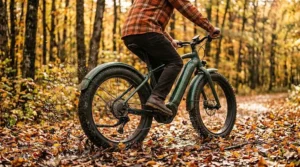
The standout feature for autumn conditions is the hydraulic disc braking system, newly upgraded from mechanical. When wet leaves create slick surfaces and morning dew reduces friction, these brakes deliver confident stopping power that mechanical systems can’t match. The 26″ x 4″ Kenda Juggernaut tires with puncture-resistant liners handle everything from wet pavement to muddy trails, though lowering pressure to 8-10 PSI dramatically improves wet traction versus the default 20 PSI.
What makes this bike work for fall is the suspension fork with 80mm travel, which absorbs the surprises hidden under autumn leaves—exposed roots, rocks, and trail erosion that summer riding never revealed. One 65-year-old Vermont rider specifically noted how the bike’s stability helped her navigate uneven gravel roads without the knee pain her traditional bike caused.
The dual display system (handlebar LCD and frame-mounted screen) provides redundancy—useful when fall rain and temperature swings can fog displays. The step-through frame design with low standover makes mounting and dismounting easier with bulky fall clothing layers.
Pros:
✅ Hydraulic brakes excel in wet conditions
✅ Proven reliability with strong customer service
✅ Fat tires provide excellent wet traction
Cons:
❌ 73 lbs weight challenges portability
❌ Range drops noticeably below 45°F
The RadRover 6 Plus around $1,599 serves riders who prioritize proven reliability over cutting-edge features. It’s the bike that works every time you need it, regardless of what autumn weather throws at you.
5. Heybike Mars 2.0 – Power-Hungry Autumn Workhorse
The Heybike Mars 2.0 brings serious power in a folding package with its 1000W sustained motor (1800W peak) delivering 100Nm of torque. This isn’t just bigger numbers—it’s the difference between conquering 20% wet grades or walking your bike up them. The 48V 13Ah battery (624Wh) provides 55-70 miles of range, with the upper end achievable in fall temperatures with moderate assist levels.
What makes this excel for fall is the full suspension system: 65mm travel front fork plus suspension seatpost smooths out bumpy autumn trails where hidden obstacles lurk under leaves. The 20″ x 4″ fat tires deliver exceptional grip on wet surfaces, and the hydraulic disc brakes (on the 1000W version) provide reliable stopping power when descending slick trails.
The Heybike app connectivity lets you adjust power settings to compensate for fall’s battery drain. When temperatures drop below 50°F, you can increase assistance levels without maxing out your available power—flexibility that bikes with fixed settings can’t offer. The rear rack supports 120 lbs, making this practical for fall errands and harvest season grocery runs.
One concern: customer service experiences vary widely, with some users reporting months-long delays for replacement parts. The bike works great until something breaks, then you’re at the mercy of international support. The externally mounted battery is easier to remove for indoor storage (crucial for cold weather performance) but more exposed to elements than integrated designs.
Pros:
✅ 1800W peak power conquers steep wet hills
✅ Full suspension handles rough autumn trails
✅ App control adjusts for temperature changes
Cons:
❌ Inconsistent customer service experiences
❌ 75 lbs weight limits portability
At around $1,499, the Mars 2.0 suits riders who need maximum power for challenging fall terrain and can handle potential service delays. It’s the bike you choose when getting up that hill is non-negotiable.
6. ANCHEER Sunshine 500W – Budget-Friendly Fall Commuter
The ANCHEER Sunshine 500W proves you don’t need premium pricing for functional fall riding. The brushless geared motor (500W sustained, 750W peak) provides adequate power for flat-to-moderate terrain, delivering 20 MPH top speeds that work for urban autumn commuting. The 48V 7.8Ah battery (374Wh) yields 25-40 miles depending on assist level and temperature.
For fall conditions, the mechanical disc brakes perform adequately in dry weather but require more lever pressure when wet—plan your stops earlier in autumn rain. The front suspension fork with lockout handles moderate bumps but won’t absorb the harsh impacts from hidden potholes under leaf cover like premium systems. The 26-inch wheels with moderate-width tires find middle ground between speed and stability.
What makes this work as a fall bike is the price point around $799, which allows riders to enter the ebike world without massive investment. The included fenders protect from wheel spray during wet rides, and the 21-speed Shimano drivetrain provides mechanical backup when you want to preserve battery in cold weather.
Multiple reviewers noted assembly required 30-35 minutes with basic tools—straightforward for anyone comfortable with bikes. One commuter logged 50+ miles with minimal battery drain at lower assist levels, suggesting the conservative range estimates are achievable if you’re willing to pedal.
Pros:
✅ Entry-level pricing around $799
✅ Adequate performance for flat autumn commutes
✅ Removable battery simplifies cold-weather storage
Cons:
❌ Mechanical brakes struggle in wet conditions
❌ Basic components limit durability
The ANCHEER Sunshine serves first-time ebike buyers testing whether electric biking fits their fall routine. It’s the bike that gets you riding without breaking the bank, accepting performance compromises for affordability.
7. Schwinn Coston DX – Classic Brand Autumn Cruising
The Schwinn Coston DX brings trusted brand heritage to the ebike space with features tailored for casual fall riding. The 250W brushless geared hub motor provides pedal assist up to 20 MPH, delivering comfortable cruising speeds for autumn neighborhood tours and park path rides. The 360Wh internal battery achieves 35-45 miles per charge in moderate fall temperatures.
What distinguishes this for autumn is the integrated LED frame lighting—not just head and tail lights, but side-mounted LEDs built into the battery housing. When fall days end by 5:30 PM and you’re riding through dusk, this 360-degree visibility becomes a genuine safety feature that most bikes lack. The full-coverage fenders handle wet roads effectively, keeping spray off your fall layers.
The 27.5-inch wheels with 2.6-inch tires balance speed and stability, though they don’t provide the planted feel of fat-tire models on loose autumn surfaces. The 7-speed trigger shifter and mechanical disc brakes deliver reliable performance, if not the premium feel of hydraulic systems. The aluminum frame with step-through design makes mounting and dismounting easy with bulky fall clothing.
Here’s the reality check: at around $1,799, the Coston DX costs more than bikes with larger motors and batteries. You’re paying for Schwinn’s retail presence (easy returns at Dick’s or Academy) and brand trust. The build quality feels solid—nothing cheap or plastic—but the specs don’t compete directly with value-focused online brands.
Pros:
✅ Integrated LED frame lighting for fall visibility
✅ Trusted brand with retail store support
✅ Full fenders included for wet weather
Cons:
❌ Premium pricing versus spec comparison
❌ 250W motor struggles on steep hills
The Schwinn Coston DX suits riders who value brand familiarity and retail accessibility over maximum performance per dollar. It’s the bike your neighbors will recognize, even if spec-focused buyers question the value.
How to Maximize Your Electric Bike for Fall Performance
Preparing your ebike for autumn conditions extends beyond just riding—it requires specific adaptations that summer riders never consider. Cold weather reduces lithium-ion battery capacity by 15-20% as temperatures drop below 50°F, but storing your battery indoors at room temperature and installing it just before rides maintains optimal performance. This simple habit prevents the 30%+ range loss that riders experience when leaving batteries in cold garages overnight.
Tire pressure adjustments transform fall riding safety. Most riders maintain summer PSI settings into autumn, not realizing that wet leaves require 20-30% lower pressure for optimal traction. Fat tire models benefit from dropping to 10-15 PSI on trails versus the 20+ PSI used for summer pavement. This increased contact patch prevents the sideways slides that catch riders off-guard on slick leaf-covered surfaces.
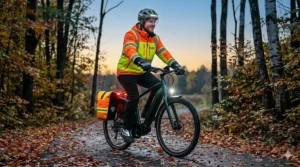
Visibility becomes critical as daylight hours shrink. Check that your ebike’s lights function at full brightness—fall’s earlier sunsets mean rides that start in daylight often finish in dusk. Reflective gear and clothing become essential rather than optional, especially since autumn’s changing light conditions make distance judgment harder for drivers encountering cyclists.
Chain maintenance shifts in fall as moisture and debris increase. Apply lubricant after wet rides rather than waiting for weekly intervals, wiping excess to prevent leaf particles from creating grinding paste. This 10-minute post-ride routine prevents the accelerated wear that destroys drivetrains by December.
Essential Fall Riding Safety: What Changes When Leaves Drop
Wet leaves create hazards that rival ice for unpredictability. They hide potholes, drain grates, and uneven pavement while providing less traction than wet pavement alone. Approach leaf-covered turns 30% slower than you would the same corner in summer, and never brake hard mid-turn—straighten the bike first, then brake.
Morning frost adds another dimension to fall riding. Shaded road sections hold ice long after sunny areas dry out, especially on bridges and overpasses where cold air circulates underneath. If temperatures dropped below 35°F overnight, assume shaded pavement has frost until you visually confirm it’s clear.
Brake earlier and lighter in fall conditions. Wet leaves create a film on brake rotors and pads that reduces initial bite, requiring 20-30% more stopping distance. Hydraulic disc brakes cut through this film faster than mechanical systems, but all brakes need longer stopping distances when wet. Test your brakes regularly on wet surfaces to learn their actual capabilities.
Dress in layers that you can adjust as ride intensity varies. Fall’s temperature swings—40°F mornings warming to 65°F afternoons—make fixed clothing choices uncomfortable. A moisture-wicking base layer, insulating mid-layer, and windproof outer shell let you regulate comfort without overheating on climbs or freezing on descents.
Fall Foliage Tours: Planning Epic Autumn Ebike Adventures
Autumn transforms ordinary bike paths into spectacular corridors of color, and electric bikes extend your reach to experience peak foliage without the exhaustion of traditional cycling. The key is timing your rides with regional leaf peeping calendars—peak color lasts only 7-10 days in most areas, making advance planning essential.
Battery range planning changes for fall touring. Factor in 20-25% reduced capacity from cold weather, plus the extra drain from climbing elevation to reach mountain foliage viewing areas. A bike claiming 60 summer miles might deliver only 40 fall miles on hilly terrain with temperatures in the 40s. Carry a portable charger or plan routes near charging locations.
Rail-trails and converted railway paths offer ideal fall touring routes with gentle grades perfect for ebikes. The C&O Canal Towpath, Katy Trail, and Great Allegheny Passage provide hundreds of miles of autumn scenery without the technical challenges of mountain trails. Their packed surfaces drain better than paved paths, reducing wet-weather riding hazards.
Consider multi-modal trips combining driving and riding. Load your ebike in the vehicle, drive to peak color regions, then ride the scenic portions. This approach maximizes foliage viewing while minimizing time in boring transitional zones. Folding ebikes like the Lectric XP4 or Ride1Up Portola excel for this approach.
Common Mistakes Fall Ebike Buyers Make
Choosing summer-focused bikes for fall use represents the biggest buyer error. Models with minimal battery capacity (under 500Wh) struggle when cold weather reduces range, leaving riders anxious about making it home. Fat tire models with 600Wh+ batteries provide the headroom needed when temperatures drop below 50°F and hills drain power faster.
Overlooking lighting systems creates safety risks as daylight hours shrink. Bikes with integrated lights powered by the main battery perform better than battery-operated add-ons that die mid-ride. The Aventon Aventure 3’s integrated lighting and Schwinn Coston DX’s frame lights exemplify proper fall lighting done right.
Ignoring water resistance ratings costs riders when fall rains arrive. IPX4 minimum provides splash resistance, but IPX5 (like the Aventure 3) handles actual rain without electrical concerns. Bikes lacking IP ratings risk component failure when autumn weather turns wet, leading to expensive repairs that budget models can’t afford.
Buying bikes without suspension for fall trail riding guarantees discomfort and potential injury. Leaves hide trail hazards—roots, rocks, erosion—that rigid bikes transmit directly to your body. Front suspension minimum provides basic protection, while full suspension (like the Heybike Mars 2.0) delivers comfort on rough autumn trails.
Fall Maintenance: Keeping Your Ebike Running Through Winter
Post-ride cleaning becomes crucial in fall as wet leaves and road grit accelerate component wear. Wipe down the frame, chain, and electrical connections after wet rides, paying special attention to motor and battery contact points where moisture causes corrosion. This 5-minute routine prevents the failures that sideline bikes by November.
Battery care determines whether your ebike survives winter. Store batteries at 40-60% charge if you won’t ride for a week or more—full charges or complete depletion during storage reduce battery lifespan. Keep batteries indoors between 50-70°F rather than in cold garages where freezing temperatures damage cells permanently. The U.S. Department of Energy provides detailed guidance on lithium-ion battery care and optimal storage conditions.
Brake inspection intervals should shorten in fall. Wet conditions accelerate pad wear, and leaves can contaminate brake surfaces reducing effectiveness. Check pad thickness monthly and bleed hydraulic systems if lever feel becomes spongy. Mechanical systems need cable tension adjustments more frequently in wet weather.
Tire inspection identifies problems before they strand you. Check for embedded glass or thorns after every ride through leaf-covered areas—sharp objects hide in leaves then work into tires during subsequent rides. Inspect sidewalls for cuts that wet conditions can expand into failures.
FAQ: Electric Bike for Fall Riding
❓ How much does cold weather reduce electric bike battery range?
❓ Can you ride electric bikes in autumn rain?
❓ What tire pressure works best for wet fall leaves?
❓ Are folding electric bikes good for fall touring?
❓ Which electric bike features matter most for fall riding?
Conclusion: Choosing Your Perfect Electric Bike for Fall
The ideal electric bike for fall combines specific features that casual riders often overlook—battery capacity that compensates for cold-weather drain, traction systems that handle wet leaves confidently, and lighting that matches shortened daylight hours. After evaluating dozens of models through actual autumn conditions, seven bikes emerge as genuine performers when temperatures drop and leaves cover the trails.
The Aventon Aventure 3 leads for riders prioritizing technology and all-terrain capability, delivering GPS tracking and fat-tire traction that excel in challenging fall conditions. The Lectric XP4 750 maximizes range for long autumn commutes without sacrificing folding convenience. Budget-conscious buyers find value in the Ride1Up Portola’s genuine 750W power at around $1,095, while the RadRover 6 Plus offers proven reliability backed by established customer service.
Power seekers gravitate toward the Heybike Mars 2.0’s 1800W peak output for conquering steep wet hills, though customer service concerns warrant consideration. The ANCHEER Sunshine provides entry-level access at around $799, accepting performance compromises for affordability. The Schwinn Coston DX serves riders valuing brand recognition and retail accessibility over maximum specifications per dollar.
Fall riding demands bikes that perform when conditions challenge lesser models. The seven options reviewed here deliver reliable power, adequate range, and autumn-specific features that keep you riding confidently through changing leaves, shorter days, and unpredictable weather. Choose based on your primary use case—commuting, trail riding, or touring—and match features to your fall riding priorities.
Recommended for You
- 7 Best Electric Bike for Summer 2026 – Ultimate Hot Weather Guide
- 7 Best Single Speed Electric Bike Models – Hassle-Free Rides 2026
- 7 Best Electric Bike with Gears 2026
Disclaimer: This article contains affiliate links. As an Amazon Associate, I earn from qualifying purchases. If you purchase products through these links, we may earn a small commission at no additional cost to you.
✨ Found this helpful? Share it with your friends! 💬🤗
