In This Article
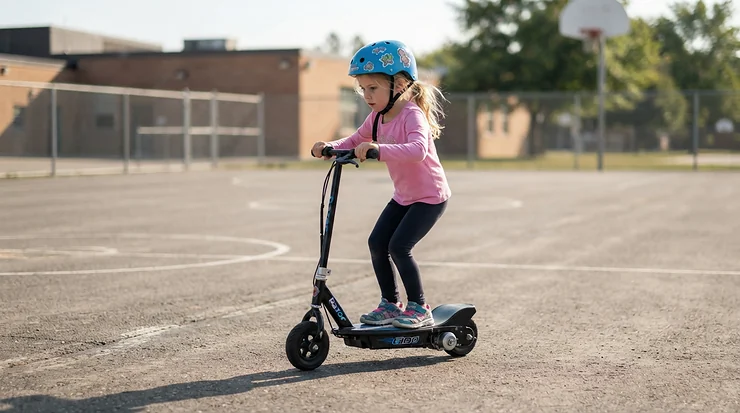
An electric scooter for kids is a compact, speed-limited, battery-powered scooter built for children roughly 8 and up, typically capped at 5-12 mph, with lightweight frames, adjustable ride modes and lower rider-weight limits than adult models. Think of it as a training ground for independence on wheels.
Here is the part most listicles skip. The American Academy of Pediatrics advises that children under 16 shouldn’t ride e-scooters at all, though that guidance was written with fast rental scooters in mind. Many households still buy one, and the sensible question becomes how to do it with the smallest possible risk. That is what this guide is for.
You’ll get seven real models compared on the specs that matter for a safe electric scooter for kids: battery capacity, braking, speed caps and how much control parents actually get. Ballpark price ranges only, since Amazon prices move daily. The independent testing data I lean on comes from published reviews, and where I can’t verify something, I say so.
Spec sheets are cheap talk. A “6+” age label tells you what the marketing department hoped for, not what a seven-year-old’s reaction time can handle. So we’ll translate every number into what it means on your street, with your kid, on a Tuesday afternoon.
Quick Comparison Table: Kids Electric Scooter Options at a Glance
| Model | Top speed | Range | Weight | Max rider | Parent controls | Best For |
|---|---|---|---|---|---|---|
| Navee K100 Max | 12.1 mph* | 8.4 mi* | 21.2 lbs | 132 lbs | App speed caps, mode lock, GPS via Apple Find My | Families wanting maximum control |
| Segway Ninebot C2 Pro | 12.2 mph* | 7.8 mi* | 23.1 lbs | 110 lbs | App speed limits and ride modes | Brand-loyal buyers wanting real range |
| Navee K100 Pro | 9.9 mph* | 4.3 mi* | 19.8 lbs | 110 lbs | Navee app (speed caps, mode lock, ride history) | Budget parental control |
| Gotrax Comet | 9.5 mph* | 4.5 mi* | 25 lbs | 132 lbs | None | Best lighting for the money |
| Segway Ninebot C2 Lite | 9 mph* | 4.2 mi* | 17.2 lbs | 110 lbs | Three riding modes, no app | Smaller first-time riders |
| Razor E100 | 10 mph (claimed) | Up to 40 min (claimed) | 26 lbs | 120 lbs | None | Simple, classic first scooter |
| FanttikRide C9 Pro | 10 mph (claimed) | ~5 mi (claimed) | 14 lbs | 132 lbs | Three fixed speed modes | Lightweight carry-and-go |
Speed and range figures marked with an asterisk come from independent rider testing published by ERideHero; the rest are manufacturer claims.
Look at the battery column against the price tier. The two big-battery models (Navee K100 Max and Segway Ninebot C2 Pro) roughly double the real-world range of the ~55 Wh models, and battery watt-hours predict range better than any “up to” mileage claim. If your child rides to a park and back, the smaller batteries are plenty. If they roam, the difference matters.
Parental control splits the field cleanly. Only the two Navee models offer proper app-based caps, so if remote speed limiting is a must-have, that narrows things fast.
💬 Just one click — help others make better buying decisions too!😊
Top 7 Electric Scooter for Kids: Expert Analysis
The seven picks below span budget, mid-range and premium. Each one gets analysis rather than a spec dump: what the numbers mean, who it suits, and where it disappoints. Reviewer sentiment is drawn from published expert testing. I couldn’t verify individual customer reviews across every listing, so I don’t quote any.
1. Navee K100 Max — GPS tracking plus deep parental controls
The standout is control. The Navee K100 Max pairs a Navee app that lets you cap speed per mode, lock out sport mode and review ride history with GPS tracking through Apple Find My, including safe-zone alerts.
Its 110 Wh battery is nearly double what most kids’ scooters carry, and the 150W motor pushed a 90-lb test rider to about 12 mph over roughly 8.4 miles. Adjustable handlebars and a 132-lb rider limit mean a child isn’t outgrowing it in a year.
On paper, this is the “buy once” option for ages 8-14. Reviewers praise the 7-inch hollow tires for smoothing sidewalk cracks better than 6-inch solid rubber, and the kick-to-start stops a bumped throttle from launching a kid. The catch: GPS works only on Apple’s network, and the 5.5-hour charge is long.
Pros:
- ✅ Largest battery among kids’ scooters here
- ✅ App speed caps, mode locking and ride history
- ✅ Adjustable bars and 132 lb rider limit
Cons:
- ❌ GPS tracking works with Apple devices only
- ❌ Most expensive option and slow to charge
Premium tier, roughly in the $300-$450 range (check current price). Worth it if you’ll use the controls, because otherwise you’re paying for features that sit idle.
2. Segway Ninebot C2 Pro — best build quality with real range
If the Navee K100 Max is the tech-forward choice, the Segway Ninebot C2 Pro is the familiar-name choice. It matches the K100 Max on a ~108 Wh battery, 150W motor and 7-inch hollow tires, and tested at 7.8 miles of range and about 12.2 mph.
That top speed is fast for a child. The app lets you limit speed and set ride modes, but there’s no GPS or ride history, so it’s a step behind the Navee on oversight. Handlebars adjust for riders from 3’9″ to 5’7″, which covers a long stretch of growth.
Reviewers describe the frame as sturdy and the RGB underglow synced to the Bluetooth speaker as the feature kids actually notice. The gaps are practical ones. At 23.1 lbs it’s the heaviest kids’ model in this comparison, and it relies on ambient LEDs and reflectors rather than a true headlight, so evening riders need clip-on lights.
Pros:
- ✅ Second-longest tested range in this group
- ✅ Adjustable bars fit 3’9″ to 5’7″ riders
- ✅ Solid folding mechanism and strong build
Cons:
- ❌ Only 110 lb max rider weight
- ❌ No real headlight or taillight
Mid-to-premium tier, around the mid-$200s to mid-$300s (check current price). A strong value if you want range and Segway reliability without paying for GPS.
3. Navee K100 Pro — control features without the premium price
This is the compromise child of the family. The Navee K100 Pro gives you the same Navee app as its bigger sibling, with speed limiting, mode locking and ride history, but a smaller 55 Wh battery.
Three riding modes run from about 7.5 mph up to roughly 9.9 mph, a sensible ladder for a child who is earning speed. That structure supports the age-appropriate speed settings approach we’ll unpack later. Handlebars adjust across the same 3’9″ to 5’7″ range.
The trade is range. Testers measured about 4.3 miles, fine for park sessions and loops around the block, but not a full afternoon. It also lacks GPS and a speaker. Reviewers frame it as sitting in an awkward middle: the K100 Max offers far more for a bit more, and the Gotrax Comet is much cheaper. It only makes sense if you specifically want the app.
Pros:
- ✅ Full Navee app controls at lower cost
- ✅ Three modes for gradual speed progression
- ✅ Folds flat and has IPX4 water resistance
Cons:
- ❌ Real-world range only about 4 miles
- ❌ No GPS or Bluetooth speaker
Budget-to-mid tier, roughly the $200-$300 range (check current price). Good value only if parental control is your priority.
4. Gotrax Comet — safest lighting setup on a budget
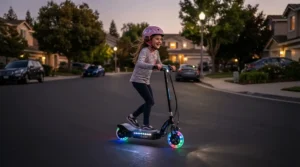
Safety gear you can’t see is safety gear that doesn’t work. The Gotrax Comet is the one model here with a real front light, a flashing red brake taillight and RGB deck lights, so it’s ready for dusk out of the box.
It also has dual brakes (mechanical plus electronic), kick-to-start, a Bluetooth speaker and a 132-lb rider limit. Testers measured 9.5 mph and about 4.5 miles from its 54 Wh battery. That is plenty for most 8-11 year olds, and honestly, how far does a ten-year-old ride before snack time?
The compromises are where you’d expect them. The 6-inch solid rubber tires are rougher on cracked pavement, and at 25 lbs it’s hefty for a small child to lift. There’s no app, no parental speed controls and no adjustable handlebar. As far as anyone can tell, the “controls” here are you, standing on the sidewalk.
Pros:
- ✅ Front light and flashing brake taillight
- ✅ Dual brakes plus kick-to-start safety
- ✅ Often among the cheapest options here
Cons:
- ❌ No app or parental speed controls
- ❌ Fixed handlebar height and rougher solid tires
Budget tier, around the $150-$250 range (check current price). Top value for visibility and simplicity.
5. Segway Ninebot C2 Lite — lightest, gentlest first scooter
For a smaller, newer rider, less is often more. The Segway Ninebot C2 Lite weighs just 17.2 lbs and pairs a 120W motor (deliberately tamer than the 150W models) with three riding modes, including a slower ~7.5 mph setting for beginners.
Testers clocked about 9 mph and roughly 4.2 miles of range. It’s UL 2272 certified, carries IPX4 water resistance, and reviewers noted a kid figured out the left-hand brake and right-thumb throttle in minutes.
The honest downside is that it’s a starter scooter, not a grow-into-it scooter. Handlebars don’t adjust, and the fit range tops out around 4’8″, so many kids outgrow it by 10 or 11. It doesn’t fold, and like the C2 Pro it relies on ambient lighting rather than a proper headlight, so keep rides to daylight or add clip-on lights.
Pros:
- ✅ Lightest scooter in this comparison
- ✅ UL 2272 certified with a slow beginner mode
- ✅ Simple controls a child masters fast
Cons:
- ❌ No adjustable handlebars, so it’s outgrown quickly
- ❌ No folding mechanism or headlight
Budget tier, roughly the $170-$250 range (check current price). Best when your child is small and new to riding.
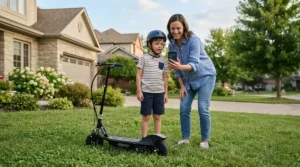
6. Razor E100 — the old-school, simple starter
Some products earn their reputation by refusing to change. The Razor E100 is chain-driven with a 100W motor, a twist-grip throttle, a steel frame and a hand-operated front brake, made for ages 8+ and riders up to 120 lbs.
Its manufacturer lists 10 mph and up to 40 minutes of run time. The kick-to-start design requires a push to about 3 mph before the motor engages, which is a genuinely useful safety layer. It also has an 8-inch pneumatic front tire that softens rough surfaces, and Razor states the electrical system is certified compliant with UL 2272 by an accredited lab.
Independent reviewers call it a fine first electric scooter that won’t last forever, and note a kid on a regular kick scooter can sometimes outrun it. That is a feature, not a flaw, for cautious parents. The tradeoffs are a heavier 26-lb build with a sealed lead-acid battery, fixed handlebar height, no app and a front-only braking lever.
Pros:
- ✅ Kick-to-start prevents accidental launches
- ✅ Pneumatic front tire smooths rough pavement
- ✅ Manufacturer states UL 2272-compliant electrical system
Cons:
- ❌ Heavy for its size, with fixed handlebar height
- ❌ Basic braking and no parental controls
Budget tier, around the $150-$250 range (check current price). Good value for cautious parents who want something plain.
7. FanttikRide C9 Pro — lightweight, carry-friendly and colorful
This one is for the family that lifts a scooter into a trunk twice a day. The FanttikRide C9 Pro is listed at about 14 lbs, with a one-step fold, 3.9-5.2 ft rider fit and a 132-lb limit.
The three fixed speed modes of 5, 8 and 10 mph offer a clean progression ladder. Range is listed around 5 miles, and one published review measured roughly 38 minutes of continuous use at 10 mph, close to the claim. Its deck and front lights help visibility at dusk.
Caveat time: my spec details here rest largely on a single review source, so verify the current listing before you buy. Reported weak spots are the 6-inch wheels and absence of suspension, which make gravel and roots unpleasant. It’s a sidewalk-and-park machine, not a trail machine, and I couldn’t confirm a parental app.
Pros:
- ✅ Very light at about 14 lbs
- ✅ Three clear speed modes: 5, 8 and 10 mph
- ✅ Lights add visibility at dusk
Cons:
- ❌ Small wheels and no suspension on rough ground
- ❌ No confirmed app-based parental controls
Budget tier, roughly the $150-$250 range (check current price). Strong value for portability and simple speed steps.
Setup and First 30 Days: A Practical Guide
The first month decides whether a scooter becomes a joy or a closet inhabitant. Amazon listings rarely say this, so here is a routine you can follow.
Day 1: Prep before the ride. Charge fully before first use, and use only the supplied charger. Check that handlebars, brakes, throttle, tires, cables and frame are in good condition, as the CPSC’s safety tips recommend. Set the slowest mode. Helmet on, closed-toe shoes, and knee and elbow pads for beginners.
Week 1: Off-street practice. Pick an empty parking lot or flat driveway. Practice kick-off, gentle stopping, and a full brake test at walking speed. Have your child scoot, stop and dismount fifty times. Boring? Yes. Effective? Also yes.
Week 2: Controlled sidewalk rides. Walk alongside. Practice turning, avoiding cracks and slowing for driveways.
Weeks 3-4: Earn the next mode. Unlock the next speed step only after smooth, jerk-free braking on demand.
Common first-month mistakes: letting kids ride in flip-flops, leaving the scooter charging overnight on a couch, skipping the pre-ride check, and jumping to the top speed mode because “they’re fine.” Charge on a hard floor, away from anything flammable, and never in a bedroom.
Two cheap upgrades pay off. Clip-on bike lights fix the headlight gap on the Segway Ninebot C2 Pro and Segway Ninebot C2 Lite, and a bell adds audible presence on shared paths.
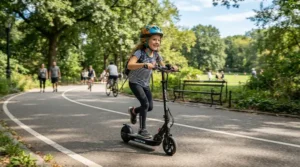
Real-World Scenarios: Which Scooter Fits Which Family
Specs are abstractions. Families are not. Here are three situations, with reasoning rather than one-size-fits-all verdicts.
Scenario 1: The tech-aware family with a wanderer. A 10-year-old rides around a suburban cul-de-sac network every afternoon, and a parent wants oversight without hovering. The Navee K100 Max fits, provided the household uses iPhones. Its longer range fits roaming, and the app lets a parent cap speed and check ride history.
Scenario 2: The budget-conscious first-timer. An 8-year-old wants a scooter for weekend park visits and the budget is tight. The Gotrax Comet delivers the best out-of-the-box lighting, while the Razor E100 offers a simpler, plainer feel. Both are best paired with a slow, supervised start. You supply the “parental controls” by watching.
Scenario 3: The small, cautious rider who may need to carry it. A slight 8-year-old needs something easy to lift onto a porch or into a car. The Segway Ninebot C2 Lite or FanttikRide C9 Pro wins on weight, though the Segway Ninebot C2 Lite gets outgrown sooner.
A fourth situation deserves mention. If your child is already 12 and 5’4″, the Segway Ninebot C2 Pro and Navee K100 Max are the ones with adjustable handlebars that fit tall kids, which is why they lead for older children. The decision is really three questions: how tall is your child, what oversight do you want, and how far will they ride?
Electric Scooter for Kids Age 8-12: Matching the Scooter to Age and Height
Age labels are marketing. Height, coordination and judgment are reality. For an electric scooter for kids age 8-12, height fit often matters more than the birthday.
Most brands market from age 6, which one reviewer calls too young for most children. Reaction times improve markedly between 6 and 9, and the ability to stay focused around distractions arrives around the same age. That is why 8 is a reasonable floor, and only if your child already rides a bike confidently and has spent time on a regular kick scooter first.
Ages 8-9: Prioritize light weight and gentle speed. The Segway Ninebot C2 Lite and FanttikRide C9 Pro suit smaller frames.
Ages 10-11: Bigger kids benefit from adjustable bars and stronger brakes. The Navee K100 Pro and Gotrax Comet make sense here.
Age 12 and tall for it: Choose scooters with 132-lb limits and adjustable stems, such as the Navee K100 Max. The Segway Ninebot C2 Pro works too, but its 110-lb cap is tighter.
Handlebar range is the quiet hero. A fixed-height model works for one growth stage. An adjustable one can stretch across four years.
Safe Electric Scooter for Kids: What “Safe” Actually Means
Let’s be blunt: no scooter is “safe” in the abstract. A safe electric scooter for kids is a system of a well-built machine, capped speed, protective gear, a supervised environment and a child who has earned the privilege.
The stakes are real. According to a CPSC micromobility report, children 14 and younger accounted for about 36% of micromobility injuries from 2017 to 2022, double their share of the population, and fractures were among the most common injuries. Most incidents stem from falls, loss of control and pavement hazards. Fires were also flagged as a significant hazard across device types.
So what should you check on the product itself?
- Braking: dual systems (electronic plus mechanical) give redundancy.
- Kick-to-start: prevents accidental take-offs.
- Speed cap: a low ceiling gives a child time to react.
- Visibility: real lights beat ambient LEDs, which is why the Gotrax Comet stands out.
- Certification: electrical safety documentation, covered below.
Then add the human parts: helmet always, pads for beginners, closed-toe shoes, sidewalks away from traffic. A locked speed mode is the closest thing to a seat belt this category has.
Age-Appropriate Speed Settings: A Practical Ladder
Speed is where a kids electric scooter stops being a toy. Age-appropriate speed settings mean matching the cap to the child’s demonstrated skill, not the box’s age label. Reaction distance grows with speed, and a child’s ability to spot hazards is still developing.
| Stage | Suggested cap | Where to ride | Best For |
|---|---|---|---|
| First rides | About 5-7.5 mph | Empty lot, adult alongside | Segway Ninebot C2 Lite, FanttikRide C9 Pro |
| Building skill | About 7.5-8 mph | Quiet sidewalks and park paths | Navee K100 Pro, FanttikRide C9 Pro |
| Confident rider | About 9-10 mph | Familiar routes, still supervised | Gotrax Comet, Razor E100 |
| Advanced tween | 10-12 mph | Only after flawless braking | Navee K100 Max, Segway Ninebot C2 Pro |
This ladder is my analytical suggestion built from the speed modes these scooters offer, not a regulatory standard. Local laws vary, and many places set minimum ages for e-scooters on public roads, so check yours before riding off the driveway.
The tables reveals something useful. Only scooters with multiple modes let you climb this ladder without buying a new device. The Navee K100 Pro starts around 7.5 mph, and the FanttikRide C9 Pro offers fixed 5/8/10 steps. Single-speed designs like the Razor E100 and Gotrax Comet ask you to accept one speed, so pick your comfort level in advance.
Parental Control Features That Actually Matter
Most “parental controls” are marketing gloss. A few are genuinely useful.
Speed limiting and mode locking. This is the one that counts. The Navee models let a parent cap speed per mode and lock out sport mode. The Segway Ninebot C2 Pro offers app-based speed limiting too.
GPS and geofencing. The Navee K100 Max supports location tracking via Apple Find My, with safe-zone alerts. That is peace of mind for older, roaming kids, but Android households are out of luck.
Ride history. A quiet accountability feature that shows where and how long a child rode, available on both Navee models.
Kick-to-start. An analog control that’s easy to overlook. The Gotrax Comet, Segway Ninebot C2 Lite and Razor E100 require a push before the motor engages.
What doesn’t matter much: digital pets, RGB effects and speakers. They drive daily use, and one tester’s nephew enjoyed the Navee K100 Max pet for about a week, but none of it prevents a crash.
Here’s the honest takeaway. If you won’t open the app, don’t pay for it. A supervised child on a slow, simple scooter beats an unsupervised child on a connected one. Parental control features are a tool for oversight, not a substitute for it.
Safety Certification Standards Explained
Safety certification standards sound dull until a battery smolders in your garage. For scooters, the label to look for in the US is UL 2272.
UL 2272 evaluates the electrical drive train, battery and charger combination. It’s a fire-and-electrical-safety standard, and UL itself notes it does not evaluate performance, reliability or rider safety. So a UL 2272 label tells you the battery system was tested. It says nothing about brake quality or whether your seven-year-old should be riding.
Among our picks, the Segway Ninebot C2 Lite is reported as UL 2272 certified, and Razor states the Razor E100‘s electrical system is certified compliant with UL 2272 by an accredited lab. For the others, I couldn’t verify certification on every listing, so check the product page and packaging yourself.
Watch the wording. “Tested to UL standards,” “designed to meet UL requirements” or “uses UL-certified cells” are not the same as certification of the finished scooter. Look for the actual certification mark and model listing.
Beyond certification, practical battery habits matter: use the included charger, don’t charge unattended overnight, keep it away from flammables, and stop using any scooter that swells, overheats or smells odd. A certification reduces risk. It doesn’t remove it.
How to Choose an Electric Scooter for Kids
Here is a quick, snippet-friendly checklist for choosing an electric scooter for kids, with the reasoning behind each step.
- Confirm age and skill readiness. Eight is a realistic minimum, and only for kids who already handle a bike or kick scooter well.
- Match height and weight. Check the rider limit and handlebar range. Adjustable bars extend usable years.
- Pick a speed ceiling. Choose a scooter whose top mode you’d be comfortable with today, not next year.
- Check the brakes. Prefer dual systems, and confirm your child’s hands can squeeze the lever comfortably.
- Look at battery watt-hours. Around 55 Wh gives roughly 4 real miles, and around 110 Wh roughly doubles it.
- Verify certification. Look for UL 2272 on the finished product.
- Decide on oversight. App controls and GPS matter for roaming kids. Kick-to-start and low caps suit supervised ones.
Two extra filters help. Weight matters if your child must carry it, and lighting matters if they’ll ever ride near dusk.
✨ Don’t Miss These Exclusive Deals!
🔍 Take your search for the right kids electric scooter to the next level with these carefully selected products. Click on any highlighted item to check current pricing and availability. These picks will help you build safe, confident riding habits your family will love!
Kids Electric Scooter vs Kick Scooter
A kids electric scooter and a regular kick scooter share a deck and a handlebar, and very little else. The real question is whether the motor adds enough fun to justify the added risk and cost.
| Factor | Kids electric scooter | Kick scooter | Best For |
|---|---|---|---|
| Speed | 5-12 mph by mode | Limited by leg power | Electric for thrills, kick for cautious starts |
| Weight | About 14-26 lbs | Lighter | Kick for young carriers |
| Cost | Higher, plus charging | Lower | Kick for budget |
| Maintenance | Battery care, tire checks | Minimal | Kick for simplicity |
| Skill training | Requires braking discipline | Builds balance | Kick as a stepping stone |
The table makes the tradeoff plain. A kick scooter builds balance, leg strength and braking judgment at almost no cost, which is why one reviewer suggests it is often a better fit for kids aged 6-7. An electric one delivers longer trips and less fatigue, but adds speed, weight and battery upkeep.
Reviewers of the Razor E100 observed that a kid on a kick scooter can occasionally outpace it. That is oddly reassuring: if your child can already handle a kick scooter at that pace, the jump to electric is smaller. Consider the kick scooter a prerequisite, not a rival.
Long-Term Cost and Maintenance
The sticker price is only chapter one. Total cost of ownership includes charging, replacement parts, protective gear and how soon your child outgrows the thing.
| Model | Approx. price tier | Value verdict | Best For |
|---|---|---|---|
| Navee K100 Max | Premium ($300-$450) | Best long-term value if you’ll use controls | Roaming older kids |
| Segway Ninebot C2 Pro | Mid-premium ($250-$350) | Strong range per dollar | Tall kids, brand loyalists |
| Navee K100 Pro | Mid ($200-$300) | Value only for app users | Budget parental control |
| Gotrax Comet | Budget ($150-$250) | Top starter value | Visibility-first buyers |
| Segway Ninebot C2 Lite | Budget ($170-$250) | Short lifespan, high polish | Small, new riders |
| Razor E100 | Budget ($150-$250) | Basic but proven design | Cautious first scooters |
| FanttikRide C9 Pro | Budget ($150-$250) | Great portability | Carry-heavy families |
Price ranges are approximate, may vary and change often. Check current price before buying.
Cost-per-year favors adjustable models. The Navee K100 Max costs more upfront but can serve from age 8 to 13, while the Segway Ninebot C2 Lite may be outgrown within two years. Spread over its useful life, the pricier scooter can come out cheaper per year of riding.
Maintenance stays modest. Solid or hollow tires remove flats, but check bolts, brake pads and folding latches monthly. Store scooters indoors and avoid leaving the battery fully drained for long stretches. Replace worn brake components early, because a child’s sense of “it’s fine” is not a safety inspection.
FAQ
❓ What is the best age to start a kids electric scooter?
❓ How fast should a safe electric scooter for kids go?
❓ Do parental control features really work?
❓ Does UL 2272 mean a scooter is safe to ride?
❓ How long does a kids electric scooter battery last per charge?
Conclusion
Choosing an electric scooter for kids isn’t a shopping problem. It’s a readiness problem with a shopping component. The safest scooter is the one matched to your child’s height, skill and your willingness to supervise.
If you want deep oversight, the Navee K100 Max leads with GPS and app controls. If you want range and a familiar brand, the Segway Ninebot C2 Pro is the obvious pick. Tighter budget? The Gotrax Comet has the best lighting, the Navee K100 Pro the cheapest app control, the Segway Ninebot C2 Lite and FanttikRide C9 Pro suit small or carry-focused riders, and the Razor E100 remains a plain, proven starter.
Whatever you choose, start slow, verify certification, insist on a helmet and earn each speed step. The goal isn’t the fastest kid on the block. It’s a kid who rides happily and comes home in one piece.
Recommended for You
- 7 Best Vespa Style Electric Scooters For Adults In 2026
- Moped Style Electric Scooter: 7 Retro Rides Worth Riding In 2026
- Best Mobility Scooter For Outdoor Use: 7 Rugged Picks (2026)
Disclaimer: This article contains affiliate links. As an Amazon Associate, I earn from qualifying purchases. If you purchase products through these links, we may earn a small commission at no additional cost to you.
✨ Found this helpful? Share it with your friends! 💬🤗
