In This Article
A youth electric scooter is a stand-up, battery-powered kick scooter sized and speed-limited for kids roughly 6 to 15 years old, typically topping out between 7 and 13 mph, with lighter frames, smaller decks, and parent-friendly controls. The best youth electric scooter models also adapt to growth, with adjustable handlebars and generous weight limits.

Here’s the catch nobody mentions on the box: kids grow faster than gadgets age. A scooter that fits a 3’8″ seven-year-old can feel like riding a toddler’s trike to a 5’2″ thirteen-year-old. That mismatch is why so many families end up buying twice.
This guide is built to prevent that. I researched seven real models using manufacturer spec sheets, retail listings, and published expert testing. Nobody here claims to have ridden them, and where verified review data ran thin, I say so rather than papering over it. Every spec comes with a plain-English translation, because “150W” means nothing until you know what it does on your street.
One thing worth knowing up front is electrical certification. A label like UL 2272 covers the battery, charger, and drive system, and all seven scooters below list it or a close equivalent. It’s a floor, not a guarantee of a good ride.
An electric scooter for youth ages 8-15 really spans two different buyers: the small, cautious beginner and the tall, impatient teenager. We’ll cover both, and show you how to pick a scooter that bridges them.
Quick Comparison: Youth Electric Scooter Models at a Glance
| Scooter | Handlebar | Top Speed | Weight Limit | Listed Range | Approx. Price Range* | Best For |
|---|---|---|---|---|---|---|
| Gotrax GKS Mini | Fixed | 7.5 mph | 120-121 lbs | ~3.75 mi | ~$100-$150 | Small first-timers on a tight budget |
| FanttikRide C9 Pro | 3 positions | 10 mph | 132 lbs | ~5 mi | ~$150-$300 | Budget-friendly growth |
| Gyroor H30 Max | 3 positions | 10 mph | 121-132 lbs | 40-60 min | ~$150-$300 | Lightest adjustable option |
| NAVEE K100 Pro | 3 positions | 9.9 mph | 110 lbs | ~6.8 mi (claimed) | ~$250-$300 | Parent app control |
| Segway Ninebot C2 Pro | 3 positions | 12.4 mph | 132 lbs | ~9.3 mi | ~$250-$300 | All-round growth and features |
| NAVEE K100 Max | 3 positions | 12.4 mph | 132 lbs | ~8.7-11.2 mi | Above the K100 Pro tier | Longest-lasting, tracking |
| Hiboy S2 Lite | Fixed (folds) | 13 mph | 180 lbs | ~10.6 mi | ~$250-$350 | Ages 12-15 |
*Ranges at the time of research; check current price, as they vary with promotions and retailer.
Looking at the table, the three “adjustable under budget” contenders (FanttikRide C9 Pro, Gyroor H30 Max, NAVEE K100 Pro) all cap out near 10 mph, which suits kids from about 8 to 12. Spend more and the Segway Ninebot C2 Pro and NAVEE K100 Max buy you real range and a higher speed ceiling, but note that both can be parent-limited through an app. The Hiboy S2 Lite is the outlier: fast, strong, and fixed-height, so it’s a teen pick, not a toddler-to-teen pick.
💬 Just one click — help others make better buying decisions too!😊
Top 7 Youth Electric Scooter Picks: Expert Analysis
1. Gotrax GKS Mini — gentlest budget starter for small riders
The headline here is restraint: a 7.5 mph cap that keeps a first-timer’s judgment ahead of the scooter.
The Gotrax GKS Mini pairs a 150W motor with 6-inch solid tires, so there are no flats to fix but a buzzier ride over cracked pavement. It weighs roughly 16 pounds, light enough for a seven-year-old to carry up porch steps. Listings show a 120-121 lb weight limit and about 3.75 miles of range. In practice, that means a trip to the park and back, not an all-day roam.
Based on the spec comparison, this is a first scooter for the younger end of the 6-12 bracket. The handlebar is fixed, so it’s also the model on this list a growing child will outgrow first. That matters if you’re weighing budget-friendly youth options against long-term fit.
I couldn’t pull verified review text specific to the Mini, so I’m leaning on published expert coverage of the GKS line. Reviewers praise the light frame and gentle speed cap, and flag short range and a compact deck as the trade-offs.
Pros:
- ✅ Very light frame that small kids can lift
- ✅ Gentle 7.5 mph cap suits beginners
- ✅ Solid tires mean zero flat-fixing
Cons:
- ❌ Fixed handlebar limits growth years
- ❌ Short range for longer outings
Price range: roughly $100-$150 at the time of research (check current price). Verdict: excellent value if your child is small today and you want a low-stakes first step.
2. FanttikRide C9 Pro — cheapest way to get an adjustable stem
This is the model that makes the “grows with your child” promise affordable.
The FanttikRide C9 Pro offers three handlebar positions, listed at 31.7, 34.1, and 36.5 inches on Amazon (the brand site lists slightly different numbers, so confirm before buying). It fits riders about 3.9 to 5.2 feet tall, supports 132 lbs, and offers 5, 8, and 10 mph speed modes. The speed ladder matters: a nervous eight-year-old starts at 5 mph and graduates as confidence grows.
A reviewer who tested the C9 Pro measured roughly 9.8 mph and 3.8 miles of range, against the 5 miles claimed. That gap is typical in this price tier, so plan outings accordingly. Folded, it’s about 29.5 inches long, trunk-friendly.
Aggregated sentiment looks solid: Amazon’s listing shows roughly 4.5 stars across a few hundred ratings, with Walmart’s page more modest. Reviewers like the adjustable bar and the price, and note limited range, a friction-style brake, and a younger brand.
Pros:
- ✅ Three-position bar fits many growth stages
- ✅ Speed modes ease beginners into riding
- ✅ UL 2272 listed and trunk-friendly fold
Cons:
- ❌ Real-world range falls short of claims
- ❌ Smaller brand with a shorter track record
Price range: roughly $150-$300, depending on promotions (check current price). Verdict: the best-value adjustable pick for ages 8-12.
3. Gyroor H30 Max — lightest adjustable scooter on the list
At about 13 pounds, this is the scooter a small child can truly manage alone.
The Gyroor H30 Max runs a 150W motor with 6, 8, and 10 mph modes, a roughly 56Wh battery, and about 40-60 minutes of runtime. The bar adjusts to 34, 36, and 38 inches, and listings cite a 132 lb limit (one retailer says 121, so double-check). Dual braking, electronic plus a rear foot brake, gives a kid two ways to stop. There’s also a Bluetooth speaker, which kids love and parents may tolerate.
Spec sheets disagree on suspension (rigid, rear, or dual, depending on the listing), so treat any suspension claim skeptically. The 6-inch solid tires also mean a firm ride on rough sidewalks.
Verified review text was thin. One retailer-page buyer reported the scooter holding up well and the bar being comfortable for a grandson. That’s one voice, so weigh it lightly. A comparison guide did note that this and the Segway were the only models on its list with adjustable bars.
Pros:
- ✅ Remarkably light for an adjustable-bar scooter
- ✅ Dual brakes plus three speed modes
- ✅ Fast roughly two-hour charge
Cons:
- ❌ Conflicting specs across listings
- ❌ Solid tires feel harsh on rough surfaces
Price range: roughly $150-$300 (check current price). Verdict: strong for lighter kids and carry-it-everywhere families.
4. NAVEE K100 Pro — best parent-control app at this price
The standout is the app: you set the speed ceiling, and your child can’t override it.
The NAVEE K100 Pro has a 3-level adjustable bar (885, 955, and 1025 mm, or about 34.8, 37.6, and 40.4 inches), a 110 lb limit, and a 7-inch hollow tire. Its 160W peak motor tops out near 9.9 mph in the US, and the scooter weighs roughly 19.8 pounds. NAVEE says the series fits riders 115-170 cm tall. One important trap: the cheaper base NAVEE K100 has a fixed 37.6-inch bar, so confirm you’re buying the Pro.
Independent testing found about 9.9 mph and 4.3 miles of range, which is the practical ceiling for the 55Wh battery. It’s a neighborhood-loop scooter, not a long-ride one.
For review sentiment, I found expert praise for the parental controls and build rather than a large verified pool of customer reviews. The 110 lb cap also makes it the first on this list a taller preteen might outgrow by weight.
Pros:
- ✅ App speed-lock puts parents in control
- ✅ Adjustable bar with a foldable frame
- ✅ UL 2272 certified with a rear drum brake
Cons:
- ❌ Lower 110 lb limit than rivals
- ❌ Modest real-world range
Price range: roughly $250-$300 (check current price). Verdict: pick this if app control matters most.
5. Segway Ninebot C2 Pro — most balanced all-rounder for growing kids
If I had to pick one scooter for a family with an eight-year-old and a nine-year-old, this would be the shortlist leader.
The Segway Ninebot C2 Pro has a three-position stem at 34.8, 37.8, and 40.7 inches, fitting riders from about 3’5″ to 5’6″. It carries 132 lbs (US), hits 12.4 mph, and lists up to 9.3 miles of range from a 108Wh battery. A 150W motor drives the 7-inch inner hollow tires, and you get an app speed limiter, a Bluetooth speaker, and UL 2272 certification. Weighing 23.6 pounds, it’s heavier than budget picks, a real consideration for small kids who must carry it.
Segway’s own materials list age 6+, but some reviewers suggest 9+ because of the speed and weight, a sensible caution worth following. Published testing recorded about 12.2 mph and 7.8 miles, close to the claims.
Reviewers consistently describe it as well built and genuinely fun, with real range, and the app limiter is a frequent highlight.
Pros:
- ✅ Real range that survives actual riding
- ✅ App-based speed limiting for parents
- ✅ Broad 3’5″-5’6″ fit range
Cons:
- ❌ Heavier than budget competitors
- ❌ Top speed may overwhelm small beginners
Price range: roughly $250-$300 (check current price). Verdict: the safest bet for a scooter that lasts years.
6. NAVEE K100 Max — longest runtime, with Find My tracking
This is the scooter a kid won’t outgrow in a year, which is exactly why it costs more.
The NAVEE K100 Max steps up from the Pro with a 150W (260W peak) motor, a 110Wh battery, and a 132 lb US limit. The bar offers three positions, fitting riders roughly 3’9″ to 5’7″. NAVEE lists 8.7 miles at 12.4 mph and 11.2 miles at 9.3 mph for a 132-lb rider. It adds Apple Find My tracking and a Bluetooth speaker. The tracking is a real bonus for parents of kids who wander farther each summer.
Testing recorded about 12.1 mph and 8.4 miles, in line with the claims, and one reviewer named it best overall for ages 8-14. The caveat is the 5% climbing rating: steep hills will slow it, and 5.5 hours of charging means planning ahead.
A big pool of verified customer reviews wasn’t something I could confirm, so I lean on expert testing here.
Pros:
- ✅ Largest battery and best range here
- ✅ Find My tracking adds peace of mind
- ✅ Highest weight limit in the NAVEE family
Cons:
- ❌ Weak on steep hills
- ❌ Long 5.5-hour charge time
Price range: above the K100 Pro tier (check current price). Verdict: worth it for families wanting the longest lifespan.
7. Hiboy S2 Lite — the bridge scooter for ages 12-15
Strength and speed are the story: this one won’t feel like a toy to a teenager.
The Hiboy S2 Lite pairs a 250W motor (350W peak) with a 36V 5Ah battery, 13 mph top speed, about 10.6 miles of range, and a 180 lb limit. It folds, weighs about 21-23 pounds, rides on 6.5-inch solid tires, and climbs about 15 degrees. Hiboy’s own spec page recommends it for ages 8 to 15, though 13 mph is brisk for an eight-year-old, so I’d treat 11 and up as the sensible floor.
There’s no adjustable stem, so the fit is fixed. For a tall teen that’s fine; for a small child, it’s the wrong tool.
I couldn’t verify independent customer review text here. The scooter appears in Hiboy’s own guides as the pick for slightly older kids, which is brand-sourced, so weigh it accordingly.
Pros:
- ✅ Strong 250W motor with 15-degree climbing
- ✅ 180 lb limit outlasts most growth spurts
- ✅ Folds compactly for lockers and trunks
Cons:
- ❌ Fixed stem height
- ❌ 13 mph is too fast for small beginners
Price range: roughly $250-$350 (check current price). Verdict: pick it for teens, not toddlers-to-teens.
Your First 30 Days With a Youth Electric Scooter: Setup, Charging, and Maintenance
Most problems show up in the first month, and almost all are preventable.
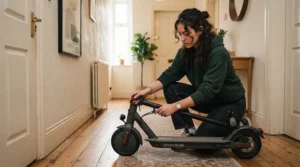
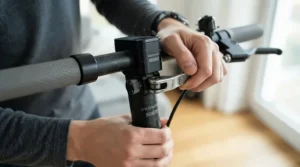
Week 1: set the fit and the limit. Raise or lower the stem so grips land around your child’s waist, with a slight bend at the elbow. That’s a common fitting rule of thumb, not a manufacturer spec. Then lock the speed to the lowest mode. On apps like Segway Ninebot C2 Pro‘s or NAVEE K100 Pro‘s, set a parent limit before the first ride.
Week 2: build the habit. Teach “kick, then twist” starts, practice braking from walking pace, and keep early rides on smooth, flat, car-free pavement. Check bolts and the stem clamp before every ride, as CPSC’s safety tips for e-scooter riders also stress: wear a helmet, avoid stunts, and follow the age and weight limits.
Weeks 3-4: graduate and maintain. Move up a speed mode only after your child brakes confidently. Wipe the deck and stem, check tire wear on Gotrax GKS Mini-style solid tires, and store at roughly half-to-full charge in a cool, dry place.
Common first-month mistakes: charging overnight unattended, using a non-original charger, and skipping the stem-height recheck after a growth spurt.
Real-World Scenarios: Which Youth Electric Scooter Fits Which Family
Scenario 1: the cautious seven-year-old, tight budget. Your child is under 4 feet, you’re not sure they’ll love it, and the sidewalk loop is under a mile. The Gotrax GKS Mini keeps the downside small. If they take to it, you’ve learned something cheaply.
Scenario 2: two siblings, ages 8 and 11, one scooter. Here adjustability earns its keep. The Segway Ninebot C2 Pro‘s 3’5″ to 5’6″ fit range and speed limiter let both ride the same machine, with the younger child capped and the older one released. Budget-sensitive? The FanttikRide C9 Pro covers a similar spread at lower cost, with less range.
Scenario 3: the tall thirteen-year-old who “outgrew” a kids’ scooter. At 5’4″ and 120 lbs, the Hiboy S2 Lite (180 lb limit, 13 mph) fits better than most youth models. A NAVEE K100 Max also works if you want parent controls and tracking, though 12.4 mph is its ceiling.
Notice the pattern: budget, number of riders, and rider height decide everything. Speed rarely does.
How to Choose a Youth Electric Scooter: 6 Steps
- Measure your child. Height, not age, predicts fit. Compare against each scooter’s listed rider height range.
- Check the weight limit. Add some headroom: a rider near the cap strains the motor and brakes.
- Prioritize an adjustable stem. One that moves through three positions can add years of use.
- Match speed to confidence. A 10 mph scooter with a lockable limit beats a 13 mph one for beginners.
- Verify certification. Look for UL 2272 and see CPSC’s micromobility information center for what to check.
- Be honest about range. Real range is often 20-40% below the claim, so size up if outings are long.
Youth Electric Scooter With Adjustable Height: How Adjustable Stem Height Really Works
An adjustable stem height is the single feature most responsible for stretching a scooter’s life. But “adjustable” varies a lot. Compare the stem ranges:
| Scooter | Stem Heights (approx.) | Listed Rider Height | Best For |
|---|---|---|---|
| FanttikRide C9 Pro | 31.7 / 34.1 / 36.5 in | 3.9-5.2 ft | Smaller kids, budget |
| Gyroor H30 Max | 34 / 36 / 38 in | Ages 6-14 | Light, mid-size kids |
| NAVEE K100 Pro | 34.8 / 37.6 / 40.4 in | 115-170 cm | Taller growth range |
| Segway Ninebot C2 Pro | 34.8 / 37.8 / 40.7 in | 3’5″-5’6″ | Widest range |
The FanttikRide C9 Pro starts lowest, which suits small riders, but tops out at 36.5 inches, so a tall teen will outgrow it first. The Segway Ninebot C2 Pro and NAVEE K100 Pro top out near 40 inches, far better for a youth electric scooter with adjustable height that has to last into the teens. Each position adds only an inch or two, so adjustments help gradually, not dramatically.
Youth Electric Scooter Weight Capacity: Reading the Numbers
Youth electric scooter weight capacity is easy to skim past, yet it quietly decides how long a scooter lasts. Weight limits cluster in three tiers: about 110 lbs (NAVEE K100 Pro), 120-132 lbs (Gotrax GKS Mini, FanttikRide C9 Pro, Gyroor H30 Max, Segway Ninebot C2 Pro, NAVEE K100 Max), and 180 lbs (Hiboy S2 Lite).
Here’s what the number really means. A child near the cap sees weaker acceleration, slower hill climbs, shorter range, and more brake wear, because the motor and battery are sized for a lighter load. Ratings are also tested under controlled conditions, and manufacturers sometimes list different limits by region: Segway quotes 110 lbs on some international pages and 132 lbs for US models.
The practical rule: pick a scooter whose cap is at least 15-20% above your child’s current weight, then re-check when they grow. A 100-lb ten-year-old on a 110-lb scooter has almost no runway. The same child on a 132-lb model has years.
Electric Scooter for Youth Ages 8-15: Matching the Scooter to the Age
An electric scooter for youth ages 8-15 covers a lot of ground, so slice it into bands.
Ages 8-10: Small, cautious, and still learning balance. Prioritize low top speed, light weight, and speed modes. The Gotrax GKS Mini, Gyroor H30 Max, and FanttikRide C9 Pro fit well.
Ages 10-12: Growing quickly, wanting range. The Segway Ninebot C2 Pro and NAVEE K100 Pro hit this sweet spot, with adjustable stems that extend past the age-12 mark.
Ages 12-15: Tall, fast-growing, and easily bored. The NAVEE K100 Max (up to 14 per NAVEE) and Hiboy S2 Lite keep pace. Beyond 5’6″ or 120 lbs, most youth models run out of room.
Age ranges on listings overlap and sometimes conflict, so trust height and weight first. Also check your state’s rules: one buying guide notes some states set minimum ages, including reported limits for kids under 14 in New Jersey, so confirm locally.
Growing Child Accommodation: Making One Scooter Last Years
Growing child accommodation is really a three-part test: stem height, weight limit, and speed headroom. A scooter must flex on all three.
Consider the numbers. A child gains roughly 2 to 3 inches a year through the middle years, and a stem with three positions spans 5-6 inches. That’s about two years of comfortable growth per scooter, three at best. So the ideal plan is a scooter that fits your child on the lowest or middle setting, leaving the upper ones in reserve.
Speed headroom matters just as much. A Segway Ninebot C2 Pro or NAVEE K100 Max, with app limits, can start gentle and “unlock” faster as skills grow. A fixed-speed scooter can’t.
Handing it down also counts as accommodation. Siblings can share an adjustable scooter for years, while a fixed-stem Gotrax GKS Mini typically serves one small rider for one or two seasons. Factor resale value too: popular models hold their value better.
Budget-Friendly Youth Options: Cost and Value
Budget-friendly youth options come in two flavors: cheap now, or cheap per year of use.
| Scooter | Approx. Price Range | Likely Useful Years | Best For |
|---|---|---|---|
| Gotrax GKS Mini | ~$100-$150 | 1-2 | Small kids, trial run |
| FanttikRide C9 Pro | ~$150-$300 | 2-3 | Adjustable value |
| Segway Ninebot C2 Pro | ~$250-$300 | 3-4 | Longest-term value |
The Gotrax GKS Mini wins on sticker price but loses on years. The FanttikRide C9 Pro lands in the middle: pay more upfront and get a scooter that adjusts for a second and third year. Spread over the likely years of use, the Segway Ninebot C2 Pro often works out cheapest per year despite the higher entry cost, especially if a younger sibling inherits it.
Total cost of ownership includes helmets, pads, and replacement chargers, though solid tires spare you tube repairs.
Youth Electric Scooter vs Kick Scooter vs Electric Bike
| Option | Speed | Learning Curve | Weight | Best For |
|---|---|---|---|---|
| Kick scooter (manual) | Child-powered | Very low | Light | Young beginners |
| Youth electric scooter | 7-13 mph | Low | 13-24 lbs | Ages 8-15 neighborhood riding |
| Youth e-bike | Higher | Moderate | Heavier | Longer commutes |
Compared with a manual kick scooter, a youth electric scooter adds motor assist, which keeps kids riding for longer. The cost is more weight and a battery to look after. Against a youth e-bike, it’s lighter, folds, and fits a locker. An e-bike wins on distance and stability.
My take: if your child has never balanced on two wheels at speed, start with a manual scooter or a low-speed model like the Gotrax GKS Mini. Move to something like the Segway Ninebot C2 Pro once balance is automatic.
Safety, Certification, and Local Rules
Safety here comes down to gear, charging habits, and knowing what certification does and doesn’t cover.
A UL 2272 listing evaluates electrical and battery hazards, not ride quality or crash safety, so it won’t tell you how a scooter handles a pothole. CPSC’s micromobility injury study found that only about 13 percent of injured riders in its 2022 follow-up were wearing a helmet. That statistic should land harder than any spec sheet.
Practical rules:
- Always require a helmet, ideally with knee and elbow pads.
- Charge only with the original charger, and only while you’re home and awake.
- Keep to smooth, car-free surfaces and avoid wet pavement.
- Never carry passengers: one rider per scooter.
Local rules vary widely. Sidewalk, bike lane, and age rules differ by state and sometimes by city, so check your DMV and municipal rules before the first ride.
FAQs
❓ How fast should a youth electric scooter go for an 8-year-old?
❓ Is a youth electric scooter with adjustable height worth the extra money?
❓ How long does one charge last on a youth electric scooter?
❓ Do kids need a helmet on an electric scooter?
❓ Where can kids legally ride a youth electric scooter?
Conclusion
If you remember one thing, make it this: buy for the child your kid will be in two years, not the one standing in front of you today. For most families, that points to an adjustable stem, a weight limit with headroom, and a speed limit you can raise on your schedule.
Here’s the quick verdict. The Segway Ninebot C2 Pro is the safest all-round bet. The NAVEE K100 Max is the long-lived, feature-rich upgrade. The FanttikRide C9 Pro and Gyroor H30 Max are the smart adjustable picks when money is tight. The NAVEE K100 Pro wins for parental app control. The Gotrax GKS Mini is the gentle, low-cost starter, and the Hiboy S2 Lite suits teens who’ve outgrown everything else.
Whichever you choose, pair it with a helmet, a charging routine, and a quick local-rules check. A good youth electric scooter should feel like freedom for your kid and peace of mind for you.
Recommended for You
- Electric Scooter For Teenagers: 7 Best Safe Picks In 2026
- Electric Scooter For Kids: 7 Safe Picks Parents Trust In 2026
- 7 Best Vespa Style Electric Scooters For Adults In 2026
Disclaimer: This article contains affiliate links. As an Amazon Associate, I earn from qualifying purchases. If you purchase products through these links, we may earn a small commission at no additional cost to you.
✨ Found this helpful? Share it with your friends! 💬🤗
