In This Article
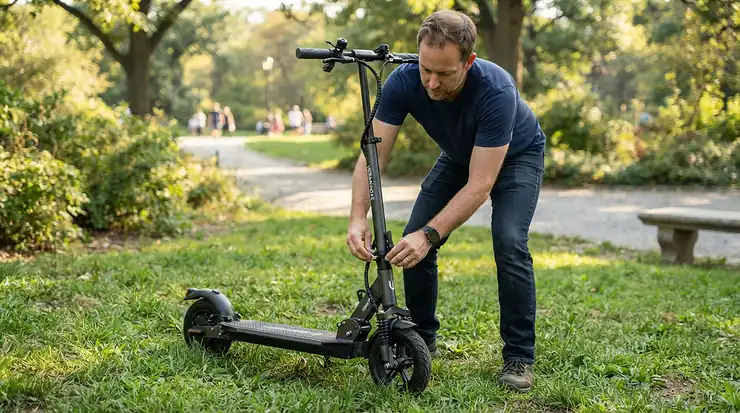
Every parent knows the moment. Your kid spots a neighbor gliding past on an electric scooter, goes quiet for exactly three seconds, then asks the question. 🛴
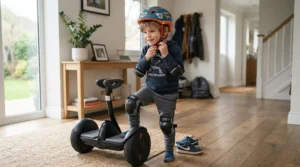
Here’s the uncomfortable part before we shop. Federal injury data keeps climbing: the Consumer Product Safety Commission’s Micromobility Information Center says emergency room-treated injuries and deaths tied to these devices are increasing. It also urges buyers to choose products certified to voluntary safety standards. So the safest electric scooter for kids isn’t the fastest or the flashiest. It’s the one that keeps speed low, limits surprises, and gives you control.
This guide is built on spec comparisons and published expert testing, not on pretending anyone has ridden all seven models for you. Reaching the safest electric scooter for kids takes three things: honest hardware, sensible rules, and a parent who stays in the picture. We’ll cover speed limiters, LED lights, deck grip, certifications, gear and supervision, then rank seven real models by who they suit.
One more thing, said plainly. The American Academy of Pediatrics advises that children under 16 shouldn’t ride motorized scooters at all. If you decide to buy anyway, and plenty of families do, this guide is about shrinking the risk, not erasing it.
Quick Comparison: Safest Electric Scooter for Kids at a Glance
Short on time? This table maps each pick to the priority it serves best. Speeds and features come from manufacturer listings and independent testing. Prices are approximate tiers, so check current price before you buy.
| Pick | Standout safety angle | Speed control | Lighting | Best For |
|---|---|---|---|---|
| Segway Ninebot C2 Pro | App-based limits, dual UL listing reported | App + ride modes | Ambient LEDs, reflectors | Parents wanting brand reliability |
| Navee K100 Max | Full parental app plus GPS | App caps, mode lock | RGB deck lights | Families who want maximum oversight |
| Navee K100 Pro | Same app, smaller battery | App caps, mode lock | Basic | Budget-conscious control seekers |
| Gotrax Comet | Best lighting package here | Modes on the scooter | Headlight + brake taillight | Evening-visibility priority |
| Segway Ninebot C2 Lite | Gentle 7.5 mph beginner mode | Three modes | Ambient LEDs | Smaller, newer riders |
| Gotrax GKS Mini | Low 7.5 mph speed | Fixed low speed | Minimal | First-time riders on a budget |
| FanttikRide C9 Pro | 5/8/10 mph tiers, kick-to-start | Modes on the scooter | Pedal-side LEDs | Gradual skill progression |
The pattern worth noticing: none of these wins every category. If you want hard parental control, the Navee K100 Max and Segway Ninebot C2 Pro lead. If lights matter most, the Gotrax Comet is the standout. For the gentlest introduction, the Gotrax GKS Mini and Segway Ninebot C2 Lite keep speeds manageable.
💬 Just one click — help others make better buying decisions too!😊
What Is the Safest Electric Scooter for Kids?
The safest electric scooter for kids is a UL 2272-certified model with a low, adjustable top speed (roughly 5-10 mph), a kick-to-start throttle, dual braking, and visible lighting, sized to the child’s height and weight. No scooter is risk-free; helmets and supervision matter more than any single spec.
Let’s unpack that. “Low top speed” matters because reaction time and hazard-spotting improve a lot between ages 6 and 9, and a scooter doesn’t wait for a kid to catch up. “Kick-to-start” matters because a bumped throttle shouldn’t launch a child. “Dual braking” matters because one failed brake shouldn’t mean no brakes. “Sized to the child” matters because an oversized scooter is a loss-of-control machine.
Notice what’s missing: top-end power, Bluetooth speakers, rainbow underglow. Fun features drive daily use, which is genuinely valuable, but they’re not safety features. Treat them like sprinkles. Pleasant, never structural.
Top 7 Safest Electric Scooters for Kids: Expert Analysis
1. Segway Ninebot C2 Pro — app-based speed limiting you can trust
The Segway Ninebot C2 Pro earns the top slot because it combines real parental controls with brand-level build quality. It’s listed for ages 9+ in retail listings, and independent testers recommend it for ages 8-12.
On paper, you get a 108 Wh battery, a 150W motor, and adjustable handlebars fitting riders from about 3’9″ to 5’7″. In practice, that battery produced roughly 7.8 miles of real riding in published testing, nearly double what the 55 Wh scooters manage. Tested top speed reached about 12.2 mph, which is why the app limiter isn’t optional decoration. Use it.
Who is this for? Parents who want to unlock speed gradually as skills develop. The catch: independent testers flag that there are no proper front or rear lights, only ambient LEDs and reflectors, so evening riders need clip-on lights. Published reviews also note it’s the heaviest in its class at 23.1 lbs. I couldn’t verify aggregated customer-review figures for this model, so scan the recent critical reviews on the listing before buying.
Pros:
- ✅ App-controlled speed limiting and ride modes
- ✅ Large 108 Wh battery for real range
- ✅ Adjustable bars grow with the child
Cons:
- ❌ No true headlight or taillight
- ❌ 110 lb limit and 23 lb weight
Price range: roughly the $250-$350 tier, so check current price. Value verdict: the best balance of control and polish if you skip GPS.
2. Navee K100 Max — GPS tracking plus full parental controls
If oversight is your love language, the Navee K100 Max speaks it fluently. Its standout is a parental app that caps speed per mode, locks out sport mode entirely, and logs ride history.
The 110 Wh battery matters for safety in a sneaky way. A scooter that dies two blocks from home creates risky behavior: carrying, dragging, rushing. Published testing recorded about 8.4 miles of real range, and tested top speed reached roughly 12.1 mph. It also carries up to 132 lbs, so a growing kid won’t age out in a year. Independent testers highlight GPS tracking through Apple Find My, which includes safe-zone alerts, but note it doesn’t work for Android households.
The 7-inch hollow tires smooth out cracks, and the rear drum brake is easy for small hands. Reviewers also credit the kick-to-start with preventing throttle surprises. The downsides are price (it’s the priciest in its testing group) and a 5.5-hour charge time. Customer-review volume wasn’t verifiable for this newer model, so treat early ratings cautiously.
Pros:
- ✅ Speed caps, mode locking, and ride history
- ✅ GPS safe-zone alerts via Apple Find My
- ✅ Handles up to 132 lbs
Cons:
- ❌ GPS tracking doesn’t support Android
- ❌ Highest price and longest charge time
Price range: premium, roughly the $350-$450 tier at the time of research. Value verdict: worth it only if you’ll actually use the oversight features.
3. Navee K100 Pro — the budget route to app-based parental control
The Navee K100 Pro is the awkward-but-clever middle child. It borrows the Navee K100 Max app (speed limits, mode locking, ride history) and pairs it with a smaller 55 Wh battery.
Three riding modes run from about 7.5 mph to roughly 9.9 mph. That’s a sensible ladder for an 8-year-old on week one versus week twelve. Adjustable bars fit riders 3’9″ to 5’7″, and the IPX4 rating means splashes won’t kill it. Real-world range lands around 4.3 miles in testing: park loops, not all-day expeditions.
Here’s my analytical take. For a parent whose main fear is “my kid will secretly crank it to max,” the Navee K100 Pro is the cheapest way to make that impossible. The trade-offs are no GPS and no speaker, and a 110 lb limit. Reviewers describe the build as solid, but I couldn’t verify a trustworthy customer-review aggregate, so check the listing’s low-star reviews for charging and brake complaints.
Pros:
- ✅ Same parental app as the Max
- ✅ Three modes for gradual progression
- ✅ Folds flat and weighs about 19.8 lbs
Cons:
- ❌ Short real-world range of roughly 4 miles
- ❌ No GPS and 110 lb limit
Price range: roughly the $200-$300 tier. Value verdict: the sweet spot for controlling speed without paying GPS money.
4. Gotrax Comet — best lighting package for visibility
Visibility keeps kids alive near driveways, so the Gotrax Comet deserves attention. Independent testers describe its lighting as the best in their lineup: a front light, a flashing brake taillight, and RGB deck lights.
Dual braking (mechanical plus electronic) gives redundancy, and kick-to-start blocks accidental launches. Tested top speed was about 9.5 mph with roughly 4.5 miles of range from a 54 Wh battery. It supports 132 lbs, which suits larger kids. Weight is the trade-off at 25 lbs, so a small 8-year-old may struggle to lift it.
What the spec sheet won’t tell you: with no app, there’s no parental speed lock. Reviewers also note the 6-inch solid tires feel rougher over cracks, and that handlebars don’t adjust. Translation: it’s a better fit for a child in the middle of the age range than for one you hope will ride it for four years. Customer-review sentiment wasn’t verified for this model, so look for comments on durability and brake feel.
Pros:
- ✅ Front light plus flashing brake taillight
- ✅ Mechanical and electronic dual braking
- ✅ Kick-to-start prevents surprise launches
Cons:
- ❌ No app or parental speed controls
- ❌ Fixed handlebars and rough solid tires
Price range: roughly the $150-$250 tier. Value verdict: the best safety-per-dollar choice when lights matter most.
5. Segway Ninebot C2 Lite — gentlest speed for smaller riders
For nervous parents and smaller kids, the Segway Ninebot C2 Lite is the “slow down, we have time” option. It weighs about 17.2 lbs, uses a 120W motor, and offers three modes including a roughly 7.5 mph beginner setting. Testers clocked its top speed near 9 mph.
The lighter motor is a feature, not a flaw. Less power means gentler acceleration, and published testing describes controls as simple: left-hand brake, right-thumb throttle. It’s listed as UL 2272 certified and IPX4 splash-resistant, with 7-inch solid tires that never go flat.
Now the honest compromises. There’s no app or parental lock, and the modes are selectable at the scooter. No adjustable handlebars means many kids outgrow it around 10 or 11, and testers also flag no headlight or taillight. Keep it to daylight or add clip-on lights. Check recent customer reviews for hill and battery complaints; I couldn’t verify a clean aggregate.
Pros:
- ✅ Lightest in its group at 17.2 lbs
- ✅ Gentle 7.5 mph beginner mode
- ✅ UL 2272 certified, maintenance-free tires
Cons:
- ❌ Fixed handlebars; kids outgrow it quickly
- ❌ No app lock or real lights
Price range: roughly the $170-$250 tier. Value verdict: a smart starter for smaller 8-10-year-olds, not a long-term investment.
6. Gotrax GKS Mini — low, fixed speed for true beginners
Simplicity is underrated safety. The Gotrax GKS Mini tops out around 7.5 mph from a 150W motor, with a 6-inch solid wheel, an all-metal frame, and a 121 lb load rating. Retail listings advertise about 3.75 miles of range.
That slow ceiling is the entire point. At walking-jog speeds, a fall is more survivable and a hesitant kid has time to think. Listings describe both an electronic brake and a rear foot brake, plus UL 2272 and CPC certification. One caution: one retailer page referenced a different UL standard in its spec blurb, so verify the certification label on the actual unit.
The brand markets it for ages 6-12, but the related Gotrax GKS manual says never for children under 8, and I’d follow the stricter guidance. The downside is that kids outgrow a 7.5 mph scooter fast. Many reviewers call it a dependable beginner scooter; still, scan the verified-purchase reviews for battery-life comments.
Pros:
- ✅ Low fixed top speed around 7.5 mph
- ✅ Electronic brake plus rear foot brake
- ✅ UL 2272 and CPC listed by retailers
Cons:
- ❌ Short range of roughly 3.75 miles
- ❌ No app; kids outgrow it quickly
Price range: budget, roughly the $100-$180 tier. Value verdict: unbeatable as a first scooter you can resell later.
7. FanttikRide C9 Pro — graduated speed tiers and kick-to-start
The FanttikRide C9 Pro is built around progression. Three speed settings (5, 8 and 10 mph) let you start slow and move up. A G-sensor means the motor only engages once the child is rolling at about 3 mph.
Add LED lights beside the pedals, a rear foot brake plus electronic braking, and handlebars adjustable from about 31.7 to 36.5 inches (listed for riders 3.9-5.2 ft). It’s listed at 132 lbs capacity, with about 5 miles of range and a 130W motor. Listings also state UL 2272 certification.
Here’s the fine print worth knowing. Speed modes are chosen on the scooter with a button press; I found no app lock in the listing, so a determined kid can change modes. Pair it with a “mode rule” you enforce. Those pedal LEDs boost visibility for the rider’s feet but aren’t a substitute for a headlight. Customer-review volume varies by listing; check complaints about durability and charging.
Pros:
- ✅ Three speed tiers: 5, 8 and 10 mph
- ✅ Kick-to-start prevents accidental takeoffs
- ✅ Adjustable bars for 3.9-5.2 ft riders
Cons:
- ❌ Modes changeable on the scooter, no lock
- ❌ No true front headlight
Price range: roughly the $180-$280 tier. Value verdict: strong middle-ground value for kids aged 8-12.
Top 7 Specs Compared
Speeds and ranges below marked “tested” come from independent testing; “listed” figures come from manufacturers or retailers and are best-case.
| Model | Top speed | Range | Weight | Max rider | Price tier | Best For |
|---|---|---|---|---|---|---|
| Segway Ninebot C2 Pro | ~12.2 mph (tested) | ~7.8 mi (tested) | 23.1 lbs | 110 lbs | $250-$350 | Brand-trusting parents |
| Navee K100 Max | ~12.1 mph (tested) | ~8.4 mi (tested) | 21.2 lbs | 132 lbs | $350-$450 | Maximum oversight |
| Navee K100 Pro | ~9.9 mph (tested) | ~4.3 mi (tested) | 19.8 lbs | 110 lbs | $200-$300 | Budget app control |
| Gotrax Comet | ~9.5 mph (tested) | ~4.5 mi (tested) | 25 lbs | 132 lbs | $150-$250 | Evening visibility |
| Segway Ninebot C2 Lite | ~9 mph (tested) | ~4.2 mi (tested) | 17.2 lbs | 110 lbs | $170-$250 | Smaller beginners |
| Gotrax GKS Mini | ~7.5 mph (listed) | ~3.75 mi (listed) | ~16 lbs | 121 lbs | $100-$180 | First-time riders |
| FanttikRide C9 Pro | 10 mph (listed) | ~5 mi (listed) | ~14 lbs (listed) | 132 lbs | $180-$280 | Gradual progression |
Reading the table, the Gotrax GKS Mini wins on gentle speed and price, while the Navee K100 Max wins on range and oversight. The Segway Ninebot C2 Pro and Navee K100 Max top out above 12 mph in testing, which is exactly why their app limiters should be set before the first ride. Budget buyers should note the Navee K100 Pro adds app control for far less than the Max.
✨ Don’t Miss These Carefully Selected Picks!
🔍 Take your search for the safest electric scooter for kids to the next level. Click any highlighted product name to check current pricing and availability, then compare ride modes, weight limits and lights against your child’s height and skills. A well-matched scooter beats an expensive one every time!
How to Choose the Safest Electric Scooter for Kids
Here’s the short checklist. Work down it in order, and stop at the first dealbreaker.
- Confirm the age guidance first. The American Academy of Pediatrics, via HealthyChildren.org, advises that children under 16 shouldn’t ride motorized scooters. If you proceed, treat 8 as a realistic minimum and only for kids who ride a bike confidently.
- Check certification. Look for UL 2272 on the scooter or documentation, covering the battery and electrical system.
- Cap the speed. Aim for a top speed of roughly 5-10 mph and a way to limit it, ideally through an app.
- Demand kick-to-start. It stops accidental launches.
- Insist on dual braking. A mechanical brake plus an electronic one gives you a backup.
- Match size to the child. Check weight limits and handlebar adjustability against height.
- Check visibility. Prefer real lights plus reflectors over decorative glow.
Number three and number six are where parents slip most. A fast scooter with a good limiter is fine; a slow scooter that’s too big isn’t.
Electric Scooter With Speed Limiter for Kids: Why It Matters
An electric scooter with speed limiter for kids converts “how fast can this go?” into “how fast will I allow this to go?” That shift is the single most useful safety lever you have.
There are two types. Hardware-fixed limits, like the Gotrax GKS Mini‘s low ceiling, can’t be changed. App-based limits, like those on the Segway Ninebot C2 Pro, Navee K100 Max and Navee K100 Pro, let you raise the cap as skills improve. Button-selected modes, as on the FanttikRide C9 Pro, sit in between: useful, but only as strong as your rules, because kids can press the button.
Here’s the reasoning. A lower limit shortens stopping distance and softens crashes. An unlockable limit also gives kids something to earn, which beats a power struggle. One review source put it bluntly: kids will find ways around simple manual settings. So if you can’t supervise constantly, choose app-lockable limits. Otherwise choose a hardware-slow scooter, and keep speed conversation honest rather than adversarial.
Electric Scooter With LED Safety Lights: What Actually Counts
Not all lights are created equal, and the marketing blurs the line. An electric scooter with LED safety lights should help others see your child, not just help your child feel like a spaceship.
Count the functional lights: a front headlight so the rider sees and is seen, and a rear light that flashes or brightens when braking. Among the seven picks, the Gotrax Comet is the clearest winner, with both. Independent testers note the Segway Ninebot C2 Pro and Segway Ninebot C2 Lite lean on ambient LEDs and reflectors, so evening use needs clip-on lights. The FanttikRide C9 Pro adds pedal-side LEDs and the Navee K100 Max adds RGB deck lights; both help rider-level visibility but aren’t headlight replacements.
Practical rule: if the scooter lacks a true headlight and taillight, treat it as daylight-only or add bike lights and reflective clothing. Twilight is when drivers misjudge small riders. Decorative glow is delightful. It just won’t carry the safety load.
Electric Scooter With Non-Slip Deck for Kids: Grip, Shoes and Stance
The phrase electric scooter with non-slip deck for kids appears in plenty of listings, and it’s the spec least likely to be measured. I found no standardized grip rating for any of the seven models, so don’t expect a number.
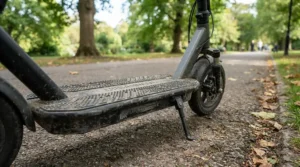
What to look for instead: a textured or rubberized deck surface, deck width that fits two small feet side by side, and a rear fender you can find with your foot. Run your hand across the surface. Smooth plastic with a few decorative ridges isn’t grip.
You can fix a lot cheaply. Stick-on grip tape (the kind used on skateboards) adds traction in minutes, though you should replace it when edges peel. Shoes matter just as much: closed-toe sneakers with flat soles, tied tight, every ride. Sandals and slip-ons are out. Wet decks are slippery regardless of marketing, so rain means no riding for kids. Even IPX4-rated models, such as the Navee K100 Pro and Segway Ninebot C2 Lite, are rated for splashes, not for puddle commutes.
Certified Safety Standards: UL 2272 and What It Doesn’t Cover
When parents ask about certified safety standards, the answer is UL 2272, the benchmark for electrical systems in personal e-mobility devices. UL Solutions certifies products to this standard, and some jurisdictions, such as New York City, require UL 2272 for e-scooters sold there.
Here’s what it covers: the battery system, charger combination, and electrical drive train, evaluated for fire and shock hazards. Here’s what it doesn’t: the standard itself says it does not evaluate performance or reliability, nor the physical hazards of using these devices. Translation: a UL 2272 sticker means it’s less likely to catch fire. It doesn’t mean it brakes well or that a child can control it.
That’s why certification is necessary but not sufficient. Check the label on your actual unit, because I noticed inconsistencies between retailer pages for some models. Choose a seller that lists documentation, charge only with the supplied charger, and register the product for recall alerts. Pair certification with speed limits, braking redundancy and gear, and you’ve got a real safety stack instead of a single checkbox.
Protective Gear Bundle Recommendations
Gear is the cheapest insurance in this guide, and it’s the part families skip. CPSC’s injury report shows helmet use among injured riders stayed below half across the tables in its 2017-2024 analysis, which is a sobering pattern. You can scan the data in CPSC’s hazard-pattern report.
Protective gear bundle recommendations, in priority order:
- 🪖 Helmet (non-negotiable): a properly fitted, CPSC-compliant bicycle helmet, snug with the straps at a Y under the ears. Replace it after any significant impact.
- 🦵 Knee and elbow pads: a beginner’s best friend, because the first falls are usually low-speed slides.
- ✋ Wrist guards: fractures are among the most common injuries, and wrists take the first hit.
- 👟 Closed-toe shoes: flat soles, laced up.
- 🔦 Visibility add-ons: a bright vest or clip-on lights for dusk.
Buy a bundle sized for your child rather than adult-sized “close enough” gear, and let them pick colors. A helmet that feels cool gets worn. A helmet that feels like punishment gets “forgotten.”
Parental Supervision Tips: A Practical Playbook
Here’s the thing about supervision: it’s not hovering, it’s a structure. These parental supervision tips turn good intentions into repeatable habits.
- Start with a walk-along. In the first sessions, stay beside your child on flat, enclosed pavement, such as an empty parking lot, and keep the scooter in its lowest speed mode.
- Use a three-gate rule. Helmet on, shoes tied, speed mode set, then ride. No gate, no go.
- Pick a route with your child. Avoid driveways, busy streets, and crowded sidewalks until skills are proven. Check your local rules, since regulations differ by location.
- Make charging your job. CPSC guidance says to be present while charging and to use the manufacturer’s charger.
- Review ride history if you own an app-enabled model like the Navee K100 Max, and discuss it without turning it into surveillance theater.
- Earn upgrades. Move to a faster mode only after a month of safe habits.
The goal is a kid who internalizes rules, not one who’s merely watched. Gradually, your supervision should shift from “beside you” to “within earshot,” while the gates stay non-negotiable.
Real-World Scenarios: Which Pick Fits Which Family
Specs are abstract. Families aren’t. Here are three profiles, each matched with reasoning.
Scenario 1: The cautious 8-year-old on a quiet cul-de-sac. Budget is tight, riding happens a few times a week in daylight, and parents will walk alongside. The Gotrax GKS Mini fits: low fixed speed, low price, little to unlock. If your child is smaller and nervous, the Segway Ninebot C2 Lite adds a gentle beginner mode and lighter weight.
Scenario 2: The 10-year-old riding at dusk through the neighborhood. Visibility is the issue. The Gotrax Comet brings a headlight and brake taillight out of the box, which beats retrofitting. Add reflective gear and a firm “home before dark” rule.
Scenario 3: The 11-year-old who’ll ride for three years. Parents want control and longevity. Here, the Navee K100 Max or Segway Ninebot C2 Pro makes sense: adjustable bars, bigger batteries, app limits. Start in the lowest mode, then raise the cap as the habits hold.
Notice the pattern: the right scooter shifts with budget, environment and frequency. The “best” scooter on paper is often wrong for your street.
Your First 30 Days: A Setup and Maintenance Guide
The first month sets habits and exposes problems. Treat it like a trial.
Day 1: Assemble and inspect. Tighten the stem and folding latch, check brake response before the child steps on, and inflate pneumatic tires if your model uses them. Charge fully before the first ride, using the supplied charger.
Week 1: Learn in the lowest mode. If you own the Navee K100 Pro or Segway Ninebot C2 Pro, set the app cap first. For the FanttikRide C9 Pro, start in the 5 mph setting. Practice kick-start, steady cruising, and braking to a controlled stop.
Weeks 2-3: Add skills. Practice turning, avoiding obstacles, and one-handed signaling only if the child is steady. Don’t hurry this.
Week 4: Review. Check for loose bolts, brake drag, and tire wear. Wipe the deck, check grip tape, and note any battery drop.
Common first-month mistakes: skipping the helmet “just for the driveway,” letting friends share the scooter, and charging overnight unattended. Avoid all three, and you’ll sidestep most beginner trouble.
Electric Scooter vs Kick Scooter for Kids: Which Is Safer?
A fair question, because the safest electric scooter for kids might be no electric scooter at all. A regular kick scooter is slower, lighter and simpler. Several expert guides, including testers cited above, suggest that for kids around 6-7, a standard kick scooter is often a better fit than any motorized one.
| Option | Typical speed | Learning curve | Risk profile | Best For |
|---|---|---|---|---|
| Kick scooter | Child-powered, low | Gentle | Lower speed, falls still happen | Ages 5-8, skill building |
| Speed-limited e-scooter | ~5-10 mph | Moderate | Higher speed, motor-assisted | Confident riders aged 8+ |
| Bicycle | Child-powered, varies | Moderate | Familiar, helmet culture established | Kids ready for longer rides |
The table shows a trade-off: motors add speed without adding skill. A child who already rides a bike confidently and has spent time on a kick scooter has the balance and judgment to benefit from an e-scooter. A child who doesn’t has a faster way to fall. If in doubt, wait a year; the scooter will still be there.
Common Mistakes When Buying the Safest Electric Scooter for Kids
Parents don’t fail because they’re careless. They fail because marketing is persuasive. Watch for these:
- Buying for the child they’ll be in two years. Oversized or too-fast scooters are loss-of-control machines. Size to now, with a limiter for later.
- Trusting “ages 6+” labels. Many brands label scooters from age 6, but expert reviewers consider that too young for most kids.
- Equating a UL sticker with total safety. As covered above, it addresses electrical risk, not riding hazards.
- Skipping the lights. Ambient glow isn’t visibility.
- Ignoring weight. A heavy scooter, like the 25 lb Gotrax Comet, is hard for small kids to maneuver or carry.
- Forgetting resale and growth. Fixed-handlebar models like the Segway Ninebot C2 Lite have a shorter lifespan.
Avoid these, and you’ve already beaten most first-time buyers.
FAQ
❓ What age is safe to start riding an electric scooter?
❓ Do kids need a license or registration for an electric scooter?
❓ How long does it take to charge a kids electric scooter?
❓ Can kids ride electric scooters in the rain?
❓ Is it safe to charge a kids scooter overnight?
Conclusion
Let’s pull it together. The safest electric scooter for kids isn’t a single model. It’s a combination: low or lockable speed, UL 2272 certification, kick-to-start, dual braking, genuine lights, a right-sized frame, full protective gear and a parent who stays in the loop.
If control is your priority, the Navee K100 Max and Segway Ninebot C2 Pro lead the pack with app-based limiting. For budget-friendly control, the Navee K100 Pro is the efficient pick. If lights matter most, the Gotrax Comet is your answer. For gentle beginnings, the Gotrax GKS Mini and Segway Ninebot C2 Lite keep speeds low, and the FanttikRide C9 Pro offers a graduated ladder.
Remember the caveat that frames everything: pediatric guidance cautions against motorized scooters for kids under 16, and no product removes risk. Used thoughtfully, with the gear and supervision habits above, a well-chosen scooter can be a controlled, confidence-building ride rather than a gamble.
✨ Ready to Choose with Confidence?
🛴 Compare your shortlist against your child’s age, height and riding environment, then click any highlighted product name to check current pricing and availability. Pick the scooter that fits your kid today, add the helmet, and ride safely!
Recommended for You
- Youth Electric Scooter: 7 Best Picks That Grow In 2026
- Electric Scooter For Teenagers: 7 Best Safe Picks In 2026
- Electric Scooter For Kids: 7 Safe Picks Parents Trust In 2026
Disclaimer: This article contains affiliate links. As an Amazon Associate, I earn from qualifying purchases. If you purchase products through these links, we may earn a small commission at no additional cost to you.
✨ Found this helpful? Share it with your friends! 💬🤗
