
In This Article
A full face helmet for electric sport bike riders is a one-piece, chin-bar motorcycle helmet chosen for fast, quiet electric bikes. It combines low weight to ease neck strain, an aerodynamic shell that tames wind noise, a fog-resistant visor, and U.S. DOT certification, ideally with extras like a Snell rating.
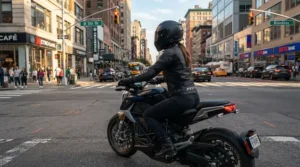
Here’s the odd thing about electric sport bikes: they remove whatever used to hide a helmet’s flaws. No exhaust bark, no engine roar, just a faint motor whine and a growing wall of wind. Researchers who study motorcycle acoustics have found that most of what a rider hears comes from air moving around the helmet rather than from the engine. On a silent bike, then, your helmet’s shape, seals and chin-bar fit become the loudest part of the ride. Add a fogged visor on a cold morning, or a heavy shell tugging at your neck after an hour in a sport tuck, and the wrong lid gets expensive fast.
So this guide narrows the field to seven real, widely sold helmets across budget, mid-range and premium tiers. Each is judged on what electric riders actually feel: weight, noise, visor clarity and certification. You’ll see how DOT FMVSS 218 certification differs from the Snell M2020 standard, why a Pinlock anti-fog insert beats most visor sprays, and which picks work as a lightweight full face helmet for sport riding versus a quiet full face helmet for highway speeds. We also flag which models give you a DOT approved full face helmet with anti-fog visor features out of the box.
A quick note on method: everything below comes from manufacturer specs, retailer listings, published expert reviews and aggregated owner feedback, not a garage full of personally tested helmets. Prices appear as ranges because they shift constantly, so check current pricing before you buy.
Quick Comparison: 7 Full Face Helmet Picks for Electric Sport Bike Riders
Skim the table first, then jump to the full breakdowns. Weights vary by size and source, so treat them as ballpark figures.
| Helmet | Approx. weight | Certifications | Anti-fog setup | Price range | Owner sentiment | Best For |
|---|---|---|---|---|---|---|
| ILM-313 | ~2.98 lb (listed) | DOT FMVSS 218 | Two visors; no Pinlock listed | Budget tier (lowest here) | ~4.5/5, thousands of reviews | First or backup helmet |
| HJC C10 | ~1,400–1,500 g | DOT (U.S.); ECE 22.06 (some regions) | Pinlock-ready; insert extra | ~$100–$155 | Strong value praise | Light, budget commuting |
| Bell Qualifier DLX | ~1,500 g | DOT; ECE 22.05 (some regions) | Coated or photochromic shield; no Pinlock | Under ~$200 | Small review pool | Easy-fitting beginners |
| Scorpion EXO-R430 | ~3.62 lb | DOT + Snell | Pinlock-ready shield sold separately | ~$155–$185 | ~4.5/5, small pool | Snell on a budget |
| Arai Regent-X | ~3.4–3.6 lb (sources vary) | DOT + Snell M2020 | Verify shield setup | Mid-$500s to high-$600s | Comfort and quiet praised | Long, comfortable freeway days |
| AGV K6 S | ~3.0–3.1 lb | DOT + ECE 22.06 | Pinlock included | ~$550–$650 | ~4.5/5, 135 reviews | Lowest neck load |
| Shoei RF-1400 | ~3.6–3.8 lb | DOT + Snell M2020D | Pinlock EVO included | ~$680–$720 | Large pool, strong reputation | Quiet highway cruising |
Looking at the comparison above, the AGV K6 S wins the weight race and bundles its Pinlock insert, while the Shoei RF-1400 pairs Snell certification with the strongest noise reputation, at the highest price. Budget buyers should note that the HJC C10 brings Pinlock-ready hardware near the bottom of the price ladder, whereas the ILM-313 sacrifices fog control and highway refinement for the lowest sticker. If a Snell sticker is non-negotiable, the Scorpion EXO-R430 and Arai Regent-X are your two doors in, separated mostly by budget and finish quality. Certification labels also vary by region and production run, so read the sticker inside the helmet you actually receive.
💬 Just one click — help others make better buying decisions too!😊
Top 7 Full Face Helmet for Electric Sport Bike Riders: Expert Analysis
The seven picks run from budget to premium. Each entry explains what the spec sheet means in practice, summarizes real reviewer sentiment, and says who should (and shouldn’t) buy.
1. ILM-313 — budget bundle with two visors included
The headline here is the bundle: a clear visor, a tinted visor and a removable winter neck scarf all ship in the box, which is rare at this tier. Listings put the weight near 2.98 pounds, courtesy of the ABS shell, so neck strain stays modest during long sport-bike tucks. That makes it a genuine entry in the lightweight full face helmet for sport riding conversation, at least on a budget. Certification stops at DOT FMVSS 218 certification, meaning you get the legal baseline without Snell or ECE extras, and the three-vent layout (two on top, one at the front) keeps airflow basic.
Based on the spec comparison, this is a starter or backup lid rather than the pick for sustained highway work on a whisper-quiet electric drivetrain. Reviewers consistently rate it around 4.5 out of 5 across thousands of retailer reviews and call it strong value for a first helmet. A common complaint in user reviews is wind noise at higher speeds, a narrow fit for rounder heads, and visors that fog even with the mouth vent open. One buyer reported adding an anti-fog overlay. No Pinlock-ready shield appears in the listings, so expect a patch-up fix rather than a proper fog solution.
Pros:
- ✅ Two visors and neck scarf included
- ✅ Listed weight under three pounds
- ✅ Meets DOT FMVSS 218 at a budget price
Cons:
- ❌ Wind noise climbs at highway speeds
- ❌ Visors fog; no Pinlock option listed
Price and value: budget tier, usually the cheapest of the seven, so check the current price. Verdict: good value for short commutes, a poor match for fast highway miles.

2. HJC C10 — light shell with Pinlock-ready hardware
The standout is Pinlock-ready hardware at a price where most rivals skip it. The visor already has the mounting pins, so adding a Pinlock anti-fog insert is a one-minute job rather than a workshop project. Retailer listings put the polycarbonate-composite shell at roughly 1,400–1,500 grams, right at the common lightweight threshold of about 1.5 kg. Four shell sizes keep the profile from ballooning on smaller heads, and two intakes plus two exhausts handle airflow. Some regional listings show ECE 22.06; in the United States, confirm the DOT label on the unit you receive.
Here’s what to weigh: the low weight and tool-free visor swap suit daily commuters, but a polycarbonate shell at this price usually offers less refined noise control than premium shells, so earplugs remain smart. Reviewers consistently call it excellent value with a comfortable entry-level fit, and U.S. retailer ratings hover around four out of five stars. The recurring grumble is that the Pinlock insert is sold separately. Budget a little extra and you’ve built a DOT approved full face helmet with anti-fog visor protection for far less than a premium lid.
Pros:
- ✅ Roughly 1,400–1,500 grams for the money
- ✅ Pinlock-ready visor with tool-free swap
- ✅ Four shell sizes and washable lining
Cons:
- ❌ Pinlock insert sold separately
- ❌ No Snell certification on listings
Price and value: roughly the $100–$155 range. Verdict: the best budget-tier balance of weight and fog-fighting potential.
3. Bell Qualifier DLX — padded wind collar aimed at noise
Bell’s pitch centers on a padded wind collar meant to cut wind and road noise, a sensible focus for a bike with no engine to hide behind. The listing describes a polycarbonate/ABS shell at about 1,500 grams, multi-density EPS, adjustable venting and speaker pockets. Some versions ship with a photochromic shield that darkens in sun, so you’re not swapping visors at tunnel mouths. A MIPS variant adds rotational-impact protection. In the U.S. it carries DOT certification; European listings add ECE 22.05.
On paper this is a friendly first helmet, though the spec sheet won’t tell you how it behaves at 80 mph. Listings show no Pinlock mounting, so fog control relies on shield coatings. One MIPS-version buyer reported no fogging, but that is a single report. Reviewers describe it as a great beginner helmet with good padding and a fit that suits larger heads, since extended sizes are available. Others say it is not the quietest, and one notes there’s no comm port, so Bluetooth users should check compatibility first. Review volume is small, so lean on fit rather than star ratings.
Pros:
- ✅ Padded wind collar targets noise
- ✅ Photochromic shield on some versions
- ✅ MIPS version available for rotational protection
Cons:
- ❌ No Pinlock mounting listed
- ❌ Some reviewers say it isn’t the quietest
Price and value: generally under the $200 range, with MIPS costing more. Verdict: a comfortable, beginner-friendly buy if you accept coating-only anti-fog.
4. Scorpion EXO-R430 — Snell certification without the premium price
Snell certification at entry-level money is the hook. Retailers describe the Scorpion EXO-R430 as an entry-level Snell-certified helmet replacing the popular R420, and it carries DOT approval too. It uses an advanced polycarbonate shell and an Elliptec shield with a central locking mechanism, which matters because shield gaps are noise leaks. A comm-ready port is built in. At roughly 3.62 pounds (about 1,640 grams), it sits above the usual lightweight threshold, so expect more neck load on long tucks.
Here’s the honest trade: this is the cheapest ticket into Snell territory in this lineup, but you pay in weight and, according to reviewers, some noise. Owner ratings average about 4.5 out of 5 across a couple dozen retailer reviews. Aggregated feedback praises the snug fit, solid venting and a visor lock that stays put, while the main reservations are that it could be quieter and lighter. Pinlock-ready shields and inserts are sold separately, and each typically costs somewhere around $40–$60 from various sellers, which nudges the true cost of anti-fog toward the next price tier.
Pros:
- ✅ Snell and DOT certification at a budget price
- ✅ Central-locking shield for a tighter seal
- ✅ Comm-ready port and speaker pockets
Cons:
- ❌ About 3.62 lb, heavier than lightweight picks
- ❌ Pinlock shield and insert cost extra
Price and value: roughly the $155–$185 range. Verdict: the best safety-per-dollar choice if Snell matters, with weight and noise as the trade.
5. Arai Regent-X — Arai comfort and quiet at its lowest price
The Arai Regent-X is Arai’s least expensive full face, built to be easier to get on and off, thanks to cheek pads that rotate slightly as you don it. The shell is laminated fiberglass with a peripheral belt reinforcing the eyeport edge, and certification covers DOT plus the Snell M2020 standard. Arai says the smooth, egg-like profile helps glancing impacts slide. A redesigned, shorter neck roll sheds weight, and one review credits it for a quieter, snug feel. Weight lands in the mid-3-pound range depending on the source.
Based on the spec comparison, this is the most comfort-first helmet of the group, which matters on long freeway days when fit decides whether you’re still happy at hour two. Reviewers praise the easy entry, plush interior and low noise, and describe the intermediate oval shape as the most common fit. The less-enthusiastic voices point to price and the cost of shield replacements. Our research did not confirm a bundled Pinlock insert, so check the shield and anti-fog options before buying.
Pros:
- ✅ DOT plus Snell M2020 certification
- ✅ Reviewers praise quiet, comfortable fit
- ✅ Redesigned neck roll trims weight and noise
Cons:
- ❌ Premium price for a non-carbon shell
- ❌ Bundled Pinlock insert not confirmed; verify shield setup
Price and value: launched in the mid-$500s for solid colors and the high-$600s for graphics; check the current price. Verdict: premium comfort and Snell for riders who value fit above gadgets.
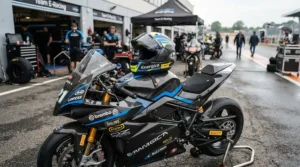
6. AGV K6 S — lightest premium option with Pinlock included
Weight is the story. The maker describes a carbon-and-aramid shell, and one published review’s scale read 3.1 pounds in size Large, with U.S. retailers listing about 3.0 pounds. That makes it the lightest full face here and a standout lightweight full face helmet for sport riding, while still holding DOT and ECE 22.06 approval. AGV also claims it beats ECE 22.06 requirements by about 36 percent. Treat that as a manufacturer claim, not independent proof. The visor is Pinlock-ready with a Max Vision insert included, and emergency-release cheek pads and a collarbone-friendly profile round out the safety details.
For electric sport riders prone to neck fatigue, those few ounces are noticeable over a two-hour ride. Reviewers rate it around 4.5 out of 5 across 135 U.S. retailer reviews. One European buyer described almost non-existent noise, though that is a single report, so keep earplugs in the plan. The catch is certification: there is no Snell sticker, so Snell-first buyers should look at the R430, Regent-X or RF-1400.
Pros:
- ✅ About 3.0–3.1 lb, lightest on this list
- ✅ Pinlock Max Vision insert included
- ✅ DOT plus ECE 22.06 certification
Cons:
- ❌ No Snell certification
- ❌ Premium price tier
Price and value: roughly the $550–$650 range. Verdict: the top pick for low neck load and anti-fog convenience.
7. Shoei RF-1400 — wind-tunnel tuned for quiet highway speeds
Shoei tuned the Shoei RF-1400 in its wind tunnel and claims 4 percent less drag and 6 percent less lift than the RF-1200. Those figures come from marketing copy, but the intent is clear: a shell that stays planted and quiet when an electric bike pulls hard past 70 mph. Other specs include a multi-ply AIM+ shell, dual-layer multi-density EPS, six intakes with four exhausts, an airtight visor seal, and fuller cheek pads plus removable ear pads aimed at wind noise. Weight reads about 1,650–1,700 grams depending on the source. Certification is DOT plus Snell M2020D (some retailers now list M2025, so confirm the label), and a Pinlock EVO insert is included.
For anyone shopping a quiet full face helmet for highway speeds, this is the benchmark. One expert review scored its noise management at the top of the scale, and with hundreds of retailer reviews the feedback pool is deep. Complaints center on price, and one roundup warns budget shoppers to look elsewhere. It’s also heavier than the K6 S.
Pros:
- ✅ Snell and DOT with Pinlock EVO included
- ✅ Wind-tunnel shaping cuts lift and drag
- ✅ Strong noise-control reputation among reviewers
Cons:
- ❌ Highest price of the seven
- ❌ Heavier than the AGV K6 S
Price and value: roughly the $680–$720 range. Verdict: the best total package if the budget stretches.
Practical Usage Guide: Setting Up Your Full Face Helmet for Electric Sport Bike Riding
Buying the helmet is half the job; setting it up properly is the other half. Use this first-week routine, which costs nothing.
- Check the fit before the ride. Seat the helmet low on your forehead, fasten the strap, then try to roll it forward off your head. Snell’s own guidance says that if it shifts or comes off, try another model.
- Install the Pinlock anti-fog insert carefully. Locate the insert on the visor’s pins, then adjust the tension a little at a time on both sides until the silicone seal touches all the way around. A poor seal is the usual reason an insert fogs.
- Crack the vents, not the visor. In wet weather, open the chin vent for airflow instead of lifting the shield, since an open visor adds wind noise.
- Give the padding 30 days. New cheek pads compress, so a snug fit often settles. Hot spots after week one, though, signal the wrong head shape, not “break-in.”
- Maintain on a schedule. Wash the liner monthly if you ride daily, clean the visor and insert with mild soap and a soft cloth, and store the helmet away from heat. Replace the insert when fog keeps returning, since its lifespan depends on use and care.
The most common first-30-day mistakes are skipping the seal check, wiping the insert with rough paper towels, and riding with the visor barely latched at speed. Fix those three and you’ve captured most of the benefit before spending another dollar.

Real-World Scenarios: Three Rider Profiles and the Helmet That Fits Each
Specs mean little until you attach them to a life. Here are three profiles matched to the best picks, with budget, environment and frequency of use spelled out.
The student commuter. You cover eight miles daily, mostly city streets with a short freeway stretch, on a roughly $200 helmet budget. The HJC C10 plus a Pinlock insert is the smart build: light, fog-resistant and affordable. If sun glare is your daily enemy, the Bell Qualifier DLX with its photochromic shield is the alternative. A first-timer on the tightest budget could start with the ILM-313 and upgrade within a season.
The weekend canyon carver. You ride 40–60 miles of twisties every Saturday and want Snell without a premium bill. The Scorpion EXO-R430 covers that for roughly the $155–$185 range, though weight will be noticeable by the third hour. If comfort matters more than cost, the Arai Regent-X is the upgrade.
The daily freeway rider. You log 45 minutes each way, four days a week, and budget isn’t the constraint. The Shoei RF-1400 suits you if noise is the pain point, while the AGV K6 S wins if neck fatigue is. Pair either with filtered riding earplugs, because no helmet fully silences highway wind.
✨ Ready to Find Your Perfect Helmet?
🔍 Take your electric sport bike rides to the next level with these carefully selected helmets. Click on any highlighted item to check current pricing and availability. These picks will help you ride quieter, see clearer and arrive fresher!
Problem → Solution Guide: Fixing the Four Most Common Helmet Complaints
Problem 1: Roaring wind noise at highway speeds. This is the big one. Engineering research reports that in-helmet noise at highway speeds can exceed 100 dB(A) regardless of helmet type, with turbulence around the shell as the dominant source. Solution: choose a shell with a tight neck roll and chin-bar seal (the Shoei RF-1400 and Arai Regent-X reviews emphasize both), confirm the fit has no gaps around cheeks and jaw, and wear filtered earplugs. Researchers note that plain earplugs block sirens and other useful sounds just as much as wind, so filtered versions are the better compromise.
Problem 2: A visor that fogs. Solution: add a Pinlock anti-fog insert (included with the AGV K6 S and Shoei RF-1400; sold separately for the HJC C10 and Scorpion EXO-R430), and crack the chin vent in rain.
Problem 3: Neck fatigue. Solution: aim near or under 1.5 kg, the common lightweight rule of thumb, which the AGV K6 S, HJC C10, Bell Qualifier DLX and ILM-313 approach. Fit still beats ounces, so don’t buy a light helmet that rattles.
Problem 4: Lift or buffeting at speed. Solution: check that the shield seals fully, the chin strap is snug, and the size is right. A loose helmet acts like a sail, and the Scorpion EXO-R430‘s locking shield and the Shoei RF-1400‘s lift-reduction shaping both target this.
How to Choose a Full Face Helmet for Electric Sport Bike Riders: 6 Steps
To choose a full face helmet for electric sport bike riders, match head shape and fit first, then confirm certification, weight, noise control and anti-fog capability against your budget. Work through these steps in order.
- Measure and match your head shape. Intermediate oval is the most common; narrow or round heads often need specific brands, and reviewers flag the ILM-313 as narrow.
- Confirm certification. U.S. riding requires a DOT label; Snell or ECE are extras that signal additional testing.
- Weigh the weight. Under about 1.5 kg counts as lightweight, so prioritize that if neck fatigue is your issue.
- Rank noise control. Seals, neck rolls and shell shape matter more than any marketing adjective.
- Verify the anti-fog setup. Ask whether a Pinlock insert is included, merely supported, or unavailable.
- Budget for the real total. Add insert, extra shield and comm gear, then compare cost per ride.
DOT FMVSS 218 Certification vs. the Snell M2020 Standard: What the Stickers Really Mean
DOT FMVSS 218 certification is the federal minimum for helmets sold in the U.S., covering impact energy absorption, penetration resistance and chin strap strength. NHTSA research from 2004 estimated that a compliant helmet cuts the risk of dying in a crash by 37 percent. The Snell M2020 standard is a voluntary, independent program that tests more demanding impacts. Snell’s newer M2025 standards add an oblique-impact test, and Snell’s explanatory letter explains that its “D” versions suit helmets also meeting DOT, while “R” versions target ECE R22-06 compatibility.
| Standard | Run by | Required in the U.S.? | Emphasis | Best For |
|---|---|---|---|---|
| DOT FMVSS 218 | NHTSA | Yes | Minimum impact, penetration and retention performance | Every U.S. rider (baseline) |
| Snell M2020 (D) | Snell Foundation | No | Higher-energy impacts plus DOT compatibility | Riders who want extra testing |
| Snell M2025 (D/R) | Snell Foundation | No | Adds oblique-impact evaluation | Riders wanting the newest Snell protocol |
| ECE 22.06 | European regulators | No (U.S.) | 18 impact points and rotational testing | Riders valuing European-style testing |
The takeaway is that DOT is the floor, not the ceiling. The Shoei RF-1400 and Arai Regent-X reach for both DOT and Snell, whereas the AGV K6 S leans on ECE 22.06 alongside DOT. The standards debate remains genuinely unsettled: older academic work comparing Snell M85 with DOT found DOT helmets performed comparably in high-energy single impacts. Either way, a certified, correctly fitted helmet beats an uncertified one by a wide margin.
Lightweight Full Face Helmet for Sport Riding: How Much Weight Is Too Much?
As a rule of thumb, anything under 1.5 kg (about 3.3 lb) counts as lightweight for a full face. By that yardstick, the AGV K6 S (about 1.4 kg), ILM-313 (about 1.35 kg listed), HJC C10 and Bell Qualifier DLX (around 1.4–1.5 kg) qualify, while the Scorpion EXO-R430 (about 1.64 kg) and Shoei RF-1400 (about 1.65–1.7 kg) edge above it.
Does that gap matter? Over a 30-minute commute, barely. Over a three-hour canyon loop, in a forward tuck where your neck supports the helmet’s weight against the wind, those extra 200–300 grams add up. The trade-off is that lighter doesn’t mean better protected: an ABS shell like the ILM-313‘s is light but offers fewer certifications, while the AGV K6 S achieves low weight through premium materials. The smartest approach is to pick the lightest helmet that meets your certification needs and fits without pressure points, since a helmet that fits perfectly feels lighter than one that fights your head.

Quiet Full Face Helmet for Highway Speeds: What Actually Reduces Wind Noise
No helmet is silent. Older audiology measurements put wind noise near 90 dB(A) at about 37 mph, climbing toward 110 dB(A) at around 100 mph. Manufacturers rarely publish decibel figures, so shoppers must read design cues instead. University of Bath wind-tunnel work found the gap under the chin bar and neck area to be a major noise source, which is why neck rolls, cheek pads and chin-curtain fit matter so much.
For a quiet full face helmet for highway speeds, look for a single-piece shell (these tend to be quieter than modular designs with extra seals), a visor that closes with a firm, sealed latch, and a snug size. On that scorecard, the Shoei RF-1400 and Arai Regent-X carry the best reputations, the AGV K6 S earns praise from owners, and the Bell Qualifier DLX targets noise with its padded collar. Budget shells like the ILM-313 and HJC C10 typically let more through at speed. Whatever you buy, remember that on an electric bike you hear the wind far sooner than you would on a combustion bike, so plan on earplugs as part of the system.
DOT Approved Full Face Helmet with Anti-Fog Visor: Pinlock Anti-Fog Insert Explained
A Pinlock anti-fog insert is a second, moisture-absorbing lens that clips onto pins inside a compatible visor. A silicone seal traps a thin layer of air between the two lenses, creating a double-glazed effect that reduces the temperature gap that causes condensation. It works best with a visor that is already “Pinlock-ready,” meaning the mounting pins are molded in.
For a DOT approved full face helmet with anti-fog visor protection, you have three paths. First, buy a helmet that bundles the insert, like the AGV K6 S or Shoei RF-1400. Second, buy a Pinlock-ready helmet and add the insert, as with the HJC C10 or Scorpion EXO-R430. Third, rely on coatings, as with the Bell Qualifier DLX, which may be enough for mild weather but is weaker in cold rain.
Inserts do wear out. Replace one when fog returns even after you’ve re-seated the seal, because a worn insert only gives a false sense of clarity. And don’t skip the basics: clean both lenses gently and keep the chin vent cracked when the air is damp.
Full Face vs. Modular vs. Open Face: Which Suits an Electric Sport Bike?
Full face helmets are among the safest and most stable choices, with strong aerodynamics and noise reduction. Modular helmets add a flip-up chin bar at the price of extra weight and extra seams, while open face helmets sacrifice chin and face protection entirely.
| Helmet type | Face protection | Noise at speed | Weight | Best For |
|---|---|---|---|---|
| Full face (e.g., Shoei RF-1400) | Complete | Lowest of the three | Light to moderate | Sport riding, highway work |
| Modular | Complete when closed | Higher (extra seams) | Heaviest | Touring with frequent stops |
| Open face | None below the nose | Highest | Lightest | Slow city riding |
The analysis is straightforward. On a bike capable of quick acceleration, chin protection matters, and the aerodynamic edge of a one-piece shell keeps wind noise manageable. Modular helmets make sense for riders who stop often and want to talk or drink without removing the helmet, but they cost you refinement at speed. For electric sport bikes specifically, a full face is the logical default.
Price Range & Value Analysis: What You Get at Each Budget Tier
| Tier | Helmets | Typical range | Anti-fog cost | Best For |
|---|---|---|---|---|
| Budget | ILM-313, HJC C10, Bell Qualifier DLX | Roughly $100–$200 | Insert extra or coating only | New riders, backup helmets |
| Value Snell | Scorpion EXO-R430 | ~$155–$185 | Shield + insert ~$80–$120 extra | Snell on a budget |
| Premium | Arai Regent-X, AGV K6 S | ~$550–$690 | Included (K6 S) or verify (Regent-X) | Daily commuters, long rides |
| Flagship | Shoei RF-1400 | ~$680–$720 | Included | Highway-focused riders |
Cost per ride tells the real story. Assume four rides a week for five years (a commonly advised replacement window), which is about 1,000 rides. A helmet in the $680–$720 range works out to roughly $0.70 per ride, while one in the $100–$155 range is about $0.10–$0.16. The extra spend buys quieter highway miles, lower weight or included anti-fog gear, not necessarily safer crash performance. If you ride rarely or mostly in town, the budget tier is rational. If you log freeway miles several days a week, the premium pays back in comfort.
Common Mistakes When Buying a Full Face Helmet for Electric Sport Bike Riders
- Trusting the DOT sticker blindly. One industry analysis of NHTSA’s compliance results put the failure rate around 40 percent, though sample sizes are small. NHTSA publishes compliance test reports, including one on a Bell Qualifier DLX Blackout that noted an incomplete purchaser-instructions label. Buy from reputable brands and check labels.
- Ignoring head shape. A great helmet that doesn’t fit is a bad helmet.
- Assuming “Pinlock-ready” means “Pinlock included.” It usually doesn’t.
- Chasing grams over fit. A light, loose helmet is louder and less safe.
- Skipping hearing protection. The silence of an electric bike lures riders into thinking noise isn’t an issue.
- Buying used. You can’t verify a prior crash or storage history.

FAQ
❓ Is a DOT approved full face helmet with anti-fog visor worth the extra cost?
❓ How much should I spend on a quiet full face helmet for highway speeds?
❓ Is the Snell M2020 standard worth paying extra for?
❓ Do I still need earplugs with a quiet helmet on an electric sport bike?
❓ How often should I replace my full face helmet?
Conclusion
Electric sport bikes change what matters in a helmet. With no engine to mask the wind, noise, fit and visor clarity move from “nice to have” to “daily reality.” The right full face helmet for electric sport bike riders is therefore less about hype and more about matching five things to your riding: certification, weight, noise control, anti-fog capability and budget.
Here’s the short version. For the lightest option with Pinlock included, the AGV K6 S leads. For the quietest, most Snell-backed highway experience, the Shoei RF-1400 is the benchmark. For comfort-first Snell protection, choose the Arai Regent-X. For Snell on a budget, the Scorpion EXO-R430 delivers. And for tight budgets, the HJC C10 (with an added insert), Bell Qualifier DLX and ILM-313 get you legal, certified protection at friendly prices.
Whatever you choose, treat fit as non-negotiable, add a Pinlock anti-fog insert where possible, and wear earplugs. Your neck, ears and eyes will thank you on the next long ride.
Recommended for You
- Safest Electric Scooter For Kids: 7 Proven Picks (2026)
- Youth Electric Scooter: 7 Best Picks That Grow In 2026
- Electric Scooter For Teenagers: 7 Best Safe Picks In 2026
Disclaimer: This article contains affiliate links. As an Amazon Associate, I earn from qualifying purchases. If you purchase products through these links, we may earn a small commission at no additional cost to you.
✨ Found this helpful? Share it with your friends! 💬🤗
