
In This Article
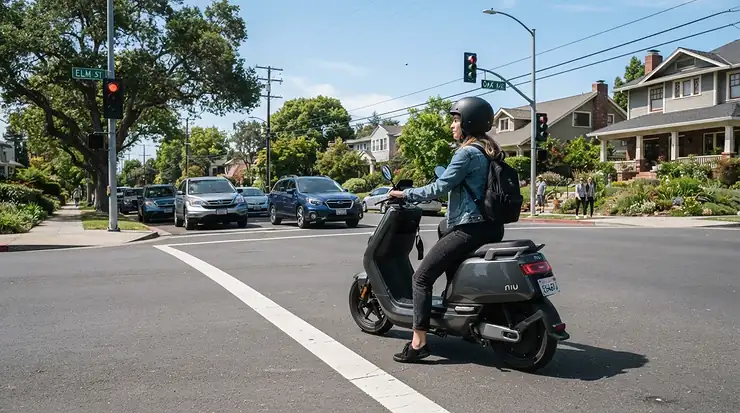
Here is the quick definition. A sport bike style electric moped for adults is a two-wheeler with a battery-electric drivetrain and a moto-inspired body: angular panels, a tank-shaped battery shroud, a windscreen or partial fairing, and a seat that sits you low and forward. Think “café racer silhouette, outlet-charged.”
The category is a blur, and that blur is exactly where buyers get burned. Some of these machines are technically e-bikes with pedals and a throttle. Others are full motorcycle-class vehicles that need a plate, insurance and a license endorsement. Federal regulators have long sorted these vehicles by power and speed, and NHTSA’s own interpretation letter on mopeds and motor-driven cycles shows how fine those lines are. A bike that looks identical to the one next to it in a showroom can fall under completely different rules.
So this guide does two jobs. First, it ranks seven real models across budget, mid-range and premium tiers, with the spec sheet translated into what it means on your commute. Second, it covers the stuff listings skip: 48V vs 72V battery systems, hub motor wattage, and state moped registration rules.
One honest note before we start. I haven’t ridden these machines, and I won’t pretend otherwise. Everything below comes from published specs and the aggregated findings of professional reviewers and owners. Where I couldn’t verify something, I’ll say so.
Quick Comparison: Sport Bike Style Electric Moped for Adults at a Glance
| Model | Battery | Motor | Claimed Top Speed | Legal Path | Price Range | Best For |
|---|---|---|---|---|---|---|
| TST 48V 15Ah | 48V 15Ah | 750W (1,500W peak) hub | Class 2 e-bike speeds | E-bike | Under $1,500 | Tight budgets |
| Juiced Scrambler | 52V 19.2Ah | 750W (1,764W peak) hub | 28 mph assist | Class 1/2/3 e-bike | $1,700-$2,200 | Range per dollar |
| Ride1Up Revv1 | 52V 20Ah | 750W (about 1,456W peak) hub | 20 mph stock, about 33 mph unlocked | Class 2 out of box | $1,900-$2,500 | Moto looks, value |
| Segway Xyber | 48V 1,440Wh | 3,000W (6,000W dual) | 35 mph unlocked | Class 2 or off-road mode | $3,000-$4,500 | Raw acceleration |
| Super Soco TC Max | 72V | Hub, about 4.8kW peak | About 59 mph claimed | Motorcycle-class | $4,000-$6,000 | Sport handling |
| Super Soco CPx | 60V | Hub, 4.8kW peak | 56 mph | Motorcycle-class | $5,000-$7,000 | Highway-ish commuting |
| Horwin SK3 | 72V 36Ah | Mid-drive, 6.3kW peak | About 56 mph | Motorcycle-class | $4,000-$5,500 | Long range, storage |
Read the table by legal path first and by price second. The three cheapest bikes live in e-bike territory, so you can skip the plate and the DMV. The three most expensive are real motorcycle-class vehicles, and they trade that paperwork for much higher sustained speeds. The Segway Xyber sits awkwardly in the middle, and its classification depends on how you configure it.
If your budget is firm and your commute is short, the Ride1Up Revv1 and the Juiced Scrambler are the sensible shortlist. If you want actual road speed, skip straight to the Super Soco and Horwin entries and budget for registration.
💬 Just one click — help others make better buying decisions too!😊
Top 7 Sport Bike Style Electric Moped for Adults: Expert Analysis
1. TST 48V 15Ah Moped-Style E-Bike — cheapest way into the look
The headline here is access. This is the entry ticket to moto styling without a four-figure commitment, with a 20×4-inch fat tire stance that reads “mini-bike” from across the street.
The spec sheet lists a 750W nominal hub motor with a 1,500W peak and a removable 48V 15Ah battery. That pairing works out to roughly 720Wh of storage, which in practice means a modest real-world range once you use the throttle freely. The peak figure matters for hill starts, but the nominal number is what you’ll feel over a long climb.
My analytical take: this is a “look good, ride gently” machine for short city hops, campus loops and casual weekend cruising. The 750W nominal rating sits right at the common U.S. e-bike ceiling, which is a feature if you want the simplest legal path. It is not the bike for riders who want sport-bike urgency.
On reviews, I couldn’t verify a deep pool of independent, professional testing for this specific listing, so I won’t summarize sentiment I can’t source. Treat it as a budget buy where you should read recent buyer feedback on the listing yourself.
Pros:
- ✅ Lowest entry price in this guide
- ✅ Removable battery for apartment charging
- ✅ Fat tires add stability on rough pavement
Cons:
- ❌ Independent testing is thin, so quality varies
- ❌ Smaller battery limits real-world range
Price range: typically under $1,500. Verdict: fair for the look, but a Ride1Up Revv1 or Juiced Scrambler delivers more hardware per dollar if you can stretch.
2. Juiced Scrambler — biggest battery under two grand
The standout is stamina. A roughly 1kWh pack on a sub-$2,200 moto-style bike is unusual, and it changes how you plan your week.
Here’s the spec in plain English. The 52V 19.2Ah battery stores about 998Wh, while the 750W motor peaks near 1,764W with 90Nm of torque. The torque figure is why this bike pulls off the line like a bigger machine, and the large pack means you aren’t rationing throttle on a 20-mile day. It’s a Class 1/2/3 platform with a 28 mph pedal-assist top speed and a 20 mph throttle-only limit, which keeps it in e-bike law.
Who is it for? Commuters who want moto looks, hill capability and real mileage without graduating to a plated vehicle. Reviewers at Electric Bike Review noted that the large battery outweighed the worry that a punchy motor would drain it fast, and they praised the quick 5A charger and easy under-saddle access to the controller and battery.
Pros:
- ✅ Roughly 1kWh battery for real range
- ✅ 90Nm torque handles hills confidently
- ✅ Fast charging and accessible components
Cons:
- ❌ Front suspension only, no rear travel
- ❌ Heavy at around 83 lbs
Price range: roughly $1,700-$2,200. Verdict: strong value, but check current availability and warranty support before buying, since brand status can shift.
3. Ride1Up Revv1 — the moto-look value champion
The hook is the all-in-one package: a gas-tank-style battery housing, adjustable front suspension, four-piston hydraulic brakes and a plush seat for the money.
On paper, the 52V 750W Bafang geared hub produces roughly 1,456W peak and about 95Nm of torque, powered by a 52V 20Ah (1,040Wh) Samsung-cell pack. In practice that means the bike arrives locked to Class 2 behavior (about 20 mph), smooth enough for beginners, then unlocks to roughly 33 mph when you want it livelier. What the spec sheet won’t tell you: pedals are an afterthought on a bike this heavy.
Reviewers consistently describe a comfortable seat, strong power and good suspension for cruising, while also noting that pedaling feels awkward and the bike weighs about 90 pounds. Real-world range reports landed around the mid-30s of miles at 20 mph and fewer at higher speeds.
Pros:
- ✅ Four-piston hydraulic brakes inspire confidence
- ✅ Adjustable front and rear suspension
- ✅ Removable battery for easy charging
Cons:
- ❌ Pedaling is impractical on this heavy frame
- ❌ Real-world range drops fast at higher speeds
Price range: about $1,900-$2,500 depending on the version. Verdict: the best “sport bike style” feel per dollar in this group.
4. Segway Xyber — acceleration that embarrasses small motorcycles
The standout feature is sheer thrust. Segway claims 0-20 mph in about 2.7 seconds in the dual-battery setup, which makes this the quickest accelerator in this guide.
The numbers: one 48V 1,440Wh battery gives about 3,000W peak and 120Nm; a second pack lifts that to 6,000W and 175Nm. Weight is the cost, at roughly 138 lbs single-battery and 165 lbs dual. The practical meaning is simple. A second battery doubles range, but it also unlocks the bike’s real personality, so a single-pack bike feels like a different product.
The Xyber ships with Class 2 behavior, and a 35 mph unlocked mode that Segway positions for off-road use only. That detail matters for state moped registration rules, because speed capability can change how an agency treats a vehicle. PopSci’s review found it outrageous and overbuilt, praised its range, and noted noticeable battery drain between rides.
Pros:
- ✅ Class-leading acceleration and torque
- ✅ Dual-battery range up to about 112 miles claimed
- ✅ Smart features like navigation and anti-theft
Cons:
- ❌ Very heavy, especially with two batteries
- ❌ Second battery adds significant cost
Price range: about $3,000 single-battery up to roughly $4,500 for dual. Verdict: worth it only if acceleration and range are your top two priorities.
5. Super Soco TC Max — the handling-first sport commuter
The hook is chassis feel. A reviewer comparing the two Super Soco models called the TC Max one of his favorite scooter/moped-category machines, citing fun, zippy handling and good finish.
Here are the specs worth translating. It runs a 72V system with a claimed top speed around 95 km/h (about 59 mph) and a claimed range near 110 km (about 68 miles). Use those as best-case numbers, since manufacturers usually measure range at steady slow speeds. The 17-inch wheel setup and a 240mm front disc suggest a more motorcycle-like stance than the 14-inch-wheel scooters here.
Who benefits? Riders who want a plated, motorcycle-class machine with café-racer geometry and don’t need a passenger perch. What I couldn’t verify is current U.S. dealer availability and warranty terms, so confirm both before you commit.
Pros:
- ✅ Larger 17-inch wheels aid handling
- ✅ 72V system supports higher sustained speeds
- ✅ Praised by reviewers for finish and fun
Cons:
- ❌ U.S. availability and support need checking
- ❌ Real range will fall short of the claim
Price range: roughly $4,000-$6,000, and one reviewer noted it was priced similarly to the CPx. Verdict: strongest pick here if handling matters more than storage.
6. Super Soco CPx — the maxi-scooter with a windscreen
The standout is touring comfort. A standard windscreen and luggage rack make this the most practical entry for a rider who wants some wind protection, which is the closest thing to fairing coverage on this list.
The specs tell the story. A hub motor on a single-sided swingarm makes 4.8kW peak (about 5.4 hp) and a 56 mph top speed, in a 60V battery platform with keyless ignition, an alarm and app integration. Range claims run from roughly 70 to over 90 miles depending on battery configuration, though steady slow speed is how those are measured.
Reviewers were mixed. One automotive writer praised the convenient battery removal system and called it a cool little machine, while another felt the overall fit and finish were a bit cheaper than the competition’s. The North American launch came with a two-year vehicle warranty and three years on battery and motor.
Pros:
- ✅ Standard windscreen and luggage rack
- ✅ Keyless ignition with app integration
- ✅ Convenient removable-battery design
Cons:
- ❌ Fit and finish feel less premium
- ❌ Smaller 14-inch rear wheel limits sportiness
Price range: about $5,000-$7,000, depending on single or dual battery. Verdict: pick this for comfort, not corner carving.
7. Horwin SK3 — long range with a real sporting stance
The hook is range engineering. A second 72V pack can double the claimed distance, and that makes this the most touring-capable bike in this guide.
The core specs: a 72V 36Ah battery, a mid-mounted motor with about 6.3kW peak, belt drive and a top speed around 90 km/h (about 56 mph). Range is about 80 km at 45 km/h on one battery and up to 160 km with two. Look closely at the trade-off: the second pack takes over the under-seat helmet compartment, so range and storage compete.
The angular body panels give it the sportiest silhouette of the scooter-style entries, and it’s the closest thing to a fairing-equipped electric moped for adults in this lineup. It launched in Europe at roughly 3,990 euros, so my caution is U.S. availability. I couldn’t verify deep U.S. owner-review volume.
Pros:
- ✅ Dual-battery range up to about 100 miles claimed
- ✅ Keyless ignition and full LED lighting
- ✅ Angular, sporty bodywork
Cons:
- ❌ U.S. availability and service are uncertain
- ❌ Second battery displaces storage
Price range: about $4,000-$5,500 at launch-era conversions. Verdict: excellent specs, but only if you can buy and service it locally.
How to Choose a Sport Bike Style Electric Moped for Adults
- Decide your legal tier first. E-bike class bikes skip plates and licenses. Motorcycle-class bikes need registration, insurance and an endorsement, so choose before you shop.
- Match battery size to your real commute. Multiply your daily miles by two and add a 30% cushion, because claimed range assumes gentle riding.
- Read nominal power, not peak. Nominal wattage predicts hill performance; peak wattage predicts launch feel.
- Weigh the bike. Anything near 90 pounds is hard to carry up stairs. Heavier dual-battery bikes need a ground-floor plan.
- Check brakes and tires. Four-piston hydraulic brakes and wider tires matter more at speed than any app feature.
- Verify service support. Imported models can leave you stranded without parts. Confirm a nearby dealer or a responsive warranty.
- Confirm local rules. State definitions differ, and the next sections walk through what to check.
48V vs 72V Battery Systems: What Actually Changes
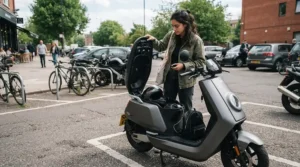
The 48V vs 72V battery systems debate is really a debate about current. Power equals volts times amps, so a higher voltage lets the same motor make the same power with fewer amps flowing through the wiring. Less current means less heat, less voltage sag under load and generally better efficiency at speed.
Capacity is a separate number. Watt-hours equal volts times amp-hours, so a 48V 15Ah pack stores about 720Wh, while a 72V 36Ah pack stores about 2,592Wh. That is a huge gap, and it explains why the plated bikes here travel farther and faster than the e-bike class models.
| Factor | 48V-52V Systems | 72V Systems |
|---|---|---|
| Typical bikes | Juiced Scrambler, Ride1Up Revv1, Segway Xyber | Super Soco TC Max, Horwin SK3 |
| Legal path | Usually e-bike | Usually motorcycle-class |
| Sustained speed | Moderate | Higher |
| Weight and cost | Lower | Higher |
| Best For | Urban commuting | Highway-adjacent riding |
Looking at the comparison above, 48V vs 72V battery systems is mostly a proxy for which legal tier you’re in. A 52V bike like the Ride1Up Revv1 delivers a lively, controllable ride without registration headaches. Riders who want to hold 50 mph should expect to step up to a 72V platform like the Horwin SK3, along with the paperwork.
Hub Motor Wattage Explained
Hub motor wattage confuses everyone because listings quote two numbers. The nominal rating is what the motor can sustain without overheating. The peak rating is what the controller allows for short bursts, and it is the number marketing loves.
Federal law gives context. A low-speed electric bicycle is defined by pedals, a motor under 750W and a motor-only top speed under 20 mph, per summaries of the federal statute. Above that, regulators have long treated vehicles as motor vehicles. NHTSA historically classes a motor-driven cycle as a motorcycle with a motor under 5 brake horsepower, which is about 3,729W.
Translate that to the bikes here. The Juiced Scrambler and Ride1Up Revv1 both use 750W nominal hubs, so they hug the e-bike ceiling, while the Super Soco CPx and TC Max use hubs rated near 4.8kW peak, which pushes them into motorcycle-class territory. Torque tells a similar story: 90-95Nm feels punchy, while 120-175Nm, as on the Segway Xyber, feels forceful.
My rule of thumb: ignore peak wattage in ads and look at nominal wattage, battery voltage and controller amperage together. Those three numbers tell you how the bike will behave when you actually ride it.
Fairing-Equipped Electric Moped for Adults: What to Expect
A true fairing-equipped electric moped for adults is rarer than the marketing suggests. Most “sport style” entries use moto-inspired body panels, a tank-shaped battery housing or a small windscreen, not a full wrap-around fairing like a sport bike.
Here’s what that means in practice. The Super Soco CPx ships with a screen, so it offers some wind deflection at 45 mph. The Horwin SK3 uses angular bodywork that looks like a fairing without the same coverage. The Ride1Up Revv1 and Juiced Scrambler go the other direction, using exposed frames with tank-style battery shrouds.
Fairings matter for three reasons. First, wind protection reduces fatigue at 40 mph. Second, enclosed bodywork can hide the battery and wiring from rain splash. Third, panels add weight and make flat-tire repairs slightly harder. Anyone buying purely for looks should know that real aerodynamic benefit only shows up at motorcycle-class speeds.
My honest advice: if you plan to ride above 40 mph regularly, shop for a windscreen at minimum and treat full fairing coverage as a nice bonus.
Affordable Electric Moped with Sport Styling: Where to Spend and Save
An affordable electric moped with sport styling is possible, but only if you know which dollars buy performance and which buy decoration. Money spent on brakes, battery cells and suspension pays back every ride. Money spent on LED strips and app features rarely does.
| Tier | Example | What You Get | Price Range | Best For |
|---|---|---|---|---|
| Entry | TST 48V 15Ah | Looks, small battery | Under $1,500 | Short trips |
| Value | Ride1Up Revv1 | Brakes, suspension, power | $1,900-$2,500 | All-rounders |
| Range | Juiced Scrambler | Big battery, strong torque | $1,700-$2,200 | Commuters |
| Premium | Segway Xyber | Speed, range, tech | $3,000-$4,500 | Thrill seekers |
The analysis is straightforward. The Juiced Scrambler gives the most battery per dollar, while the Ride1Up Revv1 gives the best brakes and suspension per dollar. The TST 48V 15Ah is cheaper but sacrifices capacity and documented quality.
For most riders, the middle two are the sweet spot. Spend the extra few hundred dollars over the entry bike, and you get a machine that lasts years longer.
State Moped Registration Rules: What Riders Need to Check
State moped registration rules are a patchwork, and the electric twist makes them messier. Each state defines a moped differently, and the definitions usually hinge on motor size, speed, pedals and sometimes engine displacement. Many of those definitions were written for 50cc gas scooters, so electric bikes fit awkwardly.
Take Ohio as one example. Its administrative code says a moped application must confirm the vehicle can be pedaled, uses a helper motor under one brake horsepower and cannot exceed twenty miles per hour on level ground. You can read it in the Ohio Administrative Code, Rule 4501-23-04. A 4.8kW hub motor falls far outside that, so a CPx-class bike would be regulated as a motorcycle there.
Rules also differ on paperwork. Massachusetts requires a moped sticker issued by its RMV and carrying your registration, while New Hampshire requires a driver’s license or special moped license to operate one. Hawaii requires a rear-facing plate and annual inspections, according to its moped owner information sheet.
My practical checklist is short. Call or visit your DMV, ask how your state classifies a vehicle with your motor’s wattage and top speed, and get the answer in writing. Laws change, so this is orientation, not legal advice.
Sport Bike Style Electric Moped vs Traditional Alternatives
| Option | Strength | Weakness | Best For |
|---|---|---|---|
| Ride1Up Revv1 (e-bike class) | No plate, easy paperwork | Heavier than pedal e-bikes | Casual commuters |
| Horwin SK3 (motorcycle class) | Higher speed, long range | Registration and insurance | Longer commutes |
| Gas 50cc moped | Cheap, simple | Noisy, emissions, slower | Low budgets |
| Standard pedal e-bike | Light, legal everywhere | Less sport styling | Mixed-use riders |
The table tells a clear story: you’re trading paperwork against capability. A Ride1Up Revv1 keeps life simple but caps out in the low 30s mph, while a Horwin SK3 unlocks 50-plus mph with the full motorcycle-class baggage. Gas mopeds lose on noise and maintenance, and pedal e-bikes lose on style.
I’d choose by commute shape. Under 10 miles on city streets, stay with an e-bike class machine. Beyond 15 miles or on faster roads, go motorcycle-class and accept the registration.
✨ Ready to Pick Your Ride?
🔍 Take your commute to the next level with these carefully selected models. Click any highlighted product to check current pricing and availability, and you’ll find the right balance of style, speed and paperwork for your daily routine!
Real-World Scenarios: Matching Bikes to Riders
Scenario 1: The college student, 4 miles each way. Budget is about $2,000, there’s no parking permit, and a stairwell is in the picture. The Juiced Scrambler fits because its large battery handles a week of short trips on one or two charges. Its 83 lb weight is manageable if you can wheel it into a ground-floor storage area.
Scenario 2: The suburban commuter, 14 miles each way. Budget is $5,000, and some roads allow 45 mph. The Super Soco CPx works because the windscreen reduces fatigue and the 56 mph top speed gives margin. Plan on registration, insurance and a motorcycle endorsement.
Scenario 3: The weekend rider, mixed terrain. Budget is $3,500 and speed matters more than range. The Segway Xyber suits the thrill, but remember the 35 mph mode is meant for off-road use, so confirm what’s legal on your local trails before you unlock anything.
Scenario 4: The budget-conscious first-timer. If cash is tight, the Ride1Up Revv1 in its stock 20 mph Class 2 mode is a gentle introduction. You can unlock more power once you trust the bike, and that staged approach reduces risk.
Practical Usage Guide: Setup, Charging and Maintenance
The first thirty days decide how long your battery lasts. Charge the pack fully before your first ride, then avoid running it to zero. Lithium cells age faster when deeply drained and when stored at full charge in the heat.
Do these in order:
- Torque-check the axle nuts and bolts. Fat-tire hub bikes shake loose fasteners during break-in.
- Set tire pressure. Low pressure drains range and risks pinch flats; check weekly.
- Bed in the brakes. Brake gently from moderate speed a dozen times to seat the pads.
- Park and charge indoors when possible. Heat degrades batteries, and a removable pack on the Ride1Up Revv1 or Juiced Scrambler makes this easy.
- Schedule a monthly inspection. Check spokes, cables, lights and chain tension.
Avoid two first-month mistakes. Don’t pressure-wash the motor or controller, and don’t use an unmatched charger. Always use the one supplied for your voltage. That one choice protects both the warranty and the pack.
Common Mistakes When Buying a Sport Bike Style Electric Moped for Adults
The most common mistake is buying peak watts. A 1,500W peak sounds exciting but says nothing about sustained climbing, so check nominal wattage and voltage together.
The second mistake is ignoring weight. Bikes near 90 pounds, and dual-battery bikes near 165 pounds, are hard to lift into a car, up a stoop or onto a rack. Plan storage before purchase.
Third, buyers trust range claims. Manufacturers measure at slow, steady speeds with light riders, so expect real-world numbers to land noticeably lower. Reviewers of the Ride1Up Revv1 reported mid-30s miles at 20 mph and fewer at higher speeds.
Fourth, people skip legal homework. A fast unlockable mode may turn a bike into a vehicle your state treats as a motorcycle, so a casual purchase can become an unregistered-vehicle problem.
Finally, don’t overlook support. Imported models like the Super Soco TC Max and Horwin SK3 can leave you waiting on parts if no regional dealer exists. A cheaper bike with local support often beats a better bike without it.
Long-Term Cost and Maintenance: What These Bikes Really Cost
The sticker price is the beginning. Electricity is cheap, and a full charge on a 1kWh pack costs only a small fraction of a gallon of gas. The real long-term cost is battery replacement, typically the single most expensive consumable.
Estimate it this way. Cycle life varies by pack and use, but most lithium packs deliver several hundred to a couple thousand cycles before capacity noticeably fades. Divide the battery’s replacement cost by expected cycles and you get a per-ride cost that still beats gas for most commutes.
Other costs differ by tier. E-bike class bikes like the Juiced Scrambler need tires, brake pads and the occasional chain. Motorcycle-class bikes add registration, insurance and possibly inspections. The Super Soco CPx launch warranty of two years on the vehicle and three on the battery and motor is a good example of what to compare when ranking total ownership cost.
The practical conclusion: for under 10 miles per day, a ~$2,000 e-bike class machine pencils out as the cheapest long-term option. Beyond that, a motorcycle-class bike’s higher purchase price starts earning its keep through speed and range.
FAQ
❓ What is the best sport bike style electric moped for adults under $2,500?
❓ Do I need a license for an electric moped with sport styling?
❓ Is a 72V electric moped worth it over 48V?
❓ How far can an electric moped really go?
❓ Are fairing-equipped electric mopeds more efficient?
Conclusion
The honest summary is that “sport bike style” describes a look, while the vehicle class beneath it describes your life. Pick the Ride1Up Revv1 or Juiced Scrambler if you want the style with minimal red tape, the Segway Xyber if acceleration is the whole point, and the Super Soco and Horwin machines if you’re ready for real motorcycle-class commuting.
Before you buy, run through your three checks: legal tier, real-world range and local support. Verify your state’s definition, because state moped registration rules vary more than most listings admit. Compare nominal wattage rather than peak, and weigh the 48V vs 72V battery systems trade-off against your commute length. The Hawaii DOT’s moped owner guide is a handy example of the kind of equipment and inspection rules to look up for your own state.
Recommended for You
- Full Face Helmet For Electric Sport Bike Riders: 7 Best Buys 2026
- Safest Electric Scooter For Kids: 7 Proven Picks (2026)
- Youth Electric Scooter: 7 Best Picks That Grow In 2026
Disclaimer: This article contains affiliate links. As an Amazon Associate, I earn from qualifying purchases. If you purchase products through these links, we may earn a small commission at no additional cost to you.
✨ Found this helpful? Share it with your friends! 💬🤗
