
In This Article
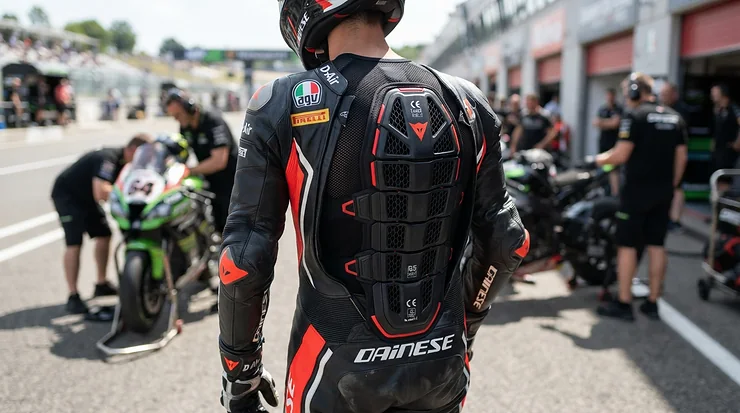
A back protector for superbike track days is a certified spinal armor panel, worn under your leathers or clipped into a suit, designed to absorb and spread crash impacts along your spine. Most are rated to the EN 1621-2 standard, ideally at Level 2, which lets through roughly half the force Level 1 does.
Here’s the uncomfortable math. A superbike at the end of a long straight is moving at speeds that would earn you a stern chat with a judge on public roads. When a high-side launches you skyward, the first thing to meet the asphalt is often the one body part no cast can fix. Your spine doesn’t care how good your sector times were. 🏍️
That’s why choosing a back protector for superbike track days is less a gear purchase than a quiet insurance policy you hope never to cash in.
The market has never been better. Slim lattice shells, viscoelastic foam armor and every flavor of CE Level 2 back protector insert now exist, and some weigh less than a full water bottle. The catch is choice overload, plus rules that change from one organizer to the next. Some events accept any CE-rated pad. Others demand a separate Level 2 protector running shoulders to tailbone, and they explicitly reject soft pads sewn into the suit. Those track day safety requirements can wreck your morning at the inspection line.
This guide is built from manufacturer spec sheets, independent reviews and aggregated rider feedback on retailer listings. It is analysis, not a claim of personal testing. Prices are given as ranges only, so check current pricing before you buy.
Quick Comparison: The Best Back Protector for Superbike Track Days at a Glance
| Product | CE Level | Format | Best For |
|---|---|---|---|
| Alpinestars Nucleon KR-3 | Level 2 | Standalone harness | Serious riders who want rib coverage |
| Alpinestars Nucleon KR-1 Cell | Level 2 | Standalone harness | Ventilation-first, race-style protection |
| Forcefield Pro Sub 4 | Level 2 | Standalone harness | Maximum impact margin |
| Knox Aegis | Level 2 | Standalone plate system | Big coverage and fine-tuned fit |
| Alpinestars Nucleon KR-2 | Level 2 | Standalone harness | All-day comfort on long track days |
| Dainese Pro-Armor 2.0 | Level 2 | Standalone harness (Short/Long) | Slim profile under tight leathers |
| REV’IT! Seesoft | Level 2 | Insert | Budget buyers with a compatible pocket |
Read the table with one eye on the “Format” column. Six of these seven are strapped, standalone designs, which is the format most organizers are happiest to see, while REV’IT! Seesoft only works if your suit or jacket has a matching pocket. If your event’s rulebook asks for a separate protector, that single detail can matter more than any lab number. Budget shoppers should note the price gap between the lowest and highest options is wide, but all seven share the same Level 2 certification headline.
💬 Just one click — help others make better buying decisions too!😊
Top 7 Back Protectors for Superbike Track Days: Expert Analysis
1. Alpinestars Nucleon KR-3 — rib protection plus a viscoelastic spine
The big idea here is side coverage. Most back protectors guard the spine and politely ignore your ribs, while the Alpinestars Nucleon KR-3 adds an adjustable rib protector to a lattice-shell back panel.
It is certified to EN 1621-2:2014 Level 2. Its hybrid build pairs a lattice shell with a viscoelastic PU foam compound along the central spine, so the hard structure spreads load while the foam handles fit and comfort. It comes in three waist-to-shoulder sizes, has horizontal flex channels, and uses snap-on detachable shoulder straps. It also accepts the Nucleon KR-C chest protector and Nucleon KR-TB tailbone add-on, which is handy if you’d like to build a layered setup.
Based on the spec comparison, this is the “I want everything” option for riders who crash-proof their kit as seriously as their lap times. I couldn’t verify a deep pool of independent owner reviews for this newer model. One 2026 roundup names it the strongest standalone CE Level 2 option it assessed, which is encouraging but not conclusive.
Pros:
- ✅ Adjustable rib protector adds side coverage
- ✅ Viscoelastic foam armor on the spine zone
- ✅ Modular with chest and tailbone add-ons
Cons:
- ❌ Premium price tag
- ❌ Rib wings may add bulk under slim leathers
Price range: roughly $230-$270 list. Check current price. It is a strong value if rib protection is on your wish list.
2. Alpinestars Nucleon KR-1 Cell — race-bred lattice shell built to breathe
If you want a lightweight back protector for sport riding that still behaves like serious armor, this is the pick to shortlist. The Alpinestars Nucleon KR-1 Cell uses a hard plastic lattice shell made from a high-performance polymer blend, and it’s heavily perforated.
On paper, that perforation means airflow on a 95-degree summer afternoon, when an unventilated board turns your back into a sauna. It meets EN 1621-2:2014 Level 2 and extends lower down the back for extra protection. Horizontal flexion grooves let it follow your spine as you move from upright to tucked. Elastic shoulder straps detach via snap fit, and a height-adjustable kidney belt keeps everything planted.
Here’s what to weigh: a lattice shell doesn’t have the plush, memory-foam feel of foam-first designs, so some riders will find it firmer. Reviewers on a UK retailer’s listing consistently describe it as light and comfortable, say it stays in place, and mention good ventilation. One added the optional tailbone protector. That is a small sample, so treat it as a trend rather than a verdict.
Pros:
- ✅ Highly perforated for hot-weather airflow
- ✅ Extended lower-back coverage
- ✅ Works with chest and tailbone add-ons
Cons:
- ❌ Firmer, less cushioned feel than foam designs
- ❌ Costs more than insert options
Price range: roughly $190-$200 list. A good value for riders who prize ventilation.
3. Forcefield Pro Sub 4 — the lowest transmitted-force number in this group
Numbers don’t get more headline-friendly than this. Independent testing by SATRA reportedly recorded a mean transmitted force of 3.38 kN for the Forcefield Pro Sub 4, well under the 9 kN Level 2 ceiling.
Context matters. That figure comes from the older EN 1621-2:2003 test, so don’t line it up against 2014-era numbers as if they were identical. The protector uses Nitrex Evo energy-dissipating material, a removable and washable outer cover, and Forcefield’s multi-impact “RPT” claim, meaning it should keep performing after repeated hits. Straps adjust at the waist and shoulders. The Large size suits a torso of about 18¾-19¾ inches.
Reviewers aren’t shy about the trade-off. A WebBikeWorld review judged it among the most comfortable protectors they had examined, yet an older Visordown roundup put its weight above 1,000 g, which makes it heavier than slimmer lattice designs. Think of it as the armored sedan of this list: reassuring, solid, not delicate.
Pros:
- ✅ Very low reported transmitted force in SATRA testing
- ✅ Removable, washable outer cover
- ✅ Multi-impact performance claim from the maker
Cons:
- ❌ Heavier than most rivals here
- ❌ Test figure uses the older 2003 edition
Price range: upper-$100s to low-$200s depending on size and retailer. Excellent value if safety margin beats weight for you.
4. Knox Aegis — the widest coverage, with sliding spine plates
The Knox Aegis is the choice for riders who like adjusting things until they’re perfect. Its flexible sliding spine system glides over a shock-absorbing honeycomb structure, so the protector keeps covering your back as you flex.
It is CE Level 2 certified to EN 1621-2:2014 and has also been tested at both +40°C and −20°C, which matters if your track season runs from freezing mornings to blazing afternoons. It comes in plate counts from four up to nine, so tall riders aren’t forced into an ill-fitting size. A reviewer who is 6’3″ went with the nine-plate version. A removable, machine-washable spacer liner helps airflow, and the multi-position waist strap, side straps and crossable quick-release shoulder straps give you lots of fit options. The maker claims a roughly 30% weight cut versus its predecessor.
Reviewers consistently praise comfort, adjustability and longevity. One owner reports nearly 100,000 miles on an Aegis before replacing it. One reviewer notes your back does get warm, though less than expected.
Pros:
- ✅ Wide size range, including very tall riders
- ✅ Tested at both hot and cold temperatures
- ✅ Highly adjustable straps and side fit
Cons:
- ❌ Open-cell back still runs warm in summer
- ❌ Segmented plates can look busy under slim suits
Price range: typically $120-$180 depending on plate count. A great value for coverage-hungry riders.
5. Alpinestars Nucleon KR-2 — viscoelastic memory foam with articulated vertebrae
This is where viscoelastic foam armor earns its keep. The Alpinestars Nucleon KR-2 blends energy-absorbing viscoelastic memory foam with articulated vertebrae protection, and it is certified to EN 1621-2:2014 Level 2.
At roughly 707 g in size M according to a European retailer’s spec sheet, it counts as a lightweight back protector for sport riding even though Alpinestars markets it toward adventure touring. It has a waist adjustment, a slim vented kidney belt and snap-on straps. Sizing is clear: S and M suit riders about 164-182 cm tall with a 56 cm protector, while L and XL suit 182-194 cm riders with a 60 cm one.
One verified buyer who owned several protectors, inserts included, called it the best of the bunch. They said it felt a little stiff and thick at first, then fit like a glove after wearing it in, even under fitted leathers. Another reviewer simply called it good value. Honest takeaway: expect a short break-in, then comfort.
Pros:
- ✅ Viscoelastic foam adapts to your back
- ✅ Light for a Level 2 standalone
- ✅ Clearly sized for tall and short torsos
Cons:
- ❌ Feels stiff until broken in
- ❌ Touring-oriented, less race-specific than the KR-1 Cell
Price range: roughly $150-$190. A strong value for comfort-first riders.
6. Dainese Pro-Armor 2.0 — featherweight nitrile with articulated flex
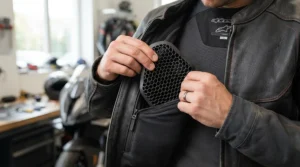
The Dainese Pro-Armor 2.0 is the slimmest-feeling standalone here. It uses expanded nitrile rubber with a perforated structure and a dynamic-thickness anatomical shape, and it bends and stretches along and across your back.
It is certified to EN 1621-2:2014 Level 2, comes with removable shoulder straps and an adjustable lumbar band, and is sold as a Short for riders up to about 1.74 m and a Long for taller ones. That means better fit under a tightly tailored suit, since there’s less plastic to create pressure points. The catch is that only two lengths exist.
Reviews I found were for the previous-generation version, so treat them as directional. Buyers called it light and flexible, not too bulky, and cool because of the honeycomb-style material. One noted it’s a little narrower at the top than a jacket-pocket protector, a useful coverage reminder.
Pros:
- ✅ Very light, flexible nitrile construction
- ✅ Perforated for ventilation
- ✅ Slim fit under leathers
Cons:
- ❌ Only Short and Long sizes
- ❌ Narrower upper coverage reported
Price range: roughly $150-$210. A solid value for riders who prioritize a low-profile fit.
7. REV’IT! Seesoft — the value insert benchmark
For riders on a budget, a CE Level 2 back protector insert like the REV’IT! Seesoft is the entry ticket. It’s built from a nitrile and polynorbornene rubber blend that behaves like memory foam, and its layers shift against each other on impact to spread the load.
It is certified to Level 2 and works across a −20°C to +40°C range. In one independent review, the average residual force came in at 5.6 kN, comfortably inside the 9 kN ceiling. It comes in three types and nine sizes, so the right match can be found, and a REV’IT! Seesoft Air variant adds larger perforations for ventilation.
Retail feedback is encouraging: one listing shows a 4.5-out-of-5 rating from more than 560 reviews. The catch for racers is that it is an insert, so it only works with a pocketed jacket or suit, and an event that wants a separate protector may not accept it.
Pros:
- ✅ Low price for certified Level 2
- ✅ Multi-impact layered rubber construction
- ✅ Large range of types and sizes
Cons:
- ❌ Needs a compatible pocket
- ❌ May not satisfy “separate protector” rules
Price range: around $50-$70. Outstanding value if your suit and organizer allow it.
Side-by-Side Spec Snapshot
| Product | Construction | Notable Spec | Price Range | Best For |
|---|---|---|---|---|
| Alpinestars Nucleon KR-3 | Lattice shell + viscoelastic PU foam | Adjustable rib protector | ~$230-$270 | Riders wanting side coverage |
| Alpinestars Nucleon KR-1 Cell | Hard lattice polymer shell | Extended lower back, kidney belt | ~$190-$200 | Ventilation-first track riders |
| Forcefield Pro Sub 4 | Nitrex Evo multilayer | 3.38 kN (SATRA, 2003 edition) | Upper-$100s to low-$200s | Maximum impact headroom |
| Knox Aegis | Honeycomb + sliding spine plates | Tested at +40°C and −20°C | ~$120-$180 | Fit-tweakers, tall riders |
| Alpinestars Nucleon KR-2 | Viscoelastic foam + articulated vertebrae | ~707 g in size M | ~$150-$190 | All-day comfort |
| Dainese Pro-Armor 2.0 | Perforated expanded nitrile | Short and Long sizes | ~$150-$210 | Slim under tight leathers |
| REV’IT! Seesoft | Layered nitrile/polynorbornene rubber | 5.6 kN average residual force | ~$50-$70 | Budget, pocketed suits |
Looking at the comparison above, the Forcefield Pro Sub 4 posts the most impressive lab figure, but the Alpinestars Nucleon KR-1 Cell and Dainese Pro-Armor 2.0 will feel lighter to wear. If your priority is value, REV’IT! Seesoft wins on price, while Knox Aegis is the one to beat for fit tuning. Don’t compare kN figures across different test editions without reading the fine print.
Practical Guide: Fitting, Setup and Your First 30 Days
A great protector fitted badly is a mediocre protector. Start by measuring your torso from the base of your neck to the tailbone while sitting on your bike in a tucked riding position. Don’t measure while standing like a mannequin, because your spine shortens and curves when you’re tucked.
Next, check coverage. The top edge should sit roughly at the base of your neck, and the bottom edge should cover the lower back without poking into the seat. Tighten the waist belt first, then the shoulder straps, because the kidney belt carries most of the stabilizing load. Do a “tuck test” in the garage: if the protector rides up into the helmet or pinches your hips, readjust.
In the first 30 days, avoid three classic mistakes. Don’t wear it loose, because a protector that slides around on impact is protecting the wrong place. Don’t layer it over a slippery base layer, because grip matters. And don’t skip washing: sweat breaks down padding and strap stitching over time, so rinse removable covers after hot days and air-dry everything.
If you crash, inspect the protector for cracks, deformation or torn stitching and follow the manufacturer’s guidance. Even if the maker claims multi-impact performance, I’d treat a serious crash as a reason to retire the gear. The EN 1621-2 standard tests the product as new, not after a pummeling.
Real-World Scenarios: Which Pick Fits Which Rider
The first-timer on a budget. You’ve bought a used one-piece with a back-pad pocket and plan about four track days this year. A CE Level 2 back protector insert such as REV’IT! Seesoft is the cheapest way to get certified protection, but confirm your organizer accepts inserts. If not, step up to Alpinestars Nucleon KR-2 or Knox Aegis.
The regular, twice a month. You ride hard, sweat harder, and care about comfort across five 20-minute sessions. The Alpinestars Nucleon KR-2 and Knox Aegis give you adjustability and all-day wearability without a flagship price.
The fast summer racer. You live in Arizona or Florida and heat is your enemy. The Alpinestars Nucleon KR-1 Cell and Dainese Pro-Armor 2.0 both prize airflow and low weight, while the Alpinestars Nucleon KR-3 adds rib coverage if you want maximum protection.
The tall or heavier rider. Plate-count sizing on Knox Aegis helps with long torsos, and Forcefield Pro Sub 4 offers a large impact margin if weight isn’t a concern.
✨ Ready to Gear Up Before Your Next Session?
🔍 Take your track day safety to the next level with these carefully selected protectors. Click on any highlighted product name to check current pricing and availability. A well-fitted back protector for superbike track days is one purchase you’ll never regret making.
How to Choose a Back Protector for Superbike Track Days
Wondering how to pick? Work through these seven steps in order.
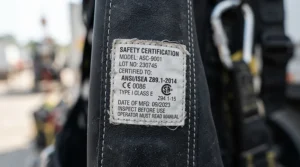
- Confirm the standard. Look for EN 1621-2:2014 on the label. Anything older may be fine but is harder to verify.
- Pick Level 2. Level 2 caps average transmitted force at 9 kN versus 18 kN for Level 1, so it is the obvious choice for high-speed use.
- Check your organizer’s rules. Some demand a separate protector, which rules out inserts.
- Match the format. Standalone harnesses fit any suit; inserts need a pocket.
- Measure your torso in a tuck. Size to your riding position, not your standing height.
- Weigh weight against comfort. A lightweight back protector for sport riding reduces fatigue, but heavier models may offer more padding.
- Plan for climate. Perforations and liners matter in summer; temperature-tested protectors help in cold starts.
Features That Actually Matter (And Those That Don’t)
Marketing copy loves buzzwords. Here is the filter I’d use.
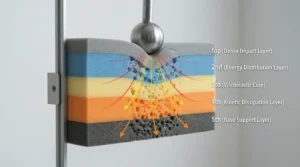
Matters: certification level and edition, coverage and sizing options, strap security, ventilation, and removable liners you can wash. Viscoelastic foam armor matters because it adapts to your back and softens the feel of a hard shell, though it doesn’t replace the shell’s load spreading.
Doesn’t matter as much: colorways, logos, and trendy adjectives like “ultra” or “pro.” A protector that is brilliant on paper but too bulky to wear for four sessions will end up in your garage, not on your back.
One spec worth ignoring in isolation is the kN number. A lab result like 3.38 kN for Forcefield Pro Sub 4 is impressive, yet it comes from a specific test edition, anvil and sample. Treat it as evidence of headroom, not a promise about a real crash. Likewise, an independently measured 5.6 kN for REV’IT! Seesoft shows how an affordable protector can exceed the Level 2 threshold, but that doesn’t make it a replacement for the best-fitting standalone for you.
EN 1621-2 Standard Explained: What Level 2 Really Means
The EN 1621-2 standard covers back protectors. In testing, a protector is struck with 50 joules of energy while force is measured beneath it. According to Dainese’s own breakdown of Level 1 and Level 2, a Level 1 device averages no more than 18 kN with no single value above 24 kN, while Level 2 averages no more than 9 kN with no single value above 12 kN.
Practically, Level 2 lets through about half the force of Level 1. That is why you’ll see Level 2 listed repeatedly in this guide. Retailers also point out coverage categories: a Type A protector covers a smaller area than a Type B, so taller riders often size up or choose models with more coverage.
Two cautions. First, a certification label proves the product passed a laboratory test, not that it will perform identically in every crash. Second, airbags are covered by a different standard (EN 1621-4), so an airbag doesn’t automatically replace a back protector, and some devices have no integrated back protector at all.
Track Day Safety Requirements: What Organizers Actually Check
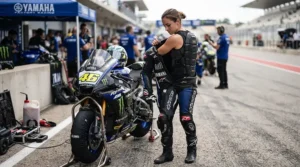
Rules differ, so read your organizer’s page before you buy. Silverstone states all riders must wear a back protector. Compact Octane’s Willow Springs event says the same. Westwood Motorcycle Racing Club in Canada asks for a separate CE Level 2 protector from shoulders to tailbone, and says soft back pads sewn into suits don’t qualify. Knockhill, by contrast, recommends back protectors rather than requiring them.
In the UK, Bennetts BikeSocial says almost all organizers now insist on a back protector covering most of the spine, and recommends EN 1621-2:2014 certified products. It also warns that some airbag devices lack an integrated back protector.
At the gate, expect a simple check. Some marshals pat your back, and others look for a visible strap. Meeting track day safety requirements means more than owning the right protector: it means wearing it the way it was designed. A standalone Level 2 harness is the safest bet if you’re unsure what your event will accept.
Back Protector vs Airbag vs Jacket Pad: Which Wins on Track?
| Option | Protection Focus | Weight/Bulk | Typical Cost | Best For |
|---|---|---|---|---|
| Standalone Level 2 back protector | Spine impact | Moderate | $50-$270 | Everyone |
| Level 1 jacket pad | Basic spine impact | Light | Often included | Casual street riding |
| Airbag vest/suit | Broader body | Varies | Higher | Riders adding extra protection |
| Insert in suit pocket | Spine impact | Light | $50-$70 | Budget with compatible suit |
A standalone Level 2 protector gives you the best balance of cost, certainty and rules compatibility for track use. Airbags add protection in other areas, but they don’t automatically replace a certified back protector, and some organizers still ask for one. Basic jacket pads are better than nothing but fall short of what a CE Level 2 back protector insert or harness offers.
Long-Term Cost and Maintenance: What Your Protector Really Costs
Think in cost per season, not cost per box. A $60 insert might last several seasons in a protected pocket. A $200+ harness with washable liners may last longer if cared for, and straps and covers can often be replaced separately.
| Price Tier | Examples | What You Get | Value Verdict |
|---|---|---|---|
| Under $100 | REV’IT! Seesoft | Certified Level 2 insert | Best entry value |
| $100-$200 | Knox Aegis, Alpinestars Nucleon KR-2, Dainese Pro-Armor 2.0 | Standalone comfort and fit | Best all-round value |
| $200+ | Alpinestars Nucleon KR-3, Alpinestars Nucleon KR-1 Cell, Forcefield Pro Sub 4 | Premium coverage, ventilation or margin | Worth it for frequent riders |
The analysis here is straightforward. Spending more buys features like ribs, ventilation or headroom, not a different certification tier, since all seven are Level 2. If you ride four days a year, the mid-tier is plenty. If you’re out twenty weekends, the comfort of the premium models pays for itself in sweat saved.
For upkeep, wash covers, inspect straps and replace worn buckles. Store your protector flat or hanging, away from heat, and always replace it after a serious crash.
Common Mistakes When Buying a Back Protector for Superbike Track Days
The first mistake is buying on price alone. A cheap, ill-fitting protector can shift on impact, so ignore the sticker and check the size chart. The second is assuming every Level 2 label is identical in coverage; a Type A protector covers less area than a Type B.
Third, many riders forget to check their suit. If your leathers have a pocket, confirm the pocket’s dimensions, and if your event requires a separate protector, don’t rely on a sewn-in pad. Fourth, some buyers chase the lowest weight and give up coverage or support.
Fifth, don’t skip the tuck test. A protector that feels fine standing can crumple or ride up in a racing crouch. Finally, don’t treat reviews like gospel. Retail listings can include small samples, mixed product generations and fit differences, so use them to spot patterns rather than make decisions.
Back Protector for Beginners, Smaller Riders and Taller Riders
Beginners should prioritize fit and rules compliance over weight savings. A mid-priced harness like Knox Aegis or Alpinestars Nucleon KR-2 removes the guesswork about pockets and inspection.
Smaller riders should pay attention to length. Dainese Pro-Armor 2.0 comes in Short for riders up to about 1.74 m, and Alpinestars Nucleon KR-2 offers S/M and L/XL lengths with clear height ranges. A protector that’s too long can hit the seat and ride up.
Taller riders benefit from options with more sizing choice. Knox Aegis offers a nine-plate size, and Forcefield Pro Sub 4 offers a Large for torsos of roughly 18¾-19¾ inches.
Riders who run hot will love Alpinestars Nucleon KR-1 Cell for its perforation, and anyone wanting extra protection can add the Nucleon KR-C chest and Nucleon KR-TB tailbone pieces to compatible Alpinestars protectors. Whatever you choose, the best protector is the one you will wear every session.
FAQ
❓ How much should I spend on a back protector for superbike track days?
❓ Can a CE Level 2 back protector insert satisfy track organizers?
❓ Is a Level 1 back protector enough for a track day?
❓ How long does a back protector last?
❓ Do I still need a back protector if I wear an airbag?
Conclusion: Pick Protection You’ll Actually Wear
The best back protector for superbike track days is the one that fits your body, meets your organizer’s rules, and stays strapped on through the hottest session of the day. Certification gets a protector onto the shortlist; fit, comfort and airflow decide whether you’ll wear it every time.
If you want a quick recap: the Alpinestars Nucleon KR-3 brings rib coverage and viscoelastic foam armor, the Alpinestars Nucleon KR-1 Cell is the ventilation-first pick, and the Forcefield Pro Sub 4 offers the biggest reported impact margin. The Knox Aegis wins on fit adjustability, the Alpinestars Nucleon KR-2 on comfort, the Dainese Pro-Armor 2.0 on slim flexibility, and REV’IT! Seesoft on value. All seven are Level 2, so the real differences lie in coverage, feel and price.
Rules continue to evolve as well. The 2022 UK rule change that made back protectors mandatory at most British events is a good reminder that track day safety requirements only get stricter. Check your organizer’s rulebook, measure yourself in a tuck, and buy once.
✨ Your spine is the one part of your kit you can’t replace.
🔍 Compare the picks above, click any highlighted product name to check current pricing and availability, and get geared up for a safer, faster season. 🏁
Recommended for You
- Motorcycle Riding Boots For Street Fighter Riders: 7 Best Picks 2026
- Motorcycle Riding Jacket With Armor For Naked Bike Riders: Top 7 2026
- Bluetooth Helmet Communicator For Sport Riders: 7 Proven Picks 2026
Disclaimer: This article contains affiliate links. As an Amazon Associate, I earn from qualifying purchases. If you purchase products through these links, we may earn a small commission at no additional cost to you.
✨ Found this helpful? Share it with your friends! 💬🤗
