
In This Article
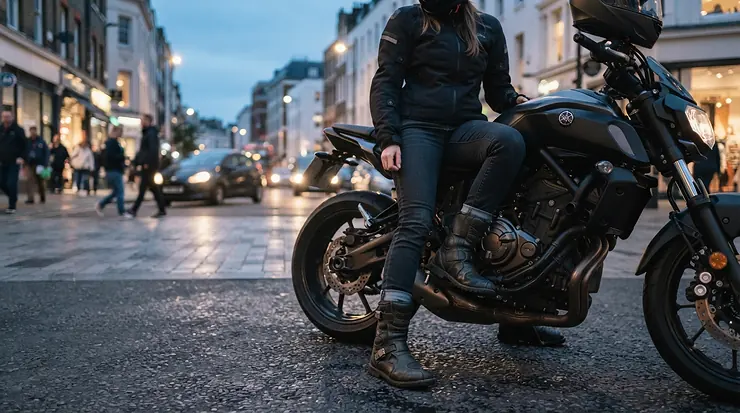
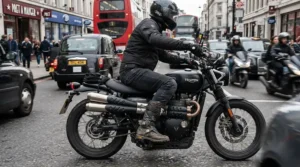
Picture the scene. You’re on a stripped-down street fighter, bars wide, seat upright, the engine’s mid-range punching you toward the next light. Everything about the bike says attitude. Now look down. Are those canvas sneakers? Hiking boots? A pair of flip-flops you swore were “just for the short ride”? In a lowside, your ankle is often the first part of you to meet the pavement, and canvas has the abrasion resistance of a wet paper towel.
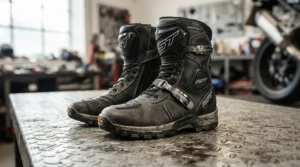
That’s why motorcycle riding boots for street fighter riders are a different shopping problem from touring boots or race boots. You want protection that survives a slide. You also want a boot you can walk into the office, the café, or the pub without clomping like a medieval knight. Street fighters are naked, upright, and usually ridden in town, so the sweet spot is short riding boots with ankle armor. Think sneaker-height silhouettes with real engineering hidden inside.
This guide cuts through the marketing noise. I compared seven real boots and shoes using manufacturer specifications, retailer review data, and published product reviews. I’m not claiming to have worn them all myself. What you’ll get is honest analysis: what each spec means on the road, what reviewers keep praising, and where each pair falls short. We’ll also cover EN 13634 certification, waterproof riding shoes for city riding, and why an oil resistant outsole matters more than most riders think.
Quick Comparison Table: 7 Boots at a Glance
| Boot | Style | Ankle Protection | Waterproof | Price Range* | Best For |
|---|---|---|---|---|---|
| Alpinestars Faster-3 Rideknit | Sneaker | TPU ankle, dual-density impact cover | No (vented knit) | $150-$240 | Hot-weather commuting |
| TCX Street 3 WP | Sneaker/ankle | Impact-mitigating ankle cups | Yes (T-Dry) | $180-$220 | Daily all-weather riding |
| Dainese Metractive D-WP | Leather sneaker | Stiff ankle inserts with D-Foam | Yes (D-WP) | $200-$250 | Style-first city riders |
| Sidi Adventure 2 GTX Mid | Short ADV boot | TPU ankle, steel shank | Yes (Gore-Tex) | Premium tier | Maximum short-boot protection |
| Alpinestars SMX-1 R V2 Vented | Short sport boot | Sport-derived ankle protection | No (vented) | Upper mid to premium | Spirited weekend riding |
| TCX R04D WP | Sneaker | D3O ankle pads | Yes (T-Dry) | Mid-range | Wet-weather commuting |
| Iron Jia’s MT016 | Cordura sneaker | CE ankle cup and heel armor | No (breathable) | Budget | First-time buyers |
*Prices change constantly. Ranges are approximate and based on retailer listings at the time of research. Check current price before buying.
Notice how few boots in this lineup do everything. The Alpinestars Faster-3 Rideknit wins on airflow but won’t keep a downpour out, while the TCX Street 3 WP and TCX R04D WP trade some ventilation for dry feet. The Sidi Adventure 2 GTX Mid sits alone in the protection-first corner, and its price says so. The Iron Jia’s MT016 proves that CE-certified protection doesn’t have to cost a month’s fuel budget.
💬 Just one click — help others make better buying decisions too!😊
What Are Motorcycle Riding Boots for Street Fighter Riders?
Motorcycle riding boots for street fighter riders are short, ankle-height or slightly taller riding footwear built for upright, naked-bike riding. They combine abrasion-resistant uppers, reinforced heel and toe zones, ankle impact armor, a shift pad, and a stiff sole, in a casual profile you can wear all day.
That definition hides an important distinction. Real motorcycle footwear is tested against a standard, and the one that counts in Europe is EN 13634, the standard for protective footwear for motorcycle riders. It covers protection, ergonomics, mechanical properties, marking, and user information. A boot that merely looks tough doesn’t qualify.
Why do short boots suit street fighters so well? The riding position matters. Upright bars and mid-mounted pegs put your feet in a natural, relaxed spot, so you don’t need the rigid shin plates of a motocross boot. You do need ankle protection, a crush-resistant midsole, and a toe box that survives constant shifting. A short boot delivers all that without turning every café stop into a production.
Top 7 Motorcycle Riding Boots for Street Fighter Riders: Expert Analysis
1. Alpinestars Faster-3 Rideknit — breathable knit with race-bred ankle support
The knitted upper is the headline. It makes this the coolest-running shoe on the list, and it still carries real armor.
The upper blends microfiber, knitted mesh, and seamless thermo-welded microfiber, which keeps weight down and airflow up. Vents sit on the toe and lateral side, a TPU ankle piece extends into the lower lateral area, and an asymmetric toe design guards the shift zone. The listed CE certification is EN 13634:2017. On paper, that means a shoe that behaves like a trainer on hot days but doesn’t fold at the ankle when something goes wrong.
Based on the spec comparison, this one suits riders who commute in warm climates and refuse to carry a second pair of shoes. Reviewers on a UK retailer’s verified-review pages consistently praise comfort, airflow, and ankle support, with a recurring note that some buyers sized up. A long-form review from a rider with a 100-plus-mile daily commute described the shoe as equally useful on and off the bike.
Pros:
- ✅ Knit mesh keeps feet remarkably cool
- ✅ TPU ankle support with dual-density impact cover
- ✅ Comfortable enough to walk in all day
Cons:
- ❌ Not waterproof in the standard version
- ❌ Some buyers report sizing up for a better fit
Expect a price in the $150-$240 range depending on retailer and colorway. For hot-weather street fighter duty, that’s solid value.
2. TCX Street 3 WP — the do-everything daily shoe
TCX built its reputation on balancing riding features with genuine walking comfort, and this model is the textbook example.
Look at the parts list. There’s a T-Dry waterproof-breathable membrane, a Groundtrax outsole, an Ortholite footbed, and TCX’s own ZPLATE midsole, which stays rigid across the foot but allows natural flex when you walk. Impact-mitigating ankle cups and a reinforced toe box round things out, and the line meets CE EN 13634:2017. Translation: the sole resists crushing, but you won’t feel like you’re strapped to a plank when you’re off the bike.
What most buyers overlook is the footbed. Cheap riding shoes fatigue your arch by lunchtime; a proper Ortholite insole doesn’t. Retail listings show a 4.5-out-of-5 rating from roughly 130 reviewers, and the common theme is comfort both on the bike and walking around town. Other riders on enthusiast forums note that TCX tends to run roomier through the toe box than Sidi or Alpinestars, so wide-footed riders should take note.
Pros:
- ✅ T-Dry membrane keeps rain out
- ✅ ZPLATE midsole balances stiffness and walkability
- ✅ Roomier fit than many European competitors
Cons:
- ❌ Warmer than mesh shoes in summer heat
- ❌ Sneaker styling means shorter coverage than a true boot
Prices commonly land in the $180-$220 range. For a rider who wants one pair, rain or shine, this is the safest bet on the list.
3. Dainese Metractive D-WP — leather sneaker styling with a waterproof lining
If your boots have to survive a dinner reservation, this is your pair. Full-grain cowhide gives it a sleek look that passes for fashion footwear.
Under the leather sit a waterproof D-WP lining, stiff ankle inserts padded with soft D-Foam, an Ortholite footbed, and reinforced heel and gear-change zones. A Groundtrax asymmetrical outsole handles grip. The practical upshot is a shoe that blends into jeans and chinos but quietly stiffens the ankle zone when you need it. One note: the listing I found was marked as a discontinued model with a newer version available, so confirm the current revision and its CE labeling before buying.
Retail reviews on the older listing averaged around 4.5 out of 5, although the sample was small, at fewer than 20 reviews, so treat it as a soft signal. A retailer note on the women’s version suggests sizing up if you’re between sizes.
Pros:
- ✅ Genuinely stylish full-grain leather upper
- ✅ Waterproof D-WP lining for wet commutes
- ✅ Padded ankle inserts and reinforced heel zone
Cons:
- ❌ Leather shifting zone wears faster than stiffer pads
- ❌ Limited review volume compared with TCX or Alpinestars
Expect roughly $200-$250 for the US-market versions. It’s a style-first pick with legitimate protection behind it.
4. Sidi Adventure 2 GTX Mid — the most protective short boot in this lineup
This is the heavyweight. It borrows the protection philosophy of Sidi’s tall adventure boot and shrinks it to ankle-plus height.
Editors at an adventure-riding publication called it the most protective short ADV boot they’d seen, noting it retains strong lateral and torsional protection despite losing the hinged ankle and shin plate of the taller version. The CE rating comes from TPU ankle protection, a steel shank sole, and full-grain leather, backed by Gore-Tex weatherproofing. In plain English: the sole resists twisting, the ankle resists rolling, and the rain stays out.
This is where street fighter riders who ride hard, ride in all weather, and want to survive a proper tumble should look. Sidi fits narrow, so wide feet should try before they buy.
Pros:
- ✅ Exceptional lateral and torsional protection for a short boot
- ✅ Gore-Tex keeps feet dry all day
- ✅ Steel shank gives a rigid, confident sole
Cons:
- ❌ Very expensive compared with the other picks
- ❌ Lacks the hinged ankle of the full-height model
I can’t verify aggregated customer ratings for this model, so the praise above comes from editorial review. Pricing sits firmly in the premium tier; check current price before you commit.
5. Alpinestars SMX-1 R V2 Vented — track DNA in a short, airy package
Most short boots compromise on ankle mobility. This one tackles that head-on.
One roundup crowned it the best overall short boot, describing a microfiber upper, strong ventilation, and excellent ankle mobility without gutting protection. In real terms, you get a boot that feels natural on a pivot-heavy commute but carries the structure of Alpinestars’ sport range. It suits the aggressive street fighter rider who treats back roads like a personal playground but still wants something short enough to wear to the garage.
Because the boot is vented, it excels in warm weather and struggles in cold rain. If you ride year-round, pair it with a second waterproof pair rather than forcing one boot to do everything. I couldn’t verify a meaningful pool of customer reviews for this specific version, so the praise above reflects editorial testing.
Pros:
- ✅ Excellent ankle mobility for spirited riding
- ✅ Vented microfiber upper for hot days
- ✅ Sport-boot pedigree in a short build
Cons:
- ❌ Not suited to cold, wet weather
- ❌ Priced above sneaker-style alternatives
Check current price, as it generally sits in the upper mid-range to premium bracket. Best for weekend canyon blasts.
6. TCX R04D WP — the sneaker that doubles as rain gear
This one looks the least like a motorcycle boot, which is exactly the point.
A published roundup rated the waterproof version its best waterproof street boot, listing a T-Dry membrane, an OrthoLite footbed, D3O ankle pads, and a lace-plus-Velcro closure. D3O is the soft-until-impact material you may recognize from jacket armor: flexible while you walk, firm when you fall. For waterproof riding shoes for city riding, that combination is hard to beat on paper.
One reviewer called it a personal pick for city riding, and sneaker-style construction means it passes the office dress code in most workplaces. I can’t verify a customer review count for this model, so treat the endorsement as editorial.
Pros:
- ✅ Waterproof T-Dry membrane
- ✅ D3O ankle pads stay flexible until impact
- ✅ Looks like a normal sneaker
Cons:
- ❌ Short height offers less coverage than a boot
- ❌ Waterproof lining reduces summer breathability
It sits in the mid-range price tier. For everyday wet-weather commuting, it’s a smart buy.
7. Iron Jia’s MT016 — CE-certified protection on a budget
Budget doesn’t have to mean unprotected. This model is the rare cheap pair that actually carries a certification.
Two separate roundups list it as CE-certified to EN 13634:2017, with a reinforced heel, ankle protection, Cordura fabric upper, and a composite rubber sole. Cordura breathes better than leather, which suits summer riding; the trade-off is that it won’t keep out heavy rain. One review praised the ankle armor and thickened heel for giving real protection in a lowside.
I’d frame this as the smart first pair. It won’t have the refinement of a TCX or Alpinestars, and customer review volume is hard to verify, so read the sizing notes before ordering. If you’re a new rider building a gear kit, spending your money on a certified pair like this beats an unprotected designer sneaker every time.
Pros:
- ✅ CE EN 13634:2017 certified at a budget price
- ✅ Breathable Cordura upper for warm weather
- ✅ Reinforced heel and ankle protection
Cons:
- ❌ Not waterproof
- ❌ Fewer verified customer reviews than premium brands
Pricing sits in the budget tier, so check current price. Excellent value for first-time buyers.
Top 7 Snapshot: Ratings and Waterproofing
| Boot | Retail Rating (where verified) | Waterproof | CE EN 13634 Listed |
|---|---|---|---|
| Alpinestars Faster-3 Rideknit | 4.5/5 (170+ reviews, one US retailer) | No | Yes (2017) |
| TCX Street 3 WP | 4.5/5 (about 130 reviews) | Yes | Yes (2017) |
| Dainese Metractive D-WP | 4.5/5 (fewer than 20 reviews, older listing) | Yes | CE certified (verify current level) |
| Sidi Adventure 2 GTX Mid | Not verified | Yes | CE rated |
| Alpinestars SMX-1 R V2 Vented | Not verified | No | Check label |
| TCX R04D WP | Not verified | Yes | Check label |
| Iron Jia’s MT016 | Not verified | No | Yes (2017) |
Look at the table honestly. Only three boots have a retailer rating large enough to take seriously, and all three land at 4.5. That tells you the Alpinestars Faster-3 Rideknit and TCX Street 3 WP are low-risk choices for most riders. The others are plausible, but you’ll lean on editorial opinion more than crowd consensus, and you should read the label for certification details before you pay.
✨ Don’t Miss These Exclusive Deals!
🔍 Take your riding setup to the next level with these carefully selected boots. Click on any highlighted product to check current pricing and availability. A good pair of motorcycle riding boots for street fighter riders will save your ankles and your wallet!
How to Choose Motorcycle Riding Boots for Street Fighter Riders
Here’s a quick framework. Work through these steps in order and you’ll narrow seven boots down to one.
- Confirm real certification. Look for EN 13634 on the label, not just a vague “CE” or “safety shoe” claim. Work-boot standards test toe caps, not motorcycle crashes.
- Check the ankle armor. At minimum, you want a toe cap, heel reinforcement, and malleolus protection. Industry testers recommend those three zones for short boots.
- Match waterproofing to your climate. Rainy region? Pick a membrane boot. Hot and dry? Prioritize airflow.
- Test the sole. You want stiffness across the midsole and good grip on the pavement at stops.
- Inspect the shift zone. Street fighters shift constantly, so look for reinforcement over the left toe.
- Size for your brand. Sidi and Alpinestars run narrower; TCX tends to be roomier, per rider forums.
- Try them with your riding socks. Walk, crouch, and sit on the bike before you commit.
Most buyers rush step one and obsess over style. Reverse that order and you’ll buy better.
EN 13634 Certification: What the Label Really Means
EN 13634 certification is the benchmark that separates genuine motorcycle footwear from lookalikes. The current widely referenced version is EN 13634:2017, which covers protection, ergonomic characteristics, innocuousness, mechanical properties, marking, and information for users, along with test methods. A manufacturer’s booklet for a certified boot explains that the standard classifies footwear into Level 1 or Level 2 protection, with Level 2 being the higher rating.
Here’s the catch. Riders on enthusiast forums point out that some brands advertise EN 20345 safety shoes as motorcycle boots. That standard is for industrial safety footwear with toe-cap impact tests. It’s useful at a construction site and largely irrelevant in a slide.
So what should you do? Read the hang tag. Look for the EN 13634 pictogram and the level rating, then confirm it matches the model and version you’re buying, since manufacturers update lines. A model listed as certified under an older edition may not be tested to the 2017 version. When in doubt, ask the seller, or check the manufacturer’s documentation.
Short Riding Boots with Ankle Armor: Features That Actually Matter
Not all ankle protection is equal. When shopping for short riding boots with ankle armor, you’ll see three main approaches: rigid TPU plates, soft D3O-style inserts, and mechanical bracing systems.
Rigid TPU, as used on the Alpinestars Faster-3 Rideknit, gives structure and slide protection. D3O-style padding, listed on the TCX R04D WP, flexes during normal movement and hardens on impact. Mechanical bracing is mostly found on taller race boots, which is why shorter designs rely on molded cups and reinforced chassis instead.
Why does ankle impact armor matter so much? Biomechanics research from an Iowa State University repository, presented at an international sports biomechanics conference, tested shoes, work boots, and motorcycle boots in a motorcycle drop task. Motorcycle boots significantly reduced peak ankle inversion, and the authors suggest they can help in both crashes and emergency stops. Notice that the sample was small, with 15 adults, so it’s an encouraging signal rather than a guarantee.
My practical rule? Treat ankle impact armor as non-negotiable and everything else as negotiable. A stylish boot with no armor is just a sneaker with ambition.
Waterproof Riding Shoes for City Riding: Are They Worth It?
Wet socks at 8 a.m. will ruin a commute faster than a missed green light. Waterproof riding shoes for city riding solve that, but with a cost: membranes trade some breathability for dryness.
Compare them honestly. A fixed membrane, such as T-Dry on the TCX Street 3 WP or D-WP on the Dainese Metractive D-WP, keeps puddles and spray out. A retailer’s note on the Dainese pair adds that membrane boots only breathe well with functional socks, so cotton gym socks undermine the whole idea. Vented models like the Alpinestars SMX-1 R V2 Vented do the opposite, favoring airflow over weather protection.
| Feature | Short Armor Boots | Plain Sneakers | Full-Height Touring Boots |
|---|---|---|---|
| Ankle protection | Yes, built in | None | Yes, plus shin |
| Walking comfort | High | Highest | Lower |
| Weather options | Waterproof or vented | Minimal | Often waterproof |
| Best for | Daily street fighter use | Short, low-risk errands | Long-distance touring |
The table makes the case quickly. Short armored boots sit in the sweet spot between plain sneakers and bulky touring gear. They won’t match a tall boot for crash coverage, but they’ll get worn far more often, and a boot you actually wear beats one stuck in the closet. If you commute in rain more than twice a week, a waterproof pair repays itself in comfort and in fewer ruined socks.
Why an Oil Resistant Outsole Matters More Than You Think
Here’s a spec that rarely makes the headline: the oil resistant outsole. City streets are slick with fuel drips, engine oil, and road film, particularly at junctions and parking spots. When you put a foot down at a stop, that sole is your only contact with the ground.
A riding-gear safety guide published by the Naval Safety Command, which draws on Motorcycle Safety Foundation guidance, advises sturdy over-the-ankle boots and notes that oil-resistant, rubber-based soles help. Meanwhile, riders at stoplights know the nightmare of a foot skating on a slick patch while balancing a 400-pound bike.
What should you check? Look for rubber soles from specialist makers, such as the Groundtrax units on the TCX Street 3 WP and Dainese Metractive D-WP. Then read the manufacturer’s description for specific oil or slip resistance claims. I couldn’t verify oil resistance ratings for every boot here, so confirm with the seller. As a bonus, textured treads give better grip on wet pavement, which is worth the price alone.
Practical Usage Guide: Your First 30 Days in New Riding Boots
New boots need break-in, and riders who skip it get blisters and a bad attitude. Here’s a simple schedule.
Week one: Wear them around the house and on short errands. Check pressure points on the heel and ankle bones, because armor sits right there.
Week two: Take them on short rides. Test how your left toe interacts with the shifter. If the shift pad feels bulky, adjust your foot position rather than swapping boots.
Weeks three and four: Increase ride length and start commuting. Check lace tension; loose laces are a real hazard near a chain. Tuck the ends under a strap or into the elastic keeper, since some models include lace-storage bands.
Maintenance tips:
- Leather boots like the Dainese Metractive D-WP need occasional cleaning and conditioning.
- Never leave wet boots on a radiator; dry them at room temperature, as manufacturer care booklets recommend.
- Replace insoles once they flatten, because they cushion your daily commute.
Common first-month mistakes: Buying a size too small because it “feels snug in the shop,” ignoring sock choice, and wearing waterproof boots with cotton socks. Fix those three and your feet will thank you.
Real-World Scenarios: Which Boot for Which Rider?
Let’s match specs to people. Here are three profiles.
The year-round commuter. She rides 12 miles each way in a rainy city, three days a week, on a budget of about $200. The TCX Street 3 WP fits her best: waterproof, comfortable on foot, CE-listed. If rain is rarer and office dress code matters more, the Dainese Metractive D-WP is a stylish alternative.
The weekend canyon carver. He rides hard on dry Saturdays, spends more on gear, and wants ankle mobility. The Alpinestars SMX-1 R V2 Vented is the sensible match, with the Sidi Adventure 2 GTX Mid as a stiffer, pricier upgrade if he rides in mixed weather.
The new rider on a shoestring. She just bought her first street fighter and has already spent on a helmet. The Iron Jia’s MT016 gives her real certification now, and she can upgrade later.
The right answer always depends on budget, climate, and frequency of use. Be honest about all three before you click buy.
Long-Term Cost and Maintenance: What Boots Really Cost Per Year
Sticker price is only half the story. Divide the cost by wear days and the math shifts. A $200 pair worn 200 days a year costs about $1 per ride for the first year, and far less if the sole and stitching survive another season.
Consider total cost of ownership. Budget boots like the Iron Jia’s MT016 cost less up front but may need replacing sooner, depending on how hard you ride. Premium boots like the Sidi Adventure 2 GTX Mid cost more but can last longer, especially if the sole can be resoled. One review of a similar Alpinestars sport boot even notes replaceable toe sliders, which restore protection after a crash without buying new boots, so check whether your pick offers that.
A final reminder: after a significant crash, replace any boot that took the impact. Armor that absorbed energy once may not do so a second time. That’s the one maintenance cost no rider should skip.
Common Mistakes When Buying Motorcycle Riding Boots for Street Fighter Riders
Even smart riders slip up. Here are the usual culprits.
Buying fashion over function. A boot that looks like a boot but has no armor, no stiffened sole, and no certification is theater.
Trusting “safety shoe” labels. As noted earlier, EN 20345 is not motorcycle certification.
Skipping the fit check. Brands differ. Sidi runs narrow, TCX roomier, and Dainese sits somewhere between. Order online only from sellers with easy returns.
Ignoring weather. A vented boot in a monsoon is misery. A sealed boot in July is a sauna.
Forgetting the shifter. Street fighters shift constantly, and an unprotected toe box will wear through fast.
Keeping crashed boots. If you slid in them, retire them.
Avoid these six and you’ll beat most buyers.
FAQ
❓ Are short riding boots safe enough for street fighter riders?
❓ Can I wear waterproof riding shoes for city riding in summer?
❓ Does EN 13634 certification mean a boot is crash-proof?
❓ How do I know if an oil resistant outsole is genuine?
❓ What size should I order when buying riding boots online?
Conclusion
Here’s the short version. If you want one boot to cover most conditions, the TCX Street 3 WP is the safest all-rounder. For hot-weather commuting, the Alpinestars Faster-3 Rideknit keeps your feet cool while still carrying ankle support. For maximum short-boot protection and a bigger budget, the Sidi Adventure 2 GTX Mid leads the pack, while the Iron Jia’s MT016 gives first-time buyers genuine certification at a budget price. The Dainese Metractive D-WP, Alpinestars SMX-1 R V2 Vented, and TCX R04D WP round out the list for style-first, spirited, and wet-weather riders respectively.
Whichever you choose, insist on EN 13634 certification, real ankle impact armor, and a sole that grips when you put a foot down. Prices shift, versions update, and labels differ by region, so verify the details at the time of purchase. Your bike earned its attitude. Give your ankles the same respect.
✨ Ready to upgrade your ride? 🏍️
🔍 Choose the pair that fits your climate, your budget, and your riding style, and click any highlighted product to check current pricing and availability. Better motorcycle riding boots for street fighter riders are one click away. Ride safe out there!
Recommended for You
- Motorcycle Riding Jacket With Armor For Naked Bike Riders: Top 7 2026
- Bluetooth Helmet Communicator For Sport Riders: 7 Proven Picks 2026
- Sport Bike Style Electric Moped For Adults: 7 Best Picks 2026
Disclaimer: This article contains affiliate links. As an Amazon Associate, I earn from qualifying purchases. If you purchase products through these links, we may earn a small commission at no additional cost to you.
✨ Found this helpful? Share it with your friends! 💬🤗
