In This Article
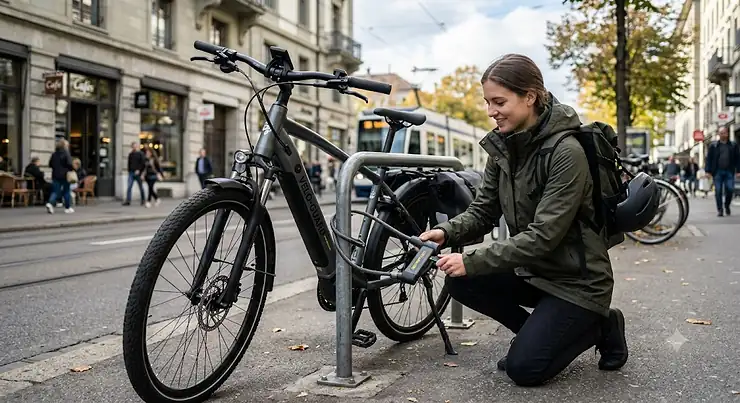
A commuter ebike with anti-theft lock built in isn’t a fantasy spec sheet item anymore — it’s quietly become one of the most requested features on Amazon’s electric bike listings. Makes sense: e-bikes routinely cost more than used cars did a decade ago, and they spend half their lives parked outside a coffee shop, a train station, or a bike rack at work. 🚲
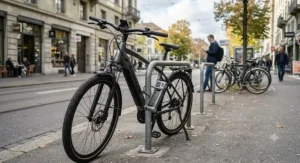
Here’s the part most buying guides skip: “anti-theft” means wildly different things depending on the bike. On some models it’s a $15 cable lock tossed in the box as a sweetener. On others, it’s a 4G-connected control unit that geofences your bike, locks the rear wheel by itself, and texts you the second someone touches it. Both technically qualify. Only one of them is going to stop a determined thief with bolt cutters at 2 a.m.
Below, I dug through actual Amazon listings — not press photos, not manufacturer marketing pages — to find seven commuter ebikes that genuinely back up the anti-theft claim, whether that’s a smart locking system, GPS tracking, a fingerprint scanner, or a no-nonsense included U-lock. Budget, mid-range, and premium are all represented, because the “best” anti-theft ebike really depends on what you’re protecting it from and what you’re willing to spend.
Quick Comparison Table
| Ebike | Best For | Motor / Range | Anti-Theft Tech | Price Range |
|---|---|---|---|---|
| Aventon Level 3 | Security-first commuters | 500W (864W peak) / up to 70 mi | GPS + 4G, geofencing, dual passcode locks, alarm | $1,600–$1,900 |
| Urtopia Carbon 1 Pro | Lightest, techiest build | 350W (750W peak) / up to 80 mi | Fingerprint ignition, GPS/4G, geofence, alarm | $2,000–$3,000 |
| Velotric Discover 2 | Long-range comfort riders | 750W (1,100W peak) / up to 75 mi | Apple Find My, GPS alarm, locked battery | $1,700–$2,000 |
| ENGWE Engine Pro / EP‑2 | Budget fat-tire all-weather | 750W (1,500W peak) / up to 75 mi | App keyless unlock, GPS, motion alerts | $1,000–$1,500 |
| Lectric XP4 | First-time buyers wanting proven value | 500W (1,000W peak) / ~45 mi | Frame-integrated lock mount, optional alarm lock | $1,000–$1,200 |
| Gotrax Dolphin 26″ | Lightest-budget commute | 350W (500W peak) / ~30 mi PAS | Lockable battery compartment, UL2849 | $500–$650 |
| ANCHEER 27.5″ w/ Free Lock | Cheapest all-in bundle | 500W (750W peak) / up to 55 mi | Included U-lock + anti-theft battery housing | $600–$900 |
Looking at this lineup, there’s a clear split between “smart” anti-theft (GPS, geofencing, app-based locking) and “physical” anti-theft (a lock that ships in the box). The Aventon Level 3 and Urtopia Carbon 1 Pro lean hardest into the smart side, while the Gotrax and ANCHEER picks rely on simple, reliable hardware at a fraction of the cost. If your bike lives somewhere with real theft risk — a train platform, a downtown office, a campus rack — the smart systems are worth the premium. If it mostly sits in a garage or a suburban driveway, a budget pick with a solid lock covers you just fine.
💬 Just one click — help others make better buying decisions too!😊
✨ Found a model you like already?
Tap through to check current Amazon pricing and availability before it changes! 💬
Top 7 Commuter Ebikes With Anti-Theft Lock: Expert Picks
1. Aventon Level 3 — Best Overall Anti-Theft Commuter
The Aventon Level 3 leads this list because its anti-theft system isn’t a bolt-on accessory — it’s baked into the bike’s electronics. The Aventon Control Unit (ACU) runs on 4G and GPS, which means the bike can report its location, lock itself, and alert your phone the moment something’s wrong, all without you doing anything in the moment.
What that looks like in practice: the rear wheel and the battery each lock with their own passcode, so a thief can’t just yank the battery and walk off with the expensive part. If the bike gets moved without being unlocked first, it triggers an audible alarm and pings your phone with an “abnormal movement” alert. Cross a boundary you’ve set in the app (geofencing), and you get notified too. Worst case scenario, you can remotely shut the motor down from the app, turning a $1,800 e-bike into a very heavy regular bike.
Customer feedback on the Level 3 consistently calls out the Magura hydraulic brakes — a genuine surprise at this price — and the smoothness of the torque-sensor pedal assist. The most common gripe is that full 4G connectivity requires a subscription after the first year, which is worth knowing before you fall in love with the geofencing feature.
Who it’s for: Commuters who park in genuinely risky spots — train stations, downtown blocks, shared apartment storage — and want tech that actively fights back instead of just deterring.
✅ Pros: Industry-leading an
ti-theft suite; premium Magura brakes; real 70-mile range
✅ Pros: Dual passcode locks (wheel + battery) instead of just one
✅ Pros: Suspension fork and seatpost smooth out rough pavement
❌ Cons: 4G subscription needed after year one for full remote features
❌ Cons: Heavier than budget alternatives due to all the added hardware
Verdict: Around $1,600–$1,900 depending on current promotions, the Level 3 is the one to buy if security is your main motivator and you’re commuting daily in a higher-risk area.
2. Urtopia Carbon 1 Pro — Best Premium / Lightest Build
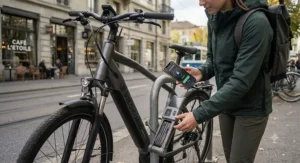
If the Level 3 wins on layered security, the Urtopia Carbon 1 Pro wins on sheer cleverness. This is a 37-pound carbon fiber commuter that unlocks with a fingerprint scan instead of a key or even a phone — there’s nothing to lose, forget, or have stolen out of your pocket.
The anti-theft “Smartbox” pairs that fingerprint ignition with a 4G/GPS connection Urtopia calls Find My Bike, plus a movement alarm and an electronic geofence. In effect, even if someone manages to physically carry the bike away (it’s light enough that this is a real risk worth planning for), you get an immediate alert and a live location feed. One widely circulated owner story involved a stolen Urtopia being tracked to a specific house days later using exactly this system — which says as much about the tech working as it does about needing a backup lock too, since GPS tracking finds a bike after theft rather than preventing it outright.
Reviewers consistently praise the ride quality and how unusually light the bike feels for an e-bike, while also flagging that the fingerprint sensor doesn’t always read on the first try and that some configurations don’t include a rack or fenders standard, meaning a little extra accessory spend.
Who it’s for: Riders who want the lightest possible commuter, don’t mind paying a premium, and like the idea of biometric security over a passcode.
✅ Pros: Genuinely lightweight at 37 lbs — easy to carry up stairs
✅ Pros: Fingerprint ignition means no key or fob to lose
✅ Pros: 80-mile range is class-leading for a lightweight build
❌ Cons: Fingerprint sensor reliability is inconsistent for some owners
❌ Cons: Rack, fenders, and lights may cost extra depending on configuration
Verdict: Typically listed in the $2,000–$3,000 range depending on sales, this is the splurge pick for someone who wants their commuter to feel more like a gadget than a bicycle.
3. Velotric Discover 2 — Best Apple Find My Integration
The Velotric Discover 2 takes a different security angle: instead of building its own tracking network, it plugs straight into Apple’s existing Find My system. That matters more than it sounds — Apple’s network is enormous, so a stolen bike has a much better shot at pinging a nearby iPhone than it would relying on a single brand’s smaller user base.
On top of Find My, the Discover 2 includes its own GPS-based anti-theft alarm and a battery that locks in place rather than sliding out for anyone to grab. The bike pairs a 750W motor with a genuinely long 75-mile range, and the upright riding position plus included fenders, lights, and rear rack make it feel finished out of the box rather than needing accessories tacked on.
Independent comparisons consistently flag the Discover 2’s anti-theft tracking and Bluetooth app integration as standout features relative to other bikes in its price class, alongside fast-charging support and a sturdy, secured battery lock.
Who it’s for: iPhone users who want anti-theft tracking that doesn’t depend on a single manufacturer’s app ecosystem, plus a longer comfortable range for bigger commutes.
✅ Pros: Apple Find My support taps into a massive existing tracking network
✅ Pros: 75-mile range, among the longest in this list
✅ Pros: Comes complete with rack, fenders, and lights — no extra shopping needed
❌ Cons: Only two frame sizes, which can be limiting for very short or tall riders
❌ Cons: Step-through standover height isn’t ideal for taller riders wanting max ground clearance
Verdict: Generally priced in the $1,700–$2,000 window, the Discover 2 is the pick for iPhone households that want serious range alongside serious security.
4. ENGWE Engine Pro / EP-2 — Best Budget Smart-Lock Fat Tire
ENGWE has built its reputation on packing smart-ebike features into prices that undercut the competition, and the Engine Pro (along with its EP-2 sibling) is a good example. The companion ENGWE app handles keyless unlocking, so you start the bike with your phone instead of fumbling for a key, and it layers in GPS tracking plus motion-detection alerts if the bike gets disturbed while parked.
This is also one of the few bikes on this list built around 20-inch fat tires and a folding frame, which makes it a genuinely different commuting tool — better suited to mixed pavement, light gravel, or apartment storage where a full-size bike won’t fit. The 1,500W peak motor and roughly 75-mile range on the larger battery configurations put it well ahead of most budget bikes on raw power.
Owner reviews are generally positive on ride comfort and the upgraded hydraulic brakes on newer Pro versions, with the most consistent complaint being the absence of a precise battery percentage readout — riders get a four-bar indicator instead of an exact number, which makes range planning a bit more guesswork than it should be.
Who it’s for: Budget-conscious commuters who want smart anti-theft features without paying premium-brand prices, especially if your commute includes rough pavement or you need a fold-down bike for storage.
✅ Pros: App-based keyless unlock plus GPS and motion alerts at a budget price
✅ Pros: Fat tires add stability on rough or wet pavement
✅ Pros: Folds down for tight apartment or office storage
❌ Cons: No precise battery percentage display on most configurations
❌ Cons: Heavier than slim commuter-style ebikes due to fat tire construction
Verdict: Generally available in the $1,000–$1,500 range, this is the value pick if you want app-based security without paying for a premium nameplate.
5. Lectric XP4 — Best-Selling Value Pick
The Lectric XP4 doesn’t lean on flashy smart-lock marketing, and that’s sort of the point — it’s one of the best-selling e-bikes in the country precisely because it nails the fundamentals at a price that’s hard to argue with. Where it earns a spot on an anti-theft list is in a detail a lot of competitors skip: every Lectric frame ships with built-in bolts and a mounting cradle on the seat tube specifically designed for the brand’s folding bike lock.
That sounds minor until you’ve tried to lock up a bike with no good frame anchor point and ended up looping a flimsy cable through the spokes instead. Having a dedicated, secure mounting spot means the lock travels with the bike instead of rattling around in a backpack — which, in practice, means people actually carry and use it instead of leaving it at home.
The XP4 pairs that practical security setup with a 500W motor, real-world range in the 45-mile neighborhood, and a folding frame that fits in car trunks and apartment closets. Reviewers across the board point to the sheer number of “happy riders” Lectric has racked up as a sign the fundamentals — comfort, reliability, customer support — are dialed in.
Who it’s for: First-time e-bike buyers who want a proven, widely-reviewed bike and a sensible, built-in way to actually carry a lock instead of skipping security altogether.
✅ Pros: Frame-integrated lock mount makes carrying a lock effortless
✅ Pros: Folds for easy storage and transport
✅ Pros: Backed by one of the largest direct-to-consumer e-bike communities in the US
❌ Cons: No GPS tracking or app-based locking — security is purely physical
❌ Cons: ~45-mile range trails the smart-lock bikes on this list
Verdict: Usually priced around $1,000–$1,200, the XP4 is the safe, well-reviewed default if you want practical lock security without paying for connected features you may not use.
6. Gotrax Dolphin 26” — Best Ultra-Budget Pick
The Gotrax Dolphin is proof you don’t need a four-figure price tag to get basic anti-theft thinking baked into a bike. Its semi-integrated battery sits inside the frame and locks into place, so a thief can’t simply pop it out and walk away with the most expensive component — they’d have to deal with the whole bike, which is a meaningfully bigger deterrent.
At under 50 pounds with a step-through aluminum frame, this is also one of the more portable bikes here, which matters if your security plan involves carrying the bike up an apartment stairwell rather than locking it outside at all. The UL2849 certification on the electrical system is a genuine plus at this price point — that’s the same safety standard increasingly required by cities cracking down on uncertified e-bike batteries after fire incidents.
Hands-on reviewers consistently flag the value here — strong stopping power from the dual disc brakes, a comfortable ride for the price, and a removable, lockable battery that’s “the best placement” they’ve tested for keeping things both tidy and secure.
Who it’s for: Riders on a tight budget who mostly commute short distances and plan to bring the bike inside rather than rely on outdoor locking alone.
✅ Pros: Lockable, semi-integrated battery deters quick grab-and-go theft
✅ Pros: UL2849-certified electrical system for fire safety
✅ Pros: Lightweight aluminum frame, easy to carry indoors
❌ Cons: No speedometer on the display
❌ Cons: Smaller battery means real-world range runs shorter than the rated 30 miles for heavier riders
Verdict: Frequently available between $500–$650, this is the pick for anyone who wants an e-bike, period, without stretching the budget for tech they won’t use.
7. ANCHEER 27.5″ Electric Bike — Best Bundled-Lock Budget Bike
Some riders just want the lock included, full stop — and that’s exactly what several ANCHEER electric bike listings deliver, with “Incl. Free Bike Lock” right in the product title. You’re not hunting for a compatible accessory or guessing whether your frame has a mounting point; the lock ships in the box.
Beyond the bundled lock, certain ANCHEER models tuck the removable battery into the frame behind its own anti-theft latch, which the brand markets specifically as reducing the worry of having it stolen off the bike. Combined with a 750W peak motor, a 48V/10.4Ah battery good for around 55 miles in pedal-assist mode, and a 21-speed drivetrain, it’s a surprisingly complete package for the price.
Buyer feedback is mixed but generally positive for the category — ANCHEER is consistently described as an affordable entry point with decent versatility, though some owners note components and customer support don’t match pricier brands. For a first e-bike or a backup commuter, that tradeoff is often worth it.
Who it’s for: Budget shoppers who want a lock included on day one without researching compatible accessories separately.
✅ Pros: Lock included in the box — no separate purchase needed
✅ Pros: Anti-theft battery housing on several models
✅ Pros: 21-speed drivetrain and suspension fork at a budget price
❌ Cons: Component quality and long-term durability lag premium brands
❌ Cons: Customer support reports are inconsistent across reviews
Verdict: Generally priced in the $600–$900 range, this is the simplest path to “an e-bike and a lock” in a single purchase.
🔍 Take your commute to the next level with one of these picks — click through to check current pricing and availability before you decide! ✨
How to Choose a Commuter Ebike With Anti-Theft Lock
Picking the right bike here really comes down to five questions, roughly in order of importance:
- Where will it actually be parked? A bike that lives in your garage overnight needs far less anti-theft tech than one locked at a train station for nine hours a day. Match the security tier to the real risk, not the worst-case scenario you can imagine.
- Do you want active or passive security? Active systems (GPS, geofencing, app alerts) tell you something’s wrong in real time. Passive systems (a sturdy included lock, a locking battery) just make theft harder and slower. Most riders genuinely don’t need both, but if your bike is expensive and exposed, layering both is the safest bet.
- How far is your commute, realistically? This matters more than people expect — a 4-mile flat commute and an 18-mile hilly one need very different battery capacities. As a rough electric bike commute distance guide: under 5 miles each way, almost anything on this list works; 5–12 miles, look at 45+ mile rated range to leave a buffer; beyond 12 miles or hilly terrain, lean toward the 70–80 mile bikes like the Level 3, Discover 2, or Carbon 1 Pro.
- Do you need a subscription-free system? Several smart-lock features (4G tracking, geofencing) quietly require a paid plan after an introductory period. If that’s a dealbreaker, prioritize bikes with strong physical security instead, like the Lectric XP4 or Gotrax Dolphin.
- What’s your actual budget ceiling? It’s easy to talk yourself into a $2,000 bike for “safety,” but a $600 bike with a good lock, used sensibly (locked through the frame, parked in well-lit areas, battery removed overnight), covers most riders’ real-world risk just fine.
Buyer’s Decision Framework
If you want the short version, use this as a quick mental checklist before you scroll back up to the product picks:
- If you commute through a downtown core or use public transit stations → choose a smart-lock bike with GPS and geofencing (Aventon Level 3, Urtopia Carbon 1 Pro, Velotric Discover 2).
- If your commute is mostly suburban streets and a home garage → a budget bike with a solid included or compatible lock is enough (Lectric XP4, Gotrax Dolphin, ANCHEER).
- If you need rough-pavement or light-trail capability → the fat-tire ENGWE Engine Pro covers smart-lock security without sacrificing tire grip.
- If weight and portability matter as much as security → the Urtopia Carbon 1 Pro’s 37-pound frame is the standout, assuming the higher price fits your budget.
- If you’re buying your very first e-bike and don’t want decision fatigue → the Lectric XP4’s track record and built-in lock mount make it the lowest-risk starting point.
Real-World Scenario: Matching Riders to the Right Anti-Theft Ebike
It helps to see this play out with actual rider profiles rather than abstract specs.
The downtown office commuter: Rides 6 miles each way through a dense city core, locks up at a public rack for eight hours, and has had a previous bike stolen. This rider should prioritize active anti-theft tech above everything else — the Aventon Level 3’s dual passcode locks plus geofencing and alarm give the kind of layered protection that matches a genuinely high-risk parking situation.
The suburban commuter with a home garage: Rides 3–5 miles to a transit station, parks the bike in a locked garage overnight, and only needs security during the workday. This is a great fit for an electric bike for suburban commute use where the bike spends most of its life somewhere safe — a budget pick like the Gotrax Dolphin or ANCHEER with its bundled lock covers the daytime risk window without overspending on always-on tracking.
The apartment dweller without secure storage: Lives somewhere with no garage or bike room, so the e-bike either gets carried up several flights or locked outside in a shared lot. Light weight matters as much as security here — the Urtopia Carbon 1 Pro’s 37-pound frame is genuinely easier to haul upstairs daily than the 65+ pound bikes elsewhere on this list, and its fingerprint ignition adds a layer of protection for the hours it does sit outside.
Practical Security Setup Guide
Buying the right bike is half the job; setting it up correctly is the other half.
- Register your bike immediately. A free registry like Bike Index lets you log your frame’s serial number, which dramatically improves recovery odds if a bike does get stolen, smart-lock or not.
- Pair every smart lock with a physical one. Even on the Aventon Level 3 or Urtopia Carbon 1 Pro, lock through the frame and rear wheel to something immovable. GPS tracking helps you find a stolen bike; it doesn’t stop the theft from happening in the first place.
- Remove or lock the battery overnight. It’s the single most expensive, most stealable component on most of these bikes. Several models here lock it automatically, but if yours doesn’t, bring it inside.
- Update the companion app and firmware. Smart-lock bikes occasionally push security patches over the air. Skipping updates can leave known vulnerabilities open longer than necessary.
- Avoid the same parking spot every single day. Predictability is a thief’s best friend. Mixing up where you lock up, even within the same general area, removes the easy pattern-spotting that opportunistic theft relies on.
Common Mistakes When Buying an Anti-Theft Commuter Ebike
The biggest mistake is assuming “anti-theft” automatically means GPS and an app. Plenty of listings use the phrase loosely to describe nothing more than an included $10 cable lock — which is fine for low-risk parking, but won’t hold up against a determined thief with bolt cutters. Read the actual feature list, not just the headline claim.
A close second: skipping the subscription fine print on smart-lock bikes. Several systems on this list, including Aventon’s ACU and Urtopia’s Smartbar, include a free trial period for cellular connectivity before requiring a paid plan. Buyers who don’t check this can end up with GPS tracking that quietly stops working a year in.
Finally, riders often over-invest in tech security while under-investing in basic locking habits — a $3,000 bike with a fingerprint scanner is still vulnerable if it’s never locked to anything solid when parked outside.
Smart Locks vs Physical Locks vs GPS Trackers
These three categories solve different problems, and the strongest setups combine more than one.
| Security Type | What It Does | Best Paired With |
|---|---|---|
| Smart/App Lock | Locks the wheel or motor electronically, often via passcode or fingerprint | A frame-anchored physical lock for redundancy |
| Physical Lock (U-lock, integrated lock) | Physically prevents the bike from rolling or being carried off | A GPS tracker bike lock combo for recovery odds if it’s defeated |
| GPS Tracker / Integrated Alarm System | Alerts you to movement and shows live location after the fact | Both of the above — it doesn’t prevent theft, only improves recovery |
The analysis here is straightforward: a smart lock without a physical backup can still be defeated by simply lifting a lightweight bike into a truck bed. A physical lock without any alarm or tracker means you might not even notice the bike’s gone until you walk outside. And a GPS tracker alone, however good the integrated alarm system is, only matters after the theft has already happened. Bikes like the Aventon Level 3 layer all three, which is exactly why it tops this list for high-risk commutes.
What to Expect: Real-World Anti-Theft Performance
In practice, smart anti-theft systems perform best as deterrents and recovery tools rather than ironclad prevention. An audible alarm and a phone alert won’t physically stop someone mid-theft, but they dramatically shrink the window a thief has to work in undetected, and they give you (or police) a fighting chance at recovery through GPS if the worst happens.
Physical locks, meanwhile, perform exactly as well as the weakest link in how you use them — a great lock looped loosely through a quick-release wheel does almost nothing if the frame itself rolls away unsecured. The bikes here that combine a quality included or compatible lock with sensible locking habits consistently outperform expensive standalone tech used carelessly.
Long-Term Cost & Maintenance
Smart-lock systems add a real, ongoing cost most buyers don’t budget for upfront: cellular connectivity. Plans across this category typically run somewhere in the range of a basic phone add-on per year after an included trial period, depending on the manufacturer’s current offer. Factor that into your total cost of ownership rather than just the sticker price.
Physical locks have essentially zero recurring cost beyond eventual replacement if the mechanism wears out, which makes the budget-friendly picks here (Gotrax, ANCHEER, Lectric) cheaper to maintain over a multi-year ownership window even though the upfront price gap looks larger on paper.
Battery maintenance matters for security too — locking batteries and removable battery compartments need occasional cleaning around the contacts to keep the locking mechanism from sticking, especially for riders who commute through rain or snow.
Safety, Regulations & Insurance for Commuter Ebikes
E-bikes in the US generally fall into Class 1, 2, or 3 categories — a system originally developed by PeopleForBikes and now adopted by most states — based on top speed and whether they have a throttle, which affects where you’re legally allowed to ride them — bike lanes, multi-use paths, or roads only. Every bike on this list ships in a lower class by default but several, including the Aventon Level 3, can be unlocked to Class 3 speeds through their companion app, so it’s worth checking your local rules before flipping that switch.
UL 2849 certification, which several bikes here carry, covers the electrical system as a whole rather than just the battery cell, and it’s increasingly becoming a requirement rather than a nice-to-have as cities respond to e-bike battery fire incidents with stricter rules on what can be sold, stored, or even ridden on public transit.
On the insurance side, dedicated insurance for ebikes has become more common as theft rates climb, and some homeowner’s or renter’s policies will cover an e-bike as scheduled property, though coverage and exclusions vary widely by provider. It’s worth a phone call to your existing insurer before assuming you’re covered, since standard policies often cap personal property claims well below what a premium e-bike actually costs. Basic charging habits matter too — the CPSC’s micromobility safety guidance recommends never charging unattended overnight and only using the charger that shipped with the bike, since both factors show up repeatedly in battery fire incident reports.
Frequently Asked Questions
❓ What is a commuter ebike with anti-theft lock?
❓ How fast can a Class 3 commuter ebike go?
❓ Do smart ebike locks drain the battery?
❓ Is a built-in ebike alarm enough to stop theft?
❓ How much does ebike theft insurance cost?
Conclusion
There’s no single “best” commuter ebike with anti-theft lock — there’s a best one for your specific commute, parking situation, and budget. If you’re locking up in a genuinely high-theft area every day, the layered GPS-and-passcode protection on the Aventon Level 3 earns its higher price tag. If your bike mostly lives somewhere safe and you just want sensible, included security, the Gotrax Dolphin or ANCHEER bundle gets you there without overspending. And if portability matters as much as protection, the Urtopia Carbon 1 Pro’s fingerprint ignition and feather-light frame are hard to beat.
Whatever you land on, the real lesson from this research is that the strongest security always comes from combining tech with habits — a smart lock plus a physical one, a tracker plus a registered serial number, a great bike plus the discipline to actually use what’s already built into it.
✨ Don’t Miss These Exclusive Deals!
🔍 Take your commute to the next level with one of these carefully selected anti-theft ebikes. Click through on any model above to check current pricing and availability. These picks can help you ride with real peace of mind! 🚴♂️🔋
Recommended for You
- Electric Bike for Mixed Terrain: 7 Best Picks for 2026
- 7 Best Electric Bikes for Flat Terrain in 2026 (Tested Picks)
- Best Electric Bike for Mountain Areas 2026: 7 Top Picks
Disclaimer: This article contains affiliate links. As an Amazon Associate, I earn from qualifying purchases. If you purchase products through these links, we may earn a small commission at no additional cost to you.
✨ Found this helpful? Share it with your friends! 💬🤗
