In This Article
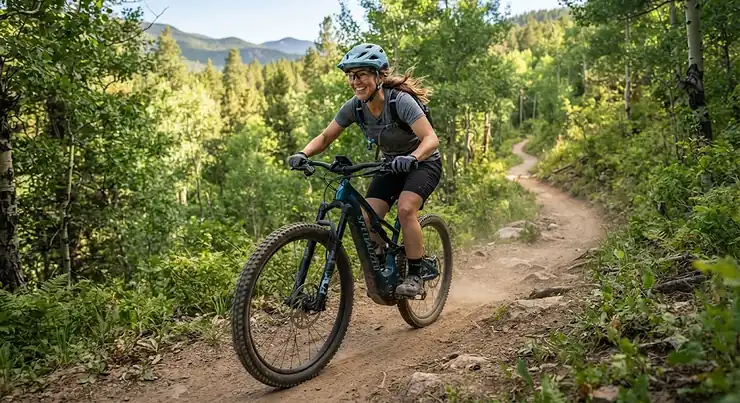
Somewhere between “I want to try mountain biking” and “I’m nervous I’ll wreck an expensive bike in week one” sits a very specific kind of shopper — someone hunting for a trail emtb for beginners that’s actually sold where they already shop: Amazon. A trail emtb for beginners is, in plain terms, an electric mountain bike built with moderate suspension travel, stable handling, and a pedal-assist motor that helps new riders climb loose, technical terrain without gassing out before the fun part even starts.
Here’s the honest part most buying guides skip: the big-name mountain bike brands you’ve heard of — Trek, Specialized, Marin — don’t sell through Amazon at all; they go through local dealer networks. What you’ll actually find on Amazon.com is a different, genuinely useful category: direct-to-consumer trail-capable ebikes, ranging from true mid-drive trail-geometry hardtails to rugged, suspension-equipped fat-tire models built specifically for off-road beginners. This guide covers seven real, currently listed Amazon products, researched from manufacturer specs and aggregated customer-review sentiment, so you know exactly what you’re getting before you click “buy.”
This guide breaks down geometry, skill progression, and how a pedal-assist electric bicycle differs from a standard mountain bike where it actually counts on singletrack — plus which of these seven bikes deserves the “trail” label and which ones are better described as trail-capable adventure ebikes.
Quick Comparison Table
| Bike | Type | Motor | Price Range | Best For |
|---|---|---|---|---|
| Aventon Ramblas ADV | Mid-drive hardtail | 100Nm mid-drive | Mid-$2,000s | True trail geometry, best overall |
| Jasion EB5 Ultra | Dual-suspension fat tire | 2500W peak hub | High-$1,000s | Powerful climbing on a budget |
| LEONX M2 Max | Dual-suspension fat tire | 1800W peak hub | Mid-$1,000s | Hydraulic brakes at a fair price |
| ESKUTE M200F | Full-suspension, 27.5″ | 1200-1500W peak hub | High-$900s to low-$1,000s | Most bike-like wheel size |
| Funhang Mountain Ebike | Front-suspension fat tire | 1000W peak hub | Low-$900s | UL-certified budget value |
| Hoverfly Ourea | Front-suspension fat tire | 750W peak hub | Around $500 | Cheapest UL2849-certified pick |
| Loeook EB-M1 | Front-suspension fat tire | 1000W peak hub | Under $300 | Absolute rock-bottom entry point |
Looking at this lineup, there’s a real quality split worth understanding before you scroll further: the Aventon Ramblas ADV is the only bike here built around true mountain-bike geometry and a genuine mid-drive motor, which is why it costs several times more than the rest. The remaining six are hub-motor, fat-tire-style ebikes — a completely legitimate and popular category for beginner trail riding, but a different animal from a purpose-built trail bike. If budget is tight, start at the bottom of this table; if you want the closest thing to a “real” trail eMTB Amazon sells, the Ramblas ADV is worth the jump.
💬 Already leaning toward one? Tap any bike above to check current availability and pricing before it changes!
Top 7 Trail eMTBs for Beginners: Expert Picks
1. Aventon Ramblas ADV — most authentic trail geometry on Amazon
The Aventon Ramblas ADV earns the top spot because it’s built differently from everything else on this list: a genuine mid-drive motor (Aventon’s own A100 unit) mounted low at the bottom bracket, a 29″ wheeled hardtail chassis, and an actual dropper post, rather than a hub motor bolted onto a fat-tire frame. Aventon advertises up to 100Nm of torque, and while independent dynamometer testing found the wheel-level output considerably lower once drivetrain losses are accounted for, real-world reviewers consistently describe it as strong enough for sustained, steep climbing that would wear out a rider on an acoustic bike. It runs a 12-speed drivetrain with a coil-sprung suspension fork, which is a genuinely uncommon spec at this price point.
Based on the spec comparison, this is the bike for a beginner who’s serious about actual singletrack, not just fire roads and gravel paths. What most buyers overlook is that this is a Class 1 ebike out of the box (20 mph pedal-assist only, no throttle), which matters because many trail systems that ban throttle-equipped ebikes still welcome Class 1 machines like this one. Reviewers testing the Ramblas ADV consistently note the trail-tuned geometry feels stable at speed without being twitchy at a beginner’s slower pace.
Pros:
- ✅ Genuine mid-drive motor with true trail-bike geometry
- ✅ 12-speed drivetrain and dropper post included
- ✅ Class 1 status keeps it welcome on more trail systems
Cons:
- ❌ Significantly pricier than every other bike on this list
- ❌ Non-adjustable fork suits mid-weight riders better than very light or heavy ones
At a price in the mid-$2,000s, the Aventon Ramblas ADV is the closest thing to a bike-shop-quality trail eMTB you’ll find sold directly on Amazon.
2. Jasion EB5 Ultra — most powerful budget climber
The Jasion EB5 Ultra stands out for raw climbing power at a fraction of the Ramblas ADV’s price. Its hub motor claims a 2500W peak output with 75Nm or more of torque, paired with a large 52V 20Ah removable battery, which in practice means steep, loose fire-road climbs feel far less demanding than on the lower-wattage bikes further down this list. Dual suspension (front fork plus a rear shock) and hydraulic disc brakes — genuinely uncommon at this price tier — round out a spec sheet that reads more like a mid-tier bike than a budget one.
Here’s what user reports suggest: because this is a hub motor rather than a mid-drive, power delivery feels more like a constant push than the more natural, cadence-matched assist of a mid-drive system — a real difference beginners notice within their first few rides. That’s a fair trade-off for buyers prioritizing torque and price over that more refined, bike-shop-quality feel.
Pros:
- ✅ Class-leading torque and battery capacity for the price
- ✅ Dual suspension smooths rough trail surfaces
- ✅ Hydraulic disc brakes are rare at this price point
Cons:
- ❌ Hub-motor power delivery feels less natural than mid-drive systems
- ❌ Fat-tire weight makes it noticeably harder to lift or transport
Typically priced in the high-$1,000s, the Jasion EB5 Ultra rewards beginners who want maximum climbing assist without spending Ramblas-level money.
3. LEONX M2 Max — best hydraulic brakes at a fair price
The LEONX M2 Max occupies a smart middle ground: a 1800W peak hub motor rated at up to 110Nm of torque, paired with adjustable air suspension and genuine hydraulic disc brakes with carbon-ceramic pads — a meaningful upgrade over the mechanical brakes found on cheaper bikes in this roundup. The 48V 17.5Ah battery delivers a claimed range up to 85 miles in its lowest-assist setting, though real-world trail riding at higher assist levels will land considerably lower.
What most buyers overlook about hydraulic brakes at this price is that they matter more on a heavy fat-tire bike than almost any other spec — a loaded-down 60+ lb bike needs strong, fade-resistant stopping power on descents, and mechanical brakes on lower-tier competitors simply can’t match that consistency. Based on the spec comparison, this is a smart step-up pick for beginners who plan to ride hillier terrain regularly rather than occasional flat greenways.
Pros:
- ✅ Hydraulic disc brakes rare at this price tier
- ✅ Adjustable air suspension for rider-weight tuning
- ✅ Strong claimed torque for steep climbs
Cons:
- ❌ Claimed 85-mile range is optimistic for real trail use
- ❌ Hub motor still lacks the natural feel of a mid-drive
Priced in the mid-$1,000s, the LEONX M2 Max is the value pick for beginners who want real stopping power without Ramblas-level spending.
4. ESKUTE M200F — most bike-like wheel size and feel
Most bikes on this list run 26″ or fat 20″ wheels, but the ESKUTE M200F uses 27.5″ x 2.1″ tires — a size much closer to a traditional mountain bike, which translates into quicker acceleration and a more familiar, less sluggish ride feel for beginners coming from acoustic bikes. It pairs a 1200-1500W peak hub motor (spec varies by listing) with full front-and-rear suspension and a hybrid braking setup: a mechanical disc up front and a hydraulic disc in back, plus a large 998Wh battery for genuinely long range between charges.
Reviewers consistently note that the narrower, larger-diameter tires roll noticeably faster and feel less “boat-like” in corners than the 4-inch fat tires used elsewhere in this roundup. What the spec sheet won’t tell you, but user reports suggest, is that this narrower tire profile does sacrifice some of the traction and stability those fat tires provide on loose sand or deep snow — a fair trade for most dedicated dirt-trail riders.
Pros:
- ✅ 27.5″ wheels feel more like a traditional mountain bike
- ✅ Hybrid mechanical/hydraulic braking setup
- ✅ Large battery for genuinely long trail days
Cons:
- ❌ Less float and grip than fat-tire competitors on loose terrain
- ❌ Rear hydraulic-only setup is less consistent than full hydraulic
At a price around the high-$900s to low-$1,000s, the ESKUTE M200F is the pick for beginners who want a ride feel closer to a conventional trail bike.
5. Funhang Mountain Ebike — UL-certified budget value
The Funhang Mountain Ebike is built around a straightforward, no-frills spec: a 1000W peak motor, 48V 13Ah battery, front suspension fork, and a 7-speed drivetrain, all backed by UL 2849 certification for the battery and electrical system — a genuinely important safety credential given ongoing concerns about uncertified lithium battery fires in cheap ebikes. It’s not a technical trail shredder, but it’s a legitimate, honest entry point for someone testing whether they’ll enjoy off-road riding at all.
Based on the spec comparison, what most buyers overlook is that UL certification matters more than an extra few hundred watts of motor power for a true first-timer, since a beginner riding moderate terrain won’t tax a 1000W motor’s limits nearly as often as they’ll appreciate a battery system that’s been independently safety-tested.
Pros:
- ✅ UL 2849 certified battery and electrical system
- ✅ Simple, reliable spec that’s easy to maintain
- ✅ Genuinely budget-friendly price point
Cons:
- ❌ Front suspension only, no rear travel
- ❌ 1000W motor feels underpowered on steep, sustained climbs
Priced in the low-$900s, the Funhang Mountain Ebike is the honest budget choice for a true first-timer who isn’t ready to commit serious money yet.
6. Hoverfly Ourea — cheapest UL-certified pick
At around $500, the Hoverfly Ourea undercuts most of this list while still holding onto UL 2849 certification — a genuinely rare combination this far down the price ladder. It runs a 750W peak motor, a 374Wh removable battery good for a claimed 20-40 miles depending on mode, front suspension, and mechanical disc brakes, arriving roughly 90% pre-assembled according to the listing.
Reviewers consistently note that mechanical disc brakes, while less refined than hydraulic systems, are still a meaningful step up from the rim brakes found on some ultra-cheap competitors, delivering adequate stopping power for the bike’s modest 20 mph top speed. What most buyers overlook is that a lower top speed and smaller battery aren’t necessarily downsides for a genuine beginner — they simply mean less can go wrong while you’re still learning basic bike handling and braking technique.
Pros:
- ✅ UL 2849 certified at a genuinely low price
- ✅ Mechanical disc brakes outperform rim-brake competitors
- ✅ Arrives mostly pre-assembled for easy setup
Cons:
- ❌ Smaller battery limits range compared to pricier options
- ❌ Front suspension only, less forgiving on rough trail sections
At a price around $500, the Hoverfly Ourea is a smart, safety-conscious starting point for a rider who wants to try trail riding without a big financial commitment.
7. Loeook EB-M1 — absolute rock-bottom entry point
Closing out the list at well under $300, the Loeook EB-M1 is proof that a UL-certified, trail-capable ebike doesn’t have to cost much at all. It pairs a 500W-nominal, 1000W-peak motor with a 48V removable battery, front suspension fork, and a 7-speed drivetrain, and it’s earned consistently strong aggregated customer ratings for a bike at this price. Reviewers consistently note surprisingly confident traction on loose or snowy surfaces, crediting the tire compound and front suspension for keeping the front wheel weighted through rougher patches.
Here’s what user reports suggest: at this price, corners were clearly cut somewhere, and that shows up mainly in components (basic gearing, simpler suspension damping) rather than in the safety-critical electrical system, which still carries full UL 2849 certification. Based on the spec comparison, this is the bike for someone who genuinely isn’t sure yet whether trail riding is for them and wants to find out before spending real money.
Pros:
- ✅ Lowest price on this list with full UL 2849 certification
- ✅ Strong aggregated customer ratings for the price tier
- ✅ Front suspension handles moderate, non-technical trails fine
Cons:
- ❌ Basic components won’t hold up to serious technical terrain
- ❌ Smaller battery means shorter rides between charges
At a price under $300, the Loeook EB-M1 is the lowest-risk way to find out if trail eMTB riding is worth investing more in.
Full Spec Comparison: Motor, Suspension & Battery
| Bike | Motor Type | Suspension | Brakes | Battery | Best For |
|---|---|---|---|---|---|
| Aventon Ramblas ADV | Mid-drive | Front fork, hardtail | Hydraulic disc | ~708Wh | True trail geometry |
| Jasion EB5 Ultra | Rear hub | Dual (front + rear) | Hydraulic disc | 52V 20Ah | Max climbing power |
| LEONX M2 Max | Rear hub | Dual, air-adjustable | Hydraulic disc | 48V 17.5Ah | Braking confidence |
| ESKUTE M200F | Rear hub | Full suspension | Hybrid disc | 998Wh | Bike-like wheel feel |
| Funhang Mountain Ebike | Rear hub | Front fork | Mechanical disc | 48V 13Ah | UL-safety on a budget |
| Hoverfly Ourea | Rear hub | Front fork | Mechanical disc | 374Wh | Cheapest certified pick |
| Loeook EB-M1 | Rear hub | Front fork | Mechanical disc | 48V (varies) | Absolute lowest cost |
This table makes the trade-off pattern obvious: brake quality and suspension sophistication climb steadily with price, while the Aventon Ramblas ADV stands apart as the only true mid-drive, hardtail-geometry option in the group. If braking confidence on descents matters most to you, prioritize the hydraulic-brake bikes — the Jasion EB5 Ultra and LEONX M2 Max — over the mechanical-brake budget picks, even if it means spending a bit more upfront.

Benefits vs Traditional Alternatives
| Factor | Amazon Trail eMTB | Bike-Shop Trail eMTB (Trek/Specialized/etc.) |
|---|---|---|
| Purchase process | Ships direct, no dealer needed | Requires local dealer visit and fitting |
| Price | Often $300-$2,900 | Typically $3,000-$11,000+ |
| Motor type | Mostly hub motors (Ramblas is mid-drive) | Almost always mid-drive (Bosch, Shimano, etc.) |
| Warranty/service | Manufacturer online support | Local dealer service network |
| Geometry | Adapted from fat-tire/adventure platforms | Purpose-built trail-bike geometry |
The core trade-off here is access versus refinement: Amazon’s direct-to-consumer trail ebikes let a curious beginner start riding for a fraction of dealer-network prices, without needing a local bike shop relationship at all. Bike-shop trail eMTBs, on the other hand, generally offer more natural mid-drive power delivery and purpose-built geometry, but at a price and process (test rides, professional fitting) that can feel like a barrier for someone who just wants to try the sport. For most true beginners, starting on Amazon and upgrading later, once you know you love the sport, is a financially sound path.
✨ Ready to Ride? 🔍 Compare the bikes above against current pricing and availability before you commit — trail season doesn’t wait, and neither should you.
Practical Usage Guide: Your First 30 Days on a Trail eMTB
Getting a new trail eMTB dialed in matters more than most first-timers expect. Start with tire pressure — fat tires in particular ship overinflated for shipping protection, and dropping to roughly 12-18 PSI (adjust for your weight and terrain) dramatically improves grip and comfort on loose dirt. Next, spend real time on the assembly and safety checklist included with direct-to-consumer bikes; unlike a dealer-assembled bike-shop model, these arrive roughly 85-90% built, and skipping a proper torque check on the stem, seatpost, and axles is the single most common cause of early problems.
During your first few rides, resist the urge to leave the motor on its highest assist setting constantly — practicing in a lower mode teaches you how the bike actually handles weight transfer and braking, skills you’ll need once you’re riding trickier terrain or running low on battery mid-ride. A common rookie mistake is charging the battery only when it hits zero; lithium batteries actually last longer with partial, frequent charges rather than deep discharge cycles. Finally, book a 30-day mechanical check with a local bike shop even if you bought online — new cables stretch and brakes need bedding in, and most shops will happily true a wheel or adjust a derailleur on a direct-to-consumer bike for a modest fee.
Real-World Rider Scenarios: Which Trail eMTB Fits You
If you’re genuinely unsure whether trail riding is for you and want the lowest-risk way to find out, the Loeook EB-M1 or Hoverfly Ourea make the most sense — both let you test the waters for a few hundred dollars, with real UL certification so you’re not gambling on battery safety while you decide.
If you’re a rider who already knows you’ll ride regularly and wants a trail electric bike for intermediate riders’ ambitions from day one, the Aventon Ramblas ADV is the clear pick — its trail-specific geometry and mid-drive motor give it real headroom to grow with your skills, unlike the fat-tire hub-motor bikes that top out sooner in capability.
And if you’re somewhere in the middle — committed to the sport but not ready for Ramblas-level spending — the Jasion EB5 Ultra or LEONX M2 Max deliver genuinely strong climbing power and hydraulic braking confidence at a price that still feels like a considered investment rather than a leap of faith.
How to Choose a Trail eMTB for Beginners
Choosing the right trail emtb for beginners on Amazon comes down to a handful of decision points that matter more than horsepower marketing:
- Motor type — mid-drive motors (like the Ramblas ADV’s) deliver more natural power at the pedals; hub motors are cheaper but feel more like a constant push than pedal-matched assist.
- Brake type — hydraulic disc brakes offer far more consistent stopping power on descents than mechanical discs, especially on heavier fat-tire bikes.
- Suspension — dual or full suspension smooths rough trail sections; front-only suspension is fine for moderate, less technical terrain.
- Safety certification — look specifically for UL 2849 certification on the battery and electrical system, a meaningful safeguard against the fire risk of uncertified lithium packs.
- Battery size vs. ride length — match claimed Wh capacity to your typical ride duration, and mentally discount claimed range by 20-30% for real trail use versus flat-ground testing.
- Total weight — fat-tire hub-motor bikes commonly weigh 55-65 lbs; that matters for lifting onto a rack or carrying over an obstacle.
- Budget headroom for gear — helmet, pads, and basic tools typically add a meaningful amount beyond the bike itself; budget for that upfront rather than as an afterthought.
Common Mistakes When Buying a Trail eMTB for Beginners
The most common mistake beginners make on Amazon is assuming every bike labeled “electric mountain bike” is built the same way — in reality, the difference between a mid-drive, trail-geometry hardtail like the Aventon Ramblas ADV and a hub-motor fat-tire adventure bike is significant, even though both get marketed under similar language. A close second is skipping the UL 2849 certification check entirely; uncertified batteries have been linked to real fire incidents, and it’s a genuinely easy detail to verify before purchase.
Buyers also frequently trust advertised range and top-speed figures at face value, without accounting for the fact that real trail riding at higher assist levels and on hilly terrain will noticeably undercut flat-ground marketing numbers. Finally, many new riders underestimate assembly requirements for direct-to-consumer bikes; these ship mostly assembled but not fully tuned, and skipping a proper first setup — brake bedding, torque checks, tire pressure — undermines the riding experience before it even starts.
Trail Skill Progression: From Beginner to Intermediate Trail Features
Trail skill progression on an eMTB tends to follow a fairly predictable arc, and the bike you start on matters here. In the first few months, most riders focus on basic balance, braking modulation, and simply getting comfortable with a bike’s extra weight at low speed — this is where a lighter, simpler bike like the Loeook EB-M1 or Hoverfly Ourea genuinely helps, since a smaller, less powerful motor doesn’t punish small mistakes as harshly as a 2500W hub motor might for a total newcomer.
By months three to six, most beginners start attempting intermediate trail features: small drops, berms, and rock gardens that require actual weight-shifting rather than just pedaling and steering. This is exactly where the Aventon Ramblas ADV earns its higher price tag — its trail-specific geometry and dropper post absorb and enable technique that a fat-tire hub-motor bike simply wasn’t designed for. If you suspect you’ll progress quickly, buying closer to Ramblas-level capability upfront, within reason, tends to save money versus upgrading twice within a year.
Beginner-Friendly Geometry Explained
Geometry is the most underrated spec on any trail eMTB, and it’s also the hardest for beginners to evaluate from an Amazon listing alone. A beginner-friendly geometry typically means a moderately relaxed head tube angle for stability without feeling unwieldy at low speed, a comfortable, upright-enough riding position, and enough standover clearance to put a foot down quickly when nerves kick in. Here’s the honest caveat: most of the fat-tire ebikes in this roundup weren’t designed from a trail-specific geometry chart the way a purpose-built mountain bike is — they’re adapted from general-purpose adventure-bike platforms, which is exactly why they ride a bit more like a stable cruiser than a nimble trail bike.
The Aventon Ramblas ADV is the clear exception, built around genuine trail-bike geometry numbers rather than adapted from a commuter platform. What most buyers overlook is that this doesn’t make the fat-tire alternatives bad choices — their more upright, stable geometry can actually feel more confidence-inspiring for a total beginner on moderate terrain, even if it’s not technically “trail geometry” in the traditional sense. For a broader primer on how frame geometry affects handling across bike types, REI’s mountain bike buying guide is a solid starting point before you commit to a specific size or build.
Long-Term Cost & Maintenance
The purchase price is only part of eMTB ownership cost. Budget for brake pad and tire replacement roughly every season of regular riding, plus periodic suspension maintenance to keep travel performing as intended — direct-to-consumer bikes generally use simpler, less serviceable suspension components than bike-shop models, so a full rebuild often means replacing the part rather than servicing it. Battery longevity is the bigger long-term factor across every bike here; most ebike batteries are rated for roughly 500-800 full charge cycles before capacity noticeably declines, and a replacement battery can represent a meaningful fraction of the bike’s original price on budget models.
On the value side, UL 2849 certification (present on the Funhang Mountain Ebike, Hoverfly Ourea, and Loeook EB-M1) matters for long-term peace of mind beyond resale value — it’s a genuine safety credential worth prioritizing even on a tight budget, since electrical fires are a real, documented risk with uncertified lithium battery systems. For a broader look at how e-bike battery safety standards work in the U.S., PeopleForBikes’ e-bike resource page is worth reading before you buy any uncertified budget model.
❓ FAQ
❓ What is the best trail emtb for beginners in 2026?
❓ Are Trek or Specialized eMTBs sold on Amazon?
❓ How much does a trail eMTB cost for beginners on Amazon?
❓ Is a hub motor or mid-drive motor better for trail riding?
❓ Why does UL 2849 certification matter for a beginner ebike?
Conclusion
Picking a trail emtb for beginners on Amazon really comes down to being honest about what you’re buying: a genuine trail-geometry, mid-drive bike in the Aventon Ramblas ADV, or one of six capable, budget-friendly fat-tire ebikes that trade some refinement for a dramatically lower price. Riders unsure if they’ll stick with the sport are well served starting with the Loeook EB-M1 or Hoverfly Ourea — both let you genuinely experience off-road riding without overcommitting financially. Riders who already suspect they’ll progress into intermediate trail features fast should lean toward the Aventon Ramblas ADV, since its geometry and mid-drive motor offer real headroom to grow into.
Whichever direction you go, prioritize UL 2849 certification and honest expectations about geometry and motor type over chasing the highest wattage number on the listing page — a bike that fits your actual skill level and riding plans will serve you far better than raw power specs ever could. Trail skill progression happens in the saddle, not on a spec sheet, and the right bike simply gets out of your way while you build it.
✨ Ready to pick your bike and hit the trailhead this season? Check current pricing on the models above before availability shifts.
Recommended for You
- 7 Best Fat Tire EMTB for Snow Trails in 2026: Ranked & Compared
- 7 Best Plus-Size Rider Fat Tire Electric Mountain Bikes for 2026
- Hardtail Electric Mountain Bike: 7 Best XC Picks for 2026
Disclaimer: This article contains affiliate links. As an Amazon Associate, I earn from qualifying purchases. If you purchase products through these links, we may earn a small commission at no additional cost to you.
✨ Found this helpful? Share it with your friends! 💬🤗
