
In This Article
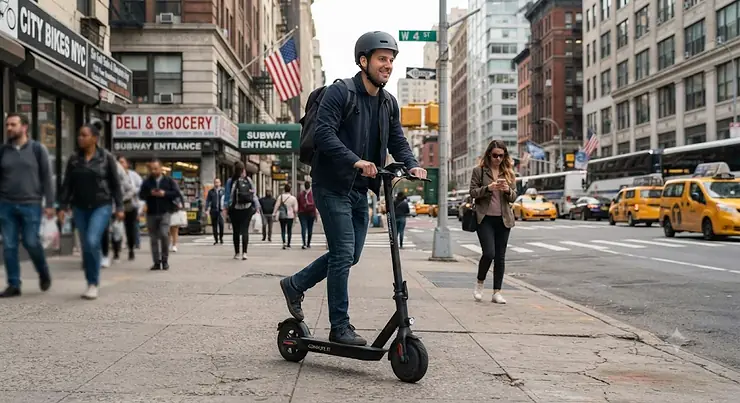
Somewhere between the third red light and the fourth pothole, most commuters have the same thought: there has to be a better way to get to work than this. For a growing number of Americans, the answer isn’t a bigger car or a faster bus — it’s a scooter that folds up small enough to slide under a desk. The best commuter electric scooter isn’t the one with the flashiest spec sheet or the biggest top-speed number splashed across the box. It’s the one that matches your actual commute — your hills, your distance, your parking situation, your patience for charging cables.

That distinction matters more than marketing copy ever will. A scooter that’s brilliant for a two-mile flat ride to the train station can be miserable on a four-mile hilly slog with rain in the forecast. This guide breaks down seven real, currently available models — from a $300 entry-level Segway to a nearly $1,400 long-range cruiser — and explains, in plain language, why each one earns its spot. You’ll get honest analysis grounded in real specs and aggregated rider feedback, not recycled listing copy. Transportation is the largest single source of U.S. greenhouse gas emissions, so every commuter who swaps a car trip for a scooter ride is doing more than saving on gas — but we’ll get to that math later. First, let’s figure out which scooter actually deserves a spot in your hallway.
What Is the Best Commuter Electric Scooter?
The best commuter electric scooter is a compact, foldable, battery-powered vehicle built for repeatable daily trips of 2 to 15 miles, balancing real-world range, a motor strong enough for local hills, comfortable tires or suspension, and a weight light enough to carry up stairs or onto a train. Unlike recreational or off-road scooters, commuter models prioritize consistency and portability over raw speed.
That’s the textbook definition. In practice, “best” always depends on your specific ride — which is exactly why this guide compares budget, mid-range, and premium options side by side instead of crowning a single universal winner.
Quick Comparison Table
Before diving into the deep-dive reviews, here’s the at-a-glance breakdown of all seven scooters covered in this guide, so you can jump straight to the category that matches your commute.
| Scooter | Top Speed | Real-World Range | Best For |
|---|---|---|---|
| Segway Ninebot E2 Plus II | 15.5 mph | ~12-16 mi | Tightest budget, short flat trips |
| Hiboy S2 Pro | ~19 mph | ~25 mi | Best value, seated comfort option |
| NIU KQi3 Max | 22 mph | ~23 mi | Consistent power through the whole charge |
| NIU KQi Air | ~20 mph | ~24 mi | Lightest carry, stairs and transit |
| Segway Ninebot Max G3 | 28 mph | ~30-40 mi | Longest hilly commutes, fastest charging |
| EMOVE Cruiser S | ~25 mph | ~35-44 mi | Multi-day range, repairable parts |
| Unagi Model One E500 | ~17-20 mph | ~9-13 mi | Style-first portability, short last-mile hops |
Looking at the spread above, the pattern is clear: range and speed climb steadily with price, but portability and style don’t always follow that same curve. The Unagi Model One E500 proves you can pay a premium price and still get a shorter range than a $300 Segway, because you’re buying design and weight savings instead of battery capacity. If your commute is under five miles each way, don’t assume the priciest scooter on this list is automatically the right one for you.
💬 Already have a favorite? Scroll down and drop a comment — your commute story might help the next reader decide!
Top 7 Commuter Electric Scooters: Expert Analysis
Every model below has been selected because it’s a real, currently sold scooter with verifiable specifications — no invented products, no rounded-up marketing numbers passed off as fact. Where hands-on testing data exists from independent reviewers, it’s cited as such. Where only manufacturer figures are available, that’s noted too, because pretending otherwise wouldn’t do you any favors when your commute is on the line.
1. Segway Ninebot E2 Plus II — best budget pick for short flat commutes
The E2 Plus II is Segway’s answer to the question “how cheap can a commuter scooter get without falling apart?” Its 300W motor (500W peak) tops out at a modest 15.5 mph, which sounds unremarkable until you remember this is a scooter that regularly sells for under $370 and dips closer to $300 during sales. The 8.1-inch hollow-core solid tires can’t puncture, ever — a genuinely underrated feature for a rider who doesn’t want to think about tire pressure on a Tuesday morning. Based on the spec comparison, this is a scooter built for riders whose commute is short, flat, and forgiving; the 12% max incline rating means hills steeper than a gentle driveway slope will bog it down fast. Reviewers consistently describe the E2 Plus II as reliable and simple rather than exciting, with the front spring suspension smoothing out cracked sidewalks better than you’d expect at this price. It’s UL-2272 and UL-2271 certified, which matters more than most buyers realize (more on that in the safety section below). What most first-time buyers overlook is that the “sport mode” range drops to around 12 miles versus the 16-mile eco-mode claim — plan your charging around the lower number, not the marketing one.
Pros:
- ✅ Genuinely puncture-proof solid tires for zero-maintenance riding
- ✅ UL-2272/2271 certified for battery and electrical safety
- ✅ Full-width handlebar and app integration rare at this price
Cons:
- ❌ 15.5 mph top speed feels slow in mixed city traffic
- ❌ Struggles noticeably on inclines above roughly 10-12%
Price sits around $300-$370, and at that range it’s one of the most defensible entry points into commuting by scooter — check current price before buying, since Segway runs frequent promotions.

2. Hiboy S2 Pro — best value with seat-ready comfort
The Hiboy S2 Pro has become a go-to recommendation among independent testers for one simple reason: it delivers a claimed 25-mile range and a 500W brushless motor for a price that typically lands in the $400-$500 range. That’s a meaningfully longer real-world range than scooters costing twice as much, and the rear dual shock absorbers do real work soaking up the kind of cracked pavement that would otherwise rattle your teeth on an 8-mile round trip. What the spec sheet won’t tell you, but reviewer accounts consistently note, is that the flat-proof tires trade a slightly firmer ride for the total elimination of roadside flat-tire panic — a fair trade for most commuters. This model is UL certified and, notably, ships with an optional seat attachment, which matters more than it sounds; a seat meaningfully reduces leg fatigue on rides over 3-5 miles and can help riders managing knee or back discomfort. Based on aggregated feedback across review platforms, the S2 Pro’s motor pulls smoothly from a standstill rather than lurching, which beginners tend to appreciate during their first nervous week of ownership.
Pros:
- ✅ 25-mile range beats most scooters in its price class
- ✅ Rear dual shock suspension smooths rough city pavement
- ✅ Flat-proof tires eliminate roadside puncture repairs
Cons:
- ❌ Optional seat attachment adds to the total cost
- ❌ Heavier than ultralight competitors, less ideal for stairs
At around $400-$500, this is the scooter most buying guides converge on as the strongest all-around value — worth checking current pricing since it fluctuates with Amazon promotions.
3. NIU KQi3 Max — best voltage architecture for consistent power
Here’s a detail almost nobody outside the enthusiast forums talks about: the NIU KQi3 Max runs a 48V electrical architecture at a price point where most rivals are still running 36V systems. Practically speaking, that means the scooter holds its speed and torque more consistently as the battery drains, instead of the sluggish crawl you get from a lower-voltage system at 20% charge. Paired with a 900W rear motor and a 608Wh battery, independent hill tests clocked the KQi3 Max climbing a 10% grade in 14.4 seconds at an average 9.4 mph — noticeably quicker than its own KQi3 Pro sibling and the older Segway Ninebot Max it was designed to outperform. Reviewers consistently note the self-healing tires as a standout, sealing small punctures on the fly rather than leaving you stranded. On paper this means the KQi3 Max sits comfortably as a mid-range workhorse: not the fastest scooter here, but arguably the most dependable across a full week of varied terrain. At a typical price around $600-$800, it undercuts the flagship Segway Max G3 by a few hundred dollars while keeping most of the comfort and reliability that matters for a daily grind.
Pros:
- ✅ 48V system keeps power consistent through the whole charge
- ✅ Self-healing tires seal small punctures automatically
- ✅ Strong hill-climbing for its price class, per independent testing
Cons:
- ❌ No dual suspension, so rough pavement transmits more shock
- ❌ Heavier build than ultralight or budget alternatives
Expect a price in the $600-$800 range depending on promotions — always check current pricing, since NIU runs seasonal discounts that can shift this by over $100.
4. NIU KQi Air — lightest carbon-fiber ultralight for stairs and transit
At roughly 26.4 pounds, the KQi Air is close to half the weight of most commuter scooters on this list, and that’s the entire point of its existence. NIU achieved this without shrinking the deck or narrowing the handlebars, which is the part that usually gets sacrificed when brands chase a lighter number. Independent range-to-weight testing recorded 20.1 mph and 24.2 real-world miles — a ratio testers called the best they’d measured on any electric scooter regardless of price. Here’s what most buyers overlook: the carbon fiber frame isn’t just a weight-saving gimmick, it’s paired with 9.5-inch tubeless self-healing tires that absorb vibration far better than the harsh solid tires typically found on lightweight scooters. The honest catch is hills. The KQi Air reportedly failed a steep 17% grade test and generally slows above a 10% incline, so if your commute includes a real hill rather than a gentle rise, this isn’t your scooter. For flat-to-rolling terrain under 10 miles each way — especially routes that involve carrying the scooter up apartment stairs or onto a subway car — the KQi Air’s portability-to-performance ratio is genuinely hard to beat.
Pros:
- ✅ Best-in-class range-to-weight ratio in independent testing
- ✅ Pneumatic self-healing tires despite the ultralight frame
- ✅ Easy to carry up stairs or through transit turnstiles daily
Cons:
- ❌ Struggles or fails on steep inclines above roughly 10%
- ❌ Premium ultralight construction pushes the price above budget models
Pricing typically lands in the $700-$900 range for this class of ultralight commuter — confirm current pricing, as availability and promotions shift regularly.
5. Segway Ninebot Max G3 — fastest charging, longest-range flagship
If the E2 Plus II is Segway’s budget statement, the Max G3 is the company’s answer to “what if we just built the best one.” An 850W nominal motor (2,000W peak) pushes the top speed to 28 mph, and the 597Wh battery is rated for up to 50 miles in eco mode — real-world figures from independent 2026 fleet data suggest closer to 30-40 miles once you account for typical mixed-terrain riding, which is still exceptional. Reviewers consistently praise the front-and-rear hydraulic suspension for making rough streets feel almost like a non-issue, and the 11-inch tubeless self-sealing tires add real confidence in wet weather thanks to the IPX6 water-resistance rating. What the spec sheet won’t tell you is how much the fast-charging system changes daily life: a full charge in about 3.5 hours means overnight charging anxiety mostly disappears. It’s also UL-2272 and UL-2271 certified — not a given at every price point, and worth confirming on any scooter you’re considering. Based on the spec comparison against its own predecessor, the doubled peak power (from 1,000W to 2,000W) and jump from 22 to 28 mph represent one of the larger single-generation upgrades in the commuter category this year.
Pros:
- ✅ Dual hydraulic suspension handles rough pavement confidently
- ✅ 50-mile eco-mode range dramatically reduces charging frequency
- ✅ IPX6 water resistance and UL-2272/2271 certification
Cons:
- ❌ At roughly 54 lbs, it’s heavy to carry up stairs regularly
- ❌ Premium price puts it out of reach for casual, short-distance riders
Typical pricing runs from around $900 to just over $1,000, with occasional promotional pricing closer to $900 — always verify current pricing before purchase.
6. EMOVE Cruiser S — longest real-world range for multi-day commutes
The EMOVE Cruiser S occupies a specific niche: commuters who genuinely dread plugging in every single night. Independent testing recorded 43.6 miles of tested real-world range on a single charge, a figure most competitors only claim in idealized lab conditions rather than deliver on the street. Reviewers highlight the comfortable ride quality and, notably, user-replaceable parts — a detail that matters enormously for long-term ownership, since it means a worn tire or tired battery doesn’t necessarily require shipping the whole scooter back to a warehouse. Based on aggregated owner feedback, the Cruiser S trades some of the flashier smart-display tech found on the Segway Max G3 for straightforward mechanical reliability and a battery big enough to comfortably cover a full week of round-trip commuting between charges. That’s a genuinely different value proposition than most scooters on this list, and it’s worth weighing seriously if range anxiety, not top speed, is your real commuting stressor. What most buyers overlook is that a longer-range battery also tends to age more gracefully, since it’s cycled through a shallower percentage of its total capacity on any single trip.
Pros:
- ✅ 43.6-mile tested range among the longest in the commuter class
- ✅ User-replaceable parts simplify long-term maintenance
- ✅ Comfortable ride quality praised across independent tests
Cons:
- ❌ Bulkier frame than portability-focused competitors
- ❌ Premium pricing reflects the extended-range battery pack
Pricing generally falls in the $999-$1,399 range depending on configuration — check current pricing, as EMOVE periodically adjusts bundle offers.
7. Unagi Model One E500 — most stylish, dual-motor design icon
No scooter on this list turns heads quite like the Unagi Model One E500, and that’s not incidental — it’s the entire design brief. Built from machined aluminum and magnesium carbon fiber, the E500 weighs a remarkably light 26.5-28.5 lbs while running dual 250W motors (500W combined, 1,000W peak) that pull it from 0 to 15 mph in a tested 4.4 seconds. Here’s the honest tradeoff, and it’s an important one: advertised range sits at 15.5 miles, but independent testers have measured real-world results closer to 8.5-13 miles depending on riding mode and terrain — significantly shorter than the budget Segway E2 Plus II, despite costing roughly triple the price. Reviewers consistently frame this scooter as a design and commuting-accessory purchase first, a distance machine second; it folds fast, slides under a train seat, and doesn’t look out of place carried into a coffee shop or an office lobby. The solid, “never-flat” tires eliminate puncture risk but also transmit more road vibration than the pneumatic tires found on the Hiboy S2 Pro or NIU models. What most buyers overlook is that the shorter real-world range makes this scooter best suited to sub-5-mile last-mile hops — pairing with a train or bus — rather than a standalone door-to-door commute.
Pros:
- ✅ Ultralight carbon fiber and magnesium build, easy to carry
- ✅ Fast, smooth dual-motor acceleration for its weight class
- ✅ Distinctive, premium design that stands out from generic scooters
Cons:
- ❌ Real-world range often falls well short of the advertised 15.5 miles
- ❌ Solid tires transmit more vibration on rough pavement
Priced around $990 (with the single-motor E250 available near $840), the Model One E500 is a style-and-portability purchase — check current pricing, as Unagi periodically runs limited promotions.
Full Spec Comparison: Top 7 Commuter Electric Scooters
| Scooter | Motor | Suspension | Weight | Price Range |
|---|---|---|---|---|
| Segway Ninebot E2 Plus II | 300W (500W peak) | Front spring | ~28 lbs | $300-$370 |
| Hiboy S2 Pro | 500W brushless | Rear dual shock | ~35 lbs | $400-$500 |
| NIU KQi3 Max | 900W rear hub | None | ~44-48 lbs | $600-$800 |
| NIU KQi Air | Rear hub | Front spring | ~26.4 lbs | $700-$900 |
| Segway Ninebot Max G3 | 850W (2,000W peak) | Dual hydraulic | ~54 lbs | $900-$1,050 |
| EMOVE Cruiser S | High-torque hub | Full suspension | ~50+ lbs | $999-$1,399 |
| Unagi Model One E500 | Dual 250W (500W) | None (solid tires) | ~26.5-28.5 lbs | ~$990 |
This table makes one pattern obvious: suspension and motor power scale almost linearly with price, but weight doesn’t follow the same curve at all. The NIU KQi Air and Unagi Model One E500 prove that ultralight engineering costs a premium regardless of whether you’re also paying for raw power, while the Segway Ninebot E2 Plus II shows that skipping suspension and going with solid tires is still the cheapest way into the category.
✨ Ready to stop scrolling and start riding? Check today’s pricing on any of these seven picks below. 🛴
How to Choose the Best Commuter Electric Scooter for Your Daily Commute
Picking a commuter electric scooter without a framework is how people end up with a garage ornament instead of a daily rider. Here’s the expert-reasoned, step-by-step approach:
- Measure your actual commute distance, then double it. Real-world range runs 30-50% below manufacturer claims, so a 10-mile round trip needs a scooter rated for at least 15-20 miles.
- Audit your hills honestly. A 500W motor handles gentle slopes fine; anything above a 10-12% grade needs 750W or more, per hill-climb data across this guide’s tested models.
- Decide how much carrying you’ll actually do. If stairs or transit are part of your route, weight under 30 lbs (like the NIU KQi Air or Unagi Model One E500) matters more than raw range.
- Check the tire type against your local road quality. Solid tires never puncture but ride rougher; pneumatic or self-healing tires (like the NIU KQi3 Max) smooth out cracked pavement.
- Confirm UL-2272/2271 certification before anything else. This isn’t optional — it’s the difference between a scooter engineered against battery fires and one that isn’t.
- Match weight capacity to your actual body weight plus cargo. Most commuter models cap out between 220 and 286 lbs; build in a buffer rather than riding right at the limit.
- Budget for accessories, not just the scooter. A helmet, a lock, and possibly a seat attachment (as with the Hiboy S2 Pro) add real cost that first-time buyers often forget to plan for.
Electric Scooter for City Commuting: What to Expect in Real-World Performance
Manufacturer spec sheets describe a best-case scenario that almost nobody experiences on an actual city street. An electric scooter for city commuting deals with stop-and-go traffic, sudden braking for pedestrians, potholes that seem to regenerate overnight, and battery drain that accelerates in cold weather. Independent GPS-tracked fleet data has found real-world range running 30-50% below advertised figures, and cold weather can shave off another 15% on top of that. A scooter rated for 28 mph, like the Segway Ninebot Max G3, rarely gets ridden at that speed in dense city traffic — most riders settle into a 12-18 mph cruising pace regardless of what the scooter is capable of, because pedestrians and cross-traffic make higher speeds impractical rather than dangerous outright.
What actually shows up in daily city riding is acceleration smoothness, braking confidence, and how the scooter handles sudden direction changes around obstacles. The Hiboy S2 Pro‘s rear suspension and the NIU KQi3 Max‘s consistent 48V power delivery both matter more in this context than their advertised top speeds ever will. If your city commute involves crossing streetcar tracks, cobblestones, or construction-zone gravel, prioritize suspension and tire type over motor wattage — the difference between a jarring commute and a smooth one usually comes down to what’s touching the pavement, not what’s spinning the wheel.
Commuter Electric Scooters for Adults: Sizing, Weight Capacity & Comfort
Commuter electric scooters for adults differ from kids’ or teen models in three specific ways: weight capacity, deck size, and handlebar height. Every scooter reviewed in this guide is rated for adult riders, with weight capacities ranging from 220 lbs on the lighter Unagi Model One E500 up to 286 lbs on the Segway Ninebot Max G3. Reviewers consistently note that riders near the upper end of a scooter’s weight limit should size up rather than buy at the edge of capacity, since motor performance and battery range both degrade faster under heavier loads.
Deck length and handlebar width matter more than most first-time buyers expect. A rider over six feet tall or wearing size 13 shoes, for instance, may find the compact deck on an ultralight scooter like the NIU KQi Air cramped during a longer ride, while the fuller-width handlebar on the Segway Ninebot E2 Plus II accommodates a wider stance comfortably despite its budget price point. For adults over roughly 200 lbs riding regularly, the added stability of dual suspension — found on the Segway Ninebot Max G3 and EMOVE Cruiser S — tends to translate into noticeably less fatigue after a multi-mile ride than a suspension-free budget model.

Practical Usage Guide: Getting the Most From Your Daily Commute Scooter
Buying the right scooter is half the equation; using it correctly is the other half, and it’s the part most product listings skip entirely. Here’s what actually matters in your first 30 days of daily commute electric scooter ownership:
Setup and first-use tips: Charge the battery fully before the first ride, even if it arrives partially charged — this calibrates the battery management system for more accurate range readings going forward. Check tire pressure (on pneumatic models like the NIU KQi3 Max) weekly, since underinflated tires quietly steal range and add rolling resistance.
Maintenance schedule: Wipe down the deck and folding mechanism weekly to prevent grit buildup, which is the leading cause of stiff folding hinges over time. Inspect brake pads monthly if your scooter uses mechanical disc brakes, as with the Segway Ninebot Max G3. Charge to 80-90% for daily use rather than always topping off to 100%, which extends long-term battery cycle life — a habit borrowed directly from EV ownership best practices.
Optimization tricks: Ride in eco mode for the first two weeks while you learn the scooter’s real-world range on your specific route, then adjust expectations accordingly rather than trusting the box number. Store the scooter indoors at moderate temperature when possible; extreme cold is the single biggest unadvertised range-killer across every model in this guide.
Common first-30-days mistakes: New riders frequently over-inflate solid-tire confidence, assuming a puncture-proof tire means an indestructible scooter — it doesn’t protect the motor, battery, or frame from curb strikes. Riders also commonly underestimate how much faster a battery drains in 30-degree weather compared to a mild 65-degree commute, leading to unexpected range anxiety in winter months.
Real-World Scenarios: Matching Riders to the Right Scooter
The budget-conscious college student, 2-mile flat campus commute, $350 budget: The Segway Ninebot E2 Plus II fits this scenario precisely — short distance, minimal hills, and a price that survives a student budget without financing. Its puncture-proof tires also mean zero maintenance for a rider who has better things to do than check tire pressure between classes.
The suburban office worker, 8-mile round trip with one steep hill, moderate budget: The NIU KQi3 Max or Hiboy S2 Pro both make sense here. The KQi3 Max’s 48V architecture and stronger hill-climbing numbers give it an edge if that hill is genuinely steep, while the S2 Pro’s longer claimed range and lower price work well if the incline is more moderate.
The urban professional combining scooter with train transit, needs to carry it up stairs daily, premium budget: This is exactly the use case the NIU KQi Air and Unagi Model One E500 were designed around. Both prioritize sub-30-lb portability over maximum range, on the reasonable assumption that the train — not the scooter — is covering most of the distance.
The long-distance exurban commuter, 15+ mile round trip, wants to charge only twice a week: The EMOVE Cruiser S or Segway Ninebot Max G3 are the only two scooters on this list built for that kind of range demand, with the Cruiser S’s tested 43.6-mile range offering genuine multi-day buffer against unexpected detours.
Commuter Scooters as an Urban Mobility Solution
An electric scooter is not a replacement for every car trip — nobody’s hauling groceries or driving to another city on one — but as an urban mobility solution for trips under 10 miles, it solves a genuinely specific and common problem. Parking a car downtown can cost more per month than several scooter models combined cost outright, and a folded scooter takes up roughly the footprint of a large umbrella rather than an entire parking spot. Cities have increasingly built out bike-lane infrastructure that scooters can legally use in many jurisdictions, effectively giving commuters a faster, congestion-immune lane that car traffic simply doesn’t have access to.
| Mode | Typical Cost per Mile | Parking Needed | Weather Sensitivity |
|---|---|---|---|
| Personal car | High (fuel + insurance + parking) | Yes, often paid | Low |
| Public transit | Low, fixed fare | No | Low |
| Commuter e-scooter | Very low (electricity only) | Minimal/none | Moderate-high |
The table above simplifies a genuinely complicated comparison, but the core insight holds: scooters win decisively on cost-per-mile and parking friction, and lose ground mainly in bad weather, where a covered bus stop beats an open-air ride every time. For commuters who can tolerate riding through light rain — several models here, including the IPX6-rated Segway Ninebot Max G3, are built for exactly that — the scooter often ends up as the fastest door-to-door option for the final one-to-five miles of an otherwise multi-modal commute.
Eco-Friendly Transportation: The Real Environmental Math
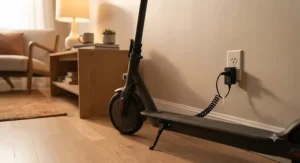
Eco-friendly transportation claims get thrown around loosely in scooter marketing, so it’s worth being precise about the actual numbers. A typical gas-powered passenger vehicle emits roughly 4.6 metric tons of carbon dioxide per year, a figure that assumes average commuting mileage and fuel economy. An electric scooter, by contrast, draws its power from a wall outlet drawing a few hundred watt-hours per charge — a genuinely tiny fraction of a car’s per-mile energy footprint, even accounting for the electricity generation mix in most U.S. grids. That doesn’t mean a scooter eliminates your carbon footprint entirely; manufacturing, shipping, and battery disposal all carry environmental costs of their own. But for the specific slice of trips under 10 miles that scooters are built for, swapping a car trip for a scooter ride represents one of the more meaningful reductions an individual commuter can make without a major lifestyle overhaul.
The honest caveat: a scooter only delivers this benefit if it’s actually replacing a car trip rather than replacing a walk or a bike ride you’d have taken anyway. If your realistic alternative to scootering is public transit you’d have used regardless, the environmental upside shrinks considerably — which is worth factoring into the decision alongside cost and convenience.
Portable Personal Transporters: Folding, Weight & Last-Mile Portability
A portable personal transporter earns that label by folding down fast, staying under a manageable weight, and surviving the daily abuse of being carried up stairs, wedged under a desk, or leaned against a subway pole. Weight is the single biggest differentiator among the seven models covered here: the NIU KQi Air and Unagi Model One E500 both sit in the mid-to-high 20-lb range, while the Segway Ninebot Max G3 tips the scale at roughly 54 lbs — genuinely difficult to carry up more than one flight of stairs regularly.
Folding mechanism quality matters as much as raw weight. A stiff or unreliable folding latch turns a 30-second fold into a frustrating daily annoyance, and reviewers across this guide’s models consistently single out one-click folding systems (like those on the Segway lineup) as meaningfully better than multi-step designs. If your commute genuinely requires carrying the scooter — rather than just rolling it a few feet — weight and fold speed should outrank top speed and range in your priority list, because the fastest scooter in the world is useless if you dread picking it up every morning.
Common Mistakes When Buying a Commuter Electric Scooter
The most common and costly mistake is buying based on advertised range instead of real-world range — a scooter claiming 25 miles routinely delivers 15-18 in mixed city conditions, and cold weather trims another chunk off that. Close behind is ignoring hill grade entirely; a 500W motor that feels adequate on a test ride around a flat parking lot can struggle badly on a genuine daily incline. Buyers also frequently skip verifying UL-2272/2271 certification, treating it as fine print rather than the safety-critical detail it actually is, especially given the rise in documented lithium-battery incidents across the micromobility category.
Another frequent error is underestimating total cost of ownership — a helmet, a quality lock, occasional tire replacement, and a possible seat attachment can add $100-200 on top of the scooter’s sticker price, a detail most listings conveniently leave out. Finally, plenty of buyers choose a scooter based purely on top speed, when acceleration smoothness, braking confidence, and suspension quality matter far more for a comfortable daily ride than a few extra miles per hour you’ll rarely use in dense traffic anyway.
Long-Term Cost & Maintenance: The Real Cost of Ownership
| Cost Category | Budget Scooter (e.g. E2 Plus II) | Premium Scooter (e.g. Max G3) |
|---|---|---|
| Upfront price | $300-$370 | $900-$1,050 |
| Annual electricity cost | Roughly $15-$25 | Roughly $25-$40 |
| Tire replacement (2-3 yrs) | Low (solid tires) | Moderate (pneumatic) |
| Expected battery lifespan | 300-500 cycles | 500-800+ cycles |
The upfront price gap between a budget and premium scooter is substantial, but the annual running cost difference is genuinely small — electricity for either scooter type costs a small fraction of what the equivalent car commute would cost in fuel. Where the real long-term math shifts is battery longevity: premium models with better battery management systems, like the Segway Ninebot Max G3, tend to hold usable capacity longer, which can make the higher sticker price a better value over a 3-4 year ownership window than it first appears. Riders planning to keep a scooter for years rather than replace it after one season should weight this durability factor more heavily than the upfront price alone suggests.
Safety, Regulations & UL Certification Guide
Battery safety is not a footnote in this category — it’s a documented, ongoing federal concern. The Consumer Product Safety Commission has formally called on e-scooter, hoverboard, and e-bike manufacturers to comply with established safety standards, warning that non-compliant devices may pose serious fire and injury risks. Between January 2021 and late 2022 alone, the agency logged at least 208 reported micromobility fire or overheating incidents across 39 states, resulting in at least 19 fatalities. That context is exactly why UL-2272 and UL-2271 certification — confirmed on five of the seven scooters in this guide — isn’t a nice-to-have footnote; it’s a baseline safety requirement.
Beyond battery safety, regulations vary meaningfully by city and state. Speed limits for legal sidewalk or bike-lane use commonly cap out between 15 and 20 mph regardless of what your scooter is capable of, and some jurisdictions require registration or insurance once a scooter exceeds certain wattage or speed thresholds. It’s worth noting that UL 2272 evaluates the electrical system of a personal e-mobility device — battery, charger, motor, and wiring — but does not evaluate a rider’s ability to maintain control while riding, a useful reminder that certification protects against battery fires, not rider error. Always check your specific city’s micromobility rules before commuting, since a scooter that’s perfectly legal one town over may require registration where you live.
Buyer’s Decision Framework
Use this simple priority checklist if you’re still torn between models:
- If your commute is under 3 miles and mostly flat, choose a budget model like the Segway Ninebot E2 Plus II, because you don’t need extra range or power you’ll never use.
- If you carry your scooter up stairs or onto transit daily, choose an ultralight model like the NIU KQi Air, because weight will matter more than any other spec in daily practice.
- If your commute includes a real hill, choose a higher-wattage model like the NIU KQi3 Max or Segway Ninebot Max G3, because underpowered motors on inclines are the single most common source of buyer regret.
- If range anxiety is your biggest worry, choose a long-range model like the EMOVE Cruiser S, because a bigger battery buffer eliminates the daily math of “will I make it home.”
- If style and portability matter as much as function, choose the Unagi Model One E500, accepting its shorter real-world range as the tradeoff for its design and weight.
Frequently Asked Questions
❓ What is the best commuter electric scooter for adults over 220 lbs?
❓ How far can a commuter electric scooter realistically go on one charge?
❓ Is an electric scooter for city commuting legal on sidewalks and bike lanes?
❓ Do commuter electric scooters need UL certification to be safe?
❓ How much does it cost to charge an electric scooter for daily commuting?
Conclusion
There’s no single best commuter electric scooter, and any guide that tells you otherwise is skipping the part where your commute is actually different from everyone else’s. What this comparison does show clearly is that the seven models here cover nearly every realistic scenario: the Segway Ninebot E2 Plus II for tight budgets and short flat rides, the Hiboy S2 Pro for value-conscious riders who want a seat option, the NIU KQi3 Max for consistent mid-range power, the NIU KQi Air for anyone who genuinely has to carry their scooter daily, the Segway Ninebot Max G3 for hilly or long commutes that demand a flagship motor, the EMOVE Cruiser S for riders who never want to think about charging more than twice a week, and the Unagi Model One E500 for commuters who value design and portability over maximum distance.
The honest throughline across all seven: real-world range always undershoots the number on the box, hill performance separates the pretenders from the workhorses, and UL certification is a non-negotiable checkbox rather than a footnote. Match the scooter to your actual commute — not the one you wish you had — and any of these seven picks will genuinely make your daily ride better than the alternative sitting in traffic.
Recommended for You
- Touring Electric Bike With 100-Mile Range: 7 Amazon Picks 2026
- Gravel Ebike for Bikepacking Trips: 5 Real Amazon Picks 2026
- 7 Best Electric Hunting Bike Under $2000 Picks for 2026
Disclaimer: This article contains affiliate links. As an Amazon Associate, I earn from qualifying purchases. If you purchase products through these links, we may earn a small commission at no additional cost to you.
✨ Found this helpful? Share it with your friends! 💬🤗
