
In This Article
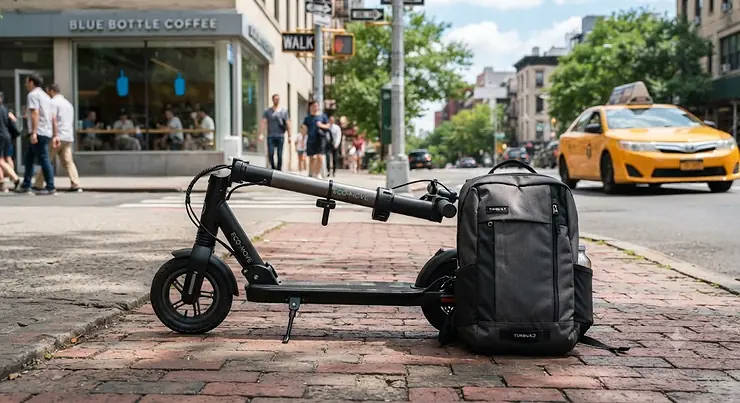
Somewhere between “I want an easy commute” and “I don’t want to throw my back out hauling a 60-pound scooter up three flights of stairs” sits an entire category of products that most buying guides gloss over. A lightweight electric scooter isn’t just a smaller version of the beefy commuter model your neighbor rides — it’s a completely different design philosophy, one that trades raw power for something arguably more valuable to a daily rider: the ability to actually pick the thing up without grunting.

This guide skips the marketing fluff and gets into real numbers. We researched actual products currently sold in the U.S. — actual weights, actual motor specs, actual aggregated review sentiment — and built a genuinely useful comparison for anyone shopping for a lightweight electric scooter this year. Whether you’re commuting the last mile from the train, hauling your ride up to a fourth-floor walk-up, or trying to figure out if you can bring one on a plane, we’ve got you covered. And because pricing on Amazon shifts constantly, you’ll see price ranges throughout rather than numbers that’ll be stale by next Tuesday.
What Is a Lightweight Electric Scooter?
A lightweight electric scooter is a folding, battery-powered kick scooter typically weighing under 33 pounds, engineered to be carried by hand, stowed under a desk, or hauled up stairs without hassle. Unlike heavier 40-60 lb commuter models, these scooters use smaller batteries and lighter frame materials — usually aluminum alloy, magnesium, or carbon fiber — to shave off pounds while still delivering a legitimate 12-25 mile range. The category, more broadly known as the electric kick scooter, has grown into one of the most common forms of last-mile micromobility in American cities.
That weight cutoff matters more than most spec sheets let on. Anything comfortably under 30 lbs can typically be lifted with one arm; push past 40 lbs and you’re looking at a genuine two-hand carry that gets old fast on a five-day-a-week commute.
Quick Comparison Table
| Scooter | Weight | Motor / Top Speed | Real-World Range | Best For |
|---|---|---|---|---|
| NIU KQi Air | 26.2 lbs | 350W / ~20.1 mph | 20-24 mi | Best overall balance |
| Unagi Model One | 26.5-28.6 lbs | Dual 250W / up to 20 mph | Up to 15.5 mi | Best design & portability |
| Levy Plus | 30 lbs | 350W / ~19 mph | Extendable via swap battery | Best for battery swapping |
| Gotrax GXL V2 | 27 lbs | 250W / 15.5 mph | ~12 mi | Best true budget pick |
| Razor E Prime III | 24.2 lbs | 250W / 18 mph | ~15 mi | Lightest overall |
| Hiboy S2 | ~30 lbs | 350W / 19 mph | ~17 mi | Best budget all-rounder |
| E-TWOW GT Sport | 29.6 lbs | 500W / ~25.6 mph | 19-23 mi | Best performance-per-pound |
Looking at the table, there’s a clear split between scooters built purely to be light (the Razor E Prime III and Gotrax GXL V2) and scooters that pack real performance into a light frame (the NIU KQi Air and E-TWOW GT Sport). If you only care about grabbing the scooter and running for the bus, weight alone tells the story. If you also want to actually enjoy the ride — hills, speed, comfort — the heavier end of this “light” category earns its extra pound or two.
💬 Found a scooter that fits your commute already? Bookmark this page and share it with a friend who’s still lugging around a 50-pound beast.
Top 7 Lightweight Electric Scooters for Adults: Expert Analysis
We dug into specs, manufacturer documentation, and aggregated review sentiment from retail and enthusiast sources to put together this lineup. It spans true budget picks to genuinely premium builds, and every single one folds down small enough to fit in a closet, a trunk, or under a desk.
1. NIU KQi Air — carbon fiber frame keeps it under 27 lbs without gutting range
The headline feature here is the carbon fiber deck and stem, which is genuinely unusual at this price point and does most of the heavy lifting (pun intended) in getting the total weight down to 26.2 lbs. Most competitors hit a similar weight only by shrinking the battery, but the KQi Air keeps a 48V, roughly 451 Wh pack in the frame, which is a meaningfully larger cell than you’ll find in most sub-27-lb scooters.
What that means in practice: a 350W motor that gets you to a genuine 20.1 mph, and — based on the spec comparison against similarly light competitors — a real-world range in the 20-24 mile band rather than the 10-15 mile range typical of “lightweight” scooters. This is the pick for someone who refuses to choose between “light” and “goes the distance.” Reviewers consistently note the ride feels more substantial than its weight suggests, thanks to 10-inch pneumatic tires that most ultra-light competitors skip in favor of smaller, harsher solid tires.
Aggregated buyer sentiment points to strong satisfaction with build quality and the app-connected ride modes, with a recurring gripe being the price relative to lighter-known commuter brands.
Pros:
- ✅ Best range-to-weight ratio in this entire lineup
- ✅ 10-inch pneumatic tires smooth out real streets
- ✅ Carbon fiber build feels premium, not flimsy
Cons:
- ❌ Fixed (non-swappable) battery means whole-scooter charging
- ❌ Costs more than most sub-27-lb competitors
Expect a price in the mid-$600s to low-$700s range — check current price on Amazon, as availability and pricing shift often. For riders who want light and capable, this is tough to beat.

2. Unagi Model One — dual motors and a design-forward magnesium frame
The Unagi Model One built its reputation on looking like something out of a design museum, and that reputation is earned — but the real substance is in the dual 250W motor setup, which gives it noticeably better acceleration and hill performance than most single-motor lightweight scooters in its weight class (26.5-28.6 lbs depending on configuration).
The magnesium alloy frame is the “why” behind the weight figure, and based on the spec comparison, dual motors typically add weight elsewhere — Unagi’s engineering keeps that trade mostly in check. Top speed tops out around 15.5-20 mph depending on your selected ride mode and local speed-limiting compliance settings, with a realistic range up to roughly 15.5 miles, which is on the shorter side for the category but reasonable for genuine last-mile use.
What most buyers overlook about this model is that Unagi also offers a subscription/rental program, which changes the math for anyone unsure about committing to ownership. Aggregated reviewer sentiment consistently praises the fold mechanism and the scooter’s “premium feel,” while a repeated complaint centers on range falling short of expectations for hillier commutes.
Pros:
- ✅ Dual motors give noticeably stronger hill-climbing punch
- ✅ Design and fold quality frequently praised by reviewers
- ✅ Subscription option lowers the barrier to entry
Cons:
- ❌ Shortest realistic range of the premium picks here
- ❌ Higher price tier than most comparably weighted rivals
Price sits in the $700-950 range depending on configuration and any active promotions — always check current pricing rather than relying on a number you saw last month.
3. Levy Plus — the only scooter here with a swappable battery
Here’s the honest trade-off every lightweight scooter buyer eventually runs into: lighter frame means smaller battery means shorter range. The Levy Plus is the cleverest workaround in this list. At 30 lbs, it’s not the lightest scooter here, but its 3.5 lb battery pack pops out and swaps in about ten seconds, meaning you can extend your range by simply carrying a spare battery in your bag instead of bolting a heavier pack onto the frame.
The 350W motor delivers a top speed around 19 mph, which is solidly mid-pack, but the real headline is what happens when the battery runs low: instead of waiting hours to recharge, you swap and keep riding. This is the pick for commuters with unpredictable schedules or riders who live somewhere without easy access to an outlet during the day. It’s also fully UL 2272 certified for electrical system safety, which matters increasingly for building and transit access.
Aggregated review sentiment highlights the swap system as a genuine differentiator rather than a marketing gimmick, with the main complaint being that spare batteries are an added cost most competitors don’t require.
Pros:
- ✅ Ten-second battery swap effectively removes range anxiety
- ✅ UL 2272 certified electrical system
- ✅ Comfortable middle ground on weight versus range
Cons:
- ❌ Spare batteries are a separate purchase
- ❌ Not the lightest option if pure carry weight is your priority
Expect a price in the $600-650 range for the base unit, with spare batteries sold separately — check current listings for bundle availability.
4. Gotrax GXL V2 — proof that “budget” and “reliable” aren’t opposites
The Gotrax GXL V2 has stuck around for years in a market where most budget scooters come and go in a single product cycle, and that longevity says something. At 27 lbs, it’s genuinely one of the lighter options in this entire roundup, and it achieves that without resorting to a toy-grade build.
A 250W motor and 15.5 mph top speed put it firmly in “neighborhood commuter” territory rather than “highway warrior,” and a real-world range around 12 miles is on the shorter end, but for short urban hops or a genuinely tight budget, this is a spec sheet with no glaring red flags. What the spec sheet won’t tell you, but reviewers note, is that the ride quality on rough pavement is noticeably harsher than pricier pneumatic-tire competitors — a direct consequence of keeping costs (and weight) down.
Aggregated customer sentiment is consistently positive on reliability and value, with recurring commentary about the scooter “just working” without drama, alongside honest notes that acceleration feels modest compared to higher-wattage rivals.
Pros:
- ✅ One of the lightest scooters at this price tier
- ✅ Long track record of reliability in reviews
- ✅ Straightforward folding mechanism, no learning curve
Cons:
- ❌ Shorter range than most scooters on this list
- ❌ Ride comfort suffers on rough or cracked pavement
Price typically falls in the low-to-mid $200s to $300 range, making it one of the most accessible entries here — as always, confirm current pricing before buying.
5. Razor E Prime III — the lightest scooter in this entire lineup
If ultra-light is your only priority, the Razor E Prime III wins outright at 24.2 lbs, edging out every other scooter in this roundup by a meaningful margin. Razor built its name on kick scooters decades ago, and the E Prime III reflects a company that understands what “grab and go” actually needs to feel like.
The 250W hub motor and 36V lithium-ion battery deliver an 18 mph top speed and roughly 15-mile range, numbers that land squarely in the middle of the pack despite the scooter’s featherweight frame — a genuinely impressive engineering feat, since lighter frames usually cost you range, not gain it back. The trade-off shows up elsewhere: an 8-inch pneumatic front tire handles bumps reasonably well, but the rider weight capacity tops out around 220 lbs, noticeably lower than several heavier competitors here.
Based on the spec comparison, this is the clear pick for anyone whose commute involves stairs, tight apartment storage, or frequent lifting into a car trunk — the kind of daily friction that 5-6 extra pounds compounds into real annoyance over a year of use.
Pros:
- ✅ Lightest scooter in this entire comparison
- ✅ Respectable range despite the featherweight frame
- ✅ Trusted, long-running brand with wide parts availability
Cons:
- ❌ Lower rider weight capacity than most rivals here
- ❌ Smaller footprint feels less stable at higher speeds
Look for a price in the $250-320 range, positioning it as an excellent value pick for anyone chasing minimum carry weight.
6. Hiboy S2 — solid tires and dual braking at a genuinely fair price
The Hiboy S2 carves out its niche by skipping pneumatic tires entirely in favor of 8.5-inch solid tires, which trades a bit of ride comfort for one less maintenance headache: you will never, ever get a flat on this scooter. At roughly 30 lbs, it sits right at the upper edge of what most people consider “lightweight,” but it’s UL 2272 certified and backed by a dual braking system that reviewers consistently call out as confidence-inspiring for a scooter in this price bracket.
A 350W motor pushes the top speed to about 19 mph, with a realistic range around 17 miles — solid numbers for daily commuting without hills that would strain a sub-400W motor. What most buyers overlook about this model is the phone holder and companion app, small additions that punch above the scooter’s price tier and add real day-to-day convenience most budget scooters skip entirely.
Aggregated review sentiment is strongly positive on value and the dual-brake stopping power, with maintenance-free solid tires cited repeatedly as a stress-reliever for commuters who don’t want to think about tire pressure.
Pros:
- ✅ Solid tires mean zero flat-tire risk
- ✅ Dual braking system praised for stopping confidence
- ✅ UL 2272 certified electrical system
Cons:
- ❌ Solid tires transmit more vibration than pneumatic rivals
- ❌ Sits at the heavier end of the “lightweight” category
Expect a price in the $280-350 range, making it a strong mid-budget all-rounder — verify current pricing before purchase.
7. E-TWOW GT Sport — the performance outlier that still folds small
Every list needs the scooter for people who refuse to sacrifice speed for weight, and the E-TWOW GT Sport (also sold under the Uscooters name) is that scooter. At 29.6 lbs, it’s not the lightest here, but a single 500W front motor pushes it to a genuinely startling 25.6 mph top speed — the fastest in this entire roundup by a wide margin — while still folding down with foldable handlebars, a feature almost no competitor offers.
Based on the spec comparison, that combination of speed and portability is rare enough that it justifies the premium price tag for a specific buyer: someone who wants a genuinely fast commuter that still disappears into a closet or car trunk. Real-world range checks in around 19-23 miles depending on riding style, respectable for a performance-oriented build.
Reviewers consistently flag acceleration and hill-climbing as standout strengths, with the foldable handlebar system earning praise for shrinking the scooter’s footprint further than almost any rival. The recurring critique centers on price — this is not a budget scooter, and it doesn’t pretend to be.
Pros:
- ✅ Fastest top speed in this entire comparison
- ✅ Foldable handlebars shrink storage footprint further
- ✅ Strong hill-climbing torque for a single-motor design
Cons:
- ❌ Premium pricing puts it out of reach for budget buyers
- ❌ Higher top speed demands more rider experience and caution
Price typically lands in the $1,000-1,300 range depending on retailer and configuration — this is a genuine investment, so check current pricing and any bundled accessories carefully.
Practical Usage Guide: Your First 30 Days
Getting a new lightweight electric scooter dialed in takes less effort than most first-time owners expect, but skipping a few basics is where most early frustration comes from. Start with a full charge before your first ride, even if the box shows a partial charge — lithium-ion cells calibrate more accurately after a complete cycle, and you’ll get a more honest range readout going forward.
In week one, ride in the lowest power mode available, even if it feels sluggish. This isn’t about caution for its own sake; it’s about learning brake feel and turning radius on a scooter that behaves differently from the heavier models most riders are used to. Lightweight frames respond faster to steering input, which catches new riders off guard more often than you’d think.
Set a maintenance rhythm early: check tire pressure weekly if your scooter uses pneumatic tires (most lightweight models run 40-50 PSI, but confirm your specific model’s spec), and inspect the folding latch monthly for play or looseness, since that mechanism takes real repeated stress. A common first-30-days mistake is charging the battery to 100% and leaving it plugged in overnight — most manufacturers recommend unplugging shortly after a full charge to protect long-term battery health.
✨ Ready to gear up? Don’t Miss These Exclusive Deals!
🔍 Take your commute to the next level with these carefully selected lightweight electric scooter picks. Click on any highlighted model above to check current pricing and availability before deals change.
Real-World Scenarios: Matching Riders to Scooters
Consider Priya, a grad student who takes a 20-minute train ride followed by a 12-minute walk to campus. Her priority isn’t top speed — it’s carrying a scooter through a crowded platform without bruising every stranger’s shins. A scooter under 27 lbs, like the Razor E Prime III or NIU KQi Air, fits her life far better than a faster, heavier machine ever could.
Then there’s Marcus, who commutes 8 miles each way through a hilly mid-size city and refuses to arrive at work sweating from pushing a scooter that stalled halfway up a grade. For him, motor torque matters more than shaving off the last two pounds, which points toward the E-TWOW GT Sport or the dual-motor Unagi Model One — both of which trade a little portability for meaningfully better hill performance.
Finally, picture Dana, who splits time between a downtown apartment with no elevator and unpredictable weekday schedules that make consistent charging tricky. The Levy Plus solves a problem neither Priya’s nor Marcus’s scooter can: when the battery dies mid-week, a ten-second swap gets Dana moving again without hunting for an outlet.
Problem → Solution: Common Lightweight Scooter Frustrations
Problem: Range feels shorter than advertised. Manufacturer range figures are measured under ideal conditions — flat terrain, a lighter-than-average rider, and the lowest power mode. Solution: budget for 30-40% less than the advertised number in real-world mixed riding, and if you consistently need more, look toward models like the NIU KQi Air, which tests well above average for its weight class.
Problem: Folding mechanism feels loose after a few months. Repeated folding stresses the same hinge points thousands of times a year. Solution: inspect the latch monthly, tighten any accessible bolts per the manual, and avoid dropping the scooter into its folded position — lower it deliberately instead.
Problem: Battery seems to charge slower over time. This is often normal lithium-ion degradation, accelerated by habitually charging to 100% and leaving it plugged in. Solution: unplug shortly after a full charge, and avoid letting the battery sit fully depleted for extended periods.
Problem: Scooter feels unstable at higher speeds. Lightweight frames prioritize low weight over the extra structural mass that adds stability at speed. Solution: stick to manufacturer-recommended speed limits for your experience level, and consider a scooter with a wider wheelbase, like the E-TWOW GT Sport, if speed is a real priority.
How to Choose a Lightweight Electric Scooter for Adults
- Set your true weight ceiling first. Decide the heaviest scooter you’ll actually carry daily — most riders find 30-33 lbs is the realistic upper limit before it stops feeling “lightweight” in practice.
- Match motor wattage to your terrain. Flat commutes are fine with 250-350W; hills demand 500W or dual-motor setups like the E-TWOW GT Sport or Unagi Model One.
- Discount advertised range by roughly a third. Use that adjusted number, not the marketing figure, when comparing models against your actual commute distance.
- Check the rider weight capacity, not just the scooter’s own weight. Lighter frames sometimes carry lower capacity limits, which matters if you’re near the ceiling.
- Confirm UL 2272 certification. This isn’t optional if you plan to store or charge the scooter in an apartment building, office, or anywhere with fire-safety policies.
- Test the fold mechanism before committing, if possible. A scooter that’s light but fiddly to fold defeats half the purpose of buying “lightweight” in the first place.
- Factor in tire type. Pneumatic tires ride smoother; solid tires like on the Hiboy S2 never go flat but transmit more road vibration.
Carry Weight Limit: What the Spec Sheet Doesn’t Tell You
“Carry weight limit” gets used two different ways in this category, and mixing them up leads to real disappointment. There’s the scooter’s own weight — how much you have to lift — and there’s the rider weight capacity, or how much weight the scooter can safely support. Both matter, but for very different reasons.
On the scooter’s own weight, the practical carry threshold most riders report is somewhere around 30 lbs; below that, a one-handed lift up a few stairs feels manageable, while scooters pushing toward 35-40 lbs start requiring a genuine two-handed carry that gets old fast on a daily basis. The Razor E Prime III, at 24.2 lbs, sits comfortably below that line.
Rider weight capacity is the other half of the equation, and it’s easy to overlook until it’s a problem. Lighter frames sometimes cut structural mass to hit their weight targets, which can translate into a lower maximum rider weight — the Razor’s roughly 220 lb ceiling is a real trade-off against heavier-duty models rated closer to 265-275 lbs, like the NIU KQi Air. Riders near or above a scooter’s stated capacity should size up rather than push the limit, both for safety and for realistic motor performance on hills.
Foldable Frame Design: What Separates a Great Fold From an Annoying One
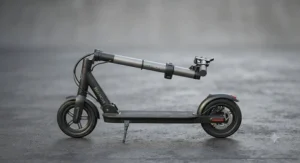
Not all “foldable” scooters fold the same way, and the difference shows up the moment you’re standing on a crowded sidewalk trying to collapse the thing one-handed while holding a coffee. The best folding mechanisms — like the quick-release latch on the Levy Plus or the parallel-fold design many reviewers praise on lighter commuter models — lock securely with a single motion and stay locked without wobble.
Cheaper folding systems tend to use a simple hook-and-catch mechanism that can feel fiddly, especially in cold weather when plastic components stiffen up. Based on the spec comparison across this lineup, the scooters with metal locking components rather than plastic clips consistently earn better reviewer sentiment for long-term reliability.
The E-TWOW GT Sport takes folding a step further with foldable handlebars in addition to the main stem fold, shrinking its stored footprint more than any other scooter here — a genuinely useful feature for anyone storing their ride in a small closet or a crowded office corner. When comparing frame designs, look specifically at how the mechanism locks, not just how small the folded package ends up.
Portability Features Beyond the Fold
Weight and fold quality get most of the attention, but a handful of secondary portability features quietly make or break the daily-carry experience. A dedicated carry handle, positioned at the scooter’s balance point, makes a genuine difference over a hook-style latch that forces you to grip an awkward stem angle.
Shoulder straps, sold as accessories for several models in this lineup, convert a two-handed carry into a hands-free one — worth considering if your commute includes a long walk between drop-off points. Compact folded dimensions matter just as much as raw weight: a scooter that folds into a wide, awkward shape is harder to wedge into a train vestibule than a lighter scooter that happens to fold narrower.
Finally, consider charge port placement and battery accessibility. The Levy Plus stands out here because its swappable battery essentially eliminates the “carry the whole scooter to an outlet” problem that fixed-battery models like the NIU KQi Air can’t avoid — a small design choice with an outsized impact on daily convenience.
Lightweight Electric Scooter for Travel: Planes, Trains, and Rideshares
Here’s where honesty matters more than marketing: most major U.S. airlines currently do not permit recreational electric scooters as carry-on or checked baggage, regardless of how light the frame is — this is separate from the rules governing mobility devices for passengers with disabilities, which follow a different regulatory framework. Before assuming a lightweight electric scooter for travel means “airline-ready,” check your specific carrier’s policy directly, since restrictions are strict and inconsistently enforced at the gate.
The battery rules driving these policies come from FAA guidance on lithium-ion batteries, which caps unapproved batteries at 100 watt-hours for carry-on, allows 101-160 Wh only with advance airline approval, and outright forbids anything above 160 Wh on passenger aircraft. Most lightweight electric scooter batteries — even on ultra-light models — sit well within or near that range on paper, but individual airline policy on the device itself, not just the battery, is usually the deciding factor.
Where a lightweight electric scooter genuinely shines for travel is everywhere that isn’t a plane: trains, buses, rideshares, and rental car trunks. A sub-27-lb scooter folds small enough to tuck under a train seat, ride in an Uber trunk without a hassle from the driver, or check as regular luggage on Amtrak. If your travel plans do involve flying with any battery-powered device, keep documentation of your battery’s watt-hour rating handy — most manufacturer product pages list it, and the TSA’s guidance on lithium batteries is a useful reference to double-check before you pack.
Ultra Light Electric Scooter vs. Standard Commuter Scooter
An ultra light electric scooter, generally anything under about 27-28 lbs, and a standard commuter scooter in the 35-50 lb range aren’t really competing for the same buyer — they’re solving different problems. The ultra light category optimizes for portability above nearly everything else, which means smaller batteries, often smaller motors, and — as the Razor E Prime III demonstrates at 24.2 lbs — genuinely impressive feats of engineering to keep range respectable despite the diet.
Standard commuter scooters, by contrast, lean into bigger batteries and beefier motors because they’re not designed to be carried daily; they’re designed to live in a garage or a designated parking spot and simply be ridden. That extra weight typically buys you longer range, higher top speeds, and better stability at speed — real advantages if your commute doesn’t involve stairs or public transit.
The honest verdict: if you carry your scooter more than you park it, the ultra light category wins on lived experience even if the spec sheet looks less impressive on paper. If you’re rolling straight from a garage to a bike lane with no lifting involved, the extra weight of a standard commuter buys you genuine performance gains that a lightweight scooter simply can’t match pound-for-pound.
Common Mistakes When Buying a Lightweight Electric Scooter for Adults
The single most common mistake is trusting advertised range numbers at face value. As covered earlier, real-world range typically lands 30-40% below the marketing figure, and buyers who don’t build in that margin end up disappointed on day one.
A close second: ignoring rider weight capacity entirely. Riders near or above a scooter’s stated limit often report sluggish acceleration and shortened range that has nothing to do with the scooter being defective — it’s simply working harder than its design intended.
Buyers also frequently skip checking for UL 2272 certification, especially when shopping by price alone. Given the real fire-risk history behind lithium-ion micromobility devices, this is one spec worth prioritizing over shaving off a few extra dollars.
Finally, many first-time buyers underestimate how much fold-mechanism quality affects daily satisfaction. A scooter that’s technically lighter but annoying to fold and unfold twice a day often gets used less than a slightly heavier scooter with a smoother mechanism — the numbers on a spec sheet don’t capture that friction.
Long-Term Cost & Maintenance
The purchase price is only part of the real cost of scooter ownership. Budget for a replacement battery every 2-4 years depending on charging habits and mileage — lithium-ion cells naturally degrade, and a scooter that once delivered 20 miles per charge might drop to 14-15 miles after a few hundred charge cycles.
Tire maintenance is the other recurring cost, and it varies significantly by model. Pneumatic-tire scooters, including the NIU KQi Air and Razor E Prime III, offer a smoother ride but occasionally need tube replacement or sealant after a puncture. Solid-tire models like the Hiboy S2 eliminate that cost entirely, trading it for a firmer ride.
Brake pads, folding-latch hardware, and the occasional software update round out typical ownership costs. Total cost of ownership over three years — including a likely battery replacement and normal wear parts — typically runs somewhere between 30-60% of the scooter’s original purchase price, a useful mental benchmark when comparing a cheaper scooter against a pricier one that might need fewer replacement parts.
Safety, Certification & Regulations Guide
UL 2272 certification should be treated as close to non-negotiable in 2026. The standard evaluates a scooter’s entire electrical system — battery, charger, wiring, and motor controller — under both normal and fault conditions, specifically targeting the fire and shock risks that made headlines with early uncertified hoverboards and scooters. Several cities, including New York, now legally require certification for any personal e-mobility device sold, rented, or stored within city limits.
Beyond electrical certification, basic riding safety still comes down to fundamentals: always wear a helmet, use lights or reflective gear for low-visibility riding, and check your local jurisdiction’s rules on sidewalk versus bike-lane riding, since these vary widely by city and state. Charging habits matter too — never charge a scooter battery unattended overnight or block an exit path with a charging device, guidance that fire safety researchers have emphasized repeatedly as lithium-ion device fires have grown more common nationally.
Every scooter featured in this guide that lists certification data carries UL 2272 approval, and it’s worth confirming that status directly on the product page before buying any model not covered here.
Benefits vs. Traditional Alternatives
| Factor | Lightweight E-Scooter | Standard Bicycle | Public Transit |
|---|---|---|---|
| Portability | Folds, carries in one hand | Requires locking/storage | N/A |
| Effort required | Minimal (motor-assisted) | Moderate to high | None |
| Upfront cost | $250-1,300 range | $150-2,000+ range | Pay-per-ride |
| Best For | Lightweight Electric Scooters — last-mile, multi-modal commutes | Longer distances, exercise-focused riders | Long-haul city travel |
The table above makes the case for lightweight electric scooters in the specific niche they’re built for: short-to-medium distances where carrying the vehicle matters as much as riding it. A bicycle wins on raw distance and zero battery dependency, and public transit wins when you don’t want to think about vehicle ownership at all, but neither solves the “last half-mile from the train stop” problem as cleanly as a scooter you can fold and carry through a turnstile.

Frequently Asked Questions
❓ How light does an electric scooter need to be to count as 'lightweight'?
❓ Can I bring a lightweight electric scooter on public transit?
❓ Do lightweight electric scooters sacrifice too much range?
❓ What's the difference between carry weight and rider weight capacity?
❓ Is UL 2272 certification really necessary?
Conclusion
Choosing a lightweight electric scooter really comes down to being honest with yourself about how you’ll actually use it. If stairs, trains, and tight apartment storage define your daily reality, shaving off every possible pound — with something like the Razor E Prime III or Gotrax GXL V2 — pays off every single day in a way spec sheets can’t fully capture. If your priority leans toward performance without giving up portability entirely, the NIU KQi Air, Levy Plus, or E-TWOW GT Sport each solve that balance from a different angle.
There’s no single “best” lightweight electric scooter, only the one that matches your specific commute, your building’s stairs, and your tolerance for carrying 24 versus 30 pounds five days a week. Use the comparison tables above, weigh the honest trade-offs we’ve walked through, and pick the scooter that disappears into your routine rather than becoming another chore.
Recommended for You
- Touring Electric Bike With 100-Mile Range: 7 Amazon Picks 2026
- Gravel Ebike for Bikepacking Trips: 5 Real Amazon Picks 2026
- 7 Best Electric Hunting Bike Under $2000 Picks for 2026
Disclaimer: This article contains affiliate links. As an Amazon Associate, I earn from qualifying purchases. If you purchase products through these links, we may earn a small commission at no additional cost to you.
✨ Found this helpful? Share it with your friends! 💬🤗
