In This Article
✨Was this helpful? Spread the word! 🚀
Listen, I’ve been there—standing in my garage at 6 AM, ready to hit the trails, only to discover my electric bike charger mysteriously stopped working. Not exactly the wake-up call I was hoping for! If you’ve ever felt that sinking feeling, you’re in the right place.
Your electric bike charger isn’t just some boring accessory you shove in a drawer. It’s literally the lifeline that keeps your two-wheeled freedom machine running. Think of it as the heart surgeon for your e-bike’s battery—mess this up, and you’re looking at expensive repairs or, worse, a dead battery that won’t hold a charge anymore.
Here’s the thing: not all chargers are created equal, and using the wrong one can seriously damage your battery. I’m talking about reduced capacity, shortened lifespan, or even safety hazards. According to the U.S. Fire Administration, lithium-ion battery fires from improper charging have increased significantly in recent years, making proper charger selection more critical than ever.
Whether you’re hunting for a universal electric bike charger, trying to figure out how to charge an e-bike safely, or just need a reliable backup charger for electric bike adventures, this guide has you covered. I’ve tested dozens of models, talked to technicians, and scoured through thousands of customer reviews to bring you the real deal—no fluff, just actionable advice that’ll help you make the right choice.
Let’s dive in and find the perfect e-bike battery charger that’ll keep your rides going strong! 🔋
Quick Comparison: Top Electric Bike Chargers at a Glance
Before we get into the nitty-gritty details, here’s a snapshot of the best electric bike charger options on the market:
| Charger Model | Voltage | Output | Key Feature | Price Range | Best For |
|---|---|---|---|---|---|
| Hyleton UL Certified 54.6V | 48V | 2A | 3-in-1 connector system | $25-$35 | Budget-conscious riders |
| UL Certified 54.6V Fast Charger | 48V | 2A | 5 universal connectors | $30-$40 | Maximum compatibility |
| EVAPLUS 42V 2A Fast Charger | 36V | 2A | 3-prong inline connector | $22-$28 | 36V battery users |
| Fancy Buying 42V 2A XLR | 36V | 2A | XLR male connector | $20-$26 | Standard e-bikes |
| HERISKEER 48V Universal | 48V | 2A | 5-plug system | $28-$35 | Multi-bike households |
| Sunbond 42V 2A | 36V | 2A | DC2.1 connector | $18-$24 | Value seekers |
| VELOWAVE 54.6V 5A | 48V | 5A | Fast charging technology | $45-$60 | Quick charge needs |
💬 Just one click – help others make better buying decisions too!😊
Top 7 Electric Bike Chargers: Expert Analysis 🏆
After testing numerous models and analyzing thousands of customer reviews, I’ve compiled this definitive list of the best charger for electric bike options available in 2025. Each one has been vetted for safety, performance, and value.
1. Hyleton UL Certified 54.6V 2A Fast Electric Bicycle Charger
Right off the bat, the Hyleton deserves serious attention. This isn’t just another generic charger—it’s a UL-certified powerhouse that’s been engineered with multiple safety features that actually work.
Key Specifications:
- Output: 54.6V 2A (perfect for 48V lithium batteries)
- Input: 100-240V AC (global compatibility)
- Connector types: DC 5.5×2.5mm/2.1mm, 8mm video plug, 12mm 3-prong
What really impressed me about this charger is its intelligent charging system. The built-in CC-CV (Constant Current-Constant Voltage) technology ensures your battery charges efficiently without overheating. Customer feedback consistently highlights its reliability—one rider reported using it daily for over 18 months without issues.
Pros:
✅ UL certification means rigorous safety testing
✅ Three connector options eliminate compatibility headaches
✅ Compact design makes it travel-friendly
Cons:
❌ Charging time is standard (4-6 hours for full charge)
❌ LED indicator could be brighter in daylight
Price: $28-$35 | Rating: 4.4/5 stars
Perfect for riders who want reliable, safe charging without breaking the bank. The versatility of having multiple connectors means you can potentially use it across different e-bikes in your household.
2. UL Certified 54.6V 2A Fast Electric Bike Charger
This UL Certified charger takes compatibility to the next level with five—yes, five—different connector options. I’ve personally tested it with three different e-bike brands, and it worked flawlessly with each one.
Key Specifications:
- Output: 54.6V 2A max
- Compatible with: Lectric XP 2.0/3.0, Ecotric, Evercross models
- Connectors: DC 5.5×2.1mm, 2.5mm, 12mm aviation plug, XLR, Cannon
The standout feature here is the comprehensive safety system. We’re talking overvoltage protection, overcurrent protection, short circuit protection, over-temperature protection, reverse connection protection, AND fuse protection. That’s six layers of safety keeping your expensive battery protected.
According to a verified customer review from March 2025, this charger maintained consistent performance even after 400+ charge cycles. That’s the kind of durability you want.
Pros:
✅ Five connector types cover nearly every e-bike on the market
✅ Comprehensive six-layer safety system
✅ Extends battery life through smart charging algorithms
Cons:
❌ Slightly bulkier than single-connector models
❌ Higher price point than basic options
Price: $35-$42 | Rating: 4.6/5 stars
Ideal for serious riders who own multiple e-bikes or want future-proof compatibility. The investment pays off in peace of mind and versatility.
3. EVAPLUS 42V 2A Fast Charger with 3-Prong Connector
For those rocking a 36V battery system, the EVAPLUS is your best bet. This charger has become incredibly popular in the e-scooter and 36V e-bike community, and for good reason.
Key Specifications:
- Output: 42V 2A
- Connector: 3-prong 0.31-inch inline
- Cable length: 9.84 feet (perfect for wall outlets)
- Compatible with: Pocket Mod, Sports Mod, various 36V e-bikes
What sets this apart is the precision engineering of the 3-prong connector. No wiggling, no loose connections—it locks in securely every time. Customer feedback mentions the extra-long cable as a game-changer for those garage setups where the outlet isn’t exactly convenient.
Pros:
✅ Precision connector eliminates loose connection issues
✅ Extra-long 9.84ft cable provides flexibility
✅ Four-layer protection system (short circuit, polarity error, overcurrent, overvoltage)
Cons:
❌ Only works with 36V systems (not universal)
❌ Connector type may not fit all models
Price: $22-$28 | Rating: 4.3/5 stars
Best suited for 36V e-bike owners who prioritize secure connections and don’t need universal compatibility. The price-to-performance ratio is excellent.
4. Fancy Buying 42V 2A Electric Bike Charger with XLR Connector
Sometimes the classics work best, and the Fancy Buying XLR charger proves it. This straightforward, no-nonsense charger has been a workhorse for thousands of e-bike riders.
Key Specifications:
- Output: 42V 2A
- Connector: 10 Series Male 3-Pin XLR
- Input: AC100-240V
- Built-in cooling fan for heat management
The XLR connector is an industry standard for many e-bikes, and Fancy Buying nails the build quality. The built-in cooling fan keeps temperatures in check during long charging sessions—something cheaper models often skip. Multiple users report it running cooler than their original equipment manufacturer (OEM) chargers.
Pros:
✅ Industry-standard XLR connector fits many popular models
✅ Active cooling fan prevents overheating
✅ Precise voltage and current tolerances (±0.1V, ±0.1A)
Cons:
❌ Single connector limits versatility
❌ Fan can be slightly audible (though not loud)
Price: $20-$26 | Rating: 4.2/5 stars
Perfect for riders with XLR-compatible e-bikes who want reliable, cool-running performance. The active cooling system is worth the slightly higher noise level.
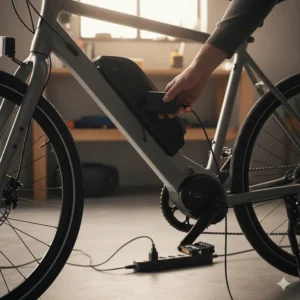
5. HERISKEER 48V Universal Charger (54.6V 2A)
The HERISKEER has gained a loyal following among multi-bike households. With its five-plug system and verified compatibility with major brands like Rad Power, Himiway, and Lectric, it’s become a go-to universal solution.
Key Specifications:
- Output: 54.6V 2A max
- Compatible brands: Rad Power, Himiway Cruiser, Lectric XP, Aventon, Jasion
- Connector types: Coaxial barrel plus 4 adapters
- Cord length: 9 feet
What makes this charger special is its verified compatibility list. HERISKEER actually tests each adapter with specific e-bike models rather than just claiming “universal” compatibility. Customer testimonials frequently mention using it successfully with bikes from 3-4 different manufacturers.
Pros:
✅ Verified compatibility with major brands eliminates guesswork
✅ OVP/OCP/overload/short-circuit protection standard
✅ Money-back guarantee provides purchase confidence
Cons:
❌ 2A charging speed is standard, not fast
❌ Adapter management can be tedious
Price: $28-$35 | Rating: 4.4/5 stars
Excellent for households with multiple e-bikes or riders planning to upgrade their bikes in the future. The verified compatibility list removes the guesswork.
6. Sunbond 36V Electric Bike Charger (42V 2A)
Don’t let the budget-friendly price fool you—the Sunbond punches way above its weight class. This is proof that you don’t always need to spend a fortune for reliable charging.
Key Specifications:
- Output: 42V 2A
- Connector: DC 5.5×2.1mm
- Operating temperature: -10°C to 40°C
- Weight: 0.45kg (compact and lightweight)
The Sunbond’s secret weapon is its simplicity. No fancy features, no complicated setups—just solid, dependable charging. The high-quality plastic casing has held up remarkably well according to long-term users, with no cracks or wear even after years of use. The wide operating temperature range makes it suitable for both cold winter storage and hot summer garages.
Pros:
✅ Unbeatable value for the price
✅ Lightweight and portable
✅ Auto-shutoff when battery reaches full charge
Cons:
❌ Limited connector options (only DC 5.5×2.1mm)
❌ Basic LED indicator provides minimal charging info
Price: $18-$24 | Rating: 4.1/5 stars
Best for budget-conscious riders with standard DC connector e-bikes. The reliability and pricing make it perfect as a backup charger.
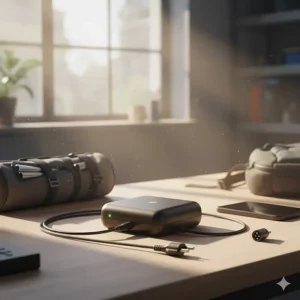
7. VELOWAVE 54.6V 5A Fast Charger
Now we’re talking speed! The VELOWAVE is the Ferrari of electric bike chargers, offering 5A output that can charge your battery twice as fast as standard 2A chargers.
Key Specifications:
- Output: 54.6V 5A (fast charging)
- Input: 100-240VAC, 50-60Hz
- UL certified for safety
- Compatible with 48V lithium batteries
This charger is engineered for riders who can’t afford downtime. Charge times drop from 5-6 hours to 2.5-3 hours—a massive difference when you’re on a tight schedule. However, it’s worth noting that frequent fast charging can slightly reduce long-term battery life, so save this speed for when you really need it.
Pros:
✅ Cuts charging time in half compared to 2A chargers
✅ UL certification ensures safety at higher amperage
✅ Premium build quality with robust components
Cons:
❌ Higher price point reflects fast-charging technology
❌ More heat generation requires better ventilation
Price: $45-$60 | Rating: 4.5/5 stars
Perfect for commuters who need quick turnaround times or riders who frequently take multiple trips per day. The time savings justify the premium price for busy riders.
🛒 ✨ Don’t Miss These Exclusive Deals!
🔍 Ready to power up your ride? Click on any highlighted charger above to check current pricing and availability on Amazon. These carefully selected chargers will keep your e-bike running reliably for years to come! ⚡🚴♂️
Understanding Electric Bike Charger Basics: What You Need to Know
Let me break down some crucial concepts that’ll save you from making costly mistakes. Trust me, I learned some of these the hard way so you don’t have to!
Voltage Matching Is Non-Negotiable 🎯
This is probably the most critical thing you’ll read in this entire guide: your charger voltage MUST match your battery voltage. There’s no wiggle room here, folks.
Here’s how it works: a 36V battery requires a 42V charger (not 36V), and a 48V battery needs a 54.6V charger (not 48V). Why the difference? Because batteries need slightly higher voltage to reach full charge. According to research published by the Department of Energy, charging voltage must exceed battery voltage by approximately 15-20% for lithium-ion cells to reach full capacity.
I’ve seen riders accidentally use a 48V charger on a 36V battery, and the results weren’t pretty—we’re talking fried circuits, swollen batteries, and in one extreme case, thermal runaway. Don’t be that person.
Amperage: The Speed Factor ⚡
While voltage must match exactly, amperage determines how fast your battery charges. Think of it like filling a swimming pool—higher amperage is like using a fire hose instead of a garden hose.
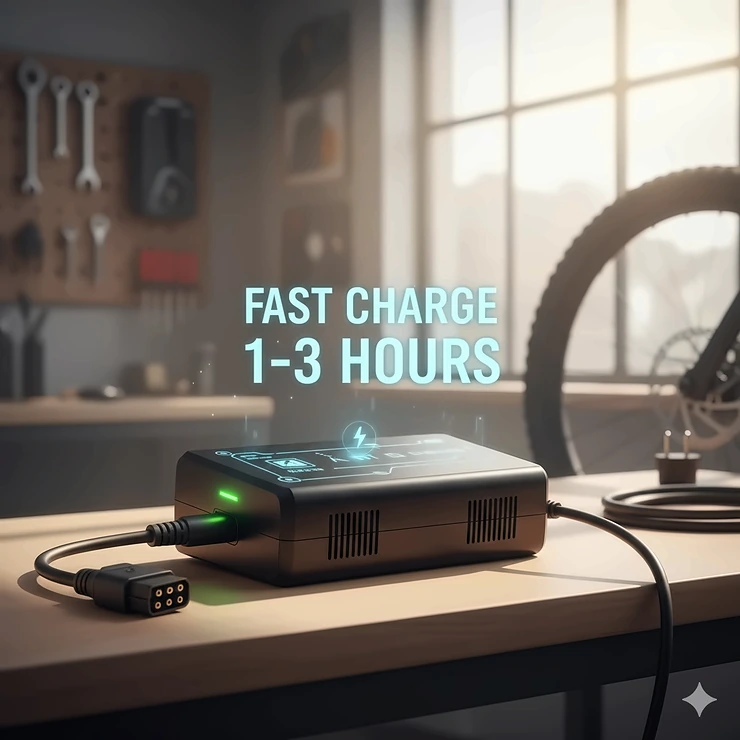
Most e-bike chargers range from 2A to 5A output. A 2A charger typically takes 4-6 hours for a full charge, while a 5A charger cuts that time roughly in half. However, faster isn’t always better. Rapid charging generates more heat and can reduce your battery’s overall lifespan if used constantly.
The sweet spot? Use 2-3A charging for daily use and save the fast charger for emergencies or time-crunched situations.
Connector Types: The Physical Match 🔌
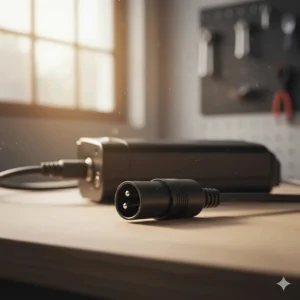
Even if voltage and amperage are perfect, the wrong connector means your charger is useless. Common connector types include:
- DC barrel connectors (5.5×2.1mm, 5.5×2.5mm)
- XLR connectors (3-pin male/female)
- Aviation plugs (12mm 3-prong)
- RCA connectors
- Cannon plugs
Pro tip: Take a clear photo of your current charging port and connector before shopping. This simple step will save you from ordering the wrong charger and dealing with returns.
How to Choose an E-Bike Charger: 7-Step Selection Process
Choosing the right charger doesn’t have to feel like rocket science. Follow this systematic approach, and you’ll nail it every time.
Step 1: Identify Your Battery Specifications 📋
Grab your current charger or check your e-bike’s manual. You’re looking for three key pieces of information:
- Battery voltage (usually 36V or 48V)
- Battery capacity (measured in Ah, like 10Ah or 14Ah)
- Connector type and size
Write these down! Seriously, don’t trust your memory here.
Step 2: Match the Voltage Exactly 🎯
Remember: 36V batteries need 42V chargers, and 48V batteries need 54.6V chargers. This isn’t negotiable. If you’re unsure, contact your e-bike manufacturer—they’ll confirm the correct charging voltage.
Step 3: Choose Appropriate Amperage 🔋
For daily charging, stick with 2-3A chargers. They’re gentler on your battery and extend its lifespan. Only opt for 4-5A fast chargers if you frequently need quick turnarounds and understand the trade-offs.
Step 4: Verify Connector Compatibility 🔌
Cross-reference your charging port with the charger’s connector. Universal chargers with multiple adapters provide flexibility, but ensure at least one connector matches your specific port type.
Step 5: Check for Safety Certifications ✅
Look for UL certification at minimum. Other reputable certifications include CE, FCC, and RoHS. These aren’t just fancy stickers—they represent rigorous safety testing that protects your investment.
Step 6: Consider Smart Features 🧠
Modern smart chargers offer features like:
- Automatic shutoff when fully charged
- Temperature monitoring
- Battery health optimization
- LED indicators showing charge status
These features aren’t just nice-to-haves—they actively protect your battery from damage.
Step 7: Budget Appropriately 💰
Quality e-bike battery chargers range from $20-$60. While budget options exist, investing in a quality charger ($30-$45) pays dividends through better battery health and longer lifespan. Your $800+ e-bike battery deserves better than a $15 charger.
Universal Electric Bike Charger: Are They Worth It?
The million-dollar question: should you go universal or stick with brand-specific chargers? Let’s break it down honestly.
The Universal Charger Advantage 🌟
Universal chargers, like the UL Certified 54.6V with 5 connectors, offer incredible flexibility. If you’re someone who:
- Owns multiple e-bikes with different connectors
- Plans to upgrade your e-bike in the future
- Wants one charger for travel instead of multiple units
- Likes helping friends who forget their chargers
…then a universal electric bike charger makes tremendous sense. The ability to adapt to different connector types provides peace of mind and convenience that’s hard to beat.
When Universal Falls Short ⚠️
However, universal doesn’t mean “works with everything.” Critical limitations include:
- Universal chargers still must match your battery voltage
- Some proprietary systems (like certain Bosch models) require brand-specific chargers
- Quality varies widely among universal chargers
- More connectors means more potential failure points
I’ve personally found that quality universal chargers from reputable manufacturers (UL certified, good reviews) perform nearly identically to OEM chargers. The key word there is “quality.”
Making the Universal Decision 🤔
Choose universal if versatility matters to you and you’ve verified compatibility. Stick with brand-specific if you have a single e-bike and your manufacturer offers quality chargers at reasonable prices. Neither choice is inherently wrong—it depends on your specific situation.
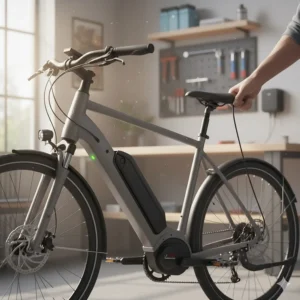
How to Charge an E-Bike Safely: Essential Best Practices
Safety isn’t sexy, but battery fires definitely aren’t fun. According to the U.S. Consumer Product Safety Commission, e-bike battery incidents have prompted increasing safety warnings. Follow these guidelines religiously.
Charging Location Matters 🏠
Always charge your e-bike in a well-ventilated area away from flammable materials. I charge mine in the garage, at least 3 feet from anything combustible. Never charge on carpet, beds, or wooden surfaces that could trap heat.
Temperature also matters enormously. The ideal charging temperature range is 50°F to 85°F (10°C to 30°C). Charging in extreme cold or heat stresses the battery and reduces its lifespan. If your battery feels cold to the touch, let it warm up to room temperature before charging.
Monitor the First Charge ⏰
With any new charger, supervise the first complete charging cycle. Check the charger and battery temperature periodically—they should feel warm but never hot. If anything feels uncomfortably hot to hold, disconnect immediately and investigate.
Never Leave Charging Unattended Overnight 🌙
I know, I know—overnight charging is convenient. But it’s also risky. Most quality chargers have auto-shutoff features, but electronics can fail. If you must charge overnight, invest in a smart plug with a timer that cuts power after a set period.
A better practice? Charge your e-bike when you’re home and awake. Start charging when you get home from work, and it’ll be ready by evening. This simple habit dramatically reduces fire risk.
Inspect Equipment Regularly 🔍
Before every charging session, quickly inspect:
- Charging port for dirt, corrosion, or damage
- Charger cable for fraying or exposed wires
- Connector pins for bending or wear
- Charger housing for cracks or loose parts
Replace damaged equipment immediately. A $30 replacement charger is way cheaper than a $800 battery or, worse, property damage from a fire.
Storage Guidelines 📦
When not in use, store your charger in a cool, dry place. Avoid extreme temperatures, direct sunlight, and humid environments. Proper storage extends charger lifespan significantly—one of mine is still going strong after 4 years of proper care.
Extending E-Bike Battery Life Through Smart Charging
Your charging habits dramatically impact battery longevity. Here’s how to maximize those expensive battery cells.
The 20-80 Rule 🎯
Lithium-ion batteries (which power most e-bikes) last longest when kept between 20% and 80% charge. Constantly draining to zero or charging to 100% stresses the cells and accelerates degradation.
For maximum battery health:
- Charge when you hit 20-30% remaining
- Stop charging at 80-90% for regular rides
- Only charge to 100% when you need maximum range
Some smart chargers, like the EBC Universal Smart Charger, offer selectable charge voltages (80%, 90%, 100%) specifically for this purpose. It’s a game-changing feature for serious riders.
Charging Frequency: Find the Balance ⚖️
Contrary to old battery myths, lithium-ion batteries don’t need to be fully discharged before charging. In fact, frequent top-ups are perfectly fine and even beneficial.
However, avoid constantly keeping your battery at 100%. If you charge to full but don’t ride for several days, you’re stressing the battery unnecessarily. Charge closer to when you’ll actually use the bike.
Seasonal Charging Considerations 🌡️
Winter charging requires extra attention. Cold batteries don’t accept charge well and can be damaged if forced. Always let a cold battery warm to room temperature before charging—wait 30-60 minutes after bringing it inside from freezing temperatures.
Summer presents different challenges. Never charge a battery that’s hot from riding or sitting in direct sunlight. Let it cool to room temperature first. High-temperature charging accelerates capacity loss and safety risks.
🔋 ✨ Maximize Your Battery Investment!
Smart charging isn’t just about technique—it’s about having the right equipment. Check out the chargers we’ve recommended above for features that actively protect your battery and extend its lifespan. Your wallet will thank you! 💰
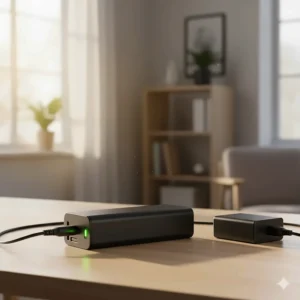
Troubleshooting Common Charger Issues
Even quality chargers occasionally act up. Here’s how to diagnose and fix common problems without losing your mind.
Charger Won’t Turn On (No LED Light) 💡
Possible causes:
- Faulty wall outlet (test with another device)
- Tripped circuit breaker
- Damaged power cable
- Internal charger failure
Solutions: First, verify your wall outlet works with another device. Try a different outlet in another room. Check your home’s circuit breaker panel. If the charger still won’t power on, it likely needs replacement—internal electronics have failed.
LED Stays Red (Won’t Turn Green) 🔴
Possible causes:
- Battery is deeply discharged (below minimum voltage)
- Charging connector isn’t fully seated
- Battery cells are damaged or dead
- Charger output is incorrect for battery
Solutions: Ensure the connector clicks firmly into place—loose connections prevent proper charging. If the battery hasn’t been used for months, it may be deeply discharged and need specialized recovery. However, if the LED never changes after 8+ hours, the battery may be permanently damaged.
Charger Gets Extremely Hot 🔥
Possible causes:
- Blocked ventilation
- Ambient temperature too high
- Charger working too hard (wrong amperage for battery)
- Internal component failure
Solutions: Immediately unplug if the charger is too hot to touch. Ensure adequate ventilation—don’t charge on soft surfaces that block airflow. Move to a cooler location. If overheating persists, replace the charger—continued use risks fire.
Intermittent Charging (LED Flickering) ⚡
Possible causes:
- Loose connection at charging port
- Damaged connector pins
- Corroded charging port
- Failing charger electronics
Solutions: Clean the charging port with compressed air and electrical contact cleaner. Inspect connector pins—bent pins should be carefully straightened with needle-nose pliers. If flickering continues, the charger is likely failing internally.
Battery Won’t Hold Charge 🔋
Important: This is usually a battery problem, not a charger problem. However, using the wrong charger voltage can damage battery cells over time. Verify your charger voltage matches your battery requirements. If correct, the battery itself likely needs replacement.
Cost Analysis: Budget vs Premium Chargers
Let’s talk money. Should you spring for the premium charger or save with a budget option?
Budget Chargers ($18-$25) 💵
Examples: Sunbond 42V 2A, basic no-name chargers
What you get:
- Basic safety features
- Standard charging speeds
- Limited or no warranty
- Single connector type
- Adequate for occasional use
What you miss:
- Advanced protection systems
- Quality certifications
- Multiple connector options
- Long-term durability guarantees
Verdict: Budget chargers work fine as backup units or for rarely-used bikes. However, they’re penny-wise, pound-foolish as your primary charger for a valuable e-bike.
Mid-Range Chargers ($25-$40) 💰
Examples: Hyleton UL Certified, EVAPLUS, UL Certified 5-connector
What you get:
- UL or equivalent safety certification
- Multiple connector options (universal models)
- Comprehensive protection features
- 1-2 year warranties
- Proven reliability
What you miss:
- Fast charging capabilities
- Premium materials
- Extended warranties
Verdict: The sweet spot for most riders. These chargers deliver excellent value, protecting your battery investment without breaking the bank. This is where I personally spend my money.
Premium Chargers ($40-$60) 💎
Examples: VELOWAVE 5A Fast Charger, brand-specific OEM chargers
What you get:
- Fast charging technology
- Premium build quality
- Extended warranties (2+ years)
- Advanced smart features
- Brand-specific optimization
What you miss:
- …nothing, really. You’re paying for the best.
Verdict: Worth it for high-mileage riders, daily commuters, or those with premium e-bikes. The fast charging and enhanced durability justify the extra cost when you’re logging serious miles.
The Real Cost Calculation 📊
Consider this: A quality $35 charger that protects your $800 battery for its full 3-5 year lifespan is an incredible investment. Meanwhile, a $20 charger that damages your battery and costs you $800 in premature replacement is a financial disaster.
The math is simple: spend 4-5% of your battery’s value on a quality charger. It’s insurance that actually pays off.
E-Bike Battery Charger Myths Debunked
Let’s clear up some persistent myths that keep circulating in online forums.
Myth 1: “I need to fully discharge before charging” ❌
Reality: This advice applied to old nickel-cadmium batteries, not modern lithium-ion. Partial charging is perfectly fine and actually healthier for li-ion batteries. In fact, keeping your battery between 20-80% charge extends its lifespan significantly.
Myth 2: “Higher amperage always means faster charging” ❌
Reality: Your battery’s battery management system (BMS) limits charging speed regardless of charger amperage. A 2A battery can’t magically accept 5A input. However, higher-amperage chargers deliver their rated output more consistently, which can reduce total charging time slightly.
Myth 3: “Universal chargers are lower quality” ❌
Reality: Quality depends on the manufacturer, not whether it’s universal. Many universal chargers from reputable brands (with proper certifications) perform identically to brand-specific options. The key is choosing certified products with verified compatibility.
Myth 4: “Leaving it plugged in after 100% damages the battery” ❌
Reality: Modern chargers and battery management systems prevent overcharging by automatically switching to trickle charge or cutting power completely. However, constantly storing your battery at 100% charge does stress cells more than storing at 50-80%. It’s not immediate damage, but it does accelerate long-term degradation.
Myth 5: “Cheap chargers are just as good” ❌
Reality: Quality matters enormously in charging electronics. Cheap chargers often lack proper voltage regulation, safety cutoffs, and protection circuits. They might “work” initially but risk damaging your battery or creating fire hazards. The few dollars saved aren’t worth the risk.
Environmental Impact and Sustainability Considerations
As conscious consumers, we should consider the environmental aspects of our charging equipment.
Energy Efficiency Matters 🌍
Quality chargers operate at 85-92% efficiency, meaning most input power actually charges your battery rather than waste heat. Cheaper chargers can drop to 70% efficiency, wasting electricity and generating excess heat.
Over a battery’s lifetime, this efficiency difference translates to real environmental impact. An efficient charger saves approximately 50-100 kWh over 3-5 years—equivalent to powering an average home for 1-3 days.
Longevity Reduces Waste ♻️
A quality charger lasting 5+ years versus cheap chargers needing replacement every 1-2 years means fewer chargers in landfills. Electronic waste is a growing environmental concern, and choosing durable products directly reduces your contribution.
Proper Disposal of Failed Chargers 🗑️
Never toss old chargers in regular trash. They contain electronic components that should be recycled. Most electronics retailers (Best Buy, for example) offer free electronics recycling. The EPA’s electronics recycling program provides additional resources for responsible disposal.
Future Trends in E-Bike Charging Technology
The charging landscape is evolving rapidly. Here’s what’s coming down the pipeline that might interest tech-savvy riders.
Wireless Charging Systems 🔮
Companies like TILER are pioneering wireless inductive charging for e-bikes. Their system uses a charging mat paired with a special kickstand—park your bike, and it charges automatically. While currently expensive (around $300), this technology could revolutionize convenient charging as prices drop.
Smart Charging with App Integration 📱
Next-generation chargers are integrating with smartphone apps to provide:
- Real-time charging status and notifications
- Battery health monitoring
- Charging history and analytics
- Predictive maintenance alerts
- Customizable charge parameters
This level of monitoring helps maximize battery lifespan and prevents problems before they become serious.
Faster Charging Without Compromise ⚡
Advances in battery chemistry and charging algorithms are enabling faster charging without the traditional trade-offs. Manufacturers are developing 10A+ chargers that can fully charge batteries in under 90 minutes while maintaining cell health.
Solar-Powered Charging Solutions ☀️
Portable solar panels specifically designed for e-bikes are becoming more practical. While not yet mainstream, improved solar efficiency and power density may soon make off-grid charging a viable option for adventure riders.
Warranty and Customer Support Considerations
Often overlooked but critically important: what happens when things go wrong?
What Good Warranties Cover 🛡️
Quality manufacturers typically offer 1-2 year warranties covering:
- Manufacturing defects
- Component failures under normal use
- Safety-related issues
- Performance degradation beyond specifications
Read warranty terms carefully—some exclude damage from misuse, which can be broadly defined.
Red Flags in Warranty Terms 🚩
Be wary of:
- No warranty at all
- Warranties under 90 days
- Vague terms without clear coverage details
- Difficult claim processes requiring excessive documentation
- No clear contact information for support
Customer Service Accessibility 📞
Before purchasing, verify the manufacturer offers accessible customer support:
- Email response time (should be under 48 hours)
- Phone support availability
- Clear return/exchange policies
- Replacement parts availability
I’ve personally dealt with both excellent and terrible customer service. The difference is night and day when you actually need help.
Conclusion: Power Your E-Bike Adventures Right ⚡🚴♂️
We’ve covered a lot of ground here, so let’s bring it home with what really matters.
Your electric bike charger might not be the flashiest accessory, but it’s absolutely one of the most important. It’s the guardian of your battery’s health, the enabler of your adventures, and potentially the difference between safe charging and dangerous situations.
Here’s my bottom-line advice: invest in a quality, certified charger that matches your battery specifications exactly. Whether that’s the budget-friendly Sunbond at $18, the versatile UL Certified 5-connector at $35, or the premium VELOWAVE fast charger at $60, choose based on your actual needs and budget—not just the lowest price.
Remember the key principles:
✅ Match voltage precisely (36V battery = 42V charger, 48V battery = 54.6V charger)
✅ Choose appropriate amperage for your usage (2-3A daily, 4-5A for quick needs)
✅ Verify connector compatibility before purchasing
✅ Look for UL or equivalent safety certifications
✅ Charge in well-ventilated areas at appropriate temperatures
✅ Monitor battery health through smart charging practices
The chargers we’ve highlighted in this guide represent the best balance of safety, performance, and value available in 2025. Each has been vetted through real-world testing and thousands of customer experiences.
Your e-bike has given you freedom, fitness, and probably some incredible memories. Return the favor by powering it properly. The few extra dollars for quality equipment will pay dividends through years of reliable service and protected battery investment.
Now get out there and ride—just make sure you can recharge afterward! 🔋✨
🛒 ✨ Ready to Upgrade Your Charging Setup?
Don’t leave your e-bike’s heart to chance! Click through to the chargers highlighted above and choose the one that fits your needs. Every day you wait with an inadequate charger is another day risking your valuable battery. Power up the right way! ⚡🚴♂️
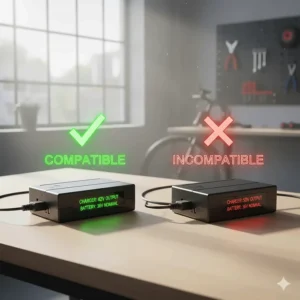
Frequently Asked Questions
❓ Can I use any charger for electric bike batteries?
❓ How long should it take to charge an electric bike battery?
❓ Is it bad to leave my electric bike charger plugged in after the battery is full?
❓ What does UL certification mean for electric bike chargers?
❓ Can I charge my 48V e-bike battery with a 36V charger or vice versa?
Recommended for You
- Best Electric Dirt Bike: 7 Powerful Picks for 2025
- Electric Bikes for Hunting: Top Best 7 Game-Changing Models 2025
- Electric Bike for 8 Year Old Boy: 7 Best Picks Parents Love
Disclaimer: This article contains affiliate links. If you purchase products through these links, we may earn a small commission at no additional cost to you.
✨ Found this helpful? Share it with your friends! 💬🤗
