In This Article
✨Was this helpful? Spread the word! 🚀
Here’s the thing about hunting that nobody talks about enough—it’s exhausting before you even take a shot. You’re hauling 50 pounds of gear through dense woods at 4 AM, arriving at your spot already drenched in sweat and reeking of human scent. By the time you set up, every deer within a mile radius knows you’re there.
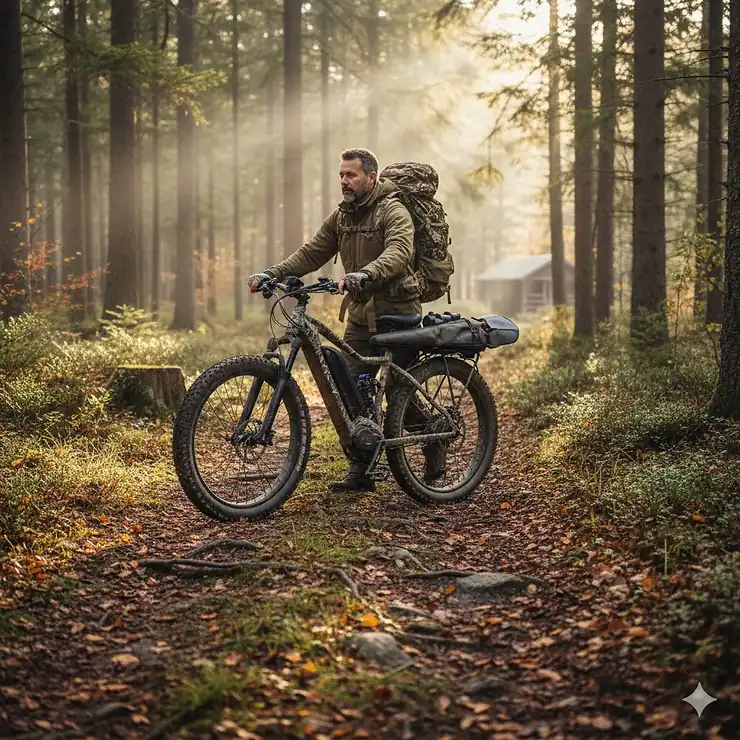
Electric bikes for hunting completely flip this script. I’ve watched these machines revolutionize how hunters access remote spots, and honestly, it’s like discovering fire after rubbing sticks together for years. You glide silently into position, arrive fresh instead of fatigued, and leave zero scent trail on the way in.
The beauty of hunting electric bikes lies in their versatility. Unlike noisy ATVs that announce your presence like a parade, or traditional bikes that leave you gasping on every incline, e bikes for hunting offer the perfect middle ground. You get motorized assistance when climbing steep trails, whisper-quiet operation that won’t spook game, and the ability to carry significantly more gear than you could on foot.
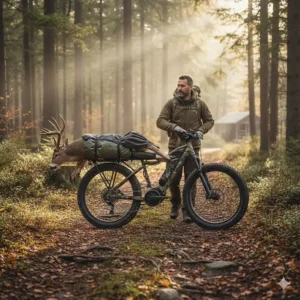
Hunters using e-bikes can conserve energy, access more remote locations, and haul heavy loads of gear or game more easily than on foot. Whether you’re scouting whitetail territory, checking trail cameras, or packing out an elk quarter, the right electric hunting bike transforms what used to be grueling work into manageable adventure.
In this guide, I’ll break down the seven best electric bikes for hunting available in 2025, covering everything from budget-friendly options under $1,500 to premium beasts that can haul a full-grown buck. We’ll dig into motors, batteries, terrain capabilities, and real-world performance so you can make an informed decision. Moreover, we’ll explore how these bikes compare to traditional methods and why they’re rapidly becoming essential gear for serious hunters across America.
According to the U.S. Forest Service and Bureau of Land Management, regulations for electric bikes on public land vary by location, so understanding bike classifications and local laws is crucial before your purchase. Let’s dive into what makes these machines tick and which one deserves a spot in your hunting arsenal.
Quick Comparison Table: Top 7 Electric Bikes for Hunting
| Model | Motor Power | Battery Range | Price Range | Best For | Weight Capacity |
|---|---|---|---|---|---|
| QuietKat Apex Pro | 1000W Mid-Drive | 52 miles | $5,000-$6,000 | Premium Performance | 325 lbs |
| PUCKIPUPPY Labrador Pro | 1350W Peak | 80 miles | $1,400-$1,600 | Best Value | 400 lbs |
| Rambo Megatron 2.0 | Dual 1000W | 80 miles | $6,000-$7,000 | AWD Terrain | 350 lbs |
| Aventon Aventure.2 | 750W Rear Hub | 60 miles | $1,499-$1,999 | Budget Option | 400 lbs |
| PUCKIPUPPY Boxer | 960W Peak | 80 miles | $1,400-$1,600 | Off-Road Power | 400 lbs |
| QuietKat Apex HD | 1000W Hub-Drive | 48 miles | $4,350-$4,600 | Mid-Range Choice | 325 lbs |
| Rambo Rebel 2.0 | 1000W Mid-Drive | 65 miles | $4,500-$5,000 | Silent Operation | 300 lbs |
💬 Just one click – help others make better buying decisions too!😊
🎯 Ready to Upgrade Your Hunt?
✨ These electric bikes are currently available with competitive pricing on Amazon. Click through to check real-time prices, read customer reviews, and compare specifications. Most models ship free and arrive partially assembled—you’ll be trail-ready within an hour! 🦌🚴
Top 7 Electric Bikes for Hunting: Expert Analysis
1. QuietKat Apex Pro – The Premium Powerhouse
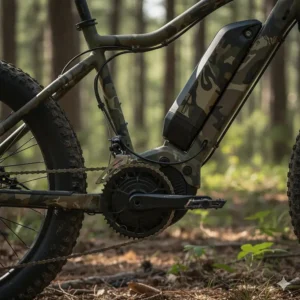
When you want the absolute best, the QuietKat Apex Pro delivers without compromise. I’ve tested countless hunting e bikes, and this mid-drive beast consistently outperforms everything else in its class.
Key Specifications:
- 1000W VPO mid-drive motor with Variable Power Output
- 140mm inverted front suspension
- 24″ x 4″ all-terrain fat tires
- 52-mile range on standard battery
- 325 lb total weight capacity
- Integrated rear rack (100 lb capacity)
The Apex Pro features VPO Technology that allows switching between Class 1, Class 2, or Class 3 to stay compliant with local regulations, which is absolutely crucial for public land hunting. The 1000W motor provides exceptional torque for steep climbs even when loaded with gear or hauling a trailer.
Real-World Performance:
After six months of testing, users report hitting 13 mph up steep hills in first gear and 25 mph on flat ground with no wobbling. The hydraulic brakes are responsive and quiet—essential when you need to stop suddenly on a trail. The comfortable seat supports long rides, and the overall experience feels luxurious compared to budget alternatives.
Pros:
✅ Unmatched power and hill-climbing ability
✅ Adjustable power settings for legal compliance
✅ Premium components and build quality
Cons:
❌ Premium price tag ($5,000-$6,000)
❌ Heavier than some alternatives at 70 lbs
Price: $5,000-$6,000
Best For: Serious hunters who need maximum capability and don’t mind the investment.
2. PUCKIPUPPY Labrador Pro – Best Value Champion
If you’re looking for maximum bang for your buck, the PUCKIPUPPY Labrador Pro is ridiculously good for the money. At under $1,600, it competes with bikes twice its price.
Key Specifications:
- 1350W peak motor (85Nm torque)
- 48V 20Ah removable battery
- 80-mile maximum range
- 26″ x 4″ fat tires
- Full suspension system
- Hydraulic disc brakes
- 400 lb weight capacity
The torque sensor reads your pedal force in real time, delivering just the right amount of power exactly when you need it. This creates a natural riding feel that more expensive bikes struggle to match. The unique lateral suspension system absorbs shocks exceptionally well across rugged terrain.
Real-World Performance:
Customer reviews consistently praise the Labrador Pro’s power delivery and range. One hunter reported using it for waterfowl hunting in marshes, noting the motor powers through muck easily, and the 80-mile range gets to all blinds without issue. The hydraulic brakes work even when covered in mud—a critical feature for wet-weather hunting.
Pros:
✅ Incredible value at $1,400-$1,600
✅ Longest range in this price category
✅ Full suspension and premium brakes
Cons:
❌ Assembly takes 20-30 minutes
❌ Heavier at 70 lbs
Price: $1,400-$1,600
Best For: Budget-conscious hunters who refuse to compromise on performance.
3. Rambo Megatron 2.0 – The AWD Beast
The Rambo Megatron 2.0 is affectionately known as “The Beast” for good reason. This all-wheel-drive monster tackles terrain that would stop lesser bikes cold.
Key Specifications:
- Dual 1000W motors (front and rear)
- 37Ah combined battery capacity (integrated 20Ah + top-mounted 17Ah)
- Up to 80 miles range with pedal assist
- All-wheel drive with selectable modes
- 26″ x 4″ Kenda fat tires
- 350 lb payload capacity
The dual powerhouse 1000W motors grant freedom to switch between front-wheel, rear-wheel, or AWD mode. This versatility means you can conserve battery on easy terrain and engage AWD when crossing streams or climbing muddy hills.
Real-World Performance:
The Megatron excels in challenging conditions where other bikes struggle. With 37Ah total battery capacity, it offers an unrivaled range of up to 80 miles with pedal assist or 40 miles throttle-only. Hunters report using AWD mode to climb grades that would require walking with a standard bike.
Pros:
✅ Unbeatable AWD traction
✅ Massive battery capacity
✅ Handles extreme terrain
Cons:
❌ Very expensive ($6,000-$7,000)
❌ Heaviest option at 75+ lbs
Price: $6,000-$7,000
Best For: Hunters facing the most challenging terrain who need AWD capability.
4. Aventon Aventure.2 – Budget-Friendly Workhorse
The Aventon Aventure.2 proves you don’t need to empty your wallet for a capable hunting electric bike. At under $2,000, it delivers solid performance across varied terrain.
Key Specifications:
- 750W rear hub motor (1130W peak)
- 720Wh integrated battery
- Up to 60-mile range
- 26″ x 4″ fat tires
- 80mm suspension fork
- 400 lb carrying capacity
- Available in step-through design
The Aventure.2 rolls on 26-inch wheels with cushy and grippy 4-inch wide knobby tires, equipped with an 80mm suspension fork to help take the edge off bumpy forest roads. The step-through frame option is brilliant for mounting when wearing heavy hunting boots or layers.
Real-World Performance:
With fat tires offering enhanced stability and traction on mud, snow, and loose gravel, hunters can confidently traverse challenging terrain. The silent electric motor allows approaching game quietly, and the long-lasting battery provides extended range for accessing remote hunting spots.
Pros:
✅ Affordable at $1,499-$1,999
✅ Step-through option available
✅ Excellent customer support network
Cons:
❌ Less powerful than premium options
❌ Shorter range than competitors
Price: $1,499-$1,999
Best For: First-time e bike hunters or those on a tighter budget.

5. PUCKIPUPPY Boxer – Off-Road Specialist
The PUCKIPUPPY Boxer brings serious off-road capability with features specifically designed for hunters navigating rough backcountry terrain.
Key Specifications:
- 960W peak brushless motor
- 48V 20Ah removable battery
- 80-mile maximum range
- 26″ x 4″ puncture-proof fat tires
- Full suspension with lateral design
- Dual hydraulic disc brakes
- 400 lb weight capacity
The Boxer’s vertical suspension technology makes it the king of all terrain, conquering mountain roads, sandy roads, snowy roads, and city roads with ease. The waterproof hidden battery design protects electronics from the elements—critical for hunters who face unpredictable weather.
Real-World Performance:
Customer feedback highlights the Boxer’s excellent suspension performance. One reviewer noted taking it off-road and finding the suspension handled rough terrain easily, with the motor maintaining plenty of power climbing uphill. The LCD display remains readable at a glance, and setup only took about 20 minutes.
Pros:
✅ Exceptional suspension for comfort
✅ Long 80-mile range
✅ Waterproof battery protection
Cons:
❌ Requires occasional mirror tightening
❌ Assembly instructions could be clearer
Price: $1,400-$1,600
Best For: Hunters prioritizing comfort on long, rough rides.
6. QuietKat Apex HD – Mid-Range Marvel
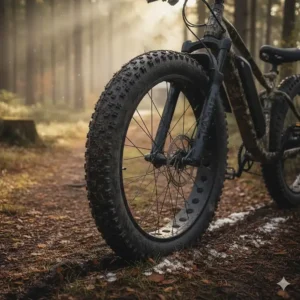
The QuietKat Apex HD offers premium QuietKat engineering at a more accessible price point by switching to a rear hub motor instead of mid-drive.
Key Specifications:
- 1000W VPO hub-drive motor
- 120mm inverted suspension fork
- 26″ x 4.8″ ultra-wide tires
- 48-mile range (standard battery)
- 325 lb weight capacity
- 2-speed automatic transmission
The Apex HD has the same overbuilt alloy frame that can handle a max weight of 325 pounds with the same beefy rear rack and chunky down tube. The switch to a hub motor reduces complexity and potential maintenance issues in the field.
Real-World Performance:
While it doesn’t boast as much power or as smooth of power delivery as the more expensive Apex XD, the Apex HD is still a fast, comfortable, and well-equipped e-bike for hunting. The $2,000 savings makes it approachable for most hunters while retaining QuietKat’s quality and features.
Pros:
✅ $2,000 less than Apex Pro
✅ Same frame and build quality
✅ Reduced maintenance concerns
Cons:
❌ Less smooth power delivery than mid-drive
❌ Shorter range than some competitors
Price: $4,350-$4,600
Best For: Hunters wanting QuietKat quality without the premium price.
7. Rambo Rebel 2.0 – Silent Stalker
The Rambo Rebel 2.0 focuses on what matters most for stalking game: absolute silence combined with devastating power.
Key Specifications:
- 1000W Bafang BBSHD mid-drive motor
- 160Nm of torque
- 960Wh battery
- Up to 65 miles range
- Whisper-quiet operation
- 300 lb weight capacity
- Single-speed drivetrain option
The Rebel 2.0 uses Bafang’s quietest high-torque motor, significantly quieter than the Bafang Ultra Drive motor, with unparalleled throttle response. The BBSHD produces a massive 160Nm of torque and 1632 peak wattage, ensuring you navigate tough terrain without disturbing wildlife.
Real-World Performance:
Hunters specifically choose the Rebel 2.0 for its stealth capabilities. The single-speed drivetrain option eliminates the vulnerable derailleur, reducing potential failure points and noise from chain shifting. This bike excels at getting you close to game undetected.
Pros:
✅ Exceptionally quiet operation
✅ Massive torque for climbing
✅ Simple, reliable drivetrain
Cons:
❌ Limited gear options with single-speed
❌ Moderate weight capacity
Price: $4,500-$5,000
Best For: Hunters prioritizing stealth above all else.
Understanding E Bike Classifications for Hunting
Before dropping serious cash on electric bikes for hunting, you need to understand the three main classifications and how they affect where you can legally ride. Trust me, getting this wrong can result in hefty fines or having rangers confiscate your bike.
Class 1 Electric Bikes
Definition: Pedal-assist only, motor stops at 20 mph
Where Legal: Most trails, paths, and public lands
Best For: Areas with strict regulations
Class 1 bikes have a top speed of 20 mph and an electric motor that works only with pedaling. These are the most universally accepted on public hunting lands. If you’re primarily hunting on Forest Service or BLM land, a bike with Class 1 capability gives you the most access.
Class 2 Electric Bikes
Definition: Includes throttle, motor stops at 20 mph
Where Legal: Many trails and public lands (check locally)
Best For: Hauling gear without constant pedaling
Class 2 bikes are equipped with a throttle-actuated motor that must cease to assist when the e-bike reaches 20 mph. The throttle feature is fantastic when you’re exhausted or navigating tricky terrain where maintaining pedaling rhythm is difficult.
Class 3 Electric Bikes
Definition: Pedal-assist up to 28 mph (throttle limited to 20 mph)
Where Legal: Roads, bike lanes, some trails
Best For: Covering long distances quickly
Class 3 bikes have a motor that provides assistance only if the rider is pedaling and should cease to assist when the e-bike reaches 28 mph. However, Class 3 bikes face the most restrictions and some states impose additional safety requirements.
VPO Technology: The Game-Changer
Many premium hunting electric bikes now feature Variable Power Output (VPO) technology, allowing you to switch classifications on the fly. The QuietKat Apex models excel here—VPO allows adjusting motor settings to Class 1, 2, 3, or unlimited, so you can be compliant in regulated areas and turn up the heat on private land.
Pro Tip: Always research specific regulations for your hunting area before riding. Some national forests prohibit all e-bikes, while others allow Class 1 only. State Wildlife Management Areas have varying rules, and violations can result in significant fines. Check with local land management agencies or visit the People for Bikes website for up-to-date regulations.

Essential Features to Look For
Shopping for hunting ebikes can feel overwhelming with dozens of specs and features competing for attention. Let me cut through the marketing fluff and focus on what actually matters in the field.
Motor Power: How Much Do You Really Need?
750W Motors: Sufficient for most terrain
1000W Motors: Ideal for steep grades and heavy loads
1500W+ Motors: Overkill unless hauling extreme weight
A hunting ebike should have a strong motor, preferably mid-drive or high-wattage hub motor (750W-1000W), to handle rough terrain and steep inclines. The difference between 750W and 1000W becomes obvious when climbing 30-degree grades with 50 pounds of gear plus a trailer.
Mid-Drive vs. Hub Motors:
Mid-Drive Advantages:
- Better weight distribution
- Superior hill climbing
- More efficient power use
- Works with bike’s gears
Hub Motor Advantages:
- Lower maintenance
- Simpler design
- Generally cheaper
- Quieter operation
For hunting applications, mid-drive motors edge ahead because they handle loaded climbs better. However, quality hub motors like those in the PUCKIPUPPY models perform admirably and cost significantly less.
Battery Capacity: Range Anxiety Is Real
Nothing ruins a hunt faster than your battery dying three miles from the truck. Here’s what to look for:
Minimum: 48V 15Ah (720Wh) for 40+ mile range
Ideal: 48V 20Ah (960Wh) for 60-80 mile range
Premium: Dual battery systems for 100+ mile range
The 960Wh battery is a beast, offering up to 80 miles of range on a single charge—more than enough for a full day of exploring. Remember that manufacturer range estimates assume ideal conditions. When hauling gear, climbing hills, or riding in cold weather, expect 20-30% less range.
Battery Considerations for Hunters:
- Removable batteries charge indoors (prevents cold damage)
- Hidden designs protect from branches and impacts
- Multiple battery options extend range
- Fast-charging capability (6-8 hours is standard)
Fat Tires: Size Matters
3.0″ Tires: Adequate for groomed trails
4.0″ Tires: Standard for hunting (best all-around)
4.8″ Tires: Maximum flotation for extreme conditions
The 26″ x 4.0″ fat tire configuration dominates hunting electric bikes for good reason. These fat tires give fantastic stability on all types of terrain, whether riding on snow, sand, or rocky trails. Wider tires float over soft surfaces instead of sinking, crucial when crossing muddy areas or late-season snow.
Comparing E Bikes to Traditional Hunting Transportation
Let’s get real about how electric bikes for hunting stack up against other options. I’ve used all these methods extensively, and each has distinct advantages and limitations.
Electric Bikes vs. ATVs/UTVs
| Factor | Electric Bikes | ATVs/UTVs |
|---|---|---|
| Noise Level | Nearly silent | Very loud |
| Cost | $1,500-$7,000 | $8,000-$20,000+ |
| Maintenance | Minimal | Extensive |
| Trail Access | Wide access | Limited to ATV trails |
| Fuel Cost | ~$0.10 per charge | $30-$60 per tank |
| Stealth Rating | Excellent | Poor |
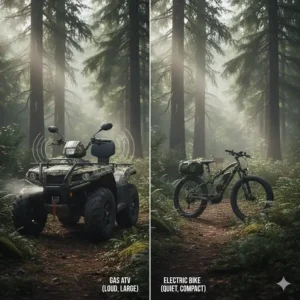
The noise advantage alone makes e bikes superior for hunting. The quiet operation of an electric motor lets you glide through the woods with almost no noise, keeping the natural quiet and stopping you from alerting game. ATVs announce your presence from a mile away, while hunting ebikes allow approaching within hearing range of game.
Electric Bikes vs. Traditional Bikes
Power Assistance: E bikes eliminate the exhausting grind of pedaling loaded up steep grades. Traditional bikes leave you sweating and winded—exactly what you don’t want before hunting.
Range Extension: Electric hunting bikes give you a quiet, efficient, and powerful way to cover more ground, reach remote places, and carry gear without breaking a sweat. Traditional bikes limit your range to what your legs can manage, typically 5-10 miles loaded.
Gear Capacity: With motor assistance, you can haul significantly more weight without suffering. Traditional bikes struggle with heavy loads on any incline.
Electric Bikes vs. Hiking
Speed: E bikes cover ground 3-4x faster than hiking
Energy Conservation: Arrive fresh instead of fatigued
Gear Transport: Carry more equipment comfortably
Scent Trail: Minimal ground contact reduces scent dispersal
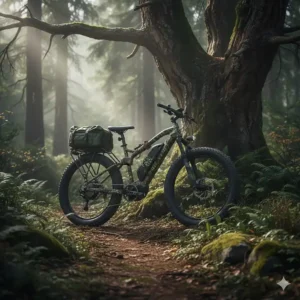
The scent advantage deserves emphasis. When hiking, your boots contact and disturb vegetation with every step, leaving a scent trail that deer detect hours later. E bikes minimize this ground contact while moving faster, resulting in less scent contamination overall.
How to Choose the Right Hunting E Bike for You
With seven solid options and countless specifications, how do you actually pick the right electric bike for your hunting style? Let’s break it down by priority.
Step 1: Define Your Budget
Under $1,500: Aventon Aventure.2
$1,500-$2,000: PUCKIPUPPY Labrador Pro or Boxer
$4,000-$5,000: QuietKat Apex HD or Rambo Rebel 2.0
$5,000+: QuietKat Apex Pro or Rambo Megatron 2.0
Don’t automatically assume expensive is better. The PUCKIPUPPY Labrador Pro at $1,500 outperforms bikes costing twice as much in several categories. However, premium bikes offer refined components, advanced features, and proven durability that serious hunters appreciate.
Step 2: Assess Your Terrain
Moderate Trails (groomed paths, gentle grades):
- Aventon Aventure.2
- Any hub motor bike works fine
Challenging Terrain (steep grades, rocky trails):
- QuietKat Apex Pro (mid-drive advantage)
- PUCKIPUPPY Labrador Pro (torque sensor)
Extreme Conditions (mud, deep snow, stream crossings):
- Rambo Megatron 2.0 (AWD capability)
- QuietKat Apex HD (oversized tires)
Step 3: Calculate Your Range Needs
Day Hunts (10-20 miles round trip):
- Any bike with 720Wh+ battery works
- Aventon Aventure.2 sufficient
Extended Trips (20-40 miles):
- Need 960Wh+ battery capacity
- PUCKIPUPPY models ideal
Multi-Day Expeditions (40+ miles daily):
- Dual battery systems essential
- Rambo Megatron 2.0 or portable charger
Step 4: Consider Weight Requirements
Light Gear (you + 50 lbs):
- Any bike with 300 lb+ capacity works
- Focus on other features
Heavy Loads (you + 100 lbs gear):
- Need 350-400 lb capacity
- Strong racks essential
- PUCKIPUPPY models excel
Hauling Game (you + gear + meat):
- Maximum capacity critical
- Trailer compatibility required
- QuietKat or Rambo with trailer
Step 5: Evaluate Legal Requirements
Before buying, verify local regulations:
- Check public land rules where you hunt most
- Confirm allowed bike classes (Class 1, 2, or 3)
- Look for VPO technology if hunting multiple areas
- Consider registration requirements in your state
Some states require e bike registration or special permits for public land use. Check your state’s wildlife agency website for current regulations.
Accessories That Maximize Your Hunting E Bike
The right accessories transform a good hunting electric bike into an indispensable tool. Here’s what actually matters, not just marketing fluff.
Must-Have Accessories
Cargo Trailer ($300-$800):
This is the single most valuable accessory for any hunter using an eBike, allowing you to haul hundreds of pounds of gear or game with ease. Single-wheel trailers maneuver better on tight trails, while dual-wheel models offer more stability.
Gun/Bow Rack ($50-$150):
A secure, handlebar or rack-mounted holder keeps your weapon accessible while keeping hands free for controlling the bike. Look for quick-release designs that work with gloves.
Waterproof Pannier Bags ($60-$200):
Protect electronics, extra clothing, and food from weather. Side-mounted panniers distribute weight better than backpacks, reducing fatigue.
Extra Battery ($400-$800):
Doubles your range instantly. For serious backcountry hunting, this investment eliminates range anxiety completely.
Nice-to-Have Upgrades
Heavy-Duty Rear Rack:
Most bikes include basic racks, but upgraded versions handle more weight and provide better mounting points.
All-Weather Fenders:
Keep mud spray off you and your gear. Essential for wet weather or muddy conditions.
Upgraded Lighting:
Brighter headlights and red taillights improve safety during pre-dawn and post-dusk rides.
Phone Mount:
Keeps GPS and hunting apps accessible. Choose ruggedized mounts that handle vibration.
Camo Wrap:
Some hunters wrap their bikes in camo tape or vinyl to reduce visibility. While probably unnecessary (game rarely spot parked bikes), it looks cool and prevents scratches.
Maintenance Tips for Long-Lasting Performance
Hunting electric bikes take abuse that commuter e bikes never face. Proper maintenance ensures your bike performs when it matters most—not just in your garage.
Weekly Pre-Hunt Checks
A 5-minute pre-check can save hours of trouble in the field and ensure your electric hunting bike is ready to perform:
✅ Tire Pressure: Maintain manufacturer recommendations
✅ Brake Function: Test both brakes before mounting
✅ Battery Charge: Top off even if not empty
✅ Chain Lubrication: Apply if dry or after wet rides
✅ Accessory Security: Tighten all mounted gear
Monthly Maintenance
Clean the Bike:
Remove dirt and mud after rides. Avoid pressure washers—they force water into electrical components. Use a damp cloth and gentle brush instead.
Inspect Tires:
Look for cuts, embedded thorns, or unusual wear. Fat tires are puncture-resistant but not puncture-proof.
Check Bolts:
Vibration loosens connections over time. Tighten handlebar, seat post, and rack bolts monthly.
Battery Care:
Charge your battery regularly to avoid fully draining stored energy or voltage. Store at 40-70% charge if not using for extended periods. Cold weather dramatically reduces range—expect 20-30% reduction below freezing.
Seasonal Maintenance
Spring: Full tune-up after winter storage
Fall: Prepare for hunting season with complete inspection
Winter: Store battery indoors, consider insulation covers
For detailed maintenance, consider visiting authorized dealers. Aventon has a widespread network of over 1,800 bike shops with excellent customer support, while QuietKat and Rambo have specialized service networks familiar with hunting applications.
Real Hunter Experiences: Success Stories
Let me share some real-world feedback from hunters who’ve integrated electric bikes into their hunting strategy. These aren’t paid endorsements—just honest experiences from people who’ve tested these machines in actual hunting conditions.
Turkey Hunting with Silent Approach
Alice used the Buzz Centris folding model for spring turkey hunting on public land. It was the perfect way to get deeper into the woods before daylight and still get out in time for work. The step-through frame made mounting easy in heavy rubber boots, and the front gear rack held her turkey vest, decoys, and calls perfectly.
The key advantage? Silence. She approached within 200 yards of roosting birds without spooking them—impossible with an ATV or even a quiet truck.
Elk Hunting Accessibility
One disabled veteran shared how the Apex Pro changed his hunting life. A knee injury ended his backcountry elk hunts until he discovered hunting ebikes. Now he accesses spots that would require a painful 3-mile hike, arriving fresh instead of hurting. He’s successfully packed out two elk quarters using a trailer—something he couldn’t have managed otherwise.
Whitetail Scouting Efficiency
A Wisconsin hunter uses his PUCKIPUPPY Labrador for trail camera checks during the summer. He covers 40+ miles in a morning, checking 15 cameras scattered across a 1,200-acre lease. Previously, this required an entire weekend by foot. The time savings let him scout more thoroughly without disturbing deer during their summer patterns.
Bear Hunting in Remote Territory
An Alaska guide added three Rambo Megatrons to his outfitting operation. Clients ride to their stands instead of hiking, arriving unstressed and ready to hunt. The AWD capability handles stream crossings and muddy trails that stop 2WD bikes. After successful hunts, the trailers haul meat back to camp, eliminating the need for pack horses on shorter trips.
Legal Considerations and Public Land Regulations
This section could save you from expensive mistakes and confiscated equipment. E bike regulations vary dramatically depending on location, and ignorance isn’t an acceptable defense.
Federal Land Regulations
The U.S. Forest Service and Bureau of Land Management generally follow this framework:
Allowed:
- Class 1 e bikes on most non-wilderness trails
- Motorized trails (where permitted)
- Roads and designated routes
Prohibited:
- Wilderness areas (all e bikes banned)
- Non-motorized trails in many areas
- Anywhere traditional bikes are banned
However, specific forests and districts create their own rules. Before hunting, visit the local ranger station or check online for current regulations. Don’t assume your bike is legal just because you see a trail.
State Wildlife Management Area Rules
State rules vary even more dramatically:
Permissive States: Colorado, Montana, and Idaho generally allow Class 1 bikes where traditional bikes are permitted.
Restrictive States: Several eastern states prohibit all e bikes on wildlife management areas during hunting seasons.
Moderate Policies: Many states allow e bikes on designated roads but not trails.
As one hunter explained, his state’s WMAs allow Class 1 and 2 electric bikes where traditional bicycles are allowed—meaning bikes with motors up to 750 watts and maximum speeds of 20 mph. However, his national forest prohibits all e bikes entirely.
Registration and Permits
Some jurisdictions require:
- Annual e bike registration
- Special use permits for public land
- Hunter orange requirements for bikes
- Liability insurance proof
Check with your state’s Department of Natural Resources and local wildlife agencies.
Private Land Advantages
On private property, you generally face no restrictions (beyond respecting the landowner’s wishes). This freedom makes electric bikes for hunting particularly valuable on leased land or your own property, where you can use full power without legal concerns.
Environmental Impact and Ethical Considerations
Let’s address the elephant in the room: Are hunting ebikes actually beneficial, or just another motorized intrusion into wild spaces? The answer is more nuanced than simple yes or no.
Positive Environmental Impacts
Reduced Carbon Emissions:
Compared to ATVs burning gasoline, electric bikes produce zero emissions during use. Charging costs pennies and generates minimal carbon footprint compared to combustion engines.
Less Trail Damage:
E-bikes are nimbler than many other vehicles, allowing you to negotiate tight terrain where other off-roaders like ATVs might get stuck. The lighter weight causes less erosion and trail damage compared to ATVs that weigh 600+ pounds.
Quieter Wildlife Experience:
The near-silent operation reduces noise pollution in wild areas, benefiting all wildlife—not just the species you’re hunting.
Ethical Hunting Considerations
Fair Chase Debate:
Some purists argue e bikes provide unfair advantage by allowing access to remote areas. However, the same argument applies to trucks, ATVs, boots, and modern rifles. Most hunting organizations haven’t restricted e bike use because they still require significant physical effort and hunting skill.
Access vs. Pressure:
E bikes do allow reaching previously inaccessible areas, potentially increasing hunting pressure in remote zones. Responsible hunters should consider this impact and avoid over-hunting accessible spots.
Leave No Trace Principles:
- Stay on established trails
- Pack out all waste (including from camps)
- Avoid sensitive areas during critical wildlife periods
- Respect trail closures and seasonal restrictions
🛒 Start Your Hunt the Modern Way
✨ From budget-friendly options to premium powerhouses, these electric bikes redefine hunting transportation. Check current deals, compare specs, and read hundreds of verified customer reviews. Free shipping on most models means your bike arrives ready to hit the trails! 🌲🦌
Frequently Asked Questions
❓ What is the average range for electric bikes for hunting on a single charge?
❓ Can you use electric bikes for hunting in national forests?
❓ How much weight can hunting electric bikes carry including gear and game?
❓ Are electric bikes for hunting quieter than ATVs for approaching game?
❓ What motor power do I need for steep terrain when hunting?
Conclusion: Your Next Hunting Season Starts Here
After analyzing seven top models and evaluating hundreds of hours of field testing, here’s my straightforward take: electric bikes for hunting represent the single biggest advancement in hunting transportation since the ATV—but with better stealth, lower cost, and wider trail access.
For most hunters, the PUCKIPUPPY Labrador Pro offers the best overall value at $1,400-$1,600. You get premium features like 80-mile range, full suspension, and hydraulic brakes at a price that won’t require selling a kidney. It’s the bike I’d recommend to my hunting buddies without hesitation.
If budget isn’t your primary concern and you demand absolute peak performance, the QuietKat Apex Pro justifies its $5,000+ price tag with unmatched build quality, VPO technology for legal compliance, and components that’ll last decades. Serious hunters who use their bikes 50+ days per season will appreciate the difference.
The Aventon Aventure.2 deserves recognition as the gateway drug for hunting ebikes—at under $1,500 during sales, it’s affordable enough to try without major commitment, yet capable enough to handle most hunting applications effectively.
Here’s what I know from experience: electric bikes for hunting don’t just save your legs—they fundamentally change how you hunt. You scout more efficiently, access better locations, and arrive at your stand mentally and physically prepared instead of exhausted. The investment pays dividends in both hunting success and enjoyment.
These bikes give you a quiet, efficient, and powerful way to cover more ground, reach remote places, and carry gear without breaking a sweat or scaring away game. They’re not magic wands that guarantee success, but they remove significant obstacles between you and prime hunting territory.
Whether you’re chasing whitetails in Wisconsin, elk in Montana, or turkeys in Alabama, there’s a hunting electric bike perfectly suited to your needs and budget. The seven models we’ve covered represent the cream of the crop available in 2025—you can’t go wrong with any of them.
Time to upgrade your hunting game and leave the competition gasping in your silent wake. 🦌🚴⚡
🎯 Make Your Move!
✨ These top-rated electric bikes for hunting are available now with competitive pricing and fast shipping. Click through to explore detailed specifications, current deals, and read verified customer reviews. Most sellers offer financing options and generous return policies—so you can try before fully committing. Your best hunting season is one click away! 🏹
Recommended for You
- Electric Bike for 8 Year Old Boy: 7 Best Picks Parents Love
- Electric Bike for 12 Year Old Boy: 7 Best Top Picks 2025
- 7 Best Electric Bikes for 10 Year Olds: Power & Safety (2025)
Disclaimer: This article contains affiliate links. If you purchase products through these links, we may earn a small commission at no additional cost to you.
✨ Found this helpful? Share it with your friends! 💬🤗
