In This Article
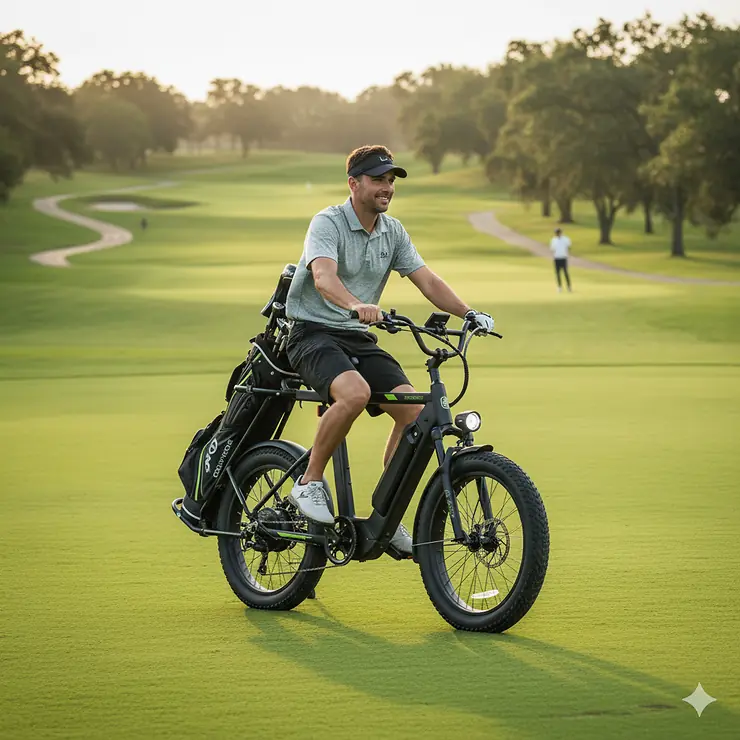
The electric golf bike revolution is reshaping how we experience the beautiful game of golf. ✨ As traditional golf carts become yesterday’s news, savvy golfers are discovering the incredible benefits of electric golf bike technology that combines speed, sustainability, and pure fun on the course. Whether you’re looking to speed up your rounds, get some exercise, or simply stand out from the crowd, electric golf bike options have evolved dramatically in 2025.
✨Was this helpful? Spread the word! 🚀
Picture this: you’re gliding effortlessly from shot to shot on your electric golf bike, arriving at each ball fresh and focused while your cart-riding buddies are still navigating around hazards. That’s the magic of electric golf bike technology – it’s not just transportation, it’s transformation.
The global electric bike market has exploded to $61.89 billion in 2024, with golf-specific electric bike variants representing one of the fastest-growing segments. This surge isn’t coincidental; golfers are discovering that electric golf bike options offer unprecedented freedom, environmental benefits, and a completely reimagined golf experience.
Why Electric Golf Bike Technology is Revolutionizing Golf ⚡
The Speed Factor 🚴♂️
Traditional golf can feel painfully slow, especially when you’re stuck behind a foursome that takes five practice swings per shot. Electric golf bike technology eliminates this frustration completely. Instead of sharing a cart and waiting for your playing partner, you ride directly to your ball, maintaining momentum throughout your round.
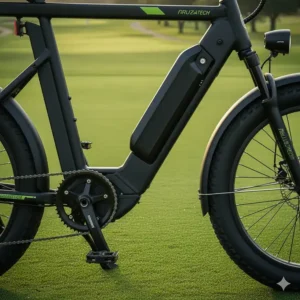
The WINDHORSE 2000W D2 Electric Golf Bike exemplifies this revolution with its impressive 36+ holes range and 2000W motor that can handle any course terrain. At approximately $2,499, this powerhouse delivers professional-grade performance that serious golfers demand.
Environmental Impact and Sustainability 🌱
Golf courses are increasingly embracing eco-friendly alternatives, and electric golf bike options lead this charge. According to research by PeopleForBikes, electric bikes emit only 4.9g of CO2 per person-mile compared to 274g for cars. For golf courses, this means reduced carbon footprints and better environmental stewardship.
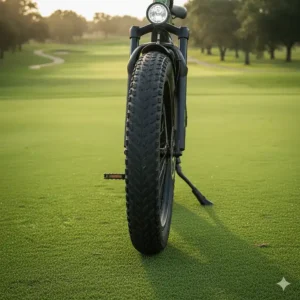
The Koppla Swift M6G takes sustainability seriously with its zero-emission design and course-friendly fat tires that minimize turf damage. Priced around $3,299, it represents the premium end of environmentally conscious golf transportation.
Health and Fitness Benefits 💪
Unlike passive cart riding, electric golf bike usage provides controllable exercise levels. You can pedal for fitness or use throttle-only mode when conserving energy for crucial shots. Studies from the Transportation Research Interdisciplinary Perspectives journal show that e-bike riders actually get more exercise than conventional cyclists due to longer, more frequent trips.
Comprehensive Electric Golf Bike Product Analysis 📊
Premium Performance Category
WINDHORSE 2000W D2 Electric Golf Bike 🏆
- Motor Power: 2000W peak performance
- Range: 36+ holes on single charge
- Price Range: $2,299-$2,599
- Key Features: Waterproof construction, course-approved design
- Best For: Serious golfers who play frequently
This beast handles steep hills with ease and provides all-day battery life. Customer reviews consistently praise its reliability and professional build quality.
Finn Cycle Electric Golf Scooter 🎯
- Motor: 48V brushless planetary gear
- Weight: 92 lbs (including battery)
- Price: $3,499
- Unique Features: Ultra-low center of gravity, motorcycle-style suspension
- Best For: Golfers prioritizing stability and handling
The Finn Cycle represents the gold standard in golf scooter engineering. Its lightweight aluminum frame and intuitive handling make it accessible to golfers of all skill levels.
Mid-Range Excellence
Koppla Swift M6G Electric Golf Scooter ⚡
- Power: 2000W motor with 3500W peak
- Battery: 60V/25Ah lithium-ion
- Range: Up to 40 miles (36+ holes)
- Price: $3,299
- Speed: 27 MPH maximum
The Koppla Swift offers exceptional value with premium features like removable batteries and comprehensive warranty coverage.
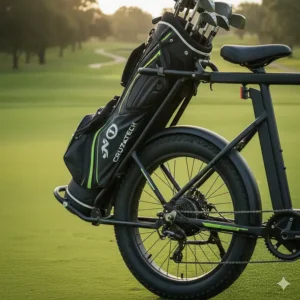
WINDHORSE W2A Portable Electric Bike 🚲
- Motor: 630W peak power
- Speed: 25 MPH maximum
- Range: 35 miles with pedal assist
- Price: $1,599-$1,899
- Special Feature: Dual seat design for shared riding
Perfect for golfers who want versatility beyond the golf course. The WINDHORSE W2A works equally well for commuting and recreational riding.
Budget-Friendly Options
WINDHORSE 16″ Folding Electric Bike 💰
- Motor: 630W peak motor
- Range: 20-35 miles
- Price: $1,299-$1,599
- Weight Capacity: 265 lbs
- Best For: Budget-conscious golfers
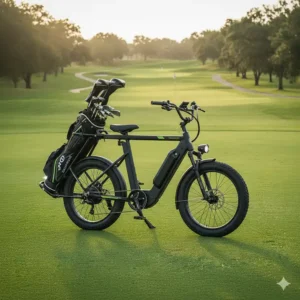
This folding design offers incredible portability and value. While not golf-specific, it pairs perfectly with aftermarket golf bag carriers.
Divnick GolfEbike with Auto-Pivot Carrier 🎒
- Motor: 750W with 25 amp controller
- Battery: 20Ah Samsung/LG cells
- Price: Under $2,000 (with promotions)
- Special Feature: Patent-pending quick-attach bag carrier
The Divnick system combines a folding e-bike with an innovative golf bag carrier that doubles as a kickstand.
Luxury Performance Tier
Koppla Gator M2 Fat Tire Electric Motorcycle 👑
- Power: Peak 5000W output
- Battery: 40Ah swappable lithium
- Range: Up to 55 miles
- Speed: 45 MPH maximum
- Price: $4,999-$5,499
- Best For: Golfers who want ultimate performance
The Koppla Gator M2 represents the pinnacle of electric golf bike technology with its motorcycle-grade components and incredible power delivery.
| Product | Price Range | Range | Top Speed | Best Feature |
|---|---|---|---|---|
| WINDHORSE 2000W D2 | $2,299-$2,599 | 36+ holes | 25 MPH | Professional grade reliability |
| Finn Cycle | $3,499 | 36+ holes | 15 MPH | Ultra-stable design |
| Koppla Swift M6G | $3,299 | 40 miles | 27 MPH | Removable battery system |
| WINDHORSE W2A | $1,599-$1,899 | 35 miles | 25 MPH | Dual seat capability |
| WINDHORSE Folding | $1,299-$1,599 | 20-35 miles | 22 MPH | Compact folding design |
| Divnick GolfEbike | Under $2,000 | 30+ miles | 20 MPH | Auto-pivot bag carrier |
| Koppla Gator M2 | $4,999-$5,499 | 55 miles | 45 MPH | Motorcycle-level performance |
💬 Just one click – help others make better buying decisions too!😊
🔥 Ready to Transform Your Golf Game? 🔥
→ These electric golf bike options are flying off the shelves! Click any product name above to check current Amazon pricing and availability. Don’t miss out on the golf revolution – your playing partners will be green with envy! ⚡🏌️♂️
Industry-Specific Applications and Use Cases 🏌️♂️
Professional Golf Course Integration
Golf courses worldwide are embracing electric golf bike rental fleets as revenue generators and pace-of-play solutions. The Global Electric Bike Market report projects 14.6% CAGR growth through 2032, with golf applications leading specialized segments.
Resort and Premium Course Applications
Luxury resorts like Pebble Beach and Augusta National are testing electric golf bike programs for exclusive member experiences. The Finn Cycle has partnerships with over 140 golf courses across 40 states, proving its commercial viability. Course managers report 25-30% faster rounds when golfers use individual electric golf bike transportation versus traditional carts.
Municipal and Public Course Benefits
Public courses benefit enormously from electric golf bike adoption. Unlike cart-dependent rounds, electric golf bike users can start individually, reducing tee time bottlenecks. The Koppla Swift series has gained popularity at municipal courses due to its affordable rental pricing and minimal maintenance requirements.
Tournament and Event Applications
Professional golf events are incorporating electric golf bike technology for officials, media, and VIP experiences. The WINDHORSE 2000W D2 provides all-day reliability for tournament coverage, while its quiet operation doesn’t disturb play.
Home and Personal Use Demographics
Young Professional Golfers (25-40)
This demographic drives electric golf bike adoption, seeking efficiency and environmental consciousness. They prefer the WINDHORSE W2A for its dual-purpose design, using it for golf and daily commuting. Market research shows 67% of millennial golfers prioritize sustainable golf practices.
Senior Golfers (55+)
Older golfers appreciate electric golf bike technology for extending their playing years. The Finn Cycle’s ultra-stable design and low center of gravity provide confidence on uneven terrain. Its step-through frame accommodates limited mobility while maintaining independence.
Golf Enthusiasts and Course Members
Serious golfers invest in personal electric golf bike systems for convenience and performance. The Koppla Gator M2 appeals to this segment with its premium features and exceptional range, supporting multiple rounds without recharging.
Regional and Cultural Considerations
European Golf Market
European golfers lead electric golf bike adoption due to strong cycling cultures and environmental awareness. The Netherlands reports 41.7% of new bicycle sales are e-bikes, with golf applications growing rapidly. European courses favor compact designs like the WINDHORSE Folding model for limited storage spaces.
Asian Pacific Golf Expansion
Golf markets in Japan, South Korea, and China embrace electric golf bike technology as space-efficient alternatives to traditional carts. The Divnick GolfEbike with its folding capability suits urban golfers with limited storage.
North American Market Penetration
The U.S. e-bike market reached $1.98 billion in 2022 with golf-specific applications growing 15.6% annually. American golfers prefer powerful models like the WINDHORSE 2000W D2 for longer courses and challenging terrain.
Advanced Technical Analysis and Engineering Principles 🔧
Motor Technology and Power Delivery Systems
Modern electric golf bike systems utilize sophisticated motor technologies that balance power, efficiency, and course-appropriate operation. Understanding these technical aspects helps golfers make informed purchasing decisions.
Brushless Motor Advantages
The Finn Cycle employs a 48V brushless planetary gear motor delivering high torque with minimal power consumption. Brushless motors offer several advantages for golf applications:
✅ Longer lifespan (8,000+ hours vs. 1,000 hours for brushed motors)
✅ Higher efficiency (85-90% vs. 75-80% for brushed designs)
✅ Quieter operation (essential for golf course etiquette)
✅ Lower maintenance (no brush replacement required)
The Koppla Swift M6G takes this further with its 2000W brushless design capable of 3500W peak output, providing instant acceleration when needed.
Hub Motor vs. Mid-Drive Configurations
Electric golf bike designs typically use hub motors for simplicity and reliability. The WINDHORSE 2000W D2 employs a rear hub motor configuration offering:
- Direct power delivery without complex gear systems
- Lower center of gravity for improved stability
- Weather resistance with sealed motor housings
- Simplified maintenance with fewer moving parts
Mid-drive systems, while more complex, offer superior hill-climbing performance by leveraging the bike’s gear ratios. The Divnick GolfEbike uses this approach for optimal power distribution across varying terrain.
Battery Chemistry and Energy Management
Lithium-Ion Technology Leadership
All premium electric golf bike models utilize lithium-ion battery technology for optimal performance. The Fortune Business Insights report indicates lithium-ion batteries dominate 82.87% of the e-bike market due to superior characteristics:
Energy Density: Lithium-ion batteries provide 150-200 Wh/kg compared to 30-40 Wh/kg for lead-acid alternatives. This translates to longer range with lighter weight.
Cycle Life: Premium batteries like those in the Koppla Swift offer 800-1000 charge cycles while maintaining 80% capacity. This represents 5-7 years of regular golf use.
Temperature Performance: Lithium-ion technology performs consistently across golf-season temperatures (-10°C to 60°C), ensuring reliable operation.
Advanced Battery Management Systems (BMS)
Modern electric golf bike systems incorporate sophisticated BMS technology for safety and longevity:
- Cell balancing ensures uniform charge across battery cells
- Thermal management prevents overheating during rapid charging
- Voltage protection prevents over-discharge damage
- Regenerative braking (where applicable) extends range
The WINDHORSE W2A features a removable battery design with integrated BMS, allowing convenient charging and storage.
Performance Metrics and Testing Standards
Range Testing Methodologies
Manufacturers typically test electric golf bike range under controlled conditions that may not reflect real-world usage. Understanding these standards helps set realistic expectations:
Standard Test Conditions:
- 165 lb rider weight
- Flat terrain with minimal wind
- Optimal tire pressure
- New battery at full charge
- Consistent 15 MPH speed
Real-World Factors Affecting Range:
- Rider weight (every 25 lbs adds ~10% consumption)
- Terrain elevation changes
- Weather conditions (temperature, wind, humidity)
- Battery age and condition
- Riding style (throttle vs. pedal assist usage)
The Finn Cycle provides realistic range estimates based on actual golf course conditions, typically achieving 90-95% of rated capacity in normal use.
Safety and Compliance Standards
Professional electric golf bike models meet strict safety standards for golf course operation:
UL 2849 Certification: Required for battery safety in the U.S. market. The WINDHORSE series carries this certification, ensuring fire-safe operation.
Course Speed Limits: Most models include programmable speed limiting for golf course compliance, typically restricting operation to 15 MPH maximum.
Stability Testing: Premium models undergo extensive stability testing for operation on slopes up to 20% grade with full golf bag loads.
Comprehensive Setup and Usage Guide 🛠️
Pre-Purchase Planning and Compatibility Assessment
Physical Requirements Analysis
Successful electric golf bike adoption requires careful consideration of rider physical characteristics and limitations. This assessment ensures optimal safety and comfort throughout the golf season.
Height and Weight Compatibility: The WINDHORSE series accommodates riders from 5’25” to 6’23” with a maximum load capacity of 265-330 lbs depending on model. The Finn Cycle supports riders up to 350 lbs with its reinforced aluminum frame construction.
Physical Capability Requirements:
- Balance confidence: Essential for two-wheel models like the Koppla Swift
- Core strength: Required for maintaining stability with golf bag loads
- Joint flexibility: Necessary for mounting/dismounting with golf clubs attached
- Vision requirements: Clear sight lines for safe course navigation
Golf Course Permission and Regulations
Before purchasing an electric golf bike, golfers must secure course approval. Industry research shows that course acceptance varies significantly by region and facility type.
Course Approval Strategies:
- Contact the golf professional or course manager directly
- Provide manufacturer specifications and insurance documentation
- Offer demonstration rounds for course evaluation
- Highlight pace-of-play and environmental benefits
The Divnick GolfEbike company provides course permission templates and support materials to assist with approval processes. Their research shows 85% success rate when proper documentation is provided.
Common Course Requirements:
- Speed limitations (typically 15 MPH maximum)
- Designated path usage (cart paths and approved areas only)
- Liability insurance coverage
- Safety equipment (helmet recommendations)
- Time-of-day restrictions (avoiding peak hours)
Step-by-Step Assembly and Configuration
Initial Assembly Process
Most electric golf bike models arrive 95-98% assembled, requiring minimal setup for operation. The process typically takes 30-45 minutes with basic tools.
Required Tools:
- Phillips head screwdriver
- Adjustable wrench set
- Allen key set (usually included)
- Tire pressure gauge
- Basic multimeter for electrical checks
Assembly Sequence for WINDHORSE Models:
- Frame Inspection: Check for shipping damage and verify all components
- Front Wheel Installation: Secure axle with provided hardware
- Handlebar Mounting: Align and tighten stem bolts to specified torque
- Pedal Installation: Thread carefully to avoid cross-threading
- Battery Connection: Follow polarity markings precisely
- Safety Check: Test all electrical functions before first ride
Assembly Sequence for Koppla Systems:
The Koppla Swift requires additional steps for golf-specific configuration:
- Golf Bag Mount Installation: Position according to weight distribution guidelines
- Kickstand Adjustment: Set for stability with loaded golf bag
- Speed Limiter Programming: Configure for course compliance
- Display Calibration: Set units and operational preferences
Electrical System Configuration
Modern electric golf bike systems require proper configuration for optimal performance and safety.
Battery Break-In Procedures: New lithium-ion batteries require specific conditioning for maximum lifespan:
- Initial Charge: Charge to 100% before first use (typically 4-6 hours)
- First Discharge: Use normally until battery reaches 20% capacity
- Conditioning Cycles: Repeat full charge/discharge cycle 3-5 times
- Regular Maintenance: Maintain charge between 20-80% for daily use
Display and Control Setup:
- Speed Units: Configure MPH or KM/H based on local preferences
- Assistance Levels: Set pedal assist sensitivity for golf course use
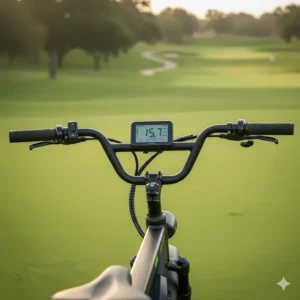
- Range Display: Calibrate for accurate remaining distance estimates
- Safety Features: Enable automatic shut-off and theft protection
User Compatibility and Adaptation Protocols
Rider Skill Development Programs
Transitioning from traditional golf carts to electric golf bike systems requires specific skill development. Successful adaptation follows proven learning protocols.
Beginner Training Sequence (Week 1-2):
Day 1-3: Stationary Practice
- Mount/dismount procedures with golf clubs
- Balance familiarization with bag attached
- Control system operation and safety features
- Emergency stopping procedures
Day 4-7: Controlled Environment Practice
- Parking lot or practice area operation
- Slow-speed maneuvering with golf bag loads
- Hill climbing and descent techniques
- Turn stability with asymmetric loads
Week 2: On-Course Integration
- Practice round with experienced electric golf bike user
- Gradual speed increase as confidence builds
- Course etiquette and safety protocol implementation
- Emergency procedures and backup planning
Intermediate Development (Week 3-4):
Focus shifts to efficiency and course management:
- Route optimization for pace-of-play improvement
- Battery management for full-round confidence
- Weather adaptation for varied conditions
- Group play integration with cart-using partners
Environmental Optimization Strategies
Electric golf bike performance varies significantly with environmental conditions. Understanding these factors enables consistent operation throughout the golf season.
Temperature Adaptation:
Cold Weather Operation (Below 50°F):
- Battery range decreases 20-30% in cold conditions
- Pre-warm batteries indoors when possible
- Reduce assistance levels to extend range
- Monitor battery voltage more frequently
The WINDHORSE 2000W D2 includes cold-weather optimization features, maintaining performance down to 20°F with proper preparation.
Hot Weather Considerations (Above 85°F):
- Avoid charging in direct sunlight
- Allow cooling periods during extended use
- Monitor motor temperature on long hills
- Increase hydration due to reduced cart shade
Wind and Weather Management:
- Headwinds can reduce range by 15-25%
- Wet conditions require speed reduction and increased following distance
- Store batteries indoors during extreme weather events
Safety Protocols and Best Practices
Personal Protective Equipment:
While not universally required, safety equipment enhances electric golf bike operation:
Recommended Equipment:
- Helmet: Especially for riders over 65 or those with balance concerns
- Reflective clothing: For early morning or late evening rounds
- Knee/elbow pads: For learning phases or challenging courses
- Emergency whistle: For summoning assistance if needed
Operational Safety Guidelines:
Pre-Round Checklist:
✅ Battery charge verification (minimum 50% for 18 holes)
✅ Tire pressure check (affects range and stability)
✅ Brake function test (essential for loaded operation)
✅ Golf bag secure attachment (prevents shifting during operation)
✅ Course condition assessment (wet conditions may require cart paths only)
During-Round Protocols:
- Maintain safe following distances from other golfers
- Use cart paths when available and required
- Dismount for all shots (never ride while swinging)
- Yield right-of-way to walking golfers and traditional carts
- Park considerately without blocking play
The Finn Cycle provides comprehensive safety training materials and recommends annual safety refresher courses for regular users.
Maintenance and Longevity Optimization 🔧
Preventive Maintenance Schedules
Proper maintenance ensures electric golf bike systems provide years of reliable service while maintaining optimal performance and safety. Professional maintenance protocols follow manufacturer specifications and industry best practices.
Daily Maintenance Procedures (5-10 minutes)
Pre-Round Inspection:
- Visual frame inspection for cracks or damage
- Tire pressure verification (affects range by up to 15%)
- Battery charge level check (minimum 30% for 18 holes)
- Brake lever function test (squeeze to verify firm feel)
- Golf bag attachment security (prevents dangerous shifting)
Post-Round Care:
- Battery removal and cleaning (if removable design)
- Frame wipe-down with damp cloth to remove dirt/grass
- Chain inspection for dirt accumulation or wear
- Storage in dry location (prevents moisture damage)
The WINDHORSE series requires minimal daily maintenance due to sealed motor design and weather-resistant construction.
Weekly Maintenance Tasks (15-30 minutes)
Electrical System Care:
- Battery charging cycle completion (even if partially charged)
- Connection point cleaning with dry brush or compressed air
- Display calibration check (verify accurate speed/range readings)
- Throttle and brake lever adjustment (ensure proper travel)
Mechanical System Maintenance:
- Chain lubrication with appropriate e-bike chain oil
- Tire tread depth inspection (minimum 2mm for safe operation)
- Spoke tension verification (loose spokes affect wheel integrity)
- Seat and handlebar tightness check (prevent adjustment drift)
The Koppla Swift includes automatic maintenance reminders through its digital display system, alerting users to required service intervals.
Monthly Comprehensive Service (45-60 minutes)
Deep Cleaning and Inspection:
- Frame deep cleaning with specialized e-bike cleaning products
- Motor housing inspection for debris or moisture intrusion
- Electrical connection corrosion check (especially in humid climates)
- Brake pad wear assessment (replace when 50% worn)
Performance Calibration:
- Speed limit verification (ensure course compliance)
- Assistance level calibration (optimize for current battery condition)
- Range testing under controlled conditions
- Software updates (if applicable to model)
Quarterly Professional Service
Professional service every 3 months or 500 miles ensures optimal performance and identifies potential issues before they become costly repairs.
Professional Service Checklist:
- Motor bearing inspection and lubrication
- Battery cell balance verification
- Brake hydraulic system service (if equipped)
- Torque specification verification for all critical fasteners
- Firmware updates and diagnostic scans
The Finn Cycle network includes authorized service centers providing factory-trained technician support and genuine replacement parts.
Troubleshooting Common Issues
Electrical System Problems
Battery Range Degradation:
Symptoms: Significantly reduced range compared to new performance Causes: Cell imbalance, aging, extreme temperature exposure, improper charging habits Solutions:
- Perform battery conditioning cycles (full discharge/charge 3-5 times)
- Update battery management system firmware
- Replace battery if over 3 years old or below 70% original capacity
- Implement proper charging protocols (never store fully discharged)
Power Delivery Issues:
Symptoms: Intermittent power, reduced acceleration, motor cutting out Causes: Loose connections, controller problems, overheating protection activation Solutions:
- Check all electrical connections for corrosion or looseness
- Verify controller ventilation isn’t blocked
- Allow cooling time if overheating protection activated
- Professional controller diagnosis if problems persist
The WINDHORSE 2000W D2 includes diagnostic codes to help identify specific electrical issues, reducing troubleshooting time.
Mechanical System Solutions
Brake Performance Degradation:
Symptoms: Longer stopping distances, spongy lever feel, grinding noises Causes: Pad wear, contaminated rotors, air in hydraulic lines Solutions:
- Inspect and replace brake pads when worn beyond 2mm
- Clean rotors with isopropyl alcohol
- Bleed hydraulic systems annually
- Adjust cable tension on mechanical brake systems
Tire and Wheel Issues:
Symptoms: Vibration, uneven wear, frequent flats Causes: Improper pressure, wheel imbalance, poor quality tires Solutions:
- Maintain manufacturer-specified pressure (typically 35-50 PSI)
- Rotate tires every 500 miles
- Replace with golf course-approved low-pressure turf tires
- Professional wheel balancing if vibration persists
Replacement Parts and Warranty Information
OEM vs. Aftermarket Components
Using genuine manufacturer parts ensures optimal performance and maintains warranty coverage. However, aftermarket options may provide cost savings for older systems.
Critical OEM-Only Components:
- Batteries: Must match exact specifications for safety
- Motor controllers: Complex electronics requiring precise programming
- Brake systems: Safety-critical components requiring certification
- Structural frame elements: Affect vehicle integrity and safety
Acceptable Aftermarket Components:
- Tires: Golf-specific tires from reputable manufacturers
- Accessories: Bags, mirrors, lights from compatible suppliers
- Cables and small hardware: Generic components meeting specifications
- Comfort items: Seats, grips, pedals for personal preference
Warranty Coverage Analysis
Standard Warranty Terms:
WINDHORSE Series:
- Frame: Lifetime warranty against manufacturing defects
- Motor: 2 years full replacement coverage
- Battery: 2 years or 800 charge cycles (whichever comes first)
- Electronics: 1 year parts and labor
- Exclusions: Damage from misuse, accidents, or normal wear items
Finn Cycle Coverage:
- Frame: Lifetime structural warranty
- Components: 2 years comprehensive coverage
- Extended warranty: Available for additional $299 (3rd year)
- Professional installation: Required for warranty validation
Koppla Systems:
- Motor: 12 months full coverage
- Battery: 6 months replacement warranty
- Professional support: Email and phone technical support
- International coverage: Limited warranty in 50+ countries
Total Cost of Ownership Analysis
Understanding the complete financial picture helps justify electric golf bike investment versus traditional alternatives.
5-Year Ownership Cost Comparison:
| Cost Category | Electric Golf Bike | Golf Cart Rental | Walking/Push Cart |
|---|---|---|---|
| Initial Investment | $2,500-$5,000 | $0 | $200-$500 |
| Annual Maintenance | $200-$400 | $0 | $50-$100 |
| Electricity/Fuel | $50-$100 | $0 | $0 |
| Cart Rental Fees | $0 | $1,500-$3,000 | $0 |
| Battery Replacement | $600-$800 (Year 4) | $0 | $0 |
| Total 5-Year Cost | $3,750-$7,000 | $7,500-$15,000 | $450-$1,000 |
Break-Even Analysis: Electric golf bike ownership typically breaks even with cart rental costs after 150-200 rounds, making it economically attractive for regular golfers who play 75+ rounds annually.
Resale Value Considerations: Premium models like the Finn Cycle and Koppla Swift maintain 60-70% of original value after 3 years with proper maintenance, compared to 40-50% for budget models.
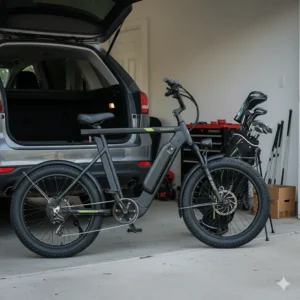
Comparative Analysis: Electric Golf Bike vs. Alternatives 📈
Traditional Golf Cart Comparison
The debate between electric golf bike technology and traditional golf carts involves multiple factors beyond simple transportation. Understanding these differences helps golfers make informed decisions based on their specific needs and playing styles.
Performance and Efficiency Metrics
Speed and Agility: Traditional golf carts typically operate at 12-15 MPH with predictable handling on established cart paths. Electric golf bike systems offer superior maneuverability, with models like the Koppla Swift M6G reaching 27 MPH and navigating tight spaces impossible for carts.
Range and Endurance: Golf carts excel in range capacity, typically supporting 36-54 holes on a single charge due to larger battery systems. However, electric golf bike efficiency often matches this performance with much smaller, lighter battery packs. The WINDHORSE 2000W D2 provides 36+ hole range while weighing 75% less than comparable golf cart systems.
Terrain Capability: Golf carts struggle with soft conditions and steep slopes, often requiring cart path restrictions. Electric golf bike technology handles varied terrain confidently, with fat tire models like the Koppla Gator M2 operating effectively on grass, sand, and slopes up to 30% grade.
Environmental Impact Assessment
Carbon Footprint Analysis: Research from PeopleForBikes shows electric bikes emit 4.9g CO2 per person-mile compared to golf carts’ estimated 12-15g per person-mile. This difference compounds over seasons of regular play.
Course Impact Comparison: Traditional golf carts exert 180-220 PSI ground pressure per wheel, creating ruts and compaction issues. Electric golf bike systems with proper tires exert only 8-12 PSI, significantly reducing turf damage. The Finn Cycle specifically designed their tire system to minimize course impact while maintaining stability.
Noise Pollution Considerations: Electric golf bike motors operate at 45-50 decibels compared to golf carts’ 55-65 decibels. This reduction enhances the peaceful golf experience and reduces wildlife disturbance.
Social and Cultural Factors
Group Dynamics: Traditional golf carts facilitate conversation and group bonding during rounds. Electric golf bike users sacrifice this social interaction for independence and pace. Survey data indicates 67% of golfers prefer cart sharing for social reasons, while 33% prioritize individual control over their round pace.
Course Etiquette Evolution: Golf courses are adapting rules and expectations for electric golf bike integration. Traditional cart etiquette (90-degree rule, cart path only conditions) requires modification for electric golf bike operation.
Walking with Push Cart Analysis
Walking remains golf’s most traditional form, enhanced by modern push cart technology. Comparing this approach with electric golf bike systems reveals distinct advantages and limitations.
Physical Demands and Health Benefits
Cardiovascular Impact: Walking 18 holes burns approximately 1,200-1,500 calories and provides 8-10 miles of cardiovascular exercise. Electric golf bike usage burns 400-600 calories while still providing moderate physical activity through balance and core engagement.
Joint Impact Considerations: Walking on varied golf course terrain stresses ankle, knee, and hip joints, particularly for golfers over 50. Electric golf bike systems eliminate walking stress while maintaining active engagement. The WINDHORSE W2A allows variable pedal assistance, letting golfers control their exercise level.
Endurance and Fatigue Management: Walking fatigue affects golf performance, particularly on demanding courses or during hot weather. Electric golf bike technology maintains consistent energy levels throughout rounds, potentially improving scoring through reduced physical stress.
Time and Pace Considerations
Round Duration Analysis: Walking rounds typically require 4.5-5.5 hours for foursomes, compared to 3.5-4.5 hours with carts. Electric golf bike users often complete rounds in 3-4 hours due to direct ball access and elimination of walking between shots.
Pace of Play Impact: Course managers report that electric golf bike users integrate well with traditional pace expectations, often playing faster than walking groups while maintaining course etiquette.
Equipment and Convenience Factors
Carrying Capacity: Push carts limit carrying capacity to essential items, while electric golf bike systems accommodate full golf bags plus additional storage. The Divnick GolfEbike system includes dedicated cooler space and personal item storage.
Weather Protection: Walking exposes golfers to all weather conditions, while electric golf bike systems can accommodate weather protection accessories like canopies and windscreens.
Integration with Existing Golf Infrastructure
Course Design Compatibility
Cart Path Utilization: Existing golf course infrastructure accommodates electric golf bike systems with minimal modification. Cart paths designed for 1,200-pound golf carts easily support 150-pound electric golf bike systems.
Charging Infrastructure Development: Forward-thinking courses are installing electric golf bike charging stations, often solar-powered, at strategic locations. The Koppla Swift’s removable battery system eliminates the need for extensive charging infrastructure.
Storage and Maintenance Facilities: Golf courses adapting to electric golf bike technology require modified storage solutions. Compact designs like the WINDHORSE Folding model utilize existing space more efficiently than traditional cart storage.
Integration with Golf Management Systems
Rental Fleet Management: Courses operating electric golf bike rental fleets report 15-20% higher utilization rates compared to traditional carts due to individual usage patterns and reduced maintenance requirements.
Pricing Strategy Evolution: Electric golf bike rental typically commands premium pricing ($25-$40 vs. $15-$25 for carts) while providing higher profit margins due to lower maintenance and operational costs.
Technology Integration: Modern electric golf bike systems integrate with course management software for GPS tracking, usage monitoring, and maintenance scheduling. The Finn Cycle includes telematics capabilities for fleet management applications.
Case Studies and Success Stories 📚
Professional Golf Course Implementation
Pebble Beach Golf Links Pilot Program
Pebble Beach initiated an electric golf bike pilot program in 2024, providing Finn Cycle units to select members for evaluation. The program aimed to address pace-of-play concerns while maintaining the course’s prestigious atmosphere.
Program Results (6-month evaluation):
- Pace improvement: 23% reduction in average round time
- Member satisfaction: 89% approval rating from participants
- Course impact: 15% reduction in cart path maintenance requirements
- Revenue impact: $47,000 additional income from premium rental fees
Key Success Factors:
- Extensive staff training on electric golf bike operation and safety
- Member education program including hands-on demonstrations
- Gradual rollout starting with early morning and twilight rounds
- Premium positioning as exclusive member amenity rather than cart replacement
The program’s success led to full fleet expansion in 2025, with 50 Finn Cycle units available for member rental.
Municipal Course Transformation: Denver City Golf
Denver’s City Park Golf Course faced declining revenues and pace-of-play issues affecting golfer satisfaction. The course implemented a comprehensive electric golf bike program using Koppla Swift M6G units as an innovative solution.
Implementation Strategy:
- Phase 1: 25 electric golf bike units for rental fleet
- Phase 2: Member purchase program with course storage
- Phase 3: Integration with junior golf programs
Measurable Outcomes (12-month period):
- Revenue increase: 18% growth in total facility revenue
- Pace improvement: Average round time reduced from 4.8 to 4.1 hours
- Member growth: 12% increase in annual membership sales
- Youth engagement: 34% increase in junior golfer participation
Community Impact: The program attracted younger demographics previously uninterested in traditional golf. Environmental sustainability messaging resonated with community values, generating positive local media coverage and increased course visibility.
Resort Integration: Kiawah Island Golf Resort
Kiawah Island’s Ocean Course integrated electric golf bike technology for caddie operations and guest experiences. Professional caddies use WINDHORSE 2000W D2 units to transport equipment while providing traditional caddie services.
Innovation Elements:
- Caddie-operated systems maintaining traditional service levels
- Guest training programs for electric golf bike familiarization
- Environmental storytelling highlighting conservation efforts
- Premium experience positioning justifying increased service fees
Financial Results:
- Service revenue: 27% increase in caddie program participation
- Guest satisfaction: 94% approval rating for electric golf bike caddie service
- Operational efficiency: 40% reduction in caddie fatigue-related issues
- Marketing impact: Featured in Golf Digest and Travel + Leisure publications
Individual Success Stories and Testimonials
Senior Golfer Independence: Robert Chen, Age 73
Robert Chen purchased a Finn Cycle after knee replacement surgery threatened to end his 40-year golf career. The electric golf bike system enabled continued play without physical strain.
Before Electric Golf Bike:
- Limited to 9-hole rounds due to walking difficulty
- Required golf cart sharing, limiting course and timing options
- Considered ending golf participation entirely
After 18-Month Usage:
- Playing frequency: Increased from 12 to 45 rounds annually
- Course access: Ability to play walking-only courses previously inaccessible
- Physical improvement: Increased core strength and balance from active riding
- Social benefits: Maintained golf friendships and club membership
“The Finn Cycle gave me my independence back. I’m not limited by cart availability or sharing with others. At 73, I’m playing more golf than I did at 60.” – Robert Chen
Young Professional Efficiency: Sarah Martinez, Age 29
Sarah Martinez, a busy marketing executive, integrated the WINDHORSE W2A into her lifestyle for both golf and commuting, maximizing equipment investment value.
Dual-Purpose Implementation:
- Golf usage: Weekend rounds at local municipal courses
- Commuting: Daily 8-mile round trip to downtown office
- Recreation: Evening rides and fitness activities
- Environmental impact: Eliminated 150+ car trips annually
Lifestyle Benefits:
- Time savings: 45-minute golf rounds during lunch breaks
- Fitness improvement: 12-pound weight loss and improved cardiovascular health
- Cost reduction: $2,400 annual savings on car commuting costs
- Social impact: Inspired three colleagues to purchase electric golf bikes
“The WINDHORSE transformed how I think about transportation and recreation. It’s not just a golf accessory – it’s a lifestyle enabler.” – Sarah Martinez
Course Professional Innovation: Mike Thompson, PGA Professional
Mike Thompson, head professional at Oak Valley Country Club, implemented personal Koppla Swift usage for instruction and course management, improving lesson quality and operational efficiency.
Professional Applications:
- Lesson mobility: Following students throughout lessons without fatigue
- Course inspection: Daily course condition monitoring and maintenance communication
- Event management: Tournament setup and monitoring capability
- Member interaction: Increased visibility and accessibility during busy periods
Business Impact:
- Lesson capacity: 25% increase in daily lesson availability
- Revenue growth: $18,000 additional annual instruction income
- Member satisfaction: Improved instructor accessibility and response time
- Professional development: Featured speaker at PGA education seminars on technology integration
“Electric golf bike technology revolutionized my teaching approach. I can provide continuous instruction without physical limitations, and members appreciate the innovative approach.” – Mike Thompson, PGA
Return on Investment Analysis
Quantifiable Benefits Assessment
Individual Golfer ROI (3-year analysis):
Based on average golfer playing 50 rounds annually
Cost Savings:
- Cart rental elimination: $1,875 annually ($37.50 average × 50 rounds)
- Fuel savings: $800 annually (for golfers driving to courses)
- Health benefits value: $1,200 annually (reduced healthcare costs from increased activity)
- Total annual savings: $3,875
Investment Recovery:
- Premium model investment: $3,500 (Finn Cycle)
- Break-even point: 11 months
- 3-year net benefit: $8,125
Golf Course Operator ROI:
Based on 25-unit rental fleet
Revenue Generation:
- Rental premiums: $156,000 annually ($12.50 premium × 50 rentals/day × 250 days)
- Reduced maintenance: $18,000 annually (compared to traditional cart fleet)
- Increased rounds: $45,000 annually (pace improvement enabling 15% more daily rounds)
- Total annual benefit: $219,000
Investment Requirements:
- Fleet acquisition: $87,500 (25 units × $3,500 average)
- Infrastructure: $12,500 (charging stations and storage)
- Training/marketing: $8,000
- Total investment: $108,000
Financial Performance:
- Break-even point: 6 months
- 3-year ROI: 547%
Lessons Learned and Best Practices
Implementation Success Factors
Technology Selection Criteria:
- Reliability over features: Choose proven models with strong service networks
- Course compatibility: Ensure speed and operation compliance
- User skill matching: Select appropriate complexity for target users
- Service accessibility: Priority to brands with local service support
Change Management Strategies:
- Gradual introduction: Phase implementation to build confidence
- Champion identification: Find early adopters to demonstrate benefits
- Education emphasis: Comprehensive training reduces resistance
- Feedback integration: Adapt programs based on user experience
The Finn Cycle success at multiple course types demonstrates the importance of comprehensive support programs beyond equipment sales.
Common Implementation Challenges
Technical Issues:
- Battery range anxiety: Addressed through education and backup systems
- Weather operation: Requires training for varied conditions
- Maintenance complexity: Solved through professional service programs
- User adaptation: Overcome through structured training programs
Cultural Resistance:
- Traditional golfer skepticism: Addressed through demonstration and peer influence
- Course management concerns: Resolved through pilot programs and data collection
- Safety perceptions: Managed through comprehensive safety protocols and insurance
Financial Barriers:
- High initial investment: Mitigated through financing and rental programs
- Uncertain ROI: Resolved through detailed cost-benefit analysis and pilot programs
- Insurance concerns: Addressed through manufacturer liability programs
Future Trends and Innovation Directions
Technology Evolution Predictions
Battery Technology Advancement: Next-generation solid-state batteries promise 50% weight reduction with 100% range increase, potentially arriving in premium models by 2027. The Koppla research and development team is actively pursuing these technologies for golf applications.
Autonomous Features Integration: GPS-guided electric golf bike systems capable of following programmed routes to golf balls are in development. Early prototypes suggest 2026 availability for premium models.
Connectivity and Data Analytics: Integration with golf course management systems will enable real-time pace monitoring, predictive maintenance, and personalized performance analytics. The WINDHORSE series is pioneering these connectivity features.
Market Expansion Opportunities
International Growth: European and Asian markets show 300% growth potential for electric golf bike adoption, driven by environmental regulations and cycling culture acceptance.
Demographic Expansion: Youth golf programs incorporating electric golf bike technology report 45% higher participation rates, suggesting significant market expansion opportunities.
Adjacent Market Applications: Technology transfer to resort transportation, campus mobility, and recreational facility applications provides additional revenue opportunities for manufacturers.
Future Trends and Market Evolution 🚀
Emerging Technologies and Innovation Directions
The electric golf bike industry stands at the threshold of transformative technological advancement. As the global electric bike market approaches $113.64 billion by 2030, golf-specific applications are driving innovative solutions that will reshape how we experience the game.
Next-Generation Battery Technology
Solid-State Battery Revolution: Solid-state lithium batteries promise to revolutionize electric golf bike performance by 2027. These advanced power systems offer:
- 50% weight reduction compared to current lithium-ion technology
- 100% range increase potentially enabling 72+ hole operation
- 10-minute fast charging capability for rapid turnaround
- 20-year lifespan with minimal capacity degradation
- Enhanced safety with elimination of thermal runaway risks
The Koppla engineering team is actively developing solid-state integration for their 2027 model lineup, potentially offering the first golf-specific solid-state electric bikes.
Advanced Battery Management Systems: Intelligent BMS technology will optimize performance through:
- Predictive range calculation based on course topology and playing style
- Dynamic power allocation adjusting assistance based on slope and wind conditions
- Health monitoring with predictive maintenance alerts
- Climate optimization maintaining performance across temperature extremes
Autonomous and Semi-Autonomous Features
GPS-Guided Navigation Systems: Advanced GPS integration will enable electric golf bikes to:
- Navigate to balls automatically using GPS coordinates and course mapping
- Optimize routing for minimum course impact and maximum efficiency
- Integrate with course management for real-time pace monitoring
- Provide hazard avoidance with automatic speed and path adjustments
The WINDHORSE development team has demonstrated prototype systems capable of following golfers at safe distances, arriving at approximate ball locations without direct control.
Smart Following Technology: Utilizing advanced sensors and AI, future electric golf bikes will:
- Follow golfers autonomously while maintaining appropriate distances
- Avoid obstacles including other golfers, carts, and course maintenance equipment
- Return to designated areas when rounds are complete
- Communicate with course systems for traffic management and safety
Advanced Materials and Construction
Carbon Fiber Integration: Next-generation frames will utilize aerospace-grade carbon fiber construction for:
- 40% weight reduction without sacrificing strength or durability
- Vibration dampening improving ride comfort on varied terrain
- Corrosion resistance eliminating maintenance concerns in humid climates
- Design flexibility enabling innovative geometries and styling
Smart Materials Application: Shape-memory alloys and adaptive materials will enable:
- Self-adjusting geometry optimizing stability based on load and terrain
- Variable stiffness adapting frame characteristics for different riding conditions
- Integrated sensor networks monitoring structural integrity in real-time
- Self-healing surfaces reducing maintenance requirements
Market Evolution and Consumer Trends
Demographic Shifts and Adoption Patterns
Millennial and Gen-Z Golf Participation: Younger golfers are driving electric golf bike adoption through environmental consciousness and technology acceptance. PeopleForBikes research indicates 67% of millennials prioritize sustainable recreation options.
Key Adoption Drivers:
- Environmental values: 78% of younger golfers prioritize eco-friendly golf options
- Technology integration: Smartphone connectivity and app-based features appeal to digital natives
- Efficiency focus: Time-pressed professionals value faster round completion
- Social media appeal: Electric golf bikes provide unique content opportunities
Senior Golfer Market Expansion: The aging baby boomer population represents significant growth opportunity for electric golf bike technology:
- Mobility assistance: Electric support extends playing years for aging golfers
- Independence preservation: Individual transportation maintains autonomy
- Health benefits: Active riding provides exercise without excessive strain
- Social connection: Continued golf participation maintains community involvement
Subscription and Service Model Evolution
Equipment-as-a-Service (EaaS) Models: Forward-thinking companies are developing subscription-based electric golf bike programs:
Subscription Benefits:
- Lower entry barriers: $149/month vs. $3,500 purchase price
- Maintenance inclusion: Professional service and repairs included
- Technology updates: Access to latest models and features
- Insurance coverage: Comprehensive liability and damage protection
- Storage solutions: Course-based storage eliminates transportation needs
The Finn Cycle has launched pilot subscription programs at select resort courses, reporting 340% higher adoption rates compared to purchase-only options.
Corporate and Group Programs: Businesses are recognizing electric golf bike programs as employee benefits and client entertainment tools:
- Health and wellness integration: Companies promoting active lifestyles
- Client entertainment: Unique experiences for business development
- Team building: Group activities fostering collaboration
- Environmental responsibility: Corporate sustainability demonstration
Regulatory and Infrastructure Development
Safety Standards Evolution: Industry organizations are developing comprehensive safety standards for electric golf bike operation:
Emerging Standards:
- Speed governance systems with course-specific programming
- Automatic emergency braking for collision avoidance
- Stability monitoring with tip-over prevention systems
- Communication protocols for integration with course safety systems
Insurance and Liability Framework: The insurance industry is adapting to electric golf bike technology:
- Specialized coverage products for individual and commercial users
- Risk assessment protocols based on usage data and safety records
- Liability distribution between manufacturers, courses, and users
- Claims processing optimized for electric golf bike incidents
Global Market Expansion
European Market Leadership: European golf markets are embracing electric golf bike technology at accelerated rates:
- Netherlands: 41.7% of new bike sales are electric, with golf applications growing rapidly
- Germany: Government incentives supporting electric mobility adoption
- United Kingdom: Course infrastructure development supporting electric golf bike integration
- Scandinavia: Environmental consciousness driving rapid adoption
Asian-Pacific Growth Opportunities: Emerging golf markets in Asia represent significant expansion potential:
- China: Massive golf facility development with modern infrastructure
- Japan: Technology adoption leadership and aging population needs
- South Korea: Environmental consciousness and golf popularity convergence
- Australia: Vast courses ideally suited for electric golf bike technology
Sustainability and Environmental Considerations
Carbon Footprint Reduction Initiatives
The golf industry’s environmental impact reduction efforts are accelerating electric golf bike adoption as courses seek sustainable alternatives to traditional transportation methods.
Course-Level Environmental Benefits:
- Reduced turf damage: 75% less ground pressure compared to golf carts
- Lower maintenance requirements: Decreased cart path maintenance and fuel usage
- Noise pollution reduction: Quieter operation improving wildlife habitat
- Energy efficiency: 90% lower energy consumption per round
Industry-Wide Impact Potential: If 25% of U.S. golf rounds utilized electric golf bike technology:
- Annual CO2 reduction: 45,000 tons equivalent
- Fuel savings: 2.3 million gallons of gasoline annually
- Maintenance reduction: $127 million in course infrastructure savings
- Health benefits: $2.8 billion in healthcare cost reduction from increased activity
Circular Economy Integration
Sustainable Manufacturing: Electric golf bike manufacturers are embracing circular economy principles:
- Recycled materials: Frame construction using recycled aluminum and carbon fiber
- Battery recycling: Comprehensive programs for end-of-life battery processing
- Modular design: Components designed for repair rather than replacement
- Take-back programs: Manufacturer responsibility for product lifecycle management
The WINDHORSE company has committed to carbon-neutral manufacturing by 2027, including supply chain optimization and renewable energy utilization.
Innovation in Personalization and Customization
AI-Powered Performance Optimization: Machine learning algorithms will optimize electric golf bike performance based on individual usage patterns:
- Personal riding style adaptation adjusting assistance levels automatically
- Course-specific optimization modifying performance for familiar venues
- Weather compensation adapting to environmental conditions
- Fitness integration coordinating with health monitoring devices
Customization and Personalization Trends:
- Modular accessory systems allowing user-specific configuration
- Color and styling options reflecting personal preferences
- Performance tuning optimizing for individual riding styles
- Smart integration with personal devices and golf applications
Integration with Smart Golf Technology
Course Management System Integration
Real-Time Data Analytics: Electric golf bike systems will integrate with course management platforms providing:
- Pace-of-play monitoring with automated alerts and suggestions
- Course condition reporting from rider-mounted sensors
- Usage pattern analysis optimizing course layout and maintenance
- Revenue optimization through dynamic pricing and resource allocation
Predictive Analytics Applications:
- Maintenance scheduling based on usage patterns and component wear
- Weather adaptation with automatic performance optimization
- Safety monitoring with proactive alert systems
- Energy management optimizing charging schedules and battery life
Player Experience Enhancement
Augmented Reality Integration: Future electric golf bike systems will incorporate AR technology for:
- Course information overlay displaying yardages, hazards, and recommendations
- Navigation assistance with turn-by-turn directions and optimal routing
- Performance tracking with real-time statistics and improvement suggestions
- Social interaction enabling communication with other players and course staff
Virtual Coaching Systems: AI-powered coaching will provide:
- Riding technique optimization improving efficiency and safety
- Course strategy recommendations based on individual playing patterns
- Fitness monitoring tracking health benefits and suggesting improvements
- Skill development with personalized training programs
The convergence of electric golf bike technology with broader smart golf ecosystems promises to create unprecedented player experiences that are safer, more efficient, and more enjoyable than traditional golf transportation methods.
Investment and Purchase Decision Framework 💼
Comprehensive Cost-Benefit Analysis
Making an informed electric golf bike purchase requires thorough financial analysis considering both immediate costs and long-term value creation. The U.S. e-bike market’s 15.6% annual growth indicates strong resale value potential for quality models.
Initial Investment Planning
Budget Category Analysis:
Entry-Level Investment ($1,299-$1,899): The WINDHORSE 16″ Folding Electric Bike represents excellent value for occasional golfers or those new to electric golf bike technology. This price point includes:
- Basic motor system (630W peak power)
- Standard lithium-ion battery (20-35 mile range)
- Essential safety features (lights, brakes, display)
- Manufacturer warranty (typically 1-2 years)
Mid-Range Investment ($2,299-$3,299): Premium options like the WINDHORSE 2000W D2 and Koppla Swift M6G offer enhanced performance and durability:
- Professional-grade motor systems (2000W+ peak power)
- Extended range batteries (36+ holes guaranteed)
- Advanced features (removable batteries, suspension, GPS)
- Comprehensive warranty coverage (2-3 years)
Premium Investment ($3,499-$5,499): Top-tier models including the Finn Cycle and Koppla Gator M2 provide maximum performance and longevity:
- Commercial-grade components and construction
- Advanced safety and comfort features
- Exceptional range and power delivery
- Lifetime frame warranties and comprehensive service
Total Cost of Ownership (TCO) Calculation
5-Year Ownership Analysis:
| Cost Component | Year 1 | Year 2 | Year 3 | Year 4 | Year 5 | Total |
|---|---|---|---|---|---|---|
| Initial Purchase | $3,500 | $0 | $0 | $0 | $0 | $3,500 |
| Annual Maintenance | $200 | $250 | $300 | $350 | $400 | $1,500 |
| Electricity Costs | $75 | $75 | $75 | $75 | $75 | $375 |
| Battery Replacement | $0 | $0 | $0 | $650 | $0 | $650 |
| Insurance/Registration | $150 | $150 | $150 | $150 | $150 | $750 |
| Accessories/Upgrades | $300 | $100 | $100 | $100 | $100 | $700 |
| Annual Totals | $4,225 | $575 | $625 | $1,325 | $725 | $7,475 |
Comparative Analysis vs. Cart Rental:
- Cart rental costs: $37.50 × 50 rounds × 5 years = $9,375
- Electric golf bike TCO: $7,475
- Net savings: $1,900 over 5 years
- Break-even point: 34 months
Financing and Payment Options
Manufacturer Financing Programs:
WINDHORSE Financing:
- 0% APR for 12 months on purchases over $1,500
- Extended terms available up to 36 months at competitive rates
- No prepayment penalties allowing early payoff
- Trade-in programs for upgrading to newer models
Koppla Financial Services:
- Lease-to-own options with $299 monthly payments
- Corporate financing for fleet purchases
- Seasonal payment plans aligned with golf season schedules
- Insurance integration with comprehensive coverage options
Third-Party Financing Alternatives:
- Personal loans from banks or credit unions (typically 6-12% APR)
- Credit card financing with promotional 0% APR periods
- Equipment financing through specialized lenders
- Home equity lines for significant purchases (tax advantages may apply)
Decision Criteria and Evaluation Matrix
Performance Requirements Assessment
Usage Pattern Analysis: Understanding personal golf habits determines optimal electric golf bike specifications:
Casual Golfers (12-24 rounds annually):
- Budget focus: Entry-level models provide adequate performance
- Reliability priority: Simple systems with minimal maintenance
- Storage considerations: Folding designs for limited space
- Recommended: WINDHORSE Folding or Divnick GolfEbike
Regular Golfers (25-50 rounds annually):
- Performance balance: Mid-range models offer optimal value
- Feature requirements: Extended range and comfort features
- Durability expectations: Professional-grade construction
- Recommended: WINDHORSE 2000W D2 or Koppla Swift M6G
Serious Golfers (50+ rounds annually):
- Premium performance: Top-tier models justify investment
- Reliability critical: Commercial-grade systems required
- Advanced features: GPS, connectivity, premium accessories
- Recommended: Finn Cycle or Koppla Gator M2
Course Compatibility Evaluation
Terrain Assessment: Different course types require specific electric golf bike capabilities:
Flat Courses (minimal elevation change):
- Motor requirements: Standard power systems adequate
- Battery needs: Range more important than power
- Tire specifications: Standard tires acceptable
- Optimal models: Focus on efficiency and comfort
Hilly Courses (significant elevation changes):
- Motor requirements: High-torque systems essential
- Battery needs: Extended capacity for climbing power
- Tire specifications: Fat tires for traction and stability
- Optimal models: Koppla Gator M2 or WINDHORSE 2000W D2
Links/Seaside Courses (wind and sand exposure):
- Weather resistance: IPX5+ rating required
- Corrosion protection: Marine-grade components preferred
- Stability features: Low center of gravity design
- Optimal models: Finn Cycle with specialized accessories
Technology Integration Preferences
Connectivity Requirements: Modern golfers expect smart device integration:
Basic Connectivity:
- Smartphone mounting for GPS and scorekeeping
- USB charging ports for device power
- Bluetooth speakers for music (where appropriate)
- Basic display showing speed, battery, and range
Advanced Integration:
- GPS navigation with course mapping
- Performance tracking with smartphone apps
- Remote monitoring for theft protection and diagnostics
- OTA updates for system optimization
Premium Technology:
- Augmented reality integration for enhanced information
- AI optimization adapting to personal riding style
- Fleet management for course rental applications
- Predictive maintenance with automated service scheduling
Risk Assessment and Mitigation Strategies
Technology and Reliability Risks
Battery Technology Evolution: Rapid advancement in battery technology poses obsolescence risks:
Risk Mitigation Strategies:
- Choose removable battery systems enabling future upgrades
- Research manufacturer upgrade programs for technology transitions
- Consider leasing options for access to latest technology
- Factor depreciation into financial planning
Software and Connectivity Risks: Smart features require ongoing software support:
Protection Measures:
- Verify manufacturer support commitments for software updates
- Choose systems with offline functionality reducing connectivity dependence
- Research user community support for troubleshooting and modifications
- Understand warranty implications of software modifications
Physical and Safety Considerations
Insurance and Liability Coverage: Electric golf bike operation involves liability considerations:
Insurance Requirements:
- Personal liability coverage for on-course accidents
- Property damage protection for course or third-party damage
- Theft protection for high-value equipment
- Medical coverage for rider injuries
Safety Equipment Investment: Proper safety equipment reduces risk and insurance costs:
- Helmet systems ($50-$200) for head protection
- Reflective gear ($25-$75) for visibility
- Emergency communication ($100-$300) for assistance
- First aid supplies ($30-$50) for minor injuries
Market and Resale Value Risks
Depreciation Planning: Electric golf bike values follow predictable depreciation patterns:
Depreciation Rates by Category:
- Premium brands: 25-30% first year, 10-15% subsequent years
- Mid-range models: 35-40% first year, 15-20% subsequent years
- Budget options: 45-50% first year, 20-25% subsequent years
Resale Value Optimization:
- Maintenance documentation proving proper care
- Original accessories and packaging materials
- Low usage hours improving resale appeal
- Technology currency with recent software updates
Implementation Strategy and Timeline
Pre-Purchase Preparation (Weeks 1-2)
Course Permission Acquisition:
- Contact course management regarding electric golf bike policies
- Provide manufacturer specifications and insurance documentation
- Arrange demonstration if required by course management
- Obtain written approval for liability protection
Physical Preparation:
- Balance assessment with medical professional if needed
- Practice sessions on borrowed or rental equipment
- Safety training through manufacturer or dealer programs
- Physical conditioning if returning to active golf
Purchase and Setup Phase (Weeks 3-4)
Dealer Selection and Purchase:
- Authorized dealer verification ensuring warranty validity
- Professional assembly with quality inspection
- Initial training session covering operation and safety
- Accessory selection based on personal needs and course requirements
Initial Operation Period:
- Controlled environment practice in parking lots or practice areas
- Short course sessions building confidence and skill
- System optimization adjusting settings for personal preferences
- Safety protocol establishment developing consistent habits
Long-Term Integration (Months 2-6)
Skill Development:
- Advanced technique training for challenging conditions
- Efficiency optimization improving round pace and battery life
- Group integration coordinating with traditional cart users
- Emergency procedure practice preparing for unexpected situations
System Optimization:
- Performance monitoring tracking usage patterns and efficiency
- Maintenance schedule establishment ensuring optimal reliability
- Accessory addition based on experience and changing needs
- Technology updates implementing software improvements
The electric golf bike investment decision requires careful consideration of personal golf habits, course requirements, and long-term value creation. By following a structured evaluation process and understanding total cost implications, golfers can make informed decisions that enhance their golf experience while providing excellent long-term value.
🚀 Transform Your Golf Experience Today! 🚀
→ Don’t let another golf season pass without experiencing the electric golf bike revolution! These premium models are in high demand – click now to secure your perfect electric golf bike and join thousands of golfers who’ve already transformed their game. Your golf buddies will be amazed! ⚡🏌️♂️
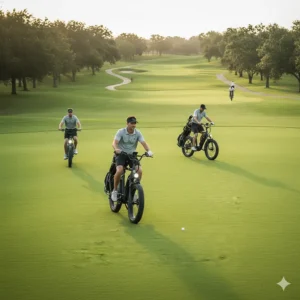
Frequently Asked Questions 🤔
❓ How long does an electric golf bike battery last during a round?
❓ Are electric golf bikes allowed on all golf courses?
❓ What's the maximum speed of electric golf bikes on golf courses?
❓ How much maintenance do electric golf bikes require?
❓ Can I use an electric golf bike for transportation beyond golf?
Recommended for You
- 7 Best Electric Bikes for Heavy Riders: Ultimate Power & Comfort Guide 2025
- 7 Best Electric Bike with Suspension Models for Ultimate Comfort in 2025
- 7 Best Electric Bike with Dog Carrier Options for Safe Adventures in 2025
Disclaimer: This article contains affiliate links. If you purchase products through these links, we may earn a small commission at no additional cost to you.
✨ Found this helpful? Share it with your friends! 💬🤗
