
In This Article
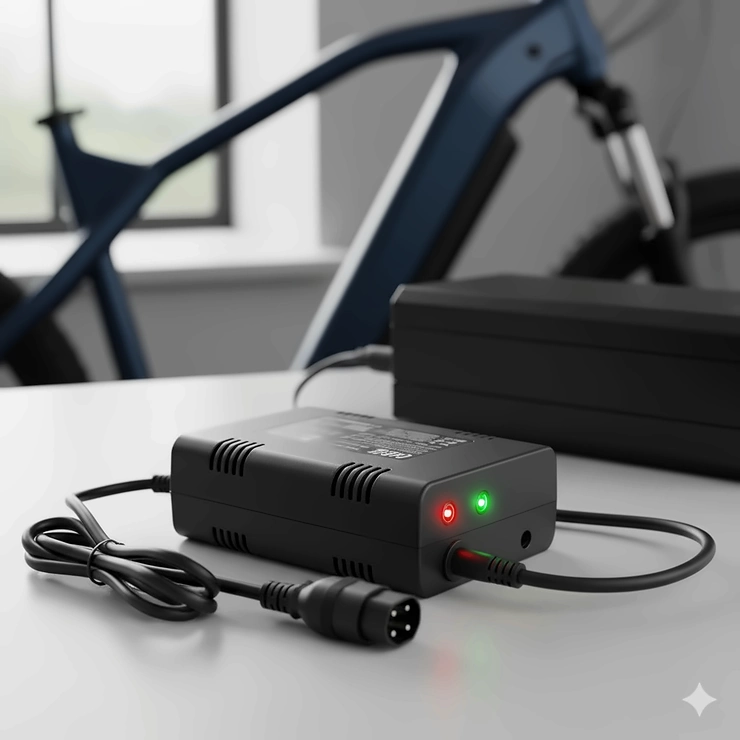
So, you’ve got yourself an electric bike, huh? That’s awesome! But here’s the thing – that sleek machine of yours is only as good as the juice keeping it alive. A reliable 36v battery charger for electric bike isn’t just an accessory; it’s basically your ride’s lifeline. I’ve been riding e-bikes for years, and trust me, choosing the wrong charger can turn your smooth commute into a real headache.
Let’s be real: not all chargers are created equal. Some work faster than a New York minute, while others take forever and might not even protect your battery properly. Whether you’re commuting to work, hitting trails on weekends, or just cruising around town, finding the right electric bike charger 36v makes all the difference. In this guide, I’m going to walk you through everything you need to know about picking the perfect charger for your ride – from safety features to charging speeds, compatibility issues, and yes, we’ll dive deep into the top seven options available right now.
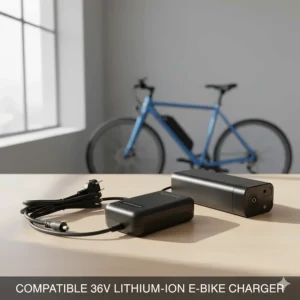
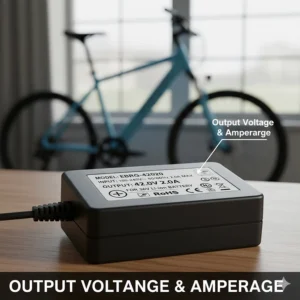
What is a 36v battery charger for electric bike? A 36V battery charger is a specialized power adapter designed to safely recharge lithium-ion battery packs in electric bikes. These chargers convert AC power (100-240V) to DC output at 42V, which is the full charge voltage for 36V battery systems.
✨Was this helpful? Spread the word! 🚀
Quick Comparison Table: At-a-Glance Overview 📊
| Charger Model | Output | Charging Speed | Price Range | Best For |
|---|---|---|---|---|
| Fancy Buying 42V 2A XLR | 42V 2A | Standard | $18-$25 | Budget-conscious riders |
| BOEEA 42V 2A 6-in-1 | 42V 2A | Standard | $22-$30 | Universal compatibility |
| EBC Smart Charger 2A | 42V 2A | Standard | $49.95 | Smart features & durability |
| EBC Smart Charger 4A | 42V 4A | Fast | $79.95 | Quick charging needs |
| 36V Super Charger 1-5A | 42V 1-5A | Variable | $119.95 | Professional users |
| eBikeling 4A Fast | 42V 4A | Fast | $69.99 | Performance riders |
| Universal 42V Multi-plug | 42V 2A | Standard | $15-$28 | Multiple bikes |
💬 Just one click – help others make better buying decisions too!😊
Top 7 36v Battery Charger for Electric Bike: Expert Analysis 🏆
1. Fancy Buying 36V Electric Bike Charger (42V 2A XLR Connector)
This workhorse has been my go-to recommendation for budget-minded riders who don’t want to compromise on quality. The Fancy Buying charger punches way above its weight class with some seriously impressive safety features packed into that compact design.
Key Specifications:
- Output: 42V 2A (84W)
- Input: AC 100-240V universal
- Connector: 3-Pin Male XLR
Price Range: $18-$25 on Amazon
Customer Feedback: Riders consistently praise this charger’s reliability and build quality, with many reporting 2+ years of daily use without issues. The built-in cooling fan gets specific mentions for preventing overheating during summer charging sessions.
Pros:
✅ Multiple protection systems (overcurrent, overvoltage, short circuit)
✅ Built-in cooling fan prevents overheating
✅ Automatic shutoff when battery reaches full charge
Cons:
❌ XLR connector may not fit all bike models
❌ Cable length (39.4 inches) could be longer for some setups
Best for: Razor MX series, Izip electric bikes, and similar 36V systems with XLR charging ports.
2. BOEEA 42V 2A Universal Charger with 6 Connections
Talk about versatility! I love this charger because it’s like the Swiss Army knife of electric bike charging. The BOEEA model comes with six different connector types, which means you’re pretty much guaranteed to find one that fits your bike.
Key Specifications:
- Output: 42V 2A
- Includes: 6 adapter plugs (DC 5.5×2.1mm, 8mm RCA, 3-pin configurations)
- Safety certifications: Multiple protection systems
Price Range: $22-$30
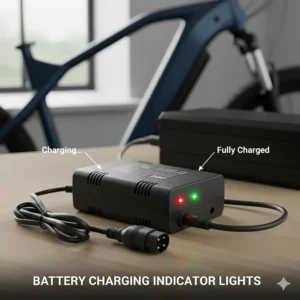
Customer Feedback: Users report excellent compatibility across multiple bike brands including Gotrax, Jetson, and Razor. The red/green LED indicator receives praise for its clarity and usefulness.
Pros:
✅ Six different connector types included
✅ Works with most major e-bike brands
✅ High-quality materials with excellent heat dissipation
Cons:
❌ Slightly pricier than single-connector options
❌ Extra adapters can be easy to misplace
Best for: Households with multiple e-bikes or riders unsure about their charging port type.
3. EBC Universal Smart Charger – 36V 2 Amp Lithium Ion
Now we’re talking premium territory. The EBC Universal Smart Charger brings some genuinely clever features to the table – specifically that selectable charge voltage function. This isn’t just marketing fluff; being able to charge to 80% or 90% instead of 100% can seriously extend your battery’s lifespan.
Key Specifications:
- Output: 42V 2A
- Selectable charge levels: 80%, 90%, 100%
- DC Connector: 5.5mm barrel (adapters available)
Price Range: $49.95
Customer Feedback: Professional riders and bike shop technicians favor this model for its battery-extending features. Many report their batteries maintaining 90%+ capacity even after 500+ charge cycles.
Pros:
✅ Intelligent charging extends battery life significantly
✅ Universal AC input (90-264VAC)
✅ Multiple safety protections including reverse polarity
Cons:
❌ Higher upfront cost
❌ Additional adapters sold separately
Best for: Riders serious about maximizing battery longevity and those who understand battery maintenance.
4. EBC Universal Smart Charger – 36V 4 Amp Fast Charging
Same great smart features as its 2-amp sibling, but this bad boy charges twice as fast. The EBC 4A model is what I reach for when I need my bike ready ASAP – like when I forgot to charge overnight and have a morning commute waiting.
Key Specifications:
- Output: 42V 4A (high-speed charging)
- Charges 36V 14Ah battery in 2-3 hours
- Selectable voltage: 80%, 90%, 100%
Price Range: $79.95
Customer Feedback: Speed is the standout feature in reviews, with users consistently amazed at how quickly it brings depleted batteries back to life. Some mention it runs warmer than 2A chargers, which is normal for fast charging.
Pros:
✅ Cuts charging time in half compared to standard chargers
✅ Smart charging features preserve battery health
✅ Robust construction with excellent heat management
Cons:
❌ Premium pricing
❌ May not be necessary for occasional riders
Best for: Daily commuters, delivery riders, and anyone who needs quick turnaround times.
5. 36V 300W Super Charger (1-5 AMP Variable)
This is the charger I recommend to professional users and bike shops. The 300W Super Charger offers adjustable amperage from 1-5 amps, giving you unprecedented control over charging speed versus battery care.
Key Specifications:
- Output: 42V adjustable (1-5A)
- Maximum power: 300W
- Selectable charge completion: 80%, 90%, 100%
Price Range: $119.95
Customer Feedback: Bike mechanics and high-mileage riders appreciate the flexibility, though casual users sometimes find it overly complex. The ability to slow-charge overnight at 1A or quick-charge at 5A gets specific praise.
Pros:
✅ Ultimate flexibility with adjustable amperage
✅ Professional-grade build quality
✅ Can handle various battery capacities efficiently
Cons:
❌ Highest price point in this category
❌ More complex operation than plug-and-play models
Best for: Professional bike mechanics, bike share programs, and enthusiasts with multiple batteries.
6. eBikeling 4A Fast Charger for 36V Batteries
The eBikeling charger strikes a sweet spot between performance and price. It’s fast, reliable, and comes from a brand that really understands e-bike conversion kits and battery systems.
Key Specifications:
- Output: 42V 4A
- LED indicator: Red (charging) / Green (complete)
- Charges typical battery in 4-5 hours from empty
Price Range: $69.99
Customer Feedback: Conversion kit enthusiasts particularly love this charger’s compatibility with DIY e-bike setups. Users note excellent customer service from eBikeling if issues arise.
Pros:
✅ Excellent value for fast-charging capability
✅ Proven compatibility with conversion kits
✅ Free shipping on orders over $50
Cons:
❌ Currently sold out (high demand)
❌ Connector options more limited than universal models
Best for: DIY e-bike builders and riders with eBikeling components.
7. Universal 42V 2A Multi-Plug Charger
Let me introduce you to the ultimate budget backup charger. These universal models from various manufacturers flood Amazon, typically featuring 5-7 different plug types at rock-bottom prices.
Key Specifications:
- Output: 42V 2A
- Includes: 5-7 connector adapters
- Basic safety protections
Price Range: $15-$28
Customer Feedback: Reviews are mixed – some users get years of service, while others report failures within months. Quality varies significantly between sellers, so check recent reviews carefully before purchasing.
Pros:
✅ Most affordable option available
✅ Multiple connectors provide flexibility
✅ Good as emergency backup charger
Cons:
❌ Quality inconsistent between manufacturers
❌ May lack advanced safety features
❌ Shorter typical lifespan
Best for: Budget-conscious riders, backup/emergency use, or riders testing compatibility before investing in premium chargers.
🛒 Ready to Power Up Your Ride?
Don’t let a dead battery slow you down! Each of these 36v battery chargers for electric bike offers unique advantages depending on your needs and budget. Click on the product names above to check current Amazon pricing, read detailed customer reviews, and find the perfect match for your e-bike. Remember – investing in quality charging equipment protects your battery investment and keeps you riding smoothly! 🚴⚡✨
Understanding 36V Battery Systems: The Basics 🔌
Here’s something that trips up a lot of new riders: why does your 36V battery need a 42V charger? Sounds backward, right? Well, it’s not – and understanding this is actually pretty important for taking good care of your bike.
Lithium-ion battery packs don’t maintain exactly 36 volts throughout their discharge cycle. They start at around 42V when fully charged and drop to about 30V when depleted. This voltage range is completely normal and expected. Think of it like a fuel tank – the gauge doesn’t stay at “Full” as you drive, even though the tank capacity hasn’t changed.
When manufacturers say “36V system,” they’re referring to the nominal voltage – basically the average voltage during typical use. Your charger needs to output 42V (sometimes labeled as 42.6V for precision) to properly top off all the individual cells in the battery pack to their maximum safe charge level.
Why Voltage Matters
Using the wrong voltage charger can cause serious problems. A 48V charger on a 36V battery? That’s asking for fire hazards and battery damage. According to the Consumer Product Safety Commission, improper charging is a leading cause of lithium-ion battery incidents. Always – and I mean always – use a charger specifically rated for your battery voltage.
How to Choose the Right 36v Battery Charger for Electric Bike 🎯
Picking a charger shouldn’t feel like rocket science, but there are definitely some key factors worth considering. Let me break down the decision-making process into manageable chunks.
1. Check Your Connector Type
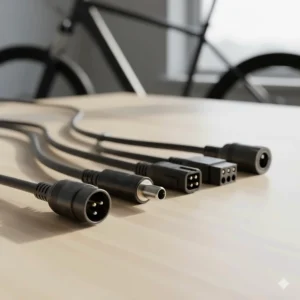
First things first: look at your bike’s charging port. Is it a round DC barrel jack? A 3-pin XLR? An RCA connector? Maybe something completely different? Taking a photo and measuring the diameter can save you from ordering the wrong charger. Most modern e-bikes use one of these common types:
- DC 5.5mm x 2.1mm barrel connector
- 3-pin XLR (looks like a microphone plug)
- RCA connectors (circular multi-pin)
- Proprietary brand-specific connectors
2. Determine Required Amperage
Amperage affects charging speed, plain and simple. A 2A charger takes twice as long as a 4A charger to fill the same battery. However, faster isn’t always better. Your battery’s BMS (Battery Management System) has a maximum safe charge rate, typically listed in your bike’s manual or on the battery itself.
As a general rule:
- 2A chargers: Perfect for overnight charging and maximizing battery lifespan
- 4A chargers: Great for daily riders who need quick turnarounds
- 5A+ chargers: Professional use, but verify your battery can handle it
3. Evaluate Safety Features
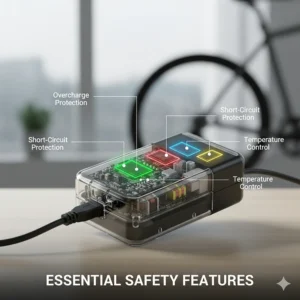
This is non-negotiable territory. Quality chargers include multiple protection systems:
Essential protections:
- Overcurrent protection (OCP)
- Overvoltage protection (OVP)
- Short circuit protection (SCP)
- Overtemperature protection (OTP)
- Reverse polarity protection
Don’t skimp here. The few extra dollars for a charger with comprehensive protections could save you from replacing a $500+ battery – or worse, dealing with a battery fire.
4. Consider Smart Features
Modern chargers offer some genuinely useful intelligence. Selectable charge levels (80%, 90%, 100%) let you extend battery lifespan significantly when you don’t need maximum range. Automatic shutoff prevents overcharging. Temperature monitoring ensures safe operation.
5. Think About Portability
Will this charger live in your garage, or do you need to carry it in a backpack? Weight, size, and cable length matter differently depending on your use case. Commuters often want compact, lightweight options, while home users prioritize features over portability.
Charging Speed Comparison: What Really Matters ⚡
Let’s talk numbers. I’ve charged hundreds of batteries over the years, and here’s what real-world charging times actually look like:
Standard vs. Fast Charging
36V 10Ah Battery (common size):
- 2A charger: 5-6 hours from empty
- 4A charger: 2.5-3 hours from empty
- 5A charger: 2-2.5 hours from empty
36V 14Ah Battery (larger capacity):
- 2A charger: 7-8 hours from empty
- 4A charger: 3.5-4 hours from empty
- 5A charger: 2.8-3.5 hours from empty
But here’s the thing nobody tells you: most riders rarely deplete their battery completely. If you’re coming home with 40% charge remaining, even a 2A charger gets you back to full in 3-4 hours. Fast charging matters most to delivery riders, taxi services, or anyone doing multiple rides per day.
The Battery Health Trade-off
Research from battery manufacturers like Samsung SDI shows that charging at lower rates (1-2A) causes less stress on battery cells, potentially extending overall lifespan by 20-30%. Fast charging (4-5A) is convenient but generates more heat and slightly accelerates capacity fade over thousands of cycles.
My recommendation? Own both if your budget allows. Use the 2A charger for routine overnight charging, keep a 4A charger for when you’re in a rush.
Safety Features Explained: Protecting Your Investment 🛡️
Okay, let’s dive into the technical stuff that actually keeps you safe. Modern chargers pack in layers of protection that work together like a well-coordinated team.
Overcurrent Protection (OCP)
This feature monitors the current flowing into your battery. If something goes wrong and current spikes above safe levels, OCP immediately cuts power. It’s like a circuit breaker for your charger – simple but essential.
Overvoltage Protection (OVP)
Prevents the charger from exceeding its rated output voltage. Lithium batteries are sensitive to overcharging; even a few volts too high can damage cells or create dangerous conditions. Quality chargers regulate voltage within ±0.1V tolerance.
Short Circuit Protection (SCP)
If positive and negative terminals accidentally touch, SCP prevents catastrophic current flow that could melt wires or start fires. This happens more than you’d think, especially with damaged cables or corroded connectors.
Temperature Protection
Perhaps the most critical feature. Batteries generate heat during charging, and excessive temperatures accelerate degradation or worse. Temperature sensors in quality chargers monitor both charger and battery temperatures, reducing charge rate or stopping entirely if things get too hot.
According to the National Fire Protection Association, most lithium-ion battery fires occur during charging with faulty or inadequate charging equipment. Don’t mess around here – buy chargers with comprehensive thermal protection.
Smart Communication
High-end chargers communicate with the battery’s BMS, adjusting charging parameters in real-time based on cell conditions. This handshake ensures optimal charging and catches potential problems early.
Common Mistakes to Avoid When Charging 🚫
I’ve seen riders make these mistakes over and over, and honestly, they’re all easily avoidable. Let me save you some headaches:
Leaving batteries on charger indefinitely: Even with auto-shutoff, leaving batteries plugged in for days creates unnecessary stress. Charge, then unplug. Your battery will thank you.
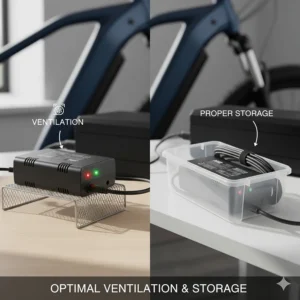
Charging in extreme temperatures: Cold garages in winter, hot sheds in summer – both terrible charging environments. Ideal charging temperature is 50-85°F (10-30°C). Seriously, bring your battery inside if it’s freezing or sweltering outside.
Using damaged chargers: Frayed cables, cracked cases, loose connections – all deal-breakers. Replace damaged chargers immediately, don’t try to “make them work” until you can afford a new one.
Ignoring connector fit: If the connector feels loose or doesn’t click securely, don’t use it. Poor connections create resistance, generate heat, and can damage both charger and battery.
Buying ultra-cheap chargers from unknown sellers: That $8 charger from a seller with no reviews? It’s cheap for a reason, and that reason is usually inadequate safety features and substandard components.
Battery Maintenance Tips for Extended Lifespan 🔋
Want to get 5+ years from your expensive battery instead of 2-3? These habits make a massive difference:
Optimal Charge Levels
Don’t always charge to 100%. If you’re not using maximum range, charging to 80-90% significantly extends battery lifespan. Those smart chargers with selectable charge levels? This is why they exist.
Similarly, avoid running your battery completely dead. Most battery management systems cut off around 20% to prevent damage, but stopping use at 30-40% is even better for longevity.
Storage Guidelines
Not riding for a while? Store your battery at around 50-60% charge in a cool, dry place. Full batteries stored for months degrade faster. Empty batteries can enter a deep discharge state that permanently damages them.
Temperature during storage matters enormously. For every 15°F above 77°F, battery degradation roughly doubles. A climate-controlled environment is ideal – not your hot garage or freezing shed.
Regular Use
Counterintuitively, batteries last longer with regular use. Sitting unused for months causes various chemical and physical degradation processes. Even just one full discharge-recharge cycle per month helps maintain battery health.
Compatibility Issues and Solutions 🔧
Sometimes the “universal” charger you bought isn’t quite as universal as advertised. Here’s how to troubleshoot common compatibility problems:
Wrong Connector Size
This is the #1 issue. Solutions include:
- Purchasing adapter plugs (available for most common conversions)
- Buying chargers with multiple connector options included
- For permanent solutions, having a qualified technician replace the charging port
Never force connectors or use duct tape to “make them fit.” That’s a fire hazard waiting to happen.
Voltage Mismatch Indicators
Your charger’s green light stays on instead of turning red? That might indicate:
- Wrong voltage charger (48V charger on 36V battery)
- Defective charger or battery
- Poor connection
Double-check your voltage specifications before doing anything else.
Brand-Specific Complications
Some manufacturers (Bosch, Shimano, Brose) use proprietary charging systems specifically to prevent off-brand chargers. While frustrating, this isn’t purely about profit – they’re controlling quality to prevent warranty claims from charging-related damage.
For these systems, you’re usually stuck buying brand-specific chargers. The good news? They’re engineered specifically for those batteries and typically include excellent safety features.
Cost Analysis: Budget vs. Premium Options 💰
Let’s talk money. Electric bike charger 36v models range from $15 to $120+, and figuring out where your dollar goes matters.
Budget Tier ($15-$30)
What you get:
- Basic charging functionality
- Some safety protections
- Usually multiple connector options
- Variable quality control
Best for: Backup chargers, casual riders, testing compatibility before investing in premium options
Red flags: Very cheap chargers (under $12) often lack adequate safety features. Spending an extra $5-10 dramatically improves reliability and safety.
Mid-Range ($40-$70)
What you get:
- Solid safety protections
- Better build quality and durability
- Some smart features
- Reliable performance
Best for: Daily riders who need dependability but don’t need cutting-edge features
This is the sweet spot for most riders. You’re getting solid protection without paying for professional-grade features you might not need.
Premium ($80-$120+)
What you get:
- Advanced smart charging features
- Selectable charge levels
- Professional build quality
- Fast charging capabilities
- Extended warranties
Best for: Serious enthusiasts, professional riders, anyone who wants maximum battery lifespan
The premium really pays off if you’re maximizing battery life or need fast turnaround times. For casual weekend riders? Probably overkill.
Total Cost of Ownership
Here’s the thing nobody talks about: a cheap charger that kills your $600 battery isn’t actually cheaper. I’ve seen riders save $40 on a charger and lose $500 on battery replacement within a year.
Consider the whole picture. Even a $100 smart charger that extends battery life from 3 years to 5 years essentially pays for itself through delayed replacement costs.
Environmental Impact and Energy Efficiency 🌱
Okay, I know this isn’t the sexiest topic, but if you care about why you’re riding an e-bike instead of driving, this matters.
Modern chargers typically operate at 85-92% efficiency. That means 8-15% of the electricity you’re paying for converts to heat instead of stored battery energy. Better chargers minimize these losses.
For a typical commuter charging a 36V 14Ah battery (504Wh capacity) daily:
- At 85% efficiency: ~593Wh from the wall
- At 92% efficiency: ~548Wh from the wall
- Annual difference: ~16.4 kWh (about $2-3 per year)
Small individually, but across millions of e-bike riders, these differences add up significantly. Quality chargers with better efficiency also generate less waste heat, reducing cooling energy in summer.
Proper Disposal
When chargers eventually fail, don’t toss them in regular trash. Electronics recycling programs accept them, and many retailers (Best Buy, for example) offer free electronics recycling. These devices contain recoverable metals and potentially hazardous components that shouldn’t end up in landfills.
Troubleshooting Common Charging Problems 🔍
Your charger isn’t cooperating? Before you panic-buy a replacement, try these troubleshooting steps:
Charger Light Won’t Turn Red
Check:
- Connector fully inserted and secured
- Wall outlet has power (plug in something else to verify)
- Battery switch turned on (some bikes have this)
- Connectors clean and corrosion-free
Solution: Clean connectors with electrical contact cleaner, ensure firm connection, verify battery isn’t already full.
Charging Takes Much Longer Than Expected
Possible causes:
- Battery capacity degradation (normal over time)
- Cold ambient temperature (slows charging)
- Partially depleted battery appearing empty
Solution: Bring battery to room temperature, verify actual capacity with multimeter if concerned about degradation.
Charger Gets Extremely Hot
This is concerning. Some warmth is normal, but if it’s too hot to touch comfortably:
- Stop using immediately
- Check for proper ventilation around charger
- Verify amperage matches battery specifications
- Consider replacing charger if problem persists
Never continue using a charger that overheats severely. This is a fire risk.
Battery Won’t Hold Charge
If newly charged battery depletes rapidly:
- Battery may have reached end of life (typically 500-1000 cycles)
- Individual cells degraded unevenly
- BMS malfunction
Solution: Professional battery diagnosis recommended. Replacement might be necessary.
Frequently Asked Questions 🙋
❓ How long does it take to charge a 36v battery charger for electric bike fully?
❓ Can I use a 48v charger on my 36v battery by mistake?
❓ What's the difference between smart chargers and regular ones?
❓ Is fast charging bad for my electric bike charger 36v system?
❓ How do I know when my charger needs replacement?
Conclusion: Making the Right Choice for Your Ride 🎯
Choosing the right 36v battery charger for electric bike really comes down to understanding your specific needs, budget, and how you use your bike. If you’re a weekend warrior who plugs in Saturday night and rides Sunday morning, a basic 2A charger handles everything beautifully. Daily commuters crushing 20+ miles might benefit enormously from a 4A fast charger and smart features.
What I’ve learned after years in this space: don’t cheap out on charging equipment. Your battery is likely the single most expensive component on your bike (after the motor), and proper charging protects that investment. The difference between a $20 basic charger and a $50 quality charger is roughly one Starbucks per week for a year – but that extra investment could extend your battery life by years.
Remember these key takeaways: verify voltage and connector compatibility, prioritize safety features, choose amperage based on your charging timeline needs, and consider smart features if you want maximum battery longevity. Whether you go with the budget-friendly Fancy Buying option, the versatile BOEEA multi-connector model, or splurge on an EBC smart charger, you’re now equipped to make an informed decision.
Keep those wheels turning, ride safe, and happy charging! 🚴⚡
🚀 Power Up Your Ride Today!
Don’t let charging confusion slow you down! Check out the highlighted products above to find your perfect match. Every charger we’ve reviewed is available right now with detailed specifications and real rider reviews. Click any product name to compare current prices and make your purchase. Your next adventure is just one charge away! 🔋✨
Recommended for You 📚
- Electric Bike Charger 48V: 7 Best Options for 2025
- Electric Bike Charger: 7 Best Options That Actually Work
- Best Electric Dirt Bike: 7 Powerful Picks for 2025
Disclaimer: This article contains affiliate links. If you purchase products through these links, we may earn a small commission at no additional cost to you.
✨Found this helpful? Share it with your friends! 💬🤗
