
In This Article
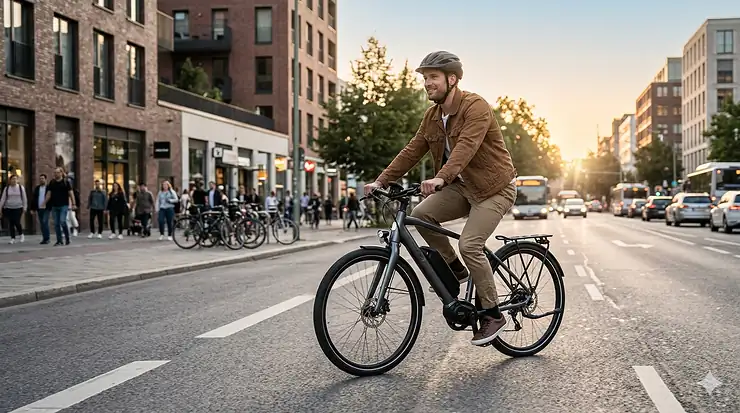
The electric bike market hit a turning point in 2026. What used to be a choice between cheap, unreliable models and premium options costing $3,000+ has transformed into something far more interesting. The $800-$1,200 range now delivers genuine quality—bikes that won’t leave you stranded halfway through your commute or fall apart after three months of use.
Here’s what changed: battery technology got cheaper without sacrificing capacity. Hydraulic brakes, once reserved for high-end models, started appearing on bikes under a grand. Chinese manufacturers refined their quality control while American brands figured out how to build better bikes without adding $2,000 to the price tag. The result? An electric bike under $1200 can now handle daily commutes, weekend trail rides, and everything in between without feeling like a compromise.
The sweet spot exists because manufacturers have learned where to invest and where to save. You’re getting motors powerful enough to tackle 15° hills without gasping for power. Batteries that actually deliver the range they promise instead of dying 10 miles into your ride. Frames that don’t flex like a wet noodle when you hit a pothole. What you’re not getting are smartphone integration, carbon fiber components, or motors that sound like sewing machines—and frankly, most riders don’t miss them.
Quick Comparison: Top 7 Electric Bikes Under $1200
| Model | Motor Power | Battery Capacity | Range | Price Range | Best For |
|---|---|---|---|---|---|
| Heybike Cityrun | 500W (1000W peak) | 720Wh | 55-60 miles | $1,100-$1,300 | Full-featured commuting |
| Lectric XP Lite 2.0 | 300W (819W peak) | 375Wh / 672Wh | 45-80 miles | $799-$999 | Budget-conscious buyers |
| Velotric Fold 1 | 750W (1050W peak) | 608Wh | 55 miles | $1,150-$1,200 | Compact storage needs |
| Ride1Up Roadster V2 | 350W (500W peak) | 252Wh | 20-35 miles | $1,095 | Lightweight urban riding |
| ANCHEER 27.5″ Mountain | 500W (750W peak) | 499Wh | 45-60 miles | $700-$850 | Trail beginners |
| FUCARE Libra | 750W (1200W peak) | 960Wh | 45-80 miles | $1,250-$1,300 | Power & suspension lovers |
| Jasion EB7 | 500W | 480Wh | 30-55 miles | $850-$950 | Folding versatility |
Looking at this comparison, the Heybike Cityrun delivers the most complete package for those who can stretch to the higher end of our budget. But if staying under $1,000 is your priority, the Lectric XP Lite 2.0 offers hydraulic brakes and impressive range that most bikes in this category simply can’t match. The Velotric Fold 1 stands out for anyone who needs a bike that folds—its 750W motor means you’re not sacrificing power for portability. Budget shoppers should note that the ANCHEER models deliver surprisingly solid performance in the $700-$850 range, though you’ll sacrifice some of the premium touches found on pricier options.
💬 Just one click — help others make better buying decisions too!😊
Top 7 Electric Bikes Under $1200: Expert Analysis
1. Heybike Cityrun — The Complete Commuter Package
The Heybike Cityrun delivers what most riders actually want from an electric bike under $1200: a balance of power, range, and practical features without weird compromises. With its 500W rear hub motor peaking at 1000W, this bike handles urban environments and moderate hills with the kind of confidence usually reserved for models costing twice as much.
The 48V 15Ah battery (720Wh total capacity) translates to 55-60 miles of real-world range in pedal-assist mode—not the inflated marketing numbers you see in product descriptions. On throttle only, expect closer to 35-40 miles, which still covers most daily commutes with power to spare. The battery sits removable and lockable, so you can charge it at your desk instead of wheeling your entire bike into your apartment.
What sets the Cityrun apart in this price range: hydraulic disc brakes front and rear. Most electric bikes under $1200 stick with mechanical disc brakes to save costs, but the hydraulic upgrade means shorter stopping distances, better modulation in wet conditions, and significantly less hand fatigue on longer rides. The hydraulic front suspension fork smooths out potholes and rough pavement without feeling mushy or adding unnecessary weight. These aren’t features you’d typically find together at this price point.
Customer feedback consistently mentions the integrated turn signals and automatic headlight—details that sound minor until you’re actually commuting in traffic. The Heybike app lets you customize pedal assist levels and lock the bike remotely, though it’s worth noting some users report the app connection can be finicky on older smartphones. The 7-speed Shimano drivetrain shifts smoothly enough for varied terrain, though die-hard cyclists might find the gear ratios better suited for cruising than aggressive climbing.
✅ Pros:
- Hydraulic brakes and suspension at this price point
- Turn signals and app control add genuine utility
- 720Wh battery capacity exceeds most competitors
❌ Cons:
- Step-through frame limits aggressive riding positions
- At 61.7 lbs, carrying upstairs requires commitment
The Cityrun works best for commuters covering 10-20 miles daily who value comfort and safety features over raw speed. At around $1,150-$1,300, it sits at the higher end of electric bikes under $1200 but justifies the cost with components that typically appear on $1,800+ models.
2. Lectric XP Lite 2.0 — Maximum Value Under $1,000
The Lectric XP Lite 2.0 shouldn’t exist at $799. A 300W nominal motor (819W peak) paired with hydraulic disc brakes and a color LCD display typically signals a price tag closer to $1,200. Yet here it sits, proving that smart engineering and direct-to-consumer sales can deliver legitimately good bikes without the usual compromises budget models make.
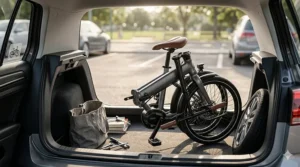
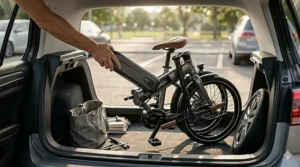
The 48V system comes in two configurations: standard (375Wh) or long-range (672Wh). The standard battery handles 35-45 miles on pedal assist, which covers most suburban commuters. The long-range version pushes that to 65-80 miles, effectively eliminating range anxiety for anyone not attempting cross-state tours. Both batteries lock into the foldable frame, which collapses to 36″ × 19″ × 33″—tight enough to fit in most car trunks or store under a desk.
The hydraulic disc brakes with 180mm rotors represent the biggest win here. Budget bikes typically cut costs on braking systems, resulting in the mushy, inconsistent stopping power that makes riders nervous in traffic. Lectric equipped the XP Lite 2.0 with components usually reserved for bikes costing $500-$700 more. The difference is immediately apparent when you squeeze the brake levers—progressive, predictable power that inspires confidence in wet conditions.
At 47-49 lbs depending on configuration, the XP Lite 2.0 weighs less than most folding electric bikes under $1200. The single-speed drivetrain keeps things simple, though riders in hilly areas might miss having lower gears for steep climbs. The Pedal Assist Wattage Regulation (PWR) system adjusts motor output based on riding conditions rather than just speed, creating a more natural riding feel than the on-off cadence sensors found on cheaper models.
Customer reviews consistently praise the assembly process—most riders report being on the road within 20-30 minutes. The color LCD display remains readable in direct sunlight, a frustratingly rare feature in this price range. The USB-A charging port on the display proves surprisingly handy for keeping phones alive during longer rides.
✅ Pros:
- Hydraulic brakes at $799 is unheard of
- True folding capability without sacrificing ride quality
- PWR system creates smoother pedal assist than competitors
❌ Cons:
- Single-speed limits versatility on varied terrain
- 20″ wheels feel less stable at higher speeds than 26″ options
The XP Lite 2.0 makes sense for apartment dwellers, RV travelers, or anyone needing a bike that folds without feeling like a toy. The standard battery version at $799 represents exceptional value; the long-range upgrade to $999 justifies itself for anyone covering more than 15 miles per trip.
3. Velotric Fold 1 — Power in a Foldable Package
Most folding electric bikes under $1200 sacrifice power for portability. The Velotric Fold 1 refuses to make that trade. Its 750W rear hub motor (peaking at 1050W) with 70Nm of torque delivers acceleration and hill-climbing capability that embarrasses many non-folding bikes costing hundreds more. This isn’t a compromise bike—it’s a legitimate daily rider that happens to fold.
The 608Wh Samsung-cell battery manages 22-78 miles depending on assist level—that wide range reflects Velotric’s unusual programming approach. In PAS 1 (minimum assist), the system limits speed to around 10 mph, sipping power and delivering that impressive 78-mile maximum. Crank it up to PAS 5, and you’re looking at 20+ mph speeds but only 22-25 miles of range. Most riders land somewhere in the middle, seeing 40-50 miles of mixed riding before needing a charge.
The frame geometry deserves specific mention. The 15.75″ standover height sits 20% lower than typical folding bikes, making it genuinely accessible for riders from 4’9″ to 6’5″. That’s not marketing hyperbole—shorter riders consistently report being able to flat-foot at stops without tiptoeing, while taller riders don’t feel cramped. The 440 lb payload capacity means you can load groceries, strap on a child seat, or carry camping gear without stressing the frame.
Hydraulic disc brakes with 180mm rotors provide stopping power proportional to that beefy motor. The 3″ puncture-resistant tires balance comfort with rolling efficiency better than the 4″ super-fat tires some competitors use. The folding mechanism completes in three simple steps, and the included retention strap prevents the bike from unfolding during transport—a small detail that prevents the frustrating wiggling most folders experience when being carried.
Customer feedback highlights the cadence sensor’s performance as notably smooth for this style of sensor. It’s not torque-sensing precision, but it avoids the jerky power delivery that makes cheap cadence sensors feel like an on-off switch. The 7-speed Shimano Tourney drivetrain shifts reliably, though gear hunters expecting buttery Ultegra performance should adjust expectations accordingly.
✅ Pros:
- 750W motor rare in folding bikes under $1200
- Exceptional standover height accommodates wide rider range
- Samsung battery cells and UL 2271 certification for safety
❌ Cons:
- 60 lbs makes carrying up stairs challenging
- Lower PAS levels intentionally speed-limited to extend range
The Fold 1 targets riders who need compact storage but refuse to compromise on power. At $1,150-$1,200, it sits near the top of our budget but delivers capability that justifies the stretch. RV owners, urban dwellers with limited storage, and anyone shuttling bikes in their car will appreciate the thoughtful design.
4. Ride1Up Roadster V2 — The Minimalist’s Choice
The Ride1Up Roadster V2 polarizes opinions precisely because it commits to a specific vision: lightweight, simple, fast. At 33 lbs, it weighs less than many non-electric bikes. The belt drive eliminates chain maintenance entirely. The minimalist frame hides the battery so effectively that most people don’t realize it’s electric until the motor kicks in.
The 350W nominal motor (500W peak) doesn’t sound impressive until you consider the bike’s light weight and efficiency-focused design. On flat terrain, the motor assists smoothly up to 24 mph—deliberately limited below the Class 3 ceiling of 28 mph to extend range. The 36V 7Ah battery (252Wh) represents half the capacity of heavier competitors, but the lightweight construction and belt drive efficiency squeeze 20-35 miles from each charge. Hills expose the system’s limits; expect to contribute meaningful pedal power on inclines steeper than 8-10 degrees.
The belt drive deserves detailed discussion. Unlike chains that require regular cleaning and lubrication, the belt runs maintenance-free for thousands of miles. It’s whisper-quiet, eliminates the possibility of getting grease on your pants, and maintains consistent tension without adjustment. The single-speed gearing uses a massive 64-tooth front sprocket paired with a 20-tooth rear cog, creating a gear ratio optimized for 15-25 mph cruising. This works brilliantly for flat commutes but limits versatility on varied terrain.
The Roadster V2 uses mechanical V-brakes—a choice that raises eyebrows in 2026 when disc brakes dominate. Ride1Up’s reasoning: properly adjusted V-brakes provide ample stopping power on a 33 lb bike, they’re dead simple to maintain, and they contribute to the overall weight savings. In practice, they work well for the Roadster’s intended use case but don’t inspire the same confidence as hydraulic discs in emergency stops.
Customer reviews split into two camps: enthusiasts who appreciate the roadster-inspired aesthetics and minimalist philosophy, and riders who expected more features at this price point. The lack of throttle, kickstand, lights, and suspension doesn’t bother the target audience—they’re buying a bike that rides like a regular bicycle with subtle electric assistance, not a feature-packed commuter.
✅ Pros:
- 33 lbs makes it genuinely portable
- Belt drive eliminates maintenance headaches
- Clean aesthetics don’t scream “electric bike”
❌ Cons:
- Small battery limits range to 20-35 miles
- Single-speed reduces versatility on hills
- No throttle or integrated lights
The Roadster V2 suits fitness-minded urban riders who want electric assistance for longer trips or headwinds but still enjoy pedaling. At $1,095, it’s a specialized tool rather than a do-everything commuter. Riders covering flat 5-15 mile commutes who value lightweight over features will find it perfect; those needing throttle, suspension, or 50+ mile range should look elsewhere.
5. ANCHEER 27.5″ Electric Mountain Bike — Budget Trail Access
The ANCHEER 27.5″ Electric Mountain Bike represents the lower end of genuinely functional electric bikes under $1200. At $700-$850, it occupies a price bracket where many bikes sacrifice reliability for affordability. ANCHEER manages to deliver a bike that works—not perfectly, not with premium components, but reliably enough for riders entering the e-bike world without spending a grand.
The 500W brushless motor (750W peak) provides adequate power for moderate trails and urban riding. It won’t blast you up 20% grades like a premium mid-drive, but it handles typical suburban terrain without wheezing. The 48V 10.4Ah battery (499Wh) delivers 45-60 miles on pedal assist depending on terrain and rider input. Real-world testing suggests the lower end of that range is more typical—expect 40-45 miles of mixed riding before hunting for a charger.
The 27.5″ wheels offer a middle ground between the nimble handling of 26″ wheels and the momentum-carrying ability of 29ers. The front suspension fork with lockout provides basic bump absorption, though experienced mountain bikers will immediately recognize its budget origins. It works fine for gravel paths and maintained trails but feels overwhelmed by technical terrain with roots and rocks. The 21-speed Shimano drivetrain shifts acceptably—not buttery smooth, but functional enough to find appropriate gears.
Build quality reflects the price. The frame is sturdy and the welds look competent, but you’ll notice rough edges that pricier bikes smooth out. The mechanical disc brakes with 160mm rotors provide adequate stopping power for the bike’s 58 lb weight, though they require more frequent adjustment than hydraulic systems. The LCD display shows basic info clearly but lacks the color screens and USB charging ports found on competitors.
Customer experiences vary widely. Many buyers express pleasant surprise at getting a functional e-bike for under $850. Others report issues with battery mounting, brake adjustment, and electrical connections that required time to sort out. The key insight: this bike rewards owners willing to learn basic maintenance and make minor adjustments. It’s not plug-and-play like Heybike or Lectric offerings.
✅ Pros:
- Genuine mountain bike under $850 with electric assist
- 27.5″ wheels and 21-speed drivetrain add versatility
- Lower price point accessible to budget-conscious buyers
❌ Cons:
- Component quality requires realistic expectations
- Customer support less responsive than major brands
- Front suspension adequate but not impressive
The ANCHEER 27.5″ works for trail beginners who want to test electric mountain biking without a major financial commitment. It’s also sensible for riders needing a second bike, teenagers learning responsible bike ownership, or anyone whose bike might get stolen in their neighborhood. At $700-$850, it fills a legitimate niche—just understand you’re getting functional, not fancy.
6. FUCARE Libra — Suspension-Focused Power
The FUCARE Libra pushes right up against our $1,200 ceiling at around $1,250-$1,300, but the spec sheet justifies the stretch. A 750W rear hub motor peaking at 1200W paired with full front and rear suspension creates a riding experience noticeably more refined than the hardtail bikes dominating this price range. If smooth matters more than saving $150, the Libra deserves consideration.
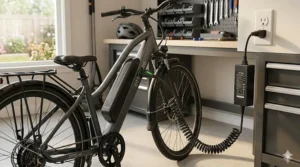
The 48V 20Ah battery (960Wh—upgraded from the original 720Wh version) represents massive capacity for this category. FUCARE claims 45-80 miles of range, and testing suggests these aren’t fantasy numbers. Throttle-only riding delivers 35-45 miles; pedal assist stretches that to 60-70 miles with moderate rider input. The aluminum frame positions the battery low and centered, helping maintain balanced handling despite the bike’s 75-80 lb weight.
Full suspension changes the riding experience fundamentally. The front suspension fork with 60mm travel absorbs potholes and curb hops that would rattle your teeth on a rigid bike. The rear coilover suspension adds another layer of compliance, creating a surprisingly plush ride quality. This isn’t mountain bike suspension meant for dropping off ledges—it’s tuned for urban obstacles, gravel paths, and maintaining comfort over longer distances. The dual suspension does add weight and slight pedaling inefficiency, but most riders find the comfort trade-off worthwhile.
The 20″ × 4″ fat tires work synergistically with the suspension, providing a cushioned ride and impressive traction on varied surfaces. The tires grip surprisingly well in light mud and gravel, though their real strength lies in soaking up small impacts and creating a stable platform for two-up riding. The included rear rack supports 120 lbs, making passenger carrying or serious cargo hauling realistic.
Hydraulic disc brakes manage the Libra’s substantial weight and power with confidence-inspiring control. The 7-speed Shimano drivetrain shifts cleanly enough to find appropriate gears for the motor’s power band. The color LCD display shows all relevant info clearly, including real-time power consumption—useful for maximizing range.
Customer feedback consistently mentions how comfortable the bike feels on rough pavement and how well it handles carrying passengers. Some riders wish for front hydraulic brakes instead of just rear, and the bike’s weight makes storage challenging without a ramp or two people. The step-through frame helps with mounting but reduces frame stiffness slightly compared to traditional designs.
✅ Pros:
- Full suspension rare under $1,300
- 960Wh battery capacity among highest in category
- 120 lb rear rack capacity enables serious hauling
❌ Cons:
- 75-80 lb weight challenges solo lifting
- Full suspension adds maintenance complexity
- Price pushes past strict $1,200 budget
The FUCARE Libra targets riders prioritizing comfort over every other consideration. Two-up riders, those covering rough urban routes, or anyone whose joints appreciate cushioning will find the extra $100-150 over strict budget options worthwhile. Solo riders on smooth pavement might not benefit enough from the suspension to justify the weight penalty.
7. Jasion EB7 — Practical Folding Workhorse
The Jasion EB7 occupies an interesting middle ground in the folding electric bike under $1200 segment. At $850-$950, it costs more than the Lectric XP Lite 2.0 but less than the Velotric Fold 1, delivering a component mix that justifies the price for riders needing specific features. The 500W motor provides adequate power without the premium pricing of 750W options.
The 48V 10Ah battery (480Wh) manages 30-55 miles depending on assist level and terrain. Real-world testing suggests 35-45 miles is typical for mixed riding—enough for daily commutes without range anxiety but noticeably less than the Lectric’s long-range option. The battery sits removable behind a locked cover, enabling off-bike charging without the flexibility of Velotric’s frame-mounted approach.
The 20″ × 3″ fat tires strike a middle ground between the Lectric’s slimmer 2.4″ tires and Velotric’s full 3″ width. They provide decent cushioning on rough pavement while maintaining better rolling efficiency than super-fat 4″ tires. The puncture-resistant construction uses a liquid sealant layer—not foolproof, but significantly better than the bare tubes many budget bikes use. The front suspension fork with 60mm travel adds another layer of comfort without the weight penalty of full suspension.
The mechanical disc brakes with 160mm rotors work adequately for the bike’s 60 lb weight, though riders accustomed to hydraulic systems will notice the firmer lever feel and slightly longer stopping distances. The 7-speed Shimano drivetrain provides more versatility than single-speed competitors, particularly valuable given the 500W motor’s more limited power compared to 750W options.
Practical features distinguish the EB7: integrated front and rear lights that run off the main battery, a rack rated for 50 lbs, full fenders, and a color LCD display with USB charging. The throttle works in conjunction with pedal assist, providing flexibility in how you power the bike. The folding mechanism completes in under 30 seconds, and the pedals fold flat to reduce the folded footprint.
Customer reviews mention the bike’s reliability and straightforward operation. Assembly takes 30-45 minutes, and while not as simple as the Lectric’s near-complete factory setup, it’s manageable for most buyers. Some riders report the electronic horn sounds cheap, and the seat could benefit from more padding, but these represent minor complaints rather than fundamental flaws.
✅ Pros:
- Integrated lights and rack included at base price
- 7-speed drivetrain adds hill-climbing flexibility
- Throttle + pedal assist provides power options
❌ Cons:
- Mechanical brakes in era of hydraulic competition
- Battery capacity less than premium folders
- 60 lbs challenges solo lifting
The Jasion EB7 suits commuters who need a folding bike but prioritize practical features over maximum power or weight savings. It’s sensible for multi-modal commuters (bike + bus/train), anyone with limited parking space, or riders who occasionally need to transport their bike in a vehicle. At $850-$950, it delivers complete functionality without premium pricing.
How to Choose Your Perfect Electric Bike Under $1200
Navigating the electric bike under $1200 market means understanding which specifications actually matter for your riding style and which features sound impressive but rarely get used. Start with motor power, but don’t fixate on peak wattage numbers—a 500W motor on a 45 lb bike often feels punchier than a 750W motor on a 75 lb beast. Pay attention to torque ratings when manufacturers list them; 40-50Nm handles most urban riding, while 60-80Nm becomes valuable for steep hills or carrying cargo.
Battery capacity directly determines your freedom to ride without constantly hunting for outlets. Anything under 400Wh limits you to 20-30 mile range in mixed conditions. The 500-700Wh sweet spot covers most commuters comfortably, with 35-50 miles of realistic range. Above 700Wh adds security for long rides or hilly terrain but increases weight and cost. Remember that manufacturer range claims assume ideal conditions—50% pedaling effort, flat terrain, 165 lb rider. Knock 30-40% off advertised numbers for real-world expectations.
Frame style matters more than most buyers realize. Step-through frames provide easy mounting and dismounting, critical if you’re wearing work clothes or carrying items. They sacrifice some structural stiffness but manufacturers have largely solved this with triangulated tube designs. Traditional diamond frames offer better power transfer and climbing efficiency but require more flexibility to mount. Test both styles if possible—the right choice depends on your clothing, flexibility, and where you’re riding.
Brake type represents the most significant safety consideration. Mechanical disc brakes work adequately in dry conditions but require frequent adjustment and provide less stopping power in rain. Hydraulic disc brakes deliver superior performance in all conditions, require minimal maintenance, and reduce hand fatigue on longer rides. The hydraulic upgrade typically adds $150-200 to a bike’s price, but it’s money well spent for anyone riding in traffic or varied weather. Rim brakes, increasingly rare on electric bikes, barely merit consideration—they wear out faster and provide marginal wet-weather performance.
Tire size influences ride quality more than most specifications suggest. 20″ wheels accelerate quickly and fold compactly but feel less stable at higher speeds and roll over obstacles with more impact. 26″ represents the traditional compromise—nimble enough for urban use, stable enough for bike paths. 27.5″ and 29″ wheels carry momentum better and smooth out rough terrain but add weight and reduce storage options. Tire width matters equally: 2.0-2.5″ balances efficiency with comfort, 3.0-3.5″ provides cushioning at the cost of rolling resistance, 4.0″+ prioritizes maximum grip and comfort but feels sluggish on pavement.
Common Mistakes When Buying Electric Bikes Under $1200
Chasing the absolute cheapest option creates predictable problems. Electric bikes legitimately capable of daily use bottom out around $700-750. Below that threshold, manufacturers make compromises that matter: underpowered motors that can’t maintain 15 mph on slight inclines, batteries using discount cells that lose capacity within 100 charge cycles, brakes that require constant adjustment, and frames that flex under pedaling loads. The $200-300 saved disappears quickly when you’re replacing a battery after eight months or dealing with electrical gremlins that strand you mid-commute.
Ignoring weight until delivery day catches buyers by surprise. A 75 lb bike sounds manageable in product descriptions but becomes brutally heavy when you’re carrying it up apartment stairs or loading it onto a car rack. Consider how you’ll store and transport the bike before purchase. If stairs are involved, stay under 60 lbs. If you have ground-floor storage and rarely move the bike, weight matters less than capability. Folding bikes fold but still weigh 50-65 lbs—they’re compact, not light.
Overestimating range leads to disappointment. Take manufacturer claims, divide by 1.5, and that’s your realistic daily range. A bike claiming 60 miles delivers 40 miles in mixed conditions with moderate pedaling. Throttle-only riding cuts that range in half. If your commute is 15 miles each way, don’t buy a bike claiming 40-50 miles of range—you need 60+ mile ratings to avoid range anxiety. Battery capacity degrades 10-20% over the first 200-300 cycles, so build in headroom.
Neglecting after-sale support costs buyers eventually. Direct-to-consumer brands like Lectric and Ride1Up offer strong customer service despite lacking local dealers. Marketplace sellers on Amazon often ghost buyers after purchase. Check how the company handles warranty claims before buying. Search “[brand name] warranty experience” and read actual customer accounts. A bike $100 cheaper means nothing if you can’t get replacement parts when something breaks.
Focusing on speed instead of torque creates hill-climbing disasters. A bike that reaches 28 mph on flat ground but only produces 30Nm of torque becomes a pedaling slog on 10% grades. Riders in hilly areas should prioritize torque ratings (40Nm minimum, 60Nm+ for serious hills) over top speed. You’ll spend more time appreciating strong hill assistance than you’ll spend riding at maximum velocity.
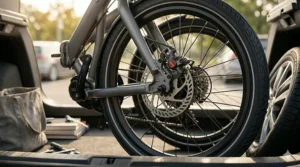
Electric Bike Under $1200 vs Premium Models: What You’re Actually Trading
The gap between electric bikes under $1200 and $2,500+ premium models has narrowed significantly, but specific differences remain. Premium bikes use mid-drive motors that provide better weight distribution and utilize your bike’s gearing for improved hill climbing. Hub motors in budget bikes work fine for flat to moderate terrain but can’t match mid-drive efficiency on steep grades. For most urban and suburban riders, the difference rarely matters. Mountain bikers tackling technical trails will notice immediately.
Component quality separates price tiers noticeably. Budget bikes use entry-level Shimano drivetrains (Tourney, Altus) that shift adequately but not precisely. Premium bikes run Deore or higher, with smoother, more predictable shifts. Brake pad materials differ—premium bikes use compounds that perform better in wet conditions and last longer. Tire quality affects puncture resistance and tread life. These incremental differences accumulate over thousands of miles, but they don’t prevent budget bikes from functioning reliably.
Battery cells reveal manufacturing philosophy differences. Budget bikes increasingly use reputable cells from Samsung or LG but pair them with less sophisticated battery management systems. Premium bikes integrate smart BMS that balances cells more precisely, potentially extending battery life by 200-300 cycles. Both approaches work; premium systems work longer. For riders planning to keep a bike 3-5 years, the difference matters less than for 7-10 year ownership plans.
Integration represents premium bikes’ most visible advantage. Motor, battery, display, and frame design work as a cohesive system rather than assembled components. Wiring hides inside tubes instead of zip-tied to frames. Battery shape custom-fits the downtube rather than using external packs. These refinements improve aesthetics and create cleaner lines but don’t fundamentally change ride quality. Whether that matters depends on how much you value polish over function.
The real question isn’t whether premium bikes offer advantages—they absolutely do—but whether those advantages justify doubling your budget. For riders covering 5-15 miles daily on mostly flat terrain, the answer is usually no. An electric bike under $1200 delivers the same fundamental experience at half the cost. Riders tackling 30+ mile trips, serious hills, or rough trails will appreciate premium features enough to justify the investment. Most buyers land somewhere in the middle, where budget bikes excel.
Real-World Performance: What to Expect from Mid-Range Electric Bikes
Speed claims deserve immediate skepticism. A bike rated for 28 mph typically achieves that only under ideal conditions: full charge, flat terrain, rider pedaling actively, no headwind. Real-world cruising speed for electric bikes under $1200 settles around 18-22 mph on mixed terrain. That’s legitimately fast enough to keep up with urban traffic, though you’ll feel wind resistance above 20 mph. Throttle-only operation usually tops out at 18-20 mph regardless of the bike’s maximum rated speed.
Range varies so wildly based on conditions that manufacturer claims become nearly meaningless. The same bike can deliver 30 miles in hilly terrain with heavy throttle use or 60 miles on flat ground with aggressive pedaling. Weight matters tremendously—a 200 lb rider carrying 20 lbs of gear uses 30-40% more power than a 150 lb rider with no cargo. Headwinds punish range worse than hills. In practice, plan for 60% of advertised range for reliable commuting, treating extra capacity as welcome security rather than expected performance.
Hill climbing ability separates motors more clearly than flat-ground speed. A 500W motor handles 8-10% grades without strain, starts laboring on 12-15% climbs, and barely manages 18-20% hills even with maximum pedaling input. 750W motors confidently tackle 15% grades and push through 20%+ slopes with rider assistance. These percentages translate roughly to: 8% = steep highway exit ramp, 12% = serious residential hill, 18% = leg-burning San Francisco-style grade. Match motor power to your actual terrain.
Battery life expectations need realistic framing. Quality cells last 500-800 full discharge cycles before dropping to 80% capacity. That translates to 15,000-25,000 miles of riding, or 3-5 years for most commuters. Partial charging extends cycle life—keeping batteries between 20-80% charge versus always charging to 100% can add years of life. After 500-800 cycles, the battery doesn’t die; it just holds less charge. A bike with 50 miles of range drops to 40 miles, then 35 miles as the battery ages. Budget $400-600 for eventual replacement.
Comfort varies wildly across models despite similar specifications on paper. Fat tires absorb impacts better than skinny tires but feel sluggish on pavement. Suspension adds plushness but introduces slight pedaling inefficiency. Upright riding positions reduce back strain but catch more wind. Aggressive positions feel faster but stress wrists and shoulders. Test ride if possible, because the most powerful bike under $1200 becomes useless if you hate riding it. Comfort compounds across miles—small irritations on 5-mile trips become genuine problems on 20-mile journeys.
Maintenance and Long-Term Ownership Costs
Electric bikes under $1200 don’t eliminate maintenance; they shift it. Chain-drive models require cleaning and lubrication every 100-200 miles to prevent rust and extend component life. Budget 15-20 minutes monthly for basic cleaning: wipe down the chain, spray on fresh lube, wipe excess. Neglecting this turns a $30 chain replacement into a $150 drivetrain overhaul when worn chains eat chainrings and cassettes. Belt-drive bikes eliminate chain maintenance entirely but aren’t serviceable—when a belt fails, you replace the entire unit.
Brake maintenance frequency depends on type and usage. Mechanical disc brakes need pad inspection every 500 miles and cable adjustment whenever lever feel changes. Learning this takes 10 minutes on YouTube and saves $30 per shop visit. Hydraulic brakes require bleeding every 1-2 years to maintain crisp feel, a job most riders outsource for $50-75. Pads wear at roughly the same rate regardless of system—expect replacement every 1,000-2,000 miles depending on terrain and riding style.
Tire life varies dramatically based on quality and conditions. Budget tires last 1,000-2,000 miles before tread wears smooth or sidewalls crack. Premium tires stretch to 3,000-4,000 miles. Puncture protection matters more than most riders expect—one flat costs $15-20 to fix professionally, or 30 minutes DIY if you’re comfortable with tire levers and patches. After the second or third flat, you’ll wish you’d bought the tires with better protection initially.
Battery management represents the single most important long-term cost consideration. Proper care extends life significantly: avoid depleting below 20% regularly, don’t store at full charge for weeks, keep batteries at room temperature when possible. Following these guidelines helps batteries reach 800+ cycles. Ignoring them kills batteries in 300-400 cycles, turning a 3-year battery into an 18-month consumable. Replacement batteries cost $400-600 for quality options, $200-300 for budget alternatives that may disappoint.
Annual tune-ups from a bike shop cost $75-150 depending on location and services needed. This catches problems early—worn brake pads, loose spokes, drivetrain wear, electrical connections—before they become expensive repairs. DIY maintenance reduces costs substantially, but you need basic tools (allen keys, chain tool, tire levers) and willingness to learn. Most riders land somewhere in the middle: handling simple tasks themselves, outsourcing complex work to professionals.
Safety Considerations and Legal Regulations
Electric bike classifications determine where you can legally ride and what equipment you need. Class 1 bikes provide pedal assist up to 20 mph with no throttle—they’re allowed on most bike paths, trails, and roads where traditional bikes ride. Class 2 bikes add throttle capability but still cap at 20 mph; some jurisdictions restrict these from certain bike paths. Class 3 bikes offer pedal assist to 28 mph, face more restrictions on trails and paths, and require helmets for riders under 18 in many states. Most electric bikes under $1200 ship as Class 2 but can be reprogrammed to Class 3 through display settings—know your local laws before adjusting.
Federal regulations under the Consumer Product Safety Commission establish baseline standards for all electric bikes under $1200. Motors must not exceed 750W output, bikes must have functional pedals, and braking systems must meet minimum performance standards. The CPSC oversees safety recalls and manufacturer compliance, so checking their database before purchasing reveals any known issues with specific models or brands.
State and local laws add another layer of complexity. Some cities allow electric bikes on sidewalks, others ban them entirely. Certain states require registration or insurance for Class 3 bikes. Age restrictions vary—some states prohibit riders under 16 from operating any e-bike, others only restrict Class 3. ]Wikipedia’s electric bicycle laws page provides state-by-state breakdowns, but always verify with local authorities since regulations change frequently.
Helmet use, while not universally mandated for adults, dramatically reduces injury severity in accidents. Budget $40-80 for a quality helmet meeting CPSC standards—cheaper options often fail impact tests. Replace helmets after any crash or every 3-5 years as foam degrades over time. Integrated lights become critically important on electric bikes given their higher speeds; cars misjudge your approach speed without adequate visibility. Most electric bikes under $1200 include basic lights, but adding a 500+ lumen front light and bright rear flasher costs $50-70 and significantly improves safety.
Battery safety deserves specific attention after several high-profile fires involving cheap e-bikes. Quality batteries include UL 2271 certification demonstrating third-party safety testing. Never charge batteries unattended overnight, don’t use damaged or swollen batteries, and follow manufacturer charging instructions precisely. The batteries in reputable electric bikes under $1200 rarely cause problems, but cheap marketplace bikes using uncertified cells represent genuine fire risks. When researching bikes, verify the battery includes proper certification—it’s worth eliminating options that don’t.
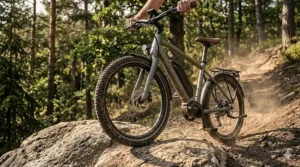
FAQ: Electric Bikes Under $1200
❓ Are electric bikes under $1200 reliable enough for daily commuting?
❓ How long do batteries last on mid-range electric bikes?
❓ Can electric bikes under $1200 handle steep hills?
❓ What's the real-world range for electric bikes in this price range?
❓ Do I need a license or registration to ride these electric bikes?
Conclusion: Finding Your Sweet Spot
The electric bike under $1200 market in 2026 offers legitimate options where compromise feels minimal rather than constant. You’re no longer choosing between cheap junk and premium bikes—you’re selecting from capable models that differ primarily in feature sets and specialized strengths. The Heybike Cityrun delivers the most complete package for commuters willing to stretch toward the $1,200 ceiling. The Lectric XP Lite 2.0 proves that quality doesn’t require premium pricing, offering hydraulic brakes and solid range for under $800. The Velotric Fold 1 solves the folding bike power problem convincingly.
Your perfect bike under $1200 depends on matching specifications to actual usage rather than chasing maximum specs across every category. Commuters covering 10-20 miles daily on mostly flat terrain don’t need 750W motors or full suspension—a well-equipped 500W bike like the Heybike Cityrun provides everything necessary. RV travelers and apartment dwellers benefit enormously from folding capability, making the Lectric or Velotric worth their respective price points. Riders in hilly areas should prioritize motor power and torque over every other consideration, directing them toward the FUCARE Libra or Velotric Fold 1.
The technology reached a maturity point where even budget-conscious shoppers can buy with confidence. Batteries deliver advertised capacity without deceptive marketing. Motors provide consistent power across reasonable operating conditions. Brakes stop reliably in varied weather. The experience of riding an $800 electric bike in 2026 feels surprisingly close to a $2,000 bike from three years ago. That democratization matters because it makes electric transportation accessible to riders who couldn’t previously justify the expense.
Start by honestly assessing your riding: flat or hilly, short trips or long commutes, storage constraints or plenty of space. Match those requirements to specifications that actually matter for your use case. Don’t let impressive-sounding features distract from fundamental fit. A 1200W peak motor sounds exciting but adds little value for flat-terrain commuters. A 960Wh battery provides security for range-anxious riders but adds unnecessary weight for short-trip specialists. The right electric bike under $1200 gives you exactly what you need without expensive extras you’ll never use.
Recommended for You
- 7 Best Electric Bikes Under $900 2026
- 7 Best Electric Bike Under $700 in 2026
- 7 Best Electric Bike Under $600 in 2026: Budget Winners
Disclaimer: This article contains affiliate links. As an Amazon Associate, I earn from qualifying purchases. If you purchase products through these links, we may earn a small commission at no additional cost to you.
✨ Found this helpful? Share it with your friends! 💬🤗
