In This Article
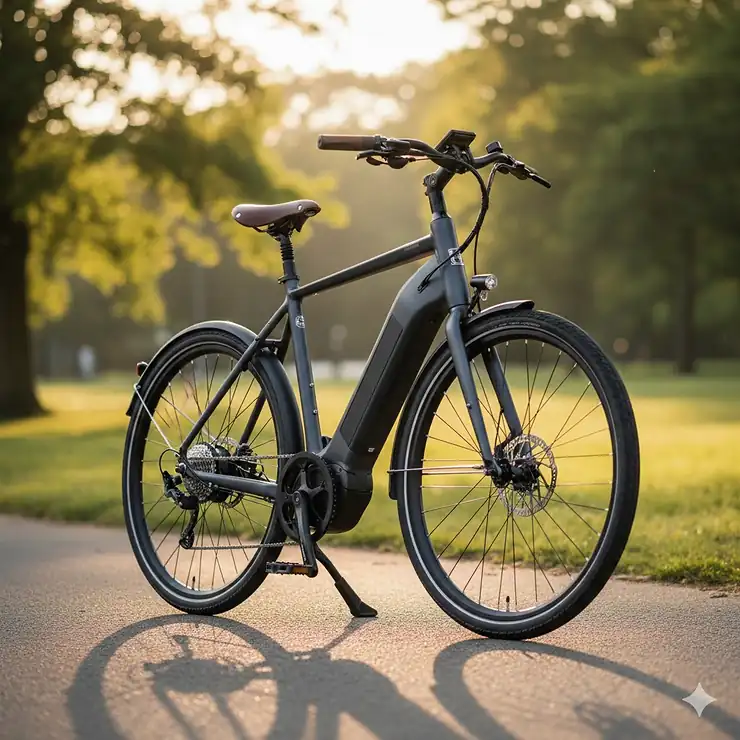
Shopping for an electric bike under $2000 doesn’t mean compromising on quality anymore. The e-bike market has exploded in recent years, and manufacturers are now delivering premium features at accessible price points. Whether you’re looking to ditch your car for daily commutes, explore new trails on weekends, or simply enjoy a more effortless ride around town, there’s a quality electric bike under 2000 that fits your needs.
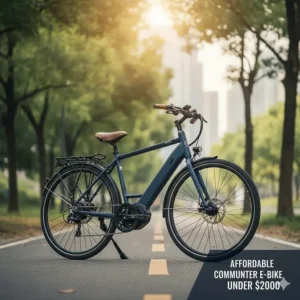
Gone are the days when budget e-bikes meant unreliable motors and poor build quality. Current models in the $1,500 to $3,500 range from brands like Aventon Level 3 and Aventon Aventure deliver excellent value and performance. These bikes now feature powerful motors, long-lasting batteries, hydraulic disc brakes, and sophisticated electronics that were once reserved for premium models.
What makes finding a top electric bikes 2000 budget so exciting right now is the sheer variety available. From compact folding bikes perfect for apartment living and RV travel, to robust fat-tire models that can tackle any terrain, to sleek commuter bikes that make city riding a breeze—there’s truly something for everyone. I’ve spent weeks researching, comparing specs, and analyzing real-world user feedback to bring you this comprehensive guide to the best options available in 2025.
Quick Comparison Table
| E-Bike Model | Motor Power | Battery | Range | Top Speed | Price | Best For |
|---|---|---|---|---|---|---|
| Ride1UP 700 Series | 750W (peak 800W+) | 720Wh | 30-50 mi | 28 mph | $1,449-$1,695 | Speed & value |
| Lectric XP 4 | 500W/750W | 500-840Wh | 50-85 mi | 28 mph | $999-$1,299 | Foldable versatility |
| Aventon Level 3 | 500W (peak 864W) | 733Wh | 70 mi | 28 mph | $1,899 | Urban commuting |
| Aventon Aventure 3 | 750W (peak 1188W) | 733Wh | 65 mi | 20 mph | $1,999 | Off-road adventure |
| Heybike Mars 2.0 | 750W (peak 1200W) | 600Wh | 45 mi | 28 mph | $999-$1,499 | Folding power |
| Heybike Ranger S | 750W/1000W | 692Wh | 55 mi | 28 mph | $1,099-$1,499 | All-terrain comfort |
| Lectric XP 3.0 | 500W (peak 1000W) | 500-672Wh | 45-65 mi | 28 mph | $999 | Budget folding |
💬 Just one click – help others make better buying decisions too! 😊
Top 7 Electric Bike Under $2000: Expert Analysis
1. Ride1UP 700 Series – Best Overall Value
The Ride1UP 700 Series consistently ranks as one of the best bang-for-your-buck options in the electric bike under $2000 category. This Class 3 e-bike features a 750W rear hub motor that easily reaches speeds up to 28 mph using pedal assist and 20 mph with the throttle.
Key Specifications:
- Motor: 750W (800W+ peak) Bafang rear hub
- Battery: 720Wh Samsung cells
- Range: 30-50 miles
- Top Speed: 28 mph (Class 3)
- Weight: 62 lbs
- Brakes: Tektro hydraulic disc (180mm rotors)
- Gears: Shimano Acera 8-speed
What Makes It Special: The integrated 720Wh battery provides class-leading distance range, and handling is smooth and stable with high volume, quick-rolling tires and a 100mm suspension fork. The bike comes fully loaded with fenders, integrated lights, and a rear rack—everything you need for commuting right out of the box.
Customer Feedback: Real-world testers praise the 700 Series for exceeding expectations. One 230 lbs rider reported the 750W brushless, geared Bafang hub motor provides the muscle necessary to reach 28 mph on pedal assist, which is no small feat.
Pros:
✅ Exceptional value with name-brand components
✅ Class 3 speed capability (28 mph)
✅ Impressive 720Wh battery range
Cons:
❌ Requires more assembly than average
❌ Heavier than some competitors at 62 lbs
Price Range: $1,449-$1,695
2. Lectric XP 4 – Best Folding E-Bike
The Lectric XP 4 represents the latest evolution of America’s best-selling folding electric bike. Now with an in-house-designed torque sensor for smoother power distribution and a better riding experience, the XP4 includes a fully redesigned frame, new colors, a full-color TFT display, and new 602 hydraulic brakes.
Key Specifications:
- Motor: 500W or 750W options
- Battery: 500Wh or 840Wh (long-range)
- Range: Up to 50 miles (standard) or 85 miles (long-range)
- Top Speed: 28 mph
- Weight: 62-69 lbs
- Payload: 330 lbs
What Makes It Special: The XP4 folds down quickly for easy storage in trunks, closets, or RVs. Available in both 500w and 750w options, the XP4 packs serious power into a travel-ready design. The upgraded torque sensor is a game-changer for providing natural, responsive pedal assistance.
Customer Feedback: Users love the versatility. One reviewer stated the Lectric XP4 is the best ebike for them after reviewing many ebikes, noting ebikes have tendency to be really heavy and this ebike just okay weight-wise.
Pros:
✅ Compact folding design
✅ Long-range battery option (85 miles)
✅ Torque sensor for smooth power
Cons:
❌ Heavy when folded
❌ Takes time to assemble initially
Price Range: $999-$1,299
3. Aventon Level 3 – Best Urban Commuter
The Aventon Level 3 is purpose-built for daily commuters who want speed, comfort, and connectivity. Aventon’s ACU technology gives the Level 3 solid features, including built-in GPS tracking and geofencing, remote locking and motor shut-off, an integrated rear-wheel lock, a display password, and unusual movement alerts with an alarm.
Key Specifications:
- Motor: 500W (peak 864W) rear hub
- Battery: 720Wh LG cells
- Range: Up to 70 miles
- Top Speed: 28 mph (Class 3)
- Brakes: Tektro hydraulic disc
- Gears: Shimano Altus 8-speed
What Makes It Special: The Level 3 comes fully equipped with fenders, integrated lights with turn signals, and a MIK-compatible rear rack. The switchable torque and cadence sensors plus Ride Tune customization make it one of the most customizable bikes in this price range.
Customer Feedback: Reviewers get 42 to 44 miles on paved bike trails in range tests using max assist, and the Tektro brakes offer solid stopping power. Experts note the gearing range allows comfortable pedaling at Class 3 speeds.
Pros:
✅ Smart connectivity features
✅ Excellent range (70 miles)
✅ Comes with turn signals
Cons:
❌ 4G connectivity requires subscription after first year
❌ Charge port placement awkward to reach
Price Range: $1,699-$1,899
4. Aventon Aventure 3 – Best for Off-Road Adventures
For riders seeking rugged performance and all-terrain capability, the Aventon Aventure 3 delivers. Featuring 4″ fat tires, a suspension fork, and an added suspension seatpost, the Aventure is built to conquer any terrain with ease.
Key Specifications:
- Motor: 750W (peak 1188W)
- Battery: 733Wh
- Range: 65 miles
- Top Speed: 20 mph
- Tires: 26″ x 4″ fat tires
- Torque: 80Nm
What Makes It Special: The biggest upgrade to the Aventure.3 is the inclusion of a torque sensor, replacing the older cadence-only system, resulting in much smoother acceleration and better battery efficiency, especially when climbing or navigating off-road trails.
Customer Feedback: Users rave about the power. One owner reported they weigh over 230 lbs but the motor is still very responsive and powerful, negotiating steep hills around 20mph and reaching 28mph easily on flat terrain.
Pros:
✅ Powerful motor for steep climbs
✅ Fat tires handle any terrain
✅ Cruise control feature
Cons:
❌ Heavier at 76 lbs
❌ Slower top speed (20 mph standard)
Price Range: $1,799-$1,999
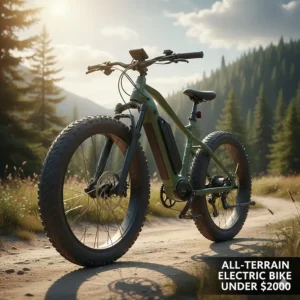
5. Heybike Mars 2.0 – Best Folding Fat Tire
The Heybike Mars 2.0 offers an impressive combination of power and portability. With a more powerful motor, a sturdier cargo rack, and Class 3 speeds up to 28 miles per hour, the Mars 2.0 feels like a true upgrade.
Key Specifications:
- Motor: 750W (peak 1200W)
- Battery: 600Wh
- Range: 45 miles
- Top Speed: 28 mph
- Tires: 20″ x 4″ fat tires
- Payload: 330 lbs
What Makes It Special: The Mars 2.0 combines full suspension (65mm front fork, 45mm seatpost) with a folding frame, a rare combination. Test results show that the Mars 2.0 can confidently power over intimidating, steep hills quickly and effectively, giving riders the option of pedaling or simply throttling to the top.
Customer Feedback: Owners consistently mention the exceptional hill-climbing ability and comfortable ride quality. The rear rack’s pegboard-style design offers unique mounting options for accessories.
Pros:
✅ Powerful 1200W peak output
✅ Full suspension + folding design
✅ Excellent hill climbing
Cons:
❌ Heavy at 75 lbs
❌ Mechanical brakes (hydraulic on pricier models)
Price Range: $999-$1,499
6. Heybike Ranger S – Best Step-Through Design
The Heybike Ranger S takes everything great about the Mars 2.0 and adds thoughtful upgrades. Available in 750W and 1000W versions, the Ranger S offers exceptional versatility.
Key Specifications:
- Motor: 750W or 1000W (peak 1400W)
- Battery: 692Wh
- Range: 55 miles
- Top Speed: 28 mph
- Frame: Step-through
- Brakes: Hydraulic disc
What Makes It Special: The 1000W Ranger S is equipped with a torque sensor, which measures the amount of force you apply to the pedals, delivering power in proportion to your pedaling effort for a more natural and responsive riding experience. The headlight auto-activates in low light, and the taillight features integrated turn signals.
Customer Feedback: A 71-year-old first-time e-bike owner reported they can control how fast they go, reaching 29 mph, and highly recommends the 1000W version for off-roading in hills.
Pros:
✅ Easy step-through mounting
✅ Torque sensor (1000W version)
✅ Auto-on headlight and turn signals
Cons:
❌ Torque sensor only on 1000W model
❌ Slightly less range than competitors
Price Range: $1,099-$1,499
7. Lectric XP 3.0 – Best Budget Option
The Lectric XP 3.0 proves you don’t need to spend $2000 to get a quality electric bike. The motor goes from 500W with a peak of 1000W and producing 55Nm of torque, which improves acceleration and hill performance.
Key Specifications:
- Motor: 500W (peak 1000W)
- Battery: 500Wh or 672Wh (long-range)
- Range: 45-65 miles
- Top Speed: 28 mph (unlockable)
- Weight: 64 lbs
- Brakes: Hydraulic disc
What Makes It Special: Lectric’s new PWR programming focuses on adding a steady stream of wattage at each PAS level versus previous models that focused on helping you hit a preset speed limit, making it feel smoother and more responsive.
Customer Feedback: Reviewers say the XP 3.0 is a comfortable utility e-bike that impressed them with its ride quality and overall value, living up to the hype.
Pros:
✅ Best value under $1000
✅ Upgraded hydraulic brakes
✅ Folding convenience
Cons:
❌ Cadence sensor only
❌ Smaller 500Wh battery (standard)
Price Range: $999
🎯 Don’t Miss These Exclusive Deals!
🔍 Take your electric bike experience to the next level with these carefully selected products. Click on any highlighted item to check current pricing and availability. These bikes will help you create authentic freedom and adventures your family will love!
Understanding Electric Bike Classes and Regulations
Before investing in an electric bike under $2000, it’s crucial to understand e-bike classifications in the United States. E-bikes are classified into three main categories: Class 1 (pedal-assist only, up to 20 mph), Class 2 (throttle-assist, up to 20 mph), and Class 3 (pedal-assist up to 28 mph).
Class 1: Pedal-assist only with motor cutting off at 20 mph. Allowed on most bike paths and trails.
Class 2: Includes throttle capability up to 20 mph. Some trails restrict Class 2 access.
Class 3: Pedal-assist up to 28 mph. Generally restricted from bike paths but perfect for road commuting.
Most quality electric bike under 2000 models offer multi-class capability, allowing you to switch between modes depending on where you’re riding. This flexibility ensures you stay legal while maximizing performance when regulations allow.
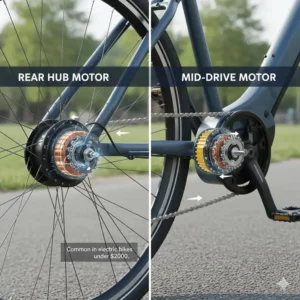
Motor Types: Hub Drive vs Mid-Drive
Understanding motor placement significantly impacts your riding experience when choosing a top electric bikes 2000 budget option.
Hub-Drive Motors
Hub-Driven Motors offer maximum assistance for less pedal effort, suiting senior riders or those with a disability, as well as anyone seeking physical rehabilitation for an injury. They’re also great for less-experienced or less-frequent cyclists.
Hub motors are simpler, require less maintenance, and are more affordable—which is why most bikes in this price range feature them. They provide consistent power delivery and are less affected by gear changes.
Mid-Drive Motors
Mid-Drive Motors suit riders who want a boost but who still want to stay fit, and they are the preferred option for experienced cyclists. They offer better weight distribution and more efficient power transfer.
Mid-drive motors typically start appearing at the $2000+ price point, though a few models like certain configurations push into this range. They excel at hill climbing and provide a more natural riding feel.
Battery Capacity and Real-World Range
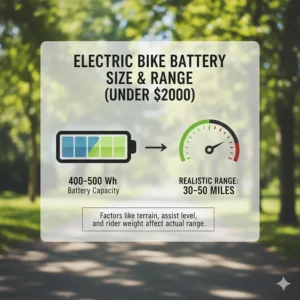
Battery capacity directly impacts how far you can ride on a single charge. In the electric bike under $2000 category, you’ll find batteries ranging from 500Wh to 750Wh+.
Understanding Watt-Hours (Wh)
A battery’s capacity measured in watt-hours tells you how much energy it stores. Larger capacity equals longer range, but real-world mileage varies based on several factors:
- Rider weight: Heavier riders consume more battery
- Terrain: Hills drain batteries faster than flat roads
- Assist level: Higher PAS levels reduce range
- Weather: Cold temperatures decrease battery performance
- Tire pressure: Properly inflated tires improve efficiency
Range Expectations
Most quality electric bike under 2000 models claim ranges between 30-70 miles. In reality, expect:
- Throttle-only: 20-30 miles
- High assist (PAS 4-5): 25-40 miles
- Moderate assist (PAS 2-3): 40-60 miles
- Eco mode (PAS 1): 50-70+ miles
Essential Features for Your Electric Bike Under $2000
Braking Systems
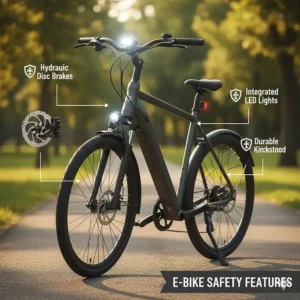
Hydraulic disc brakes have become standard on top electric bikes 2000 budget models. The 180mm rotor Tektro hydraulic disc brakes give powerful stopping performance, and many ebikes in budget ranges only have mechanical brakes and 160mm rotors. Hydraulic brakes require less hand pressure and provide more consistent stopping power—essential when riding at 28 mph.
Drivetrain and Gearing
Look for name-brand components from Shimano or SRAM. An 7-8 speed drivetrain offers sufficient range for most riding, though 9+ speeds provide finer control. The 8-speed Shimano Acera drivetrain gives riders a wider range of gears than commonly seen in this price range.
Suspension
Front suspension forks (80-100mm travel) smooth out rough roads and light trails. Some models add rear suspension or suspension seatposts for additional comfort. Full suspension remains rare under $2000 but is appearing on innovative models.
Integrated Accessories
The best value comes from bikes with included accessories:
- Fenders: Keep you clean and dry
- Lights: Front and rear for safety
- Rack: Carrying capacity for commuting
- Display: Shows speed, battery, assist level
- Kickstand: Sturdy, adjustable models
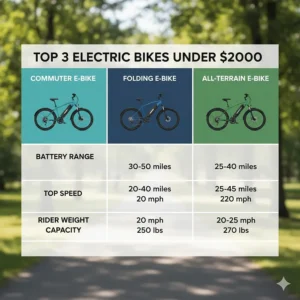
Folding vs Non-Folding Electric Bikes
The choice between folding and traditional frames significantly impacts your experience with an electric bike under $2000.
Folding E-Bikes
Advantages:
- Store in apartments, closets, or RVs
- Fit in car trunks for multimodal commuting
- Protect from theft by bringing indoors
- Travel-friendly for vacations
Considerations:
- Typically heavier (60-75 lbs)
- Smaller wheels (20″) affect ride quality
- May sacrifice some stability
- Folding mechanisms need maintenance
Popular folding models include the Lectric XP 4, Heybike Mars 2.0, and Heybike Ranger S.
Traditional Frame E-Bikes
Advantages:
- Larger wheels (26″-27.5″) for smoother riding
- More stable at high speeds
- Better for taller riders
- Often lighter overall
Considerations:
- Require garage or secure storage
- Harder to transport
- More visible theft target
Examples include the Ride1UP 700 Series and Aventon Level 3.
Safety Certifications You Need to Know
Following a dramatic increase in fires caused by lithium-ion batteries used in electric bikes, there is a push from local officials for improved safety certification, with New York City law requiring e-bikes be certified by an accredited testing laboratory for compliance with Underwriters Laboratories (UL) standard 2849.
UL Certification Standards
UL 2849: Complete e-bike safety certification covering electrical systems, mechanical safety, and fire prevention. This is the gold standard—look for it when shopping.
UL 2271: Battery-specific certification ensuring safe lithium-ion battery design, construction, and performance.
IP Rating: Water resistance rating. IPX5 means protection against low-pressure water jets. Most quality e-bikes meet IPX5 standards for riding in rain.
All the bikes recommended in this guide meet UL safety standards, giving you peace of mind with your purchase.
Torque Sensors vs Cadence Sensors
The type of pedal sensor dramatically affects your riding experience.
Cadence Sensors
Cadence sensors detect that you’re pedaling and provide consistent power based on your selected assist level. They’re simpler and more affordable, found on most budget options under $1500.
Pros:
- Less expensive
- Simple, reliable operation
- Good for casual riding
- Consistent power delivery
Cons:
- Less natural feeling
- Can feel jerky at low speeds
- Not as efficient on hills
Torque Sensors
Torque sensors measure how hard you’re pedaling and adjust motor assistance proportionally. The inclusion of a torque sensor results in much smoother acceleration and better battery efficiency.
Pros:
- More natural riding feel
- Better battery efficiency
- Excellent hill performance
- Responsive power delivery
Cons:
- More expensive
- Slightly more complex
Models like the Lectric XP 4, Aventon Level 3, and Heybike Ranger S 1000W feature torque sensors.
Maintenance and Long-Term Ownership Costs
Owning an electric bike under $2000 involves ongoing maintenance to ensure longevity and performance.
Regular Maintenance Tasks
Weekly:
- Check tire pressure (proper PSI improves range)
- Inspect brake pads for wear
- Clean chain and drivetrain
Monthly:
- Lubricate chain
- Check all bolts and screws
- Inspect brake cables
Annually:
- Professional tune-up ($75-150)
- Brake fluid replacement (hydraulic brakes)
- Full drivetrain cleaning
- Battery health check
Battery Care Tips
Your battery is the most expensive component. Proper care extends its lifespan:
✅ Store at 40-80% charge when not riding
✅ Avoid extreme temperatures (below 32°F or above 95°F)
✅ Charge after every ride
✅ Never let battery fully discharge
✅ Use only manufacturer-approved chargers
Most e-bike batteries last 500-1000 full charge cycles (3-5 years of normal use) before capacity noticeably decreases.
Replacement Costs
- Battery: $400-700
- Motor: $300-600
- Display: $50-150
- Tires: $40-80 each
- Brake pads: $20-40
Weight Capacity and Rider Fit
Ensuring proper fit and weight capacity is crucial for safety and comfort.
Weight Limits
Most electric bike under $2000 models support 275-330 lbs total weight (rider + cargo). For heavier riders, focus on two things: a high weight capacity (look for bikes rated for 300 lbs or more) and a motor with high torque (70Nm or more).
Higher-capacity models include:
- Heybike Mars 2.0: 330 lbs
- Heybike Ranger S: 330 lbs
- Lectric XP 4: 330 lbs
- Aventon Aventure 3: 400 lbs
Frame Sizing
Most e-bikes come in 1-2 frame sizes. Step-through frames accommodate riders 5’2″-6’2″, while step-over frames typically fit 5’3″-6’4″.
Step-Through Frames:
- Easier mounting/dismounting
- Better for riders with limited mobility
- More upright, comfortable position
- Examples: Heybike Ranger S, Aventon Level 3 ST
Step-Over Frames:
- More efficient power transfer
- Better for aggressive riding
- Stronger frame structure
- Examples: Ride1UP 700 XR, Heybike Mars 2.0
Smart Features and Connectivity
Modern electric bikes increasingly include smartphone connectivity and advanced features.
GPS and Anti-Theft
Aventon’s ACU technology provides built-in GPS tracking and geofencing, remote locking and motor shut-off, an integrated rear-wheel lock, display password, and unusual movement alerts with an alarm.
These features deter theft and help recover stolen bikes. Some require ongoing subscriptions after the first year.
Mobile Apps
Quality e-bike apps offer:
- Ride tracking and statistics
- Firmware updates
- Custom assist level tuning
- Lock/unlock functionality
- Battery health monitoring
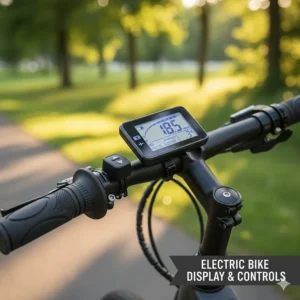
Display Types
LCD Displays: Basic, functional, easy to read in sunlight. Found on most budget models.
TFT Color Displays: Vibrant, detailed information, modern appearance. Appearing on newer premium models like the Lectric XP 4.
Best Use Cases: Matching Bike to Lifestyle
Daily Commuters
Best choices: Ride1UP 700 Series, Aventon Level 3
Look for Class 3 speeds (28 mph), fenders, lights, and racks. Range should exceed your round-trip distance by 50% for battery longevity.
Apartment Dwellers
Best choices: Lectric XP 4, Heybike Mars 2.0, Lectric XP 3.0
Folding bikes store indoors easily, preventing theft and weather damage. Consider weight if carrying up stairs.
Weekend Adventurers
Best choices: Aventon Aventure 3, Heybike Ranger S
Fat tires, suspension, and powerful motors handle trails, beaches, and rough terrain. Higher torque (70Nm+) conquers steep hills.
RV and Van Life
Best choices: Lectric XP 4, Heybike Mars 2.0
Compact folding design fits limited storage space. Long-range batteries support all-day exploring.
Fitness Enthusiasts
Best choices: Ride1UP 700 Series, Aventon Level 3
Torque sensors and adjustable assist levels let you control workout intensity. Multiple PAS levels from eco to turbo.
Comparing Top Brands in the Under $2000 Category
Ride1UP
Strengths: Exceptional component quality, Class 3 performance, outstanding value
Pricing: Mid-range ($1,400-1,700)
Support: Direct-to-consumer, growing dealer network
Warranty: 1 year
Lectric E-Bikes
Strengths: Best-selling folding bikes, innovative features, strong community
Pricing: Budget-friendly ($999-1,300)
Support: U.S.-based, responsive customer service
Warranty: 1 year
Aventon
Strengths: Premium features, smart connectivity, extensive dealer network
Pricing: Premium ($1,700-2,000)
Support: 1,800+ dealers across U.S.
Warranty: 2 years
Heybike
Strengths: Powerful motors, full suspension options, competitive pricing
Pricing: Budget to mid-range ($999-1,500)
Support: Growing U.S. presence
Warranty: 2 years
Hidden Costs to Consider
Accessories
Essential Additions ($200-400):
- Quality helmet with MIPS protection: $60-150
- U-lock or chain lock: $50-100
- Rear mirror: $20-40
- Phone mount: $20-40
- Spare battery (optional): $400-700
Shipping and Assembly
Most online retailers offer free shipping, but some charge $100-200. Assembly can cost $100-150 at bike shops if you’re not comfortable doing it yourself.
Insurance
E-bike insurance costs $100-300 annually and covers theft, damage, and liability. Many homeowners/renters policies now include e-bike coverage—check before buying separate insurance.
Environmental and Economic Benefits
Switching to an electric bike under $2000 provides significant environmental and financial benefits.
Cost Comparison vs. Car
Annual Car Costs (average):
- Gas: $2,000
- Insurance: $1,500
- Maintenance: $1,200
- Depreciation: $3,000 Total: $7,700/year
Annual E-Bike Costs:
- Electricity: $50
- Maintenance: $200
- Insurance: $200 Total: $450/year
Savings: $7,250 annually
Your electric bike pays for itself in 3-4 months if replacing car trips!
Environmental Impact
A single car produces approximately 4.6 metric tons of CO2 annually. E-bikes produce zero direct emissions. With an e-bike, you can make a contribution to reducing your ecological footprint.
Warranty Coverage and Customer Support
Standard Warranty Terms
Most manufacturers offer 1-2 year warranties covering:
- Frame defects
- Motor failures
- Battery issues (typically limited to first year)
- Display malfunctions
- Electrical components
Not typically covered:
- Normal wear items (tires, brake pads, chains)
- Crash damage
- Water damage beyond IP rating
- Modifications
Extended Protection
Some retailers offer extended warranties for $200-400, covering:
- Additional 1-2 years coverage
- Accidental damage
- Battery degradation beyond normal wear
Seasonal Buying Tips and Deals
Best Times to Buy
Black Friday/Cyber Monday (November): Deepest discounts of 20-40% off. Many 2025 models saw prices drop to $1,295 from $1,695.
Early Spring (March-April): Manufacturers clear inventory for new models.
Late Summer (August-September): Retailers discount current year models before new releases.
Holiday Sales
Memorial Day, 4th of July, and Labor Day typically offer 10-20% discounts on quality electric bike under 2000 models.
Upgrading Your Electric Bike Under $2000
Many components can be upgraded over time to enhance performance:
Popular Upgrades
Comfort:
- Suspension seat post: $80-150
- Ergonomic grips: $20-40
- Premium saddle: $50-100
Performance:
- Upgraded tires: $40-80 each
- Better pedals: $30-60
- Extended range battery: $400-700
Utility:
- Front rack: $50-100
- Panniers: $60-150
- Phone mount: $20-40
- Better lights: $40-100
What Not to Upgrade
Avoid modifying electrical systems (controller, motor, battery) as this voids warranties and poses safety risks. Stick with manufacturer-approved accessories.
FAQ
❓ What is the best electric bike under $2000 for heavy riders?
❓ How long do electric bike batteries last before replacement?
❓ Can I ride an electric bike under $2000 in the rain?
❓ What's the difference between Class 2 and Class 3 electric bikes?
❓ Do I need a license to ride an electric bike in the US?
Conclusion: Your Perfect Electric Bike Awaits
Finding the right electric bike under $2000 has never been easier or more rewarding. The current market offers exceptional quality, performance, and features that were unimaginable just a few years ago. Whether you prioritize speed and commuting efficiency with the Ride1UP 700 Series, versatile folding convenience with the Lectric XP 4, smart connectivity with the Aventon Level 3, off-road capability with the Aventon Aventure 3, powerful portability with the Heybike Mars 2.0, all-terrain comfort with the Heybike Ranger S, or pure budget value with the Lectric XP 3.0—there’s a quality electric bike under 2000 perfectly suited to your needs.
Remember that the best e-bike is the one you’ll actually ride regularly. Consider your typical use cases, storage situation, terrain, and personal preferences. Don’t get caught up in specs alone—comfort, reliability, and customer support matter just as much as wattage and range numbers.
Every bike in this guide represents outstanding value and has earned positive reviews from real riders. Budget e-bikes have never offered better value than in 2025, with the trend toward higher quality at lower prices continuing to accelerate. Take advantage of seasonal sales, test ride when possible, and don’t be afraid to reach out to manufacturers with questions. Your perfect top electric bikes 2000 budget option is out there waiting to transform your daily routine and open up new adventures.
Recommended for You
- 7 Best Electric Bike with Passenger Seat Reviews 2025
- 7 Best Electric Bikes for 8 Year Olds – Tested & Reviewed 2025
- 7 Best Electric Dirt Bikes With Training Wheels (2025 Guide)
Disclaimer: This article contains affiliate links. If you purchase products through these links, we may earn a small commission at no additional cost to you.
✨ Found this helpful? Share it with your friends! 💬🤗
