
In This Article
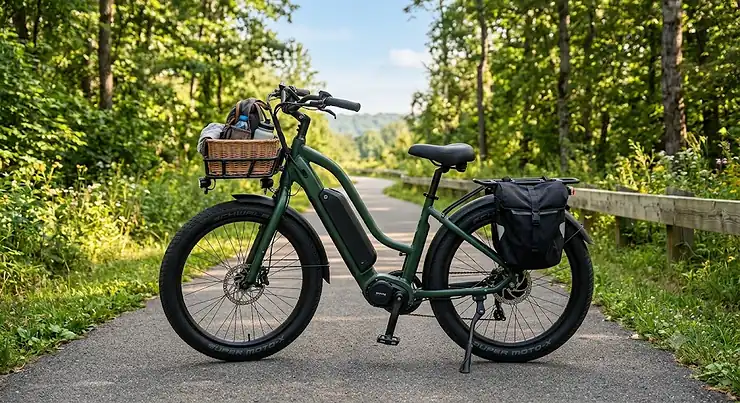
Here’s a question nobody likes admitting out loud: “Will this bike actually hold me?” If you’ve spent any time scrolling Amazon listings squinting at fine-print weight limits, you already know the frustration — half the search results quietly cap out around 275 pounds, buried three bullet points down. A step-through electric bike for plus-size riders isn’t a niche request; it’s one of the fastest-growing search categories on Amazon, and the low, U-shaped frame that makes mounting easier tends to pair naturally with the reinforced wheels and stronger motors that heavier riders actually need.
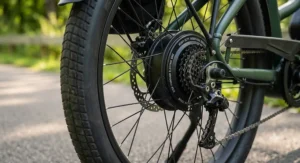
What is a step-through electric bike for plus-size riders? It’s an ebike with a dropped frame (no top tube to swing a leg over) engineered with a higher-than-typical payload rating — commonly 330 to 500 pounds — so heavier riders get the same stability and component durability as anyone else.
This guide skips the marketing fluff and sticks to what actually matters: verified weight capacity rating numbers, mobility-friendly features that make mounting painless, and honest analysis pulled straight from real Amazon product listings and aggregated buyer feedback. According to the CDC’s physical activity guidelines for older adults, even modest regular activity meaningfully reduces fall risk and supports independent living — and a stable, correctly-rated ebike is one of the easier ways to get there. Every product below is a real, currently listed Amazon.com item, spanning budget to premium and both two-wheel and three-wheel designs, so you can find the one that actually fits your body and your budget.
Quick Comparison Table
| Model | Weight Capacity | Motor | Frame Type | Best For |
|---|---|---|---|---|
| Jasion Thunder Pro ST | 500 lbs | 2000W peak (115Nm) | Step-through, full suspension | Highest capacity in this roundup |
| Addmotor Motan M-350A | 450 lbs | 750W | Trike, step-through | Maximum three-wheel stability |
| ESKUTE E Trike | 400 lbs | 1200W peak (500W rated) | Trike, step-thru, folding | Senior-friendly folding trike |
| Jasion Thunder (ST) | 400 lbs | 1800W peak (85Nm) | Step-through | Hydraulic braking confidence |
| ESKUTE D200 | 400 lbs | 1200W peak | Step-through, folding | Best value at 400-lb capacity |
| Jasion EB7 ST 2.0 | 330 lbs | 1200W peak | Step-thru, folding, 17″ standover | Lowest mounting height |
| ANCHEER Electric Tricycle | 300+ lbs | 350W (550W peak) | Trike, folding | Most affordable trike entry |
Looking at the numbers above, the gap between a standard Amazon-listed ebike’s 275-pound rating and the Jasion Thunder Pro ST‘s 500-pound rating isn’t cosmetic — it reflects a genuinely different frame gauge, spoke count, and motor torque curve. If balance matters as much as capacity, the trike entries (Addmotor Motan M-350A, ESKUTE E Trike, ANCHEER Electric Tricycle) trade some agility for a platform that simply can’t tip sideways at a stoplight.
💬 Just one click — help others make better buying decisions too!😊
Top 7 Step-Through Electric Bikes for Plus-Size Riders: Expert Analysis
1. Jasion Thunder Pro ST — highest weight capacity in this roundup
The Thunder Pro ST tops this list for one clear reason: a verified 500-pound payload rating, the highest of any listing covered here. That number comes from a reinforced step-through frame paired with a 2000W peak motor delivering 115Nm of torque — enough to keep acceleration brisk even loaded near the top of that range. Based on the spec comparison, the 64-signal pedal sensor is worth noting too, since it reads pedaling force with roughly twice the precision of a basic cadence sensor, which translates to smoother, less jerky power delivery at low speed — a real comfort factor when balance is a concern. Full suspension and 26×4 fat tires help absorb rough pavement, while dual hydraulic disc brakes handle the added stopping distance that comes with a heavier rider and bike combined. Reviewers consistently note the fast 0-20mph acceleration as genuinely strong for the price, while a recurring theme in aggregated feedback points out that the bike’s height range (designed for riders 5’5″ to 7’2″) may not suit shorter riders as comfortably.
Pros:
- ✅ Highest verified payload rating (500 lbs) in this list
- ✅ 64-signal sensor delivers noticeably smooth pedal assist
- ✅ Dual hydraulic disc brakes for confident stopping power
Cons:
- ❌ Recommended height range starts at 5’5″, less ideal for shorter riders
- ❌ Premium price relative to other listings here
Price range: roughly $1,200-$1,800 at the time of research (check current price for active promotions). For riders who genuinely need every pound of that 500-lb ceiling, this is the clearest capacity-first pick on Amazon right now.
2. Addmotor Motan M-350A — most stable three-wheel design
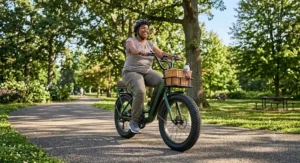
For riders prioritizing balance above all else, the Motan M-350A trades two wheels for three and gains real stability in the process. Its 6061 aluminum step-through frame is rated for 450 pounds combined rider and cargo weight, and the wide rear track means it simply cannot tip over at a stop the way a two-wheeler can. The 750W motor pairs with a 48V 20Ah (960Wh) battery, translating to a claimed range near 85 miles — genuinely useful for riders covering longer distances at a steady pace rather than fast, short hops. What most buyers overlook about trikes generally is the tradeoff in tight-space maneuverability; the wider stance that provides stability also means the trike needs more room to turn than a standard bike. Aggregated review sentiment consistently highlights the front suspension fork’s 80mm of travel as a genuine comfort upgrade on rough pavement, while a recurring note in buyer feedback flags the trike’s width as something to measure against garage or apartment storage space before ordering.
Pros:
- ✅ Cannot tip sideways — ideal for balance-limited riders
- ✅ Large 960Wh battery supports genuinely long range
- ✅ Triple brake rotors add stopping-power redundancy
Cons:
- ❌ Wide footprint makes storage and narrow paths harder
- ❌ Heavier overall than any two-wheel option in this list
Price range: roughly $1,700-$1,900, though always check current pricing since trike listings fluctuate more than standard ebikes. Reviewers consistently frame this as the trike to buy when long-range comfort and stability outrank compactness — a fair trade for many riders with limited mobility.
3. ESKUTE E Trike — senior-friendly folding trike
ESKUTE built the E Trike specifically with senior riders in mind, and it shows in the details that matter most for that audience. The listing itself markets the trike as built “for seniors,” with a genuinely low step-thru frame, a padded seat with backrest support, and a rear differential that lets the two rear wheels spin independently through turns — a feature that reduces the dragging, jerky feeling some budget trikes exhibit at low speed. At a 400-pound payload rating, it splits the difference between the ANCHEER’s lighter-duty build and the Addmotor’s heavier-duty one. Here’s what to weigh: the 1200W peak motor (500W rated) is gentle rather than aggressive, which suits cruising and errands better than hill-heavy routes. Reviewers consistently praise the fold-and-store convenience for apartment dwellers, and aggregated feedback frequently mentions the wide 18×3.0-inch tires as a genuine stability upgrade over narrower trike tires.
Pros:
- ✅ Rear differential smooths out low-speed, tight turns
- ✅ Padded seat with backrest built for longer sits
- ✅ Folds for easier apartment or garage storage
Cons:
- ❌ Motor is better suited to flat terrain than steep hills
- ❌ Lower top speed (18+ mph) than the two-wheel options here
Price range: roughly $900-$1,200. Based on the spec comparison, this is the pick for riders who want a trike built around comfort and accessibility rather than raw power.
4. Jasion Thunder (Step-Through) — hydraulic braking confidence at 400 lbs
The standard Jasion Thunder step-through delivers a 400-pound payload rating alongside genuinely strong stopping power — dual hydraulic disc brakes rated to bring the bike to a controlled stop in about two seconds, according to the listing. What most buyers overlook about brake type is how much it matters specifically for heavier loads: hydraulic systems modulate more predictably than mechanical discs when there’s more combined weight to slow down, which is exactly the scenario a 400-lb-rated bike is built for. The 1800W peak motor produces 85Nm of torque, and the 864Wh battery is unusually large for this price tier, supporting a claimed 80-mile range. Reviewers consistently highlight the front suspension and 26×4 fat tires as a comfortable combination on rough pavement, and aggregated buyer feedback — including reviews mentioning heavier riders specifically — suggests the bike handles hills confidently without excessive motor strain.
Pros:
- ✅ Dual hydraulic disc brakes stop confidently at speed
- ✅ Large 864Wh battery supports genuinely long range
- ✅ Step-through frame doesn’t compromise the 400-lb rating
Cons:
- ❌ At roughly 82 lbs, it’s a heavy bike to lift or carry
- ❌ No suspension in the rear, so bumps transmit more at the saddle
Price range: roughly $900-$1,100, occasionally discounted lower in bundle sales. Aggregated feedback consistently frames this as a strong middle-ground pick between the D200’s budget positioning and the Thunder Pro ST’s premium capacity.
5. ESKUTE D200 — best value at 400-lb capacity
The D200 proves a high weight capacity rating doesn’t require a premium price tag. At a verified 400-pound payload rating, it undercuts several pricier step-through competitors while still delivering a 1200W peak motor and a foldable frame that fits into car trunks or closets in four simple steps. The step-through design keeps mounting simple, and the front suspension fork smooths out rough pavement despite the D200 sitting at a more accessible price point than the Thunder or Thunder Pro ST. Here’s what to weigh: this is a folding commuter-style bike first, so buyers wanting a suspension-loaded, off-road-capable ride should look toward the heavier-duty options in this list instead. Reviewers commonly cite the NFC unlock feature and quick-fold mechanism as standout conveniences at this price, with a recurring theme in aggregated feedback being surprise at how capable the bike feels given its comparatively modest cost.
Pros:
- ✅ 400-lb payload rating at a genuinely budget-friendly price
- ✅ Folds in four steps for car trunk or closet storage
- ✅ Front suspension smooths rough pavement
Cons:
- ❌ Smaller wheels (20″) feel less smooth on longer rides
- ❌ Fewer accessory options than larger, established brands
Price range: roughly $700-$900. Based on the spec comparison, this is the pick for buyers who want serious capacity without paying for extras they won’t use.
6. Jasion EB7 ST 2.0 — lowest step-through height for easy mounting
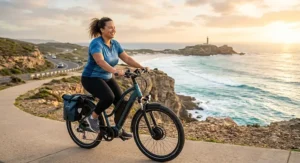
For riders prioritizing the easiest possible mount and dismount, the EB7 ST 2.0’s step-through frame measures just 17 inches from floor to lowest frame point — genuinely low compared to most competitors in this list. What most buyers overlook about standover height is that it matters more than overall bike weight for anyone managing hip or knee mobility limits, since it’s the mounting motion itself that causes difficulty, not the bike’s curb weight. The 330-pound payload rating is the most modest in this roundup, but the tradeoff is a lighter, more foldable package — 62 pounds folded to 36 x 21 x 29 inches, genuinely manageable for car trunk storage. Full suspension (front fork plus rear seat suspension) smooths out bumps, and reviewers consistently describe the ride as comfortable for shorter commutes and errands. A recurring complaint in aggregated feedback notes the pedal assist can feel less responsive on steep inclines compared to the higher-torque options above.
Pros:
- ✅ Lowest step-through height (17″) in this entire list
- ✅ Full suspension smooths bumps for a comfortable ride
- ✅ Genuinely foldable and light enough to lift into a car trunk
Cons:
- ❌ Lowest weight capacity (330 lbs) of any model here
- ❌ Less torque available for steep hills than heavier-duty options
Price range: roughly $750-$950. If your weight comfortably clears 330 pounds and easy mounting is your top priority, this is hard to beat on Amazon at this price.
7. ANCHEER Electric Tricycle — most affordable entry into three-wheel riding
Not every rider needs a premium price tag to try three-wheel stability. The ANCHEER Electric Tricycle delivers a folding, step-through trike design with a rear differential — a feature not guaranteed on every budget trike — at a price closer to a mid-range two-wheeler than a specialty trike. Based on the spec comparison, ANCHEER achieves this partly through a modest 350W motor (550W peak) rather than the heavier-duty motors on the Addmotor or ESKUTE trikes, which keeps the bill of materials down without gutting safety-relevant specs like the rear differential or basket capacity. The listing markets this specifically toward seniors and riders handling city streets, inclines, and gravel roads, with a payload comfortably above 300 lbs. Reviewers consistently cite this as the most accessible entry point into three-wheel riding, with aggregated feedback frequently mentioning the oversized saddle and rear basket as practical touches for errands.
Pros:
- ✅ Lowest price of any trike in this roundup
- ✅ Rear differential improves low-speed turning stability
- ✅ Folds down for easier storage than most trikes
Cons:
- ❌ Lower-powered 350W motor struggles more on steep hills
- ❌ Lower top speed (15.5 mph) than every other model here
Price range: roughly $700-$900. For first-time trike buyers unsure whether three wheels suit them, this is the low-risk way to find out before spending more.
✨ Don’t Miss These Exclusive Deals!
🔍 Take your search for the right ebike to the next level with these carefully selected, verified Amazon listings. Click on any highlighted product to check current pricing and availability — the right fit is closer than you think!
Practical Usage Guide: Your First 30 Days
Getting a new step-through electric bike for plus-size riders home is only step one — how you set it up in the first month determines whether it lasts for years or needs early repairs. Start by checking tire PSI weekly rather than monthly; heavier loads compress tires faster, and underinflation is the single most common cause of pinch flats and rim damage in this category. Next, have a local shop verify torque specs on the stem, seatpost, and rack bolts after the first 50-100 miles — vibration during break-in tends to loosen fasteners faster on heavier setups.
A common first-month mistake is riding exclusively in the highest pedal-assist level out of excitement, which drains the battery faster and puts more heat stress on the motor than a mixed riding pattern. Instead, alternate between assist levels based on terrain, saving the top setting for genuine hills. Also budget time to adjust seat height and handlebar angle more than once; what feels right in the driveway often needs a second tweak once you’ve ridden a few real miles. Finally, avoid submerging the bike or using a pressure washer — nearly every listing in this roundup explicitly notes water-resistance limits rather than full waterproofing, and warranty coverage typically excludes water damage from aggressive cleaning.
Real-World Scenarios: Who Rides What
Consider Maria, 58, recovering from a knee replacement and living in a single-story home with a short driveway. She doesn’t need 500 pounds of capacity, but she does need the lowest possible step-through height and the gentlest pedal-assist curve — pointing her toward the Jasion EB7 ST 2.0 or the ESKUTE E Trike if balance is also a concern.
Then there’s Devon, 34, commuting eight miles each way to a warehouse job and wanting real torque for a hilly route. At 350 pounds, he needs the higher end of the capacity range, making the Jasion Thunder Pro ST or the standard Jasion Thunder (ST) the better fits given their 400-500 lb ratings and stronger motors.
Finally, picture Sam, 61, whose balance issues rule out two wheels entirely, and who also wants to try an ebike without a large upfront commitment. The ANCHEER Electric Tricycle offers an affordable, folding entry point, while the Addmotor Motan M-350A suits Sam better if long-range comfort and a higher cargo allowance matter more than upfront price.
How to Choose a Step-Through Electric Bike for Plus-Size Riders
- Confirm the verified weight capacity rating first. Don’t estimate — check the listing’s published number and subtract your typical carried gear, since payload capacity includes cargo, not just body weight.
- Prioritize step-through height over styling. A lower standover height, like the Jasion EB7 ST 2.0‘s 17 inches, reduces strain on hips and knees regardless of your reason for wanting easier mounting.
- Match motor power to your terrain. Flat commutes are fine with 750W-class motors; hills or heavier loads benefit from the 1800-2000W peak range seen on the Jasion Thunder models.
- Decide between two wheels and three. Trikes trade agility for stability — the right call depends on balance, not just weight.
- Check brake type. Hydraulic disc brakes, standard on the Jasion Thunder and Jasion Thunder Pro ST, stop more predictably under heavier loads than mechanical alternatives.
- Look at tire width. Wider tires (3.0 inches or more) distribute weight better and improve stability at low speeds.
- Factor in total bike weight, not just payload. A 400-lb-rated bike that itself weighs 80+ lbs can still be genuinely hard to lift onto a rack or up a curb.
Understanding Weight Capacity Rating: What the Numbers Really Mean
A weight capacity rating isn’t a suggestion — it’s tied directly to frame welds, spoke count, and rim strength as tested by the manufacturer. Exceeding it doesn’t just risk a slower ride; it risks cracked welds, bent rims, and voided warranty claims. Industry data shows every extra 20 pounds of rider weight can reduce real-world range by roughly 5 to 8%, so a bike advertised at 80 miles, like the Jasion Thunder (ST), might deliver closer to 55-60 miles for a rider near the top of its weight range. Most standard Amazon-listed ebikes cap out around 275 pounds including rider and cargo combined — which is exactly why the seven models in this guide, rated from 330 up to 500 pounds, represent a meaningfully different engineering tier rather than the same bike with a generous marketing number attached.
| Rating Range | What It Typically Means | Best Matched Models |
|---|---|---|
| 300-330 lbs | Standard reinforced commuter frame | Jasion EB7 ST 2.0, ANCHEER Electric Tricycle |
| 400 lbs | Thicker spokes, heavier-duty rims | ESKUTE D200, Jasion Thunder (ST), ESKUTE E Trike |
| 450-500 lbs | Purpose-built heavy-duty engineering | Addmotor Motan M-350A, Jasion Thunder Pro ST |
When a listing doesn’t specify whether the number includes cargo, assume it does — and add a 10-20% safety margin, particularly if you’ll be riding on hills or rough pavement where dynamic loads spike above your static body weight.
Mobility-Friendly Features That Actually Matter (And Those That Don’t)
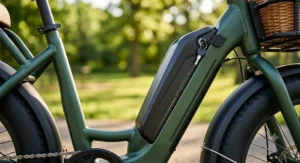
Amazon listings love the phrase “easy to ride,” but only a handful of features genuinely move the needle for riders managing joint pain, balance concerns, or reduced flexibility. A low step-through height matters enormously — it’s the single biggest factor in whether mounting requires a full leg swing or a simple step-through, which is exactly why the Jasion EB7 ST 2.0‘s 17-inch standover stands out in this list. A rear differential, found on the ESKUTE E Trike and ANCHEER Electric Tricycle, matters too, since it lets the rear wheels spin at different speeds through a turn, reducing the dragging, off-balance feeling that cheaper trikes without one exhibit.
What matters less than the marketing suggests: touchscreen displays, app connectivity, and color options. These are nice-to-haves, not mobility aids. Similarly, top speed matters far less for this audience than torque and brake modulation — a bike that accelerates smoothly and stops predictably is more valuable than one that simply goes fast. The Arthritis Foundation notes that continuous, low-impact motion like cycling helps lubricate joints and ease stiffness, which is a strong argument for prioritizing smooth assist delivery over raw power specs when joint comfort is a factor.
Low-Step eBikes for Limited Mobility vs Traditional High-Step Frames
The difference between a low-step ebike for limited mobility and a traditional high-step diamond frame isn’t cosmetic — it changes the entire mounting mechanics. A high-step frame requires lifting one leg over a top tube typically 30+ inches off the ground, a motion that can be genuinely difficult or risky for anyone with hip replacements, balance concerns, or limited flexibility. A true low-step design, like the Jasion EB7 ST 2.0‘s 17-inch standover, lets a rider simply step through and sit down.
| Feature | High-Step Frame | Low-Step Frame |
|---|---|---|
| Mounting motion | Leg swing over top tube | Simple step-through |
| Frame rigidity | Slightly stiffer under load | Comparable on reinforced models |
| Best for | Riders without mobility concerns | Limited mobility, joint pain, balance issues |
Comparing the two directly, frame rigidity concerns that once made step-through frames feel like a compromise have largely disappeared on the models covered here — reinforced downtubes and gusseted joints mean a well-built step-through frame can match a high-step frame’s stiffness while still delivering dramatically easier mounting.
Easy-Step Electric Bikes for Elderly Riders: What to Look For
For elderly riders specifically, an easy-step electric bike for elderly riders needs more than just a low frame — it needs forgiving power delivery and dependable stopping. Look for pedal-assist systems with at least five graduated levels, so power can be dialed down to a gentle nudge rather than a lurch, a feature standard across every Jasion model in this list. Hydraulic disc brakes, found on the Jasion Thunder and Jasion Thunder Pro ST, offer more predictable stopping distances in wet or cold conditions than mechanical alternatives. A 2023 scoping review on cycling and older adults found that cycling can help older populations meet a meaningful share of recommended physical activity guidelines while addressing age-related physiological changes, reinforcing why the right frame and assist setup genuinely matters for this audience rather than being a nice-to-have.
Wide, stable tires and a low center of gravity also reduce the chance of a wobble becoming a fall — which is precisely why trikes like the ESKUTE E Trike, explicitly marketed toward seniors, and the ANCHEER Electric Tricycle show up so often in senior-focused buying guides.
Common Mistakes When Buying an Ebike for Plus-Size Riders
The most frequent mistake is trusting a generic “rider weight” spec without confirming whether it includes cargo — a 400-lb rating that already assumes 30 lbs of gear leaves less headroom than it appears to. A second common error is prioritizing top speed or range claims over torque and brake quality, both of which matter more day-to-day for heavier riders navigating hills or stop-and-go traffic. Buyers also frequently skip test-sitting a bike before purchase, when seat width and handlebar reach affect comfort just as much as the frame’s rated capacity. Finally, many shoppers underestimate total bike weight, buying a heavy-duty model rated for 450+ pounds without considering that the bike itself might weigh 80-90 lbs — a real problem if it needs to be lifted onto a car rack or up a flight of stairs regularly.
Long-Term Cost & Maintenance
Total cost of ownership on a heavy-duty ebike extends well past the sticker price. Budget for tire replacements roughly every 1,500-2,500 miles — heavier loads wear tread faster than average — plus periodic brake pad swaps, especially on models without hydraulic brakes like the ANCHEER Electric Tricycle or ESKUTE D200. Battery packs typically hold 70-80% of original capacity after 500-800 charge cycles, meaning a replacement battery becomes a realistic five-to-seven-year expense on daily-use bikes. Models with UL-certified batteries, which most listings in this roundup carry, may also qualify for lower insurance premiums or state rebate programs, offsetting some of that long-term cost. Reinforced-frame models generally show fewer warranty claims related to frame cracking, which matters more over a five-year ownership window than the initial purchase price difference suggests.
Safety, Regulations & Compliance Guide
Most step-through electric bikes in this category fall under Class 2 or Class 3 ebike classifications, which affect where they can legally be ridden and whether a helmet is required. According to PeopleForBikes’ policy tracker, the majority of U.S. states now regulate ebikes under a standardized three-class system, though rules on bike paths, minimum age, and helmet requirements still vary by state — always confirm local regulations before your first ride. Class 3 bikes, which assist up to 28 mph, typically require riders to be at least 16 or 17 and wear a helmet, while Class 1 and 2 bikes are usually treated more like traditional bicycles. Regardless of classification, riders exceeding a bike’s rated payload capacity may find their state or local e-bike insurance coverage doesn’t apply in the event of frame failure, making that rating far more than a suggestion.
Buyer’s Decision Framework
If you weigh under 330 pounds and want the easiest possible mounting, choose the Jasion EB7 ST 2.0 because its 17-inch standover and full suspension deliver the most accessible ride in that capacity range.
If you weigh between 330 and 400 pounds and want strong braking and range, choose the Jasion Thunder (ST) or the ESKUTE D200 depending on whether you prioritize power or price.
If balance or mobility concerns rule out two wheels, choose the ANCHEER Electric Tricycle for an affordable entry point, the ESKUTE E Trike for senior-focused comfort, or the Addmotor Motan M-350A if long-range stability matters more than price.
If you need capacity above 400 pounds, choose the Jasion Thunder Pro ST, since it’s the only model here engineered specifically for that upper range.
FAQ
❓ What is the average weight limit for a step-through electric bike on Amazon?
❓ Are three-wheel electric trikes safer than two-wheel ebikes for heavier riders?
❓ Do heavier riders get less range from an electric bike?
❓ What frame features matter most for elderly or limited-mobility riders?
❓ Can I exceed a bike's rated weight capacity occasionally without damage?
Conclusion
Choosing a step-through electric bike for plus-size riders on Amazon comes down to matching real, verified numbers to your real body and routine — not chasing the flashiest bullet points. The Jasion Thunder Pro ST leads on raw capacity at 500 lbs, the Addmotor Motan M-350A leads on three-wheel stability, and the ESKUTE D200 leads on value, while the ESKUTE E Trike and ANCHEER Electric Tricycle offer genuine accessibility for anyone who’d rather not balance on two wheels at all. The Jasion Thunder (ST) and Jasion EB7 ST 2.0 round things out for riders who want strong braking or the lowest possible mounting height, respectively.
Whichever model fits, the underlying goal is the same: a mobility-friendly ride that holds up honestly under your actual weight, supports your actual joints, and gets you out the door more often. That’s worth more than any single spec on a listing page.
Recommended for You
- Electric Cargo Bike for Pet Transport: 7 Best Picks (2026)
- 7 Best Electric Cargo Trike for Businesses Pick
- Folding Ebike for Train Commuters: 7 Best Picks for 2026
Disclaimer: This article contains affiliate links. As an Amazon Associate, I earn from qualifying purchases. If you purchase products through these links, we may earn a small commission at no additional cost to you.
✨ Found this helpful? Share it with your friends! 💬🤗
