

In This Article
Picture hour six on an empty interstate. The engine is happy, the playlist is solid, and your neck is quietly drafting a formal complaint. At 70 mph the wind doesn’t just push. It flutters your helmet and turns every mile into a wrestling match. A well-chosen motorcycle windshield for long distance touring is the least glamorous comfort upgrade you can buy, and arguably the one you’ll feel most.

Here’s the catch: the market is a maze. Fixed or adjustable? Ten inches or twenty? Some screens hide a spoiler in their design, some pop off in seconds, and a few are meant to be looked over rather than through. Choose badly and you swap wind blast for buffeting, which is the sneakier villain.
So this guide does the homework. Seven real screens, from fork-mounted cruiser shields to spoiler-equipped adventure systems, were researched through manufacturer specs, retailer listings, and published rider reviews. Everything below is analysis built on those sources, with no invented road tests and no fabricated quotes. Whether you ride a bagger, a cruiser, or a sport touring motorcycle, you’ll learn how polycarbonate vs acrylic plays out in practice, how windshield height and rider fit work together, and why quick release mounts change how often you actually use the thing.
One housekeeping note: prices here are ranges, not promises. They move constantly, so check the current price before you buy.
Quick Comparison: 7 Touring Windshields at a Glance
| Product | Material | Mounting / Adjustability | Price Range* | Best For |
|---|---|---|---|---|
| Klock Werks Flare | Hard-coated polycarbonate | Replaces stock screen, stock hardware | Mid-range | Baggers wanting calmer air without extreme height |
| Memphis Shades Memphis Fats | Lucite acrylic | Detachable, tool-free Trigger-Lock kit (sold separately) | Roughly $300–$450 with mount kit | Cruiser riders wanting wide, full coverage |
| National Cycle VStream | Quantum hard-coated polycarbonate | Bolt-on, OEM hardware | Around $100–$225 by model | Value-minded long-haul riders |
| MadStad Adjustable Windshield System | Cast acrylic, 3/16 in. | Stainless brackets, adjustable height and angle | Around $250–$330 | Riders of different heights sharing a bike |
| Puig Touring Plus | High-impact acrylic | Bolt-on, bike-specific | Around $120–$225 | Adventure and sport-touring riders |
| Givi Airflow | Screen with sliding spoiler | Clamp-adjustable spoiler, removable | Around $200–$340 | Riders wanting a tall screen with adjustable deflector |
| Harley-Davidson Wind Splitter Detachable Compact | Hard-coated polycarbonate | Detachable, tool-free fork mount | Premium OEM tier | Fat Boy owners who want on/off convenience |
*Ranges reflect retailer listings at the time of research and vary by bike and height. Check current price.
Looking at the table, the National Cycle VStream and Puig Touring Plus are the budget-friendly entries, while the Memphis Shades Memphis Fats and Harley-Davidson Wind Splitter Detachable Compact trade extra money for easy removal. If you ride with different people on the same bike or switch seasons often, the MadStad Adjustable Windshield System and Givi Airflow are the only two built to be re-tuned on the fly. Note that ranges can hide extra costs, since the Memphis Shades Memphis Fats needs a separate mount kit.
💬 Just one click — help others make better buying decisions too!😊
Top 7 Motorcycle Windshield for Long Distance Touring Picks: Expert Analysis
Star ratings below are retailer averages, not my own scores. Where reviews couldn’t be verified, I say so.
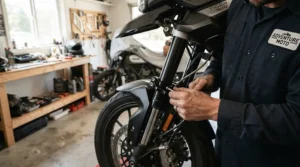
1. Klock Werks Flare — quietest air without a skyscraper screen
The signature move is a reverse curl along the top edge that flicks air up and over your helmet instead of letting it tumble down onto it.
It’s molded from Lexan polycarbonate with an FMR hard coat and sold in heights from sporty 3.5–6.5 inch cuts up to an 11.5 inch version that roughly matches a stock Electra Glide screen. The curled sides, which the maker calls hips, are designed to push air outward while adding a touch of downforce to the front end. That’s why an 8.5 inch Flare can punch above its height.
Based on the spec comparison, the 8.5 and 11.5 inch heights are where touring riders should shop. The shortest cuts are more about style than shelter. A Rider magazine reviewer found an 8 inch Road Glide version delivered the protection of a 9.5 inch factory piece, though he noted the airflow felt different from what he was used to. Measure from the center bolt hole to the start of the flip, not the very top edge.
Retailer pages show roughly 4.5 out of 5 stars across 800-plus reviews, a large and fairly consistent sample. One fit caution: fairing-mounted radar detectors and GPS units won’t fit behind the 8 inch version.
Pros:
- ✅ Reverse-curl lip manages air above the helmet
- ✅ Hard-coated polycarbonate resists scratches and impacts
- ✅ Wide height range from 3.5 to 11.5 inches
Cons:
- ❌ Fairing-mount GPS may not fit shorter sizes
- ❌ Fixed height with no on-the-fly adjustment
Expect a mid-range price, likely in the $170–$250 neighborhood depending on height and finish, so check current price. For baggers, it’s strong value.
2. Memphis Shades Memphis Fats — widest cruiser coverage that pops off
A cruiser has no fairing, so wind hits your chest and shoulders head-on. Width matters as much as height here.
The Memphis Shades Memphis Fats is made from Lucite acrylic, runs 22 inches wide, and comes in five heights from 13 to 21 inches. The straps are polished stainless steel with CNC-machined aluminum fittings, so nothing rusts. The narrower Memphis Shades Memphis Slim is 18 inches wide if you prefer a leaner look.
The clever part is the Trigger-Lock hardware. Two latches hold the shield down until you deliberately release spring-loaded triggers, with no tools needed. The kit is model-specific and angle-adjustable, and it’s sold separately. Some Softail fitments need turn signal relocation, per the maker’s notes.
This is the textbook detachable windshield for cruisers. Ride bare around town, bolt the shield on for the highway. Retailer pages show the Slim at 5 out of 5 across roughly 110 reviews, and the Fats-compatible mount kits at about 4.5 out of 5 across more than 440. In other words, shoppers seem to comment most on the mounting hardware.
Pros:
- ✅ Wide 22-inch shield protects chest and shoulders
- ✅ Tool-free removal with Trigger-Lock hardware
- ✅ Corrosion-proof stainless and aluminum fittings
Cons:
- ❌ Mount kit is a separate purchase
- ❌ Some bikes need turn signal relocation
Plan on roughly $300–$450 for screen plus kit, so check current price. It’s good value if you’ll actually use the detach feature.
3. National Cycle VStream — hardcoat polycarbonate that keeps price sane
The V-shaped profile is the headline. It’s designed to push the wind vortex away from your head and shoulders, and the passenger gets calmer air too.
On Harley touring fitments, the shield is 4.5 mm Quantum hard-coated polycarbonate, which the retailer listing calls 40% thicker than stock. It uses OEM hardware and mounting points, and National Cycle backs it with a three-year warranty. Height is measured vertically from the bottom center mount hole, so compare sizes carefully.
On a Yamaha Ténéré 700, a Rider magazine reviewer found the VStream easier to keep scratch-free than the stock screen and swapped it in with four screws. He also noted the shape is about four inches wider than stock with side flares. That width is what widens the calm pocket behind it. Taken together, it’s a smart match for riders who want fatigue relief without a premium bill.
Retailer pages show about 4.5 out of 5 across roughly 180 reviews for the Harley touring versions.
Pros:
- ✅ Hard-coated polycarbonate resists scratches well
- ✅ Uses stock mounting points for simple install
- ✅ Three-year warranty adds buying confidence
Cons:
- ❌ Fixed height once mounted
- ❌ Bolt-on design, not tool-free removable
Expect roughly $100–$225 depending on model line, so check current price. This is arguably the best value on the list.
4. MadStad Adjustable Windshield System — one screen, endlessly tunable
MadStad’s thesis is that the shield should adapt to you, not the other way around.
The system replaces plastic factory mounts with stainless steel brackets that lift the shield off the fairing. Air then scoops underneath, which the maker says eliminates the vacuum behind the screen that causes buffeting. Brackets offer at least 2 inches of vertical travel and roughly 15 degrees of tilt, and on some kits up to 3 inches and 25 degrees. The shield is 3/16 inch cast acrylic.
The company’s sizing guidance is to pick a shield that aligns with mouth level and then fine-tune. In theory, a smaller shield tilted correctly can deflect air higher than a taller fixed one. That’s a manufacturer claim, but the physics, with air passing underneath rather than stagnating behind, is consistent with what rider forums say about buffeting sources.
Honest caveat: retailer review counts are thin, for example three reviews on one BMW kit, and the glowing testimonials on distributor pages are curated. Many retailer listings also showed certain kits out of stock, so verify availability for your bike.
Pros:
- ✅ Adjustable height and angle without fuss
- ✅ Rigid stainless bracket structure on rough roads
- ✅ One shield suits riders of different heights
Cons:
- ❌ Bike-specific kits, so fitment is narrower
- ❌ Limited verified customer review pool
Roughly $250–$330 by application, so check current price. It’s a premium that makes sense for shared bikes.
5. Puig Touring Plus — taller-than-stock height for adventure tourers
If your stock screen leaves your helmet in the wind, this is the straightforward fix.
Puig’s Touring series is built from high-impact acrylic and designed to lift wind blast above the rider. The Plus version goes taller: on a KTM 1290 Super Adventure, it’s about 13 cm (5 inches) above stock, versus 5.5 cm for the standard Touring. On the Royal Enfield Himalayan 450, a listing cites 175 mm (6.8 inches) over OEM. Most versions include a shaded lower section that hides cables behind the dash.
An Expedition Portal writer learned the sizing lesson the hard way: the standard Touring screen on his F 750 GS was about five inches shorter than he needed for long highway days. He moved to a 21-inch Touring Plus described as wind-tunnel tested, and installed it in a couple of minutes. The takeaway for you is to size up if you’re tall or ride fast.
Retailer pages show roughly 4.5 out of 5 across 900 to 1,400 reviews, depending on the listing.
Pros:
- ✅ Large height gain over many OEM screens
- ✅ Simple bolt-on installation
- ✅ Wide fitment catalog for adventure bikes
Cons:
- ❌ Acrylic scratches more easily than hard-coated polycarbonate
- ❌ Fixed position, no built-in adjustment
Around $120–$225 by bike, so check current price. It’s a strong value pick for adventure tourers.
6. Givi Airflow — tall touring windshield with wind deflector built in
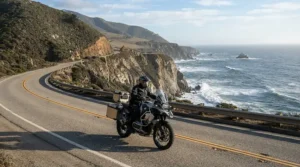
This one is the clearest example of a tall touring windshield with wind deflector done as one package.
A spoiler slides up to roughly 12 cm (4.7 inches) along two rails and locks with a clamp. On the Honda Africa Twin version, the whole screen rises 7.1 inches over stock and tops out around 25 inches. Because the spoiler is removable, you can ride summer days with just the lower screen for more airflow. Givi also claims the spoiler effect reduces rain collecting on your visor, which I’d treat as plausible but manufacturer-reported.
Reviewer comments on a retailer page are instructive. A V-Strom 650 rider cured upper-helmet buffeting at 70–75 mph by setting the spoiler about an inch below his chin, and a 6’2″ rider said the stock screen had been far too short. Another noted that included decals peeled off easily.
Retailer pages show about 4.5 out of 5 across roughly 280 reviews.
Pros:
- ✅ Slide-and-clamp spoiler tunes airflow in seconds
- ✅ Removable upper section for hot-weather riding
- ✅ Major height gain over many stock screens
Cons:
- ❌ More hardware means more to check and adjust
- ❌ Fitment is bike-specific
Roughly $200–$340 by fitment, so check current price. It’s worth it if your weather and speeds vary a lot.
7. Harley-Davidson Wind Splitter Detachable Compact — OEM polish with tool-free removal
H-D’s idea is a compact shield with the protection of a bigger one.
It comes in 15-inch light smoke or 19-inch clear, in hard-coated polycarbonate. A flipped upper edge is meant to add wind shear lift, so the screen behaves taller than it looks. It mounts to the fork triple trees with rubber isolators to damp vibration, and installs and removes without tools. Fitment as listed is ’18-and-later Fat Boy models (FLFB, FLFBS) and ’25-and-later FLSTFI.
That’s a textbook detachable windshield for cruisers: ride naked for wind-in-the-hair days, clip it on for long hauls. One practical note from H-D’s other Wind Splitter pages: they don’t fit with windshield bags or pouches, so check your accessories.
Review disclosure: I couldn’t verify customer reviews for this exact listing, which showed no reviews yet at the retailer I found. Treat the performance claims as manufacturer descriptions until more feedback accumulates.
Pros:
- ✅ Tool-free on-and-off mounting
- ✅ Flipped edge adds lift above the helmet
- ✅ Hard-coated polycarbonate with rubber-isolated mounts
Cons:
- ❌ Fitment limited to specific Fat Boy models
- ❌ No verified customer reviews for this listing
Pricing sits in the premium OEM tier, so check current price. It’s worth it only if you own a compatible Fat Boy and value factory fit.
| Product | Heights (per research) | Retailer Rating* | Notes | Best For |
|---|---|---|---|---|
| Klock Werks Flare | About 3.5–11.5 in. | ~4.5/5, 800+ reviews | USA-made, polycarbonate | Baggers |
| Memphis Shades Memphis Fats | 13–21 in., 22 in. wide | Mount kits ~4.5/5, 440+ reviews | Kit sold separately | Cruiser full coverage |
| National Cycle VStream | Multiple sizes by model | ~4.5/5, 180+ reviews | Three-year warranty | Value seekers |
| MadStad Adjustable Windshield System | Up to ~20 in. shields; 2+ in. travel | Few verified reviews | Bike-specific kits | Mixed-height riders |
| Puig Touring Plus | Up to 21 in. on one fitment | ~4.5/5, 900–1,400 reviews | High-impact acrylic | Adventure tourers |
| Givi Airflow | Up to ~25 in.; spoiler slides 4.7 in. | ~4.5/5, ~280 reviews | Removable spoiler | Variable-weather riders |
| Harley-Davidson Wind Splitter Detachable Compact | 15 or 19 in. | None verified | Fat Boy fitments | OEM-minded Fat Boy owners |
*Retailer averages at the time of research; they change and aren’t directly comparable across different retailers.
Don’t read too much into the identical 4.5 averages. A rating built on 800 reviews tells you more than one built on three, which is why the Klock Werks Flare and Puig Touring Plus are the most statistically trustworthy here. The MadStad Adjustable Windshield System and Harley-Davidson Wind Splitter Detachable Compact simply have thinner public evidence, so lean on specs and return policies when considering them.
✨ Don’t Miss These Top-Rated Windshield Picks!
🔍 Take your next long haul to the next level with these carefully researched screens. Click on any bolded product name above to check current pricing and availability. These upgrades will help you build a calmer, quieter ride you’ll actually look forward to!
Your First 30 Days with a Motorcycle Windshield for Long Distance Touring
Installing a screen is the easy part. Dialing it in is where comfort gets won.
Days 1–3: baseline and tweak. Find a straight, safe road and ride at 55, 65, and 75 mph. If your screen is adjustable, like the MadStad Adjustable Windshield System or the Givi Airflow, change one setting at a time, a small step per ride. Note where the air hits: chin, nose, or forehead. Chin-level wind usually means you’re looking over the screen; forehead hits mean it’s likely too short or poorly angled.
Days 4–14: check the hardware. Re-check fasteners after your first rides. Over-tightening plastic is a classic early mistake, so snug is the goal. If you use Trigger-Lock style latches, confirm they click fully each time.
Days 15–30: protect the surface. Rider magazine’s maintenance advice is to soak towels in water and lay them over the screen to loosen grit before wiping. It also warns against Rain-X on polycarbonate and acrylic, and recommends low-abrasive polish like Novus. The same guide notes that garage storage extends a windshield’s life, and that a badly cracked screen is often better replaced than repaired.
Common first-month mistakes include wiping a dry, dusty screen, choosing height by looks alone, and forgetting that your tank bag or GPS may change airflow. Document what works, because that notebook becomes your personal fit chart.

Real-World Scenarios: Matching Riders to the Right Screen
Specs are tidy. Riders are not. Here are three profiles with the reasoning spelled out.
Scenario 1: The weekend cruiser. You own a late-model Fat Boy, ride 150–250 miles on weekends, and like the bike bare around town. Budget is flexible. A detachable windshield for cruisers is the clear category. The Harley-Davidson Wind Splitter Detachable Compact is the factory-fit choice, while the Memphis Shades Memphis Fats offers wider coverage if you’re comfortable with a separate mount kit.
Scenario 2: The high-mileage bagger. You put 12,000 miles a year on a Street Glide, often with a passenger, and want comfort without spending premium money. The National Cycle VStream is built for exactly this, with a wider shape that also helps your passenger. If your budget stretches and you like the aggressive look, the Klock Werks Flare in an 8.5 or 11.5 inch height is the other front-runner.
Scenario 3: The tall adventure tourer. You’re 6’2″, ride a mid-size adventure bike, and tour at highway speeds. Stock screens often fall short for riders this tall, as the V-Strom reviewer above reported. The Givi Airflow or Puig Touring Plus gives meaningful height, while the MadStad Adjustable Windshield System makes sense if a shorter partner also rides the bike.
Problem → Solution: Fixing Buffeting, Noise, Glare, and Haze
Problem 1: Helmet buffeting. Don’t just buy a taller screen. Rider reports suggest turbulent air often comes from beneath and around the shield, so adjust angle first. An adjustable system like the Givi Airflow or MadStad Adjustable Windshield System lets you test this without buying again.
Problem 2: Wind roar. Screens reshape airflow, but they don’t silence it. Earplugs are the real fix, and a properly sized helmet helps too. More on that in the safety section below.
Problem 3: Looking through the screen. In rain, low sun, or oncoming headlights, a screen taller than your eye line can wreck visibility. Drop to a shorter height or tilt it, and consider the Klock Werks Flare, whose design aims for protection without extreme height.
Problem 4: Haze and scratches. Use plastic-safe polish and soft towels. If you’re scratch-prone, a hard-coated polycarbonate like the National Cycle VStream is the easiest to live with.
Problem 5: Accessories won’t fit. Windshield bags and fairing-mount GPS units conflict with some designs. Check fitment notes first, especially for the 8 inch Klock Werks Flare and H-D Wind Splitter styles.
What Is a Motorcycle Windshield for Long Distance Touring?
A motorcycle windshield for long distance touring is a tall, aerodynamically shaped screen, fixed, adjustable, or detachable, engineered to push highway wind and turbulence above your helmet and away from your chest, so you arrive less fatigued, hear less wind roar, and stay comfortable across hundreds of miles instead of dozens.
How is that different from a flyscreen? A flyscreen is mostly styling with a nod to protection. A touring screen is a working tool. It manages three things at once: pressure on your torso, turbulence around your head, and the debris and rain that would otherwise reach your face.
The physics is simple but easy to get wrong. A screen blocks wind, which creates a low-pressure zone behind it. If that zone is poorly shaped, you get a swirling pocket of turbulent air that bounces your helmet around. Better designs manage the pocket with curved edges, venting, spoilers, or by lifting the screen off the fairing. That’s why Klock Werks Flare, National Cycle VStream, and Givi Airflow all look so different despite chasing the same goal.
How to Choose a Motorcycle Windshield for Long Distance Touring
Follow these seven steps in order. Each one narrows the field.
- Confirm fitment first. Most of the screens here are bike-specific. A great shield that doesn’t bolt up is just an expensive paperweight.
- Size for your eye line. Use the guidance in the next section on windshield height and rider fit, rather than trusting a label that says “touring.”
- Choose your adjustability. Fixed screens like the National Cycle VStream are simple. Adjustable ones like the MadStad Adjustable Windshield System cost more but forgive sizing mistakes.
- Pick the material by how you ride. If scratches and debris worry you, lean toward hard-coated polycarbonate. If clarity per dollar matters, high-impact acrylic is competitive. Details follow in the polycarbonate vs acrylic section.
- Decide how often you’ll remove it. If you ride bare half the time, quick release mounts are worth paying for.
- Audit your cockpit. GPS mounts, radar detectors, and windshield bags can conflict with certain shapes.
- Read the return policy and warranty. Fit is subjective. The National Cycle VStream carries a three-year warranty per its listings, which is the kind of safety net worth valuing.
Noise matters too, and it isn’t only about comfort. University of Bath researchers who mapped helmet airflow in a wind tunnel found that wind noise under the helmet near the chin bar is a significant source of the sound reaching a rider’s ears, which is exactly where screen shape and angle can help.
Windshield Height and Rider Fit: Getting the Numbers Right
Windshield height and rider fit is the single most misunderstood part of this whole topic, because the rules differ by design.
Harley-Davidson’s own guidance is to pick a screen that tops out just below eye level, calling it the best compromise between protection and a clear forward view. Another popular rule of thumb has the tip of your nose as the target. MadStad, which lifts its shield off the fairing and tilts it, says to aim for mouth level and then adjust. These sound contradictory but aren’t, since the right number depends on how the shield redirects air.
Height also isn’t everything. Rider reports on forums repeatedly note that buffeting often comes from air arriving underneath and around the screen, so a taller fixed screen can occasionally make things worse. Seat height, handlebar position, and even helmet size change where the airflow lands.
A simple fit protocol: sit on the bike in your normal riding posture, have a friend hold a tape measure vertically from the headlight bolt or mount point, and note the heights at your chin, nose, and eye. Compare with the manufacturer’s size chart, measured the way the maker says. Klock Werks, for example, measures from the center bolt hole to the start of the flip, not the very top. If you land between sizes, go with the one that lets you look over the top, not through it.
Polycarbonate vs Acrylic: Which Material Wins for Touring?
The polycarbonate vs acrylic debate is partly physics and partly marketing, so know who’s talking. National Cycle, a polycarbonate specialist, says polycarbonate is roughly 20-plus times more impact resistant than acrylic. Treat that as a manufacturer claim, but the direction is credible: polycarbonate is the same family of material used for helmet face shields.
The catch is that bare polycarbonate is soft, so it needs a hard coat to stay clear. National Cycle’s Quantum coating is claimed to be 10 times more scratch resistant than the older FMR coating and 30 times more than acrylic. Acrylic counters with great optics, lower cost, and the ability to be polished. Plain acrylic can be brittle, though, which is why makers such as Puig specify high-impact acrylic.
Don’t treat polycarbonate as bulletproof either. One BMW owner forum thread described radial cracks around fastener holes on a factory polycarbonate screen, a reminder that over-tightening matters regardless of material.
| Material | Impact Resistance | Scratch / Clarity | Best For |
|---|---|---|---|
| Hard-coated polycarbonate | Highest | Good with coating, requires care | High-mileage riders, debris-prone roads |
| High-impact acrylic | Good | Clear, scratches more easily | Value-focused adventure and sport touring |
| Standard cast acrylic | Moderate | Excellent optics, can be polished | Cruiser screens with careful maintenance |
Based on that table, hard-coated polycarbonate like the National Cycle VStream is the lowest-regret material for long highway days. High-impact acrylic, as in the Puig Touring Plus, is a sensible value play. Cast acrylic, used in the Memphis Shades Memphis Fats and MadStad Adjustable Windshield System, rewards riders who keep their screens clean and stored.

Tall Touring Windshield with Wind Deflector: Do You Need One?
A tall touring windshield with wind deflector solves a specific problem: no single fixed height works for every speed, season, and rider.
The deflector is usually a lip or spoiler that redirects airflow upward. The Givi Airflow makes it adjustable, with a spoiler that slides about 4.7 inches and can be removed in summer. The Klock Werks Flare and Harley-Davidson Wind Splitter Detachable Compact build the deflector into the top edge instead. Some Harley accessory screens also use a center vent to reduce the vacuum behind the shield.
The trade-off is always the same. More height and deflection means more protection but a greater chance of looking through the screen. Universal clip-on extensions, often a few inches tall and made from ABS, are the budget route. They can raise the airflow path, but universal-fit claims deserve skepticism, and bike-specific systems usually fine-tune better.
In my view, the best choice is an adjustable design if you ride in mixed conditions, and a well-shaped fixed screen if you mostly ride the same roads at the same speeds. A deflector earns its keep when you regularly cross climates, from cold mornings to hot afternoons.
Detachable Windshield for Cruisers: Convenience Meets Coverage
A detachable windshield for cruisers is a compromise worth understanding. Cruisers expose your chest to wind, but many owners love the clean, bare-bars look, so removable screens let you have both.
The Memphis Shades Memphis Fats uses a hardware kit that stays on the bike while the shield comes off. The Harley-Davidson Wind Splitter Detachable Compact mounts to the fork triple trees with rubber isolators. Both remove without tools. H-D’s older Wind Splitter fork-clamp design avoids leave-behind docking hardware entirely, using lever-release clamps instead.
What should you weigh? First, the left-behind hardware: some riders won’t mind small anchors, others will. Second, fitment, since kits are model-specific and some Softails need turn signals relocated. Third, storage, because a 19–21 inch screen needs a safe place to live when it’s off the bike.
I’d argue the real benefit of detachability isn’t aesthetics. It’s usage. A screen you can remove in 30 seconds is a screen you’ll actually put back on before the long trip, and use again on a hot afternoon with the shield off. If your riding mixes commutes and tours, a detachable windshield for cruisers is the best-fitting category.
Quick Release Mounts: What to Look For
Quick release mounts sound like a luxury until you’ve fought a stripped fastener in a motel parking lot. They come in a few flavors.
The Memphis Shades Trigger-Lock system uses glass-filled nylon latches that stay engaged until you release spring-loaded triggers, and it stays angle-adjustable. MadStad’s fork-clamp setups on bikes like the BMW R nineT let you remove the shield and bracket as one unit. H-D’s detachable Wind Splitter uses rubber-isolated mounts on the triple trees for quick on-and-off.
What matters:
- Rigidity: a shield that rattles is worse than no shield, so look for isolators or stainless brackets.
- Adjustment range: can you change the angle with gloves on?
- Fitment: kits are model-specific, so confirm your exact bike and year.
- Hardware material: stainless and anodized aluminum resist corrosion.
Quick release is a convenience, not a license to skip checks. Confirm the latches seat fully every time, and re-inspect mounts periodically, especially before long trips. If you trailer your bike, remove the screen first. Heavy wind loads on a trailer are hard on any plastic.
Long-Term Cost and Maintenance: What You’ll Really Spend
The sticker price is only the start. Cost per mile of comfort is the smarter measure.
A hard-coated polycarbonate screen costs more up front but may keep its clarity longer with sensible care. Acrylic can be cheaper to replace but may haze faster. Cleaning supplies are minor but matter: plastic-safe polish, soft towels, and avoiding products like Rain-X, per Rider magazine. Mount hardware may need occasional replacement.
| Product | Screen Price Range* | Extra Costs | Value Verdict / Best For |
|---|---|---|---|
| Klock Werks Flare | Mid-range | None major | Baggers wanting a balanced upgrade |
| Memphis Shades Memphis Fats | Around $150–$250 | Trigger-Lock kit around $140–$250 | Cruiser owners who use the detach feature |
| National Cycle VStream | Around $100–$225 | None major | Best budget-to-quality ratio |
| MadStad Adjustable Windshield System | Around $250–$330 | None major | Shared bikes or tall and short riders |
| Puig Touring Plus | Around $120–$225 | Optional extras vary | Adventure riders on a budget |
| Givi Airflow | Around $200–$340 | None major | Mixed weather and changing speeds |
| Harley-Davidson Wind Splitter Detachable Compact | Premium OEM | Fitment-specific | Fat Boy owners wanting factory fit |
*Check current price; ranges vary by bike, height, and finish.
Reading that table, the National Cycle VStream and Puig Touring Plus deliver the most comfort per dollar. The Memphis Shades Memphis Fats can look cheap until you add the mount kit, so budget for both. Pay for the MadStad Adjustable Windshield System or Givi Airflow only if adjustability solves a real problem for you.
Safety, Noise, and Hearing: The Part Nobody Mentions
A windshield is a comfort item, but noise and visibility make it a safety item too.
A classic NHTSA study of 50 riders found that helmets did not impair hearing thresholds, and that hearing ability was significantly affected by vehicle speed due to increased wind noise. In plain English, speed makes the world louder regardless of what’s on your head. Wind noise is also a hearing-health issue: the University of Bath work notes that noise from air flowing over helmets can exceed safe levels even at legal speeds, and one researcher quoted in coverage says earplugs are the first line of defense.
Where does a screen fit in? Smoother airflow generally means less turbulent noise at the helmet, but it won’t replace hearing protection. Pair a well-sized screen with a properly fitted helmet and good earplugs.
On the visibility side, forum riders describe trouble with dark-tinted screens in low sun or oncoming headlights. If you ride at night, lean toward clear or light smoke, and size the screen so you look over it. Finally, never let a screen block your GPS or controls. Fit notes exist for a reason.
FAQ
❓ Does a taller screen always stop helmet buffeting?
❓ Will a windshield bag or GPS fit behind my new screen?
❓ Can I use Rain-X on a motorcycle windshield?
❓ Is a dark-tinted windshield okay for night riding?
❓ Will a clip-on wind deflector extension fix my buffeting?
Conclusion
The best motorcycle windshield for long distance touring isn’t the tallest or the priciest. It’s the one that matches your bike, your height, and how you actually ride. Based on the research, here’s the short version.
If you ride a bagger and want calm air on a sensible budget, start with the National Cycle VStream or the Klock Werks Flare. If you ride a cruiser and love the bare look between trips, the Memphis Shades Memphis Fats and Harley-Davidson Wind Splitter Detachable Compact are the detachable answers. If you tour on an adventure bike, the Puig Touring Plus and Givi Airflow deliver real height and, in the Givi’s case, a tunable deflector. And if you share a bike or can’t settle on one height, the MadStad Adjustable Windshield System exists precisely for you.
Whatever you choose, remember the three big levers: material (polycarbonate vs acrylic), windshield height and rider fit, and quick release mounts if you want the screen on only when you need it. Pair the screen with earplugs and a properly fitted helmet, and a 400-mile day starts to feel like a 200-mile one.
✨ Ready to Upgrade Your Long-Haul Comfort?
🔍 Click any bolded product name above to check current pricing and availability. The right screen turns a wrestling match with the wind into a smooth, quiet ride you’ll look forward to!
Recommended for You
- Motorcycle Saddlebags For Touring Cruisers: 7 Best Picks 2026
- Cruiser Style Electric Scooter With Seat For Adults: 7 Best (2026)
- Back Protector For Superbike Track Days: 7 Proven Picks (2026)
Disclaimer: This article contains affiliate links. As an Amazon Associate, I earn from qualifying purchases. If you purchase products through these links, we may earn a small commission at no additional cost to you.
✨ Found this helpful? Share it with your friends! 💬🤗
