
In This Article
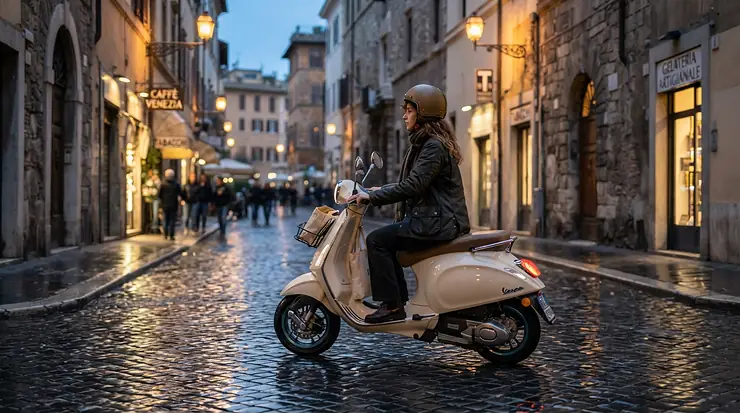
There’s a particular kind of magic in a scooter shaped like a teardrop, and if you’ve ever watched one glide past a café table in Rome, you already know why so many riders want that exact silhouette — minus the gas tank. A vespa style electric scooter is a battery-powered two-wheeler built around the rounded body panels, step-through frame, and chrome-flecked details that made the original Italian scooter a design icon, but running on an electric motor instead of a combustion engine. That’s the short answer. The longer answer is that “retro” now comes in flavors — some genuinely Italian, some German, some Chinese-built with Bosch hardware, some American upstarts chasing the same nostalgic curve with a fraction of the price tag.
This guide exists because picking one isn’t as simple as searching “electric Vespa” and buying the first result. Range claims get inflated, “street legal” means different things in different states, and a gorgeous paint job can hide a motor that struggles on your street’s one real hill. We spent time digging into real specs, manufacturer documentation, and verified owner and reviewer feedback across seven current models — from the officially licensed Vespa Elettrica down to budget-friendly retro-styled alternatives — so you can weigh range against price against authenticity without guessing. Below, you’ll find a quick comparison table, a deep dive into all seven scooters, an honest breakdown of what a classic Italian design influence actually costs you in dollars, and a buyer’s framework that accounts for commute length, storage, and local moped law. Whether you’re chasing a retro vespa style electric scooter for weekend errands or something with enough range for a real commute, there’s a configuration here that fits.
Quick Comparison Table
| Scooter | Top Speed | Real-World Range | Best For |
|---|---|---|---|
| Vespa Elettrica | ~30–45 mph (version dependent) | ~30–41 miles | Authentic Italian pedigree |
| NIU NQi GTS | 43.5 mph | Up to 99 miles (extended battery) | Best all-around commuter |
| NIU MQi+ Sport | 28 mph | ~40 miles | Budget entry into NIU’s ecosystem |
| EMMO Merona | ~28 mph | Up to 56 miles | Storage-friendly retro moped e-bike |
| Segway eMoped C80 | 20 mph | ~47–52 miles | Tech-forward budget pick |
| Aventura-X EV Series | ~28–30 mph | Up to 70 miles claimed | Removable-battery convenience |
| Ariel Rider X-Class 52v | 30+ mph | 70+ miles | Vintage-motorcycle alternative |
The NIU NQi GTS reaches a top speed of roughly 70 km/h with an extended range of about 160 km, or standard range of around 135 km on its stock battery configuration. By contrast, the smaller NIU MQi+ Sport tops out around 28 mph with roughly 40 miles of range from its 1400-watt motor — a reminder that within the same brand, “vespa style electric scooter” can mean wildly different commuting radii. If your daily loop is under 15 miles, several of these bikes have range to spare; if you’re pushing past 30 miles a day, the gap between the NQi GTS and the smaller-battery options becomes the whole decision.
Bookmark this table — you’ll want to scroll back to it once you see what each of these scooters actually looks like up close. 💬
Top 7 Vespa Style Electric Scooters: Expert Analysis
1. Vespa Elettrica — the only one with an actual Vespa badge
If authenticity is non-negotiable, this is where the search ends. The Vespa Elettrica wears a distinctive silvery-grey body that’s customizable with different front shield shapes, decorative touches on the front “tie,” wheel rim finishes, seat options, and even shadow detailing on the badge itself. That’s not marketing fluff — Piaggio built the customization into the ordering process specifically so no two Elettricas on a block look identical, which matters if the whole point of buying one is standing out.
Under the bodywork, the Vespa Elettrica runs a brushless motor paired with a lithium-ion pack, and the battery charger tucked beneath the seat fully recharges in about four hours. What the spec sheet won’t tell you outright is how the weight distribution changes the ride: because the battery sits low and center, the Vespa Elettrica feels more planted at stoplights than its curb weight suggests, which matters a lot to anyone new to two wheels. This is a scooter built for city center riders who want the Vespa name and don’t mind paying for it — not a long-haul commuter tool.
Aggregated owner sentiment across scooter forums and Piaggio’s own retail feedback consistently praises the fit-and-finish and the smoothness of the throttle response, while the most common complaint is the price gap versus Chinese-built alternatives with similar range. There’s no substitute for the badge, though, and that’s exactly what buyers are paying for.
Pros:
- ✅ Genuine Piaggio engineering and officially licensed Vespa design
- ✅ Deep factory customization on colors, trim, and wheels
- ✅ Smooth, refined throttle feel praised by owners
Cons:
- ❌ Premium price relative to range delivered
- ❌ Limited storage compared to bulkier competitors
Expect to pay solidly in premium territory — commonly in the high-$7,000s to $9,000 range depending on configuration and dealer markup, so check current price before visiting a showroom. If your budget can stretch, this is the value verdict: you’re not just buying a scooter, you’re buying the only entry on this list with a legitimate claim to the original bloodline.
2. NIU NQi GTS — best all-rounder for daily commuting
The NIU NQi GTS is the scooter most cross-shopped against the Vespa Elettrica, and for good reason — it’s the closest thing to a genuine step-up in performance without stepping fully into motorcycle territory. Its rated motor power sits at 3000 watts with a peak of 3100 watts, and it’s built by Bosch, a name that means something to anyone who’s dealt with a flaky no-name hub motor before.
Here’s what that number means in practice: a 3000-watt Bosch motor isn’t just about top speed, it’s about not losing momentum climbing a real hill with a passenger aboard. The NQi GTS is rated to climb a 32% grade even carrying a passenger, which is a spec most budget retro scooters simply don’t advertise because they can’t match it. Braking is handled by a combined braking system that applies front and rear brakes together to shorten stopping distance, and regenerative braking recovers roughly 10% of the energy that would otherwise be lost. That last detail matters more than it sounds — over a year of daily stop-and-go riding, that reclaimed energy adds real miles back to your charge cycle.
Reviewers and dealer feedback repeatedly flag the app connectivity — GPS tracking, unauthorized movement alerts, and remote lock/unlock — as genuinely useful rather than gimmicky, particularly for street parking in dense neighborhoods. The retail price varies by configuration and region, typically landing anywhere from the mid-$3,000s for base trims up to the mid-$5,000s for extended-range GTS Sport builds, so confirm current pricing with a local NIU dealer.
Pros:
- ✅ Bosch-built motor with genuine hill-climbing torque
- ✅ Regenerative braking extends real-world range
- ✅ Strong app ecosystem for security and diagnostics
Cons:
- ❌ Pricier than most non-Vespa retro alternatives
- ❌ Heavier curb weight makes it less nimble for smaller riders
If you want one scooter that does almost everything well — commuting, weekend rides, the occasional passenger — this is the value verdict: the NIU NQi GTS earns its price with performance you can actually feel.
3. NIU MQi+ Sport — most affordable way into NIU’s ecosystem
Not everyone needs the NQi GTS’s range and power, and that’s exactly the gap the NIU MQi+ Sport fills. It’s built around a 1400-watt motor, delivers roughly 40 miles of range, and tops out at about 28 mph — modest numbers, but ones that map cleanly onto short urban commutes rather than highway-adjacent riding.
What most buyers overlook about a smaller-battery scooter like this is that the weight savings genuinely change the ride character. At about 159 pounds, the MQi+ Sport is noticeably lighter than the NQi GTS, which translates into easier maneuvering through tight parking and less strain wheeling it up a curb or into an apartment lobby — a real consideration for anyone without dedicated garage space. It still carries EBS regenerative braking, 360-degree LED lighting, an anti-theft system, and app connectivity, so the feature list doesn’t feel stripped-down even though the price is.
Based on the spec comparison against its bigger sibling, this is squarely a first-scooter or secondary-vehicle pick: someone commuting under five miles each way, or a household adding a second electric moped without paying premium prices twice. Retro authenticity is present but understated — this reads more “clean, modern moped” than “vintage Italian icon,” which some buyers actually prefer.
Pros:
- ✅ Lightest and most affordable scooter in NIU’s retro lineup
- ✅ Full smart features despite the lower price point
- ✅ Easy to maneuver and store in tight urban spaces
Cons:
- ❌ Shorter range limits it to close-in commuting
- ❌ Less common in US dealer inventory than the NQi series
Typically priced in the low-to-mid $2,000s where available, though it’s worth calling ahead since stateside stock runs thinner than NIU’s flagship models — check current price and local availability before committing.
4. EMMO Merona — best storage-friendly retro moped e-bike
The EMMO Merona takes a different structural approach than the NIU or Vespa options: it’s technically an e-bike-classed, moped-styled build rather than a pure scooter, which changes both its legal classification and its price ceiling. It runs on a 500-watt QS hub motor with a removable 60V lithium battery rated for up to roughly 56 miles of range, dual-piston hydraulic disc brakes, and a 400-pound load capacity.
Here’s what the spec sheet doesn’t spell out: that removable battery is a genuine convenience win for apartment dwellers who can’t run an extension cord to street parking. The Merona pairs a two-up seat with dual storage compartments, and that built-in tail box is the detail owners mention most — it’s the difference between strapping groceries to a rear rack with bungee cords and just closing a lid. Owner feedback collected on EMMO’s own retail site describes smooth acceleration, stability on uneven pavement, and battery performance that outlasted expectations, though as with any manufacturer-hosted testimonial, treat the enthusiasm with a grain of salt and look for independent forum chatter before buying.
This is the scooter for someone who values cargo capacity and battery flexibility over raw retro authenticity — the design nods to vintage Italian scooters without chasing an exact replica.
Pros:
- ✅ Removable battery simplifies apartment charging
- ✅ Genuine two-up seating with real storage space
- ✅ Hydraulic disc brakes at a mid-range price point
Cons:
- ❌ E-bike classification means lower top speed than true scooters
- ❌ Less brand recognition than NIU or Vespa for resale value
Commonly priced in the $2,000-$3,000 range at the time of research — solid mid-pack value if cargo space matters more to you than top speed.
5. Segway eMoped C80 — best tech-forward budget pick
The Segway eMoped C80 punches well above its price bracket on smart features, and it’s one of the few scooters on this list with a genuinely independent, hands-on review to lean on. Tom’s Guide tested the C80 directly, reporting a motor rated around 600 watts nominal and 750 watts peak, a top speed of 20 mph, and a maximum range of about 47 miles from its 1152Wh battery.
What most buyers overlook about the Segway eMoped C80 is the security tech baked into the base price — its RideyGo intelligent system includes an AirLock remote unlock feature, NFC tag unlocking, smart seat detection, and an auto-lock mode, on top of four separate built-in anti-theft mechanisms. That’s a meaningfully deeper feature set than most scooters at this price point offer, and it’s a legitimate reason to pick the C80 over a cheaper no-name alternative even if the raw range numbers look modest by comparison.
Tom’s Guide summed up the C80 as a genuinely fun, well-considered ride, noting the comfortable seating position and eye-catching styling as standout strengths, with the lack of turn signals as its clearest drawback. That’s a fair trade for the price: this isn’t trying to be a highway-capable commuter, it’s a neighborhood cruiser that happens to look sharp doing it.
Pros:
- ✅ Independently reviewed with consistently positive feedback
- ✅ Class-leading smart-lock and anti-theft feature set
- ✅ No motorcycle license required in most states
Cons:
- ❌ No turn signals — you’ll need to hand-signal
- ❌ 20 mph top speed limits it to slower streets
At the time of research, listings commonly ranged from roughly $1,700 to $2,200 depending on promotions — always check current price, since this model has seen frequent seasonal discounting.

6. Aventura-X EV Series — longest claimed range on a budget
Aventura-X is a newer American entrant chasing the same retro-moped aesthetic with a specific hook: a swappable battery system. The company markets its removable lithium-ion batteries as delivering up to 70 miles of range per charge — notably more than the fixed-battery Vespa Elettrica claims — and positions the scooter as street legal with nationwide delivery.
Here’s the honest caveat that a full spec sheet demands: those range and legal-status claims come directly from the manufacturer’s own marketing, not an independent test, so treat the 70-mile figure as a ceiling under ideal conditions rather than a guaranteed daily number — a pattern true of virtually every scooter brand’s advertised range, but worth flagging explicitly here since Aventura-X doesn’t yet have the volume of independent reviews that NIU or Segway have accumulated. Owner testimonials on the company’s own site describe reliable performance and responsive customer service, including a same-day part replacement story from a 2021 model owner — a reasonable signal, though again, self-published.
What genuinely stands out is the removable battery pitch itself: if you live somewhere without garage access, charging a battery pack indoors overnight is a meaningfully better experience than running a cord out a window.
Pros:
- ✅ Removable battery designed for indoor charging convenience
- ✅ Longest advertised range on a budget-tier scooter
- ✅ Financing options make upfront cost more manageable
Cons:
- ❌ Fewer independent reviews than established competitors
- ❌ Range claims are manufacturer-reported, not third-party tested
Financing is advertised from roughly $94 per month, which typically implies a total purchase price somewhere in the $3,000-$4,500 range depending on term length — confirm exact figures directly with the seller before signing anything.
7. Ariel Rider X-Class 52v — best vintage-motorcycle alternative
The Ariel Rider X-Class 52v takes the retro theme in a slightly different direction — less “Italian scooter,” more “vintage American motorcycle” — but it earns its spot here as the pedal-assist alternative for riders who want moped styling with e-bike-level flexibility. It runs a 1,000-watt hub motor delivering 110 Nm of torque, with a claimed range beyond 70 miles, adjustable dual suspension, and puncture-resistant CST tires.
Its banana seat and oversized headlight give it a genuinely vintage motorcycle look, and that stretched seating position is the detail that divides opinion — some riders love the relaxed lean-back stance, others find it less naturally “scooter-like” than a true step-through frame. Based on the spec comparison against pure electric scooters on this list, the trade-off is speed and torque versus classification: because it retains pedals, it can qualify under e-bike rules in many states rather than moped or motorcycle rules, which meaningfully simplifies registration — though riders should always verify their specific state’s thresholds before assuming exemption, since throttle-only top speeds here can exceed the federal e-bike definition in some configurations.
Pros:
- ✅ Strong torque and long range for the price bracket
- ✅ Pedal-assist classification can simplify registration
- ✅ Adjustable suspension improves comfort on rough streets
Cons:
- ❌ Vintage-motorcycle look diverges from classic Vespa styling
- ❌ Non-adjustable single frame size limits fit options
Pricing has run around $2,099, discounted from an original $2,299 sticker — a genuinely strong value if the styling direction appeals to you more than a pure Vespa silhouette.
Top 7 Scooters: Specs at a Glance
| Scooter | Motor | Battery/Range | Price Range |
|---|---|---|---|
| Vespa Elettrica | Brushless, ~4kW | Fixed pack, ~30-41 mi | $7,700-$9,000+ |
| NIU NQi GTS | 3000W Bosch | Extended pack, up to 99 mi | $3,200-$5,600 |
| NIU MQi+ Sport | 1400W | Fixed, ~40 mi | $2,000-$2,700 |
| EMMO Merona | 500W QS hub | Removable 60V, ~56 mi | $2,000-$3,000 |
| Segway eMoped C80 | 750W peak | Fixed 1152Wh, ~47-52 mi | $1,700-$2,200 |
| Aventura-X EV | Undisclosed | Removable, up to 70 mi claimed | $3,000-$4,500 |
| Ariel Rider X-Class 52v | 1000W hub | Fixed, 70+ mi | $2,000-$2,300 |
Looking at the numbers side by side, price doesn’t track cleanly with range — the budget-friendly Ariel Rider X-Class 52v and Aventura-X EV both claim longer distances than the far pricier Vespa Elettrica, which tells you the badge and build quality, not raw range, are what you’re really paying a premium for. If maximum miles-per-dollar is your only criterion, the mid-tier options win outright; if authenticity and resale value matter, the calculus flips entirely.
✨ Don’t Miss These Exclusive Deals!
Click any highlighted model above to check current pricing and availability before it changes. 😊
The Classic Italian Design Influence Behind Every Curve
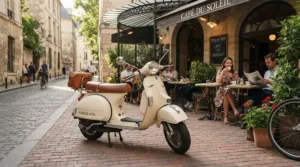
Every scooter on this list, even the ones with zero Piaggio DNA, is chasing the same design language: the rounded “beak” front fender, the flat floorboard for feet-forward seating, and the single-piece body panel that hides the mechanicals entirely. That classic Italian design influence traces back to post-war Italy, where competitors like LML’s licensed copy of the Vespa PX shape defined an entire generation’s idea of what a scooter should look like, and later revivalists like Bajaj’s Chetak reintroduced an all-metal, retro-inspired body for the electric era. The reason this matters for buyers today: the closer a scooter’s body panel hugs that original teardrop silhouette, the more likely it commands a premium — and the more likely aftermarket parts and accessories exist for it, since decades of the same basic shape have created a mature accessory ecosystem.
You’ll notice the difference immediately in person. A true classic vespa style e-scooter uses a monocoque steel or aluminum body that fully encloses the drivetrain, while budget alternatives often bolt plastic fairings onto a more conventional scooter frame. Neither approach is “wrong,” but if the Italian design lineage is the actual reason you’re shopping this category, pay close attention to whether a listing shows real body panels or styled plastic shrouding — it’s usually visible in close-up photos before you ever sit on the thing.
Vintage Color Options: Finding Your Signature Retro Look
Color is doing more work than people expect in this category. The right vintage color options — think dusty sage green, faded coral, or classic ivory — instantly signal “genuine retro” even on a scooter with an entirely modern drivetrain, while the wrong palette (neon accents, aggressive graphics) can make even an authentically Italian-designed body look like a costume. Piaggio leans into this directly, letting Vespa Elettrica buyers customize front shield color, wheel rim finish, and seat material — essentially treating paint and trim as a legitimate part of the product, not an afterthought.
For the more budget-conscious models on this list, vintage color options are usually limited to two or three factory finishes rather than a full customization menu, so if a specific shade matters to you, confirm it’s in stock before ordering rather than assuming it’s a universal option. A practical tip that most buying guides skip: matte finishes hide small scuffs from everyday parking scrapes far better than gloss paint, which matters more on a daily commuter than it does on a garage-kept weekend cruiser.
Chrome Trim Accents and the Details That Signal Quality
Chrome trim accents are the small details that separate a scooter that reads as genuinely vintage from one that just looks vaguely rounded. Mirror stems, headlight bezels, luggage rack tubing, and wheel rim edging are the four spots where chrome (or convincing chrome-look plastic) does the most visual work. Here’s what most buyers overlook: real metal chrome trim resists pitting and fading far longer than chromed plastic, but it also adds weight and cost — which is exactly why premium models like the Vespa Elettrica and NIU NQi GTS use it more liberally than budget alternatives like the Segway eMoped C80, which leans on painted plastic accents instead to hit its price point.
If chrome trim accents are a priority for you specifically because you want that showroom-vintage look in photos and on the street, budget an extra line item for aftermarket chrome mirror caps or a rack upgrade on the more affordable scooters — it’s a genuinely cheap way to close the visual gap without paying thousands more for a premium badge.
Retro Vespa Style Electric Scooter vs Traditional Gas Scooters
| Factor | Retro Vespa Style Electric Scooter | Traditional Gas Scooter |
|---|---|---|
| Fuel/Energy Cost | Pennies per charge | $8-15 per tank |
| Maintenance | Minimal — no oil changes, spark plugs | Regular oil, filters, spark plug swaps |
| Noise | Nearly silent | Audible engine noise |
| Emissions | Zero tailpipe emissions | Direct combustion emissions |
| Top Speed Range | 20-45 mph (model dependent) | Often 30-60 mph |
Riders comparing real annual costs have estimated gas moped ownership at roughly $500 a year in fuel alone, plus another $500 or more in maintenance for issues that simply don’t exist on an electric drivetrain — no carburetor to clean, no spark plug to foul, no oil to change on a schedule. A retro vespa style electric scooter trades some of that traditional mechanical simplicity for battery management instead, but for most riders that’s a favorable trade: batteries degrade gradually and predictably, while a neglected gas engine can fail suddenly and expensively. The one place gas scooters still win outright is refuel speed — five minutes at a pump beats even the fastest electric charge — which matters if your daily range genuinely exceeds what any of these seven scooters can deliver on a single charge.
How to Choose a Vespa Style Electric Scooter
- Measure your actual commute distance first. Don’t buy for the range you might someday need — buy for double your typical daily mileage, since cold weather and hills both cut real-world range noticeably below advertised figures.
- Check your state’s moped and e-bike classification rules. Speed and power thresholds vary significantly by state, and a scooter that’s license-free in one state may require registration in another.
- Prioritize brand support over marginal spec advantages. A scooter with a thin dealer network becomes a headache the moment something needs warranty service, regardless of how good its on-paper specs look.
- Test-sit before you buy if at all possible. Seat height and floorboard depth vary more than people expect between retro-bodied scooters, and comfort issues only show up once you’re actually straddling the thing.
- Factor in charging access, not just charge time. A scooter with a removable battery is a meaningfully different ownership experience if you park on the street rather than in a garage.
- Weigh chrome trim accents and vintage color options against your actual budget ceiling. Cosmetic customization is the easiest place to overspend chasing a specific aesthetic.
- Read independent reviews, not just manufacturer claims. Range, top speed, and even “street legal” status are sometimes optimistic on spec sheets — cross-check with owner forums before finalizing a purchase.
Common Mistakes When Buying a Vespa Style Electric Scooter
The single most common mistake is buying on looks alone and discovering the range doesn’t match the actual commute — a gorgeous scooter that needs recharging halfway through your day is a daily frustration dressed up as a style win. A close second is skipping the local registration check entirely, assuming “electric” automatically means license-free; several states classify higher-wattage retro scooters as mopeds or even motorcycles regardless of the battery. Buyers also frequently underestimate storage needs, picking a sleek low-profile model and later realizing there’s nowhere to stash a helmet, let alone groceries. Finally, plenty of shoppers chase the cheapest listing without checking whether parts and service are actually available locally — a $200 savings upfront isn’t worth it if a failed controller means shipping the whole scooter back to the manufacturer for repair.

Vespa Inspired Electric Scooter for Adults: Who Actually Rides These
A vespa inspired electric scooter for adults tends to attract three distinct rider profiles, and matching yourself honestly to one of them will save you from buyer’s remorse. The first is the style-first urban commuter — someone riding two to eight miles a day who genuinely cares as much about how the scooter looks parked outside a coffee shop as how it performs, and who’s well served by the Vespa Elettrica or NIU NQi GTS. The second is the budget-pragmatic rider who wants retro looks but needs the lowest total cost of ownership, a profile that fits the Segway eMoped C80 or NIU MQi+ Sport well. The third is the range-anxious commuter with a longer daily distance, who should lean toward the Aventura-X EV Series or Ariel Rider X-Class 52v for their higher claimed mileage, accepting a less purely “Vespa” aesthetic in exchange for distance.
Notably absent from this category, generally, are true beginners with zero two-wheeled experience — most of these scooters, even the slower ones, benefit from at least some prior bicycle or scooter handling familiarity, particularly around braking distance and balance at low speeds.
Practical Usage Guide: Your First 30 Days
Getting a new retro electric scooter right in the first month matters more than most buyers expect, since early habits often determine long-term battery health. Start by fully charging the battery before your first ride, even if it arrives partially charged — lithium packs benefit from a complete initial cycle. For the first week, avoid deep-discharging the battery below 20% repeatedly; shallow, frequent charges are gentler on cell longevity than habitually running it to empty. Check tire pressure weekly for the first month, since factory fill levels sometimes settle during shipping, and underinflated tires quietly eat into both range and handling precision.
A common first-30-days mistake is neglecting the app pairing process on connected models like the NIU NQi GTS or Segway eMoped C80 — skipping this step means missing out on theft alerts and diagnostic data that could catch a developing issue early. Also budget time to test the horn, lights, and brakes in a quiet parking lot before hitting real traffic; retro-bodied scooters sometimes place controls slightly differently than a standard bicycle or motorcycle layout, and a few minutes of familiarization prevents a dangerous fumble at an intersection later.
Real-World Scenarios: Which Rider Matches Which Scooter
Consider a graduate student living three miles from campus with no car and a tight budget: the NIU MQi+ Sport or Segway eMoped C80 covers that distance easily on a single charge, costs a fraction of the premium options, and doesn’t demand garage space for storage. Now consider a suburban professional commuting twelve miles each way to an office with covered parking: here the extended-range NIU NQi GTS genuinely earns its higher price, since its near-100-mile extended range absorbs weather-related range loss without daily anxiety. Finally, picture a design-conscious rider in a walkable city neighborhood who rides mostly for errands and weekend cruising rather than a fixed commute — for that person, the Vespa Elettrica‘s shorter range is a non-issue, and the authentic badge and customization options deliver exactly the value they’re actually shopping for.
Long-Term Cost & Maintenance
The upfront price tag is only part of the ownership story, and this is where electric retro scooters generally outperform expectations over a multi-year horizon. The U.S. Energy Information Administration projected the average residential electricity price at roughly 18 cents per kilowatt-hour for 2026 — at that rate, fully charging even the largest battery pack on this list, the NIU NQi GTS‘s extended 4200Wh pack, costs well under a dollar. Independent real-world testing across dozens of electric scooters has found charging costs running in the range of a few cents to roughly a dime per full charge depending on battery size, making the electricity cost of daily riding genuinely negligible compared to gasoline over a year of commuting.
Maintenance costs follow a similar pattern: no oil changes, no spark plugs, no carburetor cleaning. The real long-term cost to plan for is battery replacement — most lithium packs in this category are rated for several hundred to over a thousand full charge cycles before capacity noticeably declines, which typically translates to three to five years of daily use before a replacement becomes worth considering. Budgeting a few hundred dollars every three to five years for a fresh battery pack, alongside routine brake pad and tire wear, keeps total cost of ownership dramatically below a comparable gas scooter’s fuel and service bills.
Safety, Regulations & Street-Legal Compliance
This is the section buyers skip and then regret. Mopeds capable of exceeding 20 mph and intended primarily for road use fall under NHTSA’s jurisdiction as “motor-driven cycles,” a subcategory of motorcycle, and any such vehicle sold in the United States must comply with applicable Federal Motor Vehicle Safety Standards. That’s a meaningful distinction: a scooter marketed as “street legal” nationally may still require state-specific registration, a driver’s license, or even a motorcycle endorsement depending on its top speed and motor output, since individual states set their own registration and licensing thresholds on top of federal safety compliance.
Practically, this means a rider considering the faster NIU NQi GTS should expect closer scrutiny — potentially a moped or motorcycle endorsement — than someone buying the lower-speed Segway eMoped C80, which stays under the 20 mph threshold that many states treat more leniently. Always confirm your specific state DMV’s current rules before assuming any scooter’s marketing language applies to you; helmet requirements, minimum rider age, and insurance mandates also vary meaningfully by state and are worth five minutes of research before your first ride, not after a traffic stop.
Frequently Asked Questions
❓ Is a vespa style electric scooter street legal in the US?
❓ How far can a retro vespa style electric scooter travel on one charge?
❓ Do I need a license for a classic vespa style e-scooter?
❓ Are electric retro scooters cheaper to run than gas scooters?
❓ What's the difference between a vespa inspired electric scooter for adults and a standard e-bike?
Conclusion
Choosing among these seven scooters really comes down to what you’re optimizing for. If authenticity and badge pedigree matter most, the Vespa Elettrica remains the only genuine article on this list, and it’s priced accordingly. If you want the best balance of range, torque, and smart features without going full premium, the NIU NQi GTS earns its reputation as the category’s strongest all-rounder. Budget-focused riders shouldn’t overlook the Segway eMoped C80 or NIU MQi+ Sport, both of which deliver genuinely usable retro-styled transportation without the premium price tag, while the EMMO Merona, Aventura-X EV Series, and Ariel Rider X-Class 52v each carve out their own niche around storage, removable batteries, and vintage-motorcycle styling respectively.
What ties all seven together is the same underlying appeal: retro design that doesn’t ask you to sacrifice modern reliability, low running costs, or your daily commute to get it. Match your actual mileage needs and local regulations to the right scooter from this list, and you’ll end up with a ride that looks as good in five years as it does the day it arrives.
Recommended for You
- Moped Style Electric Scooter: 7 Retro Rides Worth Riding In 2026
- Best Mobility Scooter For Outdoor Use: 7 Rugged Picks (2026)
- Electric Mobility Scooter For Seniors: 7 Best Picks For Independence In 2026
Disclaimer: This article contains affiliate links. As an Amazon Associate, I earn from qualifying purchases. If you purchase products through these links, we may earn a small commission at no additional cost to you.
✨ Found this helpful? Share it with your friends! 💬🤗
