

In This Article
There’s a particular kind of frustration that comes from watching your own body tell you “no” to things it used to say yes to without a second thought — the walk to the mailbox, the loop around the grocery store, the afternoon at the county fair. An electric mobility scooter for seniors doesn’t fix that frustration so much as it sidesteps it entirely, trading a painful shuffle for a smooth, motorized glide that gets you where you’re going on your own terms.
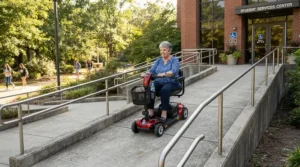
What is an electric mobility scooter for seniors? It’s a battery-powered, tiller-steered personal vehicle — usually three or four wheels — built to carry one rider across indoor and outdoor terrain without requiring standing balance or walking endurance, typically rated for 4 to 8 mph and 250 to 500 pounds of capacity depending on the model.
Here’s the thing nobody tells you upfront: the “best” scooter isn’t a single product, it’s a moving target that depends on your body weight, your doorway widths, the size of your car trunk, and whether the person loading it is you or your daughter after her workday. That’s exactly what this guide untangles. We researched seven real, currently available models — spanning bare-bones budget picks to 500-pound-capacity heavy haulers — and broke down what the spec sheets actually mean once you’re the one sitting in the seat. Title II and III entities covered by the ADA are required to let riders bring power-driven mobility devices into public spaces, which is worth knowing before you second-guess taking yours to the pharmacy or the ballpark, according to the Department of Justice’s ADA guidance on power-driven mobility devices.
We’ll walk through a quick comparison table, then a deep dive into all seven scooters, then practical stuff nobody puts in the manual — setup tricks, caregiver logistics, and the mistakes that turn a good purchase into a regretted one.
Quick Comparison Table: Top Electric Scooters for Seniors at a Glance
| Scooter | Weight Capacity | Range | Best For |
|---|---|---|---|
| Pride Go-Go Elite Traveller Plus 3-Wheel | 300 lbs | ~10.25 miles | Tight turns and easy folding |
| EV Rider Transport AF+ | 250 lbs | ~10 miles | Lightest overall, air travel |
| Golden Buzzaround EX 4-Wheel | 350 lbs | ~18 miles | Longest range in a compact frame |
| Vive 3-Wheel Mobility Scooter | 265 lbs | ~12.4 miles | Tightest budget |
| Drive Medical Scout Compact 3-Wheel | 300 lbs | ~9 miles | Simple indoor-outdoor use |
| Pride Victory 10.2 4-Wheel | 400 lbs | ~11-13.5 miles | All-around comfort and stability |
| Golden Companion HD 3-Wheel | 500 lbs | ~16 miles | Largest riders, max stability |
A quick read on this table: if range anxiety is your biggest worry, the Golden Buzzaround EX and Golden Companion HD both clear 16+ miles on a charge, which is more than double what the budget-tier Drive Medical Scout Compact offers. But that range comes at a cost in curb weight — the Companion HD tips the scales north of 220 pounds fully assembled, so it’s not the one you’re hauling into a sedan trunk solo. Meanwhile, the EV Rider Transport AF+ sacrifices some weight capacity and range specifically to stay under 50 pounds, which matters enormously if you’re the one lifting it.
💬 Bookmark this table now — you’ll want to scroll back to it once you see what each scooter actually looks like in action.
Top 7 Electric Mobility Scooters for Seniors: Expert Analysis
1. Pride Go-Go Elite Traveller Plus 3-Wheel — best turning radius for tight indoor spaces
The standout here is the 34.5-inch turning radius, which sounds like a boring number until you’re trying to pivot in a small bathroom doorway and realize most competitors need almost double that room to spin around.
Under the hood, an 18-amp-hour battery pushes this scooter to roughly 10.25 miles on a single charge at a breezy 4.5 mph, and the whole unit is rated for a 300-pound capacity. In practice, that translates to a scooter that won’t leave you stranded on a longer errand run but also won’t feel sluggish getting there — the delta tiller wraps around your wrists for one-handed control, which is a genuinely thoughtful touch for anyone dealing with grip strength issues from arthritis.
Who should actually buy this: apartment dwellers and anyone navigating older homes with narrow hallways. The feather-touch, one-hand disassembly is Pride’s calling card, and reviewers across major retail platforms consistently single out how quickly it breaks down into manageable pieces for car trunk loading — though a few consistently mention that the swivel seat mechanism can feel a bit loose over time, a fair trade-off for how easy it makes getting on and off.
Pros:
- ✅ Exceptionally tight 34.5″ turning radius for indoor use
- ✅ One-hand feather-touch disassembly into light pieces
- ✅ Wraparound delta tiller eases wrist strain
Cons:
- ❌ 300 lb capacity limits larger-bodied riders
- ❌ Seat swivel mechanism can loosen with heavy daily use
At the time of research, prices for the Pride Go-Go Elite Traveller Plus 3-Wheel land in the $1,300-$1,700 range depending on retailer and battery configuration — always check current price before buying, since these shift with promotions. For anyone whose biggest daily obstacle is a cramped floor plan rather than long distances, this is a genuinely smart value pick.
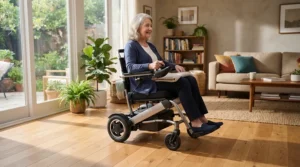
2. EV Rider Transport AF+ — lightest auto-folding scooter on the market
Press a button on the key fob, and this scooter folds or unfolds itself in seconds — no bending, no wrestling with hinges, no calling for backup.
That automatic folding mechanism is paired with an absurdly light frame: the Transport AF+ weighs only 44 pounds without the battery and 49 pounds with it, making it one of the lightest powered scooters sold anywhere. The trade-off for that featherweight build is a lower 250-pound weight capacity and a shorter roughly 10-mile range on its lithium battery — this is a scooter engineered for portability first, endurance second. The tight 31-inch turning radius means it handles cramped grocery aisles and cruise ship corridors with real grace.
Who this is for: frequent flyers and cruise passengers, since the lithium battery configuration is built to meet airline safety requirements, plus anyone whose upper body strength has declined to the point where lifting a 70-pound scooter piece is simply off the table. Reviewers who travel often report that the auto-fold feature alone justifies the premium price tag, though a handful note the plastic-heavy frame feels less rugged than steel-bodied competitors on rough pavement.
Pros:
- ✅ Auto-folds via remote in under 10 seconds
- ✅ Among the lightest powered scooters available, ~49 lbs
- ✅ Airline-compliant lithium battery for travel
Cons:
- ❌ Lower 250 lb weight capacity than most rivals
- ❌ Plastic-heavy frame feels less rugged outdoors
Expect to pay in the $1,800-$2,300 range for the EV Rider Transport AF+ at the time of research — a premium justified almost entirely by that folding mechanism. If travel is the whole point of buying a scooter, this is the one worth stretching the budget for.
3. Golden Technologies Buzzaround EX 4-Wheel — longest driving range in a compact travel frame
While most travel scooters top out around 10-12 miles, the Buzzaround EX blows past that with an 18-mile drive range on a full charge, powered by dual U-1 batteries instead of the single smaller pack found in cheaper competitors.
That extended range doesn’t come at the cost of portability, either — the heaviest disassembled piece weighs around 53 pounds, keeping it within reach of most caregivers loading a trunk. A 4-inch ground clearance is unusually generous for a scooter this size, meaning curbs, gravel driveways, and slightly uneven sidewalks won’t stop you cold the way they would on a scooter built purely for smooth indoor floors.
Who should buy this: seniors who live in suburban or rural areas where “quick errand” actually means a few miles round trip, or anyone who hates the anxiety of watching a battery gauge drop. Aggregated reviewer sentiment across major retailers consistently praises the extended range and the bright LED lighting package for evening walks, though a common thread in feedback flags that the seat, while comfortable, could use more back support on longer rides.
Pros:
- ✅ Class-leading 18-mile range on dual batteries
- ✅ 4″ ground clearance handles curbs and gravel
- ✅ Bright LED headlight and taillight for visibility
Cons:
- ❌ Heaviest piece around 53 lbs, tougher for solo loading
- ❌ Seat back support draws mixed reviewer feedback
At the time of research, the Golden Technologies Buzzaround EX 4-Wheel typically sits in the $1,300-$1,700 range — genuinely strong value considering the range advantage over similarly priced rivals. If distance is your top priority, this is the pick to beat.
4. Vive 3-Wheel Mobility Scooter — most affordable entry point into powered mobility
Sometimes the honest answer to “which scooter should I buy” is simply “the one you can actually afford without draining your savings,” and that’s exactly the lane this model occupies.
Supporting up to 265 pounds and weighing 77 pounds total, the Vive isn’t trying to out-spec the premium brands — it’s trying to get a first-time rider up and moving without a four-figure commitment. Top speed sits at 3.7 mph with a driving distance up to 12.4 miles per charge, which is genuinely respectable for the price bracket, and the scooter disassembles into four manageable pieces with the heaviest weighing just 29 pounds.
Who this fits: budget-conscious seniors testing whether a scooter actually fits their lifestyle before committing to something pricier, or families buying a “starter” unit for a parent who’s resistant to the idea altogether. Aggregated Amazon review sentiment skews positive on ease of assembly and value for money, with one recurring theme being that the seat back could sit a bit taller for users over average height — a fair critique reviewers repeat often enough to take seriously.
Pros:
- ✅ Genuinely budget-friendly entry price point
- ✅ Disassembles into light, manageable pieces
- ✅ Tight 2.6-foot turning radius for indoor navigation
Cons:
- ❌ Lower 3.7 mph top speed than most competitors
- ❌ Seat back height runs short for taller riders
At the time of research, the Vive 3-Wheel Mobility Scooter typically runs in the $650-$900 range on major retail sites — check current price, as this fluctuates with sales. It’s not flashy, but for a first scooter or a tight budget, it earns its spot on this list honestly.
5. Drive Medical Scout Compact 3-Wheel — simple, no-frills indoor-outdoor reliability
There’s real value in a scooter that doesn’t try to reinvent anything — the Scout Compact is Drive Medical’s answer to “just make something that works.”
Rated for 300 pounds with a 9-mile maximum range, this scooter disassembles into five pieces with a heaviest section around 29-49 pounds depending on configuration, using a quick-connect battery pack that even someone with limited dexterity can manage. The delta-style tiller is deliberately simple — fewer buttons, fewer things to fumble with, which matters more than spec sheets usually let on.
Who this is for: seniors who want a scooter for specific, predictable trips — shopping centers, family events, the occasional theme park visit — rather than daily long-range use. Reviewer sentiment aggregated from retail platforms is notably candid: buyers consistently praise the value and reliability for the price, while some flag a wider turning radius than expected for tight indoor corners, and a few mention spotty aftermarket customer service experiences when parts needed replacing.
Pros:
- ✅ Straightforward controls, minimal learning curve
- ✅ Quick-connect battery pack eases charging routine
- ✅ Strong value at its price point
Cons:
- ❌ Wider turning radius than similarly sized rivals
- ❌ Some reviewers report inconsistent manufacturer support
At the time of research, expect the Drive Medical Scout Compact 3-Wheel to fall in the $800-$1,100 range — one of the more approachable price points on this list for a scooter with genuine outdoor capability.

6. Pride Victory 10.2 4-Wheel — best all-around comfort and stability for daily use
If the Go-Go Elite Traveller Plus is built for tight turns and the Buzzaround EX for range, the Victory 10.2 is built for the thing that matters most once the novelty wears off: comfort, ride after ride.
A 400-pound weight capacity pairs with a maximum speed up to 5.2 mph and a travel range up to 11 miles on standard batteries, extending to 13.5 miles with the optional 40Ah pack. What separates this model from cheaper four-wheel scooters is the small quality-of-life stack: frosted LED headlights, low-mounted pathway lighting, and a USB charging port built into the tiller, so a phone doesn’t die mid-errand. Feather-touch disassembly splits the frame for transport, though the heaviest piece runs about 64.5 pounds — this is not a scooter for solo trunk-loading without help.
Who should buy this: seniors who use their scooter daily rather than occasionally, where seat comfort and ride stability outweigh portability concerns. Aggregated review sentiment across retailers is consistently strong on ride smoothness and the sliding, swiveling seat, with the most common critique being the added weight makes it a two-person job to load into most vehicles.
Pros:
- ✅ 400 lb capacity with a stable 4-wheel base
- ✅ USB charging port and full LED lighting package
- ✅ Sliding, swiveling seat for genuine daily comfort
Cons:
- ❌ Heaviest disassembled piece around 64.5 lbs
- ❌ Not ideal for solo caregiver loading without assistance
At the time of research, the Pride Victory 10.2 4-Wheel typically falls in the $2,200-$2,700 range. This is squarely a mid-to-premium purchase, and honestly, it earns that price tag if daily comfort is the priority.
7. Golden Technologies Companion HD 3-Wheel — highest weight capacity for larger-bodied riders
Weight capacity limits quietly exclude a lot of riders from standard scooters, and this model exists specifically to close that gap.
Rated for a 500-pound weight capacity, the Companion HD combines a modern design with rear suspension and a 51-inch turning radius that, remarkably, stays tighter than several lower-capacity competitors — a genuinely clever engineering trade-off. Dual NF22 batteries deliver speeds up to 6 mph and a travel range of up to 16 miles per charge, and an optional power-elevating seat can lift a rider up to 6 inches, which meaningfully reduces the strain of standing up from a seated position — a detail that matters enormously for riders with knee or hip issues.
Who this fits: bariatric riders and anyone previously told by a standard 300-pound-capacity scooter that they simply don’t qualify. Aggregated reviewer sentiment highlights the smooth rear suspension and stability at higher speeds as standout strengths, though the sheer footprint and total weight — over 220 pounds assembled — mean this isn’t a scooter you’re improvising transport for without a ramp or lift.
Pros:
- ✅ Industry-leading 500 lb weight capacity
- ✅ Rear suspension smooths out uneven terrain
- ✅ Optional power-elevating seat aids standing transitions
Cons:
- ❌ Very heavy overall build limits casual transport
- ❌ Premium price reflects its specialized capacity
At the time of research, the Golden Technologies Companion HD 3-Wheel typically runs in the $2,800-$3,400 range. It’s the most expensive scooter on this list, but for riders who’ve been turned away by lower-capacity models, it’s arguably solving a problem no other entry here can.
Practical Usage Guide: Getting the Most from Your New Scooter
The first 30 days with a new scooter set the tone for years of use, and most of the mistakes people make happen in week one out of pure impatience.
Start by charging the battery fully before the first ride, even if the manual says a partial charge is fine — lithium and sealed lead-acid batteries both benefit from a full initial cycle that calibrates the battery gauge accurately going forward. Once you’re riding, spend your first few sessions in a wide-open, low-stakes space like a driveway or empty parking lot rather than jumping straight into a crowded store; the tiller’s sensitivity takes a few minutes to feel natural, and you want that learning curve to happen somewhere a wobble doesn’t matter.
A maintenance habit worth building immediately: check tire pressure or tread (for pneumatic models) and wipe down the battery contacts monthly, since corrosion buildup is the single most common cause of “my scooter won’t turn on” service calls. Most manufacturer manuals recommend charging after every use rather than waiting for the battery to fully drain, which sounds excessive but actually extends battery lifespan significantly over deep-cycle charging habits. One optimization trick rarely mentioned in owner’s manuals: adjust the tiller angle and seat height before your first long outing, not during it — dialing in ergonomics on the fly while you’re also learning to steer is a recipe for frustration.
Real-World Scenarios: Matching Scooters to Caregivers and Families
Consider Diane, 74, who lives alone in a two-bedroom condo with narrow hallways and does most of her errands within a mile of home. For her, the Vive 3-Wheel Mobility Scooter or Drive Medical Scout Compact makes more sense than anything with a longer range — she’s not chasing distance, she’s chasing an affordable way to stay independent on short, predictable trips.
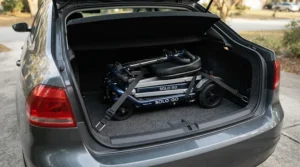
Then there’s Robert, 81, whose daughter Maria handles most of his transportation and needs to load his scooter into her sedan trunk after every doctor’s visit. For that household, the EV Rider Transport AF+‘s auto-fold feature is worth the extra cost — Maria isn’t lifting anything heavier than a suitcase, and the whole process takes seconds instead of the multi-piece disassembly other models require.
Finally, picture Eleanor, 68, a snowbird who splits her year between a large retirement community up north and a condo in Florida, walking her dog and attending community events daily. Her use case calls for range and comfort over ultra-portability — the Golden Buzzaround EX or Pride Victory 10.2 fit that lifestyle far better than a lightweight travel model that would need recharging twice a day.
✨ Not sure which scenario matches your situation? Scroll back up to the comparison table and match your weekly routine to the range column first — that single number eliminates more wrong choices than any other spec.
How to Choose an Electric Mobility Scooter for Seniors
Picking the right model comes down to seven decision points, worked through roughly in this order:
- Confirm your weight capacity margin. Choose a scooter rated at least 20-25% above your actual body weight — riding right at the maximum limit accelerates motor and battery wear.
- Measure your doorways and hallways. A scooter with a wide turning radius will feel great outdoors and miserable indoors if your home wasn’t built with wheelchairs in mind.
- Map your typical trip distance. Double whatever distance you think you’ll travel, since range estimates from manufacturers assume ideal flat terrain and a lighter rider than most real-world use cases.
- Decide who’s doing the lifting. If a caregiver loads the scooter regularly, prioritize total disassembled weight over top speed or range.
- Check terrain realistically. Gravel driveways, grass, and curbs all demand higher ground clearance than a scooter built purely for tile and pavement.
- Review the seat and tiller adjustability. Comfort issues that seem minor in a showroom become dealbreakers after 20 minutes of actual riding.
- Confirm ADA and building-specific rules before buying. Some HOAs, retirement communities, and businesses have their own reasonable accommodation policies worth understanding upfront — the ADA’s official guidance on power-driven mobility devices is the definitive starting point.
ADA Accessibility Features Explained
A lot of buyers assume “ADA accessibility” is something a building has or doesn’t have, but it’s actually a two-way relationship between the scooter and the space it’s entering. Under Title II and III of the ADA, public entities and businesses must accommodate wheelchairs and mobility scooters in any area open to pedestrians, and must make reasonable modifications to accommodate other power-driven mobility devices too, unless a legitimate safety concern applies.
What this means practically for scooter shoppers: standard mobility scooters like every model on this list are automatically covered under ADA mobility device protections — you generally can’t be denied entry to a business or public building simply for using one. Clinicians and physical therapists who prescribe mobility devices typically weigh factors like balance, endurance, and the patient’s ability to safely operate tiller steering versus needing the more supportive control of a power wheelchair, which is worth a conversation with your doctor if you’re unsure whether a scooter or wheelchair better fits your situation. Features like adjustable tillers, wide turning radii, and stable low-speed handling — all present across the models reviewed here — directly support that kind of accessible, confident use in public spaces.
Understanding Weight Capacity Limits
Weight capacity is the single most misunderstood spec on any scooter listing, and misunderstanding it is how riders end up with premature motor burnout or a voided warranty.
That capacity number represents the rider’s weight, not rider-plus-cargo — a 300-pound-rated scooter carrying a 280-pound rider with a full grocery basket in the front tray is effectively over its limit. Manufacturers build in some engineering margin, but riding consistently near the ceiling shortens motor life, drains batteries faster per mile, and can compromise braking distance on inclines. This is exactly why the spread on this list matters: the Vive and EV Rider Transport AF+ cap out around 250-265 pounds, the Go-Go Elite Traveller Plus, Buzzaround EX, and Scout Compact sit in the 300-350 pound range, and the Victory 10.2 and Companion HD climb to 400 and 500 pounds respectively for larger-bodied riders. If you’re anywhere near a listed capacity, size up — the next tier isn’t meaningfully more expensive, and the mechanical strain difference is significant.

Foldable vs. Lightweight: What’s the Real Difference
These two terms get used interchangeably in marketing copy, and that’s genuinely misleading, because they solve different problems.
A foldable mobility scooter — like the EV Rider Transport AF+ — collapses its frame into a smaller footprint, often automatically, but doesn’t necessarily weigh less overall; it just takes up less space when stored. A lightweight mobility scooter, by contrast, is built from lighter materials and disassembles into smaller pieces rather than folding as one unit — think the Pride Go-Go Elite Traveller Plus, which breaks down into five separate components none heavier than roughly 34 pounds. For a caregiver lifting one whole folded unit into a trunk, foldability matters more. For a senior who can manage smaller loads one piece at a time but couldn’t lift a single 50-pound folded block, true lightweight disassembly wins instead.
Common Mistakes When Buying an Electric Mobility Scooter
The most expensive mistake buyers make is sizing for their current weight rather than accounting for the 15-20 pounds that sometimes creeps on after mobility declines and activity drops — buy the next capacity tier up if you’re anywhere close to a limit. A close second is skipping the tape measure: buyers fall in love with a scooter’s range or price, then discover at delivery that it doesn’t clear their front door frame or fit in the elevator. Third, people consistently underestimate battery charging discipline, letting batteries fully drain repeatedly, which shortens lifespan dramatically compared to routine after-use charging. Finally, plenty of buyers skip the test ride entirely, ordering online sight-unseen — tiller resistance, seat firmness, and turning responsiveness vary enough between models that a five-minute local dealer test can save a costly return.
Electric Mobility Scooters vs. Power Wheelchairs
The line between these two categories confuses a lot of first-time buyers, but the distinction actually comes down to physical requirements rather than price or features. Medicare’s own comparison criteria note that power-operated vehicles like scooters require the rider to have the physical ability to use tiller steering and maintain postural stability while in motion, whereas power wheelchairs are appropriate for those with more significant weakness or seated instability who can’t safely manage that kind of control.
In practical terms: if you can transfer independently, sit upright without extra support, and operate a steering handle with reasonable hand strength, a scooter like any reviewed here is likely the right category. If balance, core strength, or hand dexterity are more significantly limited, a power wheelchair with joystick control and more supportive seating may serve better — that’s a conversation worth having directly with a physician or occupational therapist before you buy anything.
Long-Term Cost & Maintenance
The sticker price is only the opening chapter of what a scooter actually costs over its lifespan, and it’s worth budgeting for the sequel. Batteries typically need replacement every 12-18 months with regular use, running roughly $100-$250 per pair depending on the battery type and capacity — a predictable, recurring cost worth building into your annual budget from day one. Tires, whether solid flat-free or pneumatic, generally last several years but should be inspected each season, and minor items like tiller grips or seat upholstery wear down faster than the core frame itself.
On the insurance side, many buyers don’t realize Medicare Part B may help cover power-operated vehicles as durable medical equipment when medical necessity is properly documented through a face-to-face exam and physician prescription — coverage generally kicks in after the Part B deductible, with the beneficiary paying 20% of the Medicare-approved amount. That’s a meaningful offset worth exploring with your doctor’s office before assuming a scooter is entirely out-of-pocket, and it’s one more reason to loop your physician into the buying process early rather than after the fact. For families navigating this from the caregiver side, Next Avenue’s guide on helping aging parents stay mobile walks through the right questions to ask before committing to a purchase.
Frequently Asked Questions
❓ What is the best electric mobility scooter for seniors with limited mobility?
❓ How much weight can a mobility scooter for seniors hold?
❓ Can I take a folding mobility scooter on an airplane?
❓ Does Medicare cover an electric mobility scooter for seniors?
❓ How long does an electric mobility scooter battery last per charge?
Conclusion
There’s no universal “best” electric mobility scooter for seniors, and honestly, anyone who tells you otherwise is skipping the part where your hallway width, your car trunk, and your grandson’s back all get a vote. What you can walk away with is a clearer map: the Vive 3-Wheel and Drive Medical Scout Compact for tight budgets and short trips, the EV Rider Transport AF+ for anyone who travels or has a caregiver doing the lifting, the Golden Buzzaround EX for range-hungry riders, the Pride Go-Go Elite Traveller Plus for indoor maneuverability, and the Pride Victory 10.2 or Golden Companion HD for riders who need serious comfort or weight capacity.
Whichever you land on, treat the buying process the way you’d treat picking a good pair of shoes for a long walk — measure carefully, test if you can, and don’t assume the priciest option is automatically the right fit for your actual life. Independence isn’t about owning the fanciest scooter on the lot; it’s about owning the one that gets you to the mailbox, the market, and everywhere in between without a second thought.
Recommended for You
- Seated Electric Scooter For Adults: 7 Comfortable Picks (2026)
- Racing Electric Scooter Guide 2026: 7 Fastest Picks Ranked
- Dual Motor Electric Scooter Hill Climbing: 7 Elite Picks (2026)
Disclaimer: This article contains affiliate links. As an Amazon Associate, I earn from qualifying purchases. If you purchase products through these links, we may earn a small commission at no additional cost to you.
✨ Found this helpful? Share it with your friends! 💬🤗
