In This Article
An electric moped for adults is a seated, two-wheeled electric vehicle built for short city trips, usually running on a throttle at roughly 15 to 28 mph. Some are true mopeds with no pedals; many are moped-style e-bikes that keep pedals to stay on the bicycle side of the law.

That second sentence matters more than any spec sheet. The word moped was coined in Sweden in 1952 from “motor” and “pedal,” and today’s electric moped for adults still lives in that same awkward space between bicycle and motorcycle. Pick the wrong side of that line and you may need a license, plates and insurance you didn’t plan for.
So why the surge? Gas costs sting, parking is a sport, and a seat with a throttle beats pedaling uphill in a work shirt. The best electric moped for adults feels like a cheat code for errands: quiet, cheap to charge, and weirdly fun.
This guide does the legwork for you. I compared seven real models using published specs and what reviewers keep reporting, without pretending to have ridden them myself. Along the way I’ll cover a cheap electric moped for city commuting, an entry level electric moped for beginners, honest top speed limits, charging time, and moped licensing rules in plain English. Prices below are ranges from research time, so check current price before you buy.
Electric Moped for Adults at a Glance: Quick Comparison
Here is the short version before we go deep. Speeds are stock, out-of-the-box figures, and ranges are manufacturer claims unless noted. Real-world distance runs shorter, especially on throttle alone.
| Model | Stock Top Speed | Claimed Range | Approx. Price Range | Best For |
|---|---|---|---|---|
| Gyroor C1S | 18.6 mph | Up to 20 miles | Roughly $400-$500 | Tight budgets, short hops, pet owners |
| GoTrax Ranger | 20 mph throttle, 25 mph pedal assist | Up to 50 miles (pedal assist) | Around $700-$900 | First-time buyers |
| Macfox X7 | 20 mph | 35 miles (single battery) | Around $1,600-$1,900 | Street-legal moped looks |
| GoTrax Mustang | 20 mph throttle, 25 mph pedal assist | Up to 86 miles claimed | Around $1,400-$1,600 | Longest range per dollar |
| Super73 ZX | 20 mph | 25-45 miles by version | Around $2,500-$2,800 | Taller riders, brand appeal |
| Ride1Up Revv 1 FS | 20 mph stock (28 mph pedal assist configured) | 30-60 miles claimed | Around $2,300-$2,600 | Hills and power |
| Segway eMoped C80 | 20 mph | 47 miles claimed | Around $1,800-$2,500 | Anti-theft tech, comfort |
Looking at the comparison above, the Gyroor C1S is the budget entry point, while the GoTrax Mustang gets you the most claimed range for the money. Power-hungry riders should note that the Ride1Up Revv 1 FS justifies its higher price with a bigger battery and stronger climbing. The Super73 ZX sits at the premium end mostly for brand, fit and finish rather than raw performance.
💬 Just one click — help others make better buying decisions too!😊
Top 7 Electric Moped for Adults: Expert Analysis
Each entry below blends real specs, published reviewer findings and plain reasoning about who benefits. Nothing here comes from personal ownership, and review notes are aggregated themes, not quotes.
1. Gyroor C1S — cheapest seat-and-basket entry
The Gyroor C1S is the least intimidating way into the category: a folding, seated scooter with a detachable basket rather than a full moped body.
It uses a 550W motor (800W peak) and a 36V 7.8Ah pack. Translation: flat-ish streets at up to 18.6 mph, not steep hills. Gyroor claims up to 20 miles, but small packs sag quickly under load, so heavier riders should plan on less. The seat suits riders from roughly 5’1″ to 6’1″, and the load limit is 265 lbs including cargo.
On the spec comparison, this is a cheap electric moped for city commuting for sub-10-mile round trips, apartment dwellers who need a folding frame, and dog owners who want the basket. It is not a highway machine.
Buyer reviews on retail listings consistently praise the comfortable seat, quiet motor and pet-friendly basket. The recurring complaint is slow acceleration and short range for riders near the weight limit.
Pros:
- ✅ Comfortable adjustable seat for everyday errands
- ✅ Folds for apartments and car trunks
- ✅ Large basket doubles as pet carrier
Cons:
- ❌ Range shrinks fast for heavier riders
- ❌ Sluggish acceleration on hills
Expect roughly the $400-$500 range, which makes it the strongest value pick if your trips stay short.
2. GoTrax Ranger — gentlest power for first-timers
The GoTrax Ranger is where I’d point an entry level electric moped for beginners, because its power delivery is calm rather than twitchy.
A 500W rear-hub motor and a 48V 10.4Ah (499Wh) battery give you 20 mph on throttle and 25 mph with pedal assist. GoTrax advertises up to 50 miles, yet Electric Bike Report estimated closer to 17 miles of throttle-only riding from the battery math. Treat the claim as a pedaling best case. Charging takes about 5.5 hours on the 2A charger, and the bike is UL 2849 certified.
What most buyers overlook is the pedaling position: moped geometry makes real pedaling a chore, so think of this as a throttle-first commuter with pedals for legal purposes.
Reviewers keep praising the comfortable seat, upright posture and price. Common complaints include a bar-style battery readout that makes range hard to judge and a throttle not tied to assist levels.
Pros:
- ✅ Very approachable price for the style
- ✅ Gentle, controllable power for beginners
- ✅ UL-certified electronics and battery
Cons:
- ❌ Battery meter makes range estimates guesswork
- ❌ Real throttle range falls well below claims
At around $700-$900, it’s an easy first moped-style bike if you stay within its limits.
3. Macfox X7 — moped looks with street-legal manners
The Macfox X7 is the one that looks most like a real scooter while staying inside e-bike law.
A 500W motor (750W peak) pulls from a removable 624Wh pack. Macfox lists 35 miles on one battery and up to 70 with a second, plus a 5-6 hour charge. Speed is locked to 20 mph, which keeps the whole lineup in Class 2 territory. For most riders that means no license or plates, though local rules still apply. The rider limit is 330 lbs, which is generous.
The catch is mass. At roughly 87-89 lbs, this is not a bike you carry upstairs. If you have a garage or ground-floor storage, the weight becomes stability; if you have a walk-up, it becomes regret.
Reviewers highlight the long comfortable seat, fat tires that swallow cracks, and the dual-battery option. The most common criticism is how heavy it feels to maneuver, plus limited frame sizing.
Pros:
- ✅ Fully limited to street-legal Class 2 speeds
- ✅ Second battery option doubles range
- ✅ High 330 lb rider limit
Cons:
- ❌ Very heavy to move around by hand
- ❌ Only two near-identical sizing trims
Plan on roughly $1,600-$1,900 for the single-battery build, more with the second pack.
4. GoTrax Mustang — longest range per dollar
The GoTrax Mustang is the spreadsheet winner of this list, and the spreadsheet is backed by a real test.
A 750W rear-hub motor with 90Nm of torque runs from a 48V 15Ah battery, which GoTrax says can reach 86 miles. That number is a pedal-assist best case. In a throttle-only test, Electric Bike Report measured 28.7 miles, which still ranked among the longest of any moped-style bike it had tested. That’s the honest figure to plan around.
It also uses a torque sensor, rare in this style, so pedal assist responds to effort instead of simply switching on. Add an integrated frame battery, a color display and a storage compartment.
The most common reviewer complaints are a slight motor whine, lever-based speed control and a bar-style battery readout. Digital Trends also noted that riders with longer legs may feel cramped.
Pros:
- ✅ Class-leading tested throttle-only range
- ✅ Torque sensor feels more natural
- ✅ Integrated battery keeps the profile clean
Cons:
- ❌ Tall riders may feel cramped
- ❌ Noticeable motor noise at takeoff
At around $1,400-$1,600, it’s the value-for-range champion.
5. Super73 ZX — the comfortable commuter with brand pull
The Super73 ZX is positioned as the brand’s comfort-first commuter, with a 31-inch seat height that suits taller riders better than other Super73 models.
The Core version runs a 480Wh (48V 10Ah) battery, a 500W nominal motor, 25-35 miles claimed and a 5-hour charge. The LE steps up to 720Wh, 35-45 miles claimed and 7-8 hours of charging. Super73 lists 20 mph, and riders are 16 and older. Some owners report firmware updates have restricted top speed to 20 mph, so don’t count on faster modes.
This is a lifestyle purchase as much as a performance one. You are paying for design, fit and brand, and for riders who stick to paved streets, that’s a legitimate reason.
The review pool on the brand’s own store is small. Reviewers praise design and sturdiness, while some note long charging and a lack of fenders.
Pros:
- ✅ Roomier fit for taller riders
- ✅ UL-compliant removable battery
- ✅ Strong brand support and resale appeal
Cons:
- ❌ Premium price for modest performance
- ❌ Slow charging on the larger battery
Budget around $2,500-$2,800 depending on version, and verify where you’re buying.

6. Ride1Up Revv 1 FS — power and hill-climbing muscle
The Ride1Up Revv 1 FS is the bike on this list that actually behaves like a small motorcycle.
Electrek lists a 750W continuous Bafang hub motor with a 52V 20Ah (1,040Wh) battery, 93 lbs of weight and a 30-60 mile claimed range, while some outlets quote a higher peak output. OutdoorGearLab measured 37.17 miles throttle-only, which is a more honest planning figure. It ships in Class 2 form at 20 mph, with a pedal-assist cap of 28 mph. Some reviewers describe an off-road unlock that exceeds 35 mph, but speeds like that may take it out of e-bike legal territory.
Charging is slow: Digital Trends reported more than six hours on the original 3A charger.
Reviewers consistently praise the power, comfort, lights and turn signals. The most repeated criticisms are heft, poor pedaling dynamics and the lack of a rear rack.
Pros:
- ✅ Strong hill-climbing power
- ✅ Big battery with measured long range
- ✅ Turn signals, horn and full lighting
Cons:
- ❌ Roughly 93 lbs is hard to maneuver
- ❌ Long charge on the stock charger
Plan on around $2,300-$2,600. If hills define your commute, it’s the best fit here.
7. Segway eMoped C80 — smart security and a plush ride
The Segway eMoped C80 treats theft as a feature problem. It has app-based unlocking, motion alerts and automatic locking, which matter if you park on city streets.
Tom’s Guide reports a 20 mph top speed, a 24Ah (1,152Wh) removable battery, a 220 lb rider limit and a claimed 47-mile range. The reviewer’s hilly 6-mile ride suggested roughly 30 miles in practice, and on steep inclines a 185 lb rider slowed to about 6 mph. Weight is listed near 121 lbs in that review, while Segway’s own spec table shows a higher number, so check before ordering. Electrek notes functional pedals qualify it as a Class 2 e-bike in the US.
Availability has been inconsistent, and at least one major retailer listed it as no longer available new, so confirm stock.
Reviewers praise comfort, styling and security. The recurring drawbacks are the lack of turn signals and under-deck taillights that are less visible than ideal.
Pros:
- ✅ Best-in-list anti-theft and app features
- ✅ Full suspension and padded seat
- ✅ Removable battery for indoor charging
Cons:
- ❌ No turn signals
- ❌ Struggles on steep hills with heavier riders
Expect roughly $1,800-$2,500 and watch availability.
How the Seven Stack Up
| Model | Charge Time | Main Reviewer Takeaway | Best For |
|---|---|---|---|
| Gyroor C1S | About 5 hours | Comfortable seat, shorter real range | Short budget trips |
| GoTrax Ranger | About 5.5 hours | Gentle power, hard-to-read meter | Beginners |
| Macfox X7 | 5-6 hours | Street-legal, very heavy | Ground-floor storage |
| GoTrax Mustang | Roughly 5-6 hours | Tested range leader | Range-focused commuters |
| Super73 ZX | 5 hours (Core), 7-8 hours (LE) | Great fit, premium price | Taller riders |
| Ride1Up Revv 1 FS | 6+ hours (3A charger) | Powerful, heavy | Hilly routes |
| Segway eMoped C80 | Not published in reviewed sources | Plush ride, limited stock | Theft-prone streets |
The table points to a clear split: light, cheap and short-range on one side, heavy and long-range on the other. The GoTrax Mustang is the best balance if you want range without a premium price, while the Segway eMoped C80 is the pick when theft worries you more than watts. If you can’t store or lift weight, the Gyroor C1S is the realistic option.
✨ Ready to Find Your Ride?
🔍 Take your daily commute to the next level with these carefully selected picks. Click on any highlighted product name to check current pricing and availability. Whichever you choose, you’ll build a faster, calmer routine your whole week will thank you for!
How to Choose an Electric Moped for Adults
Start with the questions that actually decide the outcome. These steps come from the spec comparison and the common complaints above.
- Check your local law first. Whether it’s a bicycle, a moped or a motorcycle in your state decides everything else, from license to insurance.
- Match battery capacity to your real route. Ignore the headline range. Throttle-only tests landed well below claims, so double your round trip and make sure it fits.
- Weigh the bike against your storage. An 87-93 lb frame is stable on the road and brutal on stairs.
- Be honest about hills. A 500W motor handles flat commutes; a long climb rewards the stronger 750W bikes.
- Look for safety certification. UL 2849 and UL 2271 certifications show up on several of these bikes and reduce fire-risk worries.
- Check the lighting package. Turn signals and a bright brake light matter more at night than any top speed number.
- Confirm fit. Several reviewers flagged cramped legroom for taller riders or limited sizing.
Cheap Electric Moped for City Commuting: What a Small Budget Really Buys
A cheap electric moped for city commuting usually means two trade-offs: smaller batteries and thinner finishing details. That’s fine if you know where the compromises are.
At the low end, the Gyroor C1S gives you a seat and a basket for the cost of a few tanks of gas. The GoTrax Ranger steps up to a bigger 48V battery and real moped styling at around $700-$900. Both are honest answers when trips are short and flat.
The part budget shoppers overlook is total cost of ownership. Charging is cheap, since a roughly 500Wh pack costs a small amount of electricity per full charge at typical US residential rates. What costs money is tires, brake pads and eventually a replacement battery. A cheaper bike with a weak battery warranty can lose that savings in one replacement.
So here is the rule: for a cheap electric moped for city commuting, spend extra on the battery and brakes and economize on frills. A bike that is boring but reliable beats a flashy one that strands you at mile nine.
Entry Level Electric Moped for Beginners: Where to Start
New riders don’t need the fastest bike. They need the most forgiving one. An entry level electric moped for beginners should deliver power smoothly, stop predictably and fit without contortions.
Based on published reviews, the GoTrax Ranger is the clearest beginner pick because reviewers describe gentle, controllable power. The Macfox X7 is another good entry level electric moped for beginners with room to grow, since its Class 2 speed lock prevents surprises. Reviewers specifically described its power as controllable and suited to newer riders.
Beginner mistakes tend to repeat:
- Grabbing the throttle too hard on a wet road.
- Skipping a helmet because the bike “feels like a bicycle.”
- Overlooking weight when parking.
- Ignoring tire pressure for the first month.
An entry level electric moped for beginners should also have hydraulic or well-adjusted disc brakes and a visible headlight. Practice in an empty parking lot first, then graduate to quiet streets. A bike this fun invites overconfidence, and confidence is not a safety feature.
Top Speed Limits: What the Numbers on the Box Really Mean
The most misunderstood part of any electric moped for adults is the top speed limits. A faster number can quietly change what the vehicle legally is.
Under federal definitions, a low-speed electric bicycle has working pedals, a motor under 750 watts and a motor-powered top speed under 20 mph. Most states layer on a three-class system: Class 1 offers pedal assist to 20 mph, Class 2 adds a throttle to 20 mph, and Class 3 assists up to 28 mph with extra rules like age minimums and helmet requirements. A moped, by contrast, is typically capped around 50cc equivalent and roughly 30 mph.
Here’s how this lineup falls out:
- The Macfox X7 and Super73 ZX are locked to 20 mph.
- The GoTrax Ranger and GoTrax Mustang list 20 mph on throttle and 25 mph with pedal assist.
- The Ride1Up Revv 1 FS ships at 20 mph, with 28 mph pedal assist configured.
Be wary of “unlock” modes. A bike that exceeds the top speed limits for its class can be treated as a motorcycle or moped, and states like Minnesota are already legislating against high-powered e-motos. Wikipedia notes US moped speed is generally capped near 30 mph, with a few states at 20 or 25. A faster bike is not necessarily a better one if it needs plates.
Charging Time: What to Expect and How to Plan Around It
Charging time is the least glamorous spec and the one you’ll live with daily. Most bikes here need 5-6 hours for a full fill, which fits neatly into a workday or overnight.
The ranges are consistent. The Gyroor C1S takes about 5 hours, the GoTrax Ranger about 5.5 hours, and the Macfox X7 5-6 hours. The Super73 ZX Core is rated near 5 hours, but the larger LE version stretches to 7-8. Digital Trends reported more than six hours for the Ride1Up Revv 1 FS on its original 3A charger. Newer batteries may charge faster, so verify the exact pack you’re buying.
Practical charging time rules:
- Charge at your destination if the battery is removable.
- Charge after rides that drop below half.
- Don’t leave a pack at empty for long, since deep discharge shortens life.
- If storing, top up roughly monthly, as Gyroor’s listing advises.
On cost, a pack around one kilowatt-hour, like the roughly 1,040Wh Ride1Up Revv 1 FS, typically costs well under a dollar at normal US residential rates. Slow charging is a planning issue, not a cost issue. If you need a midday top-up, a second battery (as offered with the Macfox X7) beats a faster charger.
Moped Licensing Rules: Do You Need a License?
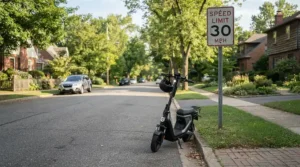
This is where buyers get burned, so read it twice. Moped licensing rules vary by state, and the same bike can be unlicensed in Texas and regulated in New Jersey.
The general pattern from reviewed sources: a compliant low-speed e-bike (pedals, under 750W, 20 mph on motor power) is treated like a bicycle. Most states don’t require a license, registration or insurance for one. Mopeds usually need at least a basic driver’s license, and registration varies widely. Some examples reported in 2026:
- New Jersey: requires registration and a license for every e-bike, with a July 19, 2026 compliance deadline.
- Hawaii: requires one-time registration.
- California: requires UL 2849 certification for new e-bikes and bans selling Class 3 bikes to riders under 16.
- Connecticut: requires helmets for all riders.
- Texas: no license or registration, but a Class 3 age rule applies.
Alaska and Massachusetts may license certain e-bikes under moped rules, though the sources describe them differently, so verify directly. For a concrete look at how one state spells things out, the New Jersey micromobility rules show how categories, age limits and licensing are split.
Because moped licensing rules change, check your state DMV before buying. A helmet is smart everywhere, and insurance is worth considering even where it’s optional.
Electric Moped vs Moped-Style E-Bike vs Gas Moped
Not every seated two-wheeler is the same legal animal. Here’s the breakdown.
| Factor | Moped-Style E-Bike | True Electric Moped | Gas Moped (50cc) |
|---|---|---|---|
| Pedals | Working pedals | Usually none | Varies by state |
| Typical top speed | 20-28 mph | Often 30 mph or more | Around 30 mph design speed |
| License | Usually none | Often required | Typically required |
| Registration | Usually none | Varies, often yes | Varies |
| Running cost | Very low | Low | Fuel and oil |
| Best For | Casual city commuting | Longer, faster trips | Riders already licensed |
The table shows why the moped-style e-bike dominates this list: it keeps the fun and avoids most paperwork. A true electric moped goes faster but usually brings licensing and registration, which narrows the audience to people ready for that responsibility. Gas models remain simple and cheap upfront, but they lose on noise, fuel and maintenance.
For most people reading this, the GoTrax Mustang or Macfox X7 captures the experience without the paperwork. If you need highway-adjacent speed, you’re really shopping for an electric motorcycle, which is a different guide.
Real-World Scenarios: Which Electric Moped for Adults Fits Your Life?
Specs get abstract fast, so here are three imagined riders. They are illustrations, not real customers.
The college student, 8 miles daily. Flat campus, a third-floor dorm and a tight budget. The Gyroor C1S folds and fits a closet, while the GoTrax Ranger gives more battery if she has a ground-floor rack. Either fits a cheap electric moped for city commuting without a license worry. Budget: under $1,000.
The hilly commuter, 15 miles each way. Long climbs, secure garage, a larger budget. Based on the spec comparison, the Ride1Up Revv 1 FS has the muscle and the 1,040Wh battery for a round trip, though six-plus hours of charging means plugging in at work. The GoTrax Mustang is the lower-cost alternative with a tested 28.7-mile throttle range.
The urban renter, street parking. Theft is the daily worry. The Segway eMoped C80 answers it with locking and alerts, provided you can find one in stock. If you can’t, a good chain lock changes the math for the Super73 ZX or Macfox X7.
The lesson: match the bike to your worst day, not your average one. Your worst day has rain, a heavy backpack and a hill.
Your First 30 Days: Setup, Charging and Maintenance Guide
Most problems with a new electric moped for adults show up in the first month, and almost all are avoidable.
Week one: Inspect the box for damage, since several reviewers report banged-up crates. Check tire pressure, tighten the handlebar stem (reviewers note it can loosen), and confirm the brakes engage before the first ride. Brake pads may need early replacement, so test them on flat ground.
Week two: Learn the display. If you own a GoTrax Ranger or GoTrax Mustang, remember the bar-style battery meter is approximate. Rely on trip distance, not trust.
Weeks three and four: Build your charging rhythm. Top up after rides that drain below half, avoid leaving the pack empty, and keep it away from extreme heat or cold.
A simple maintenance schedule:
- Weekly: tire pressure and quick brake check.
- Monthly: bolts, chain tension and lights.
- Every few months: brake pad wear and chain lubrication.
Common first-month mistakes include riding without a helmet, ignoring weight limits and parking a heavy bike on a slope without the kickstand locked. Do the boring checks, and your electric moped for adults stays reliable for years.
Frequently Asked Questions
❓ How fast can an electric moped for adults go?
❓ How long does charging time take on a typical moped-style bike?
❓ Do I need a license for a cheap electric moped for city commuting?
❓ What is the best entry level electric moped for beginners?
❓ Are moped licensing rules the same in every state?
Conclusion
The right electric moped for adults isn’t the fastest or the flashiest. It’s the one you’ll actually ride on a rainy Tuesday.
If your budget is tight and trips are short, the Gyroor C1S makes a cheap electric moped for city commuting that fits almost anywhere. The GoTrax Ranger is the calmest entry level electric moped for beginners. The GoTrax Mustang wins on tested range per dollar, the Macfox X7 on moped looks with street-legal speed, and the Ride1Up Revv 1 FS on climbing power. Pay for the Super73 ZX when fit and brand matter, and look at the Segway eMoped C80 when theft is the nightmare, subject to stock.
Before you click anything, confirm three things: top speed limits for the class you’re buying, realistic charging time for your routine, and your state’s moped licensing rules. Get those right and the rest is joy.
Recommended for You
- Adventure Helmet With Sun Peak: 7 Best Picks For 2026
- Off-Road Riding Boots For Trail Riders: 7 Best Rugged Picks 2026
- Knee Braces For Enduro Riders On A Budget: 7 Smart Picks 2026
Disclaimer: This article contains affiliate links. As an Amazon Associate, I earn from qualifying purchases. If you purchase products through these links, we may earn a small commission at no additional cost to you.
✨ Found this helpful? Share it with your friends! 💬🤗
