
In This Article
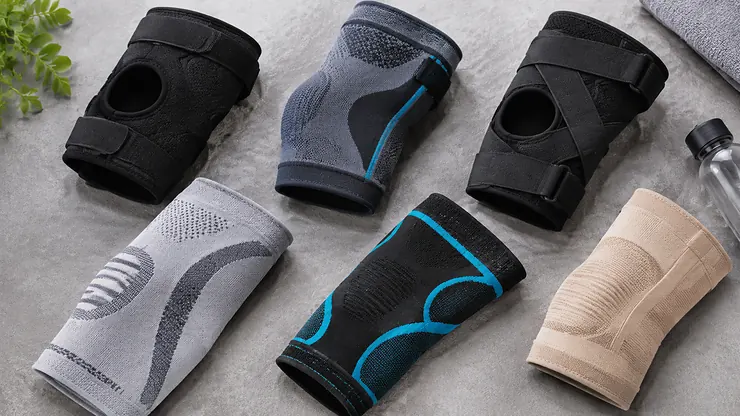
Knee braces for enduro riders on a budget are affordable hinged or semi-hinged supports that limit hyperextension, resist twisting, and shield the kneecap on rough terrain. They skip the carbon frames and custom molding of premium orthoses, but they keep the features that matter most on a trail. Think of them as seatbelts for your knees: not glamorous, hugely valuable the one time you need them.
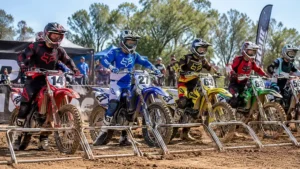
Enduro is hard on joints. Rocks, roots, ruts, and the occasional tree that jumped out at you (it didn’t, but it feels that way) all want a piece of your knees. Cycle World’s guide to off-road knee protection makes the point well: strapping on bulky articulated braces feels like overkill right up until you’ve had a knee injury. A European buying guide goes further and calls the knees the number-one fuse in enduro and motocross.
Here’s the honest part. This guide is built from spec sheets, retailer listings, published tests, and aggregated reviews, not from my own garage time. Where reviews couldn’t be verified, I say so. Prices appear only as ranges, because they move constantly.
Below you’ll find seven real options, a plain-English breakdown of hinged vs soft braces, notes on ligament support, and fit advice for compatibility with riding pants.
Quick Comparison: Knee Braces for Enduro Riders on a Budget at a Glance
| Product | Type | Price Band (check current price) | Best For |
|---|---|---|---|
| EVS Axis Sport | Hinged brace | Entry-brace tier | Riders wanting a true brace without premium spend |
| Alpinestars RK-1 Plasma | Flexible-frame brace | Mid-$200s range | Casual trail days where comfort leads |
| EVS SX02 | Hinged hybrid guard | Hybrid-guard tier | Riders with tight-fitting pants |
| POD K4 2.0 | Composite-frame brace | Mid tier | Best quality-to-price in a full orthosis |
| Alpinestars Bionic 10 Carbon | Hinged carbon hybrid | Around $450 range | Riders stretching the budget for more support |
| Fox Racing Titan Pro | Hinged knee/shin guard | Under $100 | Beginners and tight budgets |
| O’Neal Pump Gun MX Knee Guard | Hinged knee guard | Budget-guard tier | Hot-weather, weekend riding |
This table splits into two camps. Under $100 you’re buying impact protection with hinges (Fox Racing Titan Pro, O’Neal Pump Gun MX Knee Guard). From the mid-$200s upward you start buying real structural support (Alpinestars RK-1 Plasma, Alpinestars Bionic 10 Carbon, POD K4 2.0). Pick the camp that matches your riding before comparing brands.
💬 Just one click — help others make better buying decisions too!😊
Top 7 Knee Braces for Enduro Riders on a Budget: Expert Analysis
“Budget” is relative in this category. In the brace world it means a few hundred dollars, and in the guard world it means under $100. I’ve covered both, because the smartest buy depends on your history and your trails.
1. EVS Axis Sport — best budget-brace compromise for trail riders
The standout feature is the hinge-lock piece, which stops the leg from straight-locking past a safe point. A rider reviewing it on EVS’s own store said their knee used to hurt when they landed big jumps with the leg locked straight, and that the lock fixed it.
The brace uses twin sliding knee cups that flex and extend with the leg. In practice that means the kneecap stays covered through the whole bend instead of peeking out mid-squat. Hyperextension is among the most common off-road knee insults, so a lock that works is worth more than a fancy shell. One older buying guide named it the best budget brace in its roundup.
Reviewers on EVS’s site give it about 4.0 out of 5 across 11 reviews. That’s a small sample on a brand-run page, so treat it as a hint rather than a verdict. Reviewers describe it as comfortable and not bulky.
Pros:
- ✅ Hinge lock helps limit hyperextension on landings
- ✅ Sliding cups keep the kneecap covered through flexion
- ✅ Reviewers describe it as comfortable and low-bulk
Cons:
- ❌ Lighter-duty than the carbon-and-aluminum Axis Pro tier
- ❌ Small review pool, mostly from the brand’s own store
Price: check current price. It sits in the entry-brace tier, and the value verdict is strong if you want a genuine hinged brace without a $400-plus tag.
2. Alpinestars RK-1 Plasma — lightest on-ramp into a real brace
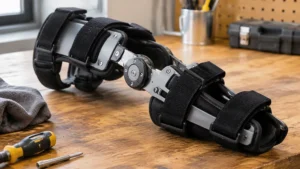
The standout is its flexible plastic structure. A European buying guide calls it the light entry-level option, ideal for leisure enduro where comfort matters more than absolute rigidity. Alpinestars rebuilt its range around a bio-sourced Plasma material for inner comfort in 2025, which is a practical upgrade for sweaty summer rides.
Flexible frames bend with you instead of fighting you. The trade-off is that a bendier frame offers less resistance to the sideways and twisting forces that damage ligaments. So the Alpinestars RK-1 Plasma suits riders who mostly want kneecap protection and a hyperextension buffer, not someone rehabbing a reconstructed ACL.
Retail listings put it in the mid-$200s range, with a 3.8-out-of-5 rating on a major off-road retailer. I couldn’t verify the number of reviews behind it, so consider it directional.
Pros:
- ✅ Among the more affordable Alpinestars brace options
- ✅ Comfort-first design suits long trail days
- ✅ Newer Plasma material aims at inner comfort
Cons:
- ❌ Flexible frame offers less rigid ligament support
- ❌ Middling 3.8 rating suggests mixed experiences
Price: the mid-$200s range at time of research. For casual riders it’s fair value. For hard-enduro riders it’s probably underbuilt.
3. EVS SX02 — hinged hybrid that slides into tight pants
The standout is the very low profile. The manufacturer’s listing describes dual polycentric hinges with hyperextension stops, plus a heavy-duty knee cup, and claims it fits inside most motocross pants. That’s a brand claim, so test it with your own pants.
Polycentric hinges mimic how a real knee glides and rolls rather than swinging on one fixed pin. In practice that means less binding at the bottom of a squat. One buying guide, though, files the EVS SX line under “beefed-up guards with hinges” rather than full braces. I think that’s fair, and it’s useful to know up front.
For riders whose pants fit snugly, the EVS SX02 is the tidy compromise. You get hyperextension control and a hard cup without the bulk of a full-frame orthosis.
I couldn’t find enough verifiable review data to summarize sentiment honestly, so I won’t guess.
Pros:
- ✅ Dual polycentric hinges with hyperextension stops
- ✅ Low-profile build suits snug pant legs
- ✅ Heavy-duty knee cup for impact protection
Cons:
- ❌ One guide classes it as a hinged guard, not a full brace
- ❌ Limited verifiable review data
Price: check current price. It sits in the hybrid-guard tier, and the verdict is good value if your priority is impact plus basic joint control.
4. POD K4 2.0 — best quality-to-price ratio in a true orthosis
The standout is value. A European buying guide singles it out for the best quality-to-price ratio among the braces it covered, and lists a composite frame. POD, an Australian company founded in 2005, focuses specifically on knee joint protection.
A composite frame resists twisting better than a flexible plastic one but costs less than carbon. That’s the sweet spot for riders who want real ligament support without paying flagship money. For context, the flagship POD K8 2.0 listed around $400 at one retailer, and the POD K4 2.0 is typically positioned beneath it. Confirm current pricing, since I couldn’t pin an exact figure.
I couldn’t verify an aggregated review score, so I’m leaving sentiment out. The guide’s recommendation is the main evidence here, and it comes from one source.
Pros:
- ✅ Composite frame balances stiffness and cost
- ✅ Brand focused entirely on knee protection
- ✅ Singled out for quality-to-price ratio
Cons:
- ❌ Costs more than hinged guards
- ❌ Verified review data was thin
Price: check current price. It likely lands in the mid-tier, and it’s the best “stretch” buy if you ride hard.
5. Alpinestars Bionic 10 Carbon — stretches the budget for extra support
The standout is the double-hinged carbon build. One rider writing at Rust Sports, who wore them after an operation, said they fasten well and stay put, with great kneecap protection and a bulk level that fits most motocross pants. He described them as a halfway house between a guard and a brace, which is exactly right.
That middle position means the Alpinestars Bionic 10 Carbon gives you meaningful hinged support and a secure fit without full-orthosis pricing. It’s a smart choice if you’ve had a knee issue but can’t justify a $600-plus custom-feel brace.
A major retailer listed it around $450 with a 3.5-out-of-5 rating from only five reviews. That sample is tiny, so don’t lean on it.
Pros:
- ✅ Double-hinged design for added stability
- ✅ Strong kneecap protection per one rider’s account
- ✅ Not too bulky under most motocross pants
Cons:
- ❌ Top-of-budget pricing around the $450 range
- ❌ Small review sample and a middling 3.5 score
Price: around $450 at the time of research. The value is decent if you need genuine support, but overkill for casual riders.
6. Fox Racing Titan Pro — best under-$100 hinged guard
The standout is coverage. One roundup describes it as popular in the under-$100 guard market, covering shin, knee, and lower thigh. A three-piece hinged, floating knee cup connects through a dual pivoting hinge, so the cup tracks the knee instead of sliding off it.
The same guide is blunt that it isn’t technically a brace. It’s impact armor, and that’s fine, as long as you understand what it does. It won’t control twisting the way a structural brace does.
For beginners, tight budgets, or riders who simply haven’t been hurt yet, the Fox Racing Titan Pro is a sensible floor. The guide’s own advice is that guards are the absolute minimum protection. Availability changes, and one older listing noted it as unavailable on Amazon, so check current stock.
I couldn’t verify an aggregated review score, so I’ll stay silent on sentiment.
Pros:
- ✅ Priced under the $100 mark
- ✅ Covers shin, knee, and lower thigh
- ✅ Floating cup moves with the knee
Cons:
- ❌ Not designed to control twisting or hyperextension
- ❌ Stock varies across retailers
Price: under $100. The value verdict is excellent for impact protection and unremarkable for ligament support.
7. O’Neal Pump Gun MX Knee Guard — vented hinged guard for hot weekend rides
The standout is breathability. A 2026 dirt-bike roundup named it the budget pick, citing a hinged pivot design, pre-formed foam, light weight, and ventilation. Enduro in summer is a sauna on wheels, so airflow isn’t a luxury.
Pre-formed foam means the padding is shaped to the knee rather than flat, which usually helps the guard stay centered. A hinged pivot lets the cup follow flexion. It’s a guard, not a brace, and the O’Neal Pump Gun MX Knee Guard belongs on the shortlist for casual riders and newer riders testing the waters.
The roundup gave it its own 4.6 score, but that’s an editor’s rating, not customer sentiment. I couldn’t verify an aggregated customer-review figure.
Pros:
- ✅ Hinged pivot follows knee flexion
- ✅ Lightweight and ventilated for heat
- ✅ Pre-formed foam helps keep position
Cons:
- ❌ Guard, not a ligament-supporting brace
- ❌ Customer-review data not verified
Price: budget-guard tier, so check current price. It’s good value if heat and weight are your enemies.
Here’s how the seven stack up side by side.
| Product | Type | Verified Rating | Price Band | Best For |
|---|---|---|---|---|
| EVS Axis Sport | Hinged brace | About 4.0/5 (11 reviews, brand site) | Entry-brace tier | First true brace |
| Alpinestars RK-1 Plasma | Flexible brace | About 3.8/5 (retailer) | Mid-$200s | Casual trail riding |
| EVS SX02 | Hybrid guard | Not verified | Hybrid tier | Snug pants |
| POD K4 2.0 | Composite brace | Not verified | Mid tier | Value-focused hard riders |
| Alpinestars Bionic 10 Carbon | Carbon hybrid | About 3.5/5 (5 reviews) | Around $450 | Added stability |
| Fox Racing Titan Pro | Hinged guard | Not verified | Under $100 | Tightest budgets |
| O’Neal Pump Gun MX Knee Guard | Hinged guard | Not verified | Budget tier | Hot-weather riding |
Notice how thin the verified data is. Several of these have few or unverifiable reviews, so the smartest filter is how the design matches your needs. If ligament support is the goal, look at POD K4 2.0 and Alpinestars Bionic 10 Carbon. If impact protection on a shoestring is the goal, Fox Racing Titan Pro and O’Neal Pump Gun MX Knee Guard do the job.
Your First 30 Days: Setting Up a Hinged Knee Brace for Off-Road Riding
A hinged knee brace for off-road riding only works if it stays where it should. Most disappointment comes from poor setup, not poor products. Here’s a practical routine.
Week 1: fit at home. Measure your knee and thigh following the maker’s chart, since every brand sizes differently. Put the brace on with a bent knee and line the hinges up with the joint line, not the kneecap’s top edge. Tighten from the bottom strap up, snug but not numb. Wear it around the house for a day before you ever start a bike.
Week 2: short, easy rides. Check strap tension after the first 15 to 20 minutes, since padding settles. Add one thin moisture-wicking base layer. EVS’s fitting guide for motocross knee braces notes that wicking base layers reduce chafing and help the brace stay in place on long rides. Don’t stack two layers, because they slide against each other and let the brace migrate.
Weeks 3 and 4: normal riding. Rinse mud off, air-dry fully, and inspect hinge screws and strap stitching after every few rides. Loose hinge screws are a classic early-failure culprit.
Common first-month mistakes: over-tightening the top strap, skipping the dry-out, and wearing a brace on a leg you never test-fit with boots. Take your boots to the fitting session.
Real-World Scenarios: Which Budget Pick Fits Which Rider?
Specs mean little until you attach them to a person. Here are three profiles, with reasoning.
The weekend trail rider. She rides roughly twice a month, mostly smooth singletrack and fire roads, with about $300 to spend. Her main risks are dropped-bike twists and low-speed tumbles. The Alpinestars RK-1 Plasma (mid-$200s) gives comfort and hyperextension buffering without much bulk. A Fox Racing Titan Pro would be the thriftier option.
The hard-enduro regular with a past ligament issue. He rides rocky, technical terrain weekly and has a history of knee trouble. This is where ligament support matters, so the POD K4 2.0 or Alpinestars Bionic 10 Carbon make sense. The extra spend is cheap compared with the downtime of re-injury.
The hot-climate summer rider. Heat is the enemy here, and airflow wins. The O’Neal Pump Gun MX Knee Guard is built around ventilation and low weight. If she has a minor knee history, the EVS SX02 adds hyperextension stops in a low-profile package.
Budget, environment, and frequency of use decide this, not brand loyalty.
✨ Don’t Miss These Exclusive Deals!
🔍 Take your motocross knee protection to the next level with these carefully selected picks. Click on any highlighted item to check current pricing and availability. Your knees will thank you after the next rocky descent!
Problem → Solution: Fixing the Most Common Knee Brace Annoyances
Problem 1: The brace slides down your leg. Gravity wins when thighs are slim or straps loosen. The solution is a compression layer or dedicated brace pants, which use compression from the hips to hold braces in place. The Asterisk Zero G Knee Brace Pants, around $100, are designed for this and work with any brand of brace.
Problem 2: Chafing and hot spots. Usually this is bare skin meeting hinge edges. Add a thin wicking base layer and keep it to one layer only.
Problem 3: Overheating. Braces trap heat. Choose a ventilated option like the O’Neal Pump Gun MX Knee Guard, loosen straps slightly during long climbs, and rinse and dry the liner after every ride.
Problem 4: Straps catching your pants. Velcro tabs snag fabric. One buying guide suggests checking that straps don’t catch when putting pants on and off. Tuck loose ends or trim them where the manufacturer allows.
Problem 5: Numb calves. You’re overtightening. Loosen the lower strap until circulation returns, then re-check after ten minutes of riding.
How to Choose Knee Braces for Enduro Riders on a Budget
- Define your risk first. Hyperextension and impacts call for a hinged guard or hybrid. Twisting and ligament concerns call for a real brace.
- Set a realistic budget. Expect under $100 for guards and a few hundred dollars for braces. A 2019 guide put entry braces at $400 to $600, but prices on the Alpinestars RK-1 Plasma (mid-$200s) show cheaper options exist now.
- Check the hinge type. Dual or polycentric hinges follow the knee more naturally than single-pivot designs.
- Look for hyperextension stops. These matter in jump landings and slow-speed falls.
- Test fit with boots and pants. Compatibility with riding pants decides whether you’ll actually wear it.
- Read reviews skeptically. Small samples (like 5 or 11 reviews) are hints, not proof.
- Weigh your history. Past injuries justify spending up toward the POD K4 2.0 or Alpinestars Bionic 10 Carbon.
Hinged vs Soft Braces: What the Research Actually Says
Hinged vs soft braces is the debate every bargain shopper runs into. The clinical evidence is more nuanced than the marketing.
A 2020 study in Frontiers in Bioengineering and Biotechnology compared rigid and soft braces in 17 people with ACL-deficient knees during walking and 180-degree cutting. The soft brace limited peak abduction with less disruption to normal gait. The rigid brace caused a significant extension deficit and larger increases in rotation. In the cutting task, neither brace clearly beat the other. The authors also noted that earlier studies comparing the two show conflicting results.
Two cautions apply. First, those were clinical patients, not riders bouncing over roots. Second, the study tested sport movements, not crashes. So treat it as evidence that stiffer isn’t automatically better for everyday movement, not as a verdict on off-road impact.
My practical read: if your trails involve frequent falls and hard landings, a hinged knee brace for off-road riding gives mechanical stops and a hard cup that a soft sleeve simply can’t. If your main need is comfort and mild stability, a softer, flexible design like the Alpinestars RK-1 Plasma may serve you better. Hinged vs soft braces isn’t winner-takes-all. It’s about matching the design to your terrain and history.
Motocross Knee Protection: Braces vs Guards vs Pads
Motocross knee protection comes in three tiers, and the right one depends on what you’re guarding against.
| Option | Protects Against | Typical Cost | Best For |
|---|---|---|---|
| Knee pads | Scrapes, minor impacts | Lowest | Casual riders |
| Hinged guards (Fox Racing Titan Pro, O’Neal Pump Gun MX Knee Guard) | Impacts, shin strikes | Under $100 range | Beginners, tight budgets |
| Braces (POD K4 2.0, Alpinestars Bionic 10 Carbon) | Hyperextension, twisting, impacts | A few hundred dollars | Serious riders, prior injuries |
EVS notes that most new riders start with pads because of the lower cost, while braces aim to prevent potential or recurring injuries. MX Locker adds that pads are lighter and cheaper but offer less structural help, while some riders find braces cumbersome.
Read the table this way: pads are for scrapes, guards are for impacts, and braces are for joints. If you only ride mellow trails, a guard may be all you need. If you’ve ever felt your knee “go” on a landing, step up to a brace. A knee guard is also a perfectly respectable stepping stone, because you can always upgrade later.

Ligament Support on a Budget: What to Expect (and What Not To)
Ligament support is where budget buyers most often misjudge their purchase. A $250 brace isn’t a custom-fitted medical orthosis, and no off-the-shelf brace guarantees you’ll avoid a torn ACL.
What a good affordable brace can do: add mechanical stops against hyperextension, resist some twisting, and give you a hard shell that protects the kneecap. Those benefits are real, especially for landing-related strain.
What it can’t do: replace muscle strength, fix an unstable knee on its own, or make crashes consequence-free. One buying guide advises that if you have an existing injury, you should buy the best brace you can, and custom options sit well above off-the-shelf pricing.
That’s the honest takeaway. If you’re healthy and cost-conscious, the EVS Axis Sport or Alpinestars RK-1 Plasma are reasonable preventive choices. If you’re returning from a ligament injury, talk to a physician or physiotherapist before choosing, and consider stepping up to the POD K4 2.0 or Alpinestars Bionic 10 Carbon. Cheap is great, but cheap plus an unstable knee is a gamble.
Compatibility With Riding Pants: Fit Rules That Save Your Ride
Compatibility with riding pants is the make-or-break detail. A brace you can’t comfortably wear under your pants will sit in the garage.
Low profile matters. The EVS SX02 and Alpinestars Bionic 10 Carbon both draw praise for fitting under most motocross pants, though that’s partly brand or single-rider claims. Always try your own pants.
You may need to size up. One guide notes that some braces require bigger pants. Straight-cut pants usually accommodate guards better than slim-cut ones.
Use dedicated brace pants if needed. The Asterisk Zero G Knee Brace Pants run around $100 and use compression to hold braces in place while letting pants slide on easily. Sizing is by waist: small covers 28 to 29 inches, medium 30 to 32, large 33 to 35, and extra-large 36 to 40.
Avoid double layers. Stacking socks and sleeves lets the brace shift.
Bring your boots. Test fit with the footwear you actually ride in.
Common Mistakes When Buying Knee Braces for Enduro Riders on a Budget
Buying on price alone. The cheapest option is only a bargain if it matches your needs. A guard won’t replace a brace.
Trusting tiny review samples. A 5-review average isn’t evidence. Look for patterns across multiple sources.
Skipping the size chart. Manufacturers each design for an “average” leg, so the less average your leg, the more careful you need to be.
Ignoring pant fit. If it won’t fit under your pants, it won’t get worn.
Forgetting the extras. Sleeves, liners, and straps wear out. Budget a little for replacements.
Assuming a brace is a cure. It reduces risk, not eliminates it.
Chasing looks. A flashy graphic doesn’t change how the hinges behave.
Avoid these seven, and knee braces for enduro riders on a budget will pay you back in comfort and confidence.
Long-Term Cost and Maintenance: Is a Budget Brace Worth It?
Do the math. Suppose a brace in the $300 range lasts three seasons at 25 rides each. That’s 75 rides, or roughly $4 per ride. A $450-range Alpinestars Bionic 10 Carbon over the same stretch comes to around $6 per ride. A guard under $100 like the Fox Racing Titan Pro costs about a dollar and a half.
Now compare that with injury costs. One European guide counts six months off work, surgical overruns, and around 40 physiotherapy sessions as the real price of a knee injury, and calls braces among the cheapest insurance on the market.
Durability matters too. Enduro21’s long-term test of the Leatt X-Frame ran about two years through hard enduro, cross-country, and the Erzbergrodeo, taking hits from posts, earthmover tyres, and rocks. That’s a pricier brace, but it shows what sturdy construction can survive.
Maintenance for budget braces is simple: rinse, air-dry, check screws, and replace worn straps. A $30 liner swap often extends a brace’s life more than a new purchase.
FAQ: Knee Braces for Enduro Riders on a Budget
❓ Are cheap knee braces worth it for enduro?
❓ Do I need a brace or are knee guards enough?
❓ Can I wear a knee brace under enduro pants?
❓ How much should I spend?
❓ Do hinged knee braces really protect ligaments?
Conclusion
Knee braces for enduro riders on a budget aren’t a compromise on safety. They’re a way to match your protection to your real risks. For tight budgets, the Fox Racing Titan Pro and O’Neal Pump Gun MX Knee Guard offer hinged impact protection at the lowest cost. For a first true brace, the EVS Axis Sport and Alpinestars RK-1 Plasma are sensible entry points. For riders who want more ligament support without custom pricing, the POD K4 2.0 and Alpinestars Bionic 10 Carbon are worth the stretch. The EVS SX02 fills the gap for snug pant legs.
Remember the three questions that matter: what you’re protecting against, whether it fits under your pants, and whether you’ll actually wear it. Get those right and the logo matters far less. Spend a little now, ride harder later, and keep your knees in one piece for the long haul.
Recommended for You
- Waterproof Panniers For Dual Sport Motorcycles: 7 Best Picks 2026
- Electric Dirt Bike For Adult Trail Riding: 7 Proven Picks (2026)
- Electric Dual Sport Vs Electric Dirt Bike: 7 Best Picks 2026
Disclaimer: This article contains affiliate links. As an Amazon Associate, I earn from qualifying purchases. If you purchase products through these links, we may earn a small commission at no additional cost to you.
✨ Found this helpful? Share it with your friends! 💬🤗
