
In This Article
Every few months, a new direct-to-consumer electric bike brand lands in your search results with a motor that sounds like a small motorcycle and a price that sounds like a typo. Most of them blur together. The velowave ebike lineup is one of the few that has stuck around long enough to build a real paper trail: retailer write-ups, owner reports, spec sheets and a few years of “would I buy this again?” feedback.
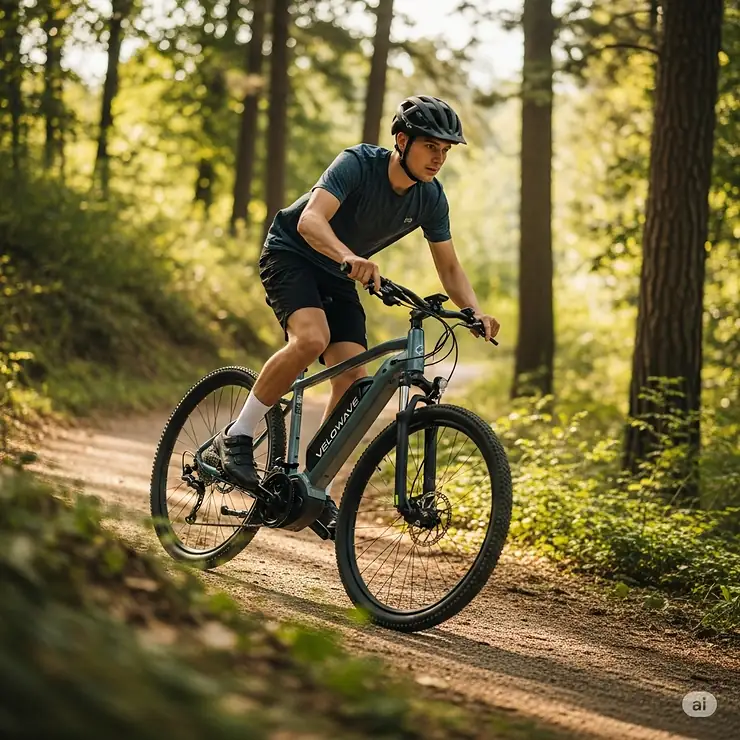
So here’s the pitch. A velowave ebike is a budget-minded, fat-tire-leaning electric bike built around a Bafang geared hub motor, a 48V battery and a long list of features that used to cost a lot more. That’s the appeal. The catch is that the range is wide: a 500W trail bike, a step-through cruiser, a 960Wh long-hauler and a mid-drive monster all wear the same badge, and they are not interchangeable.
This guide sorts them out. We’ll compare seven real models, read the spec sheets for what they mean in practice, summarize what reviewers consistently report, and flag where the evidence runs thin. Where I couldn’t verify real owner feedback for a model, I’ll say so instead of papering over it. Prices below are ranges only, because they move constantly. Check the current price before you buy.
Let’s find the velowave ebike that actually fits your life.
What Is a Velowave Ebike?
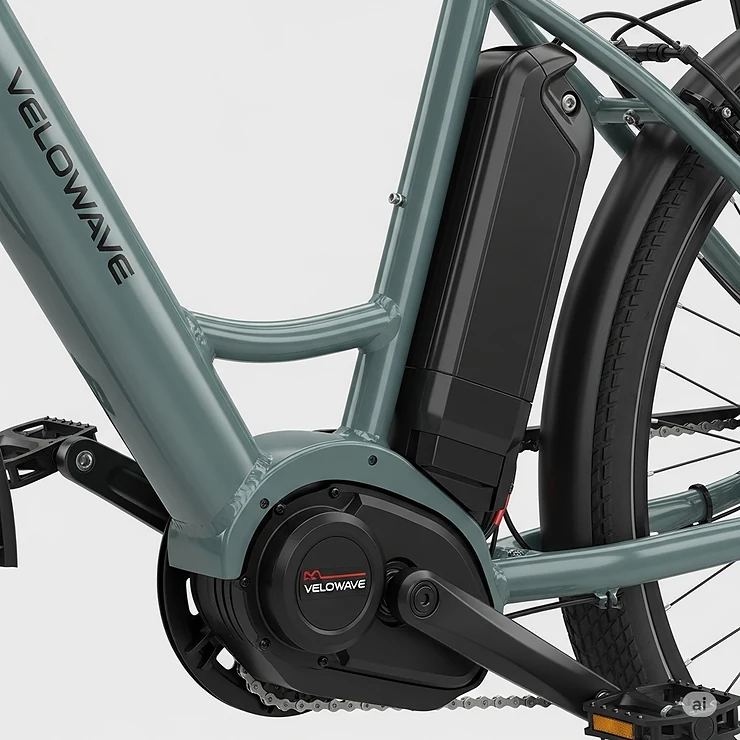
A velowave ebike is an electric bicycle sold under the Velowave brand, typically a fat-tire or step-through model with a 500W-750W geared hub motor, a 48V lithium battery, and hydraulic or mechanical disc brakes. Most models are built for mixed-surface riding, commuting and casual trail use, and sold directly to buyers.
That definition sits inside a bigger category. An electric bicycle is a bicycle with an integrated motor that assists the rider, and it keeps the ability to be pedaled, which is what separates it from an electric motorcycle. Velowave’s pitch within that category is straightforward: sell direct, skip the bike-shop markup, and spend the savings on motor and battery rather than premium components.
According to retailer reviews of the brand, that means you get strong headline specs and solid-but-not-fancy parts. You won’t find top-shelf suspension or boutique drivetrains. You will find a Shimano 7-speed or 8-speed derailleur, Kenda fat tires, and in most cases LG battery cells. For the money, that’s a sensible trade.
Velowave Ebike Quick Comparison Table
Here’s the seven-bike lineup at a glance. Specs come from retailer and review-site listings and can vary slightly between sellers, so treat the table as a starting point and confirm on the product page.
| Model | Motor / Torque | Battery | Weight | Tires | Best For |
|---|---|---|---|---|---|
| Velowave Ranger | 750W hub, 28 mph pedal assist claimed | 48V 15Ah (720Wh) | ~74 lb | 26″ x 4″ | Budget all-terrain riders |
| Velowave Rover | 750W hub, 80Nm | 48V 15Ah (720Wh) | ~70.5 lb | 26″ x 4″ | Hills and comfort commuting |
| Velowave Prado S | 750W hub | 48V 15Ah (720Wh) | ~77 lb | 20″ x 4″ | Easy-on, easy-off cruising |
| Velowave Pony | 750W hub, 80Nm | 48V 15Ah (720Wh) | ~79 lb | 20″ x 4″ | Compact step-thru fun |
| Velowave Grace 2.0 | 750W hub, 80Nm | 48V 20Ah (960Wh) | ~80 lb | 26″ x 4″ | Maximum range, step-thru |
| Velowave Ghost 500 | 500W hub | 48V 15Ah | Not verified | 27.5″ x 2.35″ | Light trail and value |
| Velowave Brawny XM | 1000W mid-drive, 160Nm | 48V 20Ah (960Wh) | ~82 lb | 26″ x 4.8″ | Steep climbs, heavy loads |
Read the table by priority, not by column. If battery size is your anxiety, the Velowave Grace 2.0 and Velowave Brawny XM are the only two with the 960Wh pack. If price is the anxiety, the Velowave Ghost 500 and Velowave Ranger sit at the friendlier end. And if you need real torque for steep terrain or a heavier rider, the mid-drive Velowave Brawny XM is in a different league from the hub-motor bikes.
💬 Just one click — help others make better buying decisions too!😊
Top 7 Velowave Ebike Models: Expert Analysis
Seven bikes, one honest look at each. Every entry covers what the specs mean in practice, who it suits, what reviewers consistently report, and a price-range verdict.
1. Velowave Ranger — the budget all-terrain workhorse
The Velowave Ranger (model FMTB3) is the bike most people picture when they hear velowave ebike. It’s a classic fat-tire e-mountain-bike shape with a 750W Bafang hub motor, front suspension fork, 26-inch Kenda fat tires and a 48V 15Ah battery.
What do those numbers mean? The 720Wh pack, combined with a mid-power hub motor, is why reviewers cite roughly 40 miles of real-world range on low pedal-assist settings and closer to 25 miles when leaning on the throttle alone. Hydraulic disc brakes are a welcome extra at this price. They make the 74-pound curb weight easier to stop, and that weight is the real tax of fat-tire bikes.
Based on the spec comparison, the Ranger suits riders between roughly 5’6″ and 6’2″ who want a capable, no-frills bike for gravel, grass and light trails. It isn’t a lightweight commuter, and you’ll want to add a taillight, fenders and a rack, since reviewers note none come standard.
Aggregated review sentiment is positive on value, with multiple sources noting that Velowave’s customer service is quick to send replacement parts. A common complaint is the missing rear light and the sheer heft.
Pros:
- ✅ Strong hill-climbing for the price
- ✅ Hydraulic disc brakes included
- ✅ Removable battery for remote charging
Cons:
- ❌ Heavy at roughly 74 pounds
- ❌ No taillight, fenders or rack
Price range: typically in the roughly $1,000-$1,500 range, which makes it a genuinely good value if you accept the weight. Check current price.

2. Velowave Rover — comfort-first step-thru with real hill power
The Velowave Rover is the sleeper of the lineup. It pairs a low-step aluminum frame with the same 750W Bafang geared hub motor (80Nm of torque, peak output listed between roughly 1000W and 1275W depending on the source), a downtube-integrated 48V 15Ah battery and 26-inch Kenda fat tires.
On paper, that 80Nm figure is the headline. In practice, it’s why reviewers describe the Rover as confident on climbs that make cheaper 350W-500W bikes wheeze. Combined with a Shimano 7-speed drivetrain, you can also ride it like a normal bike with the motor off, which matters when you’re stretching the battery.
Reviewers report that the stated 50-mile maximum range holds up under gentle assist use, which is better than the usual brochure optimism. Reported assisted speeds reach about 28 mph, so check how your state treats Class 3 speeds before you ride.
Who’s it for? Commuters and casual riders who want a low step-over, a comfortable upright position and enough power to flatten hills. It isn’t suited to riders under about 5’6″, and some buyers report battery failures, so keep your warranty paperwork handy.
Pros:
- ✅ Confident hill-climbing from 80Nm torque
- ✅ Low-step frame is easy to mount
- ✅ Long stated range holds up in owner reports
Cons:
- ❌ Roughly 70 pounds is still heavy
- ❌ Some reports of battery failure
Price range: around the $1,000-$1,200 range at the time of research, which is excellent value for the power on offer. Check current price.
3. Velowave Prado S — the cruiser that rewards lazy afternoons
If the Velowave Prado S were a personality, it would be the friend who always suggests the coastal route. It’s a step-through cruiser with a 750W hub motor, a 48V 15Ah battery, a front suspension fork and 4-inch fat tires, topped with an oversized saddle and adjustable ape-hanger handlebars.
Here’s what that means in the saddle. Wide, low-pressure tires and a cushy seat soak up rough pavement and light trail chatter, and the upright posture is easy on the lower back. BikeRide’s review summary lists a 330-pound payload capacity and a bright front light as standout positives.
Torque is lower than on some siblings (listed around 55Nm), and range figures in listings (up to about 45 miles) come with the usual real-world caveat. Reviewers also flagged disappointment with range and tire quality, and multiple owners reported tire beads separating from the rim. Tire size varies by seller, from 20 inches to 26 inches, so confirm what you’re ordering.
Fit-wise, the Prado S is the easiest bike in the lineup to hop on and off, which is exactly why it works for riders with limited mobility or anyone tired of swinging a leg over a top tube.
Pros:
- ✅ Step-through frame is very easy to mount
- ✅ Plush saddle and fat tires ride smoothly
- ✅ Bright integrated front light
Cons:
- ❌ Reported tire bead separation issues
- ❌ Range falls short of the brochure for some
Price range: usually in the mid-$1,000s range. Good for comfort, so check current price against what you value most.
4. Velowave Pony — the compact step-thru with serious torque
Small wheels, big attitude. The Velowave Pony arrived in late 2022 with a low-step aluminum frame, integrated battery and wiring, ape-hanger bars and 20″ x 4″ fat tires on blade rims. Behind the cute name sits a 750W Bafang hub motor with 80Nm of torque.
The 20-inch wheels are the interesting design call. They lower the center of gravity and shorten the wheelbase, which makes the Pony feel more compact and maneuverable in tight spaces. The trade-off is that smaller wheels roll over bumps less easily than 26-inch ones, though the fat tires make up much of that gap.
Listed specs include a 48V 15Ah (720Wh) battery, about 40 miles of range, a 5-level pedal-assist system with a thumb throttle, and Class 2 behavior (about 25 mph with pedal assist and 20 mph on throttle). It weighs roughly 79 pounds with a 330-pound capacity.
Honest caveat: ERideHero’s page for the Pony showed zero community reviews when I checked, so I can’t summarize owner sentiment. What I can say is that its spec sheet closely mirrors the better-documented Rover, which suggests similar behavior with a different, more compact body.
Pros:
- ✅ Compact frame suits smaller living spaces
- ✅ 80Nm torque for a smaller-wheel bike
- ✅ Hydraulic brakes and 7-speed gearing
Cons:
- ❌ Roughly 79 pounds is hard to lift
- ❌ Little verified owner feedback available
Price range: around the $1,400-$1,600 range at the time of research. It’s fair, but not the cheapest way into this torque class. Check current price.
5. Velowave Grace 2.0 — the long-range step-thru
The Velowave Grace 2.0 is the one to look at if range anxiety keeps you up at night. It carries a 48V 20Ah (960Wh) battery with LG cells, which is a full third more capacity than the 720Wh bikes above, plus the familiar 750W Bafang hub motor (peak 1000W, 80Nm) and a Shimano 8-speed drivetrain.
What does 960Wh buy you? Simply: more miles between charging sessions and more margin for hills, headwinds and heavier riders. It’s the sort of spec upgrade that matters more on day 300 than day one, once you’ve stopped babying the battery and started actually using the bike.
The step-through frame (offered in Star Black, Mint Green and Macaron Pink) keeps mounting simple, and the front hydraulic suspension fork and hydraulic disc brakes round out a thoughtful spec. At roughly 80 pounds, it’s one of the heavier options, so storage and transport deserve a thought.
I couldn’t find independent aggregated owner reviews for the Grace 2.0 during research, so there’s no honest sentiment to report. Treat it as a spec-sheet-strong, field-data-light option, and lean on the warranty terms.
Pros:
- ✅ Largest battery in the step-thru lineup
- ✅ Easy mount, upright and comfortable
- ✅ Shimano 8-speed adds gearing range
Cons:
- ❌ Heavy at about 80 pounds
- ❌ Limited independent review data
Price range: priced above the 15Ah bikes, likely in the upper-$1,000s range. Check current price before deciding.
6. Velowave Ghost 500 — the lighter-footprint trail bike
Not every velowave ebike is a fat-tire brute. The Velowave Ghost 500 is the exception: a 500W Bafang geared hub motor, 48V 15Ah LG battery, Shimano 7-speed drivetrain, and 27.5″ x 2.35″ mountain-bike-style tires.
Why does that matter? Narrower tires roll faster and handle more like a traditional mountain bike, which can feel more athletic on firm trails and pavement. The concealed battery and internal cabling give it a slimmer, cleaner look than the fat-tire models. Per BikeRide, it fits riders from about 5’4″ to 6’2″ and carries up to 280 pounds.
Reviewer themes are mixed in a useful way. Riders praise the quick acceleration, the value for the money and the comfortable saddle. Complaints include underpowered mechanical brakes (some needed professional adjustment out of the box), an oversensitive throttle, low handlebars and no lights included. Some owners also reported short battery life under serious mountain biking conditions.
Note that some retailer listings describe different tire widths and ranges, so verify the exact configuration before ordering.
Pros:
- ✅ Lighter-feeling, more bicycle-like handling
- ✅ Good value at the entry end
- ✅ Removable battery for security
Cons:
- ❌ Mechanical brakes reported as underpowered
- ❌ No lights included as standard
Price range: typically at the lower end of the lineup, so check the current price. It’s the pick if you value ride feel over brute torque.
7. Velowave Brawny XM — the premium mid-drive climber
Now for the outlier. The Velowave Brawny XM isn’t a hub-motor value play. ERideHero lists it with a 1000W mid-drive motor (peak 1200W), a very large 160Nm of torque, a 960Wh battery, Tektro hydraulic discs, a 100mm air fork, a 44mm rear air shock and 26″ x 4.8″ Kenda fat tires.
A mid-drive motor sends power through the bike’s gears, which is why it climbs steep grades without bogging down the way a hub motor can. Add a torque sensor, which delivers assistance proportional to your effort, and the ride feels more natural than a cadence-based hub. The listed 385-pound weight limit and a 10-speed drivetrain suggest it’s built for heavier riders and loaded rides.
Two cautions. First, it weighs about 82 pounds. Second, ERideHero lists a 37 mph top assist speed, which, if accurate, would exceed the usual 28 mph Class 3 ceiling and could push it outside standard e-bike classes in many states. Verify that with the seller before you buy.
I found no aggregated owner reviews for the Brawny XM, so I can’t speak to real-world durability. It’s a spec-led recommendation with open questions.
Pros:
- ✅ Mid-drive torque suits steep climbs
- ✅ Full suspension with air fork and shock
- ✅ Highest weight capacity in the lineup
Cons:
- ❌ Heaviest bike here at about 82 pounds
- ❌ Little verified owner feedback or class clarity
Price range: this is the premium tier of the lineup, so expect it above the other six. Check current price.
Top 7 Velowave Ebike Models: Head-to-Head Comparison
| Model | Class / Top Assist | Stated Range | Brakes | Frame | Best For |
|---|---|---|---|---|---|
| Velowave Ranger | Class 3-style, 28 mph | 25-40 miles | Hydraulic disc | High-step or step-thru | Budget off-road buyers |
| Velowave Rover | 28 mph assist | Up to ~50 miles | Hydraulic disc | Low-step | Commuters on hills |
| Velowave Prado S | Often shipped as Class 2 | Up to ~45 miles | Hydraulic disc | Step-through | Comfort cruising |
| Velowave Pony | Class 2, 25 mph assist | ~40 miles | Hydraulic disc | Low-step | Compact city and trail |
| Velowave Grace 2.0 | Not confirmed here | Highest capacity pack | Hydraulic disc | Step-through | High-mileage riders |
| Velowave Ghost 500 | Class 2 and 3 | ~40-45 miles | Mechanical disc | High-step | Value-minded trail riders |
| Velowave Brawny XM | Listed Class 3, 37 mph claimed | Up to 75 miles listed | Hydraulic disc | Step-over | Steep terrain, heavy riders |
This table shows a clear pattern: the 750W hub-motor bikes all cluster around 40-50 stated miles, and only the Velowave Grace 2.0 and Velowave Brawny XM break away with the bigger pack. Brake type is the quiet differentiator. The Velowave Ghost 500‘s mechanical discs are the weakest link on paper, while everything else gets hydraulics. If you plan to ride in traffic or carry weight, that matters more than another 5 mph.
How to Choose a Velowave Ebike
Choosing a velowave ebike is less about “which is best” and more about “which fits.” Work through these steps in order.
- Decide the main use. Commuting, trail riding and relaxed cruising pull toward different models. Cruiser and step-through bikes like the Velowave Prado S and Velowave Rover suit comfort. The Velowave Ghost 500 suits firmer trails.
- Check the fit. Most fat-tire models target riders around 5’6″ to 6’2″. Shorter riders should confirm standover height and look at the Velowave Ghost 500, which lists a lower minimum height.
- Match battery to range needs. 720Wh is fine for most commutes. 960Wh on the Velowave Grace 2.0 or Velowave Brawny XM buys real margin.
- Pick the motor type. Hub motors keep costs down and handle most hills. A mid-drive like the Velowave Brawny XM costs more but climbs harder.
- Verify the class. Class 2 and Class 3 rules differ by state, and listings sometimes conflict. Confirm what you’re getting.
- Think about weight. At 70-82 pounds, stairs and car racks become real constraints.
- Read the warranty. Listings cite a 2-year warranty on electrical components plus technical support. Read the fine print.

Velowave Ebike Classes and Legal Rules
This is the section most buyers skip and later wish they hadn’t read last. The U.S. three-class e-bike system, developed with PeopleForBikes, sorts bikes into Class 1 (pedal assist to 20 mph), Class 2 (throttle-capable, 20 mph) and Class 3 (pedal assist to 28 mph). Power is typically capped at 750W.
Why does this matter for a velowave ebike? Because several models blur the lines. Some listings describe the Velowave Ranger as a 28 mph Class 3-style bike, while retailer notes say many 750W classics ship as Class 2. A model that reaches 28 mph with pedal assist but also has a thumb throttle may not fit cleanly into one class under every state’s rules.
Rules vary widely by jurisdiction. Class 3 bikes are often restricted from multiuse paths and sometimes carry age or helmet requirements. For a broader overview of how definitions differ by region, see Wikipedia’s page on electric bicycle laws.
Practical advice: check your state and city rules first, confirm the class sticker on the specific bike you receive, and keep your documentation. It’s boring, and it can save you a fine.
What to Expect: Real-World Performance
Spec sheets promise a perfect world: flat roads, a 150-pound rider, a mild day. Real riding is messier.
Range. Expect the stated numbers to be best-case. Reviewers report roughly 40 miles on low assist and about 25 on throttle-only for the Velowave Ranger, which is a useful rule of thumb for the 720Wh family. Heavier riders, hills, cold weather and high assist levels all cut that.
Speed. Pedal-assist top speeds reach 25-28 mph on several models, but throttle-only speeds are usually capped near 20 mph.
Weight and handling. At 70-82 pounds, these bikes feel planted but slow in tight spots. The 20-inch-wheel Velowave Pony and Velowave Prado S will feel more nimble than the 26-inch bikes.
Comfort. Fat tires and suspension forks smooth out rough roads, but they don’t replace a full-suspension system. The Velowave Brawny XM is the only model listed with a rear shock.
Service. Reports are mixed. Reviewers praise quick replacement parts, while one buyer described a costly battery-lock repair where support was responsive but limited in what it could fix. Document your unboxing.
Velowave Ebike vs Premium Brands
How does a velowave ebike compare with a well-known premium brand? Reviews of the Velowave Ranger place it against the Rad Power Bikes RadRover 6 Plus, Aventon Aventure.2, Himiway Cruiser and Ride1UP Rift, and the verdict is that it competes on price and style.
| Factor | Velowave | Typical premium brand |
|---|---|---|
| Upfront cost | Lower, often $1,000-$1,500 range | Often meaningfully higher |
| Components | Mid-tier Shimano, Kenda | Often better suspension and drivetrain |
| Support network | Mostly online | Wider dealer or service networks |
| Best For | Velowave Rover and Velowave Ranger value shoppers | Riders who want local service |
The table makes the trade-off plain. You’re buying more motor and battery per dollar, and you’re giving up polish and, often, local support. That’s a fine bargain if you’re comfortable with a wrench and online troubleshooting. If you want a bike shop down the street to handle everything, a pricier brand might be worth it.
Put differently: Velowave rewards the confident buyer. If you’re organized, patient and willing to read a manual, you’ll likely be happy. If you want hand-holding, budget extra time or consider a local mechanic to help with assembly.
Common Mistakes When Buying a Velowave Ebike
Even good bikes get bought badly. Avoid these.
Buying on peak watts alone. A “1200W peak” figure is marketing math. The nominal 750W and the torque rating tell you more.
Ignoring tire size variants. The Velowave Prado S appears with 20-inch and 26-inch tire listings. Check which one you’re ordering.
Skipping the class check. Speeds and throttle presence determine legality, and listings don’t always agree.
Forgetting accessories. The Velowave Ranger and Velowave Rover reportedly ship without a taillight, rack or fenders. Budget for them.
Underestimating weight. If you live on the third floor, a 79-pound bike is a commitment.
Not documenting delivery. If the box arrives damaged, photograph it before you open it. That evidence matters for claims.
Your First 30 Days With a Velowave Ebike: Setup and Maintenance
Most problems show up early. A little discipline in month one pays off for years.
Day 1: assembly check. Velowave bikes need some assembly. Work through the manual, then re-check every bolt, especially stem, pedals and brake mounts. Hydraulic brakes should feel firm. If the Velowave Ghost 500‘s mechanical brakes feel mushy, get them adjusted, since reviewers noted that need.
Week 1: tire pressure. Fat tires run at low pressure, but too low risks rim damage and, on some bikes, bead issues. Check pressure weekly, and look closely if you own a Velowave Prado S, where bead separation was reported.
Week 2: charging habits. Use only the charger supplied with the bike, and never leave a charging battery unattended. The Consumer Product Safety Commission has warned that e-bike lithium-ion batteries can pose fire and burn hazards and urges charging only with the manufacturer’s charger and being present while charging.
Week 3: drivetrain. A new chain stretches and settles. Clean and lube it, and check shifting on the Shimano 7-speed or 8-speed setup.
Week 4: first service. Re-torque bolts, check spoke tension and inspect brake pads.
Common first-month mistakes: overcharging to 100% daily when you don’t need to, ignoring odd noises, and storing the battery in extreme heat or cold.
Real-World Scenarios: Which Velowave Ebike Fits Which Rider?
Specs are abstract. Here are three rider profiles.
Scenario 1: the hilly commuter. You ride 8 miles each way with a steep stretch in the middle, and a mid-sized budget. The Velowave Rover fits: strong 80Nm torque, a low-step frame and reviewer-confirmed range that covers a round trip with margin.
Scenario 2: the weekend trail rider. You want gravel and light trail, you’re 6’0″, and you’d rather save than splurge. The Velowave Ranger matches: fat tires, front suspension and hydraulic brakes, with a mid-$1,000s ceiling. Add lights and fenders.
Scenario 3: the heavier rider on steep terrain. You’re closer to 280 pounds and your commute includes a real grade. The Velowave Brawny XM looks designed for you, with a 385-pound limit and 160Nm mid-drive, though the missing owner reviews and the unclear class are reasons to ask the seller hard questions first.
And if mobility is your priority? A step-through like the Velowave Prado S or Velowave Grace 2.0 removes the leg-over step entirely.
Problem → Solution Guide for Velowave Ebike Owners
Every bike has quirks. Here are the likely ones and what to do.
Problem: range disappoints. Solution: drop to a lower assist level, keep tires inflated and ride in higher gears. If it’s chronic, the Velowave Grace 2.0‘s 960Wh pack is the structural fix.
Problem: brakes feel weak. Solution: on mechanical-brake models like the Velowave Ghost 500, adjust cables and replace pads. Several owners needed a professional tune-up out of the box.
Problem: no taillight. Solution: add a rechargeable rear light and reflectors. The Velowave Ranger and Velowave Rover don’t include one.
Problem: tire bead separation. Solution: check pressure, inspect the bead seating, and contact support early. This was a recurring complaint on the Velowave Prado S.
Problem: battery trouble. Solution: keep your receipt, record the serial number and contact support within the warranty window. Some Velowave Rover owners reported failures, and the 2-year electrical warranty only helps if you use it.
Long-Term Cost and Maintenance
A cheaper bike isn’t always a cheaper ownership. Here’s the honest math.
Start with the purchase price, then add accessories (lights, fenders, a rack, a good lock) and a basic tool kit. Budget a few hundred dollars for these extras. Annual upkeep, including brake pads, a chain, tires and occasional tune-ups, often lands in the low hundreds if you do some work yourself.
The big-ticket item is the battery. Lithium packs lose capacity over hundreds of charge cycles, and replacements are expensive. The 2-year electrical warranty offsets some risk, but you should still plan for eventual replacement.
On cost per use, a velowave ebike used for commuting a few times a week can pay for itself against fuel, parking and transit costs over time. How fast depends on your habits. A 15Ah bike like the Velowave Rover is usually the efficient middle path, while the Velowave Grace 2.0 trades a higher upfront cost for fewer charges and potentially longer pack life through shallower discharge cycles.
Features That Actually Matter (And Those That Don’t)
Matters: battery capacity in watt-hours. It’s the best predictor of range. Compare 720Wh and 960Wh, not “48V” in isolation.
Matters: brake type. Hydraulic discs are worth paying for on a 75-pound bike.
Matters: torque. The 80Nm figure on the Velowave Rover and Velowave Pony tells you more about climbing than “1000W peak” ever will.
Matters: fit and standover. A bike that doesn’t fit is never a good bike.
Doesn’t matter much: peak wattage. It’s a short-burst number. Look at nominal power and torque.
Doesn’t matter much: top throttle speed. It’s usually capped near 20 mph anyway.
Depends: suspension. A front fork helps on rough roads. Full suspension on the Velowave Brawny XM is great on trails but adds weight and complexity.
✨ Don’t Miss These Exclusive Deals!
🔍 Take your search for the right velowave ebike to the next level with these carefully selected models. Click on any highlighted product to check current pricing and availability. Whichever one you choose, you’re one step closer to easier hills and longer rides!
Frequently Asked Questions About Velowave Ebike
❓ Is a velowave ebike a good choice for beginners?
❓ Where are Velowave bikes manufactured?
❓ How fast can a velowave ebike go?
❓ What warranty comes with a velowave ebike?
❓ How far can a velowave ebike go on one charge?
Conclusion
The velowave ebike lineup works because it’s honest about its trade-offs. You get big motors, big batteries and surprisingly complete spec sheets for the money. You give up some polish, accept some weight, and take on more responsibility for setup and service.
Here’s the short version. For the best all-round value, the Velowave Rover is hard to beat: strong torque, a comfortable low-step frame and owner reports that back up its range. The Velowave Ranger is the sensible budget pick for off-pavement riders. The Velowave Prado S and Velowave Pony make easy, relaxed choices for comfort and compact living, while the Velowave Grace 2.0 is the one for range-obsessed riders. If you prefer a lighter-feeling trail bike, the Velowave Ghost 500 earns a look. And if you need serious climbing muscle, the Velowave Brawny XM is the specialist, with the caveat that independent feedback is thin.
Before you click buy, do three things: confirm the class and local rules, check that the tire and battery configuration matches the listing, and plan for lights, fenders and a safe charging routine. Do that, and a velowave ebike can be a genuinely good deal.
🚴♂️ Ready to find your ride? Check current prices on your favorite model, compare it against your real needs, and get out there. Your hills are waiting! ⚡
Recommended for You
- 7 Best Addmotor E Bike Models for Ultimate Performance in 2025
- 7 Best Jansno Ebike Models for Ultimate Performance in 2025
- 7 Best Pexmor Electric Bike Models For Ultimate Performance in 2025
Disclaimer: This article contains affiliate links. As an Amazon Associate, I earn from qualifying purchases. If you purchase products through these links, we may earn a small commission at no additional cost to you.
✨ Found this helpful? Share it with your friends! 💬🤗
