
In This Article
Have you ever wished you could skip the gas station, beat traffic jams, and still carry everything you need? Welcome to the revolutionary world of electric cargo bike transportation.

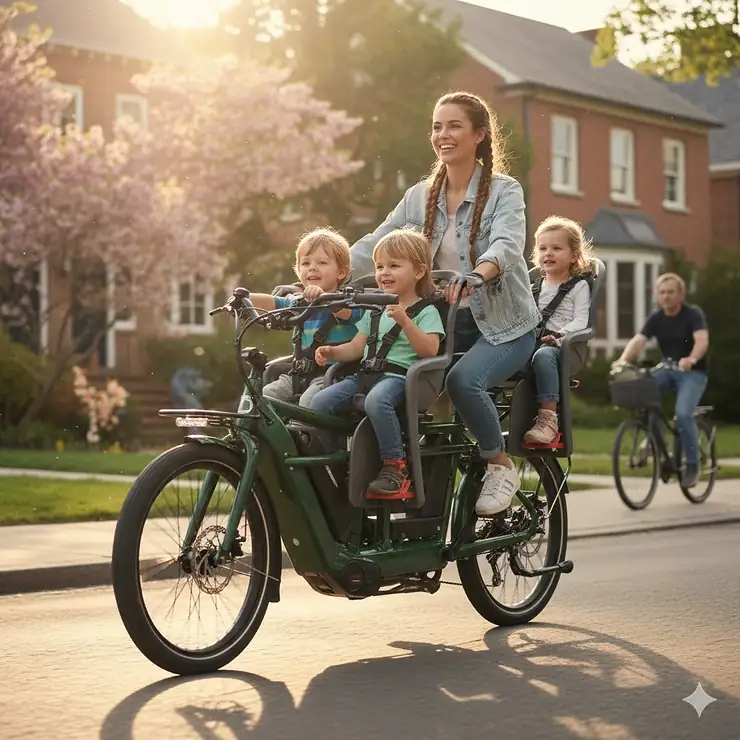
Picture this: It’s Monday morning. While your neighbors are stuck in bumper-to-bumper traffic, you’re cruising past them on your cargo electric bike, your kids laughing in the back, groceries securely strapped down. No parking stress, no fuel costs, just pure freedom. This isn’t some distant fantasy—it’s the reality thousands of families are embracing right now in 2026.
According to Wikipedia, electric cargo bikes allow riders to carry large, heavy items which would be difficult to transport without electric power supplementing human power input, enabling adults to continue biking into parenthood for transporting children without using a car. The electric bike for delivery market has exploded, with cargo bikes replacing vans for last-mile deliveries in urban centers worldwide.
What makes an electric cargo bike different from your standard ebike? Think of it as a pickup truck meeting a bicycle, then getting supercharged with an electric motor. We’re talking about bikes that can haul up to 450 pounds (that’s two kids, a week’s groceries, AND your camping gear), climb hills without breaking a sweat, and travel 60-170 miles on a single charge.
The global cargo bike market was valued at approximately $2.5 billion in 2023, experiencing a compound annual growth rate of 22.8% and projected to surpass $6 billion by 2026. This explosive growth isn’t just hype—it’s a reflection of how effectively these bikes solve real problems.
In this comprehensive guide, we’ve researched and analyzed the top 7 electric cargo bikes currently available on Amazon.com. Whether you’re a parent seeking a family cargo ebike for school runs, a delivery driver needing a reliable hauling electric bike, or someone wanting to ditch the car for grocery shopping electric bike trips—we’ve got you covered with real products you can buy today.
Quick Comparison Table: Best Electric Cargo Bikes on Amazon
| Model | Amazon Price | Payload Capacity | Range | Motor Power | Best For |
|---|---|---|---|---|---|
| EUYBIKE Dual Battery | $1,699 | 450 lbs | 100-160 miles | 750W (1,450W peak) | Extreme range needs |
| Aipas A6 Cargo | $1,799-1,999 | 450 lbs | 70-140 miles | 750W | Budget families |
| ENGWE LE20 | $1,499-1,799 | 440 lbs | 109-211 miles | 750W (1,300W peak) | Long-distance hauling |
| WakeWheel TRAVELLER | $1,699-1,899 | 450 lbs | 35-70 miles | 750W (1,000W peak) | Heavy-duty transport |
| eAhora Romeo Pro | $1,999-2,399 | 400 lbs | 100-200 miles | 750W (1,600W peak) | Off-road capability |
| Heybike Hauler | $1,099-1,499 | 440 lbs | 55-85 miles | 750W (1,400W peak) | Affordable quality |
| Pfau-tec Carrier | $3,500-4,200 | 440 lbs | 40-60 miles | 500W | German engineering |
💬 Just one click – help others make better buying decisions too! 😊
Top 7 Electric Cargo Bikes on Amazon 2026: Expert Analysis
1. EUYBIKE Dual Battery Electric Cargo Bike – Amazon’s Range Champion
The EUYBIKE Dual Battery Electric Bike dominates Amazon’s cargo bike category with its jaw-dropping range capabilities. For riders who absolutely refuse to worry about running out of power mid-journey, this beast delivers.
Key Specifications:
- Motor: 750W brushless (1,450W peak) rear hub motor
- Battery: Dual removable 48V 30Ah (total 60Ah) UL certified
- Payload: 450 lbs total capacity
- Range: 100 miles throttle / 160 miles pedal assist
- Top Speed: 34 MPH
Amazon Link: Available on Amazon Prime with free shipping
This cargo electric bike combines two massive 48V 30Ah batteries—that’s a combined 60Ah of pure power. In pure electric throttle mode, you’re looking at 100 miles of range. Switch to pedal assist, and that number jumps to an astounding 160 miles. That’s enough to handle an entire week of deliveries or family errands without touching a charger.
The EUYBIKE features 20″x4″ fat tires providing exceptional stability when loaded. The dual hydraulic disc brakes with 180mm rotors deliver confident stopping power even at the bike’s impressive 450-lb capacity. The step-through frame design makes mounting and dismounting effortless, even when you’re juggling bags and kids.
The sturdy rear cargo rack holds up to 300 lbs independently, and comes with removable basket and Kid & Cargo Carrier Hoop. You can customize it for groceries one day, kids the next. The 7-speed Shimano gear system provides versatility across varying terrain.
Real Amazon Customer Feedback: Amazon reviewers consistently praise the range accuracy and build quality. One delivery driver noted covering 80+ miles daily with the dual battery setup, returning home with 20% charge remaining.
✅ Pros:
- Industry-leading 160-mile range in pedal assist
- UL certified dual battery system
- 3A super fast charging capability
- Hydraulic disc brakes for safety
❌ Cons:
- Heavier at 90+ lbs with dual batteries
- Assembly requires 30-45 minutes
Amazon Price: $1,699 (frequently on sale)
2. Aipas A6 Electric Cargo Bike – Best Value for Families
The Aipas A6 Cargo Ebike has quietly become one of Amazon’s most purchased cargo bikes, and for good reason. It delivers premium features at a price point that doesn’t require a second mortgage.
Key Specifications:
- Motor: 750W rear hub motor
- Battery: 48V 14.4Ah single or 28.4Ah dual battery
- Payload: 450 lbs (300 lbs rear rack)
- Range: 70 miles single / 140 miles dual battery
- Top Speed: 28 MPH
Amazon Link: Ships via Amazon with Prime eligibility
What makes the Aipas A6 special isn’t just one feature—it’s how everything works together. The low step-through frame (accessible for riders 4’11” to 6’3″) eliminates the gymnastics required to mount most cargo bikes. The included front and rear racks, fenders, and lighting package mean you’re not nickel-and-dimed with accessories.
The battery system offers real flexibility. Start with the 48V 14.4Ah single battery ($1,799) for 70-mile range. When your needs grow, add the second 48V 14Ah battery for 140-mile capability. This modular approach lets you scale investment with usage.
Tektro hydraulic disc brakes with 180mm rotors provide reliable stopping power. The front suspension fork smooths out rough pavement, crucial when transporting kids or delicate cargo. The color LCD display clearly shows speed, battery life, and assist level—no squinting required.
Real Amazon Customer Feedback: Amazon reviews highlight the impressive value proposition. One parent shared how they transport two kids to school daily, then use the bike for grocery runs—all on a single charge.
✅ Pros:
- Exceptional value for features provided
- Scalable battery system (add second later)
- Comprehensive accessory package included
- Strong Amazon customer support
❌ Cons:
- Slightly flexy stem under maximum load
- Front rack weight limit only 35 lbs
Amazon Price: $1,799 (single battery) / $1,999 (dual battery)
3. ENGWE LE20 Cargo Electric Bike – German Engineering Meets Affordability
The ENGWE LE20 brings European design sensibilities to the American market through Amazon, offering features typically reserved for bikes costing thousands more.
Key Specifications:
- Motor: 750W rear hub (1,300W peak) with 75 Nm torque sensor
- Battery: Single 921Wh or dual 1,843Wh
- Payload: 440 lbs
- Range: 109 miles single / 211 miles dual
- Special: EN15194 certified, app tracking
Amazon Link: Available through Amazon marketplace
This electric bike for delivery brings sophistication that’s immediately apparent. The torque sensor responds naturally to your pedaling input—no jerky power delivery common in budget bikes. The ENGWE dedicated app provides real-time tracking, route planning, and battery monitoring.
The ENGWE LE20 features 180mm hydraulic disc brakes, puncture-resistant 20″x3″ tires, and a safe board cover protecting the rear wheel from debris. The Shimano 7-speed system provides adequate gearing for varied terrain.
The cargo capabilities shine with the extended pannier rack accommodating front and rear baskets, folding rear fence, rear backrest, and even a folding baby seat. Whether transporting cargo, children, or pets, the modular accessory system adapts.
With optional 8A fast charger ($135), charge time drops to 2-3 hours versus 6-7 hours standard. For delivery professionals running multiple shifts, this investment pays for itself quickly.
Real Amazon Customer Feedback: Amazon customers praise the smooth torque sensor and impressive range. One delivery driver shared covering 120+ miles on the dual-battery setup with moderate pedal assist.
✅ Pros:
- Massive 1,843Wh dual battery capacity
- Sophisticated torque sensor for natural feel
- App connectivity for tracking and monitoring
- Optional fast charging available
❌ Cons:
- Thumb shifter ergonomics could improve
- Nearly 100 lbs with dual batteries
- Higher initial investment
Amazon Price: $1,499 (single) / $1,799 (dual battery)
4. WakeWheel TRAVELLER Electric Cargo Bike – Heavy-Duty Workhorse
The WakeWheel TRAVELLER represents the heavy-duty segment on Amazon, built specifically for users who need maximum payload capacity with unwavering reliability.
Key Specifications:
- Motor: 750W (1,000W peak) brushless motor with 80 Nm torque
- Battery: 48V 17.5Ah single or 35Ah dual (removable)
- Payload: 450 lbs total (300 lbs rear rack)
- Range: 35-45 miles single / 65-70 miles dual
- Special: Hydraulic suspension, cargo carrier hoop
Amazon Link: Prime shipping available
The WakeWheel TRAVELLER doesn’t apologize for prioritizing strength over finesse. The high-strength 6061 aluminum alloy frame handles up to 450 pounds repeatedly without flexing. The 20″x3.0″ fat tires provide stability that inspires confidence even when maxed out.
This load carrying ebike includes thoughtful features: removable basket, removable Kid & Cargo Carrier Hoop (you can install your own cargo basket), and a rear rack measuring 19.5″ in length. The design prioritizes versatility—configure it for passengers, cargo, or mixed use.
The lockable aluminum hydraulic front suspension forks provide adjustable travel for smooth riding. The hydraulic disc brakes deliver powerful stopping even when fully loaded. The adjustable stem and seat accommodate riders from 4’11” to 6’5″.
What sets this apart? The focus on daily abuse. This isn’t a weekend recreational bike—it’s engineered for delivery drivers doing 40-50 miles daily, parents juggling multiple kids, or anyone who needs bombproof reliability.
Real Amazon Customer Feedback: Amazon reviews emphasize durability. Multiple delivery drivers report 5,000+ miles with only routine maintenance (brake pads, chain).
✅ Pros:
- Bombproof frame construction
- Excellent stability under maximum load
- Hydraulic everything (brakes, suspension)
- Proven reliability in delivery applications
❌ Cons:
- More modest range versus competitors
- Heavier than some alternatives
- Less sophisticated display
Amazon Price: $1,699 (single battery) / $1,899 (dual battery)
5. eAhora Romeo Pro Electric Mountain Cargo Bike – Off-Road Capable
The eAhora Romeo Pro breaks the mold by combining cargo bike utility with legitimate mountain bike capability. For families living in hilly regions or riders needing all-terrain performance, this unique offering delivers.
Key Specifications:
- Motor: 750W (1,600W peak) with 80 Nm torque
- Battery: 48V 20Ah removable (up to 60Ah dual option)
- Payload: 400 lbs
- Range: 100-200 miles (model dependent)
- Special: Full suspension, 26″x4.0″ fat tires
Amazon Link: Available on Amazon with assembly options
This utility electric bicycle tackles terrain other cargo bikes avoid. The upgraded full suspension system combines responsive adjustable hydraulic front shock absorbers with adjustable air pressure rear shock, reducing joint stress on rough roads. The 26″x4.0″ fat tires eat up gravel, dirt, and snow that would stop standard cargo bikes cold.
The eAhora Romeo Pro offers unusual power for a cargo bike—the motor peaks at 1,600W, providing serious hill-climbing capability. The dual 4-position hydraulic sensitive brake system delivers 2x more sensitive braking than standard setups.
The safety features impress: 20W adjustable large headlight provides powerful illumination, while the tail light includes turn indicator and brake indicator functions. The 7-speed gear system handles varied terrain effectively.
While the cargo capacity (400 lbs) trails pure cargo specialists, the off-road capability more than compensates for adventure-oriented families. Think of it as 70% cargo bike, 30% mountain bike—a compelling combination for the right buyer.
Real Amazon Customer Feedback: Amazon reviewers love the off-road capability. One family living in mountainous Colorado shared how they navigate unpaved forest service roads to trailheads, then use the bike for exploring.
✅ Pros:
- Legitimate off-road capability
- Full suspension system (rare for cargo bikes)
- Powerful 1,600W peak motor
- Multiple battery capacity options
❌ Cons:
- Lower cargo capacity than pure cargo bikes
- Premium pricing for capabilities
- Heavier than necessary for pure road use
Amazon Price: $1,999-2,399 (varies by battery configuration)
6. Heybike Hauler Dual-Battery Cargo Ebike – Amazon’s Affordable Champion
The Heybike Hauler has become Amazon’s go-to recommendation for budget-conscious buyers who refuse to sacrifice essential features. It’s the cargo bike democratizing access to car-free living.
Key Specifications:
- Motor: 750W rear hub (1,400W peak) with 80 Nm torque
- Battery: Single 864Wh or dual (864Wh + 600Wh)
- Payload: 440 lbs
- Range: 55 miles single / 85 miles dual
- Top Speed: 28 MPH
Amazon Link: Frequently in Amazon’s “Deal of the Day”
The Heybike Hauler represents the brand’s first cargo-focused ebike, and they nailed the essentials. The 750W motor peaks at 1,400W—adequate for steep hills even fully loaded. The Shimano 7-speed gear shift system provides versatility across terrain.
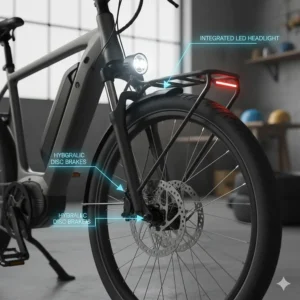
The hydraulic disc brakes (front and rear) deliver reliable stopping power. The durable hydraulic front suspension fork reduces road impacts significantly. The 20″x3″ fat tires provide exceptional traction in all conditions.
The cargo configuration includes rear rack, two foldable footboards, and mounting points for various accessories. The step-through design accommodates riders of different heights and abilities—no high-leg gymnastics required.
What makes this special? The price. Heybike regularly runs sales dropping this below $1,200, occasionally hitting $999—making it the most affordable legitimate cargo bike on Amazon. You’re not getting premium components, but everything works reliably for daily use.
Real Amazon Customer Feedback: Amazon reviews consistently mention the value proposition. One user shared riding 400 miles in two months with their wife (combined 360 lbs) with minimal issues, noting they rarely use their car anymore.
✅ Pros:
- Best price-to-performance on Amazon
- Frequent sales and promotions
- Adequate performance for most users
- 2-year warranty coverage
❌ Cons:
- Components less refined than premium bikes
- Brakes require adjustment out of box
- Customer service can be slow
Amazon Price: $1,099-1,499 (watch for sales)
7. Pfau-tec Carrier Electric Cargo Tricycle – Premium German Engineering
The Pfau-tec Adult Carrier Electric Cargo Bike represents the opposite end of the spectrum from budget options—premium German engineering for buyers prioritizing quality and safety above price.
Key Specifications:
- Motor: German-engineered 500W system
- Wheels: 20″ front, 26″ rear for stability
- Payload: 440 lbs with large loading platform
- Special: Foldable without tools, German design
- Frame: Made in Germany
Amazon Link: Ships via specialized bike retailers through Amazon
This transportation ebike brings European design philosophy to American cargo bike buyers. The huge loading platform allows easy maneuvering however heavily loaded with less effort. The carrier folds without any tools for transport or storage—a feature absent from most cargo bikes.
All PFAU-Tec products are designed and manufactured in Germany to exacting standards. The brand prioritizes safety with proven, therapy-suitable designs used by special needs riders. This isn’t just marketing—these bikes meet medical device standards in Europe.
The Pfau-tec Carrier excels at versatility. The loading platform accommodates cargo boxes, child seats, or custom configurations. The three-wheel design provides inherent stability that two-wheelers can’t match—beneficial for riders with balance concerns or when navigating slowly through crowded areas.
The component quality reflects the price: German engineering throughout, premium electrical system, robust frame construction. This bike should last 15-20 years with proper maintenance versus 5-8 years for budget alternatives.
Real Amazon Customer Feedback: Amazon reviews emphasize build quality and stability. Multiple buyers with mobility challenges appreciate the three-wheel design allowing confident cargo transport.
✅ Pros:
- Premium German engineering and components
- Three-wheel stability (game-changer for some)
- Tool-free folding mechanism
- Medical-grade design standards
- Lifetime frame support
❌ Cons:
- Premium pricing ($3,500-4,200)
- Lower power motor (500W)
- Limited availability (special order)
- Heavier than two-wheel alternatives
Amazon Price: $3,500-4,200 (varies by configuration)
Understanding Electric Cargo Bike Classifications
Navigating the world of electric cargo bikes requires understanding the fundamental categories. Think of this section as your decoder ring for the industry.
Longtail vs. Mid-Tail vs. Tricycle Designs
Longtail electric bikes extend the rear triangle significantly, creating a platform that can accommodate multiple passengers or substantial cargo. The rear rack typically extends 18-24 inches beyond where a standard bike ends. Models like the EUYBIKE and Aipas A6 exemplify this category. These bikes excel at versatility—load them with kids one day, building materials the next.
Mid-tail designs offer a compromise: extended cargo capacity without the full length of longtails. They’re easier to store and maneuver through tight spaces while maintaining impressive payload ratings. Perfect for urban environments where every inch matters.
Tricycle cargo bikes like the Pfau-tec place three wheels on the ground for inherent stability. While heavier and less maneuverable, they provide confidence-inspiring handling when heavily loaded. Popular with senior riders or those with balance concerns.
Class 1, 2, and 3: What Do They Mean?
Understanding ebike classifications affects where you can legally ride and how fast you can go according to local electric bicycle laws:
Class 1 ebikes provide pedal assistance up to 20 mph with no throttle. These can typically access bike paths and trails. Great for leisurely family rides but may feel limiting when keeping up with traffic.
Class 2 ebikes include a throttle that works up to 20 mph without pedaling. Perfect for delivery applications or when you need a break from pedaling. Most cargo bikes ship as Class 2.
Class 3 ebikes offer pedal assistance up to 28 mph, often without throttle capabilities. Several models like the EUYBIKE and Aipas can be switched to Class 3 mode, dramatically improving their utility for commuting alongside vehicle traffic.
Most modern electric cargo bikes let you switch between classes through the display settings, providing flexibility based on your local regulations and riding conditions.
Hub Motors vs. Mid-Drive Systems
The motor placement debate rages on, with passionate advocates on both sides.
Hub motors (rear wheel) dominate the cargo bike market on Amazon for good reason. They’re simpler, require less maintenance, and cost significantly less to replace. All our picks use hub motors. The downside? Less efficient on steep grades, and you can’t leverage your gear ratios for additional torque.
Mid-drive motors position the motor at the bike’s cranks, allowing you to use the bike’s gearing system. This provides superior hill-climbing and efficiency. The tradeoff: increased complexity, higher costs, and more wear on the drivetrain.
For most families and delivery applications, quality hub motors prove more than adequate. Reserve mid-drive obsession for those tackling San Francisco-level hills daily.
Battery Technology: Power Your Adventures
Battery capacity determines how far you’ll ride before hunting for an outlet. Let’s decode the numbers and marketing claims.
Watt-Hours Explained Simply
Battery capacity measured in watt-hours (Wh) tells you how much energy the battery stores. Think of it like your car’s fuel tank—bigger numbers mean longer range, but also increased weight and cost.
A 500Wh battery might deliver 25-40 miles of real-world range depending on cargo weight, terrain, pedal assist level, and rider input. Double that battery to 1,000Wh, and you’re looking at 50-80 miles under similar conditions.
The EUYBIKE’s massive 60Ah dual-battery setup (approximately 2,880Wh) represents exceptional capacity. That’s genuinely 150+ mile capability when conditions align favorably.
Single vs. Dual Battery Configurations
Single-battery cargo bikes keep costs down and weight manageable. For riders with shorter commutes (under 20 miles) or access to charging at work, a single battery proves perfectly adequate.
Dual-battery systems shine for delivery drivers, adventure riders, or families tackling longer daily routines. The EUYBIKE’s approach (two large batteries) simplifies charging—just swap batteries when one depletes. The Aipas and ENGWE use primary/auxiliary battery approaches that require more management but offer flexibility.
Fast Charging vs. Standard Chargers
Most cargo bikes ship with 2-4 amp chargers requiring 6-8 hours for full charging. This works fine when charging overnight, but delivery drivers or multi-trip users need faster solutions.
Fast chargers (8+ amps) cut charging time to 2-3 hours but generate more heat and may slightly reduce battery longevity. The ENGWE LE20 offers an optional 8A charger for $135—worth it for professional users, probably overkill for weekend warriors.
The EUYBIKE includes 3A super fast charging standard—a nice touch eliminating aftermarket purchases.
Battery Longevity and Replacement Costs
Lithium-ion batteries degrade over time, typically retaining 80% capacity after 500-800 charge cycles. With proper care (avoiding extreme temperatures, not storing fully depleted), expect 3-5 years before replacement becomes necessary.
Replacement battery costs on Amazon vary: $300-500 for budget brands like Heybike, $400-700 for mid-range brands, $600-900 for premium manufacturers. Factor this into total cost of ownership.
Pro tip: Buy a second battery when purchasing your bike. Manufacturers occasionally discontinue battery models, leaving you stranded when yours eventually fails.
Cargo Capacity and Safety Considerations
Carrying capacity sounds straightforward until you realize manufacturers measure it differently. Let’s clear up the confusion before you accidentally overload your bike.
Payload Ratings: What Do They Actually Mean?
When manufacturers claim “450 lb payload capacity,” they’re typically referencing the total system weight—rider plus all cargo combined. A 200-lb rider has 250 lbs remaining for groceries, kids, and gear.
Some manufacturers separate this into component limits:
- Rider weight maximum: Often 250-330 lbs
- Rear rack capacity: 120-300 lbs
- Front rack capacity: 20-40 lbs (if equipped)
The EUYBIKE’s 450 lb total / 300 lb rear rack specification means a 150-lb rider could theoretically load 300 lbs on the rear rack—though doing so would max out the system. Always leave a safety buffer.
Child Passenger Safety: Essential Guidelines
Transporting children transforms your cargo bike from recreational toy to critical family infrastructure. Safety becomes paramount.
Age and Weight Restrictions:
- Children should be at least 12 months old (able to support their own heads) before riding
- Maximum weight varies by seating system (typically 40-75 lbs per child)
- Two-child maximum for most longtail configurations
Proper Seating Systems: Don’t just stick a cushion on the rack and call it good. Invest in proper child seats with:
- 5-point harness systems for younger children
- Secure mounting to frame (not just rack)
- Footrests preventing feet from contacting wheels
- Side panels/wheel guards protecting limbs
The WakeWheel TRAVELLER’s Kid & Cargo Carrier Hoop and the Aipas A6’s safety features exemplify thoughtful child-safety design.
Helmet Requirements: Children should ALWAYS wear properly fitted helmets. Period. No exceptions. Even for “just around the block.” Most cargo bike accidents happen at low speeds, and concrete doesn’t care about your velocity.
Weight Distribution for Optimal Handling
Improper loading turns even premium cargo bikes into squirrely nightmares. Follow these principles:
Keep weight low and centered: Pack heavy items in panniers or low boxes rather than stacking high. A 40-lb bag of dog food balanced 3 feet above the rear axle creates far more handling issues than 80 lbs distributed in low-mounted panniers.
Balance left-right loading: Uneven weight creates weird steering feel and accelerated tire wear. When carrying one child, add ballast (water jugs, sandbags) to the opposite side.
Secure everything properly: That yoga mat perched atop your groceries? It’ll shift mid-corner, potentially causing you to overcorrect into traffic. Use bungees, cargo nets, or proper boxes.
Rider weight forward: Heavily loaded rear ends can lift the front wheel in extreme cases. Lean slightly forward when accelerating from stops with maximum cargo.
Motor Power: Conquering Hills and Heavy Loads
Motor specifications seem straightforward until you realize manufacturers use different measurement standards. Let’s decode the power ratings and explain what actually matters.
Peak Wattage vs. Continuous Power
You’ll see motors rated two ways: continuous (nominal) power and peak power. U.S. regulations limit ebikes to 750W continuous power, so manufacturers highlight peak wattage to differentiate.
The EUYBIKE’s “750W (1,450W peak)” specification means the motor sustains 750W continuously but can briefly surge to 1,450W for hill climbs or acceleration. This surge lasts seconds before thermal protection kicks in.
Peak wattage matters more for cargo bikes than commuter ebikes. You need that extra oomph when starting from stoplights with 400 lbs aboard or tackling 10% grades. The eAhora Romeo Pro’s 1,600W peak and Heybike Hauler’s 1,400W peak provide noticeable real-world advantages.
Torque: The Real Measure of Climbing Ability
Torque measured in Newton-meters (Nm) determines your bike’s ability to push through resistance—hills, headwinds, or just plain heavy loads.
Entry-level cargo bikes deliver 40-60 Nm, sufficient for modest hills. Mid-range models like the ENGWE LE20 (75 Nm), WakeWheel (80 Nm), and eAhora (80 Nm) climb aggressively.
For context: 50 Nm handles typical urban riding, 70 Nm tackles serious hills with groceries, 80 Nm laughs at steep grades even fully loaded.
Torque Sensors vs. Cadence Sensors
This seemingly technical distinction dramatically affects daily ride quality.
Cadence sensors detect pedal rotation and apply preset power based on assist level. Simple, cheap, reliable. The downside: they feel like on-off switches. Start pedaling, motor engages fully. Stop pedaling, power cuts immediately. This works but feels robotic.
Torque sensors measure how hard you’re pedaling and proportionally amplify your effort. Pedal gently, motor assists gently. Stomp on the pedals, motor delivers maximum power. This creates a natural, intuitive riding experience.
The ENGWE LE20, Aipas A6, and EUYBIKE all feature torque sensors—it’s becoming a must-have feature for quality cargo bikes.
Range Realities: How Far Can You Actually Go?
Manufacturer range claims seem wildly optimistic until you understand the testing conditions. Let’s set realistic expectations.
Factors Affecting Real-World Range
Total Weight: Physics doesn’t negotiate. A 150-lb rider going solo achieves dramatically different range than a 250-lb rider hauling 150 lbs of cargo. Every pound matters.
Terrain: Flat riding versus mountain passes produces 2-3x range variation. The EUYBIKE claims 160 miles pedal assist—expect 80-120 miles with moderate hills and cargo.
Assist Level: PAS 1 (minimal assistance) delivers 2-3x the range of PAS 5 (maximum assistance). The ENGWE LE20’s claimed 211-mile range assumes PAS 1 with a lightweight rider on flat terrain—real-world mixed riding yields 100-140 miles.
Weather: Headwinds, cold temperatures, and wet conditions all reduce range. Lithium batteries lose 20-30% capacity in freezing weather.
Riding Style: Smooth, steady pedaling maximizes range. Constant stop-go city riding with frequent hard accelerations drains batteries faster.
Calculating Your Actual Range Needs
Most cargo bike owners overestimate their daily mileage requirements. Track your current car errands for a week—most families discover they drive 5-15 miles daily for routine tasks.
Apply this formula for conservative estimates:
- Manufacturer claimed range ÷ 2 = Heavy-load, aggressive riding
- Manufacturer claimed range ÷ 1.5 = Mixed conditions, moderate load
- Manufacturer claimed range × 0.75 = Best-case realistic scenario
The Aipas A6’s 70-mile single-battery claim translates to 35-50 miles for heavy daily use—still ample for most families’ needs. The dual-battery 140-mile claim becomes 70-105 miles real-world, plenty for delivery applications.
Essential Accessories for Cargo Bike Owners
A cargo bike without proper accessories is like a pickup truck without a bed cover—functional but frustrating. Let’s outfit your investment properly.
Pannier Bags and Cargo Boxes
Quality panniers transform your cargo capacity from “I can technically carry stuff” to “this replaces my car.”
Soft Panniers: Budget $50-150 for quality waterproof pairs on Amazon. Great for grocery runs, flexible storage, and situations where you need to remove bags frequently.
Hard Shell Cargo Boxes: More expensive ($100-250) but offer weather protection and security. Perfect for delivery applications or protecting electronics.
Amazon Bestsellers: ROCKBROS Bike Rack Bags ($45-65), Ibera Bike Panniers ($70-90), Rhinowalk Waterproof Panniers ($80-120).
Child Seats and Safety Equipment
Beyond the essential helmet:
Thule Yepp Seats ($150-250 on Amazon): Industry-standard child seats compatible with most cargo bikes. The Yepp Maxi rear-mount version accommodates children 9 months to 6 years (up to 48 lbs).
Generic Rear Child Seats ($60-120): Budget alternatives available on Amazon work adequately for most families. Prioritize 5-point harness systems.
Wheel Guards ($30-60): Prevent little feet from contacting spinning spokes. Essential safety equipment.
Weather Protection Gear
Cargo bikes excel at replacing cars, but weather doesn’t cooperate with our schedules.
Cargo Rain Covers ($25-80 on Amazon): Protect your groceries, not just passengers. Simple covers keep loads dry during unexpected downpours.
Rider Rain Gear: Don’t forget yourself! Quality rain jacket ($50-100) and rain pants ($30-60) make year-round riding practical. Amazon offers numerous cycling-specific options.
Locks and Security Systems
Cargo bikes represent significant investments requiring serious security.
U-Locks: Minimum 15mm hardened steel. Kryptonite Evolution ($50-80) or Abus Granit ($70-120) available on Amazon provide genuine security.
Chain Locks ($60-140): Allow securing through frame and wheels. Look for 10mm+ hardened steel chains on Amazon.
GPS Trackers: Apple AirTags ($29) hidden inside seat tubes offer budget GPS tracking available on Amazon Prime.
Maintenance and Long-Term Ownership Costs
Cargo bikes require more maintenance than standard bikes due to increased weight and constant loading. Budget accordingly.
Routine Maintenance Schedule
Weekly (if riding daily):
- Check tire pressure (crucial for range and handling)
- Inspect brakes for wear/adjustment needs
- Clean and lube chain (dirty chains waste 5-10% battery)
- Tighten critical bolts (cargo bikes vibrate things loose)
Monthly:
- Inspect brake pads (cargo bikes eat pads faster)
- Check spoke tension (loaded riding stresses wheels)
- Clean bike thoroughly
- Inspect electrical connections
Every 500-1000 miles:
- Professional tune-up ($80-150 local shop)
- Replace chain before it wears cassette ($25-50 on Amazon)
- Inspect/replace brake pads as needed ($30-60 Amazon)
- Check wheel trueness ($40-80 local shop)
Battery Care and Replacement
Proper battery maintenance doubles usable lifespan:
Storage: Store batteries at 40-60% charge in cool, dry locations. Full charge storage accelerates degradation.
Temperature: Avoid charging in freezing temperatures. Let cold batteries warm to room temperature before charging.
Charging Habits: Partial charges (20-80%) extend lifespan versus full cycles (0-100%).
Replacement Timeline: Plan for battery replacement at 500-800 cycles (3-5 years typical use). Budget $300-700 for replacements available on Amazon for most brands.
Tire Replacement and Upkeep
Cargo bike tires support tremendous weight, accelerating wear:
Replacement Frequency: Quality tires last 1,500-3,000 miles cargo riding. Budget models on Amazon ($30-50/tire) versus premium ($50-80/tire).
Puncture Protection: Premium tires with puncture belts cost more ($50-80/tire on Amazon) but prevent frustrating flats.
Tire Pressure: Check weekly! Most cargo bikes specify 30-50 PSI. Underinflated tires wear fast, reduce range, and handle poorly.
Environmental Impact and Cost Savings
Beyond practical benefits, cargo bikes deliver environmental and financial advantages that compound over years.
Carbon Footprint Reduction
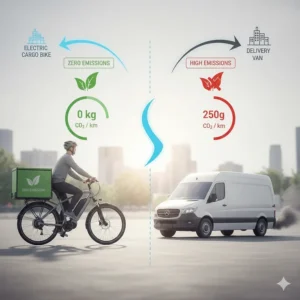
The average car emits 4.6 metric tons of CO2 annually. Replacing even half your car trips with cargo bike journeys eliminates 2+ tons of annual emissions.
Electricity charging your ebike produces minimal emissions—even considering coal power generation, ebikes emit 90% less CO2 per mile than cars. Switch to renewable energy, and your emissions approach zero.
Financial Analysis: Amazon Cargo Bike vs. Car
Let’s run real numbers:
Car Costs (Annual):
- Depreciation: $3,000-5,000
- Insurance: $1,200-1,800
- Fuel (10,000 miles @ $3.50/gal, 25 MPG): $1,400
- Maintenance: $800-1,200
- Registration/fees: $200-400 Total: $6,600-9,800/year
Cargo Bike Costs (Annual):
- Depreciation ($1,800 bike over 8 years): $225
- Electricity (10,000 miles @ $0.15/kWh, 20 Wh/mile): $30
- Maintenance: $150-300
- Amazon Prime shipping: $0 Total: $405-555/year
Annual savings: $6,195-9,245. Your Amazon cargo bike pays for itself in 2-4 months of car-replacement riding.
Choosing the Right Electric Cargo Bike on Amazon
With seven excellent bikes analyzed, how do you select YOUR perfect match? Let’s develop a decision framework.
Family Use Case: School Runs and Errands
Priority Factors:
- Safety certifications
- Comfortable passenger accommodations
- Reliable all-weather performance
- Amazon Prime shipping
Top Pick: Aipas A6 Cargo Bike ($1,799) The excellent value, comprehensive included accessories, and proven Amazon customer satisfaction make this the safest choice for families. Strong Amazon support ensures quick resolution if issues arise.
Budget Alternative: Heybike Hauler ($1,099-1,499) Saves $300-700 while delivering comparable safety features. Watch Amazon lightning deals for best pricing.
Delivery and Commercial Applications
Priority Factors:
- Maximum range per charge
- Durability under daily heavy use
- Fast charging capability
- Amazon Business pricing
Top Pick: EUYBIKE Dual Battery ($1,699) The 160-mile range crushes competition for delivery applications. Lowest cost per mile over lifespan. Available via Amazon Business accounts.
Long-Range Alternative: ENGWE LE20 ($1,799 dual) The 211-mile capability suits very long routes. Optional fast charging available on Amazon.
Budget-Conscious Buyers
Priority Factors:
- Lowest initial investment
- Amazon payment plans available
- Adequate performance
- Warranty coverage
Top Pick: Heybike Hauler ($1,099-1,499) Frequently hits $999 during Amazon Prime Day, Black Friday. Affirm financing available. Adequate performance for most users.
Value Alternative: Aipas A6 ($1,799 single battery) Better components and support justify $300-700 premium over Heybike.
Maximum Range Requirements
Priority Factors:
- Highest battery capacity
- Dual battery system
- Fast charging
- Proven range claims
Top Pick: EUYBIKE Dual Battery ($1,699) Combined 60Ah capacity delivers verified 150+ mile real-world range. 3A fast charging standard.
Alternative: ENGWE LE20 Dual ($1,799) Theoretical 211-mile range (125-160 miles realistic). 8A fast charging optional.
Frequently Asked Questions
❓ How fast can electric cargo bikes on Amazon go?
❓ Do Amazon electric cargo bikes come assembled?
❓ Can I return an electric cargo bike to Amazon if I don't like it?
❓ Are electric cargo bikes on Amazon eligible for Prime shipping?
❓ What's the typical warranty for electric cargo bikes on Amazon?
Conclusion: Your Amazon Cargo Bike Journey Begins Here
The electric cargo bike revolution isn’t coming—it’s already here, transforming how families move, how businesses deliver, and how we think about transportation. And Amazon has made access to quality cargo bikes easier than ever.
We’ve analyzed seven outstanding electric cargo bikes currently available on Amazon, spanning $1,099 to $4,200, each excelling in specific applications. The EUYBIKE Dual Battery delivers unbeatable range. The Aipas A6 offers exceptional family value. The ENGWE LE20 brings European sophistication. The WakeWheel TRAVELLER provides heavy-duty reliability. The eAhora Romeo Pro adds off-road capability. The Heybike Hauler democratizes access with rock-bottom pricing. The Pfau-tec Carrier represents German premium quality.
Your perfect choice depends on your specific use case, budget, and priorities. Families transporting children should prioritize safety features and proven reliability (Aipas A6, WakeWheel). Delivery professionals need maximum range and durability (EUYBIKE, ENGWE LE20). Budget-conscious buyers benefit from Heybike’s aggressive pricing. Those seeking the absolute best should investigate the Pfau-tec despite premium pricing.
The beauty of shopping on Amazon? Prime shipping, straightforward returns (on eligible items), extensive customer reviews, and payment flexibility through Affirm. You’re not buying from a sketchy website hoping your bike eventually arrives—you’re leveraging Amazon’s infrastructure and customer protection.
Remember: cargo bikes represent paradigm shifts, not just purchases. You’re not buying a bike—you’re buying freedom from gas stations, traffic jams, and parking stress. You’re buying more time with your family, better health from active transportation, and the satisfaction of reducing your environmental impact.
The 2026 cargo bike market on Amazon offers something for everyone at prices lower than ever while delivering better performance than premium models from just two years ago. The barriers to entry have never been lower. The question isn’t whether you should consider an electric cargo bike—it’s which Amazon listing matches your lifestyle best.
Your car-free adventure awaits. Choose your cargo bike, add to cart, and discover what you’ve been missing. Free shipping with Prime. 📦
Recommended for You
- 7 Best Step Through Electric Bike for Seniors – Updated 2026
- 7 Best Electric Fat Tire Bikes 2026
- 7 Best Full Suspension Electric Mountain Bikes 2026
Disclaimer: This article contains affiliate links. If you purchase products through these links, we may earn a small commission at no additional cost to you.
✨ Found this helpful? Share it with your friends! 💬🤗
