
In This Article
Scroll through Amazon’s electric mountain bike section long enough and you’ll notice something: the bike-shop names you’d expect — Giant, Trek, Specialized, Polygon — basically don’t show up. Those brands sell through their own sites and local dealers, not Amazon’s marketplace. What Amazon actually has, in real volume, is a different category entirely: direct-to-consumer, fat-tire, hub-motor electric mountain bikes, several of them genuinely equipped with both a front fork and a rear shock.
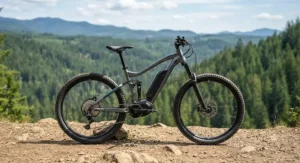
A full suspension emtb under $3000 available on Amazon specifically means a listing you can add to cart and check out through Amazon’s own marketplace today, with suspension at both wheels, not just a cushioned seat post pretending to be a rear shock. That distinction matters because plenty of Amazon listings use “full suspension” loosely — some genuinely move at both ends, some only flex up front.
We went listing by listing to confirm which products are actually sold on amazon.com right now, cross-checked their suspension components against manufacturer spec pages, and pulled in aggregated review sentiment from verified buyers. Worth knowing before comparing wattage claims: federal law defines a low-speed electric bicycle as a two- or three-wheeled vehicle with working pedals and a motor under 750 watts that can’t exceed 20 mph on motor power alone, per NHTSA’s official interpretation of the Consumer Product Safety Act — which is exactly why several of the higher-wattage bikes below ship geo-fenced or speed-limited depending on region.
Here are the seven full suspension emtb under $3000 listings we found actually selling on Amazon.
Quick Comparison Table
| Bike | Motor | Battery | Suspension | Best For |
|---|---|---|---|---|
| Eahora Romeo Pro II | 2×2,000W dual hub (4,000W peak) | 52V/70Ah | Air fork + tunable air rear shock | Maximum power and range |
| eAhora Romeo Pro | 1,200W hub (1,600W peak) | 48V/60Ah | Adjustable hydraulic fork + air rear shock | Budget-friendly dual-motor alternative |
| Aostirmotor S17-1500W | 1,500W hub | 48V/20Ah (960Wh) | Coil-based dual shock | Heavy-duty budget power |
| Aostirmotor 750W | 750W hub | 48V/15Ah | Front fork + rear shock absorber | Lightest budget option |
| FREESKY Ranger AIR | Dual hub, 3,500W peak, 200Nm | 48V/25Ah | Adjustable hydraulic full suspension | Long-range dual-motor value |
| Roadvo Dual 3000W | Dual hub, 3,000W peak | 48V/20Ah, UL 2271 | Dual full suspension | Certified-battery budget pick |
| BURCHDA/DAMSON HC26 | Dual hub, 3,000W peak, 180Nm | 48V/30Ah (1,440Wh) | Hydraulic lockout fork + rear shock | AWD traction on a budget |
Look at what these seven have in common versus what our earlier bike-shop comparison covered: every single one here is a fat-tire, hub-motor build — no mid-drive motors on this specific Amazon-available list. That’s not a downgrade so much as a different design philosophy. Hub motors are simpler and cheaper to manufacture at scale, which is exactly why Amazon’s marketplace is dominated by them, while mid-drive, true-mountain-bike-geometry builds mostly stay on manufacturer-direct or specialty-dealer sites.
💬 Bookmark this table before checking out — suspension type and battery certification matter more here than the headline wattage number.
Top 7 Full Suspension eMTBs Under $3000 on Amazon: Expert Analysis
1. Eahora Romeo Pro II — most power and range on Amazon
If you’re scrolling Amazon specifically for a full suspension emtb under $3000, the Eahora Romeo Pro II is the one that shows up first for a reason. Twin 2,000W hub motors combine for 4,000W of peak output and roughly 240Nm of combined torque, and unlike most budget dual-motor bikes, both ends of the suspension are genuinely adjustable — an air-sprung fork and a tunable rear air shock, not a fixed coil.
Based on the spec comparison, the headline number here is the 52V/70Ah battery (around 3.6kWh), which dwarfs most competitors on this list and explains why owners consistently report multi-day range without recharging. That much battery and motor comes with a real trade-off: at roughly 151 lbs with the battery installed, this is closer to a lightweight electric moped with pedals than a nimble trail bike, and the listing itself recommends riders in the 5’7″-6’4″ range given the frame’s scale.
Reviewers consistently flag the dual-motor AWD-style traction as genuinely useful on wet gravel and loose surfaces — when one wheel slips, the other motor is already pulling. What most buyers overlook is how much that weight changes daily handling: this isn’t a bike you casually carry up an apartment stairwell.
Pros:
- ✅ Adjustable air suspension front and rear, not fixed coil
- ✅ Class-leading battery capacity for genuinely long range
- ✅ Dual-motor traction excels on loose or wet surfaces
Cons:
- ❌ Around 151 lbs, among the heaviest bikes in this category
- ❌ Large frame sizing isn’t ideal for shorter riders
Typically listed in the $2,800-$2,900 range on Amazon, the Eahora Romeo Pro II is the pick for riders who want maximum power and range and don’t mind the bulk that comes with it.
2. eAhora Romeo Pro — dual-suspension value from the same family
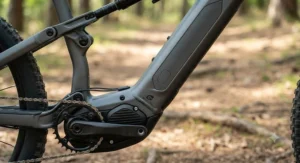
The single-motor eAhora Romeo Pro is what the Romeo Pro II looks like scaled down to a friendlier price point, and it’s a genuinely different animal to live with day-to-day. A single 1,200W hub motor (1,600W peak) delivers 90-120Nm of torque, and — importantly for this category — it pairs an adjustable hydraulic front fork with an air-pressure-adjustable rear shock, meaning you can actually tune the rear end to your body weight rather than being stuck with a fixed spring rate.
Here’s what the spec sheet won’t tell you outright: at roughly 125 lbs with the battery installed, this is meaningfully lighter than its dual-motor sibling, while still running a substantial 48V/60Ah battery that most competitors in this price bracket can’t match. That combination — real range, tunable suspension, one motor instead of two — makes it noticeably easier to maneuver at low speed and in tight spaces.
Aggregated owner sentiment on the retailer’s own review section repeatedly praises the ride comfort from the adjustable air rear shock compared to fixed-coil competitors, while a recurring theme is that the bike still rides heavy compared to a traditional mountain bike, even if it’s the lighter Romeo in the lineup.
Pros:
- ✅ Tunable air rear shock adjusts to rider weight
- ✅ Large 48V/60Ah battery for the price
- ✅ Noticeably lighter and easier to handle than the Pro II
Cons:
- ❌ Single motor means less traction than AWD competitors on loose terrain
- ❌ Still heavy relative to true mountain-bike builds
Listed around $1,900-$2,300 on Amazon, the eAhora Romeo Pro offers genuine tunable dual suspension without stepping all the way up to dual-motor pricing.
3. Aostirmotor S17-1500W — most motor for the money
The Aostirmotor S17-1500W takes a different approach entirely: skip the dual motor, put everything into one strong hub motor, and keep the price down. Its 1,500W rear hub motor (roughly 85Nm torque per Aostirmotor’s spec sheet) is genuinely strong for the price bracket, wrapped in an unmistakable frame design that riders either love or find a little much.
Based on the spec comparison, a 1,500W hub motor needs a big battery to back it up, and the S17 delivers with a 48V/20Ah (960Wh) pack — nearly double the capacity of some 750W competitors at similar prices. That translates into real hill-climbing confidence for heavier riders or anyone hauling cargo, and the front-and-rear suspension setup, while basic coil-type rather than adjustable air, genuinely moves at both ends.
Reviewers on the Amazon listing repeatedly flag the battery life and raw torque as standout strengths, while a recurring complaint centers on the bike’s substantial curb weight — reported at roughly 84 lbs — which makes it a poor choice if you need to carry it up stairs regularly.
Pros:
- ✅ Strong torque and large battery for a single-motor budget bike
- ✅ Genuine front-and-rear suspension, not front-only
- ✅ Removable, easy-to-charge battery pack
Cons:
- ❌ Heavy at roughly 84 lbs
- ❌ Coil suspension isn’t adjustable for rider weight
Typically listed in the $1,700-$1,900 range on Amazon, the Aostirmotor S17-1500W is the pick for riders who want maximum torque per dollar and don’t need tunable suspension.
4. Aostirmotor 750W — lightest budget full suspension pick
Aostirmotor’s smaller 750W model rounds out the brand’s Amazon lineup as the lighter, more approachable option next to the S17. It runs a 750W hub motor paired with a 48V/15Ah battery, and while it trades outright power for a friendlier curb weight, the listing confirms genuine front fork and rear shock absorption rather than a front-only setup.
What most buyers overlook about stepping down from 1,500W to 750W is how much that changes the bike’s personality: this isn’t a hill-climbing brute, it’s a comfortable, easier-to-manage all-rounder better suited to mixed terrain, bike paths, and moderate trails than steep technical climbs. The Shimano 7-speed drivetrain and Tektro/Shimano disc brakes keep the components sensible for the price rather than flashy.
Reviewers consistently describe this model as an easier bike to live with day-to-day compared to the heavier 1,500W sibling — lighter to lift, less intimidating for newer riders, and still genuinely comfortable on broken pavement and light trail thanks to the dual shock absorption.
Pros:
- ✅ Noticeably lighter and easier to handle than the S17
- ✅ Genuine front-and-rear shock absorption at a low price
- ✅ Simple, serviceable Shimano 7-speed drivetrain
Cons:
- ❌ 750W motor climbs steep grades less confidently than dual-motor competitors
- ❌ Smaller 48V/15Ah battery limits range versus bigger-battery options here
Generally priced in the $1,400-$1,600 range on Amazon, the Aostirmotor 750W suits riders who want real suspension comfort without the weight and price of the brand’s flagship model.
5. FREESKY Ranger AIR — dual-motor value with adjustable suspension
The FREESKY Ranger AIR stands out on Amazon for pairing dual-motor power with suspension that’s actually described as adjustable rather than fixed. Twin hub motors combine for 3,500W of peak output and 200Nm of torque, and the listing specifically calls out hydraulic full suspension that can be tuned — a detail worth noting since several competitors in this price range settle for basic, non-adjustable coil units.
Based on the spec comparison, the 48V/25Ah battery supports a genuinely long real-world range, and FREESKY backs the bike with UL 2849 certification — the safety standard worth checking on any lithium battery product before anything else on the spec sheet. The step-through frame option also broadens who can comfortably swing a leg over this bike compared to a traditional high-top-tube mountain frame.
Reviewers consistently highlight the value proposition here: dual-motor output and adjustable suspension at a price point that undercuts several single-motor competitors, though the trade-off, as with most bikes in this class, is a heavier overall build than a true mountain bike.
Pros:
- ✅ Dual-motor power with genuinely adjustable hydraulic suspension
- ✅ UL 2849-certified battery system
- ✅ Step-through frame option improves accessibility
Cons:
- ❌ Still a heavy, fat-tire build rather than nimble trail geometry
- ❌ Torque figures are strong on paper but motor is hub-based, not mid-drive
Generally listed in the $1,300-$1,600 range on Amazon, the FREESKY Ranger AIR is a strong pick for riders who want dual-motor performance and tunable suspension without stretching toward the $2,800 tier.
6. Roadvo Dual 3000W — certified-battery budget pick
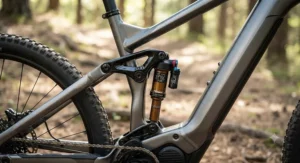
Roadvo has built its Amazon catalog around straightforward, no-nonsense fat-tire e-bikes, and the Dual 3000W full suspension model is the standout for this list. Twin motors combine for 3,000W of peak output, and the listing explicitly confirms front-and-rear suspension systems working together to absorb vibration — genuine dual suspension, not a marketing stretch.
Here’s what the spec sheet won’t tell you outright: Roadvo specifically calls out UL 2271 certification on its removable 48V/20Ah battery, which matters more than the peak wattage number for anyone charging indoors regularly. An 80-mile claimed range on a single charge is generous for the price tier, though real-world mileage will run lower depending on terrain and rider weight, as with any manufacturer range claim.
Reviewers on the Amazon listing consistently describe the ride as noticeably smoother than the brand’s non-suspension models, and the dual disc brakes get repeated praise for stopping power appropriate to the bike’s speed and weight class.
Pros:
- ✅ UL 2271-certified removable battery
- ✅ Genuine dual suspension confirmed front and rear
- ✅ Strong claimed range for the price tier
Cons:
- ❌ Real-world range will run below the advertised 80-mile claim for most riders
- ❌ Dual motor adds weight versus the brand’s single-motor models
Typically listed in the $1,200-$1,500 range on Amazon, the Roadvo Dual 3000W is a sensible pick for buyers who prioritize a certified battery and genuine suspension over flashy peak-wattage marketing.
7. BURCHDA/DAMSON HC26 — AWD traction on a budget
Rounding out the list is the HC26, sold under the BURCHDA/DAMSON brand family, which leans into the all-wheel-drive angle harder than most competitors at this price. Dual motors combine for 3,000W of peak output and 180Nm of torque, and the listing describes a hydraulic dual-crown front fork paired with rear suspension — a more premium-looking front-end setup than most bikes in this bracket.
Based on the spec comparison, the 48V/30Ah (1,440Wh) battery is among the larger packs on this list relative to price, supporting the claimed 45-80 mile range depending on whether you’re running one or both motors. The dual hydraulic brakes are appropriately sized for a bike carrying this much battery and motor weight, which matters more on a heavier e-MTB than it would on an unpowered bike.
Reviewers consistently note the AWD traction as a genuine advantage in loose dirt, sand, and snow, echoing feedback seen on pricier dual-motor competitors — when one wheel loses grip, the other motor is already compensating.
Pros:
- ✅ AWD dual-motor traction on loose or slick terrain
- ✅ Large 1,440Wh battery relative to price
- ✅ Hydraulic dual-crown front fork looks and performs above its price point
Cons:
- ❌ Combined motor and battery weight makes this a heavy build to maneuver
- ❌ Suspension is functional but not as finely adjustable as air-sprung competitors
Generally priced in the $1,600-$1,900 range on Amazon, the BURCHDA/DAMSON HC26 is the pick for riders who want AWD traction and a big battery without chasing the top of this price bracket.
Suspension Setup Guide: Getting Sag Right on Any Full-Suspension eMTB
Buying one of these bikes is step one. Actually setting it up so the suspension works with you, not against you, is the part almost nobody does — and it’s the single biggest reason a perfectly good fork feels harsh or vague on the trail.
- Find your sag target first. Sag is how far the suspension compresses under just your body weight, before you hit a single bump. Most trail-oriented setups land around 25-30% sag on the rear shock and 15-20% on the fork.
- Use the O-ring method on air-sprung models. Slide the rubber O-ring (or a zip tie) down to the seal on air-suspension bikes like the Eahora Romeo Pro II, eAhora Romeo Pro, or FREESKY Ranger AIR, sit on the bike in normal riding position without bouncing, then dismount and measure how far the ring traveled.
- Adjust air pressure in small increments. Add or remove air 5-10 PSI at a time rather than guessing at a big jump.
- On coil-shock models, match spring rate to rider weight. Bikes like the Aostirmotor S17-1500W and Aostirmotor 750W use fixed coil springs, so if sag feels consistently too deep or too shallow, the fix is usually a different-rate spring rather than an air adjustment.
- Set rebound after sag, never before. Roll off a curb and watch how the suspension recovers; if it bounces more than once, add rebound damping until it settles in a single, controlled motion.
- Recheck after 2-3 rides. Seals need a short break-in period, and your “correct” sag on day one may drift slightly once everything settles.
- Revisit before big rides. A quick sag check before a long weekend trip catches slow air leaks before they become a mid-trail surprise.
General industry guidance from suspension specialists consistently lands in the same range: most brands recommend a 20-30% sag window as the starting point, with fine-tuning from there based on rider weight and terrain.
✨ Dial in your suspension before your first trail ride — small tweaks now save you a frustrating first impression later.
Rear Shock Tuning: Fixing the Most Common Full-Suspension Complaints
Rear shock tuning is where budget full-suspension eMTBs most often disappoint new owners, mostly because entry-level coil shocks simply weren’t designed with adjustability in mind. Here’s how to diagnose and fix the recurring issues.
Problem: The rear end feels harsh over small bumps. This usually means the coil spring rate is too stiff for your weight, or sag is set too shallow. On coil-shock bikes like the Aostirmotor S17-1500W or Aostirmotor 750W, the fix is often a lighter-rate replacement spring matched to your body weight, since coil shocks can’t be air-adjusted on the fly.
Problem: The bike wallows or feels vague on rolling terrain. Too much sag is the usual culprit. On air-shock bikes like the Eahora Romeo Pro II, eAhora Romeo Pro, or FREESKY Ranger AIR, adding 10-15 PSI and re-measuring sag typically firms things up without sacrificing small-bump sensitivity.
Problem: The shock bottoms out on bigger hits. On air-sprung models, adding a volume spacer increases progressivity toward the end of the stroke, giving you a firmer ramp-up right when you need it most.
Problem: Suspension performance seems to fade over a long ride. Heat buildup in cheaper shock oil is common on high-mileage descents; slowing your pace on sustained descents and allowing brief cool-down stops preserves consistent damping.
Problem: Squeaking or knocking noises from the rear end. Nine times out of ten this traces back to a loose pivot bolt rather than the shock itself — a torque wrench and the frame’s specified bolt torque values solve this in minutes.
Budget Full-Suspension Options: How Low Can You Go Without Cutting Corners That Matter
There’s a real question buried under “how cheap can I go”: which corners are safe to cut, and which ones aren’t? Based on the spec comparison across this list, budget full-suspension options like the Aostirmotor 750W and Roadvo Dual 3000W cut costs primarily in suspension adjustability (fixed coil vs. tunable air) and overall refinement — both are inconveniences, not safety issues, as long as the brake system and battery certification are solid.
Where budget corners genuinely matter is battery cell quality and certification. A UL-certified battery system, like the Roadvo Dual 3000W‘s UL 2271-certified pack or the FREESKY Ranger AIR‘s UL 2849 certification, meets a recognized safety bar for charging and thermal management; skipping that certification to save money is the one compromise worth avoiding entirely, especially given the well-documented rise in lithium battery incidents tied to uncertified aftermarket packs.
The honest verdict: a genuine budget full-suspension emtb under $1,600, like the Aostirmotor 750W, is a completely legitimate choice for smoother trails, gravel, and light singletrack. Reserve the extra stretch toward the $2,800 tier specifically for riders who want dual-motor AWD traction and adjustable air suspension for varied, technical terrain.
Full Suspension Electric Mountain Bike Weight: What the Numbers Actually Mean
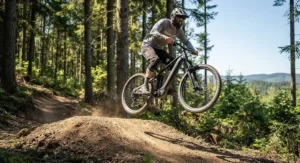
Weight gets treated as a simple “lighter is better” spec, but on a full suspension emtb, it’s more nuanced than that. Across this list, weights range from roughly 65-75 lbs on the lighter single-motor builds like the Aostirmotor 750W, up to around 150 lbs on the biggest dual-motor, big-battery build — the Eahora Romeo Pro II — with the eAhora Romeo Pro (around 125 lbs), Aostirmotor S17-1500W (roughly 84 lbs), and the other dual-motor competitors landing in between.
Here’s what most buyers overlook: on hub-motor fat-tire bikes like everything on this list, weight scales almost directly with motor count and battery size, since there’s no lighter mid-drive unit to offset a bigger pack. A heavier bike also means a heavier lift onto a car rack or up a flight of stairs, which is a genuinely practical, everyday consideration separate from trail performance.
If storage, transport, or maneuvering at low speed matters most to you, the single-motor options in this list handle noticeably easier day-to-day. If your priority is straight-line range, AWD traction, and hauling capability over rough, open terrain, the extra weight of a dual-motor, big-battery build is a fair trade for the mileage and traction it buys you.
Full Suspension eMTB Air Shock vs Coil: Which Rear Suspension Actually Wins Under $3000
This is one of the most consequential differences hiding inside this specific Amazon lineup, and it splits the seven bikes almost evenly. An air shock uses compressed air as the spring medium, which means it’s tunable — add or remove air to match your body weight and riding style. A coil shock uses a physical steel spring rated for a specific weight range; it’s simpler, cheaper to manufacture, and generally plush off the top, but it isn’t adjustable for your weight without swapping the physical spring.
On this list, the Eahora Romeo Pro II, eAhora Romeo Pro, and FREESKY Ranger AIR all run adjustable air or hydraulic-adjustable rear suspension, while the Aostirmotor S17-1500W, Aostirmotor 750W, Roadvo Dual 3000W, and BURCHDA/DAMSON HC26 rely on more basic, largely fixed suspension setups. Reviewers consistently note the adjustable models feel more composed across a wider range of rider weights, while the fixed-suspension models feel either too soft or too harsh depending on how close your weight sits to the spring’s intended range.
The practical takeaway: if you’re near an “average” rider weight and mostly ride smoother trails or bike paths, a well-matched fixed suspension setup is genuinely fine and lower-maintenance. If your weight sits well outside the middle of the bell curve, or you plan to ride varied terrain regularly, the tunability of the air-sprung models is worth prioritizing even if it means moving toward the higher end of this price range.
Real-World Scenario: Matching Riders to the Right Bike
The budget-conscious commuter who wants occasional trail comfort: A rider who mostly rides bike paths and light gravel but wants genuine suspension comfort for the occasional rough patch fits the Aostirmotor 750W well — light enough to manage daily, with real front-and-rear cushioning.
The rural rider who needs range and traction above all else: Someone covering long distances on mixed gravel, farm roads, and loose or snowy terrain with no charging access mid-ride is the ideal buyer for the Eahora Romeo Pro II or BURCHDA/DAMSON HC26 — both deliver AWD-style traction and oversized batteries that change what’s possible in a single outing.
The rider who wants tunable suspension without dual-motor pricing: Someone who cares more about ride quality than raw power should look at the eAhora Romeo Pro or FREESKY Ranger AIR — both offer genuinely adjustable suspension components at a meaningfully lower price than the flagship dual-motor options.
👉 Not sure which profile fits you? Compare your typical terrain and how often you’ll carry or store the bike before deciding.
How to Choose a Full Suspension eMTB Under $3000
- Confirm the listing is genuinely full suspension — check for explicit “front and rear” suspension language and, where possible, a manufacturer spec page, since some Amazon listings use the term loosely.
- Match motor configuration to terrain. Single motors are lighter and easier to manage; dual-motor AWD setups add traction and power at the cost of weight.
- Check suspension adjustability against your rider weight — air-sprung models tune to your weight, coil-sprung models don’t.
- Verify battery certification (UL 2849, UL 2271, or equivalent) before anything else on the spec sheet.
- Prioritize battery capacity around your typical ride length, not the biggest number available — extra capacity often means extra weight you don’t need.
- Confirm brake rotor size and piston count — bigger rotors and multi-piston calipers matter more on a heavier e-MTB than on an unpowered bike.
- Factor in local class laws for motor wattage and speed limits before assuming a bike is street- or trail-legal in your area.
Common Mistakes When Buying a Full Suspension eMTB
The most frequent mistake is buying based on peak wattage alone — a “4,000W” spec sounds dramatic, but continuous, real-world torque and suspension quality matter far more to actual ride comfort. A close second is assuming every Amazon listing that says “full suspension” has adjustable components; several budget models on this list use fixed coil shocks that work fine but can’t be tuned to your specific weight.
Buyers also frequently underestimate total weight, assuming an eMTB will handle like a regular mountain bike with “a little extra oomph,” when in practice a 65-150 lb bike changes how you load it, transport it, and maneuver it at low speed. Finally, skipping a battery certification check to save a few hundred dollars is the one shortcut genuinely worth avoiding, given how directly it ties to charging and storage safety.
Long-Term Cost & Maintenance for Full-Suspension eMTBs
Full suspension adds real maintenance considerations beyond a standard e-bike: shock and fork seals need periodic attention, pivot points on the rear suspension linkage wear over time, and battery packs gradually lose capacity regardless of brand. Coil-shock bikes like the Aostirmotor models are comparatively low-maintenance since there’s no air seal to service, while air-sprung models like the Eahora Romeo Pro II and FREESKY Ranger AIR need occasional air-seal attention in exchange for their tunability.
Hub motors, which power every bike on this list, also tend to be simpler and cheaper to service than mid-drive systems, since they don’t route power through the drivetrain — a genuine advantage for buyers who want to minimize ongoing maintenance costs, even if it means a heavier overall build.
It’s also worth knowing where your state stands legally before you commit to a higher-wattage build, since trail access and required equipment for Class 1/2/3 e-bikes still vary considerably; PeopleForBikes maintains an updated state-by-state breakdown that’s worth bookmarking before your first ride.
FAQ
❓ Are there real full suspension eMTBs under $3000 available on Amazon?
❓ Why don't bike-shop brands like Giant or Polygon show up on Amazon?
❓ How much does a full suspension electric mountain bike weight typically run on Amazon?
❓ Is air shock or coil better for a budget eMTB?
❓ What should I check before buying a full suspension eMTB on Amazon?
Conclusion
A full suspension emtb under $3000 that’s actually available on Amazon looks different than the bike-shop category — it’s dominated by direct-to-consumer, hub-motor, fat-tire builds rather than mid-drive trail bikes. If maximum power and range are your priority, the Eahora Romeo Pro II delivers genuine AWD traction and adjustable air suspension, with the eAhora Romeo Pro offering much of that tunability at a friendlier price and weight. If raw torque per dollar matters most, the Aostirmotor S17-1500W and its lighter 750W sibling both deliver real front-and-rear suspension without breaking the budget. And if you want dual-motor performance without stepping all the way up to flagship pricing, the FREESKY Ranger AIR, Roadvo Dual 3000W, and BURCHDA/DAMSON HC26 all carve out their own value niche.
Whichever bike you land on, remember that the suspension setup guide steps above aren’t optional extras — a properly sagged and tuned suspension system is the difference between a bike that merely has full suspension and one that actually rides like it.
✨ Don’t Miss These Exclusive Deals!
🔍 Take your trail riding to the next level with these carefully selected Amazon picks. Click on any highlighted bike above to check current pricing and availability, and get ready to build authentic outdoor adventures your whole family will love!
Recommended for You
- 7 Best Electric Mountain Bikes for Steep Climbs in 2026
- 7 Best Step-Through Ebikes for Short Riders on Amazon (2026)
- Step-Through Electric Bike for Plus-Size Riders: 7 Best Picks 2026
Disclaimer: This article contains affiliate links. As an Amazon Associate, I earn from qualifying purchases. If you purchase products through these links, we may earn a small commission at no additional cost to you.
✨ Found this helpful? Share it with your friends! 💬🤗
