

Here’s the thing nobody tells you when you start shopping for a lightweight electric scooter for women: “lightweight” is doing a lot of heavy lifting as a marketing word. Scroll through enough listings and you’ll see the same photo of a smiling rider hoisting a scooter over one shoulder like it weighs nothing. In reality, most genuinely rideable adult scooters land somewhere between 23 and 36 pounds, and the difference between the light end and the heavy end of that range is the difference between “sure, I’ll carry this up to my fourth-floor walkup” and “absolutely not.”
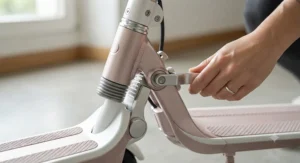
We dug into real specs, real aggregated review sentiment, and real pricing across dozens of models to find scooters that actually deliver on portability without turning every ride into a compromise. This guide covers seven specific products — from a 23-pound featherweight built almost for smaller frames to a suspension-equipped option that trades a few pounds for a noticeably smoother ride. Along the way we’ll cover petite frame sizing, comfortable grip handlebars, carry-friendly folding designs, and what “under 20 lbs” actually means once you account for a battery, a motor, and a frame sturdy enough to hold an adult.
Whether you’re commuting to a train platform, weaving through a campus, or just tired of hauling a 40-pound scooter up three flights of stairs, there’s a real, buyable answer below — not a wishlist of specs that don’t exist yet.
Quick Comparison Table
| Scooter | Weight | Top Speed | Range | Price Range | Best For |
|---|---|---|---|---|---|
| NIU KQi Air | 26.4 lbs | 20 mph | Up to 31 mi | $900-$1,050 | Best overall balance |
| Segway Ninebot Air T15 | 23.2 lbs | 12.4 mph | Up to 7.5 mi | $700-$750 | Lightest / petite riders |
| Unagi Model One E500 | 26.5-28.6 lbs | 15-18 mph | Up to 15.5 mi | $840-$990 | Style + dual motor |
| Levy Light | 27-28 lbs | 18 mph | ~10 mi/battery | $550-$600 | Swappable battery |
| Hiboy S2R | 30.8-31 lbs | 19 mph | Up to 17 mi | $550-$680 | Best value |
| Gotrax GXL V2 | 26.5-27 lbs | 15.5 mph | Up to 12 mi | $300-$400 | Tightest budget |
| Segway Ninebot E2 Plus II | 36.2 lbs | 15.5 mph | Up to 16 mi | $300-$370 | Smoothest ride |
Looking at the spread above, the honest takeaway is that “lightweight” and “long-range” pull in opposite directions almost every time. The NIU KQi Air is the rare scooter that doesn’t force that trade-off — its carbon fiber frame keeps weight down while still packing enough battery for a real commute. If your priority is the absolute lowest number on a scale, the Segway Ninebot Air T15 wins outright, but you’re paying for that in range. Meanwhile, the Segway Ninebot E2 Plus II proves that sometimes an extra 8-10 pounds buys genuinely better ride comfort, which matters more than raw portability for some riders.
💬 Found a favorite already? Bookmark this page — you’ll want the full breakdown before you commit.
Top 7 Lightweight Electric Scooters for Women: Expert Analysis
1. NIU KQi Air — best overall balance of light weight and range
The KQi Air’s whole pitch rests on one number: 26.4 lbs, achieved through an actual carbon fiber frame rather than the usual aluminum-and-marketing-copy approach. That matters because most scooters shed weight by shrinking the battery, which tanks range. NIU didn’t do that here.
Under the deck sits a 350W motor (700W peak) paired with a 451.2Wh, 48V battery — enough for a claimed 31 miles and a verified 20 mph top speed in independent testing. Translated into daily use, that’s a scooter that can handle a genuine multi-day commute between charges, not just a lap around the block. The 9.5-inch tubeless tires and single front disc brake round out a setup that feels closer to a mid-tier commuter scooter than an ultralight novelty.
Based on the spec comparison against similarly priced models, the KQi Air earns its premium price through a metric independent testers specifically flagged: its range-to-weight ratio outperformed every other scooter in its class during controlled testing. Reviewers consistently note that the ride feels planted and stable at speed despite the low weight — a rarity, since most sub-27-lb scooters feel twitchy once you cross 15 mph.
Pros:
- ✅ Best-in-class weight-to-range ratio in independent testing
- ✅ Carbon fiber frame keeps the ride stable at higher speeds
- ✅ Turn signals and anti-theft features rare at this weight class
Cons:
- ❌ No suspension, so rough pavement transmits shock directly
- ❌ Premium price tag relative to its 20 mph top speed ceiling
At around $900-$1,050, the NIU KQi Air sits at the top of this list price-wise, but for riders who genuinely carry their scooter daily, the weight savings alone can justify it.

2. Segway Ninebot Air T15 — lightest scooter built for petite riders
At 23.2 lbs, the Air T15 is the lightest scooter in this entire roundup, built around a magnesium alloy frame that Segway specifically engineered for portability over performance. It folds in about one second flat, and once folded, it’s small enough to slide under an office desk or into a coat closet without a second thought.
The trade-off is real, and it’s worth saying plainly: a 250W motor, 12.4 mph top speed, and a 7.5-mile range mean this scooter is built for short hops, not commuting across town. What most buyers overlook about the Air T15 is that its small 7.5-inch front and 6-inch rear wheels — while part of what makes it so compact — also mean it feels every crack and pebble on rough pavement. This is a scooter for smooth sidewalks and short, predictable routes, not potholed streets.
Reviewers consistently describe it as ideal for smaller or lighter riders specifically because the frame and grip width feel proportionate rather than oversized, and the one-hand carry is genuinely effortless even for someone who wouldn’t want to lug a 30-pound scooter.
Pros:
- ✅ Lightest scooter in this roundup by several pounds
- ✅ Folds in about one second for quick stashing
- ✅ Compact folded size fits under a desk or car seat
Cons:
- ❌ Real-world range best suited to trips under 5 miles
- ❌ Struggles noticeably on any real incline
Priced around $700-$750, the Segway Ninebot Air T15 is a specialty pick — perfect for the person whose entire use case is “get me the four blocks from the train station,” less so for anyone commuting further.
3. Unagi Model One E500 — sleekest design with dual-motor power
The Model One doesn’t look like the rest of this list, and that’s by design. Its tapered steering column and magnesium-and-aluminum build give it a distinct silhouette, and the E500 configuration adds a second 250W motor for a combined 500W of power — a meaningful jump in acceleration over single-motor budget scooters.
Weighing in between 26.5 and 28.6 lbs depending on configuration and testing conditions, it lands squarely in the lightweight tier, and its one-click folding hinge is genuinely one of the smoothest mechanisms on the market — you hear an audible click when it locks, which sounds trivial until you’re fumbling with a stiffer latch on a colder morning. Here’s what the spec sheet won’t tell you, but multiple independent testers note: the 7.5-inch solid tires that make the Model One maintenance-free also transmit noticeably more road vibration than pneumatic alternatives, which matters if your commute includes anything rougher than freshly paved bike lanes.
Aggregated review sentiment is split — testers who prioritize style and low-maintenance tires rate it highly, while those comparing pure performance-per-dollar note that scooters costing considerably less deliver comparable real-world speed and range.
Pros:
- ✅ One-click folding mechanism is genuinely effortless to use
- ✅ Dual motors deliver confident acceleration off the line
- ✅ Distinctive design that doesn’t read as a generic rental scooter
Cons:
- ❌ Solid tires transmit more road vibration than pneumatic rivals
- ❌ Premium price for a mid-pack top speed and range
The Unagi Model One E500 runs in the $840-$990 range depending on configuration and promotions — a legitimate premium pick if aesthetics and folding convenience top your list.
4. Levy Light — swappable battery for worry-free range
The Levy Light solves a problem almost no other scooter on this list addresses: what happens when the battery dies mid-ride? At 27-28 lbs, its swappable battery system means you can carry a spare (about 3 lbs each) in a bag and swap it in seconds rather than waiting hours for a recharge.
The 350W front motor (700W peak) and 274Wh battery deliver an 18 mph top speed and roughly 10 miles of range per battery pack — modest on its own, but functionally unlimited if you keep a charged spare in your bag. Based on the spec comparison, this is the only scooter here where “range anxiety” is a solvable problem rather than a fixed limitation. Reviewers consistently highlight that the battery’s fireproof, waterproof metal casing adds a layer of safety reassurance that built-in, non-removable batteries can’t match, and that the scooter can even be ridden manually, kick-scooter style, if you’re ever caught with a dead battery and no spare.
What most buyers overlook is that this swappable design also extends the scooter’s usable lifespan — when a built-in battery degrades, the whole scooter is often junk, but a Levy owner can simply order a replacement battery.
Pros:
- ✅ Swappable battery effectively removes range anxiety
- ✅ Doubles as a manual kick scooter if the battery runs out
- ✅ Fireproof, waterproof battery casing built for daily urban use
Cons:
- ❌ Base single-battery range trails several pricier competitors
- ❌ Extra battery packs are a separate purchase
At roughly $550-$600, the Levy Light is the mid-range pick for anyone whose commute occasionally runs longer than expected.
5. Hiboy S2R — best value with a removable battery
The Hiboy S2R walks a smart middle line: a 350W motor, 19 mph top speed, and up to 17 miles of claimed range, all wrapped in a roughly 31-pound frame that’s still light enough for regular carrying, even if it’s a few pounds heavier than the ultralight tier above. Its removable battery — chargeable separately from the scooter body — means you can top up at a desk while the scooter itself sits locked outside or in a trunk.
The 8.5-inch solid, puncture-proof tires mean zero maintenance concerns about flats, and reviewers consistently note that the extended-range battery accessory can nearly double total range for riders with longer commutes. On paper this means a rider gets dual-motor-adjacent performance and genuine flexibility without paying dual-motor prices.
Honest aggregated sentiment does flag two consistent gaps: no suspension, so bumps are felt directly through the deck, and at 31 lbs it’s the heaviest of the “genuinely portable” scooters here, meaning daily stair-carrying is doable but noticeably more effortful than the sub-27-lb options.
Pros:
- ✅ Removable battery lets you double range with a spare pack
- ✅ Puncture-proof solid tires require zero maintenance
- ✅ Strong value against pricier dual-motor competitors
Cons:
- ❌ No suspension means bumps transmit directly to the deck
- ❌ A few pounds heavier than the ultralight tier
Priced between $550 and $680, the Hiboy S2R rewards riders who want range flexibility without stretching into premium territory.

6. Gotrax GXL V2 — most affordable genuinely portable pick
At $300-$400, the Gotrax GXL V2 is the cheapest scooter on this list by a wide margin, and it doesn’t cut every corner to get there. A 250W front motor and 8.5-inch pneumatic (air-filled) tires deliver a 15.5 mph top speed and roughly 12 miles of claimed range — modest numbers, but honestly reported ones, since independent testers found real-world range closer to 9-10 miles for riders in the 165-180 lb range.
What most buyers overlook about the GXL V2 is that its pneumatic tires actually give it a smoother ride than some pricier solid-tire competitors, since air-filled tires naturally dampen small road vibrations in a way solid rubber can’t. The aluminum A6061 frame keeps total weight around 26.5-27 lbs, putting it firmly in genuinely-portable territory despite the low price. Reviewers consistently praise the inclusion of cruise control at this price point — a feature many pricier scooters skip.
The honest limitation here is the 220-lb rider weight cap, lower than every other scooter on this list, and a motor that reviewers describe as “leisurely” on anything beyond a gentle slope.
Pros:
- ✅ Lowest price point of any genuinely portable pick here
- ✅ Pneumatic tires smooth out cracks better than solid-tire rivals
- ✅ Cruise control included at a genuinely budget price
Cons:
- ❌ Lower 220 lb rider weight limit than competitors
- ❌ Underpowered on any incline with real grade
For a first scooter, a campus commuter, or a backup ride, the Gotrax GXL V2 is hard to argue with on price alone.
7. Segway Ninebot E2 Plus II — smoothest ride if a few extra pounds are fine
Let’s be upfront: at 36.2 lbs, the E2 Plus II is the heaviest scooter on this list, and it doesn’t really belong in the “under 20 lbs” conversation. We’re including it because it answers a real question a lot of shoppers eventually ask: what if I’m willing to trade some portability for comfort? The answer here is front suspension, 8.1-inch shock-absorbing tires, and a ride quality that independent reviewers consistently rank above every other scooter in this list for smoothing out cracked pavement and potholes.
A 300W motor (500W peak) delivers a 15.5 mph top speed and up to 16 miles of range in Eco mode, though independent testing found real-world range closer to 11 miles under standardized conditions. Here’s what the spec sheet won’t tell you: that suspension and steel frame add real heft, and the 198-lb max rider weight is also the lowest ceiling of any scooter here, which is a genuine limitation for some riders despite the comfort upside.
Reviewers consistently frame this as the right pick for someone commuting on genuinely rough streets who values comfort over the last few pounds of portability — folding and carrying it occasionally is fine, but daily stair-hauling will feel noticeably more effortful than with the lighter options above.
Pros:
- ✅ Front suspension makes it the comfiest ride in this lineup
- ✅ Puncture-proof tires plus dual braking for confident stops
- ✅ Segway’s reliability track record and companion app support
Cons:
- ❌ Heaviest scooter in this lineup at over 36 lbs
- ❌ Lower 198 lb rider weight capacity than rivals
Priced around $300-$370, the Segway Ninebot E2 Plus II is worth considering specifically if comfort, not weight, is your top priority.
Carrying Your Scooter Up Stairs, Onto Transit, and Everywhere Else
The “lightweight” label only matters in the moments you’re actually lifting the thing — up a subway staircase, into a trunk, over a curb. Here’s how to make that easier regardless of which scooter you choose.
First, learn the fold before you need it under pressure. Practice the folding mechanism at home a few times so it becomes muscle memory; fumbling with a stiff latch while balancing a scooter on a crowded platform is how folding hinges get bent. Second, carry from the folded steering column, not the deck — nearly every scooter on this list, including the NIU KQi Air and Levy Light, is designed to be gripped at the stem, which distributes weight closer to your center of gravity than grabbing the deck. Third, if stairs are a daily reality, prioritize anything under 28 lbs; the difference between carrying 23 lbs (the Segway Ninebot Air T15) and 36 lbs (the Segway Ninebot E2 Plus II) compounds fast over multiple flights, multiple times a day.
A common first-30-days mistake is trying to carry the scooter one-handed at an awkward angle to keep a free hand for a phone or coffee — this is exactly when hinges get stressed and shoulders get strained. Use a cross-body strap if your model supports one, or accept the two-handed carry on stairs. Finally, check your building or transit system’s rules before you commit to a daily carry routine; some elevators and subway turnstiles have size restrictions that folded dimensions (not just weight) need to clear.
✨ Ready to Stop Guessing and Start Riding?
🔍 Compare the full lineup above side-by-side, click through to check current availability, and grab the scooter that actually matches how you’ll use it — not just how it photographs.
Real-World Scenarios: Which Scooter Fits Your Life?
If you’re a graduate student commuting 1.5 miles across campus with two flights of stairs between your apartment and the street, the Segway Ninebot Air T15 or Gotrax GXL V2 cover that distance easily, and their lighter weight (or lower price) matters more than raw range you’ll never use.
If you’re a downtown professional riding 4-6 miles to a train station and then carrying the scooter onto a packed commuter rail car, the NIU KQi Air or Levy Light make more sense — you need genuine range for the full trip plus a “last mile” buffer, and both fold compactly enough to stand beside a subway seat without blocking the aisle.
If your commute includes rougher streets, more distance, and you’re less concerned about shaving off the final few pounds, the Hiboy S2R or Segway Ninebot E2 Plus II are the more realistic picks — the former for battery flexibility, the latter specifically for its suspension on cracked pavement.
Common Problems Women Riders Face (And How to Solve Them)
Problem: The scooter feels too tall or the handlebars sit at an awkward reach. Look for models with adjustable stem height — the Levy Light and several Segway models offer handlebar height adjustment, which matters far more for comfort than shaving an extra pound off total weight.
Problem: Carrying the scooter daily is straining your shoulder or wrist. Switch your grip point to the folded stem rather than the deck, and consider a padded carrying strap if your model’s fold point supports one — this redistributes weight along your torso instead of one wrist.
Problem: Range drops faster than advertised in cold weather. This is universal across lithium-ion battery scooters, not a defect. Battery output drops in low temperatures; riders in colder climates should expect 15-25% less real-world range in winter months regardless of which model they choose.
Problem: The scooter feels unstable at low speeds when starting from a stop. This is more common on single-motor, smaller-wheel models like the Segway Ninebot Air T15. Keep both feet planted before applying throttle, and avoid starting on any downward slope until you’re confident with the throttle response.
Problem: You’re unsure if a scooter is legal to ride where you live. Rules vary significantly by state and city — some restrict sidewalk riding, others cap top speed. It’s worth checking your local regulations before your first ride, not after.
What Is a Lightweight Electric Scooter for Women?
A lightweight electric scooter for women is a foldable, battery-powered scooter typically weighing between 23 and 30 pounds, designed with easier one-hand carrying, adjustable or narrower handlebar reach, and a lower standover profile that suits smaller or petite frames better than standard 35-45 lb commuter models.
It’s worth being direct about something the marketing around “lightweight electric scooter under 20 lbs” tends to obscure: a genuinely rideable adult electric scooter under 20 lbs essentially doesn’t exist on the market yet, once you factor in a battery, motor, frame, and brakes strong enough to safely carry an adult rider. The lightest scooters that actually function as daily transportation — like the 23.2-lb Segway Ninebot Air T15 — sit just above that threshold. Anything marketed as a true sub-20-lb “adult” scooter with real range and speed should be approached skeptically; that combination currently requires trade-offs in materials cost that push scooters into premium pricing, as seen with the carbon-fiber NIU KQi Air.

How to Choose a Lightweight Electric Scooter for Women: 7 Expert Criteria
- Total weight, honestly assessed. Don’t just check the spec — check it against your own daily carry distance (stairs, platform, entryway).
- Folded dimensions, not just weight. A scooter can be light but still bulky when folded, making it awkward on crowded transit.
- Handlebar height and grip design. Adjustable stems accommodate a wider range of heights and reduce wrist strain on longer rides.
- Rider weight capacity. Confirm your weight sits comfortably under the stated max — performance and range both degrade near the ceiling.
- Tire type. Pneumatic tires ride smoother but need occasional air; solid tires are maintenance-free but transmit more vibration.
- Battery type — fixed vs. swappable. Swappable batteries, like on the Levy Light, solve range anxiety at the cost of a higher upfront price for spares.
- Certification. Confirm UL 2272 certification, which addresses electrical and battery fire safety — a baseline, not a bonus.
A common mistake at this stage is chasing top speed numbers first. Reviewers consistently note that for most urban commutes under 5 miles, the difference between 15 mph and 20 mph barely changes total trip time once you factor in stops, crosswalks, and pedestrian traffic — but it does change how confident you feel braking on short notice.
Comfortable Grip Handlebars and Petite Frame Sizing: Why Fit Beats Specs
It’s easy to fixate on motor wattage and battery capacity and completely overlook the thing you’ll actually touch for the entire ride: the handlebar grip. A grip that’s too wide forces your shoulders into an unnatural, hunched stance; one that’s too narrow crowds your hands together and reduces steering control at speed. Look specifically for ergonomic, slightly contoured rubber grips — several models in this list, including the Levy Light and Segway Ninebot E2 Plus II, use textured rubber that reviewers describe as noticeably more comfortable over longer rides than the smooth foam grips found on cheaper models.
Petite frame sizing is less about a scooter being labeled “for women” and more about three measurable factors: stem height range, deck length, and standover clearance when folded. A shorter rider generally benefits from a stem that adjusts down to a lower minimum height — without that adjustability, even a light scooter can feel oversized and awkward to control. The Segway Ninebot Air T15‘s compact proportions work well here specifically because its overall scale, not just its weight, was designed down rather than simply trimmed from a standard adult frame.
What most buyers overlook is that a slightly heavier scooter with the right grip width and adjustable stem often feels more comfortable over a real commute than a lighter scooter that fits poorly — weight is only one variable in overall ride comfort.
Lightweight Scooters vs Traditional Commuter Scooters and E-Bikes
Traditional commuter scooters — the 35-45 lb category that includes many rental-style models — trade portability for range, rider weight capacity, and suspension. If you’re not carrying your scooter daily, that trade-off may not cost you anything meaningful. But for anyone navigating stairs, tight apartment storage, or multi-modal commutes involving buses or trains, the extra 10-15 lbs adds up fast across repeated daily lifts.
E-bikes solve range and comfort more thoroughly than any scooter here — longer battery life, a seat, better stability at speed — but they cost significantly more to purchase, require actual storage space (not a closet corner), and can’t be carried up a flight of stairs at all. For a genuinely short, sub-5-mile urban commute with stairs or transit involved, a lightweight scooter’s total cost of ownership, including the time saved not maintaining a heavier vehicle, tends to edge out both alternatives. Reviewers consistently note that riders who tried e-bikes for short urban hops before switching to lightweight scooters cited storage and portability, not price, as the deciding factor.
The honest exception: if your commute regularly exceeds 8-10 miles or includes serious hills, both traditional scooters and e-bikes will outperform every lightweight pick on this list, portability trade-offs aside.
Common Mistakes When Buying a Lightweight Electric Scooter
The most frequent mistake is prioritizing the lowest weight number without checking rider weight capacity — several ultralight scooters cap out around 220 lbs, which matters even for riders who don’t consider themselves heavy once winter coats and backpacks are factored in. The second common mistake is skipping folded dimensions entirely; a scooter that’s light but doesn’t fold into a compact enough package still won’t fit comfortably beside a subway seat.
A third mistake is assuming advertised range equals real-world range. Independent testing consistently shows real-world range running 60-80% of manufacturer claims once rider weight, hills, and stop-and-go city riding are factored in — plan around the lower end, not the marketing number. Finally, many buyers skip checking for UL 2272 certification entirely, assuming all scooters sold on major platforms are automatically vetted for battery safety — they aren’t, and it’s worth confirming before purchase.
What to Expect: Real-World Performance for Everyday Riders
Translating specs into daily experience: a scooter advertising a 20 mph top speed will typically feel comfortably brisk in real city riding, since few urban commutes involve sustained top-speed stretches longer than a block or two. Range numbers, as noted above, should be discounted by 20-40% for realistic planning — a scooter claiming 17 miles, like the Hiboy S2R, more realistically delivers 10-13 miles for an average-weight rider in mixed conditions.
Tire choice shapes daily comfort more than most riders expect going in. Pneumatic tires on the Gotrax GXL V2 smooth out sidewalk cracks noticeably better than the solid tires on the Unagi Model One E500, though solid tires eliminate flat-tire risk entirely — a real trade-off, not a marketing distinction. Charging time also matters more in practice than on a spec sheet: a scooter that charges in 3-4 hours, like the Levy Light, fits comfortably into an overnight routine, while a 7+ hour charge time on models like the Segway Ninebot E2 Plus II requires more deliberate planning around when you’ll next need it.
Safety, Regulations & Compliance: What Every Woman Rider Should Know
Every scooter on this list should carry UL 2272 certification, the ANSI-accredited U.S. safety standard for personal e-mobility device electrical systems, which evaluates battery and charging system fire safety. It’s a baseline check, not a nice-to-have — the U.S. Consumer Product Safety Commission has specifically urged manufacturers and retailers to comply with this and related standards.
Beyond certification, federal research on emerging micromobility safety trends notes that behavioral safety issues for e-scooters differ somewhat from traditional bicycles, partly due to different speed profiles and rider habits. A university-led survey study on scooter-related crashes specifically found that female riders were more likely to report riding on sidewalks and non-paved surfaces, which the study’s authors identified as a risk factor worth addressing through infrastructure and rider education — a useful reminder to seek out bike lanes where available rather than defaulting to sidewalk riding.
Practical safety steps that apply regardless of which scooter you choose: wear a helmet every ride, not just on “risky” routes; check your state’s specific rules, since some states cap speed or restrict sidewalk use differently than others; and inspect tires and brakes weekly, since these are the components most likely to degrade unnoticed.

Frequently Asked Questions
❓ Is a lightweight electric scooter safe for a smaller or petite rider?
❓ What is the lightest electric scooter that's still practical for adults?
❓ Do lightweight scooters sacrifice range compared to heavier models?
❓ Can I carry a lightweight electric scooter up stairs every day?
❓ Is a swappable battery worth the extra cost over a fixed battery?
Conclusion
There’s no single “best” lightweight electric scooter for women — there’s a best one for your specific stairs, your specific commute distance, and your specific tolerance for trading pounds against range. The NIU KQi Air earns its premium price by refusing to make you choose between light weight and real range. The Segway Ninebot Air T15 is unmatched for pure portability if your trips are genuinely short. And if comfort matters more than shaving off the last few pounds, the Segway Ninebot E2 Plus II‘s suspension is worth the extra heft.
What matters most is being honest with yourself about how you’ll actually use it — daily stair-carrying calls for a different pick than occasional weekend errands. Whichever model you land on, prioritize UL 2272 certification, confirm the rider weight capacity comfortably clears your own, and don’t let a flashy top-speed number outweigh how the scooter actually feels folded under your arm at the end of a long day.
Recommended for You
- Lightweight Electric Scooter: 7 Surprisingly Tough Picks for 2026
- Best Commuter Electric Scooter 2026: 7 Top Picks That Won’t Let You Down
- Touring Electric Bike With 100-Mile Range: 7 Amazon Picks 2026
Disclaimer: This article contains affiliate links. As an Amazon Associate, I earn from qualifying purchases. If you purchase products through these links, we may earn a small commission at no additional cost to you.
✨ Found this helpful? Share it with your friends! 💬🤗
