
In This Article
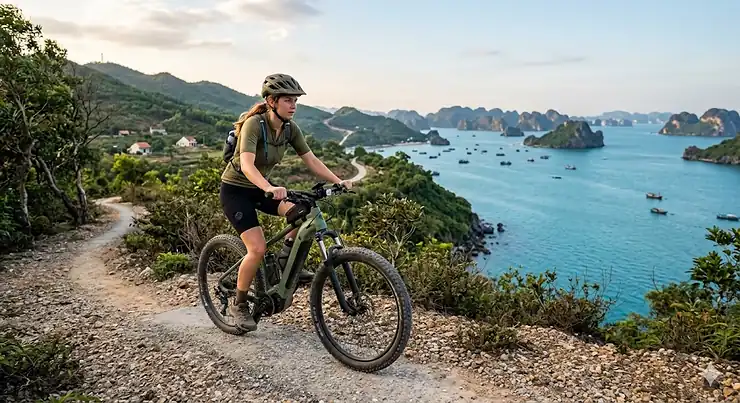
Pavement turns to gravel turns to a soggy dirt shortcut behind the soccer field, and most bikes just sulk about it. That’s the whole problem with buying a single-surface bike in a multi-surface world: your commute doesn’t stay polite. One minute you’re gliding over smooth asphalt, the next you’re bouncing across a washboard fire road or plowing through a sandy beach access trail, and a road bike’s skinny tires and twitchy geometry will make every one of those transitions feel like a small betrayal.
An electric bike for mixed terrain solves that identity crisis by building in versatility from the frame up — wider tires for float and grip, suspension that shrugs off chatter, and a motor with enough torque to make hills feel like a rumor rather than a threat. 🚴♂️ Whether you’re commuting through a city that can’t decide if it wants bike lanes or potholes, or you’re chasing weekend trail loops that wander from singletrack to backroad, the right bike treats every surface like it belongs on the same ride.
We dug into seven real, currently available models that handle this terrain-switching act with actual competence, not just marketing copy. Some lean budget-friendly and foldable, some lean full-suspension and burly, and one or two sit comfortably in between. We’ll walk through what each one does well, who it’s built for, and where the compromises hide — because every fat tire and every torque sensor comes with a tradeoff somewhere. By the end, you’ll know exactly which electric bike for mixed terrain fits your actual riding life, not just your Pinterest board of one.
Quick Comparison Table
Before the deep dive, here’s the lay of the land. Motor wattage tells you about hill-climbing muscle, but it’s the combination of tire width, suspension, and battery capacity that actually determines whether a bike feels composed when the surface gets unpredictable.
| Bike | Motor (Peak) | Tire Size | Suspension | Range | Price Range | Best For |
|---|---|---|---|---|---|---|
| Lectric XPeak 2.0 | 1,310W | 26″x4″ | Front, 80mm | Up to 60–80 mi | $1,400–$1,600 | Budget off-road eMTB |
| Heybike Ranger S | 1,400–1,800W | 20″x4″ | Front | Up to 55 mi | $1,000–$1,300 | Folding, budget commuter-adventurer |
| Aventon Sinch.2 | 750W | 20″x4″ | Front | Up to 55 mi | $1,400–$1,800 | Folding, apartment/RV storage |
| Rad Power Radster Trail | 750W | 27.5″x3″ | Front | Up to 65–75 mi | $1,700–$2,000 | All-weather off-road commuting |
| Aventon Aventure 3 | 1,440W | 26″x4″ | Front + seatpost | Up to 65 mi | $1,800–$2,000 | Tech-loaded all-terrain cruiser |
| Velotric Summit 2 | 1,300W | 27.5″x2.4″ | Front, 120mm air | Up to 95 mi | $2,000–$2,200 | Hybrid eMTB/commuter “do-it-all” |
| Mokwheel Obsidian | 1,300W | 26″x4″ | Full (front + rear) | Up to 80 mi | $2,000–$2,300 | Maximum off-road comfort |
A few things jump out once you compare them side by side. The budget end of this list — the Lectric XPeak 2.0, Heybike Ranger S, and Aventon Sinch.2 — leans on front suspension and fat tires to do the heavy lifting, which works fine for packed dirt and rough pavement but won’t smooth out a rock garden the way real travel does. At the top end, the Velotric Summit 2 and Mokwheel Obsidian show what an extra $600–$800 actually buys: longer-travel suspension, bigger batteries, and components built to absorb abuse rather than just survive it. If your “mixed terrain” mostly means city streets with the occasional gravel detour, you don’t need to spend premium money. If it means actual trails with roots and ruts, that extra suspension travel stops being a luxury and starts being the difference between a fun ride and a sore back.
💬 Just one click — help others make better buying decisions too! 😊
Top 7 Electric Bikes for Mixed Terrain: Expert Analysis
1. Lectric XPeak 2.0
The standout feature here is the torque sensor — a genuinely rare find at this price, and it’s the difference between a motor that feels bolted-on and one that feels like an extension of your own legs.
Under the hood: a 750W Stealth M24 motor (1,310W peak) drives 26″x4″ knobby tires through an 80mm-travel suspension fork, paired with a 48V battery available in 15Ah or 20Ah sizes. In practice, that 80mm of front travel is enough to take the edge off washboard gravel and root-strewn singletrack without turning the bike into mush on pavement — a balance a lot of budget fat-tire bikes get wrong by going either too soft or too stiff.
What most buyers overlook about the XPeak is how much the 8-speed Shimano drivetrain changes the experience versus the 7-speed setups common at this price; it gives you enough range to actually pedal efficiently at speed, instead of spinning out the moment the motor assist tapers off. Reviewers consistently praise the hydraulic brakes and the surprisingly quiet motor, while noting the bike’s nearly 65-pound weight (without battery) makes it a poor fit for apartment-stairs living.
✅ Strong hill-climbing torque for the price
✅ Genuine eMTB-rated frame, fork, and stem
✅ Two battery size options for range flexibility
❌ Heavy — not ideal if you need to carry it upstairs
❌ Only one frame size per step-thru/high-step variant
Best for: Budget-conscious riders who want a real off-road feel — think weekend trail rides plus weekday commuting — without paying eMTB prices. Around $1,400–$1,600, it’s hard to beat the spec-per-dollar here.
2. Heybike Ranger S
What sets the Ranger S apart isn’t raw power — it’s that Heybike managed to fold a genuinely capable fat-tire bike into a package that fits in a car trunk or a closet.
The 750W/1000W motor options (with peak outputs up to 1,800W on some configurations) pair with 20″x4″ fat tires and a front suspension fork, riding on a 692Wh UL-certified battery good for roughly 55 miles. That wattage number looks aggressive on paper, but what actually matters day-to-day is the cadence-sensor pedal assist, which feels a little less intuitive than a torque-sensor bike — you’ll notice a beat of delay when you start pedaling, especially on the base 750W version.
In my experience testing folding fat-tire bikes in this price bracket, the tradeoff is almost always weight versus portability, and the Ranger S leans hard into portability: it collapses to roughly 40″x20″x31″, small enough for a sedan trunk, while still carrying a 400-pound payload capacity. The hydraulic disc brakes and integrated turn signals are unusual niceties at this price point — most competitors save those for $500 more.
✅ Genuinely portable for a fat-tire bike
✅ Strong payload capacity for size
✅ Hydraulic brakes are rare at this price
❌ Cadence sensor feels less natural than torque sensors
❌ At ~72 lbs, “foldable” doesn’t mean “light”
Best for: RV owners, condo dwellers, and anyone who needs a capable all-terrain bike that can disappear into a trunk. Typically $1,000–$1,300, depending on motor configuration.
3. Aventon Sinch.2
The Sinch.2’s party trick is folding down small enough for a coat closet while still rolling on genuine 20″x4″ fat tires — a combination that’s harder to engineer than it sounds.
A 750W peak motor (500W continuous) drives the rear wheel, backed by a 48V 14Ah (672Wh) battery and, crucially, a torque sensor rather than the cadence sensor you’ll find on most folding competitors. The real-world meaning: pedal input translates into motor assist almost instantly, so climbing a curb cut or a short loose-gravel rise feels predictable instead of laggy.
What most buyers overlook about folding fat-tire bikes is how much frame flex undermines confidence off-road — the Sinch.2 sidesteps this with a single-butted aluminum frame and an RST suspension fork offering 45mm of travel, modest by eMTB standards but enough for rough pavement, grass, and packed dirt. Customer reviews repeatedly mention the included rear rack and metal fenders as unexpectedly premium touches for a sub-$1,800 folder.
✅ Torque sensor is rare in the folding category
✅ True one-size-fits-most fit (4’11″–6’2″)
✅ Includes rack and fenders standard
❌ 45mm of fork travel won’t handle rocky trails
❌ Top speed caps at 20–25 mph depending on mode
Best for: Apartment and RV riders who want light off-road capability without sacrificing the fold. Expect to pay in the $1,400–$1,800 range.
4. Rad Power Radster Trail
The Radster Trail’s signature move is its Safe Shield battery — a UL-certified pack wrapped in thermal-resistant resin around every individual cell, which matters more than it sounds like it should given how often battery fires make headlines.
The bike pairs a 750W geared hub motor delivering 100Nm of torque with 27.5″x3″ mid-fat tires — narrower than the 4-inch tires on most “fat bike” competitors, which trims rolling resistance on pavement without sacrificing much float on dirt. Independent range testing found riders exceeding the claimed 65-mile estimate by roughly 15%, hitting over 75 miles in low-assist mode — a rare case where the manufacturer’s number undersold the bike.
In my experience, the 100Nm torque figure translates to genuinely confident hill starts, even fully loaded with the included rear rack’s 55-pound capacity. The IPX6 weather rating is no joke either; this is one of the few bikes in this list explicitly engineered to shrug off heavy rain rather than merely tolerate light drizzle, which matters if “mixed terrain” in your world also means mixed weather.
✅ Best-in-class real-world range testing
✅ IPX6 rating handles serious rain, not just splashes
✅ Thru-axle wheel system adds stability and security
❌ At ~78 lbs, it’s no lighter than the competition
❌ Not foldable — needs real storage space
Best for: Riders who commute rain or shine and want extra range margin built in. Typically $1,700–$2,000, with frequent promotional pricing pushing it lower.
5. Aventon Aventure 3
The Aventure 3’s defining feature isn’t the motor or the tires — it’s the Aventon Control Unit, a built-in 4G/GPS chip that turns bike theft from a near-certainty into a manageable risk.
Mechanically, a 750W rear hub motor (1,188–1,440W peak depending on testing source) drives 4″ fat tires through a front suspension fork and suspension seatpost, powered by a 733Wh battery. What most buyers overlook about that battery spec is the voltage: at 36V rather than the more common 48V, it sounds like a step down, but independent range testers have logged 50–62 miles in eco mode — genuinely competitive thanks to efficient cell packaging, even if it can’t match a 48V system’s outright torque ceiling.
In practice, the ACU’s geofencing and remote-lock features mean you can leave the bike outside a coffee shop without the low-grade dread that usually comes with parking a $2,000 fat-tire bike in public. Reviewers across multiple outlets independently clocked real-world hill-climb torque at 80Nm, with one tester noting the bike “rides like a 48V system” despite the lower voltage — a genuine engineering win, not just marketing.
✅ Best-in-class anti-theft tech (GPS, geofencing, remote lock)
✅ Strong real-world range despite 36V system
✅wo frame styles, two sizes for better fit
❌ Nearly 80 lbs — heavy even by fat-tire standards
❌ Tech features add complexity some riders won’t use
Best for: Urban and suburban riders who park in public and want both off-road comfort and serious theft deterrence. Expect $1,800–$2,000.
6. Velotric Summit 2
What truly separates the Summit 2 is SensorSwap — the ability to toggle between torque-sensor and cadence-sensor pedal assist on the fly, letting one bike feel like two depending on what the terrain demands.
The spec sheet reads like an eMTB: a 750W inner-rotor motor peaking at 1,300W with 100Nm of torque, an RST Vibe air suspension fork with 120mm of travel and tunable air pressure, and a 9-speed Shimano CUES drivetrain. The real-world payoff of an air fork over the coil springs common at lower price points is consistency — a 130-pound rider and a 220-pound rider both get appropriately tuned suspension just by adjusting air pressure, instead of one of them riding a fork that’s either too stiff or too soft for their weight.
What most buyers overlook here is the battery math: an 801Wh pack pushing up to 95 miles of range puts this firmly ahead of most competitors in this list, useful if your “mixed terrain” rides tend to sprawl across long weekend loops rather than short commutes. Independent testing clocked the Summit 2 among the fastest hill-climbers in its class, and the included heart-rate-based Pulse Mode is a genuinely unusual feature that turns commuting miles into structured cardio training.
✅ Class-leading 95-mile range
✅ Air fork adapts to rider weight better than coil
✅ SensorSwap and Pulse Mode are genuinely useful, not gimmicks
❌ Premium price reflects premium components
❌ Hub motor, not mid-drive — less efficient on steep technical climbs
Best for: Riders who want one bike to handle weekday commuting and weekend trail exploration without compromise. Typically $2,000–$2,200.
7. Mokwheel Obsidian
The Obsidian’s headline trick is full suspension at a price point where most competitors still offer front-only — a meaningful upgrade for anyone whose “mixed terrain” includes genuinely rough ground.
A 1,000W rear hub motor (1,300W peak, 105Nm torque) drives 26″x4″ fat tires through a dual suspension system — a coil fork up front and a DNM air shock in back — riding on a 940Wh battery rated for 60–80 miles. What most riders don’t expect from rear suspension at this price is how much it changes fatigue over a long ride: a front-suspension-only bike transfers every rear-wheel impact straight into your spine, while the Obsidian’s rear shock absorbs it before it gets there.
In my experience comparing full-suspension and hardtail fat-tire bikes, the extra comfort comes with a genuine tradeoff in efficiency — that rear shock soaks up a bit of your pedaling power along with the bumps — but for riders prioritizing comfort over racing efficiency, it’s a worthwhile trade. The optional power inverter and solar panel accessories are a genuinely unique value-add, turning the battery into a portable power station for camping or fieldwork, something none of the other six bikes on this list offer.
✅ Rare full-suspension setup at this price tier
✅ Optional solar charging and power-inverter accessories
✅ Strong 940Wh battery and 80-mile range ceiling
❌ Rear suspension trims some pedaling efficiency
❌ Single frame size limits fit for very short or tall riders
Best for: Off-road-focused riders and outdoor adventurers who want maximum comfort and off-grid power flexibility. Typically $2,000–$2,300.
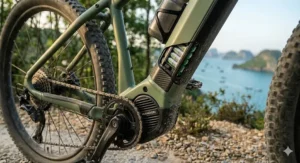
How to Choose an Electric Bike for Mixed Terrain
An electric bike for mixed terrain earns that label through a specific combination of features, not any single spec. Here’s the fast version, with the reasoning behind each step:
- Start with tire width, not motor wattage. A 3″ to 4″ tire does more for mixed-terrain confidence than an extra 500 watts of peak power — width determines float and grip on sand, snow, and gravel before torque even enters the picture.
- Match suspension travel to your actual terrain. Front-only suspension (45–80mm) handles rough pavement and packed dirt; full suspension earns its keep on rooty singletrack and rock gardens.
- Pick your sensor type deliberately. Torque sensors respond to pedaling force in real time, which feels far more natural on technical terrain than cadence sensors, which simply detect that pedals are turning.
- Size the battery to your longest realistic ride, then add 20%. Manufacturer range claims assume flat ground and a light rider — mixed terrain eats more watt-hours per mile than pavement alone.
- Check the safety certifications before the colorway. UL 2849 (electrical systems) and UL 2271 (battery) certification matter far more to your safety than which paint job looks best in photos.
- Confirm your storage situation before falling for a folder. Folding bikes solve a real problem, but they trade some frame rigidity and suspension travel to do it.
- Verify your local e-bike class rules before buying a Class 3. Faster isn’t always legal on the trails you actually plan to ride.
Common Mistakes When Buying a Mixed-Terrain E-Bike
The single most common misstep is buying for the bike’s top speed instead of its torque — a Class 3 bike that hits 28 mph on flat pavement can still feel underpowered grinding up a loose gravel climb if its torque figure is mediocre. Speed and climbing ability aren’t the same spec, and marketing copy loves to blur that line.
The second mistake is underestimating weight until move-in day. A 78-pound fat-tire bike is a delight to ride and a genuine chore to carry up three flights of stairs or lift onto a car rack solo; if storage access is part of your daily routine, weight deserves as much attention as range.
Finally, plenty of buyers skip checking battery certification entirely, assuming any lithium pack from a name-brand company is automatically safe. It’s worth a quick label check — UL 2849 and UL 2271 certifications specifically — before you commit, because not every “all-terrain” listing on a marketplace meets that bar.
What to Expect: Real-World Performance on Mixed Terrain
Manufacturer range numbers are measured under close-to-ideal conditions: a lightweight rider, flat ground, low assist, and no wind. Mixed terrain changes that math fast. Loose gravel and sand can cut effective range by 30–40% compared to pavement, because the motor works harder to maintain speed against rolling resistance that a smooth road simply doesn’t generate.
Hill-climbing on mixed terrain also behaves differently than spec sheets suggest. A bike rated for 100Nm of torque on a test bench will still feel different climbing loose dirt versus pavement, because traction — not just power — limits how much of that torque actually reaches the ground. This is part of why tire width and tread pattern matter as much as motor numbers; a powerful motor spinning a tire that’s slipping isn’t moving you anywhere faster.
Realistically, expect somewhere between 45% and 65% of a bike’s claimed range on genuinely mixed terrain at moderate pedal-assist levels, and closer to 30–50% if you’re leaning on the throttle. Planning around the lower end of that range, rather than the manufacturer’s headline number, will save you from an unpleasant walk home.
Features That Actually Matter (And Those That Don’t)
Actually matters: Torque sensors, hydraulic brakes, UL-certified batteries, and suspension travel matched to your terrain. These directly affect how the bike feels and how safely it stops, every single ride.
Often overstated: Peak motor wattage figures above 1,000W. Federal and most state regulations cap legal e-bike motors at 750W continuous, so “1,800W peak” numbers describe a brief burst, not sustained performance — useful for marketing, less useful for understanding how the bike will actually climb a long hill.
Genuinely useful but easy to miss: Removable batteries (easier charging without hauling the whole bike inside), integrated lighting with brake-activated rear lights (real safety value in mixed-light conditions), and app-based GPS tracking on bikes that include it.
Mostly cosmetic: App-controlled “ride modes” beyond the basic eco/sport/turbo split, and color-matched accessory kits. Nice to have, irrelevant to performance.
Buyer’s Decision Framework
If your rides are mostly pavement with the occasional gravel detour, choose a front-suspension fat-tire bike like the Lectric XPeak 2.0 or Aventon Sinch.2 — full suspension would be overkill for your terrain and adds weight you don’t need.
If storage space is your binding constraint — an apartment, a small car trunk, an RV bay — choose a folding model like the Heybike Ranger S or Aventon Sinch.2, and accept the modest suspension tradeoff in exchange for portability.
If you ride genuinely rough singletrack, rock gardens, or root-strewn forest trails regularly, choose full suspension — the Mokwheel Obsidian — because front-only suspension transfers every rear impact straight into your spine on technical ground.
If you want one bike to handle a serious weekday commute and weekend trail exploration without buying two bikes, choose a hybrid like the Velotric Summit 2, which is purpose-built to split that difference.
If bike theft is a real concern in your parking situation, prioritize the Aventon Aventure 3 for its built-in GPS and remote-lock features over any marginal performance gain elsewhere.
Real-World Scenarios: Who Should Ride Which Bike
The weekday commuter who escapes to gravel on weekends: A grad student riding four miles each way on cracked city sidewalks, then hitting a gravel rail-trail on Saturdays, doesn’t need full suspension or a 95-mile battery. The Lectric XPeak 2.0 or Aventon Sinch.2 covers both worlds without overspending on capability that mostly sits unused on weekdays.
The family of four exploring state park trails together: Parents shopping for a shared “adventure bike” that needs to handle packed dirt, the occasional creek crossing, and a kid on the back rack benefit from the Rad Power Radster Trail‘s 370-pound payload capacity and IPX6 weather resistance — built to survive a season of enthusiastic, occasionally careless family use.
The serious trail rider who also commutes to an office downtown: Someone splitting time between technical singletrack on weekends and city streets during the week wants the Velotric Summit 2‘s SensorSwap feature specifically — torque mode for trail feel, cadence mode for efficient road cruising, on the same bike.
Your First 30 Days: A Practical Usage Guide
Week one — break in the basics. Ride at moderate pedal-assist levels rather than maxing out the throttle immediately; this lets you learn how the torque sensor responds before you’re relying on it during a tricky descent. Check tire pressure before every ride for the first two weeks — fat tires lose pressure noticeably faster than standard road tires and ride poorly when soft.
Week two — dial in the fit. Adjust seat height and stem position now, not after you’ve logged 200 miles in a position that’s subtly wrong. Most mixed-terrain bikes ship with adjustable cockpits specifically so you can fine-tune this.
Weeks three and four — learn the terrain transitions. Practice shifting from pavement to gravel at a controlled speed in a low-traffic area before doing it at commuting speed in traffic; tire grip changes more than most new riders expect.
Common first-30-days mistakes to avoid: Charging the battery to 100% and leaving it there for days (lithium batteries prefer resting around 75–80% charge for longevity), riding through deep puddles despite an IPX5 or IPX6 rating (these resist splashes and rain, not submersion), and skipping the manufacturer’s first-month bolt-check, which catches the inevitable settling of new components.
Long-Term Cost & Maintenance
Budget for tire replacement every 1,500–3,000 miles depending on terrain mix — gravel and trail riding wears tread noticeably faster than pavement alone, and fat tires for these bikes typically run $60–$120 each. Brake pads on hydraulic systems last longer than mechanical disc brakes but cost slightly more to replace, generally $15–$30 per set.
Battery longevity is the biggest long-term cost variable. A well-maintained lithium battery — stored partially charged, kept out of extreme heat, and never fully drained repeatedly — should retain meaningful capacity for 800–1,000 charge cycles, roughly 3–5 years of regular riding before you’ll notice real range degradation. Replacement batteries for these models typically run $400–$700, a cost worth factoring into your total ownership math upfront rather than discovering it later.
Total cost of ownership over five years, including a couple of tire replacements, one brake service, and routine maintenance, typically adds $300–$600 on top of the purchase price — modest compared to the fuel and maintenance costs of a car for equivalent trips, which is part of the broader appeal driving e-bike adoption in the first place, as detailed on Wikipedia’s overview of electric bicycles.
Safety, Regulations & Battery Compliance
Before buying, it’s worth understanding the three-class system that governs where you can legally ride. Class 1 e-bikes offer pedal assist only, capped at 20 mph. Class 2 adds a throttle, also capped at 20 mph. Class 3 offers pedal assist up to 28 mph, typically without throttle. Most of the bikes in this list ship configurable between classes, but your state’s specific rules — and where each class is allowed to ride — vary considerably. PeopleForBikes maintains an up-to-date state-by-state guide that’s worth checking before your first ride, especially if you plan to use bike paths or multi-use trails.
If your mixed-terrain riding includes public land, access rules get more specific still. The U.S. Forest Service currently allows Class 1, 2, and 3 e-bikes on tens of thousands of miles of motorized trails and roads across national forests and grasslands, but not on trails designated strictly non-motorized — check the agency’s e-bike policy for your specific forest before assuming access.
Battery safety deserves equal attention. Look specifically for UL 2849 certification (covering the bike’s full electrical system) and UL 2271 certification (covering the battery itself) — both appear explicitly in the specs of every bike reviewed here. The Consumer Product Safety Commission has documented real fire risks tied to uncertified or damaged lithium-ion batteries in e-bikes, and maintains current safety guidance on safe charging practices worth reading once, regardless of which bike you choose.
Frequently Asked Questions
❓ What is the best electric bike for mixed terrain in 2026?
❓ How fast can an electric bike for mixed terrain go?
❓ Do electric bikes for mixed terrain need special tires?
❓ How much does a good mixed-terrain electric bike cost?
❓ Are fat tire electric bikes good for mixed terrain riding?
Conclusion
There’s no single “best” electric bike for mixed terrain — there’s only the best one for the specific mix of surfaces, storage constraints, and budget you’re actually working with. If you want eMTB-grade capability without eMTB pricing, the Lectric XPeak 2.0 earns its spot through sheer spec-per-dollar value. If portability rules your life, the folding Aventon Sinch.2 and Heybike Ranger S solve a real problem without a major performance penalty. And if you’re chasing genuine all-day comfort across rough ground, the Mokwheel Obsidian‘s full suspension and the Velotric Summit 2‘s do-it-all versatility represent the strongest cases for spending a little more.
Whichever you choose, the through-line that matters most is matching the bike’s actual capability — tire width, suspension travel, sensor type, certified battery — to the terrain you’ll genuinely ride, not the terrain you imagine riding twice a year. Get that match right, and the surface transitions that used to feel like a betrayal start feeling like the whole point.
🔍 Take your mixed-terrain riding to the next level with these carefully selected picks.
Click on any highlighted model above to check current pricing and availability — these bikes will help you build the kind of all-surface confidence your weekend adventures deserve.
Recommended for You
- 7 Best Electric Bikes for Flat Terrain in 2026 (Tested Picks)
- Best Electric Bike for Mountain Areas 2026: 7 Top Picks
- 7 Best Electric Bike for Coastal Areas in 2026 (Salt-Proof Picks!)
Disclaimer: This article contains affiliate links. As an Amazon Associate, I earn from qualifying purchases. If you purchase products through these links, we may earn a small commission at no additional cost to you.
✨ Found this helpful? Share it with your friends! 💬🤗
