In This Article
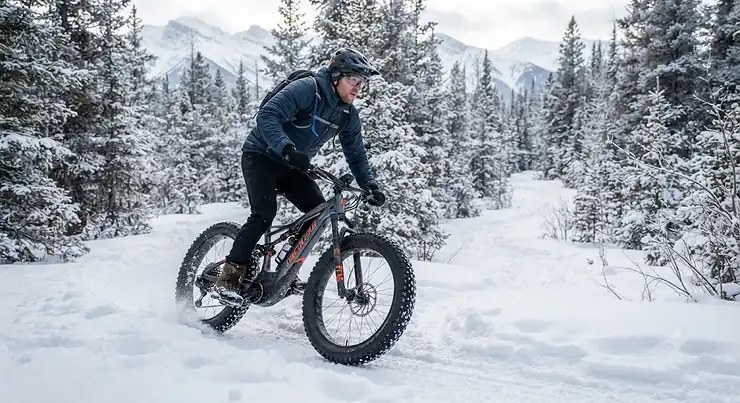
Winter doesn’t have to mean hanging your bike in the garage until April. A fat tire emtb for snow trails turns packed powder, icy fire roads, and frozen singletrack into legitimate riding season, provided you pick a bike built for the job rather than one that just happens to have chunky tires. The category traces back to bikes engineered around low ground pressure for soft, unstable terrain like snow, sand, and mud — and that founding principle still separates a real snow bike from one that just looks rugged in a product photo. The difference matters more than most shoppers realize. A fat tire emtb for snow trails needs a specific combination of low-pressure-friendly rubber, torque that doesn’t spin out on loose snowpack, and a drivetrain that won’t seize up when temperatures drop into the teens. Not every “off-road” e-bike on Amazon actually delivers that.
This guide skips the marketing copy and gets into what actually separates a snow-worthy machine from a fair-weather cruiser. We researched seven real, currently available fat tire electric mountain bikes spanning entry-level hub-motor commuters to premium mid-drive backcountry rigs, and we’re laying out honest analysis of their specs, their strengths, and where they fall short. You’ll find aggregated review sentiment where it’s verifiable, clear price ranges instead of prices that’ll be outdated by the time you read this, and practical guidance for steep hills, rocky trails, and everything in between. Whether you’re chasing fresh tracks on a fire road at 6 a.m. or grinding up a 15-degree grade with a loaded pannier, there’s a model here that fits. Let’s get into it.
Quick Comparison Table
| Bike | Motor | Best For |
|---|---|---|
| Gotrax R7 | 750W hub-drive | Ultra-budget snow-and-commute duty |
| QuietKat Ranger XR | 750W hub-drive | Budget backcountry trail riding |
| Heybike Ranger 2.0 | 750W hub-drive (1,400W peak) | Folding versatility for commuting and trails |
| Wallke X3 Pro | 750W-1000W hub-drive | Full-suspension comfort on a mid-range budget |
| Himiway Cobra Pro | 1000W mid-drive | Rocky, technical terrain with full suspension |
| Addmotor Wildtan M-5600 | Bafang BBSHD mid-drive | Serious backcountry hauling |
| QuietKat Apex Pro | 1000W mid-drive | Premium steep-hill performance |
Looking at the spread above, the biggest split is between hub-drive and mid-drive systems, and that single spec decision shapes everything else about how a bike handles snow and hills. Hub-drive bikes like the Gotrax R7 and Heybike Ranger 2.0 deliver simple, predictable power that’s forgiving for new riders, but mid-drive machines like the Himiway Cobra Pro and QuietKat Apex Pro put torque through the drivetrain itself, which translates to better traction control when a rear wheel wants to spin out on packed snow. Budget shouldn’t be the only factor — an $800 hub-drive bike and a $4,500 mid-drive bike are genuinely built for different jobs, not just different price tiers.
💬 Just one click — help others make better buying decisions too!😊
Top 7 Fat Tire Electric Mountain Bikes: Expert Analysis
We picked these seven to cover the realistic spread of what buyers actually shop between: affordable hub-drive value bikes, versatile folding all-rounders, and torque-heavy mid-drive machines built for serious elevation and technical ground. Here’s the honest breakdown of each.
1. Gotrax R7 — best ultra-budget entry point
The R7 opens our list because it proves you don’t need to spend four figures to get real fat tire capability for light snow and mixed terrain. Its 750W motor pairs with 20″x4.0 fat tires and a 48V removable battery, and the bike ships 90% pre-assembled with a 365-day warranty backing it up. What that means in practice: this is a low-friction entry point for someone who wants to try winter fat tire riding without committing mid-drive money to it. The UL 2849-certified battery is a genuinely reassuring detail at this price — plenty of budget competitors skip that certification entirely. Based on the spec sheet, the front suspension fork and oversized padded seat are clearly tuned for comfort-first commuting and errand-running rather than technical trail riding, and the 264 lb load capacity is on the modest side compared to pricier fat tire bikes in this guide. Reviewers consistently describe the R7 as stable and planted for casual mixed-surface cruising, while a recurring critique flags its roughly 81 lb curb weight as awkward to lift or store, and its 25 mph top speed doesn’t cleanly fit the standard Class 2 or Class 3 framework in most states, so riders should check local rules and consider capping assist speed for street use.
Pros:
- ✅ UL 2849-certified battery at a genuinely low price point
- ✅ Arrives 90% pre-assembled with a 365-day warranty
- ✅ Removable 48V battery simplifies charging and storage
Cons:
- ❌ 25 mph top speed doesn’t cleanly fit Class 2/3 rules
- ❌ 264 lb load capacity trails behind pricier fat tire bikes
Price typically runs in the $800-$950 range, making it one of the most accessible ways to try fat tire winter riding without a major financial commitment.
2. QuietKat Ranger XR — best budget pick for backcountry trail access
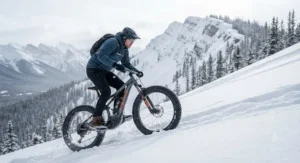
The Ranger XR steps up from entry-level commuters with genuine backcountry intent. Its 750W hub-drive motor pairs with a 12.8Ah fast-swap battery, and QuietKat’s all-terrain tires are engineered to run as low as 8 psi for extra flotation in soft snow and shallow mud, which is a detail budget competitors often skip. Real-world meaning here: dropping tire pressure that low on packed snow noticeably widens the contact patch, so you get better float without needing a heavier, pricier motor to compensate. The 100mm Mozo coil suspension fork and 7-speed drivetrain round out a package that feels more capable than its price tag suggests. Based on the spec comparison against other sub-$2,500 fat tire bikes, the Ranger XR’s puncture-resistant liners and hydraulic disc brakes are the standout value-adds — most competitors at this price still use mechanical brakes. This bike is for riders who want genuine backcountry capability — hauling gear, hitting fire roads, tackling moderate snowpack — without paying mid-drive prices. Reviewers consistently note the Ranger line’s reliability and QuietKat’s thorough pre-shipping inspection process as reasons for repeat purchases, though some mention the coil suspension feels basic compared to air forks on pricier models.
Pros:
- ✅ Tires deflate to 8 psi for genuine snow flotation
- ✅ Hydraulic disc brakes at a budget-friendly price point
- ✅ Fast-swap battery simplifies charging logistics
Cons:
- ❌ Coil suspension fork lacks the tunability of air forks
- ❌ Hub-drive motor spins out faster than mid-drive on ice
Price sits in the $2,000-$2,500 range at the time of research, and for riders easing into winter off-roading, that’s a strong value entry point.
3. Heybike Ranger 2.0 — best folding all-rounder for commuting plus trails
The Ranger 2.0 earns its spot by doing what a lot of fat tire bikes claim but few actually deliver: folding down for easy storage without giving up real off-road manners. Its motor is rated at 750W with a 1,400W peak, paired with a 600Wh removable battery good for a claimed 60+ miles of range, and the step-thru folding frame with 20″x4″ tires is built around a front suspension fork for bump absorption on packed snow and uneven ground. What that means day-to-day: apartment dwellers or anyone with limited garage space gets a bike that still has genuine fat tire flotation, rather than compromising down to narrow folding-bike tires. The UL 2849-certified battery is a meaningful safety detail for a bike that will likely spend time in cold storage. Based on the spec sheet, the 28 mph top assisted speed puts this in Class 3 territory once unlocked, which is worth checking against your local trail rules before you buy. Reviewers of the Ranger line consistently highlight the fold time and portability as standout features relative to rigid-frame competitors, with the more common critique centering on the single front suspension fork leaving rear-wheel impacts less cushioned than full-suspension alternatives.
Pros:
- ✅ Folds down for easy apartment or car-trunk storage
- ✅ UL 2849-certified 600Wh removable battery
- ✅ 1,400W peak motor handles moderate grades confidently
Cons:
- ❌ Front suspension only — no rear cushioning for rough ground
- ❌ 28 mph Class 3 speed needs a local trail-rules check
Pricing typically falls in the $1,100-$1,400 range, positioning it as a strong step up from ultra-budget models without approaching mid-drive pricing.
4. Wallke X3 Pro — best mid-range pick for full-suspension comfort
The X3 Pro fills a gap that budget hub-drive bikes leave open: genuine dual suspension at a price well below the mid-drive tier. Its hub motor is offered in 750W and 1000W configurations with a claimed top speed up to 32 mph, paired with a 48V battery (14-20Ah depending on configuration) and a full front-and-rear suspension setup that’s rare to find on a folding fat tire bike. What that means in practice: the dual suspension noticeably reduces the jarring impact of chattery, refrozen snowpack or hidden ruts under fresh powder, a comfort advantage that hardtail bikes in this price range simply can’t match. The 26″x4″ tires and Shimano 8-speed drivetrain round out a genuinely trail-capable package. Based on the spec sheet, the Samsung-cell battery carrying UL certification is a reassuring detail for cold-weather storage. Reviewers who’ve tested the X3 Pro consistently praise its unusually smooth power delivery and describe the ride quality as a standout for the price tier, while a recurring critique notes that at roughly 65-73 lbs, it’s still a two-person lift onto a standard vehicle rack, and its higher-speed configurations may exceed standard e-bike class limits in some states.
Pros:
- ✅ Full front-and-rear suspension rare at this price point
- ✅ Samsung UL-certified battery for cold-weather reliability
- ✅ Folding frame simplifies storage despite trail capability
Cons:
- ❌ 65-73 lb weight still needs two people to rack solo
- ❌ Top-speed configurations may exceed local e-bike class limits
Expect a price in the $1,500-$1,800 range, making it a strong middle ground between folding commuters and full mid-drive trail bikes.
5. Himiway Cobra Pro — best for rocky, technical winter trails
Step up to the Cobra Pro and you’re in a different performance category entirely. Its 1000W Bafang mid-drive motor (1,300W peak, 160 Nm torque) routes power through the drivetrain rather than the wheel hub, which meaningfully improves traction control on loose or icy surfaces — a mid-drive motor amplifies your pedaling input rather than just spinning the wheel independently, so it’s far less prone to breaking traction on packed snow or wet rock. The four-bar linkage rear suspension with 150mm travel and an inverted front fork give the Cobra Pro genuine full-suspension capability, a rarity at this price point, and the massive 26″x4.8″ CST tires are among the widest available on any production e-bike. What most buyers overlook about this model is the 10-speed Shimano Deore drivetrain, which gives far more precise gear selection for the kind of uneven, technical terrain where a 7-speed setup would leave you between gears. Reviewers who’ve put miles on the Cobra Pro consistently highlight its “true off-road capability” as standing apart from bikes that merely look rugged, though the tradeoff is a nearly 90 lb curb weight that makes it a two-person lift onto a vehicle rack.
Pros:
- ✅ Mid-drive motor improves traction on ice and loose rock
- ✅ Full suspension with 150mm travel is rare at this tier
- ✅ Widest production fat tires (4.8″) for maximum float
Cons:
- ❌ Nearly 90 lbs unloaded — difficult to rack solo
- ❌ Premium components push it above budget territory
Expect to pay in the $2,500-$3,000 range, which reflects the mid-drive motor and full-suspension hardware rather than marketing markup.
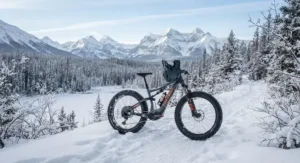
6. Addmotor Wildtan M-5600 — best premium pick for backcountry hauling
The Wildtan M-5600 is built around one standout component: a Bafang BBSHD 1000W mid-drive motor delivering 160 Nm of torque, a genuinely serious power figure that puts it in the same conversation as hunting-specific backcountry bikes costing considerably more. What that torque number means in practice: this motor maintains steady, controlled power on sustained steep climbs rather than surging or bogging down, which matters enormously on a snow-covered grade where sudden power delivery breaks traction. The 26″x4.5″ Kenda Juggernaut Pro tires are among the widest in this guide, and the 120mm air inverted front fork with rebound and lockout adjustment gives real tuning control for varying trail conditions. Based on the spec sheet, the Shimano Alivio 9-speed drivetrain is tuned for climbing torque rather than top-end speed, echoing the same hill-focused gearing philosophy found on dedicated hunting and expedition bikes. The Tektro hydraulic disc brakes with a motor cutoff sensor add a real safety margin on long, loaded descents. Reviewers consistently describe the Wildtan as an outlier even within the fat tire category — praising its ability to crawl up steep, muddy, or snow-covered grades in its lowest gear — while also flagging its roughly 70 lb curb weight and sizable footprint as genuine transport considerations.
Pros:
- ✅ Bafang BBSHD mid-drive with 160 Nm torque for steep climbs
- ✅ Adjustable 120mm air fork tunes for varying trail conditions
- ✅ Hill-tuned 9-speed drivetrain built for grade, not top speed
Cons:
- ❌ Premium mid-drive pricing puts it out of budget range
- ❌ Roughly 70 lb frame demands a sturdy vehicle rack
Pricing generally lands in the $3,000-$3,800 range depending on configuration, positioning it as an investment-tier bike for serious backcountry riders.
7. QuietKat Apex Pro — best premium pick for steep-hill performance
The Apex Pro sits at the top of QuietKat’s hardtail lineup, and it’s built around a philosophy of doing one thing extremely well: climbing. Its 1000W mid-drive motor uses QuietKat’s VPO (Variable Power Output) technology, letting riders toggle between Class 1, Class 2, Class 3, and an unrestricted off-road mode — a feature that matters practically because it means the same bike can be street-legal for a commute and fully unlocked for private land or open trail systems where higher power is permitted. The 140mm inverted air suspension fork and 26″x4.5″ Kenda Juggernaut tires are tuned for exactly the kind of chattery, rock-strewn winter singletrack that flatter suspension setups struggle with. Here’s what the spec sheet won’t tell you, but reviewers consistently note: the Apex Pro’s mid-drive placement lowers the bike’s center of gravity noticeably compared to hub-drive fat tire bikes, which translates to better balance when picking a line through rocks or ruts under snow. Electric Bike Report named the Apex Pro Best All-Terrain and Hunting eBike in a recent annual roundup, and aggregated owner sentiment consistently frames it as the bike for riders who’ve outgrown budget models and want mid-drive precision on the steepest terrain they can find.
Pros:
- ✅ VPO tech switches between street-legal and unlocked modes
- ✅ Mid-drive placement lowers center of gravity for balance
- ✅ 9-speed SRAM drivetrain built for technical climbing
Cons:
- ❌ Among the priciest bikes in this roundup
- ❌ 70 lb weight still demands a sturdy vehicle rack
Price typically falls in the $4,500-$5,500 range depending on battery capacity, making it a genuine investment for riders who prioritize steep-hill performance above all else.
Practical Usage Guide: Setting Up Your Fat Tire EMTB for Winter
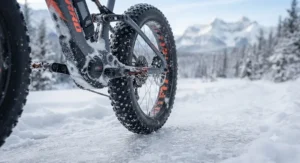
Buying the right bike is half the equation — setup determines whether it actually performs once the snow starts falling. Start with tire pressure, which industry sources and experienced fat bikers agree is the single biggest lever for winter traction. On packed snow trails, most riders run 5-10 psi; in fresh or unpacked powder, dropping to 3-5 psi widens the contact patch and reduces the sinking that plagues higher-pressure setups. A dedicated low-pressure gauge is worth the $15-20 — standard gauges aren’t accurate below 10 psi.
Battery care matters more in winter than any other season. Lithium batteries lose meaningful capacity below freezing, so bring the battery inside between rides rather than leaving it in a cold garage, and only charge it once it’s warmed to room temperature to avoid degrading cell life. In the first 30 days, the most common mistake new owners make is over-tightening bolts on suspension components after cold-weather stiffness makes them feel loose — check torque specs rather than guessing.
Drivetrain maintenance also shifts in winter. Road salt and slush accelerate chain corrosion, so a quick wipe-down and dry lube application after every wet ride prevents the rust that eats through budget chains within a season. Check brake pad clearance monthly, since cold rubber seals in hydraulic systems can occasionally cause spongy lever feel until they warm up on the first few minutes of a ride.
Real-World Scenarios: Matching the Right Bike to Your Winter Riding
Consider a college student or apartment dweller who wants to keep riding through winter without a dedicated garage or a big budget. Storage space is tight, budget is the top priority, and most rides stay under 10 miles on mixed pavement and packed trail. The Gotrax R7 or Heybike Ranger 2.0 fit this profile well — both are affordable or foldable, handle moderate snow, and don’t demand specialized maintenance knowledge.
Now picture a backcountry hunter or land manager who needs to cover 15-20 miles of rough, ungroomed terrain hauling gear, often on steep grades above 4,000 feet elevation. Budget is secondary to reliability and climbing torque. The Addmotor Wildtan M-5600 or QuietKat Apex Pro make more sense here — their mid-drive motors and higher payload capacities are built exactly for this use case, even though they cost more than double the entry-level options.
Finally, think about a weekend trail rider chasing technical singletrack that mixes exposed rock with icy sections after a storm. Full suspension and precise gear control matter more than raw range. The Himiway Cobra Pro‘s four-bar linkage suspension and 10-speed drivetrain address exactly that scenario, giving a smoother, more controlled ride over the kind of chattery, unpredictable ground that a hardtail struggles to absorb.
What Is a Fat Tire EMTB for Snow Trails?
A fat tire emtb for snow trails is an electric mountain bike fitted with oversized 4-inch-or-wider tires designed to run at low pressure, spreading rider weight across a larger contact patch so the bike floats over snow instead of sinking into it, while an electric motor supplies the extra torque needed to maintain momentum in low-traction conditions.
How to Choose a Fat Tire EMTB for Snow Trails
- Match motor type to your terrain. Hub-drive motors are simpler and cheaper but can spin out on ice; mid-drive motors route power through the drivetrain for better traction control on steep or slick ground.
- Prioritize tire width and pressure range. Look for tires that can safely drop to single-digit psi — anything that bottoms out below 10 psi limits your snow performance regardless of motor power.
- Check battery cold-weather certification. UL 2849 and UL 2271 certifications indicate rigorous safety testing, which matters when batteries are exposed to freezing temperatures.
- Weigh suspension against your trail type. Full suspension helps on rocky, technical ground; a hardtail with a quality front fork is often lighter and cheaper for smoother packed-snow trails.
- Confirm brake type and rotor size. Hydraulic disc brakes with 180mm+ rotors perform far more consistently in cold, wet conditions than mechanical disc brakes.
- Factor in total weight for transport. Fat tire eMTBs commonly weigh 65-90 lbs — make sure your vehicle rack and your own strength can handle loading and unloading it solo.
- Verify your local e-bike class rules before buying. Some trail systems restrict Class 2 throttle bikes or Class 3 speed pedelecs, so check regulations for where you’ll actually ride.
Fat Tire EMTB for Steep Hills
Climbing ability separates a genuinely capable fat tire emtb for steep hills from one that only looks the part. The deciding factor is almost always motor placement and torque, not raw wattage. A 750W hub motor and a 750W mid-drive motor perform very differently on a 12-15% grade: the hub motor pushes the wheel directly and can lose traction when the incline steepens, while a mid-drive motor multiplies torque through the bike’s own gearing, giving far more controlled, gradual power delivery. That’s why the Addmotor Wildtan M-5600 and QuietKat Apex Pro — both mid-drive — consistently outperform hub-drive competitors on sustained climbs, even when their headline wattage numbers look similar on paper.
Gear ratio matters just as much as motor type. The Wildtan’s Shimano Alivio 9-speed drivetrain is specifically tuned with lower gearing for hill-climbing rather than flat-ground speed, a distinction that rarely shows up in marketing copy but makes a real difference once you’re grinding up a snow-covered fire road. For riders whose primary use case is repeated steep climbing — think mountain terrain, elevation gain over long rides, or loaded hauling — spending more for a mid-drive system with climb-specific gearing pays off far more than chasing a higher peak wattage number on a cheaper hub-drive bike.
Fat Tire Electric Mountain Bike for Rocky Trails
Rocky terrain punishes bikes differently than snow does — instead of needing float, you need controlled impact absorption and precise line control. A fat tire electric mountain bike for rocky trails benefits enormously from full suspension, which is why the Himiway Cobra Pro‘s 150mm four-bar linkage system stands out in this roundup. Rigid or hardtail fat tire bikes can still handle moderate rock gardens, but repeated impacts transfer more directly to the rider and the frame, which accelerates component wear over time.
Tire tread pattern also matters more on rock than on snow. Deep, widely-spaced knobs that excel in loose snow can feel vague on hardpack rock, where a tighter, more continuous tread pattern grips better. Reviewers of the Cobra Pro and Apex Pro both note that their respective tire compounds strike a workable middle ground for mixed rocky-and-snowy conditions, though neither is a dedicated rock-crawling tire. If your local trails lean heavily rocky with only occasional snow, it’s worth checking whether your chosen bike’s stock tires can be swapped for a more rock-specific tread — most of the bikes in this guide use standard bead sizes that support aftermarket tire changes.
Winter Riding Traction: What Actually Works
Winter riding traction comes down to three controllable factors: tire pressure, tire tread, and power delivery — and of the three, tire pressure has the single biggest real-world impact. Veteran fat bike riders and racers consistently dial in pressure by feel and conditions, adjusting lower for fresh powder and higher for icy or packed trails. Dropping from a typical 15 psi road setting to 5-8 psi on packed snow can be the difference between a controlled ride and a series of near-slips.
Power delivery is the second lever, and it’s where motor type becomes a genuine traction feature rather than just a spec sheet number. Mid-drive units — like the ones on the Himiway Cobra Pro, Addmotor Wildtan M-5600, and QuietKat Apex Pro — route torque through the drivetrain, which generally delivers more controlled, gradual power than a hub motor spinning the wheel directly, and that translates to fewer sudden power surges that can break traction on ice. Cadence-only sensors, common on cheaper hub-drive bikes, tend to deliver power in a less nuanced way, which can catch new winter riders off guard on slick patches. Studded tires are the final piece for genuinely icy conditions; none of the bikes here ship with studs stock, but most support aftermarket studded tire swaps for riders who regularly face black ice.
All-Terrain Capability: Features That Actually Matter (And Those That Don’t)
Marketing copy for fat tire eMTBs loves to throw around the phrase “all-terrain capability” without much substance behind it, so it’s worth separating genuinely useful specs from ones that mostly look good in a listing. Motor torque and battery certification (UL 2849/2271) actually matter — they determine real climbing performance and safety in cold storage conditions. Suspension travel matters when your terrain is genuinely rocky or root-strewn, but it’s largely wasted on smooth, packed snow trails where a rigid or basic front-suspension setup performs nearly as well for a fraction of the weight and cost.
What doesn’t matter as much as buyers assume: top speed. Every bike in this guide tops out in the 20-32 mph range depending on class setting, but very few winter trail riders ever approach that speed on snow or loose rock — traction, not top-end power, is the limiting factor. Similarly, flashy full-color displays add little functional value over a simple, legible LCD; the money is better spent on tire quality or a bigger battery. When you’re comparing listings, weigh motor type, battery certification, and tire pressure range heavily, and treat top speed and display aesthetics as tie-breakers at best.
Off-Road Versatility: Fat Tire EMTB vs Traditional EMTB
| Factor | Fat Tire eMTB | Traditional eMTB |
|---|---|---|
| Snow performance | Excellent — wide tires float | Poor — narrow tires sink |
| Weight | Heavier (65-90 lbs) | Lighter (45-55 lbs) |
| Technical singletrack agility | Moderate | Excellent |
| Best For | Snow, sand, mixed rugged terrain | Fast, technical mountain trails |
The core tradeoff here is float versus agility. A fat tire eMTB’s wide tires spread weight across snow and soft ground, which is why they shine on loose surfaces like sand, snow, and gravel, while standard electric mountain bikes stay lighter and more responsive on technical trails with tight turns and steep descents. If your riding is genuinely mixed — some snow season, some warm-weather technical trail — a fat tire eMTB is the more versatile single-bike solution, even if it gives up some nimbleness on tight switchbacks compared to a purpose-built trail eMTB. Off-road versatility, in other words, favors the fat tire format for riders who can’t or don’t want to own two bikes for two seasons.
Common Mistakes When Buying a Fat Tire EMTB for Snow Trails
Buyers new to this category tend to repeat a handful of avoidable mistakes. The most common is fixating on peak wattage numbers without checking motor placement — a 1000W hub motor and a 1000W mid-drive motor perform very differently on snow and steep grades, and the spec sheet alone won’t tell you which one you’re getting unless you read carefully. A second frequent error is ignoring total bike weight; a 90 lb fat tire eMTB requires a genuinely sturdy vehicle rack and enough physical strength to load it solo, which catches some buyers off guard after purchase.
Underestimating battery cold-weather behavior is another pitfall — lithium batteries lose real-world range in freezing temperatures, so a bike advertised with a 60-mile range might deliver noticeably less on a 20-degree day. Finally, many first-time buyers skip checking local trail regulations before purchasing, only to discover their preferred trail system restricts throttle-equipped Class 2 bikes or caps assisted speed below what their new bike offers — a detail worth double-checking given that a couple of bikes in this guide top out above the standard Class 3 limit.
Safety, Regulations & Trail Access Guide
E-bike classification affects where you can legally ride, and it’s worth understanding before you buy. In the U.S., most states use a three-class system: Class 1 bikes are pedal-assist only up to 20 mph, Class 2 bikes add a throttle capped at 20 mph, and Class 3 bikes are pedal-assist up to 28 mph. Several bikes in this guide — including the QuietKat Apex Pro with its VPO mode-switching — let riders toggle between these classes, which is useful if you commute on public roads (requiring street-legal compliance) but also want full power on private land or open trail systems. A couple of the more affordable picks, like the Gotrax R7 and Wallke X3 Pro, ship with top speeds that exceed the standard Class 2/3 framework, so it’s worth confirming your bike’s configured speed cap before riding it on public trails. Advocacy groups generally push land managers to allow at least Class 1 e-bikes on natural-surface trails already open to traditional bicycles, though actual policy differs widely by state park system, national forest district, and local trail organization.
Trail access for eMTBs varies significantly by jurisdiction and land manager. Before heading out on a new trail system, it’s worth a quick check with the local land manager — many popular winter riding areas have specific rules about which e-bike classes are permitted, and rules can change season to season. For a state-by-state breakdown, PeopleForBikes maintains an updated electric bike law tracker that’s worth bookmarking before your first ride on unfamiliar terrain.
✨ Don’t Miss These Exclusive Deals!
🔍 Take your winter riding to the next level with these carefully selected fat tire eMTBs. Click on any highlighted model to check current pricing and availability. These bikes will help you build authentic winter trail adventures your whole crew will love!
Long-Term Cost & Maintenance
Sticker price is only part of the ownership equation. Budget hub-drive bikes like the Gotrax R7 or Heybike Ranger 2.0 typically cost less to maintain year-to-year — simpler hub motors have fewer failure points and cheaper replacement parts than mid-drive systems, and routine maintenance (chain lube, brake pad swaps, tire pressure checks) runs comparable across the whole category. Mid-drive bikes like the Addmotor Wildtan M-5600 and QuietKat Apex Pro cost more upfront and often carry higher-priced replacement parts if a drivetrain component fails, but they also tend to place less strain on the chain and cassette since torque is distributed more evenly through the gearing — a real, if hard-to-quantify, long-term durability advantage for riders logging serious annual mileage.
Battery replacement is the largest long-term cost across the category, typically arriving after 500-1,000 charge cycles, or roughly 3-5 years of regular use. Cold storage habits directly affect this timeline: batteries kept in freezing garages degrade faster than those brought indoors between rides. Buying a bike with a UL-certified, replaceable battery — as most models in this guide offer — protects you from being stuck with a dead bike when the pack eventually needs replacing, since aftermarket or manufacturer replacement packs remain available rather than requiring a whole new bike.
Frequently Asked Questions
❓ How much psi should I run on a fat tire emtb for snow trails?
❓ Can a fat tire electric mountain bike handle ice safely?
❓ Do fat tire eMTB batteries lose range in cold weather?
❓ Is a mid-drive or hub-drive motor better for steep snowy hills?
❓ How much does a good fat tire emtb for snow trails cost?
Conclusion
Choosing the right fat tire emtb for snow trails comes down to being honest about how and where you’ll actually ride. Budget-conscious riders chasing occasional snow days are well served by the Gotrax R7 or Heybike Ranger 2.0 — both are affordable or foldable, and easy to live with day to day. The QuietKat Ranger XR and Wallke X3 Pro sit comfortably in between, offering a meaningful step up in capability — deeper snow flotation on the Ranger XR, full suspension comfort on the X3 Pro — without jumping all the way to mid-drive pricing. Riders facing steep grades, rocky mixed terrain, or serious backcountry mileage will get more real value from mid-drive options like the Himiway Cobra Pro, Addmotor Wildtan M-5600, or QuietKat Apex Pro, even at a higher upfront cost, because the torque delivery and traction control genuinely change how the bike behaves once conditions get difficult.
Whatever you choose, the fundamentals matter more than any single spec: check tire pressure ranges, understand your motor type, verify battery certification, and confirm your local trail rules before you buy. Winter riding rewards preparation, and a well-matched bike makes the difference between a season spent stuck indoors and one spent genuinely enjoying the trails other riders write off as unusable until spring.
✨ Don’t Miss These Exclusive Deals!
🔍 Take your winter riding to the next level with these carefully selected fat tire eMTBs. Click on any highlighted model to check current pricing and availability. These bikes will help you build authentic winter trail adventures your whole crew will love!
Recommended for You
- 7 Best Plus-Size Rider Fat Tire Electric Mountain Bikes for 2026
- Hardtail Electric Mountain Bike: 7 Best XC Picks for 2026
- Hardtail eMTB for Beginner Riders: 7 Amazon Picks for 2026
Disclaimer: This article contains affiliate links. As an Amazon Associate, I earn from qualifying purchases. If you purchase products through these links, we may earn a small commission at no additional cost to you.
✨ Found this helpful? Share it with your friends! 💬🤗
