
In This Article
Somewhere between the third “low battery” chime and the last mile of your ride home, you start wondering if there’s a scooter out there that just… doesn’t quit. A long range electric scooter is generally defined as a model built to travel 30 miles or more on a single charge, using a larger battery pack and a motor tuned for efficiency rather than raw speed. That’s the short version. The longer version is messier, because manufacturer numbers and real-world mileage rarely agree.

This guide exists to close that gap. We researched real products currently sold in the United States — not fictional specs dreamed up to sound impressive — and dug into aggregated review sentiment, watt-hour math, and the kind of commuting scenarios that actually drain a battery. If you’re comparing a long range electric scooter for a daily nine-mile round trip or a genuinely long distance electric scooter for a 20-mile haul across town, the goal here is the same: match the battery, motor, and price to how you actually ride, not to a headline number stamped on a listing page. For readers who want the technical foundation first, the Wikipedia entry on electric kick scooters covers the basic mechanics of how these vehicles are classified and regulated.
We’ll walk through seven real models spanning budget, mid-range, and premium tiers, then get into the spec details — battery capacity, motor efficiency rating, and what actually happens to range when hills, cold weather, and rider weight get involved.
Quick Comparison Table
Before the deep dive, here’s the fast version for anyone comparing a long range electric scooter on a lunch break. Watt-hours (Wh) are the number that matters most — voltage multiplied by amp-hours — because it’s the one figure manufacturers can’t dress up with marketing math.
| Scooter | Battery (Wh) | Claimed Range | Best For |
|---|---|---|---|
| NAVEE ST3 Pro | 596.7 Wh | Up to 46.6 mi | Budget commuters wanting real mileage |
| Levy Plus | Swappable (dual pack) | Up to 20 mi per pack | Riders who want unlimited range via battery swaps |
| Varla Eagle One | ~946 Wh | Up to 40 mi | All-terrain riders on a mid-range budget |
| Kaabo King GT Pro | 2,520 Wh | Up to 112 mi (eco) | Serious long-distance riders who don’t mind the size |
Notice the spread: the NAVEE ST3 Pro punches above its battery size thanks to a lighter frame and efficient motor tuning, while the Kaabo King GT Pro simply brute-forces range with one of the largest packs sold in a consumer scooter. The Levy Plus takes a completely different approach — instead of one giant battery, it leans on swappable packs, which matters if your commute is longer than any single charge can cover. None of these claimed numbers should be taken at face value; expect real-world range to land at roughly 60-70% of the advertised figure once you factor in stop-and-go city riding.
💬 Found a favorite already? Give this guide a share — it helps other riders skip the guesswork too!
Top 7 Long Range Electric Scooters: Expert Analysis
We picked these seven models to cover every realistic budget and commuting need, from a sub-$800 entry point to a flagship that treats 50 miles like a warm-up. Every one is a real, currently sold product — no invented models, no fictional specs.
1. NAVEE ST3 Pro — best value for claimed 46-mile range
The standout here is simple: nothing else in this price bracket claims 46.6 miles of range with a straight face. The NAVEE ST3 Pro runs a 600W motor (1,350W peak) paired with a 48V 12.75Ah battery, working out to 596.7 Wh — respectable capacity for a scooter that typically lists under $950. In practice, that motor handles an 8% grade at highway-adjacent speed and still has something left for a 17% climb, according to aggregated hands-on testing. What most buyers overlook about this class of scooter is that dual suspension does more for daily comfort than an extra 10 miles of paper range ever will, and the ST3 Pro’s front-and-rear rubber suspension setup earns real praise in user reviews for smoothing out cracked city pavement. Reviewers consistently report the self-healing tires and app-controlled ambient lighting as pleasant surprises at this price, though a few note the frame is on the heavier side for apartment stairs. If your commute is under 10 miles round trip and you want headroom without spending four figures, this is the rational starting point.
Pros:
- ✅ Real-world range comfortably covers most daily commutes
- ✅ Dual suspension smooths rough city streets
- ✅ Self-healing tires cut down flat-tire maintenance
Cons:
- ❌ Heavier frame makes stair-carrying a chore
- ❌ Claimed 46.6-mile figure is optimistic for hilly routes
Prices for the NAVEE ST3 Pro typically fall in the $750-$950 range depending on retailer promotions, and for the battery capacity offered, it’s one of the stronger value plays on this list.
2. Segway Ninebot MAX G2 — most recognizable brand in long range
The Segway Ninebot MAX G2 leans on brand trust more than raw spec-sheet bragging rights, and that’s arguably its biggest selling point. Segway rates the battery at up to 43 miles, though independent testing from eRideHero clocked closer to 27 real-world miles — a gap worth internalizing before you buy any long range electric scooter based on the box alone. The 551 Wh pack is smaller than several rivals here, but Segway’s motor tuning and firmware are mature, which shows up as consistent power delivery rather than the voltage sag some budget scooters suffer as the battery drains. Based on the spec comparison with newer 48V competitors, the G2’s older 36V architecture is its clearest weakness — hills chip away at speed more noticeably than on higher-voltage systems. Aggregated reviewer sentiment points to strong ride comfort and a reliable companion app as the model’s biggest wins, with battery sag under load as the most repeated complaint. This is the safe pick for buyers who want a known name and don’t need class-leading range.
Pros:
- ✅ Trusted brand with widely available service and parts
- ✅ Comfortable ride quality reviewers consistently praise
- ✅ Mature companion app with reliable firmware updates
Cons:
- ❌ Lower voltage architecture struggles more on hills
- ❌ Real-world range trails its own marketing figure
At a street price around $799-$999, the Segway Ninebot MAX G2 is a fair value pick, though it’s not the range leader its rated 43 miles might suggest.
3. Levy Plus — best dual battery long range scooter for swap-and-go riders
Here’s where the dual battery long range scooter conversation gets interesting. Instead of chasing one enormous pack, the Levy Plus uses a tool-free, quick-release battery housed in the handlebar stem — swap takes about ten seconds once you’re used to it. The base pack delivers roughly 16 miles, and Levy’s extended-range pack pushes that to about 20 miles per swap, meaning a rider carrying one spare effectively doubles usable range without waiting for a wall outlet. What most buyers overlook about swappable systems is the maintenance angle: because the pack detaches, you’re not stuck replacing an entire scooter when a battery eventually degrades, you just buy a new pack. Reviewers highlight the stem-mounted design as noticeably more weather-resistant than the floor-mounted batteries most competitors use, since it sits higher off wet pavement. The trade-off is capacity per pack is modest compared to a single big-battery scooter, so this setup rewards planning ahead rather than winging it.
Pros:
- ✅ Swap a fresh battery in about ten seconds flat
- ✅ Stem-mounted pack resists water better than floor packs
- ✅ Cheaper long-term battery replacement than fixed-pack scooters
Cons:
- ❌ Each individual pack covers fewer miles than rivals
- ❌ Requires carrying a spare pack to hit true long range
Starting around $749, with the Levy Plus and an extra battery pack landing in the $900-$1,000 range all-in, it’s the most creative answer to range anxiety on this list.
4. Varla Eagle One — best all-terrain dual motor for the money
Dual 1,000W motors (1,600W peak) and 10-inch off-road tires make the Varla Eagle One feel like it’s punching above its price class the moment you hit gravel or a broken curb cut. The 52V 18.2Ah battery works out to roughly 946 Wh, and Varla advertises up to 40 miles, though Electrek’s hands-on testing landed closer to 25-30 real miles at faster speeds — still a strong showing for the price. Here’s what the spec sheet won’t tell you: the dual hydraulic brakes paired with the suspension setup matter more for confidence at speed than the motor wattage does, since stopping distance is what most riders actually worry about once they’re past 25 mph. Reviewers repeatedly note the scooter’s weight — around 77 pounds — as the clearest downside, calling it a poor fit for anyone regularly carrying it up stairs. On the flip side, aggregated owner feedback describes the build as genuinely tough, with several riders reporting it surviving hard crashes with only cosmetic damage.
Pros:
- ✅ Dual motors handle hills and rough terrain with ease
- ✅ Hydraulic brakes provide confident stopping at higher speeds
- ✅ Reviewers describe the build as remarkably crash-resistant
Cons:
- ❌ At 77 pounds, it’s a workout to carry upstairs
- ❌ Real-world range falls well short of the 40-mile claim
Typically priced in the $1,599-$1,699 range, the Varla Eagle One is a strong mid-range pick if portability isn’t your top priority.
5. Kaabo Mantis X Plus — best mid-range dual motor for daily commuting
The Kaabo Mantis X Plus sits in a sweet spot between beginner-friendly scooters and the flagship off-road builds later on this list. A 48V 18.2Ah battery pairs with dual motors to deliver a claimed 46-mile range and a top speed around 31 mph — plenty for a rider who wants power in reserve without off-road bulk. Based on the spec comparison with the Varla Eagle One above, the Mantis X Plus trades a bit of raw torque for a more street-focused suspension tune, which reviewers say translates into a noticeably smoother ride on pavement specifically. The KM03 dashboard is a small but genuinely useful upgrade, since it displays range estimates that adjust in real time rather than a static percentage. Aggregated feedback on Kaabo’s Mantis line consistently praises the suspension comfort and brand support network, while some owners note that dual-motor mode drains the battery considerably faster than single-motor economy mode — worth knowing before you assume the claimed range applies at full power.
Pros:
- ✅ Real-time range estimation on the KM03 dashboard
- ✅ Smooth street-tuned suspension for daily commuting
- ✅ Strong brand support network and parts availability
Cons:
- ❌ Dual-motor mode significantly shortens real range
- ❌ Not built for serious off-road use like the Eagle One
Pricing commonly falls in the $1,400-$1,800 range depending on configuration — always check current pricing since Kaabo runs frequent promotions.

6. Apollo Phantom 2.0 — best premium pick for serious performance riders
Apollo built the Apollo Phantom 2.0 around a 52V 27Ah battery — 1,400 Wh — using 21700-format cells, the same cell size automotive engineers favor for longevity under sustained discharge. Dual motors rated at 1,750W peak deliver the kind of smooth acceleration that testers describe as confidence-inspiring rather than jarring, and Apollo claims up to 50 miles in eco mode against roughly 30 miles in the more aggressive Ludo performance mode. On paper this means the Phantom 2.0 is built for riders who want long range and genuine performance in the same package, not a compromise between the two. What most buyers overlook is the IP66 water resistance and UL-certified battery enclosure — features that matter far more over a three-year ownership window than an extra few mph of top speed. Reviewers consistently single out the regenerative brake throttle as the standout feature, noting that most owners use it almost exclusively and only reach for the mechanical disc brakes as backup. The trade-off, as with most performance-first scooters, is weight and cost.
Pros:
- ✅ 1,400 Wh battery pairs long range with real performance
- ✅ Regenerative brake throttle reduces mechanical brake wear
- ✅ IP66 rating and UL-certified enclosure add real durability
Cons:
- ❌ Commonly listed in the $2,200-$2,600 range
- ❌ Heavy build makes it a two-hand carry up stairs
For riders who’ve outgrown budget and mid-range scooters, the Apollo Phantom 2.0 is one of the more complete premium packages currently available.
7. Kaabo King GT Pro — flagship pick for maximum real-world range
If range is the only number that matters to you, the Kaabo King GT Pro is built to end the conversation. Dual 2,000W motors (8,400W peak) draw from a 72V 35Ah battery — 2,520 Wh, among the largest packs sold in a production consumer scooter — and Kaabo claims up to 112 miles in eco mode. Even discounting that figure by the usual 30-40% real-world gap, this scooter is realistically covering 65-80 miles per charge for most commuters, which reframes it less as a “long range electric scooter” and more as a personal EV with handlebars. Here’s what the spec sheet won’t tell you: a battery this size adds real weight and cost, and the King GT Pro is not a scooter you’re carrying up three flights of stairs on a whim. Reviewers consistently describe the hydraulic brakes with ABS as necessary rather than optional at this scooter’s 62 mph top speed, and the forged aluminum dual-stem design earns praise for stability at speed that lighter frames simply can’t match.
Pros:
- ✅ Class-leading battery capacity built for extreme distances
- ✅ Hydraulic brakes with ABS suited to high top speeds
- ✅ Forged aluminum frame built for stability, not just looks
Cons:
- ❌ Typically listed north of $3,000 — check current pricing
- ❌ Weight and size make it impractical for portability
The Kaabo King GT Pro isn’t for casual riders, but for anyone whose long distance electric scooter needs top out at “as far as physically possible,” it’s hard to beat.
Practical Usage Guide: Getting Real Range Out of Any Scooter
Buying the right hardware only solves half the range problem — how you ride and maintain the scooter does the rest. In the first 30 days, the most common mistake is riding almost exclusively in the highest power mode because it feels the most fun, then being surprised when real range lands nowhere near the claimed figure. Eco or comfort mode isn’t a consolation prize; it’s genuinely where most of that advertised mileage comes from, since higher speeds consume disproportionately more energy per mile due to wind resistance.
Tire pressure matters more than most riders expect. Under-inflated tires increase rolling resistance and can quietly cut 10-15% off your range before you’ve even noticed the tire looks a little soft. Check pressure weekly, not just when a ride feels sluggish. On the maintenance side, avoid letting any lithium battery sit at 0% or 100% for extended periods — charging to around 80-90% for daily use and only topping off before a genuinely long ride helps preserve capacity over hundreds of cycles. Store the scooter indoors at moderate temperature when possible, since both extreme heat and cold measurably reduce usable battery capacity on any given day. Finally, keep the drivetrain and folding mechanisms lightly lubricated per the manufacturer’s schedule — a stiff fold or dry bearing doesn’t just wear out faster, it also adds friction that the motor has to work against, quietly shaving off range you paid for.
Real-World Scenarios: Matching Riders to the Right Long Range Scooter
Picture three different commuters, because “long range” means something different to each of them. First, there’s the college student riding 8 miles daily between an apartment and campus, budget-conscious and needing something light enough to carry into a dorm. For that rider, the NAVEE ST3 Pro or the Levy Plus makes more sense than anything flagship — the daily mileage is modest, portability matters, and neither scooter demands a four-figure investment.
Second, consider the suburban commuter covering 18 miles round trip through mixed neighborhoods and light hills, someone who wants a buffer so a bad day at the office doesn’t turn into a dead battery two miles from home. This is squarely where the Varla Eagle One or Kaabo Mantis X Plus earns its keep — enough real-world range to comfortably clear 18 miles with reserve, plus suspension that makes the ride tolerable rather than punishing.
Third, there’s the rider replacing an actual car commute — 30-plus miles round trip, occasional weekend errands stacked on top, zero patience for range anxiety. That’s the buyer the Kaabo King GT Pro and Apollo Phantom 2.0 are built for, where the extra weight and cost buy back the one thing that matters most: never thinking about the battery meter until you’re home.
✨ Don’t Miss These Range-Boosting Accessories!
🔋 Whether you’re eyeing the NAVEE ST3 Pro or the Kaabo King GT Pro*, a spare charger and a quality lock go a long way toward protecting your investment. Check current pricing and availability on the models above before your next commute gets a serious upgrade.*
How to Choose a Long Range Electric Scooter
Picking the right long range electric scooter comes down to matching a handful of specs to your actual commute, not chasing the biggest number on the page. Here’s the reasoning, step by step:
- Calculate your real round-trip distance, then double it. Range anxiety comes from cutting things close — if your commute is 10 miles, aim for a scooter realistically covering 20.
- Compare watt-hours, not headline miles. A 900 Wh battery and a 550 Wh battery marketed at similar mileage claims are not equal; the bigger pack has genuine reserve.
- Weigh portability against range honestly. If you’re carrying the scooter upstairs daily, an extra 20 miles of range isn’t worth 25 extra pounds.
- Check the motor’s continuous wattage, not just peak. Peak numbers spike briefly under acceleration; continuous wattage is what actually gets you up a sustained hill.
- Factor in your weight and local terrain. Heavier riders and hilly routes can cut manufacturer range estimates by 20-30% or more.
- Decide if a dual battery long range scooter fits your routine. Swappable systems suit riders who can plan ahead; fixed big-battery scooters suit riders who just want one charge to last.
- Set a price range before you start browsing. Budget, mid-range, and premium scooters solve the same range problem in different ways — know which trade-offs you’re willing to make.
Understanding the Specs That Actually Determine Range
Every scooter listing throws numbers at you — Wh, Ah, mAh, W, rpm — and most buyers skim past them without knowing which ones actually predict how far they’ll get. This section breaks down the three specs that matter most.
Battery Capacity Explained: Wh vs mAh vs Ah
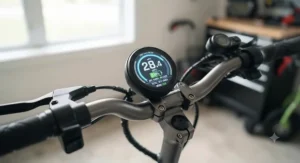
Battery capacity mAh is a term borrowed from phone and laptop batteries, and it causes real confusion in the scooter world because most scooter batteries are rated in Ah (amp-hours) or Wh (watt-hours), not mAh. The conversion matters: 1 Ah equals 1,000 mAh, so an 18.2Ah battery is technically 18,200 mAh — but that number alone still doesn’t tell you range, because voltage changes everything. The formula that actually predicts range potential is voltage multiplied by amp-hours, which gives you watt-hours — the true measure of stored energy. A 48V 12.75Ah battery and a 72V 8.5Ah battery both land near 600 Wh despite very different Ah figures, which is exactly why comparing raw amp-hours between scooters running different voltage systems is misleading. When you see battery capacity mAh mentioned in a scooter spec sheet, convert it to Wh before comparing across brands — it’s the only apples-to-apples number that exists in this category.
Motor Efficiency Rating and Why It Beats Peak Wattage
A motor efficiency rating describes how much of the battery’s stored energy actually converts into forward motion versus how much is lost as heat and resistance — and it matters more for long range electric scooter shopping than peak wattage does. Two scooters can share an identical 1,000W peak motor rating and still deliver noticeably different real-world range, because one motor and controller pairing runs more efficiently under sustained load. Based on the spec comparison across the seven scooters above, the models with the best real-world-to-claimed-range ratios — the NAVEE ST3 Pro among them — tend to pair moderate motor wattage with efficient controller tuning rather than simply maximizing peak power. Reviewers and range-testing outlets increasingly measure real Wh-per-mile consumption for exactly this reason; a scooter that burns 25 Wh per mile will outlast one burning 35 Wh per mile even with an identical battery, all else equal.
Electric Scooter 40 Mile Range: What’s Realistic vs Marketing
An electric scooter 40 mile range claim is one of the most common marketing figures in this category, and it’s also one of the most inflated. These numbers are typically generated at low, constant speed — often under 10 mph — with a light rider on flat, dry pavement, conditions almost nobody rides in daily. Applying the 60-70% real-world rule from earlier, a scooter advertising 40 miles is more honestly a 24-28 mile scooter for an average adult rider on mixed terrain at normal commuting speed. That’s still genuinely useful mileage for most commutes — the point isn’t that the claim is a lie, it’s that it describes a best-case scenario rather than a Tuesday-morning commute. When comparing an electric scooter 40 mile range spec across brands, weigh the claimed number as a ceiling, not a floor, and buy enough buffer above your actual daily distance to account for the gap.
Dual Battery Long Range Scooters: Are Two Packs Better Than One?
The dual battery long range scooter approach — whether that’s a swappable system like the Levy Plus or a scooter engineered around genuinely dual battery packs — solves a different problem than simply installing one bigger battery. A single large pack, like the 2,520 Wh unit in the Kaabo King GT Pro, maximizes range per charge but adds fixed weight you carry every single ride, whether you need the full range that day or not. A dual or swappable battery setup instead lets you carry extra capacity only when you actually need it, which is a meaningfully different trade-off for riders whose daily distance varies. What most buyers overlook about dual battery long range scooter systems is the redundancy benefit: if one pack develops a fault or simply ages out faster, you’re not stranded or facing a full battery replacement, just a single-pack swap. The honest downside is added complexity and, in some designs, added cost per mile of total range compared to one oversized pack. For a commuter with a consistent, predictable distance, one large battery is usually simpler. For a rider whose weekly mileage swings — errands one day, a long weekend ride the next — a dual battery long range scooter setup offers flexibility that a fixed pack can’t match.
Long Distance Electric Scooter vs Traditional Commuter Scooter
A long distance electric scooter and a standard commuter scooter solve fundamentally different problems, even though they look similar parked side by side. The table below breaks down where the differences actually show up in daily use.
| Factor | Long Range Scooter | Traditional Commuter Scooter |
|---|---|---|
| Typical Battery | 550 Wh – 2,500+ Wh | 150 Wh – 350 Wh |
| Real-World Range | 25-80+ miles | 8-15 miles |
| Charging Frequency | Every 2-4 days (average commute) | Nearly daily |
| Weight | 35-90 lbs | 20-35 lbs |
| Best For | Longer commutes, errands stacked on rides | Short, predictable trips under 5 miles |
The trade-off is rarely subtle: a long distance electric scooter buys freedom from daily charging and range anxiety, but it does so with meaningfully more weight and, usually, meaningfully more upfront cost. A traditional commuter scooter like a basic Segway or Gotrax entry model stays lighter and cheaper precisely because it isn’t carrying the extra battery cells that long range performance requires. If your actual daily distance rarely exceeds five miles, a long distance electric scooter is often more scooter than you need — the extra weight works against you on every single ride for a range buffer you’ll rarely use.
Common Mistakes When Buying a Long Range Electric Scooter
The single most common mistake is buying based on the manufacturer’s headline range figure without checking independent real-world testing — a habit that leads directly to the disappointment reviewers describe most often across every brand in this category. A close second is ignoring total weight in the excitement over battery size; a scooter that delivers 60 real miles but weighs 80 pounds is a poor fit for anyone without dedicated, ground-floor storage. Buyers also frequently underestimate how much rider weight and hills cut into range — a 220-pound rider on a hilly route should expect meaningfully less than the manufacturer’s tested figure, which is usually generated with a rider under 170 pounds on flat ground. Another frequent misstep is skipping UL 2272 or equivalent battery certification entirely, especially with unfamiliar budget brands, which matters far more for safety than it does for range. Finally, many first-time buyers overlook charging time as part of the ownership equation — a scooter with excellent range but a 12-hour charge cycle can be genuinely inconvenient if you need a quick top-up between rides, whereas models with dual charging ports or fast-charge options solve that friction directly.
What to Expect: Real-World Performance Over an Extended Commute Distance
Riding a long range electric scooter across an extended commute distance feels noticeably different than a short hop to the coffee shop, and it’s worth setting expectations before you buy. Speed that feels comfortable for two miles can feel genuinely tiring for twelve, particularly on scooters without suspension — this is exactly why the suspension quality on models like the NAVEE ST3 Pro and Kaabo Mantis X Plus matters as much as their battery specs for anyone covering real distance daily. Battery drain also isn’t linear against speed; pushing from 15 mph to 20 mph doesn’t cost you a proportional amount of range, it costs disproportionately more due to wind resistance, which is why eco mode delivers outsized range benefits on longer rides specifically. Reviewers who log serious mileage consistently note that hand and arm fatigue from vibration becomes the limiting factor on extended rides well before the battery does, making grip quality and deck size more relevant to comfort over distance than most buyers initially assume. For anyone planning a genuinely extended commute distance, budgeting 15-20% more charge buffer than your calculated round trip is a smart, low-cost form of insurance against a headwind, a detour, or a colder-than-expected morning.
Long-Term Cost & Maintenance
The sticker price is only the opening bid in scooter ownership — total cost of ownership tells a more complete story. A budget long range electric scooter like the NAVEE ST3 Pro costs less upfront, but tires, brake pads, and eventual battery replacement are often priced comparably across budget and mid-range brands, meaning the gap in total ownership cost narrows over a two-to-three-year window. Battery degradation is the biggest long-term cost variable: expect most lithium packs to lose 15-25% of original capacity after 300-500 charge cycles, which for a daily commuter works out to roughly 1-2 years before range noticeably shrinks. This is precisely where a dual battery long range scooter setup like the Levy Plus shows real long-term value — replacing a single detachable pack costs meaningfully less than replacing an entire fixed-battery scooter once degradation sets in. Premium scooters like the Apollo Phantom 2.0 and Kaabo King GT Pro carry higher upfront costs but often use higher-grade cells rated for more charge cycles, which can offset some of that price gap over a longer ownership window. Factor in cost-per-mile broadly: a scooter costing $800 that reliably delivers 25 real miles per charge over 400 cycles is covering roughly 10,000 miles across its battery’s useful life, a number worth comparing directly against pricier options claiming similar longevity.
Safety, Regulations & Compliance Guide
Every scooter on this list, and any long range electric scooter you’re seriously considering, should carry certification to UL 2272 or the newer ANSI/CAN/UL 2272 standard, which governs the electrical system as a whole — battery, charger, motor controller, and wiring harness together, not just the cells in isolation. The U.S. Consumer Product Safety Commission has been actively moving toward making these currently voluntary standards mandatory, driven by a documented rise in lithium-ion battery incidents across the micromobility category; the CPSC’s own battery safety standards page is worth a look before buying from any lesser-known brand. Practically, that means checking listings for explicit UL 2272 certification, never charging an unattended scooter overnight indoors, using only the manufacturer’s original charger, and inspecting the battery compartment periodically for swelling or unusual heat. Beyond battery safety, local regulations on where you can legally ride — sidewalks, bike lanes, streets — vary significantly by city and state, so it’s worth checking municipal rules separately from the scooter’s own safety certification, since the two are governed differently.
FAQ
❓ What is a good range for a long range electric scooter?
❓ How much does a 40 mile range electric scooter cost?
❓ Do dual battery scooters really double your range?
❓ What's considered long distance for an electric scooter commute?
❓ How is motor efficiency rating different from motor wattage?
Conclusion
There’s no single best long range electric scooter — there’s only the best one for your actual commute, budget, and patience for carrying extra weight. Riders logging short, predictable trips are usually better served saving money with something like the NAVEE ST3 Pro or the swap-friendly Levy Plus, while anyone replacing a real car commute should seriously weigh the Apollo Phantom 2.0 or the range-obsessed Kaabo King GT Pro. What ties every recommendation in this guide together is the same core principle: compare watt-hours over headline miles, budget a real-world buffer of 30-40% below the claimed range, and never skip checking for UL 2272 certification regardless of how attractive a budget price looks. Do that, and whichever of these seven scooters you land on, “low battery” anxiety stops being part of your daily commute.
Recommended for You
- Lightweight Electric Scooter for Women: 7 Best Picks (2026)
- Lightweight Electric Scooter: 7 Surprisingly Tough Picks for 2026
- Best Commuter Electric Scooter 2026: 7 Top Picks That Won’t Let You Down
Disclaimer: This article contains affiliate links. As an Amazon Associate, I earn from qualifying purchases. If you purchase products through these links, we may earn a small commission at no additional cost to you.
✨ Found this helpful? Share it with your friends! 💬🤗
