In This Article
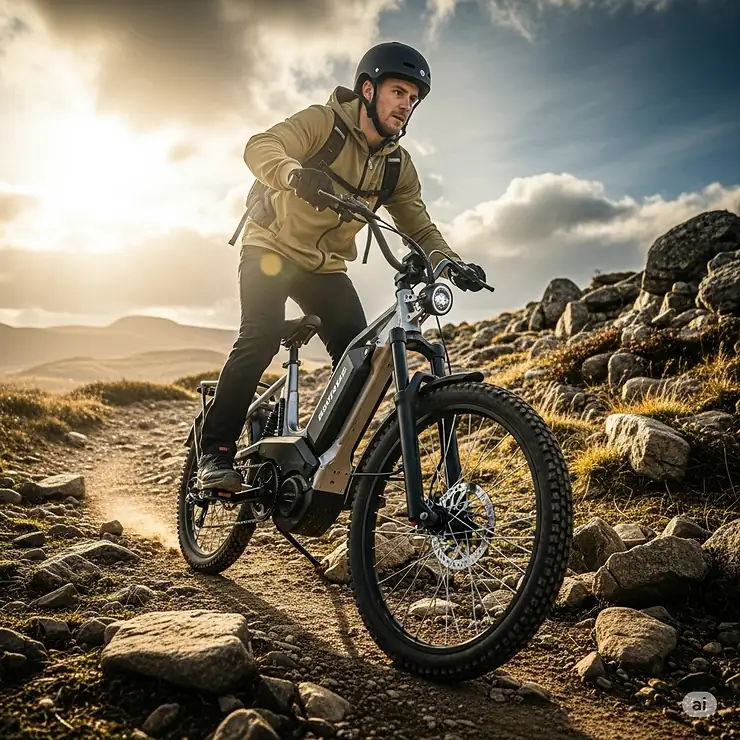
The best moped style e bike brands are the manufacturers that wrap an electric bicycle in a motorcycle-inspired body: a long bench seat, fat tires, a thumb throttle and still-working pedals. That last detail matters. The pedals are what let these machines stay in the e-bike category instead of being treated as a moped or motorcycle.
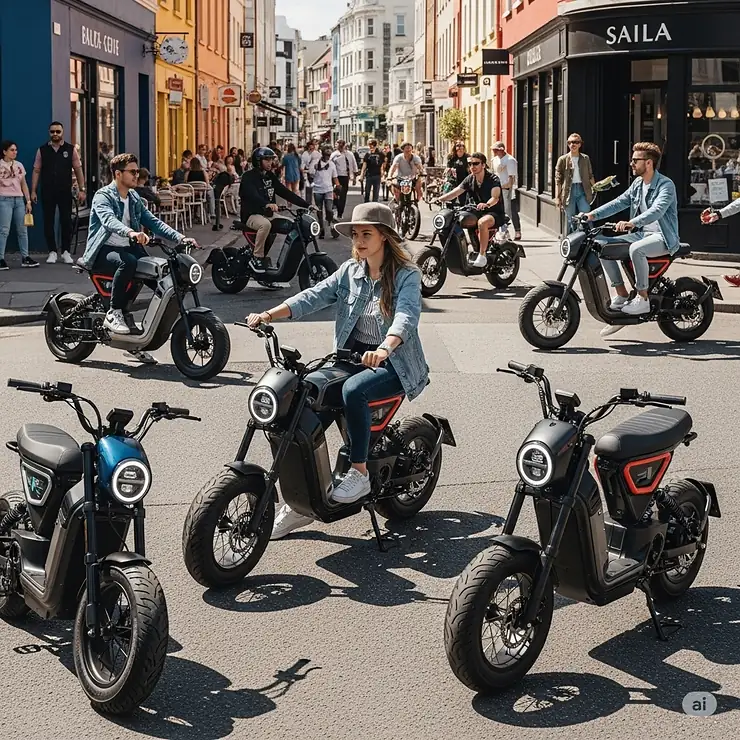
Picture a cafe racer that went to the gym, skipped the gas station and learned to charge from a wall outlet. That’s the pitch, and it works. Moped style e-bikes have gone from niche curiosity to a crowded aisle, and the crowding is the problem. Prices swing from about $1,000 to well over $4,000. Weights climb past 100 pounds. Some bikes ship as legal Class 2 machines. Others are happiest on private land with a speed unlock enabled.
So which brands deserve your money? This guide ranks the best moped style e bike brands using real spec sheets, published independent reviews and honest analysis. I haven’t ridden these bikes, and nothing here pretends otherwise. Where the evidence is thin, I say so. For each pick you’ll get what the numbers mean in practice, who it suits, and where it falls short.
Prices below are ranges, not quotes, because they move constantly. Check current pricing before you buy.
Quick Comparison Table: The 7 Best Moped Style E Bike Brands at a Glance
| Bike | Motor | Battery | Price Range | Best For |
|---|---|---|---|---|
| Super73-S Adventure | 750W nominal | 960Wh | ~$3,000-$3,600 | Style-first riders who want a polished, proven look |
| Ride1Up REVV1 | 750W Bafang hub (~95 Nm) | 1,040Wh | Low-$2,000s | All-round value with full suspension |
| Juiced Scrambler | 750W (1,764W peak, 90 Nm) | 998Wh | Check current price | Long throttle range and Class 1/2/3 flexibility |
| Segway Xyber | 3,000W peak (single battery) | 1,440Wh (or 2,880Wh dual) | ~$3,000-$4,500 | Power junkies and tech lovers |
| Heybike Saturn | 1,000W (1,800W peak) | 957Wh (or 1,914Wh dual) | ~$1,000-$1,400 | Budget range seekers |
| Ariel Rider X-Class 52V | 1,000W (2,000W peak) | ~936-1,040Wh | ~$1,700-$2,300 | Punchy performance without the premium badge |
| ENGWE M20 | ~750W (listed) | ~48V, 13Ah class (verify) | ~$1,000-$1,500 | Entry-level shoppers on a tight budget |
Look at the table and one thing jumps out: the Heybike Saturn and Ariel Rider X-Class 52V push the most motor power per dollar, while the Super73-S Adventure charges a premium mostly for brand polish. The Segway Xyber sits in a category of its own, with a peak-power figure that dwarfs the rest. If your budget is under $1,500, the Heybike Saturn and ENGWE M20 are the realistic contenders, and the Ride1Up REVV1 is the sweet spot for riders who can stretch.
💬 Just one click — help others make better buying decisions too!😊
Top 7 Best Moped Style E Bike Brands: Expert Analysis
1. Super73-S Adventure — the style icon, now trail-ready
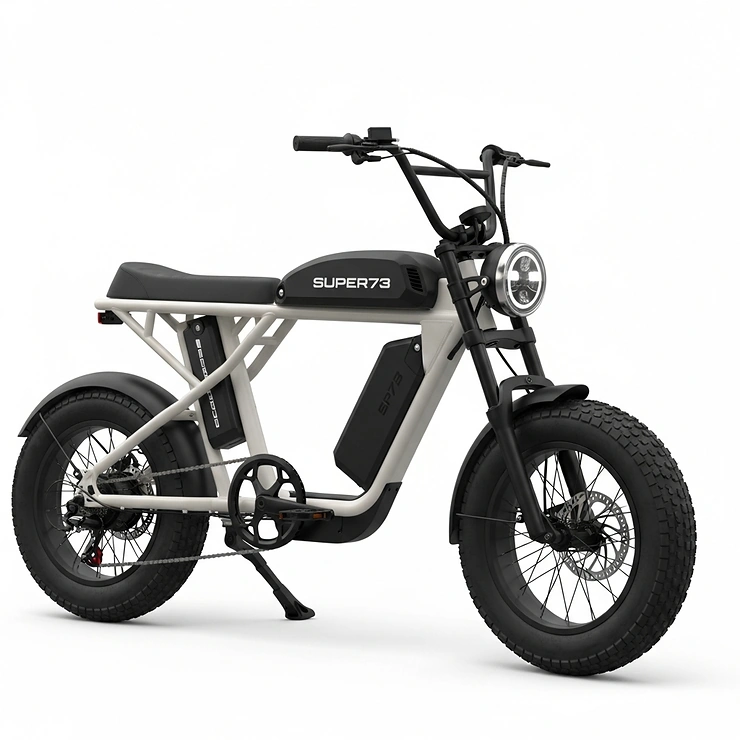
The Super73-S Adventure takes the original S2 look and adds beefier tires, a longer seat and a downtube-mounted battery. Super73 lists a 750W nominal motor and a 960Wh (48V, 20Ah) UL 2271-compliant pack. Claimed range runs 40-75 miles, with 40+ at 20 mph under Class 2 throttle-only use and 75+ in pedal assist. The bike weighs roughly 80 pounds, which is light for this category.
Here’s what the spec sheet means: moving the battery to the downtube frees up room for that longer seat and lowers the center of gravity. The trade-off is a premium price. Reviewers consistently note that Super73 charges more than rivals for comparable components, and you’re paying for design heritage as much as hardware.
Who’s it for? Riders who care how the bike looks parked outside a coffee shop. One reviewer found real-world throttle use well past 20 miles with plenty of charge remaining, so the range claims look plausible with sensible riding.
Pros:
- ✅ Iconic styling and strong brand recognition
- ✅ Lighter than most rivals at around 80 pounds
- ✅ UL 2271-compliant removable battery
Cons:
- ❌ Premium pricing versus similar spec sheets
- ❌ Fewer bells and whistles per dollar
Price: roughly $3,000-$3,600 range. Verdict: worth it if design is your priority, a stretch if raw value is.
2. Ride1Up REVV1 — the benchmark all-rounder
The Ride1Up REVV1 is the bike most rivals get measured against. It pairs a 750W Bafang geared hub motor (about 95 Nm of torque) with a 52V, 20Ah (1,040Wh) battery, a 120mm air fork, adjustable rear shock and four-piston hydraulic brakes. It ships as a 20 mph Class 2 bike; an off-road mode can be unlocked for private land.
What does that mean in practice? The torque figure is why this bike climbs well, and reviewers have called it one of the best climbers in the style. The brakes are properly sized for a bike that weighs about 93 pounds. That weight is also its biggest flaw: stairs are a workout, and a long-time reviewer noted that pedaling is awkward and racks are hard to mount.
Reviewer sentiment is strong on value and ride quality. Range is the soft spot: one outlet reported about 24 miles on a charge, far below the 30-60 mile claim, while others reported better figures at moderate speeds. The lesson? Plan on roughly half the maximum claim if you use the throttle heavily.
Pros:
- ✅ Full suspension with adjustable, quality components
- ✅ Strong torque and hill-climbing ability
- ✅ Four-piston hydraulic brakes suited to its weight
Cons:
- ❌ Heavy at roughly 93 pounds
- ❌ Real-world range often falls short of the claim
Price: low-$2,000s range. Verdict: the best overall balance of power, parts and price.
3. Juiced Scrambler — range champ with street-legal manners
The Juiced Scrambler is a rare moped style bike that behaves itself. It uses a 750W motor (1,764W peak, 90 Nm of torque), a 52V 998Wh battery with LG cells, and can switch among Class 1, 2 and 3 through its display. An independent review logged 43.4 miles of throttle-only range, a strong result for this style. It rolls on 20″ x 4.5″ knobby tires.
The practical detail that matters: the seat lifts to expose the battery and controller. On a 90-pound-class machine, easy service access saves headaches. Switching classes also means one bike can be a legal commuter on paths and a quicker cruiser elsewhere, subject to local rules.
Reviewers agree on two themes. It’s excellent for long throttle rides, and like most bikes in this category, it’s not much fun to pedal unassisted. Juiced has also been through a corporate restart, so confirm warranty and parts support before buying.
Pros:
- ✅ Standout throttle-only range for its class
- ✅ Switchable Class 1, 2 and 3 modes
- ✅ Seat lifts for easy battery and controller access
Cons:
- ❌ Pedaling without motor help feels like a chore
- ❌ Brand history means checking support details
Price: check current price (it varies by configuration). Verdict: best for riders who value range and flexibility over sheer speed.
4. Segway Xyber — a motorcycle in e-bike clothing
The Segway Xyber is the wild card. Segway lists 3,000W of peak power and 120 Nm with a single 1,440Wh battery, or 6,000W and 175 Nm with two batteries (2,880Wh total, up to 112 miles claimed). Weight is 138 pounds single-battery and about 165 pounds dual. Segway claims 0-20 mph in 2.7 seconds in dual-battery trim.
Translate that: this is closer to a light electric motorcycle than a bicycle. One reviewer called its motor integration the most refined in the category, since pedaling feels electronically multiplied rather than mechanical. Another noted the full potential only arrives with the second battery.
Classification is murky. Some sources describe the bike as unclassified and not intended for public roads at full power, while a reviewer received a Class 2 unit. Verify your exact configuration and local law before riding on streets. Reviewers also flagged the sheer heft and noticeable battery drain between rides.
Pros:
- ✅ Extraordinary power and acceleration
- ✅ Smart-display features like navigation and security
- ✅ Dual-battery option for very long range
Cons:
- ❌ Extremely heavy, especially with two batteries
- ❌ Legal class varies by configuration
Price: roughly $3,000-$4,500 range depending on battery setup. Verdict: unmatched thrills, but only if you have storage and a legal place to ride.
5. Heybike Saturn — the budget range king
The Heybike Saturn is the bike to beat under $1,500. It packs a 52V hub motor rated 1,000W continuous (1,800W peak, 95 Nm), full suspension, and a choice of one 957Wh battery or two (1,914Wh total). Heybike lists 30-50 miles for one battery and 55-90 for two. Weight is about 103 pounds single, 115 pounds dual. The company lists UL 2849 certification and a 2-year warranty on direct purchases.
The value logic is clear: you get more watts and more watt-hours per dollar than almost anything else here. A dual-battery unit reportedly managed around 51 miles in testing, a very respectable real-world number.
Reviewer sentiment is positive on power and smooth motor delivery, with caveats. Aggregated reviews flag struggles on steep hills, braking that is adequate rather than great, and weak performance in loose sand. Class 2 or Class 3 settings are changed through the app, so you can match local rules.
Pros:
- ✅ Exceptional range and power for the money
- ✅ Single or dual-battery options
- ✅ App-based class and speed settings
Cons:
- ❌ Very heavy, hard to lift or store upstairs
- ❌ Brakes and steep-hill performance draw criticism
Price: roughly $1,000-$1,400 range. Verdict: the strongest value pick if you can live with the weight.
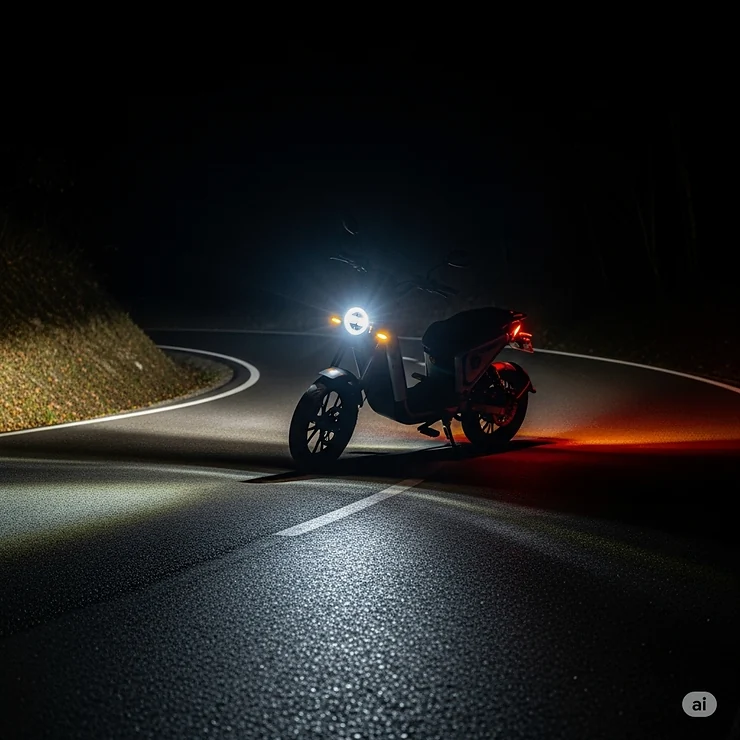
6. Ariel Rider X-Class 52V — punchy performance, proven formula
The Ariel Rider X-Class 52V is the veteran of the affordable moped style world. It uses a 1,000W (2,000W peak) rear hub motor and a removable 52V pack, listed at 18Ah (936Wh) in earlier reviews and 20Ah (1,040Wh) on newer listings. Ariel Rider claims up to 75 miles. One reviewer noted that figure would require staying in the lowest assist level, so expect much less at speed. Top speed was clocked at about 36 mph by one reviewer in unrestricted mode.
What matters: it feels like a motorbike with bicycle pedals, and aftermarket support for batteries and controllers is a plus for tinkerers. The honest caveat is quality-control variance. Some owner posts on deal forums report charger problems and overheated battery connectors, while professional reviewers found the bike met or exceeded expectations. Treat that as a reason to buy from a seller with solid return and warranty terms.
Pros:
- ✅ Strong 1,000W motor with plenty of punch
- ✅ Large removable battery
- ✅ Active community and aftermarket support
Cons:
- ❌ Range claims are optimistic at higher speeds
- ❌ Some owners report charger and connector issues
Price: roughly $1,700-$2,300 range. Verdict: a performance bargain if you buy carefully and inspect everything on arrival.
7. ENGWE M20 — the entry-level retro cruiser
The ENGWE M20 targets riders who want the look without a four-figure commitment. ENGWE describes it as a retro-style electric moped with dual suspension and 20″ x 4″ fat tires, and lists a motor in the 750W neighborhood. I couldn’t verify detailed independent test data for this model during research, so treat battery and range specs as “confirm on the current product page.”
What can be said honestly: ENGWE’s pitch is affordability and robust performance. For a first moped style bike, that’s attractive. The unknown is how it holds up over months of use. Without a body of independent reviews I can cite, I’d recommend reading verified buyer feedback on the retailer page and checking warranty terms before buying.
Who is it for? Someone dipping a toe into the style, riding short urban routes, and willing to accept less proven reliability for a low entry price. If you plan heavy daily mileage, spend up toward the Heybike Saturn or Ride1Up REVV1.
Pros:
- ✅ Low entry price into moped style riding
- ✅ Dual suspension and fat tires for comfort
- ✅ Retro styling that turns heads
Cons:
- ❌ Limited independent test data to verify claims
- ❌ Smaller battery likely means shorter real-world range
Price: roughly $1,000-$1,500 range (check current price). Verdict: fine for casual riders, but verify specs before you commit.
✨ Don’t Miss These Exclusive Deals!
🔍 Take your search for the best moped style e bike brands to the next level with these carefully selected bikes. Click any highlighted bike name to check current pricing and availability. Your next favorite ride might be one click away! 🏍️⚡
Head-to-Head: Power, Range and Value Compared
| Bike | Real-World Range Data Point | Weight | Value Rating | Best For |
|---|---|---|---|---|
| Super73-S Adventure | 20+ mi throttle use with charge to spare (reviewer) | ~80 lb | Moderate | Design-focused buyers |
| Ride1Up REVV1 | ~24 mi in one test; 30-60 mi claimed | ~93 lb | High | All-round riders |
| Juiced Scrambler | 43.4 mi throttle-only (tested) | Not verified | High | Long-range commuters |
| Segway Xyber | 56 mi single / 112 mi dual (claimed) | 138-165 lb | Moderate-High | Performance seekers |
| Heybike Saturn | ~51 mi dual-battery (tested) | 103-115 lb | Very High | Budget range hunters |
| Ariel Rider X-Class 52V | Up to 75 mi claimed; less at speed | Not verified | High | Value-focused performance |
| ENGWE M20 | Not independently verified | Not verified | Unverified | Casual entry-level riders |
The pattern is clear: independent range tests land well below manufacturer maximums, so a dual-battery Heybike Saturn at about 51 miles is a legitimately strong result. The Juiced Scrambler‘s 43.4 miles from a single pack is the efficiency winner. If range anxiety is your main worry, those two deserve the first look, and the Segway Xyber only makes sense with its second battery.
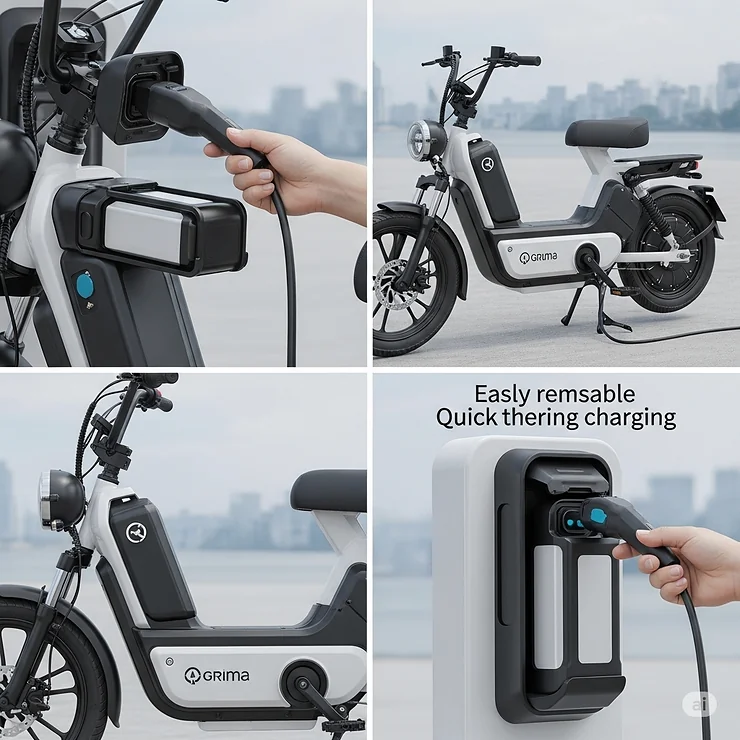
How to Choose the Best Moped Style E Bike Brands
Choosing between the best moped style e bike brands gets simpler when you work through these steps in order:
- Decide your legal reality first. Check whether you need a Class 2 or Class 3 bike for your local paths and streets. A bike you can’t legally ride where you live is a very expensive lawn ornament.
- Set your weight tolerance. Most of these bikes run 80-165 pounds. If you live up a flight of stairs, the 80-pound Super73-S Adventure is a different proposition from a 115-pound dual-battery Heybike Saturn.
- Match battery size to your routes. Divide your daily round trip by roughly half the claimed range to get a realistic buffer. Bigger packs cost more but cut charging cycles.
- Check the brakes. A 100-pound bike with 30 mph potential needs real hydraulic discs, ideally four-piston, as on the Ride1Up REVV1.
- Ask about suspension and seat comfort. Full suspension earns its keep on rough pavement. A long bench seat adds comfort and room for a passenger on some models.
- Verify certifications and support. Look for UL 2271 (battery) or UL 2849 (system) listings and a clear warranty.
- Budget for accessories. Add a good lock, helmet and possibly a spare charger to your total.
Moped Style E Bikes vs Traditional E Bikes
| Factor | Moped Style E Bike | Traditional E Bike | Best For |
|---|---|---|---|
| Weight | 80-165 lb | 45-70 lb | Traditional if you carry the bike |
| Throttle focus | Primary | Often optional | Moped style for effortless riding |
| Pedaling feel | Often awkward | Natural | Traditional for fitness riders |
| Suspension and tires | Fat tires, often full suspension | Varies | Moped style for rough roads |
| Typical price | $1,000-$4,500 | $800-$3,500 | Depends on use |
Pedaling is where the two worlds split. Moped style bikes are built around the throttle, and reviewers repeatedly note that pedaling them without motor help is hard work. A traditional e-bike rewards cadence and fitness. If you want exercise, buy a traditional model. If you want effortless, motorbike-flavored transportation, the moped style is the better fit, and the weight is the price you pay for that stability.
Are Moped Style E Bikes Legal? Classes and Regulations
Legality is where many buyers trip up. Most states have adopted a three-class system. Class 1 provides pedal assistance up to 20 mph, Class 2 adds a throttle up to 20 mph, and Class 3 provides pedal assistance up to 28 mph, according to Electric Bike Report’s street-legality guide. Riding a bike that fits one of those classes on regular roads is generally fine.
Here’s the catch. Some moped style bikes unlock far higher speeds or power. California, for example, treats a bike over 750W nominal as a moped requiring a license, registration and insurance. Utah has also enacted rules aimed at out-of-class e-bikes. The Ride1Up REVV1 ships as a 20 mph Class 2 bike, with the faster mode intended for private land only. The Segway Xyber reportedly varies by configuration, and the Heybike Saturn lets you set Class 2 or 3 via its app.
State-by-state rules vary on helmets, minimum ages (Class 3 often requires riders to be 16 or older) and path access. For specifics in your area, the PeopleForBikes e-bike laws directory is a solid starting point. Always confirm with your local DMV or city rules before riding.
Features That Actually Matter (And Those That Don’t)
Features worth paying for:
- Torque rating (around 90-95 Nm and up). This, more than peak watts, determines how the bike launches and climbs.
- Hydraulic brakes with multi-piston calipers. Heavy bikes need stopping power.
- Quality battery cells and certifications. Brands like the Juiced Scrambler advertise LG cells, and Ride1Up REVV1 lists Samsung cells.
- Accessible service points. The Juiced Scrambler‘s lift-up seat is a small design choice with big maintenance benefits.
Features that mostly don’t matter:
- Peak wattage headlines. A 6,000W number on the Segway Xyber is real, but you’ll rarely use it legally.
- Maximum range claims. They assume ideal conditions and low assist.
- Dozens of speed or pedal-assist levels. Reviewers note that multiple pedal-assist levels on some models mainly change acceleration, not meaningful range.
Long-Term Cost and Maintenance
The sticker price is only the opening bid. A realistic ownership budget includes tires (fat tires are pricier than standard bicycle rubber), brake pads, chain or belt care, and eventually a replacement battery. Super73 battery replacement is a common search topic, which tells you buyers do eventually face the bill.
Cost per mile helps. A $1,300 Heybike Saturn ridden 3,000 miles over three years costs about 43 cents per mile before electricity, while a $3,300 Super73-S Adventure over the same distance lands near $1.10. That doesn’t make the Super73 a bad buy, but it reframes what you’re paying for: aesthetics and resale appeal rather than pure transportation economy.
Electricity is trivial by comparison. Charging a roughly 1,000Wh pack costs pennies per fill-up. Where owners get hurt is in deferred maintenance and skipped warranty registration. Budget for an annual brake and hardware inspection, and keep your purchase records.
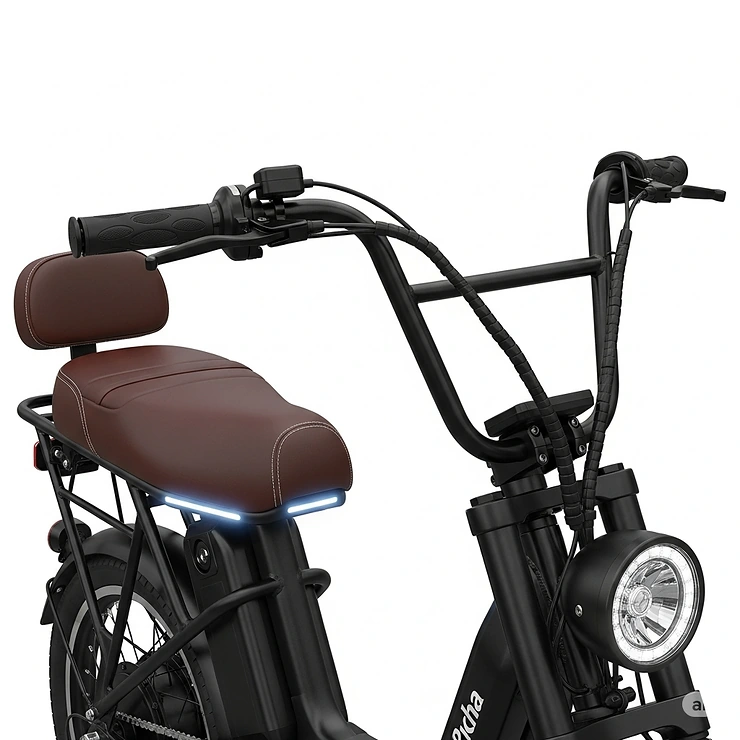
Common Mistakes When Buying Moped Style E Bikes
- Believing the maximum range number. As the Ride1Up REVV1‘s ~24-mile test result against its 30-60 mile claim shows, throttle-heavy riding cuts range sharply.
- Ignoring weight until delivery day. A 115-pound bike on a second-floor walk-up is a lifestyle problem.
- Skipping local law research. Class and power limits differ by state.
- Buying purely on peak watts. A well-tuned 750W bike can feel better than a poorly tuned 1,000W one.
- Forgetting service access. Ask where the nearest shop or support channel is before you buy.
- Ordering without checking return terms. Large boxes are painful to ship back, so know the policy in advance.
Practical Usage Guide: Your First 30 Days
Week 1: assembly and inspection. Even bikes marketed as quick to assemble (Super73 cites about 15 minutes for some models) deserve a full bolt check. Confirm brake function before your first ride, and test the motor cut-off feature if equipped.
Week 1-2: battery conditioning. Owner posts around the Ariel Rider X-Class 52V suggest allowing a few full charge cycles before long rides. Follow your manufacturer’s instructions, and use only the supplied charger.
Week 2-3: learn the modes. Practice with the lowest power setting in an empty lot. Heavy bikes with strong throttles can surprise new riders at low speed. If your bike has class settings (like the Heybike Saturn app controls or the Juiced Scrambler display), set the one that fits local law.
Week 3-4: establish routines.
- Charge only while you’re present, as the U.S. Consumer Product Safety Commission has warned consumers about e-bike lithium-ion battery fire risks.
- Check tire pressure weekly.
- Re-torque bolts after the first 100 miles.
Common first-30-day mistakes: leaving the battery on a charger overnight, ignoring a loose pedal, and testing top speed on public roads.
Real-World Scenarios: Which Bike Fits Which Rider?
Scenario 1: The urban commuter. Picture a 9-mile-each-way ride with a budget under $1,500. The Heybike Saturn single-battery version covers the round trip with room to spare, and the app lets you cap speed to stay street-legal. Storage matters, since at about 103 pounds it needs a ground-floor spot.
Scenario 2: The weekend trail rider. Someone with $2,000-$2,500 to spend, hauling the bike on a hitch rack. The Ride1Up REVV1 offers full suspension and strong torque, though its 93-pound weight demands a rack rated for it. Verify the bike’s off-road mode is only used where it’s allowed.
Scenario 3: The style-first city cruiser. A rider who values design and short trips around town. The Super73-S Adventure at about 80 pounds is the easiest of the premium bikes to handle, and its brand recognition holds resale value reasonably well.
Scenario 4: The tech and power enthusiast. With a $4,000+ budget and private land access, the dual-battery Segway Xyber delivers the most dramatic performance, provided you accept its 165-pound curb weight.
Buyer’s Decision Framework: If This, Then That
- If your budget is under $1,500, choose the Heybike Saturn because it delivers the most range and power per dollar.
- If you want one bike that does everything well, choose the Ride1Up REVV1 because its parts and handling are the most balanced.
- If long throttle range and class flexibility matter, choose the Juiced Scrambler, but confirm warranty support.
- If style and lighter weight come first, choose the Super73-S Adventure.
- If you want maximum power and have private riding space, choose the Segway Xyber with the dual-battery setup.
- If you want strong performance at a mid price, choose the Ariel Rider X-Class 52V, and inspect everything on arrival.
- If you’re just testing the style, the ENGWE M20 is a lower-cost way in, though you should verify specs first.
Priority checklist: legality, weight, range, brakes, support. Settle them in that order and the shortlist writes itself.
FAQ: Best Moped Style E Bike Brands
❓ Do moped style e bikes need a license?
❓ How fast do moped style e bikes actually go?
❓ Can you pedal a moped style e bike without the motor?
❓ How much should I spend on a moped style e bike?
❓ Are budget moped style e bike brands reliable?
Conclusion
Choosing among the best moped style e bike brands comes down to being honest about three things: where you’ll ride, how much bike you can physically handle, and what you actually value. If value rules, the Heybike Saturn is hard to beat. If you want a balanced, well-equipped all-rounder, the Ride1Up REVV1 earns its reputation. The Juiced Scrambler wins on throttle range and class flexibility, the Ariel Rider X-Class 52V delivers performance on a mid-range budget, and the Super73-S Adventure sells style with a lighter frame. The Segway Xyber is the spectacle, and the ENGWE M20 is the cheap way to find out whether the moped style lifestyle suits you.
Whatever you choose, read your local e-bike laws, confirm the exact battery and motor specs on the current product page, and budget for maintenance. Prices and models change quickly, so check current pricing and availability before you buy.
🚀 Ready to ride? Pick the bike that fits your route, your garage and your wallet, then click through to check current pricing. Your first moped style ride is closer than you think! 🏍️💨
Recommended for You
- Electric Gravel Bikes: 7 Best Picks for 2026
- Adults 3 Wheel Electric Bicycle: 7 Best Trikes to Buy in 2026
- Electric Tricycle for 2 Adults: 7 Best Picks for 2026 (Ranked)
Disclaimer: This article contains affiliate links. As an Amazon Associate, I earn from qualifying purchases. If you purchase products through these links, we may earn a small commission at no additional cost to you.
✨ Found this helpful? Share it with your friends! 💬🤗
