In This Article
Electric gravel bikes are drop-bar, wide-tire bicycles with a built-in pedal-assist motor and battery, designed to roll smoothly over pavement, dirt roads, and mixed terrain. The motor amplifies your pedaling instead of replacing it. You climb faster, ride farther, and arrive less wrecked than you would on a traditional gravel bike.
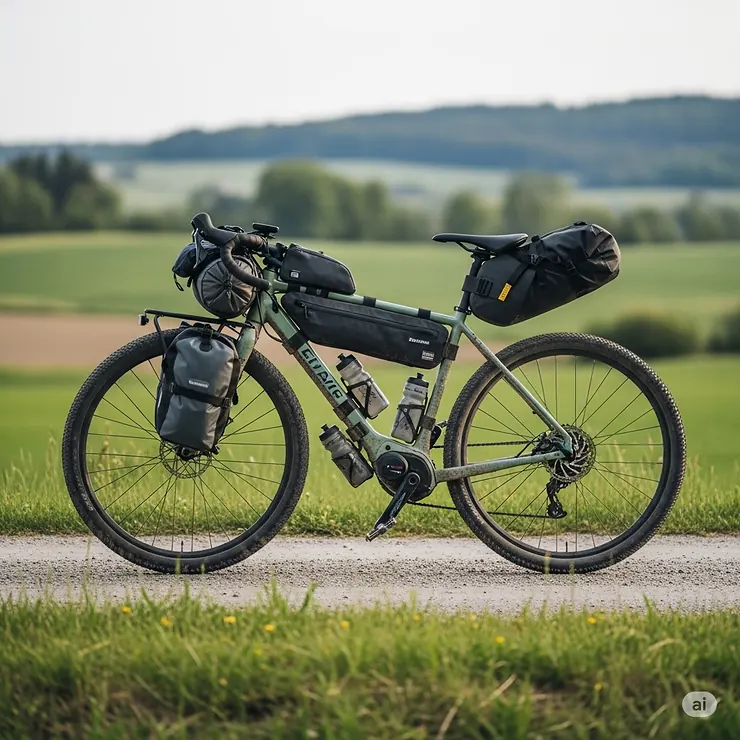
Here’s the plot twist: the best electric gravel bikes barely look electric. A generation ago, an electric bicycle meant a lumpy, battery-strapped commuter. Now a 2026 electric gravel bike hides its battery inside the down tube and whispers instead of whirring. It can also carry you 60 or 80 miles of fire road without turning your legs to overcooked noodles.
There is a catch, and it’s the reason this guide exists. A lot of products labeled “gravel e-bikes” online are really fat-tire electric mountain bikes wearing drop-bar costumes. Others are road e-bikes that fold at the first sign of loose rock. Sorting the real contenders from the pretenders takes spec-sheet reading and review-digging, not guesswork.
So that’s what follows. This guide covers seven genuine electric gravel bikes across budget, mid-range, and premium tiers. For each one you get the specs, what those specs mean in practice, and what independent reviewers consistently say. You also get buyer’s advice, a regulations primer, and a few practical guides Amazon listings never bother to write. Pricing is shown in ranges only, because e-bike prices move constantly. Check current prices before you buy.
Quick Comparison: The Best Electric Gravel Bikes at a Glance
Short on time? This table gives you the lay of the land before we dig in.
| Bike | Drive Type | Approx. Weight | Price Range | Best For |
|---|---|---|---|---|
| Ride1UP Roadster V3 | 500W rear hub | ~40 lb | Roughly $1,300–$1,500 | Budget buyers, smooth gravel and rail trails |
| Cannondale Topstone Neo SL 2 | Mahle X35 rear hub | Low-30s lb class | Mid-$3,000s | Riders who want a light, stealthy ride |
| Canyon Grizl:ON CF 7 | Bosch SX mid-drive | ~35 lb (claimed) | Roughly $3,000–$5,000 | Versatile all-rounders who want suspension |
| Canyon Grail:ON CF 7 | Bosch CX mid-drive | ~37 lb | Mid-$2,000s (discounted older stock) and up | Power and big-mile range |
| Salsa Tributary GRX 600 | Bosch Speed mid-drive | ~46 lb | Roughly $4,100–$5,500 | Bikepacking and heavy loads |
| Specialized Turbo Creo 2 Comp | Specialized SL 1.2 mid-drive | Light class (varies by build) | Around $5,000–$7,000 | Natural-feeling assist, big tire clearance |
| Orbea Gain M21e | Mahle X20 rear hub | Light class | High-$8,000s at launch | Riders who want an e-bike nobody notices |
The pattern is clear. Hub-motor bikes like the Cannondale Topstone Neo SL 2 and Orbea Gain M21e chase low weight and a “no one knows it’s electric” ride. Mid-drive bikes like the Canyon Grail:ON CF 7 and Salsa Tributary GRX 600 trade pounds for torque and range. If your gravel routes are hilly or heavily loaded, mid-drive power matters more than the scale. If your routes are mostly flat and fast, the lighter bikes feel livelier and cost less to haul around.
💬 Just one click — help others make better buying decisions too!😊
Top 7 Electric Gravel Bikes: Expert Analysis
Every bike below is a real model with real published specs. The review sentiment comes from aggregated editorial tests and retailer feedback, not from hands-on claims. Where a listing had no customer reviews yet, that’s noted.
1. Ride1UP Roadster V3 — budget pick that doesn’t look like an e-bike
The Ride1UP Roadster V3 proves electric gravel bikes don’t need a four-figure sticker shock to be fun. Its minimalist cafe-racer looks are a bonus.
Under the frame sits a 500W rear hub motor with a torque sensor and a battery of roughly 360Wh. The torque sensor matters because power ramps up in proportion to how hard you push. It feels like a tailwind rather than a shove. The 700x45c tires and hydraulic disc brakes handle packed gravel, canal towpaths, and rail trails comfortably. It also shifts between Class 1, 2, and 3 modes, with pedal assist reaching 28 mph.
My honest take: this is gravel-adjacent rather than gravel-pure. The flat bar and road-leaning tires suit smooth surfaces and commutes better than chunky singletrack. For a first e-bike on a budget, though, the parts spec is hard to argue with.
Reviewers consistently report real-world range beating the manufacturer’s 20–40 mile claim, with several testers logging roughly 48–50 miles in low-assist mode. Others found throttle-only range thin, and one noted the V3 got chunkier than its predecessor.
Pros:
- ✅ Strong parts spec for the price
- ✅ Class 1–3 flexibility for varied trails
- ✅ Real-world range often exceeds the claim
Cons:
- ❌ Flat bar and 45c tires limit rough-gravel ability
- ❌ Heavier (~40 lb) than premium hub-motor rivals
Price: roughly $1,300–$1,500. Value verdict: the cheapest respectable entry to electric gravel bikes.
2. Cannondale Topstone Neo SL 2 — featherweight alloy with stealth assist
The Cannondale Topstone Neo SL 2 is the bike you buy when you’d rather forget the motor exists.
Cannondale pairs a Mahle ebikemotion X35 rear-hub motor (250W) with a 250Wh battery hidden in the down tube. The whole drive system weighs about 3.5 kg, and the launch-era SL 1 build tipped scales near 13.9 kg. That low mass is what makes it feel like a gravel bike first. The Mahle app also lets you set heart-rate-based assist, so the motor adjusts to keep you in a target training zone. Claimed range is around 47 miles, and tire clearance is 42mm.
My honest take: it rewards riders who pedal hard and want the motor as a safety net, not a crutch. The smaller battery is the trade-off. Long, hilly days may need careful assist management.
Aggregated reviews praise the lightweight design, comfortable ride, and seamless motor integration. Common criticisms include geometry that isn’t ideal for aggressive off-road riding, saddle comfort on long rides, and a price some call steep.
Pros:
- ✅ Very light for an electric gravel bike
- ✅ Heart-rate-based assist for training
- ✅ Clean, nearly invisible motor integration
Cons:
- ❌ 250Wh battery limits big-mile days
- ❌ Geometry favors smooth gravel over rough terrain
Price: mid-$3,000s. Value verdict: a good fit for fitness-minded riders on smooth routes.
3. Canyon Grizl:ON CF 7 — suspension and range-extender flexibility
The Canyon Grizl:ON CF 7 is the Swiss-army knife of this list.
It runs Bosch’s compact Performance Line SX motor (55Nm peak torque) with a 400Wh battery. Motor and battery together weigh roughly 4 kg. A 40mm front suspension fork takes the sting out of washboard roads, and Canyon’s integrated lighting runs off the main battery. Canyon claims a total bike weight near 15.9 kg and rates the system for up to 130 kg including rider and cargo. A 250Wh range extender lifts capacity to 650Wh.
What the spec sheet won’t tell you: suspension on a gravel bike is divisive, but on rough descents it keeps your wrists and nerves intact. Because the lights are always charged, it also doubles as a year-round commuter.
Reviewers praise the lightweight carbon frame and the adjustable Bosch SX tune. Common caveats: it’s heavier than rivals once you add the extras, and the 400Wh battery may not satisfy long-distance riders without the extender.
Pros:
- ✅ Front suspension boosts rough-road comfort
- ✅ Integrated lights powered by the main battery
- ✅ Optional extender expands range to 650Wh
Cons:
- ❌ Base 400Wh battery may fall short on epic days
- ❌ Extras add weight
Price: roughly $3,000–$5,000, depending on model year and promotions. Amazon availability varies by listing and model year. Value verdict: great versatility for the money.
4. Canyon Grail:ON CF 7 — Bosch CX muscle for big-mile days
If the Canyon Grizl:ON CF 7 is the Swiss-army knife, the Canyon Grail:ON CF 7 is the crowbar.
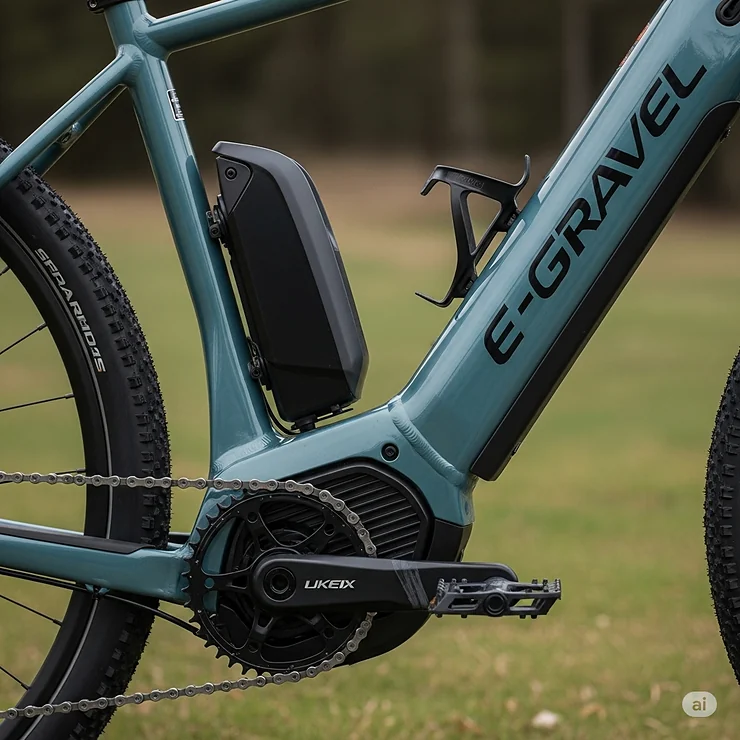
It uses Bosch’s Performance Line CX motor, rated at 85Nm of torque, with a 500Wh PowerTube battery inside an oversized carbon down tube. The bike weighs about 16.7 kg. Its Double Decker handlebar offers four hand positions, a real boon on all-day rides. The fork is rigid, which keeps it light and efficient on hardpack, but there’s no suspension to blunt rocks.
Practically speaking, 85Nm means this bike chews through steep, loose climbs that would stall the 50–55Nm motors elsewhere on this list. In Eco mode, Bosch’s range calculator suggests around 88 miles. One BikeRadar tester reportedly squeezed out about 88 miles with over 3,000 feet of climbing.
Reviewers describe it as powerful and plain fun to ride. The main complaint is weight, which is noticeable when you lift it into a car. At the time of research, discounted older-model-year stock appeared on Amazon in the mid-$2,000s. Newer builds list higher.
Pros:
- ✅ Bosch CX torque conquers steep climbs
- ✅ Excellent real-world range with 500Wh
- ✅ Four hand positions reduce fatigue
Cons:
- ❌ Rigid fork transmits rough-road vibration
- ❌ Heavier than hub-motor alternatives
Price: mid-$2,000s for discounted stock, higher for new builds. Value verdict: outstanding power per dollar when discounted.
5. Salsa Tributary GRX 600 — bikepacking workhorse
The Salsa Tributary GRX 600 doesn’t pretend to be a road bike in disguise. It was built to carry gear into the wild.
A Class 3 Bosch Performance Line Speed motor delivers 85Nm and assist up to 28 mph. A big 625Wh internal battery gives it the endurance for multi-day trips, with a retailer-listed estimate of about 72 miles. The aluminum frame and carbon fork carry wide tires and a flared Cowchipper handlebar. Salsa lists a 42–46 lb weight depending on build.
Here’s the real-world meaning of those numbers: the Tributary is stable and planted at speed, especially when loaded. The weight is the price you pay. It also accepts a Bosch range extender if even 625Wh isn’t enough.
Reviewers consistently praise the smooth, quiet motor and the accurate range estimator. Retailer reviewers describe it as a rock-solid performer on road and trail. Critics call it very heavy for an electric gravel bike, and some consider it overpriced.
Pros:
- ✅ Huge 625Wh battery for long routes
- ✅ Stable, planted handling when loaded
- ✅ Bosch Speed motor reaches 28 mph
Cons:
- ❌ Heavy (42–46 lb) for the category
- ❌ Some reviewers call it overpriced
Price: roughly $4,100–$4,500 on promotion, up to about $5,500 at list. Value verdict: worth it for bikepackers, overkill for casual riders.
6. Specialized Turbo Creo 2 Comp — natural assist, massive tire clearance
The Specialized Turbo Creo 2 Comp is the bike gravel purists keep recommending to e-bike skeptics.
It uses Specialized’s SL 1.2 mid-drive motor (about 50Nm), a 320Wh integrated battery, and a Future Shock suspension stem that smooths vibration at the cockpit. The system offers up to roughly five hours of assist and speeds up to 28 mph. Published comparisons cite tire clearance up to 47mm, and the alloy E5 version lists clearance for 29×2.2 tires. A range extender can be added.
What this means on the road: the assist ramps up quietly and in proportion to your effort, so the bike feels like you, only fitter. The MasterMind display and app let you tune motor behavior, and Auto-Lock helps deter theft.
Reviewers praise the responsiveness of the SL 1.2 motor, though one noted the top mode can feel unnatural to e-bike newcomers. A major retailer’s listing showed no customer reviews yet, so this sentiment comes from editorial tests. Reviewers also flag the price and modest battery.
Pros:
- ✅ Quiet, natural-feeling assist
- ✅ Wide tire clearance for true gravel
- ✅ App tuning and Auto-Lock theft deterrent
Cons:
- ❌ Premium pricing, especially carbon builds
- ❌ 320Wh battery needs an extender for epic rides
Price: around $5,000 for the alloy E5, about $7,000 for carbon. Value verdict: pricey, but the benchmark for ride feel.
7. Orbea Gain M21e — the e-bike nobody notices
The Orbea Gain M21e is for riders who want electric help without electric optics.
It uses Mahle’s X20 rear-hub system (55Nm), marketed as the lightest e-bike drive system around. Orbea’s top road build claims about 11.5 kg total, and the integrated battery and motor are nearly invisible. Orbea’s MyO program lets buyers customize builds, and a larger 350Wh iX350 battery is an option. Check tire clearance before buying: the road models top out at 700x35mm, so confirm what the M21e gravel build accepts.
In practice, this bike behaves like a premium endurance road bike with a gentle tailwind. Ride quality is the draw, with a tradeoff: the rear hub motor adds weight in back, which some reviewers describe as a firmer rear feel.
Reviewers praise its stealthy looks and ride quality, while noting the premium price on higher-end builds. The M21e listed at roughly the high-$8,000s at launch, so confirm current pricing.
Pros:
- ✅ Remarkably light and discreet
- ✅ Customizable builds via MyO
- ✅ Excellent ride quality for long days
Cons:
- ❌ Very high price
- ❌ Firmer rear feel from hub motor
Price: high-$8,000s at launch. Value verdict: a luxury pick for riders who prize subtlety.
Specs side by side help clarify the differences:
| Bike | Motor | Torque | Battery | Best For |
|---|---|---|---|---|
| Ride1UP Roadster V3 | 500W rear hub | Torque-sensing | ~360Wh | Budget commuters who hit gravel |
| Cannondale Topstone Neo SL 2 | Mahle X35 hub, 250W | Light-assist class | 250Wh | Fitness riders on smooth gravel |
| Canyon Grizl:ON CF 7 | Bosch SX | 55Nm | 400Wh (+250Wh option) | Versatile do-it-all riding |
| Canyon Grail:ON CF 7 | Bosch CX | 85Nm | 500Wh | Climbers and big-mile riders |
| Salsa Tributary GRX 600 | Bosch Speed | 85Nm | 625Wh | Bikepacking and loaded touring |
| Specialized Turbo Creo 2 Comp | SL 1.2 mid-drive | ~50Nm | 320Wh | Natural-feel assist seekers |
| Orbea Gain M21e | Mahle X20 hub | 55Nm | Small (350Wh option) | Stealthy, premium road-gravel riders |
Notice that torque and battery size rise together as the bikes get more adventure-focused. The Salsa Tributary GRX 600 and Canyon Grail:ON CF 7 both offer 85Nm, but the Salsa’s bigger battery buys range at the cost of weight. For lighter riders on gentler terrain, the Specialized Turbo Creo 2 Comp and Orbea Gain M21e deliver a more elegant experience despite smaller numbers.
✨ Don’t Miss These Exclusive Deals!
🔍 Take your electric gravel bikes shopping to the next level with these carefully selected options. Click on any highlighted bike to check current pricing and availability. The right ride will have you exploring routes you never thought possible!
How to Choose Electric Gravel Bikes
Picking among electric gravel bikes comes down to six questions. BikeRadar’s electric gravel bike guide notes that assistance in the US stops at 20 mph, so assist is mostly a climbing and endurance tool, not a speed tool.
- Decide your terrain first. Smooth gravel and rail trails suit light hub-motor bikes. Rough, hilly routes demand mid-drive torque and tire clearance of 42mm or more.
- Match motor type to your goals. Hub motors feel natural and keep weight low. Mid-drive motors climb better and balance weight lower, which helps loaded handling.
- Size the battery for your longest ride. As a rough rule, 250–320Wh suits day rides, while 500Wh and above suits all-day or multi-day trips. Extenders add insurance.
- Check weight honestly. If you lift the bike into a car or up stairs, 46 lb feels very different from 33 lb.
- Confirm class and trail rules. Class 1 usually enjoys the most access. Class 3 is often restricted to roads and certain paths.
- Budget for the whole system. Factor in tires, a good lock, lights, and bags, not just the frame.
The takeaway: the “best” bike is the one whose weaknesses you can live with. A tourer who values range will happily accept weight, while a weekend roadie will not.
Electric Gravel Bikes vs. Traditional Gravel Bikes
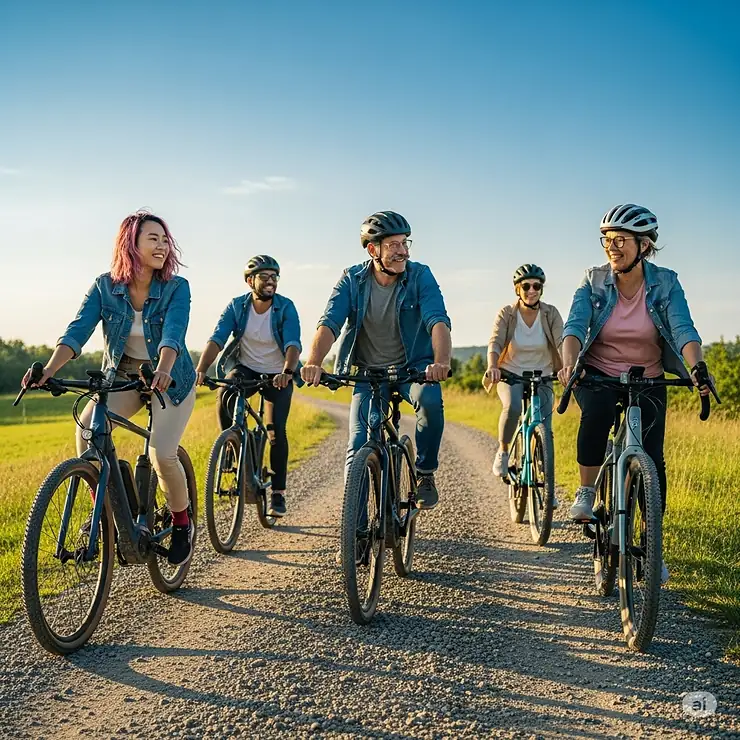
An electric gravel bike isn’t a replacement for a regular one. It’s a different tool with a different job.
| Factor | Electric Gravel Bikes | Traditional Gravel Bikes | Best For |
|---|---|---|---|
| Climbing | Motor flattens steep grades | Fully rider-powered | Canyon Grail:ON CF 7 for steep terrain |
| Range per ride | 50–90+ miles possible with assist | Limited by fitness | Salsa Tributary GRX 600 for long tours |
| Weight | ~30–46 lb | ~20–25 lb | Orbea Gain M21e for lightest e-option |
| Upfront cost | Higher | Lower | Budget buyers lean traditional or Ride1UP Roadster V3 |
| Maintenance | Battery and software care | Simpler | Traditional for minimal fuss |
| Trail access | More restrictions | Broadest access | Traditional on non-motorized trails |
The honest analysis: electric assist shines when your riding is limited by time, hills, or fitness gaps, not by pure enjoyment of suffering. If you’re racing or training for gravel events, a traditional bike may still serve better. If you want to ride longer with friends who are fitter, or keep exploring as you age, assist closes the gap. Expect to pay more upfront and to carry a few extra pounds, but the Canyon Grail:ON CF 7 shows that power and range can arrive in a bike that still feels like a gravel bike.
Features That Actually Matter (And Those That Don’t)
Marketing copy loves big numbers. Here’s what’s worth caring about.
Matters:
- Torque, not just wattage. Nm figures (50–85Nm here) decide how well a bike climbs. Wattage is mostly regulatory.
- Tire clearance. Volume is comfort. A bike that fits 42–47mm tires, like the Specialized Turbo Creo 2 Comp, absorbs trail chatter.
- Battery capacity plus an extender option. The Canyon Grizl:ON CF 7 and Salsa Tributary GRX 600 both offer one.
- Mounting points. Fenders, racks, and bottle bosses turn a bike into a tourer.
Matters less:
- Peak speed. US assist generally cuts off at 20 mph for Class 1, so 28 mph Class 3 capability rarely applies on dirt.
- Giant displays. Simple controllers work fine, like the minimalist system on the Cannondale Topstone Neo SL 2.
- Throttles. Useful on commutes, but often restricted on trails.
The spec sheet won’t tell you this, but reviewers repeatedly say the “feel” of assist, smooth versus jerky, shapes satisfaction more than any single number.
Electric Gravel Bikes: Classes, Trail Access, and Regulations
Before you shred your local fire road, understand the class system. Most US jurisdictions recognize three classes. Class 1 is pedal-assist up to 20 mph, Class 2 adds a throttle, and Class 3 assists up to 28 mph.
Federal rules vary by agency. The Congressional Research Service overview of e-bikes on federal lands explains how agencies like the Bureau of Land Management, National Park Service, and Forest Service treat the classes differently. Class 1 usually has the broadest access, while Class 2 and 3 face more restrictions on shared and non-motorized trails.
The practical advice:
- Learn your bike’s class and whether you can change modes. The Ride1UP Roadster V3 can switch between Class 1, 2, and 3, which changes where you can legally ride it.
- Check local rules before every new trail system, because state and county laws differ.
- Respect signage. Violations cost everyone access.
Access keeps expanding. For example, local reporting indicates BLM authorized Class 1 e-bikes on 211 miles of Moab trails starting March 2026. Still, a trail open to traditional bikes is not automatically open to electric ones.
Common Mistakes When Buying Electric Gravel Bikes
Buyers repeat the same errors, so here’s your cheat sheet.
- Buying an e-mountain bike in gravel clothing. Fat-tire, 1,000W hub-motor bikes marketed as “gravel” often lack drop bars, efficient gearing, and proper geometry. Look for real gravel components and a reputable brand.
- Ignoring weight. A 46 lb bike like the Salsa Tributary GRX 600 is magnificent on trail but a chore to lift. Be honest about your garage and car.
- Chasing battery size alone. A big battery on a heavy frame can feel worse than a small battery on a light one.
- Skipping a test ride. Assist feel is subjective. The Specialized Turbo Creo 2 Comp feels different from the Canyon Grail:ON CF 7, and only riding them tells you which suits you.
- Forgetting service access. Direct-to-consumer brands offer value, but you’ll need a local shop that will service e-bike systems.
- Underbudgeting accessories. Lights, locks, and tires add up fast.
Avoid these and you’ll sidestep most of the heartbreak.
Long-Term Cost & Maintenance of Electric Gravel Bikes
Sticker price is only the beginning. Total ownership cost includes consumables, battery health, and servicing.
| Tier | Bikes | Price Range | Best For |
|---|---|---|---|
| Budget | Ride1UP Roadster V3 | Roughly $1,300–$1,500 | First-time buyers |
| Mid-range | Canyon Grail:ON CF 7 (discounted), Cannondale Topstone Neo SL 2, Canyon Grizl:ON CF 7, Salsa Tributary GRX 600 | Roughly $2,000s to $5,500 | Serious riders wanting capability |
| Premium | Specialized Turbo Creo 2 Comp, Orbea Gain M21e | Roughly $5,000 to high-$8,000s | Riders prioritizing ride feel and discretion |
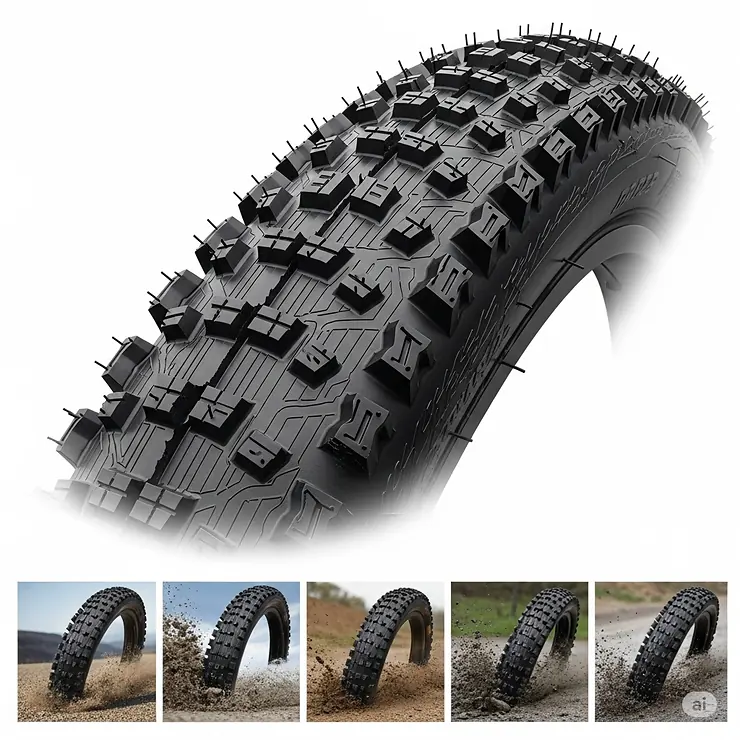
Watch out for these ongoing costs. Chains and cassettes wear faster under motor torque, so expect to replace them more often than on a traditional bike. Brake pads wear faster because e-bikes are heavier and faster. Batteries degrade over hundreds of charge cycles, and replacement costs can run into the hundreds of dollars.
The cost-per-use math is reassuring if you ride often. A rider who replaces a car commute with the bike a few days a week recoups much of the cost over time. Casual riders get less of that benefit, so the budget Ride1UP Roadster V3 is the more rational choice for them.
Transformation Guide: Setting Up and Maintaining Your Electric Gravel Bike
Unboxing is the easy part. These habits keep electric gravel bikes running well.
First 30 days:
- Torque-check bolts, especially stem, handlebar, and seatpost, after the first few rides.
- Set tire pressure by weight and surface. Lower pressure on tubeless tires boosts grip and comfort.
- Update firmware through the manufacturer’s app, such as Specialized’s or Bosch Flow, to unlock motor tweaks.
Ongoing:
- Clean and lube the chain frequently. Motor torque accelerates wear.
- Inspect brake pads monthly and replace early.
- Store the battery partially charged and out of extreme heat or cold. Most manufacturers recommend partial charge for long-term storage, so check your manual.
- Wipe down contacts and avoid pressure-washing the motor area.
Common first-month mistakes: running tires too hard, ignoring app updates, and leaving the battery fully drained for weeks. A fifteen-minute monthly check beats a surprise shop bill. For bikes like the Canyon Grizl:ON CF 7, also check that integrated lighting wiring stays dry and secure.
Real-World Scenarios: Which Electric Gravel Bike Fits Your Life?
Specs get abstract fast, so here are three profiles.
The budget commuter-explorer. She rides eight miles to work on pavement and weekend rail trails, with $1,500 to spend. The Ride1UP Roadster V3 fits: affordable, Class 3 capable, and comfortable on 45c tires.
The weekend fitness rider. He’s fit, rides 40–50 miles on smooth gravel, and wants minimal weight. The Cannondale Topstone Neo SL 2 gives a light, lively feel with heart-rate-based assist, and a mid-$3,000s budget covers it. The Orbea Gain M21e serves the same rider with a bigger wallet.
The bikepacker. She’s planning multi-day routes with 30 lb of gear through hilly country. The Salsa Tributary GRX 600 and Canyon Grail:ON CF 7 both offer 85Nm of torque. The Salsa’s 625Wh battery adds range, while the Canyon’s lower weight eases handling. If the route includes technical descents, the Canyon Grizl:ON CF 7 brings suspension.
For anyone who wants the most natural ride and doesn’t mind the price, the Specialized Turbo Creo 2 Comp covers many of these scenarios. Match your profile to the bike, and you’ll rarely regret the purchase.
Problem → Solution Guide for Electric Gravel Bikes
Owners hit the same snags, and most have clean fixes.
Problem 1: “The bike is too heavy to lift.” Choose a lighter hub-motor build like the Orbea Gain M21e or Cannondale Topstone Neo SL 2, or install a hitch rack with a ramp for heavier bikes such as the Salsa Tributary GRX 600.
Problem 2: “I’m worried about range.” Use eco mode on flats, carry an extender if the bike supports one, and plan charging stops. Capacity matters most on bikes like the Specialized Turbo Creo 2 Comp with 320Wh.
Problem 3: “A trail turned out to be closed to e-bikes.” Check local rules in advance, and see the BLM’s e-bike page for how federal lands handle access. Remember that BLM e-bikes are defined as having motors of 750 watts or less, and the 2020 rule alone doesn’t open non-motorized trails.
Problem 4: “The rear feels firm.” Hub-motor bikes can ride firmer. Run lower tire pressure and consider a suspension seatpost.
Problem 5: “I’m nervous about theft.” Use a high-quality lock and the app-based security features like Specialized’s Auto-Lock, and never leave the bike unattended on a rack.
FAQ: Electric Gravel Bikes
❓ Are electric gravel bikes worth the money?
❓ How far can electric gravel bikes go on one charge?
❓ Can electric gravel bikes be ridden on mountain bike trails?
❓ Do electric gravel bikes require a license or registration?
❓ How much do electric gravel bikes weigh?
Conclusion: Which Electric Gravel Bike Should You Buy?
The electric gravel bikes category has matured fast. A few years ago you picked between compromises. Today you can match a bike to your life.
If you want the cheapest respectable entry, the Ride1UP Roadster V3 delivers. If light weight and subtle assist are your priority, the Cannondale Topstone Neo SL 2 or the splurge-worthy Orbea Gain M21e fit. Riders who want one bike for everything should look at the Canyon Grizl:ON CF 7 with its suspension and extender option. Climbers and distance riders will love the Canyon Grail:ON CF 7, while bikepackers should consider the Salsa Tributary GRX 600. And if natural-feeling assist matters most, the Specialized Turbo Creo 2 Comp is the benchmark.
Whichever way you lean, test ride if you can, check class and trail rules, and budget for upkeep. Electric assist doesn’t make gravel riding easy. It makes it possible for more people, on more roads, for more years.
✨ Ready to ride farther than you ever thought possible?
🚴♂️ Click through any highlighted bike above to check current pricing and availability. Your next favorite route is waiting!
Recommended for You
- Adults 3 Wheel Electric Bicycle: 7 Best Trikes to Buy in 2026
- Electric Tricycle for 2 Adults: 7 Best Picks for 2026 (Ranked)
- Electric Bikes for Teens: 7 Best Safe Picks for 2026
Disclaimer: This article contains affiliate links. As an Amazon Associate, I earn from qualifying purchases. If you purchase products through these links, we may earn a small commission at no additional cost to you.
✨ Found this helpful? Share it with your friends! 💬🤗
