In This Article
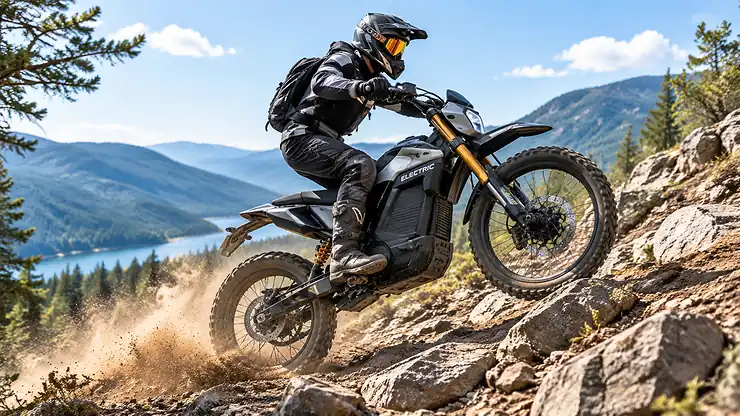
The electric dual sport vs electric dirt bike question comes down to where your tires will spend most of their time. An electric dual sport is a motorcycle built, titled, and equipped to run legally on public roads and on dirt. An electric dirt bike is built for off-road riding only, trading plates and mirrors for lower weight, more travel, and often more power.
That sounds tidy. In practice the line is blurry, and 2026 has blurred it further. A dual-sport motorcycle has traditionally meant a street-legal bike with off-road ability. The electric market has split into two camps. There are factory-plated machines with VINs and DOT-legal lighting, and there are lightweight “e-motos” that look road-ready but are sold as off-road vehicles. Many buyers learn the difference at the DMV counter, which is a rotten place to find out.
Here’s the other twist. Electric bikes remove the clutch, the gearbox, the carburetor, and the weekend oil change. That makes both categories friendlier than their gas cousins, but it also hides real differences. Power outputs run from about 10 hp to 80 hp. Weights run from about 110 lb to over 400 lb. Prices run from the mid-$4,000s to well over $20,000.
This guide sorts it out with seven real bikes across budget, mid-range, and premium tiers. It also covers beginners, legality, tires, and suspension travel, because those four factors decide almost every purchase. I haven’t ridden any of these bikes. Everything below comes from published specs and aggregated reviews, and I’ll flag where the data is thin.
Quick Comparison: 7 Electric Bikes at a Glance
| Bike | Class | Peak Power (approx.) | US Road Status | Best For |
|---|---|---|---|---|
| Zero DSR/X | Electric dual sport | ~48 hp | Factory street-legal | Riders who want one premium bike for pavement and trail |
| Zero FX | Electric supermoto/dual sport | ~44 hp | Factory street-legal | Urban riders who want light, dirt-capable fun |
| Sur-Ron Ultra Bee | Electric dirt bike | ~28 hp (21 kW) | Off-road in the US | Beginners who want room to grow |
| Sur-Ron Light Bee X | Electric dirt bike | ~10.7 hp | Off-road in the US | Budget buyers, tight trails, skills practice |
| Talaria Sting MX4 | Electric dirt bike | ~11 hp | Off-road in the US | Riders who want a Light Bee alternative |
| Stark Varg | Electric MX/enduro | ~80 hp | Off-road in the US | Experienced and competitive riders |
| Sur-Ron Storm Bee | Electric enduro | ~22 hp continuous | Off-road in the US | Heavier-duty trail and enduro riding |
Power numbers in this space are slippery. Peak versus continuous output, regional versions, and trim levels all change the figures. The pattern still holds. The Zero DSR/X and Zero FX are the only two here you can plausibly register as-is. Everything else is a dirt bike first and a street candidate second, with the legal homework that implies.
Read the table as a legality ladder rather than a power ladder. The Stark Varg dominates on output but needs the most skill and has the least road potential. The Sur-Ron Light Bee X and Talaria Sting MX4 are close in power and cost, so choosing between them comes down to feel and parts support. For a rider who expects to commute at all, the Zero pair is the shortcut. Anything else means kits, paperwork, and state-by-state uncertainty.
💬 Just one click — help others make better buying decisions too!😊
Top 7 Electric Dual Sport and Electric Dirt Bikes: Expert Analysis
1. Zero DSR/X — the premium do-it-all adventure pick
The Zero DSR/X is the flagship of the electric dual sport category. It’s built to cover highway miles and then keep going when the pavement ends.
Published specs put output around 48 hp and torque near 229 Nm. That means strong highway passing and enough shove to climb loose fire roads without a gearbox. Manufacturer-style range claims run high, up to roughly 180 miles in city riding. Treat that as a best case, because highway speeds and trail work drain the pack far faster. Based on the spec comparison, this is the bike for someone who wants one machine and has a real budget.
It’s heavy compared with the lightweight dirt bikes below. That weight is the price of road manners, so it’s a poor fit for tight, technical single-track. Review coverage generally praises the instant torque and near-zero running costs of Zero’s lineup. Used-market guides flag battery health as the big variable on older models. I couldn’t verify a deep pool of owner reviews for this specific model, so I’m not going to invent one.
Pros:
- ✅ Factory street-legal with VIN and DOT equipment
- ✅ Real highway capability plus off-road ability
- ✅ Strong torque with minimal running costs
Cons:
- ❌ Heavy and costly for technical trail riding
- ❌ Real-world range falls well below claims
Price: north of $20,000, so check current price. It’s expensive, but it’s the only bike here that doesn’t require legal gymnastics.
2. Zero FX — the lightest plated option on this list
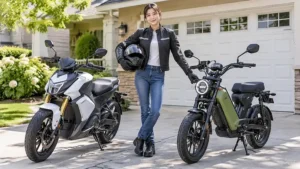
The Zero FX is the bike to pick if the electric dual sport vs electric dirt bike dilemma leaves you wanting a little of both. It’s an electric supermoto with dirt-bike DNA and a road-legal registration.
Output sits around 44 hp with roughly 106 Nm of torque, and a belt drive keeps the drivetrain quiet and low-maintenance. Published comparisons list a 0-62 mph time around 4 seconds, which is lively enough to embarrass plenty of gas 450s off the line. Suspension travel in the FX line has historically run around 8.6 inches in front and 8.9 inches in the rear, per published comparison data. That’s plenty for gravel roads and moderate trails, but not for whoops at speed.
What most buyers overlook is the tire and gearing character. The FX is tuned for urban agility more than backcountry grind, so it rewards riders who commute on weekdays and explore on weekends. Reviewers of the closely related FXE found it surprisingly sporty, but complained that charging takes too long in practice. Plan your rides around that.
Pros:
- ✅ Registerable as a motorcycle out of the box
- ✅ Light, nimble, and genuinely quick
- ✅ Belt drive keeps maintenance minimal
Cons:
- ❌ Less travel than true trail machines
- ❌ Slow charging frustrates frequent riders
Price: around the low-to-mid $12,000s, so check current price. Strong value for a daily-rider-plus-trail bike, poor value if you’ll never touch pavement.
3. Sur-Ron Ultra Bee — best all-around trail bike for growing riders
The Sur-Ron Ultra Bee is the bike most guides point to when someone asks for a first full-size electric dirt bike.
It makes 21 kW peak (about 28 hp) and 18 kW continuous, tops out around 59 mph, and weighs about 194 lb, per published specs. The seat height is roughly 35.8 inches. Switchable ride modes and selectable traction control let you dial power down while you learn. A carbon belt primary drive and quick charging, around 2.5 hours to 80%, round out the practical side.
In Europe, the street-legal Ultra Bee T is limited to about 12.5 kW and 17 hp. In the US it’s sold for off-road use, and forum chatter suggests Sur-Ron hasn’t pursued the certification needed to sell it plated. Aftermarket street-legal kits exist, around $700, but a kit alone doesn’t give you a title.
Reviewer sentiment is consistently positive on balance: enough power, manageable weight, a huge aftermarket. A common caution is that the stock brakes and stock tires deserve upgrades if you push hard.
Pros:
- ✅ Ride modes and traction control suit learning
- ✅ Light enough to pick up after a tip-over
- ✅ Large aftermarket and parts support
Cons:
- ❌ Not factory street-legal in the US
- ❌ Stock tires and brakes benefit from upgrades
Price: mid-$6,000s range, so check current price. Excellent value for the capability.
4. Sur-Ron Light Bee X — the budget gateway to electric dirt riding
The Sur-Ron Light Bee X is the bike that built the segment, and for budget buyers it’s still the default recommendation.
Published figures put it near 10.7 hp, about 110 lb, roughly 46 mph, and around 47 miles of range from a 2.4 kWh pack. Those numbers sound modest. In practice, 110 lb means you can flick it around like a mountain bike with a motor. That’s why it’s loved for tight trails and skills practice.
The catch is road use. The Light Bee X is sold as off-road, and forum discussions note that it lacks a 17-digit VIN, which blocks standard registration in most states. Utah’s licensing division says Sur-Rons require motorcycle registration, insurance, and a driver license for road use, or OHV registration for off-road use.
Owners and reviewers praise the huge community and cheap, swappable parts. The honest complaint is that stock suspension and brakes feel basic once you start pushing.
Pros:
- ✅ Lightest serious electric dirt bike here
- ✅ Massive aftermarket community
- ✅ Low entry cost
Cons:
- ❌ Off-road only, with no VIN
- ❌ Modest suspension for aggressive riding
Price: roughly the $4,000-$5,000 range, so check current price. Hard to beat for the money.
5. Talaria Sting MX4 — the Light Bee rival with more punch
The Talaria Sting MX4 is the most common alternative to the Sur-Ron pair, and it’s pitched as a step up in power.
One aggregated spec sheet lists about 11 hp, a 60V 45Ah battery, roughly 56 miles of range, and a weight near 132 lb. It also lists inverted Fastace forks and Tektro 220 mm brake discs. Front fork travel on the broader Sting family has been around 203 mm, or 8 inches, in some model years.
Pro-rider commentary I found is mixed in a useful way. One tester said he’d still pick a Light Bee for its nimble, playful feel. The same outlet also notes that road use is “not really” realistic for the stock Sting in the US. Another review of an earlier model said it surprised them positively. Parts cost more than on the Sur-Ron, according to one comparison.
Pros:
- ✅ Slightly more power than the Light Bee X
- ✅ Inverted forks and larger brake rotors
- ✅ Strong trail character
Cons:
- ❌ Off-road only for most US buyers
- ❌ Parts can cost more
Price: mid-$4,000s, so check current price. Best for riders who want a bit more than a Light Bee X without jumping to full-size pricing.
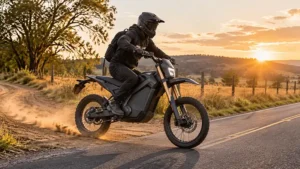
6. Stark Varg — the competition-grade 80 hp monster
The Stark Varg sits at the very top of the electric dirt bike pyramid, according to several guides. It’s built for motocross and enduro, not for commuting.
Peak output is about 60 kW, which is 80 hp, and weight lands near 260 lb. That makes it more powerful than most 450cc gas motocross bikes. Pricing runs roughly $12,000-$14,000 depending on MX or enduro trim. Some enduro-oriented versions list around 55-70 miles of range.
There’s a counterintuitive beginner angle. Because the Varg has deep power-map customization, one beginner-focused guide ranks it as the best for power customization despite the headline horsepower. I’d treat that with caution. Having a Level 1 mode doesn’t mean the throttle can’t surprise you, and the bike is heavy and expensive to drop.
Review coverage treats it as the benchmark for competition riders. Street legality isn’t realistic here.
Pros:
- ✅ Genuine MX-level performance
- ✅ Deeply tunable power delivery
- ✅ Benchmark status among reviewers
Cons:
- ❌ Costly and heavy for newcomers
- ❌ No practical road use
Price: roughly the $12,000-$14,000 range, so check current price. A superb value for racers and a mismatch for everyone else.
7. Sur-Ron Storm Bee — the heavy-duty enduro option
The Sur-Ron Storm Bee is the biggest, most capable model in the Sur-Ron lineup, aimed at riders who found the Ultra Bee too small.
Published comparisons list around 22 hp continuous, with peak figures that vary by source. Weight is about 260 lb, and top speed is governed near 68 mph in one source. A European-spec version shows 290 mm (about 11.4 inches) of travel at both ends, liquid cooling, and chain drive. That generous suspension travel makes it the most trail-focused bike on this list.
Torque is the headline. Reviewers talk about savage low-end shove. Cautionary coverage urges buyers to “buy with eyes open,” especially when buying used and verifying documentation. Another guide describes the power as approachable, so the experience may depend heavily on settings.
I couldn’t verify a current US price, so check current price. It sits above the Ultra Bee tier.
Pros:
- ✅ Very long suspension travel
- ✅ Strong torque for steep terrain
- ✅ Liquid cooling for sustained riding
Cons:
- ❌ Heavy compared with other Sur-Ron models
- ❌ US road legality isn’t straightforward
Price: above the Ultra Bee range, with value hinging on how much suspension travel and torque you’ll truly use.
Top 7 Specs and Value Table
| Bike | Weight (approx.) | Range (claimed/reported) | Price Range | Review Sentiment | Best For |
|---|---|---|---|---|---|
| Zero DSR/X | Heavy (road-bike class) | Up to ~180 mi city claim | $20,000+ | Positive on torque, running costs | Daily road plus trail |
| Zero FX | Mid-weight | City-focused | Low-to-mid $12,000s | Positive; charging time noted | Urban supermoto fun |
| Sur-Ron Ultra Bee | ~194 lb | ~70 mi at low speed | Mid-$6,000s | Very positive for beginners | Learner to intermediate |
| Sur-Ron Light Bee X | ~110 lb | ~47 mi | $4,000-$5,000 | Positive; huge community | Budget and tight trails |
| Talaria Sting MX4 | ~132 lb | ~56 mi | Mid-$4,000s | Mixed-positive vs Sur-Ron | Light Bee alternative |
| Stark Varg | ~260 lb | ~55-70 mi (enduro) | $12,000-$14,000 | Benchmark for racing | Competition |
| Sur-Ron Storm Bee | ~260 lb | Not verified | Above Ultra Bee tier | Strong torque, buy carefully | Heavy-duty trail |
Looking at the table, the Sur-Ron Ultra Bee delivers the best balance for most riders, and the Zero FX wins for anyone who needs a legal plate. If hill-climbing and rough terrain matter most, the Sur-Ron Storm Bee and Stark Varg justify their extra cost. Budget buyers should note that the Sur-Ron Light Bee X and Talaria Sting MX4 are very close in price, so test-ride and compare parts availability before choosing.
✨ Don’t Miss These Exclusive Deals!
🔍 Take your electric riding to the next level with these carefully selected bikes. Click on any highlighted bike name to check current pricing and availability. Whether you want a plated commuter or a trail weapon, you’ll find a match for the ride you’re picturing!
Your First 30 Days: Setup and Maintenance Guide
Electric bikes cut maintenance but don’t eliminate it. Treat the first month as a break-in period for you as much as the bike.
Week one: check everything. Tighten every fastener, because vibration shakes things loose on lightweight frames. Check tire pressure, brake pad bite, and chain tension on chain-driven models. Dirt bikes ship with accessible bolts, but not every bolt was torqued right at the factory.
Learn the modes before the trail. Start in the gentlest ride mode, even if you’re experienced. Instant torque punishes a twitchy wrist. The Sur-Ron Ultra Bee, for example, offers multiple modes and adjustable traction control, so use them like training wheels you can remove later.
Think about tires early. Stock tires suit the average rider’s imagined riding, not yours. A soft, open-pattern knobby is great in dirt and terrible on the street, as Cycle World’s tire guide explains. Match the tire to the terrain you actually ride, not the terrain you hope to ride.
Charging habits. Avoid leaving the pack at 100% for weeks or fully drained for long periods. Store at a moderate state of charge and keep it out of extreme heat.
Common first-month mistakes: skipping a brake upgrade on a bike that’s faster than its stock stoppers, riding in the highest mode too early, and ignoring suspension sag. A little setup now saves a crash and a repair bill later.
Real-World Scenarios: Which Bike Fits Which Rider?
Specs mean little without a life attached to them. Here are three profiles, with reasoning.
The college student commuting eight miles each way. Budget matters, parking is scarce, and the route is mostly pavement with a gravel shortcut. A plated machine like the Zero FX fits best. It’s registerable, light, and quick. An off-road-only Sur-Ron Light Bee X would be cheaper, but the legal risk on public roads is the real cost.
The weekend trail rider with kids. Rides happen twice a month, mostly on forest roads and light single-track. The Sur-Ron Ultra Bee is the sweet spot. It’s light enough to load into a truck bed, has modes for family members to try, and costs far less than a premium plated bike. The tradeoff is zero legal road use, so you’ll need a trailer or truck.
The experienced rider coming from gas motocross. The Stark Varg is the obvious pick. It has the power, the build quality, and the competition pedigree. For this rider, silent riding and low maintenance are bonus points, and legality is irrelevant because the bike lives at the track.
A budget, an environment, and a frequency of use decide it. If most of your riding is on pavement, buy plated. If most is on dirt, buy a dirt bike and keep your ambitions realistic.
Problem and Solution Guide: Five Common Pain Points
Problem 1: “I want to commute, but my dirt bike has no VIN.” Solution: stop assuming lights make it legal. A kit gives you lighting, not a title. If you’re serious, buy a factory street-legal bike like the Zero DSR/X or Zero FX.
Problem 2: “Range drops fast on trails.” Solution: ride in eco mode, keep tires properly inflated, and avoid running the pack empty. Real-world range is always lower than claims.
Problem 3: “The bike is too fast for me.” Solution: use ride modes and traction control on the Sur-Ron Ultra Bee, or the customizable power maps on the Stark Varg, to limit output while you learn.
Problem 4: “Stock brakes feel weak.” Solution: upgrade pads and rotors first. On bikes like the Talaria Sting MX4, larger rotors help, but pad choice matters just as much.
Problem 5: “Knobbies wear out on my commute.” Solution: switch to a dual-purpose tire for road-heavy riding. More on that in the tire section below.
Dual Sport or Dirt Bike for Beginners: Which Is Smarter?
The dual sport or dirt bike for beginners question has a clear answer if you’re honest about where you’ll ride. Dual-sport bikes are widely described as among the easiest motorcycles for new riders because they’re stable, comfortable on pavement, and forgiving off-road.
Electric versions simplify things further. There’s no clutch to stall and no gears to miss. That’s a big win for first-timers.
For pure dirt use, a lighter bike like the Sur-Ron Light Bee X at roughly 110 lb is easy to control and cheap to replace parts on. The Sur-Ron Ultra Bee weighs about 194 lb, with a seat height near 35.8 inches. That’s still manageable but taller than many beginners expect.
For beginners who want road access, a plated Zero FX is simpler legally. It’s also more expensive.
Avoid the obvious trap. The Stark Varg offers adjustable power maps, but 80 hp is a lot for a new rider, and even a gentle map can’t fix poor judgment. Start light, learn throttle discipline, and move up later.
Street Legal vs Off-Road Only Electric Bikes: The Real Difference
The street legal vs off-road only electric bikes divide is mostly about paperwork and compliance, not horsepower. A street-legal bike is built to meet federal safety standards and state registration rules. An off-road-only bike usually isn’t.
Most electric dirt bikes ship without a VIN, DOT lighting, mirrors, or compliant tires. Some even lack the certification needed to be plated. As one New England guide points out, a VIN, a manufacturer’s certificate of origin, and bolt-on lights don’t each make a bike road legal on their own.
Factory street-legal bikes like the Zero DSR/X and Zero FX come with the right documentation. That’s why they cost more.
Think about three costs. First, purchase price. Second, conversion cost if you try to plate an off-road bike. Third, legal risk if you ride unplated and something goes wrong. Insurance companies and police treat an unregistered motorcycle very differently from a trail bike.
The off-road-only route makes sense when you have land, a trailer, or nearby OHV areas. The street-legal route makes sense when roads are part of your routine.
Street Legal Requirements: What You Actually Need
Street legal requirements vary by state, but most follow a pattern. Utah’s licensing division is a good example. It treats electric devices above 750 watts, or capable of exceeding 20 mph on motor power alone, as motorcycles needing street-legal equipment.
Typical requirements include:
- DOT-approved headlight, taillight, and brake light
- Turn signals and a horn
- Rearview mirrors and a speedometer in mph
- DOT-marked tires
- A 17-digit VIN and valid title
- Registration, insurance, and a motorcycle endorsement
Some states add inspections. Massachusetts, for instance, requires annual motorcycle inspections at licensed stations.
Aftermarket kits typically cost a few hundred dollars. For example, one Ultra Bee kit runs around $700 and includes a harness, blinker control, and plate bracket. Even so, kit makers themselves tell buyers to confirm local requirements. Adding parts doesn’t certify a vehicle.
Always call your DMV before spending money. Ask whether your specific model can be titled as a motorcycle in your state.
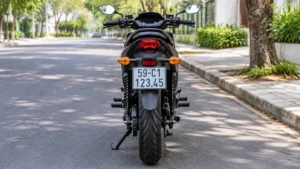
Knobby vs Dual Purpose Tires: What Fits Your Riding?
The knobby vs dual purpose tires decision shapes how your bike feels more than almost any other upgrade.
A true knobby digs into loose soil, but it gives up pavement grip and wears quickly on asphalt. As RevZilla’s tire explainer notes, knobby tires provide minimal street grip, and traction drops as knob height wears down. Dunlop’s own engineers say knobbies wear faster on asphalt than on dirt.
Dual-purpose tires split the difference. Manufacturers rate them by percentage of street versus dirt, such as 50/50. They offer longer life and calmer handling on pavement. One tire guide estimates a soft knobby can be wrecked in under 1,000 miles of aggressive road riding, while a quality dual-sport tire may last 3,000-5,000 miles. Treat those numbers as ballpark.
The tradeoff is off-road traction. Dual-purpose tires pack up with mud and offer less sidehill grip. Some riders choose DOT-approved trials-style tires for dirt-heavy riding.
Rule of thumb: mostly dirt means a knobby, mostly road means dual-purpose, and an even split means a 50/50 tire.
Suspension Travel: Why It Matters More Than Horsepower
Suspension travel is the unsung hero of this comparison. More travel absorbs bigger hits, keeps tires planted, and reduces fatigue on rough ground.
The numbers vary widely. The Sur-Ron Ultra Bee offers about 9.4 inches of fork travel with adjustable compression and rebound. The Sur-Ron Storm Bee reportedly reaches about 290 mm, or 11.4 inches, at both ends. The Zero FX line has historically sat near 8.6 inches in front and 8.9 inches in the rear. The Talaria Sting family has listed about 203 mm, or 8 inches, in front in some model years.
What does that mean in practice? On a washboard fire road, long travel lets you ride faster with less rattle. On pavement, long travel can feel floaty and dive under braking.
For commuters, moderate travel is fine. For trail and enduro riding, longer travel on the Storm Bee or Stark Varg class makes a noticeable difference. Compare travel numbers alongside weight, because a heavy bike with short travel bottoms out sooner.
How to Choose Between an Electric Dual Sport and an Electric Dirt Bike
Here’s a practical way to settle the electric dual sport vs electric dirt bike choice.
- Decide where you’ll ride most. If it’s more than 30% pavement, lean toward a plated dual sport.
- Confirm legality in your state. Call the DMV before buying anything off-road-only.
- Set a total budget. Include gear, a charger, upgrades, and any registration costs.
- Match weight to experience. Beginners do better under about 200 lb.
- Check suspension travel. Match it to your terrain, not to the spec-sheet winner.
- Choose tires deliberately. A bike with the wrong tire feels like the wrong bike.
- Plan your charging. If you can’t charge at home, factor in long waits.
Follow those seven steps and most of the confusion evaporates.
Electric vs Gas: Long-Term Cost and Maintenance
| Factor | Electric Dual Sport/Dirt Bike | Gas Dual Sport/Dirt Bike | Best For |
|---|---|---|---|
| Maintenance | No oil changes, fewer parts | Oil, filters, valves | Electric for low upkeep |
| Fuel/Energy | Cheap electricity | Gasoline costs | Electric for frequent riders |
| Range | Limited, charge-dependent | Refuel anywhere | Gas for remote touring |
| Noise | Very quiet | Loud | Electric near neighbors |
Electric bikes win on running cost and simplicity. Gas bikes win on range and refueling flexibility. If you ride short, frequent trips, electric saves money over time. If you ride long, remote routes, gas still has the edge.
Battery replacement is the long-term wild card. Pack life depends on use, heat, and charging habits, so check warranty coverage before buying.
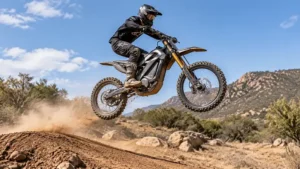
Frequently Asked Questions
❓ How much does a street legal electric dirt bike cost?
❓ Can I add a street legal kit to a Sur-Ron?
❓ Do I need a motorcycle license for an electric dual sport?
❓ How long does an electric dirt bike battery last per charge?
❓ Is an electric dual sport worth it over a gas bike?
Conclusion: Which Should You Buy?
The electric dual sport vs electric dirt bike decision isn’t about which category is better. It’s about honesty. If your daily routine includes pavement, buy a bike that’s actually plated, like the Zero FX or Zero DSR/X. If your routine is trails and tracks, an off-road bike such as the Sur-Ron Ultra Bee, Sur-Ron Light Bee X, Talaria Sting MX4, Sur-Ron Storm Bee, or Stark Varg will give you more capability per dollar.
Beginners should lean light, with the Sur-Ron Light Bee X for tight budgets and the Sur-Ron Ultra Bee for room to grow. Experienced riders chasing speed will find the Stark Varg hard to beat. Whatever you choose, treat legality, tires, and suspension travel as first-order decisions rather than afterthoughts.
Prices and availability change, so check current pricing before you buy.
✨ Ready to pick your ride?
Compare the bikes above, confirm your state’s rules, and get out there! 🏍️
Recommended for You
- Chopper Style Electric Bike For Adults: 7 Best Picks In 2026
- Half Helmet For Cruiser Riders: 7 Ultimate Picks (2026)
- Bobber Style Electric Moped: 7 Best Picks For 2026
Disclaimer: This article contains affiliate links. As an Amazon Associate, I earn from qualifying purchases. If you purchase products through these links, we may earn a small commission at no additional cost to you.
✨ Found this helpful? Share it with your friends! 💬🤗
