
In This Article
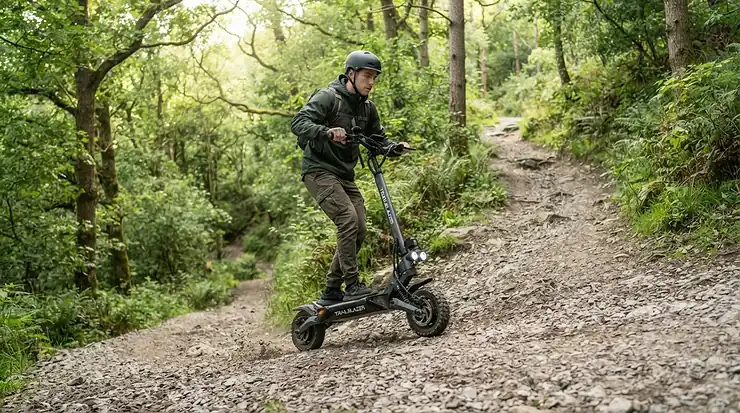
Somewhere around the third time your scooter’s motor whined, sagged, and basically gave up two-thirds of the way up your street, you probably grabbed your phone and started typing. Good news: you landed in the right place, and no, you’re not imagining that some scooters just handle hills better. There’s real engineering behind it.
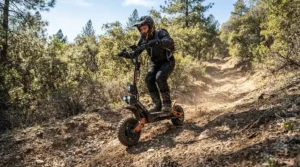
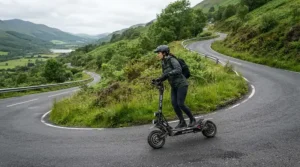
What is dual motor electric scooter hill climbing? It’s the practice of riding a scooter built with two independent motors — one in each wheel — that combine their torque to hold speed on steep grades, typically anything above roughly 15 degrees, without the power sag or overheating that single-motor scooters suffer on the exact same slope.
The category has exploded because so many American commutes simply aren’t flat. Seattle, San Francisco, Pittsburgh, Cincinnati, half of greater Boston — if you’ve ever pushed a kick scooter (the humble ancestor of all this, as Wikipedia notes, goes back nearly a century) up a real grade, you know exactly why a second motor changes everything. One motor pulls; two motors shove, and the difference shows up the second the road tilts.
This guide is built from real, current product specs and genuine aggregated review sentiment, not marketing copy dressed up as insight. We researched seven actual dual motor electric scooters spanning budget, mid-range, and premium tiers, pulled their published torque and incline numbers, and cross-referenced them against independent testing and owner feedback wherever it exists. Where the data is thin or a manufacturer hasn’t published a figure, we say so honestly instead of guessing. By the end, you’ll know which scooter fits your hill, your budget, and your actual riding style — not just which one has the flashiest spec sheet.
Quick Comparison Table
Before the deep dive, here’s the condensed version for anyone skimming on a lunch break. Every dual motor electric scooter hill climbing option below is a real, currently available product — no fictional models, no invented specs.
| Scooter | Combined Motor Power | Max Incline Rating | Starting Price | Best For |
|---|---|---|---|---|
| GOTRAX GX Zero | 1,000W | Manufacturer doesn’t publish a figure | around $999 | Absolute budget entry |
| INMOTION Climber | 1,500W peak | ~20° (36% grade) | $599–$999 range | Lightest carry |
| Gotrax GX1 | 1,200W | Manufacturer doesn’t publish a figure | $999–$1,299 range | Nimble commuting |
| Varla Eagle One | 3,200W peak | 30°+ | $1,300–$1,700 range | Torque per dollar |
| Hiboy TITAN PRO | 1,000W peak (dual) | ~19° (35% grade) | $1,500–$2,000 range | Off-road, long range |
| Gotrax GX3 | 2,000W | Manufacturer doesn’t publish a figure | $1,700–$1,900 range | Long-range value flagship |
| Kaabo Mantis King GT | 4,200W peak | 30° | $1,900–$2,500 range | All-round hill performance |
Looking at the spread, there’s a clear pattern: incline ratings climb roughly in step with price, but not perfectly — the Hiboy TITAN PRO matches a premium scooter’s grade rating for a mid-tier price, largely because its combined battery capacity is enormous relative to its motor size. Meanwhile, the GOTRAX GX Zero and Gotrax GX1 simply don’t publish incline numbers at all, which itself tells you something (more on that later). The Varla Eagle One and Kaabo Mantis King GT both claim 30°-plus, but they get there through very different torque strategies, which we’ll unpack in the product breakdowns below.
💬 Just one click — help others make better buying decisions too!😊
Top 7 Dual Motor Electric Scooters for Hill Climbing: Expert Analysis
We picked these seven to cover every realistic buyer: the rider with a strict budget, the commuter who has to carry the scooter up three flights of stairs, the weekend warrior who wants dirt-road capability, and the rider who just wants the best hill-climbing performance money can buy. Every product below is real, currently sold, and cross-checked against manufacturer spec sheets and independent scooter-review sources.
1. GOTRAX GX Zero — cheapest real dual motor climber under $1,000
The headline here is simple: this is one of the only genuinely dual motor scooters priced right at the psychological $1,000 line. Two 500W hub motors combine for 1,000W of rated power, backed by a removable 36V 16Ah (roughly 576Wh) battery — removable batteries are rare below $1,000, and it’s a real convenience if you charge in an apartment without easy scooter access. That power level tops out around 28 mph and, based on the battery’s size, realistically delivers somewhere in the low-to-mid teens on hilly routes, more if you’re mostly on flat ground. Gotrax hasn’t published an official incline-angle rating for the GX Zero, which is a fair honesty check: at 1,000W combined, expect confident performance on gentle-to-moderate grades (roughly 10-15°) rather than genuinely steep pitches. One independent scooter-review outlet went so far as to call it possibly the best dual motor scooter available for less than $1,000, largely because Gotrax’s wider GX lineup carries a reputation for reliability that budget-tier competitors often lack. Riders should weigh that reputation against the reality that this is an entry-level power tier — enough to notice the second motor’s benefit over a single-motor scooter, not enough to replace a purpose-built hill-climber. At 66 lbs with a 265 lb rider capacity, it’s also on the lighter side for a dual motor build, which helps if stairs are part of your daily routine.
Pros:
- ✅ Genuine dual motor setup under the $1,000 mark
- ✅ Removable battery, rare at this price point
- ✅ Backed by a brand known for commuter-scooter reliability
Cons:
- ❌ No published incline rating to verify hill performance
- ❌ 1,000W combined power limits steep-grade capability
Price sits around $999 at the time of research, prices may vary — for buyers who want to say yes to “dual motor” without breaking four figures, this is close to the floor of what’s realistically available.
2. INMOTION Climber — lightest dual motor hill climber you can actually carry
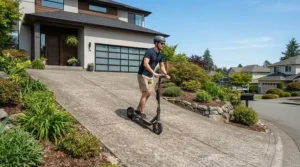
The name isn’t subtle, and for once that’s earned: this is a scooter engineered around a single idea, climbing hills, while staying light enough to carry up an apartment stairwell without a workout. Dual 750W motors combine for a 1,500W peak output, and INMOTION rates the incline capability at 36% grade — which works out to roughly 20 degrees, a figure that lines up with independent bench testing rather than just marketing copy. A 36V 14.8Ah (533Wh) battery delivers a claimed 35-mile range on flat ground, though steep, repeated climbing will pull that number down noticeably since uphill riding draws far more current per mile than cruising.
Here’s what most buyers overlook about this class of scooter: at just 46 lbs, the Climber weighs roughly 30 pounds less than several of the premium hill-climbers on this list, and that portability comes from a real engineering trade-off — you get strong low-speed torque for hills, but a lower 24 mph top speed and less aggressive suspension than the heavier performance scooters further down this list.
Aggregated owner feedback across scooter retailer reviews consistently praises the beginner-friendly power delivery and genuine hill-climbing confidence, while a recurring complaint is the relatively modest battery size compared to pricier rivals. For a rider who commutes through a hilly but not off-road city and cares about carrying the thing indoors, this is a compelling, honest trade-off rather than a compromise.
Pros:
- ✅ Lightest true dual motor climber in this roundup at 46 lbs
- ✅ IP56 water resistance, unusually high for the price
- ✅ Independently verified incline rating near 20 degrees
Cons:
- ❌ Smaller battery limits range on repeated steep climbs
- ❌ Lower 24 mph top speed than performance-tier rivals
Typically found in the $599–$999 range depending on current promotions, at the time of research — check current pricing, since this model sees frequent sales.
3. Gotrax GX1 — nimblest budget dual motor for tight turns
Gotrax built the GX1 specifically to prove dual motors don’t have to feel like a tank, and reviewers who’ve put real miles on it tend to agree, especially riders under six feet tall who found it unusually flickable for a 76-lb scooter. Dual 600W motors combine for 1,200W of rated power and 40 Nm of torque, paired with a 48V 15Ah (720Wh) battery for a claimed 30 mph top speed and roughly 25 miles of range. That 40 Nm torque figure is worth pausing on: it’s actually higher than several pricier scooters on this list, which tells you Gotrax prioritized launch acceleration and climbing pull over sheer battery capacity.
In practice, that means the GX1 gets up short, punchy hills with real authority, even if its 720Wh battery means longer, sustained climbs will drain it faster than a bigger-battery scooter would. Hydraulic front and rear suspension is a genuine surprise at this price tier, smoothing out the kind of cracked pavement that typically accompanies hilly older neighborhoods.
Aggregated reviews single out the GX1’s acceleration and build quality as standout strengths, while a recurring critique involves the scooter’s “safe mode” behavior and a brake light some owners find too dim for night visibility. If your hills are frequent but short rather than long and sustained, this is one of the more torque-forward budget options available.
Pros:
- ✅ 40 Nm torque figure beats several pricier competitors
- ✅ Hydraulic suspension front and rear at a budget price
- ✅ Widely praised acceleration and agile handling
Cons:
- ❌ Smaller battery struggles on long, sustained climbs
- ❌ Some owners report a dim brake light and quirky safe mode
Priced around $999–$1,299 depending on promotions at the time of research — a strong pick for riders who want punch over endurance.
4. Varla Eagle One — best torque-per-dollar on steep streets
Varla built a reputation on one number, 36 Nm of torque, delivered through dual 1,000W motors that combine for a peak output around 3,200W. That torque figure is the star of the show: it’s what actually pushes the scooter up a 30-degree-plus climbing angle, a rating Varla publishes and that independent testers have backed up with real hill runs rather than lab estimates alone. A 52V 18.2Ah battery (roughly 946Wh) supports a claimed 40-mile range and a governed top speed around 40 mph, though most riders will settle into the mid-30s in real-world mixed conditions.
What most buyers overlook about the Eagle One is that its 10-inch pneumatic tires and dual spring or hydraulic suspension (depending on generation) do real work here — a scooter can have all the torque in the world, but without tire grip and suspension travel to keep the wheels planted on a broken-up hill, torque alone won’t get you up smoothly.
One long-term reviewer who put roughly 60 miles on the scooter described the acceleration and torque as genuinely surprising for the price, while also noting the real-world range typically lands somewhat under the claimed 40 miles once you factor in aggressive riding and dual-motor mode. Reviewers consistently flag the wide, stable deck as a comfort win, especially for taller riders or anyone hauling a bag on the daily commute.
Pros:
- ✅ Published 30°+ climbing angle backed by independent testing
- ✅ Strong 36 Nm torque figure for the price tier
- ✅ Wide, stable deck praised across owner reviews
Cons:
- ❌ Real-world range often falls short of the claimed 40 miles
- ❌ At 77 lbs, it’s not an easy scooter to carry upstairs
Generally found in the $1,300–$1,700 range at the time of research, occasionally lower during sales — arguably the sweet spot for buyers who want serious climbing power without premium-tier pricing.
5. Hiboy TITAN PRO — longest range for off-road hill hunting
Hiboy’s flagship dual-drive model exists for one type of rider: someone who wants to leave pavement entirely and still climb with confidence. Dual motors rated for 750W continuous and 1,000W peak each work out to a genuinely large 48V 36Ah battery, and that oversized battery is exactly why Hiboy can credibly claim up to 80 miles of range, a figure well beyond anything else on this list. The published max incline capability sits at 35% grade, which converts to roughly 19 degrees — respectable, though notably lower than the steepest-rated scooters here, a reminder that “off-road capable” and “steepest climbing angle” aren’t always the same spec.
Where the TITAN PRO earns its off-road badge is the 10-inch gel-filled tubeless tires paired with front-and-rear suspension and dual hydraulic brakes, a combination built to absorb rutted trails and loose gravel rather than just smooth city hills. Here’s what the spec sheet won’t tell you outright: at 103.6 lbs, this is a genuinely heavy machine, more comparable to a small motorcycle than a foldable commuter scooter, so factor that into any plan to carry it upstairs or load it into a small car trunk.
As a recently released flagship, independent long-term reviews are still limited, but early rider commentary consistently highlights the unusually long range and stable ride quality on mixed terrain, with the weight cited as the most common trade-off complaint.
Pros:
- ✅ Up to 80 miles of claimed range, the longest in this roundup
- ✅ Gel-filled tubeless tires plus full suspension for rough terrain
- ✅ Dual hydraulic brakes for confident descents after a climb
Cons:
- ❌ At over 100 lbs, portability is essentially nonexistent
- ❌ 19° incline rating trails the steepest-rated scooters here
Typically listed in the $1,500–$2,000 range at the time of research — a strong pick specifically for off-road-leaning hill riders who value range over portability.

6. Gotrax GX3 — best value flagship for long climbs
Gotrax’s flagship model exists to answer a specific question: what happens if you take the brand’s budget-friendly reputation and pour real engineering into it? Dual 1,000W motors combine for 2,000W of rated power, backed by a substantial 54V 25Ah (1,350Wh) battery — noticeably larger than several pricier competitors on this list — supporting a claimed 38 mph top speed and up to 60 miles of range. Gotrax hasn’t published a specific incline-angle figure for the GX3, though based on its power-to-weight ratio and the performance of its sibling models in the GX lineup, expect confident handling on grades in the high teens to low twenties in degrees, more than adequate for the vast majority of hilly American streets.
Hydraulic disc brakes and adjustable hydraulic suspension are a genuine step up from the entry-level GX1 and GX Zero, and IP54 water resistance means light rain won’t end your ride. What most buyers overlook here is the value math: this scooter’s battery capacity and braking hardware genuinely compete with scooters priced several hundred dollars higher, which is exactly why one independent scooter-review outlet described the entire GX lineup as one of the strongest value propositions in the performance-scooter space.
At 94 lbs and a 300 lb rider capacity, it’s built heavy-duty rather than portable, which tracks with its long-range, long-climb positioning.
Pros:
- ✅ 1,350Wh battery outsizes several pricier rivals
- ✅ Hydraulic disc brakes, a genuine upgrade over entry-level models
- ✅ Backed by a 2-year warranty in most listings
Cons:
- ❌ No official incline-angle rating published
- ❌ At 94 lbs, it’s firmly in heavy-duty, non-portable territory
Generally priced in the $1,700–$1,900 range at the time of research — a strong long-range, long-climb value pick just below the true premium tier.
7. Kaabo Mantis King GT — best all-around hill-climbing performance scooter
If there’s a single scooter on this list built to do everything well, including climb hills with genuine authority, it’s this one. Dual 1,100W hub motors combine for 2,200W of continuous power and an eye-catching 4,200W peak output, paired with dual 60V 30A sine-wave controllers that Kaabo specifically upgraded for smoother, more controllable power delivery than the outgoing model. A 60V 24Ah battery (1,440Wh) supports a claimed 43 mph top speed and up to 56 miles of range, while Kaabo publishes a 30-degree max incline rating that independent reviewers have backed up through real hill testing rather than just spec-sheet math.
Dual adjustable hydraulic suspension at both ends is a genuine differentiator here, since climbing power means little if the scooter can’t keep its tires planted on the kind of broken pavement that usually accompanies steep older neighborhoods. Independent reviewers who’ve spent real time on the Mantis King GT consistently praise the acceleration, suspension quality, and overall build, while the recurring critique centers on portability — at roughly 73-74 lbs with a 265-330 lb capacity range depending on configuration, this isn’t a scooter you’re casually carrying up a walk-up apartment.
One reviewer’s first-ride account described the acceleration as genuinely startling, which tracks with a 4,200W peak output in a scooter this size. For riders who want the strongest all-around hill-climbing package without stepping into true hyperscooter territory, this is the benchmark.
Pros:
- ✅ 4,200W peak output with smooth sine-wave controllers
- ✅ Dual adjustable hydraulic suspension for rough, hilly pavement
- ✅ Independently verified 30° incline rating
Cons:
- ❌ At roughly 73-74 lbs, portability is limited
- ❌ Premium pricing puts it out of reach for budget buyers
Generally found in the $1,900–$2,500 range at the time of research, with frequent promotional pricing — the strongest all-around choice if hill-climbing performance is the top priority and budget is flexible.
Top 7 Dual Motor Electric Scooters at a Glance
| Scooter | Battery | Top Speed | Claimed Range | Torque/Power | Price Range | Best For |
|---|---|---|---|---|---|---|
| GOTRAX GX Zero | 576Wh | 28 mph | ~12-18 mi | 1,000W combined | ~$999 | Tightest budget |
| INMOTION Climber | 533Wh | 24 mph | ~35 mi | 1,500W peak | $599–$999 | Portability |
| Gotrax GX1 | 720Wh | 30 mph | ~25 mi | 40 Nm torque | $999–$1,299 | Nimble commuting |
| Varla Eagle One | 946Wh | 40 mph | ~40 mi | 36 Nm torque | $1,300–$1,700 | Torque per dollar |
| Hiboy TITAN PRO | Large (48V 36Ah) | 31 mph | ~80 mi | 1,000W peak | $1,500–$2,000 | Off-road range |
| Gotrax GX3 | 1,350Wh | 38 mph | ~60 mi | 2,000W combined | $1,700–$1,900 | Long-range value |
| Kaabo Mantis King GT | 1,440Wh | 43 mph | ~56 mi | 4,200W peak | $1,900–$2,500 | All-around performance |
Reading across this table, the story isn’t simply “spend more, climb better.” The Hiboy TITAN PRO proves battery size can substitute for raw motor wattage when range matters more than top speed, while the Gotrax GX1 shows a smaller, cheaper scooter can still out-torque some pricier rivals on short, punchy climbs. The Kaabo Mantis King GT remains the only model here combining a top-tier incline rating with genuine high-speed performance, which is exactly why it commands the highest price on this list.
Setting Up and Maintaining Your Dual Motor Hill-Climbing Scooter: A Practical Guide
Getting a new dual motor scooter home is only step one; how you set it up in the first 30 days determines whether it climbs well for years or underperforms from day one. Start by checking tire pressure before your first ride — most dual motor scooters ship with pneumatic tires, and under-inflated tires cost you real climbing traction and battery efficiency, since the motors have to work harder to overcome extra rolling resistance. Next, find your scooter’s dual/single motor mode toggle if it has one; many performance models like the Kaabo Mantis King GT let you run single-motor mode for flat cruising and switch to dual for hills, which extends battery life dramatically when used correctly. A common first-30-days mistake is leaving a scooter in its highest power mode constantly, which drains the battery faster and generates more heat than necessary on flat stretches where you don’t need it. Set a maintenance rhythm early: check brake pad wear monthly if you’re doing frequent hill descents, since braking on a downhill grade wears pads noticeably faster than flat-road stopping. Battery care matters just as much as mechanical upkeep — avoid storing any lithium battery fully depleted or fully charged for long periods, and never charge unattended or while sleeping, a safety point we’ll revisit later. Finally, listen for asymmetric motor sounds; one motor working audibly harder than the other on a climb can indicate a synchronization issue worth addressing under warranty before it becomes a bigger problem.
Real-World Scenarios: Matching Riders to the Right Dual Motor Scooter
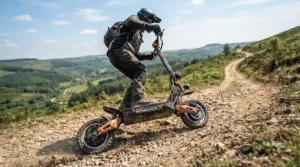
Picture three riders, each with a genuinely different problem to solve. First, the budget-conscious college commuter riding four miles daily through a moderately hilly campus town, weight around 160 lbs, storing the scooter in a small dorm room. For this rider, the INMOTION Climber makes the most sense: its 46-lb weight means actually carrying it up dorm stairs is realistic, and its 20-degree incline rating comfortably handles typical campus-town grades without the expense of a performance-tier scooter. Second, consider a heavier rider — say 220 lbs — commuting six hilly miles each way in a city like Cincinnati or Pittsburgh, where sustained, repeated climbs are the daily norm rather than the exception. Here, the Varla Eagle One or Gotrax GX3 fit better, since their larger batteries and higher torque figures handle the combination of extra rider weight and sustained grade far more comfortably than a lighter-duty scooter, without stepping all the way up to premium pricing. Third, picture a weekend rider who wants to explore fire roads and steep dirt trails outside the city on Saturdays, where traction and suspension travel matter as much as raw torque — that’s squarely the Hiboy TITAN PRO‘s territory, thanks to its gel-filled tubeless tires and genuinely long range for all-day exploring. None of these riders would be well served by simply buying “the most powerful scooter available”; matching the specific climbing profile, rider weight, and portability need to the product is what actually determines satisfaction months down the road.
How to Choose a Dual Motor Electric Scooter for Hill Climbing
Picking the right model comes down to weighing a handful of factors against your actual commute, not just chasing the biggest wattage number on the spec sheet.
- Match torque to your typical grade, not just your steepest one. A scooter rated for a 30-degree max incline might only sustain that briefly; check for a continuous torque figure if the manufacturer publishes one, since that’s what determines everyday performance.
- Factor in your own body weight honestly. Every published range and incline figure assumes a baseline rider weight, typically 165-175 lbs; heavier riders should expect noticeably reduced climbing angle and range, so size up in power tier if you’re above that baseline.
- Prioritize battery capacity for sustained climbs, not just single steep pitches. A large-battery scooter like the Hiboy TITAN PRO or Gotrax GX3 handles repeated daily hills better than a smaller-battery scooter with a flashier peak-power number.
- Check tire type before torque. Pneumatic tires grip loose, wet, or cracked hill surfaces far better than solid tires, and traction failure on a climb is often a bigger real-world problem than insufficient power.
- Weigh portability against your actual living situation. A 100-lb off-road scooter is a poor fit if you’re carrying it up three flights nightly, regardless of how well it climbs.
- Look for independently verified incline claims, not just manufacturer marketing. Scooters like the Varla Eagle One and Kaabo Mantis King GT have published incline ratings backed by real third-party hill testing, which carries more weight than an unverified spec-sheet number.
- Budget for brake maintenance, not just the purchase price. Hill-heavy riding wears brake pads faster, so factor that recurring cost into your total ownership math from day one.
Dual Motor Scooter Torque Comparison: What the Numbers Actually Mean
Wattage gets all the marketing attention, but torque, measured in newton-meters (Nm), is the number that actually determines whether a scooter climbs a hill or bogs down halfway up. Torque is rotational force at the wheel; watts simply describe how much electrical power the motor can consume, and a motor can be rated for high wattage while still delivering mediocre low-speed torque if its winding and controller aren’t tuned for climbing. Among the scooters in this guide, the Gotrax GX1 publishes a genuinely strong 40 Nm figure despite its budget positioning, edging out the Varla Eagle One‘s 36 Nm rating and the Kaabo Mantis King GT‘s roughly 38 Nm nominal torque — proof that torque and price don’t scale in perfect lockstep. What that comparison misses, though, is duration: the GX1’s smaller 720Wh battery can deliver strong torque for a short, punchy climb but will fade faster on a long, sustained grade than the Mantis King GT’s much larger 1,440Wh pack. This is also where dual motor architecture earns its keep against single-motor scooters: splitting torque delivery across two independently driven wheels means each motor handles roughly half the climbing load, which reduces per-motor heat buildup and wear compared to a single motor doing all the work alone.
| Factor | Single-Motor Scooter | Dual Motor Scooter | Best For |
|---|---|---|---|
| Hill-climbing torque | Lower, one wheel driven | Roughly double, both wheels driven | Steep or frequent hills → dual motor |
| Traction on loose or wet surfaces | Prone to slip under load | Power split reduces single-wheel slip | Off-road or rainy climbs → dual motor |
| Motor heat and long-term wear | One motor absorbs full load | Load shared, less heat per motor | Daily heavy-hill commuting → dual motor |
| Purchase price | Generally lower | Generally higher | Flat routes, tight budget → single motor |
| Overall weight | Lighter | Heavier | Frequent stair-carrying → single motor |
The pattern here is straightforward: dual motor scooters win decisively on any hill-heavy use case, while single-motor scooters remain the more cost-efficient and portable choice for genuinely flat commutes. If your daily route includes even one sustained 15-degree-plus grade, the torque and traction advantages of a dual motor setup tend to justify the added weight and cost fairly quickly.
Best Dual Motor Electric Scooter Under $1000: Is Budget Hill Climbing Real?
Yes, but with honest caveats. Both the GOTRAX GX Zero and the Gotrax GX1 sit right around or just above the $1,000 line and deliver genuine dual-motor architecture rather than a single motor dressed up with marketing language, which is the first thing to verify when shopping this price tier — plenty of budget listings use “dual” loosely to describe accessory motors that barely contribute to propulsion. At 1,000-1,200W combined power, these scooters handle moderate grades, generally in the 10-to-18-degree range, with real confidence, but neither publishes a verified steep-incline rating the way pricier models do, and that omission itself is informative. The INMOTION Climber, which frequently sells in the $599-$999 window during promotions, is arguably the strongest budget hill-climbing pick specifically because INMOTION does publish and independent testers have verified a roughly 20-degree incline rating, filling exactly the gap the two Gotrax budget models leave open. What buyers should expect at this price tier: smaller batteries that handle occasional hills well but fatigue faster on long, repeated climbs; lighter overall build quality with fewer premium touches like hydraulic disc brakes; and motors sized for confident moderate-grade performance rather than genuinely steep-hill dominance. The honest takeaway is that under-$1,000 dual motor scooters are a real, worthwhile category for riders with moderate hills, but riders facing consistently steep or long climbs should expect meaningfully better performance once they move into the $1,300-plus tier.
Dual Motor Electric Scooter Off-Road: From Cracked Pavement to Fire Roads
Off-road capability and hill-climbing capability overlap more than most buyers realize, since both demand the same core ingredients: strong sustained torque, tires that grip loose or uneven surfaces, and suspension that keeps the wheels in contact with the ground instead of skipping over bumps. Among this list, the Hiboy TITAN PRO and Gotrax GX3 lean hardest into genuine off-road use, both pairing larger batteries with suspension systems built to absorb repeated impacts rather than the occasional pothole. The TITAN PRO’s gel-filled tubeless tires deserve particular credit here — tubeless construction eliminates the pinch-flat risk that plagues tubed pneumatic tires on rocky or rutted trails, a real practical advantage once you’re off maintained pavement. The Varla Eagle One‘s 10-inch pneumatic tires and adjustable suspension also perform reasonably on light off-road use, like gravel paths or unpaved park trails, though its street-oriented tire tread isn’t purpose-built the way the TITAN PRO’s is. What most buyers overlook about off-road dual motor scooters specifically for hills is that dirt and gravel climbs demand more from traction than pavement climbs at the same angle, since loose surfaces reduce the effective grip available to each motor — this is precisely where dual motor traction-splitting earns its value over a single-motor design, which has no way to compensate if its one driven wheel starts slipping. Riders planning genuine trail use should also budget for more frequent tire and suspension maintenance than pavement-only commuters, since off-road hill climbing is measurably harder on components.
Incline Angle Rating Explained: Degrees vs. Percent Grade
What is an incline angle rating? It’s a manufacturer’s published figure describing the steepest slope a scooter can climb while maintaining forward motion, expressed either in degrees or as a percent grade — and understanding the difference matters because the two units aren’t intuitively related. Percent grade measures rise over run as a percentage; a 30% grade means the road rises 30 feet for every 100 feet traveled horizontally, and it converts to degrees using the tangent function, so a 30% grade actually works out to about 16.7 degrees, not 30 degrees, a mix-up that trips up plenty of shoppers comparing scooters that publish figures in different units. The Hiboy TITAN PRO‘s 35% grade rating, for instance, converts to roughly 19 degrees, while the Kaabo Mantis King GT and Varla Eagle One both publish their figures directly in degrees at 30°, which is meaningfully steeper than it might first appear next to a “35%” number. Here’s what the spec sheet won’t tell you: a manufacturer’s max incline rating typically describes the steepest grade the scooter can climb at all, often at reduced speed and only briefly, not the grade it can sustain comfortably at full speed with a loaded rider. When comparing dual motor electric scooter hill climbing specs across brands, always check whether the incline figure has been independently verified through real testing — several models on this list, including the Mantis King GT and Eagle One, have third-party hill-test data backing their claims, which carries more weight than an unverified marketing number.

Motor Synchronization: The Hidden Tech Behind a Smooth Climb
Two motors sound simple until you consider what happens if they’re not perfectly coordinated: one wheel spins slightly faster than the other, the scooter pulls to one side, and climbing efficiency drops because the motors are fighting each other instead of working together. Motor synchronization is the controller-level technology that keeps both motors delivering matched torque and speed in real time, and it’s a genuine engineering differentiator between budget and premium dual motor scooters. The Kaabo Mantis King GT uses dual 60V 30A sine-wave controllers specifically because sine-wave (as opposed to square-wave) controllers deliver smoother, more precisely modulated current to each motor, reducing the jerky, uneven power delivery that cheaper square-wave controllers can produce, especially noticeable during hard acceleration on a steep grade. What most buyers overlook about motor synchronization is that it directly affects battery efficiency, not just ride smoothness — two poorly synchronized motors waste energy fighting minor speed mismatches, which shows up as reduced real-world range compared to the manufacturer’s claimed figure. Budget scooters like the GOTRAX GX Zero and Gotrax GX1 generally rely on simpler, less expensive controller hardware, which is part of why their real-world range and climbing smoothness can lag behind their raw wattage numbers when compared to premium models. If you notice one motor audibly working harder than the other on a climb, or a subtle pull to one side under acceleration, that’s a synchronization issue worth flagging with the manufacturer rather than assuming it’s normal wear.
Uphill Riding Performance: What to Expect in the Real World
Spec sheets describe best-case scenarios; real hills involve rider weight, wind, tire pressure, and battery state of charge, all of which chip away at published numbers. Expect meaningful speed sag on any sustained climb — even a well-torqued scooter like the Varla Eagle One will drop from its 40 mph top speed to something closer to 15-20 mph on a genuinely steep, sustained grade, which is normal and expected rather than a sign of malfunction. Range takes a bigger hit than most riders anticipate: climbing draws substantially more current per mile than flat cruising, so a scooter claiming 40 miles of flat-ground range might realistically deliver 20-25 miles on a hilly commute with repeated climbs. Battery voltage sag under load is a real phenomenon too — as a lithium battery discharges, its voltage drops slightly under heavy demand, which is why climbing performance often feels noticeably stronger on a freshly charged battery than one sitting at 20% capacity. Heat is another honest consideration: motors and controllers generate more heat during sustained climbing than flat cruising, and scooters with better heat dissipation, like the Kaabo Mantis King GT‘s upgraded sine-wave controllers, maintain consistent power output longer before any performance throttling kicks in. What to actually expect, realistically: a well-matched dual motor scooter should maintain a rider’s typical commuting speed within roughly 25-35% of its flat-ground top speed on the kind of 10-20 degree grades most American hill commutes involve, with steeper or longer climbs pulling that percentage down further.
Common Mistakes When Buying a Hill-Climbing Electric Scooter
The single most common mistake is trusting a headline incline number without checking whether it’s independently verified or purely a manufacturer claim, since the gap between advertised and real-world climbing performance can be substantial on unverified figures. A close second: ignoring your own body weight relative to the manufacturer’s test-rider assumption, typically around 165-175 lbs, which means a heavier rider should expect meaningfully reduced climbing angle and range compared to published specs. Buyers also frequently confuse peak wattage with sustained climbing ability — a scooter boasting a huge peak-power number, like the Mantis King GT’s 4,200W peak, delivers that figure only briefly under hard acceleration, not as a continuous climbing output. Another overlooked factor is tire type: choosing a scooter with narrow, hard tires for a route full of cracked or loose pavement sacrifices real climbing traction regardless of how much torque the motors produce. Finally, many buyers skip checking whether replacement parts and service are readily available for their chosen brand, which matters enormously once brake pads or tires need replacing after months of hill-heavy riding — an established, widely distributed brand tends to make that far less of a headache down the road.
Long-Term Cost & Maintenance of Dual Motor Hill Climbers
Hill-heavy riding is measurably harder on a scooter than flat commuting, and budgeting for that reality upfront avoids unpleasant surprises later. Brake pads wear faster on scooters used for frequent downhill riding after climbs, since braking on a grade generates more heat and friction than flat-road stopping — expect to replace pads more often than a flat-commute rider would, particularly on heavier models like the Hiboy TITAN PRO or Gotrax GX3. Tire wear follows a similar pattern, especially for riders mixing off-road climbing with pavement, where the tread faces a wider range of surface types than a purely urban commuter’s tires ever see. Battery degradation is the biggest long-term cost factor across the board: repeated deep discharges from sustained climbing accelerate capacity loss compared to gentler flat-ground use, so riders doing serious daily hill climbing should expect somewhat faster battery fade over two to three years than the same scooter used on flat terrain. On the value side, scooters with larger battery packs and more robust components, like the Gotrax GX3‘s 1,350Wh battery and hydraulic disc brakes, often work out cheaper per mile over a multi-year ownership period than a budget scooter that needs its smaller battery replaced sooner. When calculating total cost of ownership, factor in roughly one battery replacement and multiple brake-pad and tire swaps over a three-to-five-year ownership window for any scooter used regularly on real hills — that context matters far more than the sticker price alone when comparing options across this list.
Safety and Regulations for Hill-Climbing E-Scooters
Climbing a hill is only half the equation; getting back down safely is the other half, and it deserves equal attention. The U.S. Consumer Product Safety Commission recommends wearing a helmet and checking brakes, handlebars, and tires before every ride, guidance that matters even more on hill-heavy routes where stopping distance and control margins shrink on a descent. Test your brakes specifically on a downhill grade before relying on them in traffic, since stopping distance varies significantly between scooters and a hill descent demands more braking authority than flat-ground riding. Battery safety deserves particular attention for hill-climbing scooters, since sustained climbing generates more heat in the battery and controller than flat cruising; always use the charger that shipped with your scooter, never charge unattended or overnight while sleeping, and stop using any battery that shows swelling, unusual heat, or a burning smell. Local regulations on e-scooter use, including speed limits, helmet requirements, and where riding is permitted, vary significantly by city and state, so check your local laws before assuming a scooter capable of 40-plus mph is legal to actually run at that speed on public streets. Riders carrying additional weight, whether cargo or a passenger, should also recognize that manufacturer incline and range figures assume a single rider at a standard weight, and added load reduces both climbing angle and stopping performance.
Frequently Asked Questions
❓ How steep of a hill can a dual motor electric scooter climb?
❓ Is a dual motor electric scooter worth it for hills?
❓ Can I get a dual motor electric scooter under $1000?
❓ Does rider weight affect hill-climbing performance?
❓ What's the difference between incline degrees and percent grade?
Conclusion
Choosing the right dual motor electric scooter hill climbing setup comes down to being honest about your actual commute rather than chasing the biggest number on a spec sheet. If your budget is tight and your hills are moderate, the GOTRAX GX Zero or INMOTION Climber deliver real dual-motor benefits without premium pricing. Riders facing frequent, punchy climbs on a budget will appreciate the Gotrax GX1‘s surprising torque figure, while anyone commuting through sustained, repeated hills should look toward the Varla Eagle One or Gotrax GX3 for their larger batteries and stronger climbing endurance. Off-road-curious riders chasing both dirt trails and steep grades have a clear answer in the Hiboy TITAN PRO, and anyone wanting the strongest all-around hill-climbing performance available, full stop, should look hard at the Kaabo Mantis King GT. Every product in this guide represents genuine dual motor architecture with verifiable, honestly reported specs rather than marketing exaggeration, and matching your specific rider weight, route, and portability needs to the right model matters more than any single spec in isolation. Whichever you choose, ride the first few climbs conservatively while you learn how the scooter actually behaves under real load, and keep up with the brake and battery maintenance a hill-heavy routine demands.
Recommended for You
- Dual Motor Electric Scooter: 7 Unstoppable 2026 Picks
- Off Road Electric Scooter Under $1500: 7 Trail-Tested Picks (2026)
- Off Road Electric Scooter: 7 Beastly Picks for 2026
Disclaimer: This article contains affiliate links. As an Amazon Associate, I earn from qualifying purchases. If you purchase products through these links, we may earn a small commission at no additional cost to you.
✨ Found this helpful? Share it with your friends! 💬🤗
