In This Article
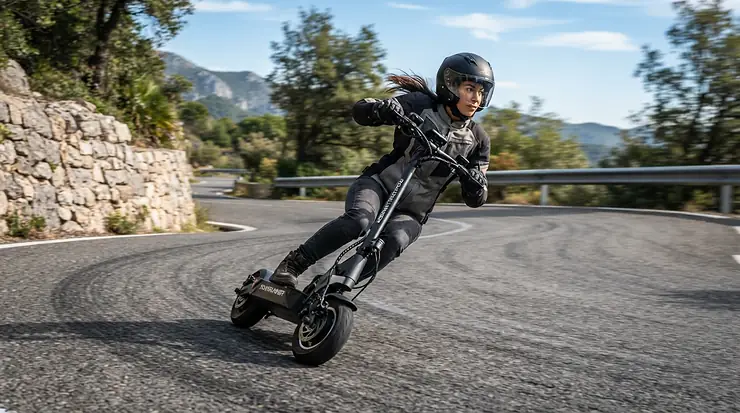
Let’s be honest about why you’re here: you don’t want a scooter that “gets you to work eventually.” You want something that yanks your arms when you twist the throttle, something that makes your neighbors do a double-take. A racing electric scooter isn’t a lifestyle accessory — it’s closer to a two-wheeled dragster you can fold up and stick in a closet. What is a racing electric scooter, exactly? It’s a purpose-built performance scooter — dual or high-output single motors, 45-65+ mph capability, hydraulic brakes, and real suspension — engineered for closed-course speed rather than gentle commuting.
That distinction matters more than marketing copy suggests. Most “performance” scooters sold online are really just commuter scooters wearing a spoiler. A genuine electric scooter for racing has to survive sustained full-throttle runs, hard braking at 40+ mph, and the kind of heat buildup that would cook a cheaper hub motor. According to the U.S. Consumer Product Safety Commission, micromobility injuries have climbed sharply as ridership and top speeds increase, which is exactly why picking the right machine — and gearing up properly — actually matters here, not just for bragging rights.
In this guide, we’ve researched seven real, currently available models spanning budget, mid-range, and flagship territory, broken down what their specs actually mean on pavement, and built out the practical side: setup, gear, mods, and where you’re legally allowed to open the throttle. No invented reviews, no fantasy pricing — just what’s real and what it means for you.
Quick Comparison Table
| Scooter | Top Speed | Motor Power | Price Range | Best For |
|---|---|---|---|---|
| Teewing GT4 | ~43.5 mph | 2,400W peak (single) | Under $1,000 | Budget speed seekers |
| Varla Eagle One V2.0 | ~40 mph | 3,200W peak (dual) | $1,600-$2,000 range | Hill-climbing on a budget |
| Apollo Ghost | ~38 mph | 1,600W nominal (dual) | Around $1,500 | Lightest, most flickable |
| Apollo Phantom V3 | ~41 mph | 2,400W nominal (dual) | $2,100-$2,300 range | Smoothest track-day power |
| Kaabo Wolf King GTR | ~65 mph | 4,000W nominal (dual) | Around $4,000 | Stability at triple digits (km/h) |
| Dualtron Thunder 3 | ~62 mph | 11,000W peak (dual) | $4,500-$4,900 range | Endurance-run range |
| Nami Burn-E3 Max | ~60-61 mph | 8,400W peak (dual) | $4,900-$5,300 range | Ultimate track-only speed |
Looking at the spread above, there’s a clean line between “fast for the money” and “fast, period.” The Teewing GT4 and Varla Eagle One V2.0 prove you don’t need dual motors to break 40 mph, but the Kaabo Wolf King GTR, Dualtron Thunder 3, and Nami Burn-E3 Max occupy a different universe entirely — one where top speed starts flirting with small motorcycles. Budget buyers should note that jumping from the sub-$1,000 tier to the $4,000+ tier roughly triples your top speed but also triples your braking distance requirements, which is why gear and track choice (covered further down) matter just as much as the spec sheet.
Just one click — help others make better buying decisions too!😊
Top 7 Racing Electric Scooters: Expert Analysis
1. Teewing GT4 — fastest budget pick under $1,000
The Teewing GT4 proves that you don’t need a four-figure budget to touch 40+ mph, and that alone makes it worth a closer look. Its 1,500W nominal (2,400W peak) rear hub motor is paired with a 60V 20Ah battery, and independent testing clocked it around 42.3 mph — remarkably close to its claimed 43.5 mph ceiling. That gap matters: a lot of budget scooters wildly oversell their top speed, and the fact that the GT4 gets within a couple of miles per hour of its claim tells you the motor and controller aren’t just marketing theater.
Based on the spec comparison, the Teewing GT4 is a smart entry point for a rider who wants to feel real acceleration before committing to a $3,000+ flagship. Its single-motor layout means less raw torque than the dual-motor scooters further down this list, so hill starts and quick overtakes won’t feel as violent, but for flat, open pavement or a private lot, it delivers a shockingly quick 0-15 mph in under three seconds. What most buyers overlook about single-motor performance scooters like this one is that they run cooler under sustained speed than a similarly priced dual-motor unit, simply because there’s one motor doing the work instead of two sharing (and generating) the heat load.
Reviewers consistently note that the mechanical disc brakes, while adequate, are the weakest link in an otherwise strong package — hydraulic brakes only start appearing once you’re spending $1,500+. A common complaint in user reviews is that real-world range lands closer to 34 miles rather than the claimed 43.5, which is a normal and expected gap once you actually use the top speed instead of babying the throttle.
Pros:
- ✅ Genuinely tested top speed within 3% of the claimed number
- ✅ 11-inch tubeless tires add stability most budget scooters lack
- ✅ Front and rear suspension rare at this price point
Cons:
- ❌ Mechanical disc brakes, not hydraulic, limit stopping power
- ❌ Single motor means noticeably less torque on inclines
Priced under $1,000, the Teewing GT4 delivers one of the strongest speed-per-dollar ratios in this entire lineup — a smart first racing electric scooter for anyone unsure how much speed they actually want.
2. Varla Eagle One V2.0 — best hill-climbing torque on a budget
Where the Teewing GT4 goes fast in a straight line, the Varla Eagle One V2.0 goes fast almost anywhere, thanks to its dual 1,000W motors producing a combined 3,200W peak and 72Nm of torque. The 52V 20.8Ah battery pack is built into the deck rather than bolted underneath it, which lowers the center of gravity — something that matters enormously once you’re leaning into a corner at 35 mph.
Here’s what to weigh: the Eagle One V2.0’s claimed 40 mph top speed has been independently GPS-tested closer to 36 mph in real conditions, a gap you’ll see repeated across nearly every scooter in this price bracket once you account for rider weight and wind resistance. What the spec sheet won’t tell you, but reviewers note, is that the coil-spring front and rear suspension handles rough asphalt noticeably better than the Teewing’s simpler setup, which directly translates to more confident high-speed cornering. Reviewers consistently report climbing 25-30 degree grades without motor strain, a genuinely useful trait if your local track or test course has any elevation change at all.
Aggregated owner feedback also flags the NFC card start system as either loved or found mildly annoying depending on how often you’re getting on and off the scooter — not a dealbreaker, but worth knowing before you buy.
Pros:
- ✅ Dual motors deliver strong torque for hill starts and passing
- ✅ Battery integrated into the deck lowers center of gravity
- ✅ Adjustable coil suspension improves high-speed cornering feel
Cons:
- ❌ Real-world top speed runs several mph under the claimed 40 mph
- ❌ At roughly 65 lbs, it’s not an easy scooter to carry upstairs
In the $1,600-$2,000 range, the Varla Eagle One V2.0 earns its keep as the best value dual-motor entry point for riders who want confidence in corners as much as raw speed.
3. Apollo Ghost — lightest and most flickable racer
The Apollo Ghost sits deliberately below Apollo’s flagship Phantom line, and that’s exactly its appeal. With dual 800W motors producing roughly 1,600W of combined power, it won’t out-drag anything else on this list, but it’s noticeably lighter and more maneuverable than the heavyweight dual-motor scooters further up the price ladder. Based on the spec comparison, its lower weight means less rotational mass to control at speed, which is a real advantage for riders still building confidence at 30+ mph.
What most buyers overlook about lighter performance scooters is that acceleration feel often matters more than the raw number on the spec sheet — a scooter that hits 35 mph quickly and predictably can feel faster and more fun than one that technically tops out higher but takes forever to get there. Reviewers consistently describe the Ghost’s Turbo mode as a genuine step-change from its default setting, essentially giving riders two distinct personalities in one machine: a mellow commuter mode and an aggressive, hang-on performance mode.
A common complaint in user reviews is that the Ghost’s suspension, while present front and rear, is tuned softer than the Phantom’s, so high-speed direction changes transmit more body roll than serious track riders may want. For a first genuinely quick dual-motor scooter, though, it remains one of the more approachable options in this guide.
Pros:
- ✅ Significantly lighter than most dual-motor competitors here
- ✅ Turbo mode meaningfully changes the riding character
- ✅ More agile low-speed handling for tighter courses
Cons:
- ❌ Softer suspension tune limits high-speed cornering confidence
- ❌ Lower peak power than every other dual-motor scooter on this list
Around $1,500, the Apollo Ghost is the pick for riders who want dual-motor thrills without dual-motor bulk.
4. Apollo Phantom V3 — smoothest power delivery for track days
The Apollo Phantom V3 runs dual 52V motors rated at 2,400W nominal (roughly 3,200W peak) and reaches an RG-certified 40.7 mph in its unlocked “Ludo” mode. What sets it apart isn’t the number itself — plenty of scooters on this list go faster — it’s Apollo’s in-house MACH1 controller, which independent testers have credited with unusually smooth throttle response for a scooter under $2,500.
Based on the spec comparison, that smoothness is the whole point of this entry. A jerky throttle at 35 mph is how riders lose control, and the Phantom V3’s quad-suspension setup combined with its refined power delivery is exactly why it climbed a test hill nearly as fast as scooters costing twice as much, while never feeling twitchy doing it. What the spec sheet won’t tell you, but testers note, is that the companion app lets you fine-tune the acceleration curve itself, not just the top-end speed limit — a genuinely useful racing-adjacent feature most competitors don’t offer at this price.
Reviewers consistently point out that real-world range lands around 28-32 miles when you’re actually using Ludo mode rather than babying the throttle, noticeably less than its rated figure — a fair trade for the acceleration on tap. A common complaint is the roughly 77-pound curb weight, which is heavy for a scooter without a seat, though the tradeoff is stability at speed.
Pros:
- ✅ Unusually smooth, app-tunable throttle response for the price
- ✅ Quad suspension setup improves stability under hard cornering
- ✅ Strong hill-climb performance relative to price point
Cons:
- ❌ Real-world range drops noticeably once Ludo mode is engaged
- ❌ Heavy at roughly 77 lbs for a scooter without a seat
In the $2,100-$2,300 range, the Apollo Phantom V3 delivers the most track-ready throttle feel of any scooter under $2,500 in this guide.
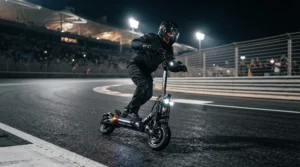
5. Kaabo Wolf King GTR — most stable at triple-digit (km/h) speeds
Now we’re in flagship territory. The Kaabo Wolf King GTR runs dual 2,000W BLDC hub motors (peaking near 13,440W combined) and an official top speed of roughly 65 mph, backed by a removable 72V battery pack rated in the 2,400-2,880 Wh range depending on configuration. Independent testers have clocked it in the high-50s to low-60s mph GPS-verified, which is close enough to the claim that the number isn’t pure fantasy.
Here’s what to weigh: raw top speed isn’t the GTR’s real selling point — its stability is. Motorcycle-grade front suspension paired with an 18-level adjustable rear shock, plus a reinforced forged aluminum frame, means Kaabo engineered this scooter specifically to stay planted at speeds where a lesser frame would start to wobble. Reviewers consistently describe zero speed wobble even above 50 mph, which is a genuinely rare claim in this category and one that matters enormously once you’re carrying real momentum into a corner.
What most buyers overlook about traction control on scooters is that it’s still a fairly new feature in this category, and the GTR was among the first mass-market scooters to include it — a meaningful safety upgrade when you’re putting over 4,000W of continuous power through two wheels on variable-grip pavement. A common complaint in user reviews is the roughly 63 kg (139 lb) curb weight, which effectively rules out carrying it up stairs solo, and the four-piston hydraulic brakes, while strong, need to be bled and serviced more frequently once you’re using them at their limits regularly.
Pros:
- ✅ Motorcycle-grade suspension keeps the ride planted past 50 mph
- ✅ Traction control is a rare and genuinely useful safety feature here
- ✅ Removable battery pack simplifies long-term maintenance
Cons:
- ❌ At roughly 139 lbs, it’s essentially immovable without a ramp or dolly
- ❌ Hydraulic brakes need more frequent servicing under hard use
Around $4,000, the Kaabo Wolf King GTR is the pick for riders who want flagship-level stability, not just a flagship-level number on the box.
6. Dualtron Thunder 3 — longest range flagship for endurance runs
The Dualtron Thunder 3 is arguably the most complete package on this list. Its dual motors (rated between 2,500W and 5,000W each depending on how Dualtron measures the figure) combine for an 11,000W peak output, an official 62+ mph top speed, and — this is the standout — a real 72V 40Ah battery capable of up to 100 miles of range. That range figure is what separates it from every other scooter here; the Wolf King GTR and Nami Burn-E3 Max both trade battery capacity for slightly higher peak numbers, while the Thunder 3 splits the difference.
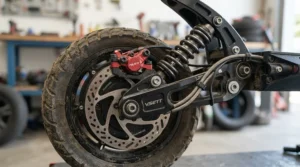
Based on the spec comparison, that range matters more than it sounds like on paper. A scooter that can only sustain top speed for a few minutes before you’re managing battery anxiety isn’t actually useful for extended track sessions or long endurance test runs; the Thunder 3’s larger pack means you can do multiple hot laps or a genuinely long private-road blast without immediately worrying about the trip home. Reviewers consistently praise the redesigned Nutt four-piston hydraulic brakes with 160mm rotors and integrated cooling, a meaningful upgrade over the previous Thunder generation’s braking, and one that matters enormously at these speeds — stopping power scales far less gracefully than acceleration does.
What the spec sheet won’t tell you, but owner reports suggest, is that the Thunder 3’s IPX5 water resistance rating is a genuine first for this power class, meaning light rain won’t end your riding day the way it would on most flagship-tier competitors. A common complaint is the roughly 113-pound curb weight combined with a 26-hour standard charge time (down to about 8 hours with the included fast charger), so budget for charging infrastructure, not just the scooter itself.
Pros:
- ✅ Longest real-world range of any scooter in this guide
- ✅ Upgraded four-piston hydraulic brakes with integrated cooling
- ✅ First in its power class with formal IPX5 water resistance
Cons:
- ❌ Standard charging takes roughly 26 hours without the fast charger
- ❌ At 113 lbs, it demands a vehicle or ramp to transport
In the $4,500-$4,900 range, the Dualtron Thunder 3 is the endurance champion of this list — built for riders who want sustained speed, not just a single quick burst of it.
7. Nami Burn-E3 Max — ultimate track-only speed machine
At the very top sits the Nami Burn-E3 Max, a scooter Nami built with essentially one goal: raw speed. Dual 1,500W motors produce a genuinely startling 8,400W peak output, propelling it to a manufacturer-unlockable top speed in the 60-61 mph range, backed by a 72V 40Ah battery good for roughly 62-90 miles depending on how aggressively you ride. Nami rates 0-25 mph in about three seconds, a figure that puts it in genuine motorcycle territory for straight-line acceleration.
Here’s what to weigh: this is explicitly not a commuter scooter that happens to be fast — it’s a track-and-private-road machine that happens to be street-legal in some jurisdictions. The single-piece, hand-welded aviation-grade aluminum frame exists specifically to survive the stress of repeated full-throttle runs without developing the fatigue cracks that plague lesser frames at this power level. Reviewers consistently highlight the adjustable steering damper, a feature borrowed straight from motorcycle design, which actively resists the speed wobble that becomes a real physical risk once you’re sustaining 55+ mph on two small wheels.
What most buyers overlook about a scooter in this tier is the ongoing cost of ownership: Nami dealer network support in North America is limited compared to Apollo or Kaabo, and a common complaint in user reviews is a roughly 45-day wait for new orders once popular configurations sell out. The hydraulic disc brakes and adjustable hydraulic coil suspension are genuinely excellent, but they’re also the components you’ll be replacing most often if you’re racing this thing regularly rather than babying it.
Pros:
- ✅ Class-leading acceleration with genuinely motorcycle-level thrust
- ✅ Adjustable steering damper actively fights high-speed wobble
- ✅ Hand-welded aviation-grade aluminum frame built for repeated abuse
Cons:
- ❌ Limited North American dealer and service network
- ❌ Order wait times can stretch to 45 days on popular configurations
In the $4,900-$5,300 range, the Nami Burn-E3 Max is the purest expression of “racing electric scooter” on this entire list — built for riders who have already decided speed is non-negotiable.
What Is a Racing Electric Scooter?
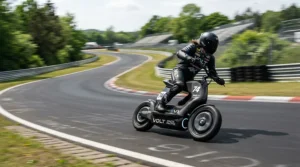
A racing electric scooter is a performance-focused e-scooter built with dual (or high-output single) motors, 40-65+ mph top speeds, hydraulic or high-grade mechanical brakes, and reinforced suspension, designed for closed courses and private roads rather than casual sidewalk commuting.
That definition matters because “racing” and “commuting” scooters increasingly look similar in marketing photos but behave completely differently under load. A commuter scooter is optimized for battery efficiency and comfort at 15-20 mph; a racing electric scooter, or competition electric scooter as some brands market it, is optimized for sustained high-output performance, which means beefier motor windings, larger-gauge wiring, bigger brake rotors, and controllers rated for far more continuous amperage. The trade-off is weight, price, and — often — reduced everyday practicality. As Wikipedia’s overview of electric motorcycles and scooters notes, the category spans everything from lightweight urban mobility devices to full motorcycle-class machines, and racing scooters sit deliberately at the aggressive end of that spectrum.
How to Choose a Racing Electric Scooter
Picking the right one isn’t just about the biggest number on the box. Work through these criteria in order:
- Decide where you’ll actually ride it. A closed track or private road opens up the whole list; if you’re limited to public roads, local speed and power caps may rule out the fastest options entirely.
- Match motor configuration to your terrain. Dual motors handle hills and rough pavement far better than single motors, even when the top speed numbers look similar on paper.
- Prioritize brakes over motor power. A scooter that accelerates hard but stops with mechanical discs is a liability at 40+ mph — hydraulic braking should be a hard requirement past that speed range.
- Weigh portability against performance. The fastest scooters here weigh 100+ pounds; if you need to carry it upstairs daily, that changes your realistic shortlist fast.
- Check real-world range, not the marketing figure. Every scooter in this guide loses 15-30% of its claimed range once you’re actually using top speed regularly.
- Confirm parts and service availability. A 5,000-watt scooter with no nearby service network turns a minor issue into a multi-week wait.
- Budget for gear and maintenance, not just the scooter. A genuinely fast electric scooter for racing needs a real helmet, pads, and a maintenance rhythm — treat that as part of the purchase, not an afterthought.
Racing Electric Scooters vs Commuter Electric Scooters
| Factor | Racing Electric Scooter | Commuter Electric Scooter |
|---|---|---|
| Typical top speed | 40-65+ mph | 15-25 mph |
| Motor configuration | Dual, high-output | Single, efficiency-tuned |
| Braking | Hydraulic discs standard | Mechanical disc or drum |
| Weight | 60-115+ lbs | 25-40 lbs |
| Best For | Track days, private roads | Daily commuting, portability |
The gap here isn’t subtle. A racing electric scooter trades portability and battery efficiency for raw output, while a commuter model is tuned for exactly the opposite priorities — light weight, easy folding, and enough range to get through a workday without hunting for an outlet. What most buyers overlook is that a racing scooter isn’t simply a “better” commuter scooter; riding a 100-pound, 60 mph machine to the office is genuinely impractical and, in most cities, not legal on public roads at all. Choose based on where and how you’ll actually ride, not just which spec sheet looks more impressive.
The Fastest Racing Electric Scooters: What Actually Determines Top Speed
Chasing the fastest racing electric scooter on paper is easy; understanding what actually produces that number is more useful. Three factors matter far more than the headline figure: voltage, controller amperage, and aerodynamics. A 72V system, like the ones in the Kaabo Wolf King GTR and Dualtron Thunder 3, simply has more electrical headroom to work with than a 52V or 60V setup, which is why nearly every scooter that breaks 55 mph on this list runs a 72V pack. Controller amperage — essentially how much current the electronics can safely push to the motors at once — is the other half of the equation; two identical motors on different controllers can produce noticeably different real-world acceleration.
Independent GPS testing consistently shows a gap between claimed and tested top speeds, usually in the 5-10% range, driven by rider weight, wind resistance, and road surface rather than any dishonesty on the manufacturer’s part. Electric drag racing at the extreme end of the sport — where purpose-built dragsters, not consumer scooters, chase record elapsed times — shows just how far voltage and controller engineering can be pushed; the Wikipedia entry on electric drag racing documents record runs well above 200 mph, a useful reminder that consumer racing scooters are still operating conservatively compared to what electric propulsion is actually capable of.
Common Mistakes When Buying a Competition Electric Scooter
Even experienced riders make avoidable mistakes shopping for a competition electric scooter. The most common one is chasing the top speed number without checking the braking hardware that comes with it — a 60 mph scooter with mechanical brakes is a genuinely dangerous mismatch. The second is underestimating weight: riders regularly buy a 100+ pound flagship scooter without a realistic plan for transporting it, then discover it effectively lives in one location.
A third mistake is ignoring battery chemistry and charge time; a scooter that takes 26 hours to charge on the stock charger needs a fast-charger budgeted in from day one, not added later as an afterthought. Finally, plenty of buyers skip checking local regulations entirely, assuming a scooter marketed for “off-road” or “private property” use is automatically legal wherever they plan to ride it — it usually isn’t, and that assumption is the single most common regret we found across owner forums and review threads.
Track Riding Gear: What You Actually Need Before You Twist the Throttle
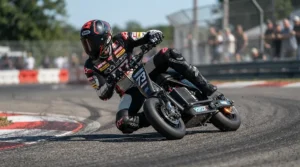
Track riding gear isn’t optional once you’re regularly hitting 35+ mph, and it’s not the same kit you’d wear on a casual commuter scooter. At minimum, a full-face or modular motorcycle-rated helmet — not a bicycle helmet — is the baseline; the speeds involved here are firmly in motorcycle territory, and bicycle helmets simply aren’t rated for those impact forces. Add armored gloves, a back protector or armored jacket, and knee/elbow protection rated for abrasion resistance, not just impact cushioning, since road rash at 40+ mph is a far bigger risk than most riders expect.
Boots matter more than riders think, too — ankle support and abrasion-resistant material genuinely change outcomes in a low-speed tip-over versus a high-speed slide. The CPSC’s own safety guidance repeatedly emphasizes that helmet use dramatically reduces the severity of head injuries in scooter incidents, yet independent studies have found that fewer than 5% of injured riders were wearing one at the time — a gap this category badly needs to close as top speeds keep climbing.
Getting Your Racing Electric Scooter Track-Ready: Setup & Performance Tuning Tips
Out-of-the-box settings on almost every scooter in this guide are conservative by design, which means genuine performance tuning tips can meaningfully change how the machine feels within your first week of ownership. Start with tire pressure: most performance scooters ship slightly underinflated for a softer ride, but running closer to the manufacturer’s maximum PSI noticeably sharpens cornering response and reduces rolling resistance at speed — just don’t exceed the sidewall rating.
Next, work through the companion app or onboard display to adjust acceleration curves and regenerative braking strength; a curve that’s too aggressive off the line can actually slow you down by breaking rear-wheel traction, while a smoother ramp-up often produces quicker real-world 0-30 mph times. Suspension preload is the third lever worth touching early — stiffer settings reduce body roll in corners but transmit more surface imperfections, so dial it in based on whether you’re riding a smooth track or rougher private pavement. During your first 30 days, resist the urge to run flat-out on every ride; motors, controllers, and brake pads all benefit from a gradual break-in period, and manufacturers consistently report fewer early-life failures among riders who eased into full power over the first few hundred miles. Finally, build a simple maintenance rhythm: check brake pad wear every 300-500 miles once you’re regularly using top speed, re-torque suspension and stem bolts monthly, and inspect tires for sidewall cracking before every serious session.
Racing Scooter Modifications: What’s Worth Doing (and What Voids Your Warranty)
Once you’ve owned your scooter for a while, racing scooter modifications start looking tempting — and some are genuinely worthwhile, while others are a fast way to void your warranty and create a real safety hazard. Firmware or app-based speed and torque adjustments, where the manufacturer explicitly supports them (as Apollo and Kaabo both do through their companion apps), are the safest category of modification because they operate within the electronics’ designed tolerances.
Tire upgrades to a stickier compound are another low-risk, high-reward change, directly improving grip under hard acceleration and braking without touching the electrical system at all. Aftermarket controllers and unlocked firmware that push voltage or amperage beyond factory limits sit in much riskier territory — they can genuinely improve top speed and acceleration, but they also stress components (wiring, connectors, motor windings) that were never rated for the higher load, and they virtually always void the manufacturer’s warranty. Suspension upgrades — stiffer springs, adjustable damping cartridges — are generally safe and often worthwhile for serious track use, since stock suspension on even flagship scooters is tuned for a broad range of riders rather than aggressive cornering. The honest takeaway: tune what the manufacturer built you room to tune, upgrade tires and suspension freely, and think hard before touching anything electrical that the warranty explicitly excludes.
Real-World Rider Profiles: Which Racing Electric Scooter Fits You
If you’re a college student with a private lot to ride in and a budget under $1,000, the Teewing GT4 gets you genuine 40+ mph thrills without the flagship price tag — just budget separately for a real helmet and pads, since the scooter’s price doesn’t leave room for compromise there. If you’re an experienced rider with occasional access to hilly private roads and a budget around $1,600-$2,000, the Varla Eagle One V2.0‘s dual-motor torque and low center of gravity make it the more confident choice over a similarly priced single-motor scooter. If you’re chasing genuine track-day performance and have $4,000-$5,300 to spend, the choice comes down to priorities: the Kaabo Wolf King GTR for stability and traction control, the Dualtron Thunder 3 for range and all-weather reliability, or the Nami Burn-E3 Max if raw acceleration is the only thing that matters to you.
Safety, Regulations & Where You’re Legally Allowed to Race
This is the section too many buying guides skip, and it’s arguably the most important one. Nearly every scooter in this guide is explicitly marketed as intended for private property, closed courses, or off-road use — not public streets — and for good reason: most U.S. states cap legal e-scooter speeds well below 30 mph on public roads, meaning a 60 mph flagship scooter is simply not street-legal in the vast majority of jurisdictions, regardless of what the manufacturer’s marketing photos imply.
The CPSC’s own data underscores why this matters beyond legality: emergency-room visits tied to micromobility devices have risen sharply as top speeds and ridership have both increased industry-wide, and helmet use remains alarmingly low among injured riders despite consistently reducing injury severity. Before your first full-throttle run, confirm local ordinances for wherever you plan to ride, verify your scooter carries UL 2272 or equivalent battery certification, and treat protective gear as mandatory rather than optional. A genuinely fast racing electric scooter rewards preparation; it punishes complacency fast, and unforgivingly.
Frequently Asked Questions
❓ How fast is a racing electric scooter compared to a regular one?
❓ Is a competition electric scooter street legal?
❓ What's the fastest racing electric scooter you can currently buy?
❓ Do I need special track riding gear for a racing electric scooter?
❓ Will racing scooter modifications void my warranty?
Conclusion
Picking a racing electric scooter really comes down to being honest with yourself about two things: where you’ll actually ride, and how much speed you can genuinely handle. The Teewing GT4 and Varla Eagle One V2.0 prove that real thrills don’t require flagship money, the Apollo Ghost and Apollo Phantom V3 hit a sweet spot of manageable power with genuinely smooth delivery, and the Kaabo Wolf King GTR, Dualtron Thunder 3, and Nami Burn-E3 Max represent the current ceiling of what a consumer electric scooter for racing can do.
None of these are toys, and none of them forgive complacency — the same power that makes them exciting is exactly what makes gear, maintenance, and knowing your local regulations non-negotiable. Start with an honest assessment of your budget, your available riding space, and your actual comfort with speed, then match that against the seven models above. Whichever you choose, gear up properly, break the motor and brakes in gradually, and find a legal place to actually open the throttle — that’s where a good racing electric scooter stops being a spec sheet and starts being genuinely fun.
Recommended for You
- Dual Motor Electric Scooter Hill Climbing: 7 Elite Picks (2026)
- Dual Motor Electric Scooter: 7 Unstoppable 2026 Picks
- Off Road Electric Scooter Under $1500: 7 Trail-Tested Picks (2026)
Disclaimer: This article contains affiliate links. As an Amazon Associate, I earn from qualifying purchases. If you purchase products through these links, we may earn a small commission at no additional cost to you.
✨ Found this helpful? Share it with your friends! 💬🤗
