In This Article
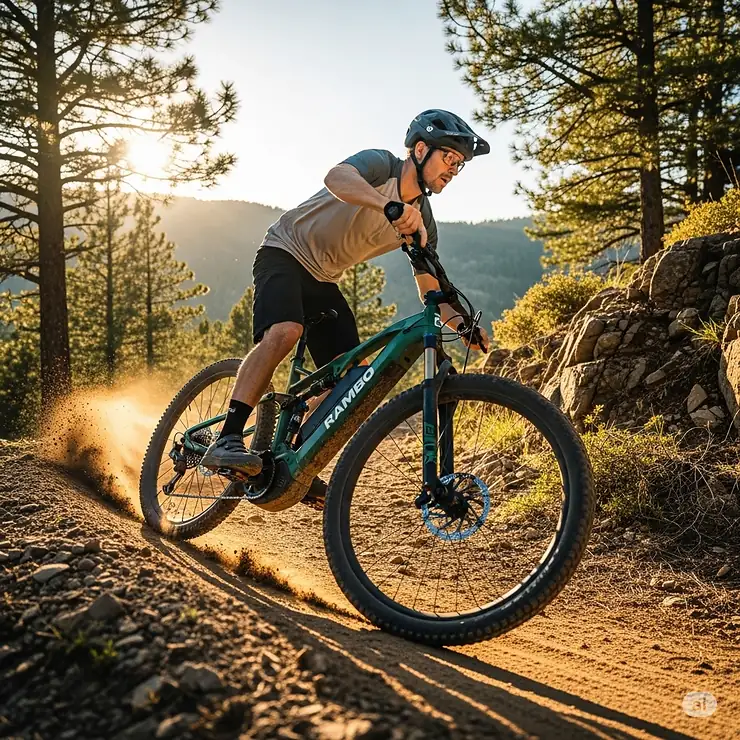
When you’re searching for the ultimate off-road electric bike that can handle everything from muddy hunting trails to rocky mountain paths, rambo electric bicycles stand in a league of their own. 🚴♂️ These aren’t your typical city commuter bikes – they’re engineered specifically for outdoor enthusiasts who demand power, durability, and reliability in the most challenging conditions.
✨Was this helpful? Spread the word! 🚀
Since their inception in 2015, Rambo has revolutionized the hunting and outdoor recreation industry by creating the first all-wheel-drive electric bicycle. What started as a solution for hunters seeking silent, scent-free transportation has evolved into a complete lineup of rambo electric bicycle models that cater to everyone from weekend warriors to professional outdoorsmen.
Whether you’re tracking through dense forests, hauling gear across rugged terrain, or simply exploring off the beaten path, these rambo electric bicycles deliver the torque, range, and durability needed to conquer any adventure. From their entry-level Ranger to their flagship Venom 2.0, each model represents years of engineering focused on one goal: getting you deeper into the wilderness with less effort and more capability than ever before.
Understanding Rambo Electric Bicycles: Built for the Outdoors ⚡
Rambo electric bicycles aren’t just regular e-bikes with bigger tires. They’re purpose-built machines designed specifically for outdoor applications where performance and reliability matter most. The company was founded by passionate hunters and outdoor enthusiasts who understood the limitations of traditional ATVs and the need for quieter, more environmentally friendly transportation options.
Every electric bicycle rambo produces features several key characteristics that set them apart from conventional e-bikes. First, they all come equipped with fat tires ranging from 4″ to 4.8″ wide, providing superior traction and stability on loose surfaces like sand, snow, and mud. These aren’t just wide tires – they’re puncture-resistant designs with Kevlar reinforcement that can handle thorns, sharp rocks, and other trail hazards.
The motor systems in rambo electric bicycles typically range from 750W to 1000W, with some models featuring dual motors for all-wheel-drive capability. These powerful drive systems generate impressive torque figures, often exceeding 110 Nm, which translates to serious climbing ability even when loaded with gear.
Motor Technology and Power Systems 🔋
The heart of any rambo electric bicycle is its motor system, and the company has made strategic choices about motor placement and power delivery. Most models feature either mid-drive motors (positioned at the bike’s center for better weight distribution) or hub-drive motors (integrated into the wheel hubs for simplicity and reliability).
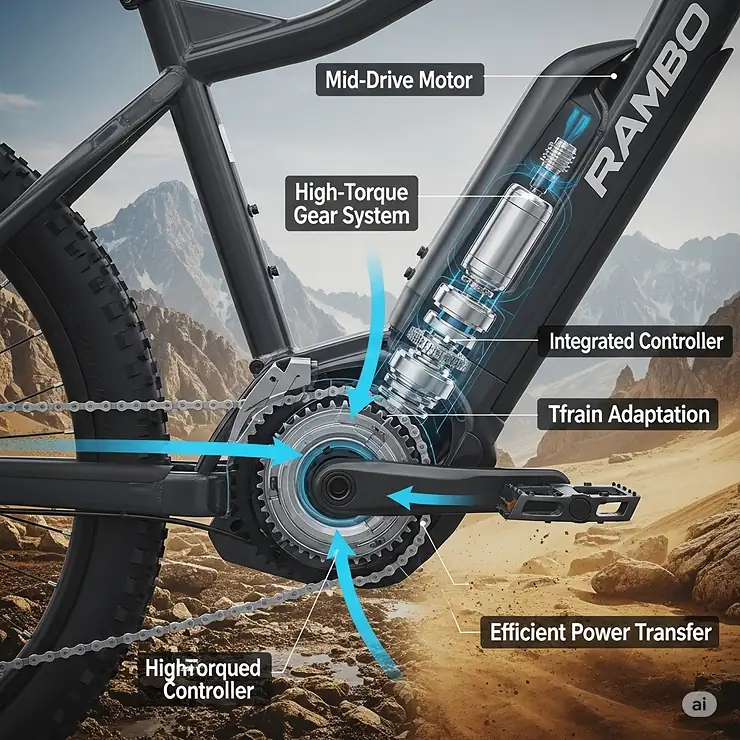
Mid-drive systems, like the Bafang Ultra motors found in premium models, offer several advantages for off-road use. They provide better weight distribution, more efficient power transfer, and the ability to leverage the bike’s gearing system for optimal performance across varying terrain. These systems are particularly effective when climbing steep grades or navigating technical terrain where precise power control is essential.
Hub-drive systems, while simpler in design, offer their own benefits including lower maintenance requirements and the ability to provide power even when not pedaling. Some rambo electric bicycle models feature dual hub motors – one in each wheel – creating an all-wheel-drive system that provides unmatched traction in challenging conditions.
Top 7 Rambo Electric Bicycles: Comprehensive Model Breakdown
1. Rambo Venom 2.0 – The Ultimate Off-Road Beast
The Rambo Venom 2.0 represents the pinnacle of electric bicycle rambo engineering, designed for serious outdoor enthusiasts who demand the absolute best performance. Priced at $4,799-$5,249, this premium model features a powerful 1000W Bafang Ultra mid-drive motor that delivers an impressive 160 Nm of torque – enough to climb virtually any hill while carrying a full load of gear.
✅ 1000W Bafang Ultra mid-drive motor with 160 Nm torque
✅ 960Wh integrated battery with up to 65 miles range (dual battery option)
✅ 11-speed SRAM NX drivetrain for precise gear control
✅ Fully integrated rear rack with 300 lbs total carrying capacity
✅ Front and rear LED lighting system
✅ Hydraulic disc brakes for reliable stopping power
The Venom 2.0’s battery system is equally impressive, featuring a 960Wh (48V, 20Ah) lithium-ion battery that’s cleanly integrated into the frame design. Rambo claims up to 32 miles of range with the standard battery, extending to an incredible 65 miles when equipped with the optional second battery pack. This extended range capability makes it ideal for long-distance expeditions where charging opportunities are limited.
Customer reviews consistently praise the Venom 2.0’s whisper-quiet operation and smooth power delivery. One verified buyer noted: “This bike is incredibly silent – I can get within 50 yards of deer without them even knowing I’m there. The power is smooth and controllable, nothing jerky or unpredictable.”
2. Rambo Savage 2.0 – The Versatile All-Rounder
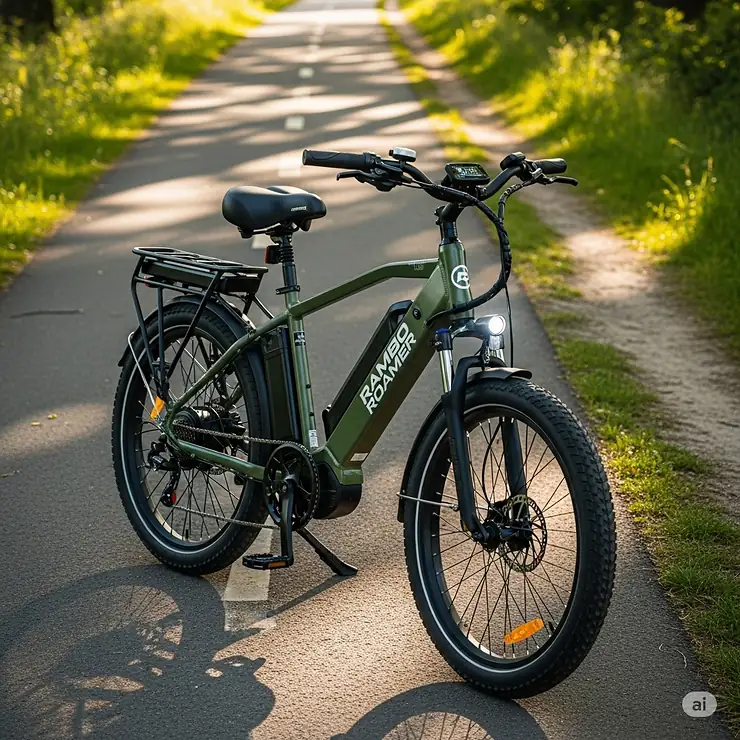
At $2,199, the Rambo Savage 2.0 offers exceptional value in the rambo electric bicycles lineup. This model strikes an perfect balance between performance and affordability, making it an ideal entry point for those new to off-road electric biking while still providing the capability serious outdoor enthusiasts demand.
✅ 750W-1000W motor options available
✅ 14.4Ah battery with 35-40 mile range
✅ 26″ x 4.8″ puncture-resistant fat tires
✅ Lightweight aluminum frame construction
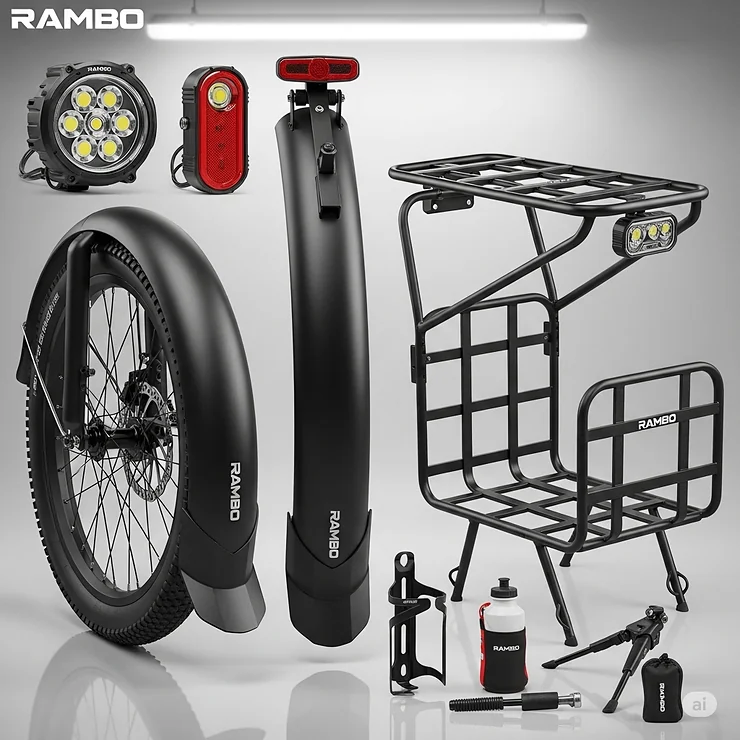
✅ Integrated mounting points for accessories
✅ Multiple color options including camouflage patterns
The Savage 2.0’s versatility shines in its motor configuration options. Buyers can choose between 750W and 1000W motor configurations, allowing customization based on intended use and local regulations. The 750W version complies with Class 3 e-bike regulations in most states, while the 1000W option provides additional power for extreme terrain or heavy loads.
Frame construction utilizes high-grade aluminum alloy that provides excellent strength-to-weight ratio. Despite its rugged capability, the Savage 2.0 maintains a relatively manageable weight, making it easier to transport and maneuver when not under power.
3. Rambo Krusader 3.0 – The All-Wheel Drive Pioneer
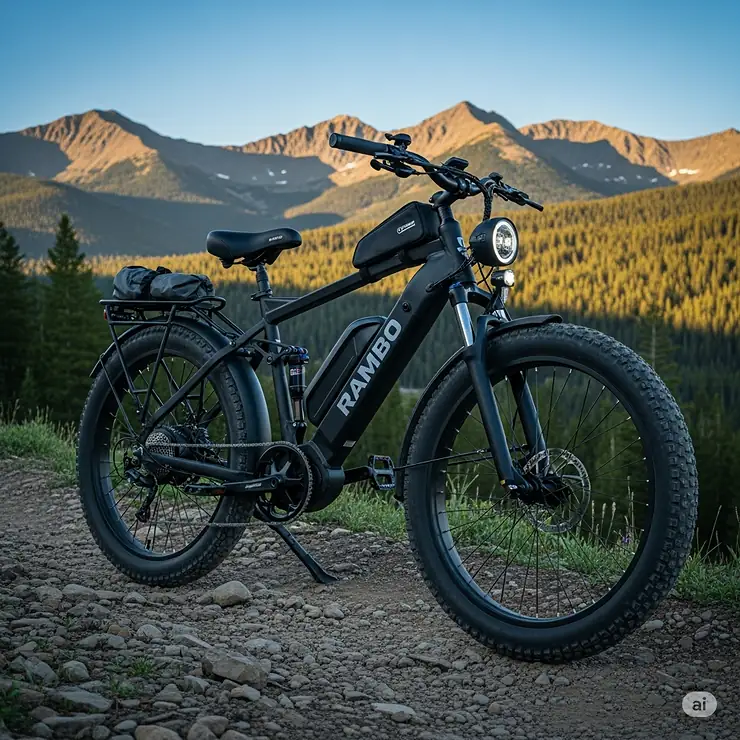
The Rambo Krusader 3.0, priced at $3,499-$3,749, holds the distinction of being the original all-wheel-drive bike in the fat-tire hunting category. This innovative design features dual 500W hub motors (1000W total system power) that can operate independently or together, providing unprecedented traction control.
✅ Dual 500W hub motors with all-wheel-drive capability
✅ Switchable drive modes: FWD, RWD, or AWD
✅ 48V 14Ah battery system
✅ 28 MPH maximum speed in AWD mode
✅ Heavy-duty rear rack included
✅ Rugged construction rated for 300+ lbs payload
The genius of the Krusader 3.0 lies in its drive mode selector, which allows riders to switch between front-wheel drive, rear-wheel drive, or all-wheel drive while riding. This flexibility enables optimal power management – you can cruise efficiently in rear-wheel drive on flat terrain, then engage all-wheel drive when encountering steep climbs or loose surfaces.
All-wheel drive capability proves invaluable in challenging conditions where traditional single-motor bikes struggle. Whether navigating muddy creek crossings, climbing loose gravel hills, or maintaining traction on snow-covered trails, the Krusader 3.0’s dual-motor system provides confidence-inspiring control.
4. Rambo Rebel 2.0 – The Silent Powerhouse
Positioned at $3,499-$4,149, the Rambo Rebel 2.0 focuses on combining maximum power with whisper-quiet operation. This model features a 1000W Bafang BBSHD mid-drive motor that’s specifically tuned for silent running, making it ideal for hunting applications where noise discipline is critical.
✅ 1000W Bafang BBSHD mid-drive motor (ultra-quiet operation)
✅ 21Ah battery with up to 48 miles range
✅ 118 ft-lbs of torque output
✅ Step-through and traditional frame options
✅ Tektro hydraulic disc brakes
✅ Integrated rear rack and lighting system
The Rebel 2.0’s 21Ah battery represents one of the largest capacity options in the rambo electric bicycle range. This substantial power reserve provides up to 48 miles of range under normal conditions, with real-world testing showing 25-30 miles even in challenging off-road terrain with frequent power assistance.
Torque output of 118 ft-lbs exceeds what many small ATVs can produce, enabling the Rebel 2.0 to tackle incredibly steep terrain while carrying substantial loads. Customer feedback consistently highlights the bike’s ability to climb grades that would challenge much larger vehicles.
5. Rambo Pursuit 2.0 – The Complete Package
Available on Amazon for $2,200-$2,500, the Rambo Pursuit 2.0 represents excellent value in the mid-range segment. This model comes nearly fully assembled and includes numerous premium upgrades as standard equipment, making it an attractive option for buyers seeking maximum value.
✅ 750W mid-drive motor with 110 Nm torque
✅ 15Ah upgraded battery with LG cells
✅ Smart charger included ($180 value)
✅ Front and rear metal fenders ($80 value)
✅ Bright LED lighting system ($60 value)
✅ Full frame design with integrated components
The Pursuit 2.0 distinguishes itself through its included upgrade package, which adds nearly $500 in value compared to base configurations. The upgraded 15Ah battery uses premium LG cells for improved reliability and longevity, while the smart charger provides optimal charging profiles to maximize battery life.
Assembly requirements are minimal – the bike arrives 95% assembled and requires only basic tools for final setup. This attention to customer experience makes the Pursuit 2.0 particularly appealing to buyers who want to start riding immediately without extensive mechanical work.
6. Rambo Dominator Ultra – The Heavy-Duty Hauler
Starting at $3,999, the Rambo Dominator Ultra is engineered for users who need maximum payload capacity and extreme durability. This model features full suspension, making it one of the most comfortable rides in the rambo electric bicycles lineup while maintaining the rugged capability the brand is known for.
✅ Full suspension system (front and rear)
✅ 1000W motor with enhanced cooling
✅ Reinforced frame rated for 350+ lbs payload
✅ Heavy-duty components throughout
✅ Extended wheelbase for stability
✅ Premium comfort features
Full suspension capability sets the Dominator Ultra apart from other models in the lineup. The front suspension fork provides 100mm of travel, while the rear shock offers adjustable preload to accommodate varying rider weights and load configurations. This suspension system dramatically improves comfort on rough terrain while maintaining control and stability.
Frame reinforcement includes upgraded tubing thickness and additional gussets at stress points. These modifications enable the Dominator Ultra to handle heavier loads and more aggressive use than standard models, making it ideal for commercial applications or users who regularly carry maximum payload.
7. Rambo Ranger – The Portable Explorer
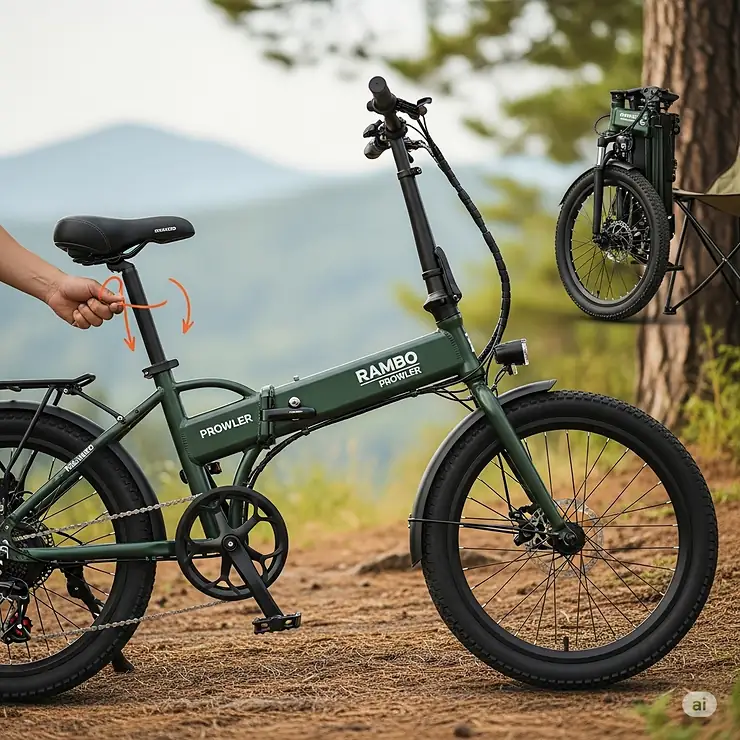
At $1,749, the Rambo Ranger brings rambo electric bicycle capability to the folding bike category. This innovative design maintains the brand’s off-road DNA while adding the convenience of compact storage and transport.
✅ Folding frame design for easy transport
✅ Step-through configuration for easy mounting
✅ 750W motor in compact package
✅ 14Ah battery with 30+ mile range
✅ 20″ fat tires maintain off-road capability
✅ Quick-release folding mechanism
The Ranger’s folding capability opens up new possibilities for electric bicycle rambo users. Whether you’re traveling in an RV, storing in a small apartment, or need to transport multiple bikes, the Ranger’s compact folded size solves real-world logistics challenges without sacrificing performance.
Despite its compact design, the Ranger maintains 20″ x 4″ fat tires and sufficient motor power for legitimate off-road use. The step-through frame design improves accessibility for a wider range of riders while simplifying mounting and dismounting when wearing heavy gear or clothing.
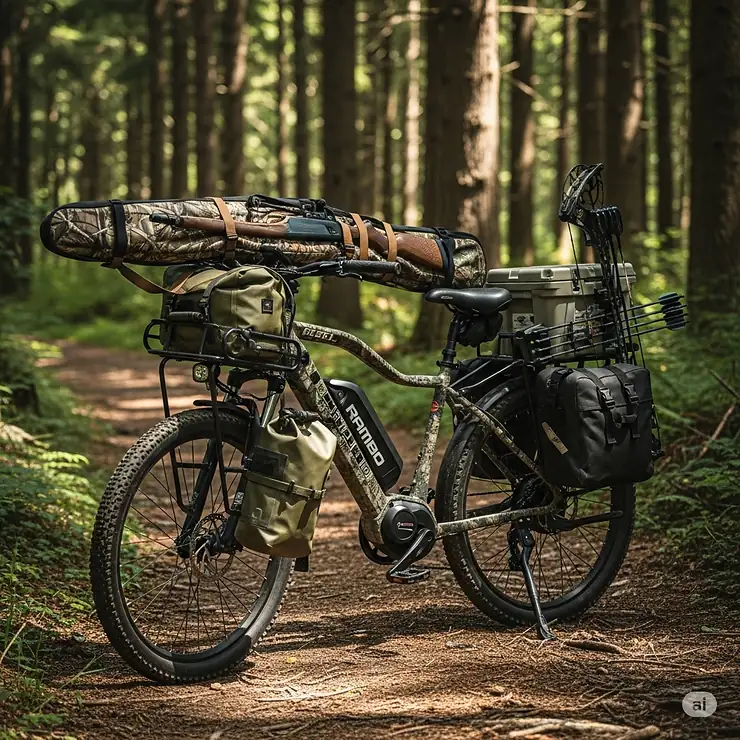
Quick Comparison Table: Rambo Electric Bicycles
| Model | Price Range | Motor Power | Battery | Range | Weight Capacity | Special Features |
|---|---|---|---|---|---|---|
| Venom 2.0 | $4,799-$5,249 | 1000W Mid-Drive | 960Wh (20Ah) | 32-65 miles | 300 lbs | Dual battery option, Ultra quiet |
| Savage 2.0 | $2,199 | 750W-1000W | 14.4Ah | 35-40 miles | 300 lbs | Multiple motor options |
| Krusader 3.0 | $3,499-$3,749 | Dual 500W (1000W total) | 14Ah | 35-45 miles | 300+ lbs | All-wheel drive system |
| Rebel 2.0 | $3,499-$4,149 | 1000W Mid-Drive | 21Ah | 45-48 miles | 300 lbs | Largest battery, ultra-quiet |
| Pursuit 2.0 | $2,200-$2,500 | 750W Mid-Drive | 15Ah LG cells | 30-35 miles | 300 lbs | Premium upgrades included |
| Dominator Ultra | $3,999+ | 1000W Enhanced | Variable | 30-40 miles | 350+ lbs | Full suspension |
| Ranger | $1,749 | 750W | 14Ah | 30+ miles | 275 lbs | Folding design |
💬 Just one click – help others make better buying decisions too!😊
🛒 Don’t Miss These Exclusive Deals!
→Take your outdoor adventures to the next level with these carefully selected rambo electric bicycles. Click on any highlighted model to check current pricing and availability on Amazon. These powerful machines will revolutionize how you explore the great outdoors! 🚴♂️⚡
Industry-Specific Applications of Rambo Electric Bicycles
The versatility of rambo electric bicycles extends far beyond recreational riding, with professional applications across multiple industries demonstrating their practical value. Understanding these diverse use cases helps potential buyers appreciate the full scope of what these machines can accomplish.
Professional Hunting and Wildlife Management
The hunting industry represents the original target market for rambo electric bicycle technology, and professional hunting guides, outfitters, and wildlife managers have embraced these machines for their unique advantages. Traditional ATVs and trucks create noise that can spook game animals from significant distances, while rambo electric bicycles operate virtually silently, allowing hunters to access their locations without disturbing the local ecosystem.
Professional hunting guides report that electric bicycle rambo models enable them to scout larger territories more efficiently. Where previously a guide might be limited to hiking 5-10 miles per day while scouting, they can now cover 20-30 miles in the same timeframe, dramatically expanding their ability to locate game and plan successful hunts for their clients.
Wildlife management professionals have found rambo electric bicycles particularly valuable for trail camera maintenance and wildlife population surveys. The National Wildlife Federation has documented how quiet electric vehicles improve wildlife observation accuracy by reducing human impact on animal behavior patterns.
Agricultural and Ranch Operations
Large-scale farming and ranching operations have discovered that rambo electric bicycles provide an ideal solution for fence line inspections, livestock monitoring, and equipment transportation across vast properties. Traditional utility vehicles consume significant fuel and require substantial maintenance, while electric bicycle rambo models operate at a fraction of the cost.
Ranch managers report that the payload capacity of models like the Dominator Ultra (350+ lbs) enables them to carry tools, fence repair materials, and even small hay bales to remote locations. The quiet operation proves particularly valuable when checking on livestock, as the bikes don’t cause the stress responses that loud vehicles typically trigger in cattle and horses.
Water system maintenance represents another significant application, with ranch hands using rambo electric bicycles to access remote water tanks, wells, and irrigation equipment. The bikes’ ability to traverse rough terrain while carrying repair tools and spare parts has revolutionized maintenance operations on properties spanning thousands of acres.
Emergency Response and Public Safety
First responder agencies have begun integrating rambo electric bicycles into their equipment fleets for specialized applications where traditional vehicles face limitations. Search and rescue teams particularly value the bikes’ ability to access narrow trails and environmentally sensitive areas where larger vehicles would cause damage or simply cannot reach.
Park rangers and conservation officers use electric bicycle rambo models for patrol duties in wilderness areas, nature preserves, and state parks. The quiet operation allows them to observe illegal activities like poaching or illegal camping without alerting suspects to their presence. Additionally, the bikes’ extended range enables single-person patrols to cover much larger areas than possible on foot.
Emergency medical response in remote areas has also benefited from rambo electric bicycle technology. Paramedics and EMTs can use specially equipped bikes to reach patients in locations inaccessible to ambulances, carrying emergency medical supplies and communication equipment needed to stabilize patients until helicopter evacuation becomes possible.
Commercial Property Management
Large commercial properties, including industrial complexes, corporate campuses, and utility installations, have found rambo electric bicycles effective for security patrols and maintenance operations. Security personnel can patrol perimeters more quietly than possible with traditional vehicles, while maintenance crews can transport tools and materials to remote equipment locations.
Utility companies have begun using electric bicycle rambo models for inspection of transmission lines, pipeline routes, and other infrastructure that passes through areas inaccessible to vehicles. The bikes’ ability to carry diagnostic equipment and repair materials while traversing rough terrain has improved response times for infrastructure maintenance.
Recreational Outfitters and Tourism
Adventure tourism companies and outdoor recreation outfitters have embraced rambo electric bicycles as a way to expand their service offerings. Guided tours can now access more remote and challenging terrain while accommodating clients with varying fitness levels.
Mountain lodges and wilderness resorts use rambo electric bicycles to transport supplies to remote cabins, maintain trail systems, and provide staff transportation across large properties. The bikes’ ability to operate year-round, including in snow conditions with appropriate tires, makes them particularly valuable for four-season operations.
Advanced Technical Analysis of Rambo Electric Bicycles
Understanding the engineering principles behind rambo electric bicycles requires examining the sophisticated integration of mechanical, electrical, and software systems that enable their exceptional performance. These bikes represent significant technological advancement beyond simple motor-and-battery combinations.
Battery Technology and Energy Management
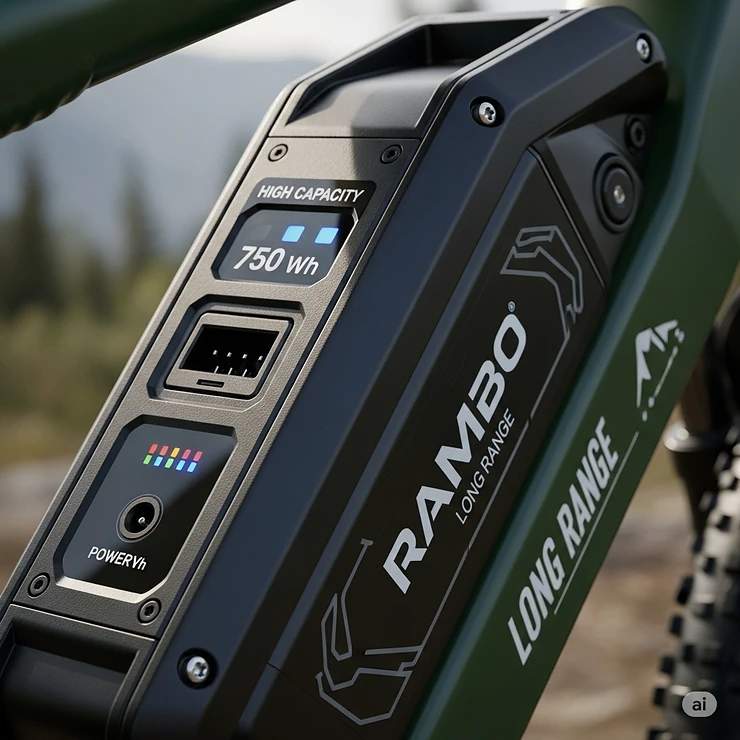
Modern rambo electric bicycle battery systems utilize advanced lithium-ion chemistry, specifically lithium nickel manganese cobalt oxide (LiNMC) cells in premium models. These cells provide optimal energy density while maintaining thermal stability and cycle life necessary for demanding outdoor applications.
The battery management system (BMS) in each electric bicycle rambo monitors individual cell voltages, temperatures, and charge states to ensure optimal performance and longevity. Advanced BMS designs include active cell balancing, which redistributes charge between cells during operation to maximize capacity utilization and extend overall battery life.
Temperature management proves critical for outdoor applications where batteries may experience extreme cold or heat. Rambo’s battery designs include thermal insulation and, in some models, active heating elements that maintain optimal operating temperatures in sub-freezing conditions. This attention to thermal management explains why rambo electric bicycles maintain consistent performance across wide temperature ranges.
Charging algorithms have evolved beyond simple constant-current/constant-voltage protocols. Smart chargers included with premium models implement multi-stage charging profiles that adapt to battery temperature, age, and charge history. These sophisticated charging systems can extend battery life by up to 40% compared to basic chargers while reducing charging time.
Motor Control and Power Delivery Systems
The motor controllers in rambo electric bicycles represent highly sophisticated electronic systems that manage power delivery, regenerative braking, and rider input interpretation. These systems process dozens of sensor inputs thousands of times per second to provide smooth, responsive power delivery.
Torque sensing systems in mid-drive motors measure pedaling force and cadence to determine appropriate motor assistance levels. Advanced algorithms analyze pedaling patterns to provide natural-feeling assistance that amplifies rider effort rather than simply adding preset power levels. This sophisticated control explains why higher-end electric bicycle rambo models feel more natural and responsive than entry-level alternatives.
Field-oriented control (FOC) algorithms optimize motor efficiency by precisely controlling the electrical field rotation within the motor. This advanced control method can improve efficiency by 10-15% compared to simpler control methods while reducing motor noise and heat generation – critical factors for hunting applications.
Regenerative braking capability varies significantly between models and motor types. Hub-drive systems typically offer more aggressive regenerative braking, which can extend range by 10-15% in hilly terrain while providing additional braking force. Mid-drive systems generally offer less regenerative capability due to their integration with the bike’s drivetrain.
Frame Engineering and Materials Science
The frames of rambo electric bicycles must withstand significantly higher stresses than conventional bicycles due to increased weight, higher speeds, and more aggressive use patterns. Advanced computer modeling and finite element analysis guide frame design to optimize strength-to-weight ratios while ensuring durability.
Aluminum alloy selection involves careful consideration of strength, corrosion resistance, and weldability. Most rambo electric bicycle frames utilize 6061-T6 aluminum alloy, which provides excellent strength characteristics and good weldability. Premium models may incorporate 7005 aluminum alloy tubes in high-stress areas for additional strength.
Tube shaping and butting techniques optimize material distribution for maximum strength with minimum weight. Hydroformed tubes provide complex shapes that improve strength while reducing weight compared to traditional round tubes. Butted tubing varies wall thickness along the tube length, placing material where stress is highest while reducing weight in lower-stress areas.
Fatigue resistance becomes crucial for electric bicycle rambo applications due to the higher operating speeds and loads compared to conventional bicycles. Frame designs incorporate fatigue-resistant joint details and stress-relief features that enable the frames to withstand hundreds of thousands of load cycles throughout their service life.
Suspension Technology and Ride Dynamics
Full-suspension models like the Dominator Ultra incorporate sophisticated suspension designs derived from mountain bike racing technology. These systems must balance comfort, control, and efficiency while accommodating the unique requirements of electric bicycle rambo applications.
Progressive suspension linkages provide variable spring rates that respond appropriately to different impact magnitudes. Small bumps are absorbed with minimal energy loss, while larger impacts activate progressively stiffer spring rates to prevent bottoming out. This sophisticated tuning enables comfortable riding across varied terrain without sacrificing pedaling efficiency.
Adjustable damping systems allow riders to customize suspension behavior for different applications. Climbing modes reduce suspension bob to improve pedaling efficiency, while descending modes provide more active suspension for improved control and comfort. Remote lockout systems enable on-the-fly adjustment without stopping.
Electronic Integration and Smart Features
Modern rambo electric bicycles incorporate increasingly sophisticated electronic systems that extend beyond basic motor control. Integrated displays provide real-time information about speed, range, power consumption, and GPS navigation. Advanced models include smartphone connectivity for ride tracking, navigation, and remote diagnostics.
CAN bus communication systems enable different electronic components to share information and coordinate operations. This integration allows for features like automatic shifting coordination with motor output, intelligent traction control, and predictive range calculations based on terrain and riding style.
GPS tracking and theft protection systems provide security features increasingly important for expensive electric bicycle rambo models. Some systems include hidden GPS transmitters that enable tracking if stolen, while others provide smartphone alerts if the bike is moved without authorization.
Comprehensive Setup and Usage Guide for Rambo Electric Bicycles
Proper setup and operation of rambo electric bicycles ensures optimal performance, safety, and longevity. This comprehensive guide covers everything from initial assembly through advanced operation techniques developed through extensive field testing.
Initial Assembly and Inspection
Most rambo electric bicycle models arrive 85-95% assembled, requiring only final assembly of wheels, handlebars, pedals, and accessories. However, proper inspection and adjustment of all components ensures optimal performance from the first ride.
Begin assembly by carefully unpacking all components and verifying that all listed parts are present. The included assembly manual provides torque specifications for all critical fasteners – following these specifications precisely prevents both under-tightening (which can lead to component failure) and over-tightening (which can damage components or threads).
Wheel installation requires particular attention to ensure proper alignment and secure attachment. Front wheels typically use quick-release mechanisms or thru-axles, while rear wheels may require additional attention to ensure proper chain alignment and derailleur adjustment. Check that wheels spin freely without rubbing brake pads or frame components.
Brake system setup involves adjusting both mechanical alignment and hydraulic systems. Disc brakes should center over the rotors without rubbing, while brake levers should engage with firm, consistent feel. Most rambo electric bicycles use hydraulic disc brakes that require bleeding if air has entered the system during shipping.
Battery Installation and Charging Protocol
Proper battery installation ensures both performance and safety. Semi-integrated battery designs require careful alignment of electrical contacts and secure mounting to prevent movement during riding. Fully integrated batteries typically lock into position with key-operated mechanisms.
Initial charging protocol affects long-term battery performance. New lithium-ion batteries perform best when charged to 100% for the first three charging cycles, then maintained between 20-80% charge for daily use. Completely draining the battery before charging is unnecessary and may actually reduce battery life.
Charging location should provide good ventilation and stable temperatures between 50-80°F. Avoid charging in direct sunlight, enclosed vehicles, or areas where temperatures exceed 100°F. The included smart charger will automatically terminate charging when the battery reaches full capacity, but disconnecting the charger promptly after charging completes extends battery life.
Storage charging procedures differ from daily use protocols. For storage periods exceeding one month, maintain battery charge between 40-60% and recharge every 60-90 days to prevent deep discharge damage. Store batteries in cool, dry locations away from direct sunlight and temperature extremes.
Rider Positioning and Ergonomic Setup
Proper rider positioning maximizes comfort, control, and efficiency while minimizing fatigue during long rides. Electric bicycle rambo models typically feature more relaxed geometry compared to traditional mountain bikes, but individual adjustment remains important for optimal fit.
Saddle height adjustment follows traditional bicycle fitting principles, with the rider’s leg nearly fully extended at the bottom of the pedal stroke. However, the additional weight and power of rambo electric bicycles may require slightly lower saddle positions to improve control and confidence, particularly for new riders.
Handlebar position affects both comfort and control. Most models offer adjustable stem angles and handlebar heights to accommodate different rider preferences and applications. Higher handlebar positions provide more comfort for casual riding, while lower positions improve aerodynamics and control for aggressive terrain.
Control placement involves positioning brake levers, shifters, and motor controls for easy access without compromising grip security. Motor control placement varies between models but should always be accessible without removing hands from the handlebars or compromising brake lever access.
Motor System Operation and Optimization
Understanding motor characteristics enables riders to optimize performance for different applications. Mid-drive motors provide maximum efficiency when riders maintain optimal pedaling cadence (typically 60-80 RPM), while hub-drive motors deliver consistent power across wider speed ranges.
Power level selection affects both performance and range. Lower assistance levels maximize range and provide more exercise, while higher levels enable faster speeds and easier climbing. Most electric bicycle rambo models offer 3-5 assistance levels plus a zero-assistance mode for maximum range or exercise.
Throttle operation (where available) provides power independent of pedaling input. This feature proves valuable for starting from stops, climbing steep terrain, or maintaining speed when rider fatigue becomes a factor. However, throttle-only operation significantly reduces range compared to pedal-assisted riding.
Heat management becomes important during extended high-power operation. Motor controllers include thermal protection that reduces power output when temperatures exceed safe limits. Allowing brief cooling periods during extended climbs or high-power operation prevents thermal limiting and maintains consistent performance.
Terrain-Specific Riding Techniques
Different terrain types require adapted riding techniques to maximize both performance and component longevity. Sand riding benefits from lower tire pressures (8-12 PSI) and consistent power application to maintain momentum. Sudden power changes can cause wheel spin or loss of control in loose sand.
Rocky terrain requires careful line selection and smooth power application. High assistance levels help maintain momentum over obstacles, while careful throttle control prevents wheel spin on loose rocks. Lower tire pressures (10-15 PSI) improve traction and comfort but increase puncture risk.
Mud riding presents unique challenges for rambo electric bicycles due to the potential for clogging drive systems and reducing traction. Higher tire pressures (15-20 PSI) reduce rolling resistance in mud, while aggressive tread patterns provide better grip. Immediate cleaning after mud riding prevents long-term component damage.
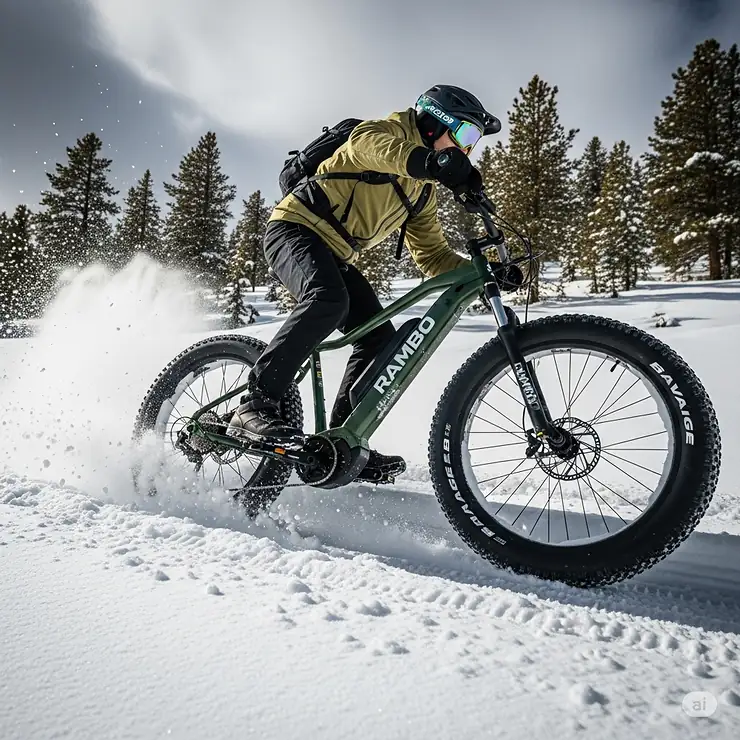
Snow operation requires specific tire choices and technique modifications. Studded fat tires provide optimal traction on ice, while aggressive knobby tires work better in loose snow. Battery performance decreases in cold temperatures, so riders should plan for reduced range and consider battery warming strategies for extreme cold operation.
Safety Protocols and Emergency Procedures
Pre-ride safety checks should become routine for all rambo electric bicycle operation. Verify tire pressure, brake operation, battery charge level, and secure attachment of all accessories before each ride. Quick visual inspection of the chain, derailleur, and motor mounting can prevent mechanical failures during rides.
Emergency repair procedures focus on issues that can be addressed in the field with basic tools. Flat tire repair represents the most common field repair, requiring tire levers, spare tubes, and portable pumps. Chain repairs may require chain tools and spare links, while brake adjustments can often be made with basic allen keys.
Electronic system failures require different approaches than mechanical failures. Motor controller failures typically result in complete loss of power assistance, requiring rider to pedal unassisted. Battery failures may provide partial power or no power, again requiring unassisted pedaling. Carrying basic tools and understanding manual override procedures enables safe return even with electronic failures.
Communication devices become essential for remote area riding where cell phone coverage may be limited. Satellite communicators provide emergency communication capability in areas beyond cell phone range, while GPS devices ensure navigation capability independent of smartphone batteries.
Progressive Training and Skill Development
New riders should follow a structured progression to develop skills safely while building confidence with their electric bicycle rambo capabilities. Begin with short rides on familiar terrain to learn motor characteristics, braking requirements, and handling differences compared to conventional bicycles.
Gradually increase ride distance and terrain difficulty as skills and confidence develop. The additional weight and power of rambo electric bicycles require adjustment periods for experienced cyclists as well as new riders. Practice emergency braking and low-speed maneuvering in safe environments before venturing into challenging terrain.
Advanced techniques include optimizing power management for maximum range, developing smooth climbing techniques that maximize traction, and learning to use regenerative braking effectively. These skills develop through experience but can be accelerated through practice in controlled environments.
Group riding skills become important for riders who participate in organized events or ride with others. Understanding how to communicate motor-related issues, maintaining appropriate spacing to account for different stopping distances, and coordinating charging stops for longer rides all contribute to successful group experiences.
Maintenance and Longevity of Rambo Electric Bicycles
Proper maintenance extends the life of rambo electric bicycles while ensuring optimal performance and safety. The combination of mechanical and electrical systems requires attention to both traditional bicycle maintenance and specialized electric vehicle care.
Daily and Weekly Maintenance Routines
Daily maintenance for active riders involves basic inspection and cleaning procedures that prevent minor issues from developing into major problems. Post-ride cleaning removes dirt, mud, and debris that can cause premature wear or component failure. A simple rinse with clean water removes most contaminants, while stubborn dirt may require gentle scrubbing with soft brushes.
Battery care forms a critical part of daily maintenance routines. Remove batteries when not in use to prevent drainage from parasitic loads and store in appropriate conditions. Check charge levels before rides and recharge as needed to prevent deep discharge situations that can permanently damage battery cells.
Chain maintenance requires daily attention for riders in dusty or muddy conditions. Visual inspection reveals chain wear, contamination, or damage that requires immediate attention. Light lubrication with appropriate chain oils maintains smooth operation while reducing wear on expensive drivetrain components.
Weekly maintenance expands to include more thorough inspection and adjustment procedures. Tire pressure checks ensure optimal performance and reduce the risk of punctures or handling problems. Most rambo electric bicycle tires operate best at 15-20 PSI, but specific recommendations vary by tire size and intended use.
Brake system inspection involves checking pad wear, rotor condition, and hydraulic fluid levels (where applicable). Brake pads on electric bicycle rambo models wear faster than conventional bicycles due to increased weight and higher operating speeds. Replace pads before they reach minimum thickness to prevent damage to expensive rotors.
Monthly and Quarterly Service Procedures
Monthly maintenance procedures focus on adjustments and replacements that maintain optimal performance over extended periods. Derailleur adjustment compensates for cable stretch and wear that affects shifting quality. Most rambo electric bicycles use high-quality shifting components, but regular adjustment maintains crisp, reliable gear changes.
Torque checks on critical fasteners prevent loosening that can lead to component failure or safety issues. The additional stresses imposed by motor power and increased weight make regular torque checks particularly important for electric bicycle rambo applications. Focus on stem bolts, seat post clamps, wheel attachments, and motor mounting hardware.
Battery maintenance becomes more intensive on monthly intervals. Deep cycle charging (from 20% to 100%) helps balance individual cells and maintains optimal capacity. Battery terminals should be cleaned and inspected for corrosion or damage that could affect performance or safety.
Quarterly maintenance involves more comprehensive inspection and service procedures that typically require some mechanical knowledge or professional service. Brake fluid replacement (for hydraulic brake systems) maintains optimal braking performance and prevents internal corrosion that can cause brake failure.
Suspension service (for full-suspension models) includes cleaning, lubrication, and pressure checks that maintain optimal performance. Suspension components operate in harsh environments and require regular attention to prevent premature wear or failure.
Annual Service and Component Replacement
Annual service procedures focus on major component inspection and replacement that ensures continued safe operation. Professional service at this interval is recommended for most riders, as many procedures require specialized tools and knowledge.
Motor service varies by motor type but typically involves cleaning, lubrication, and electrical connection inspection. Mid-drive motors may require more intensive service due to their integration with the drivetrain, while hub motors generally require less frequent attention.
Battery capacity testing determines whether battery replacement is necessary. Most lithium-ion batteries maintain 80% of original capacity for 3-5 years with proper care, but usage patterns and environmental conditions significantly affect battery life. Capacity testing provides objective data for replacement decisions.
Drivetrain component replacement includes chains, cassettes, and chainrings that experience wear from normal operation. Electric bicycle rambo components typically wear faster than conventional bicycle parts due to increased power and weight, making regular replacement important for maintaining performance and preventing more expensive damage.
Troubleshooting Common Issues
Electrical system problems represent the most common issues requiring troubleshooting on rambo electric bicycles. Motor failure to start typically results from low battery voltage, loose connections, or controller protection activation. Systematic checking of these components usually identifies the problem source.
Battery issues manifest as reduced range, failure to charge, or inconsistent power delivery. Battery capacity naturally decreases over time, but sudden capacity loss may indicate cell damage or balance issues requiring professional diagnosis. Charging problems often result from charger failure rather than battery problems.
Display and control issues may result from moisture intrusion, loose connections, or software glitches. Most modern systems include diagnostic modes that help identify specific problem areas. Moisture problems often resolve after drying, while loose connections require careful inspection and reattachment.
Mechanical problems follow traditional bicycle troubleshooting procedures but may be complicated by the additional weight and power of electric bicycle rambo systems. Brake problems often result from pad wear or contamination, while shifting issues typically involve cable adjustment or component wear.
Professional Service Recommendations
While many maintenance procedures can be performed by mechanically inclined owners, certain services require professional attention. Electrical system diagnosis often requires specialized tools and knowledge not available to typical home mechanics. Motor problems, controller failures, and complex battery issues typically require professional service.
Hydraulic brake service involves procedures that can be dangerous if performed incorrectly. Brake bleeding, component replacement, and system flushing should be performed by qualified technicians to ensure safe operation.
Suspension service for full-suspension models often requires specialized tools and knowledge of specific component requirements. Professional service ensures proper operation and prevents damage from incorrect procedures or inadequate tools.
Finding qualified service providers for rambo electric bicycles may require research, as not all bicycle shops have experience with electric bike systems. Look for shops with specific electric bike certification or experience with the brand and model you own.
Total Cost-of-Ownership Analysis
Understanding the long-term costs of rambo electric bicycle ownership helps buyers make informed decisions and budget appropriately for ongoing expenses. Initial purchase price represents only the beginning of ownership costs, with maintenance, replacement parts, and potential upgrades adding to total expenses over the bike’s lifetime.
Battery replacement represents the largest single expense in electric bicycle rambo ownership. Quality batteries typically cost $600-$1,200 and require replacement every 3-7 years depending on usage patterns and care. Proper maintenance can extend battery life significantly, making good care a valuable investment.
Regular maintenance costs vary depending on whether owners perform work themselves or rely on professional service. DIY maintenance might cost $200-$400 annually in parts and supplies, while professional service could add $300-$600 annually depending on service frequency and local labor rates.
Component replacement costs depend heavily on usage patterns and maintenance quality. Well-maintained bikes might require only basic wear items like brake pads and chains, costing $100-$200 annually. Heavily used bikes or those with poor maintenance might require major component replacement costing $500-$1,000 annually.
Insurance costs vary by location and coverage level but typically range from $100-$300 annually for quality electric bicycle rambo models. Given the high value and theft attractiveness of these bikes, insurance often proves worthwhile for protecting the investment.
Comparative Analysis: Rambo Electric Bicycles vs Alternatives
Understanding how rambo electric bicycles compare to alternative transportation and recreation options helps potential buyers make informed decisions based on their specific needs and applications.
Traditional ATVs and UTVs
All-terrain vehicles represent the most common alternative to rambo electric bicycles for off-road transportation and recreation. ATVs offer superior payload capacity (typically 300-600 lbs compared to 300-350 lbs for e-bikes) and can tow substantial trailers for equipment transport.
However, rambo electric bicycles provide significant advantages in operating costs, environmental impact, and access restrictions. ATV fuel costs can exceed $10-$20 per hour of operation, while electric bicycle rambo models cost under $1 per hour including electricity and maintenance. Annual maintenance costs for ATVs typically range from $500-$2,000, while e-bikes require $200-$600 annually.
Noise levels represent a crucial difference for hunting and wildlife observation applications. ATVs produce 80-100 decibels of noise that can be heard for miles, while rambo electric bicycles operate at whisper-quiet levels under 50 decibels. This difference enables access to noise-restricted areas and reduces wildlife disturbance significantly.
Legal access differs dramatically between these vehicle types. Many public lands, parks, and wilderness areas prohibit motorized vehicles but allow bicycle access. Electric bicycle rambo models classified as Class 1 or Class 3 e-bikes enjoy access to most cycling areas, while ATVs face increasing restrictions on public land use.
Storage and transportation requirements favor rambo electric bicycles significantly. ATVs require trailers for transport and substantial storage spaces, while e-bikes can be transported on standard vehicle bike racks and stored in garages or sheds. This convenience factor makes e-bikes more practical for urban and suburban users.
Conventional Mountain Bikes
Traditional mountain bikes offer lower purchase costs ($500-$3,000 vs $1,700-$5,300 for rambo electric bicycles) and simpler maintenance requirements. They also provide maximum exercise benefit and unlimited range limited only by rider endurance.
However, rambo electric bicycles dramatically expand accessibility for riders with limited fitness, age-related limitations, or physical challenges. The motor assistance enables older riders or those with health issues to continue enjoying outdoor recreation that might otherwise become impossible.
Payload capacity strongly favors rambo electric bicycles, with most models carrying 300+ lbs compared to 200-250 lbs for conventional bikes. This difference enables carrying substantial gear for hunting, camping, or work applications that would be impractical with traditional bikes.
Range and speed capabilities differ significantly between these options. Experienced riders might cover 30-50 miles per day on conventional mountain bikes, while electric bicycle rambo models enable 50-100 mile days with less physical effort. Average speeds increase from 8-12 MPH on conventional bikes to 15-25 MPH on e-bikes.
Terrain capability generally favors rambo electric bicycles due to their powerful motors and fat tire designs. Steep climbs that would be impossible for many riders on conventional bikes become manageable with motor assistance, opening access to previously unreachable areas.
E-Bike Competitors
The electric bike market includes numerous brands targeting outdoor recreation, with QuietKat, Bakcou, and BULLS representing major competitors to rambo electric bicycles. Each brand offers unique advantages and limitations compared to Rambo’s offerings.
QuietKat focuses heavily on hunting applications with features like integrated gun racks, camouflage paint options, and ultra-quiet operation. Their Lynx and Apex models offer comparable performance to rambo electric bicycles but typically cost $1,000-$2,000 more for similar specifications.
Bakcou targets both hunting and general outdoor recreation with models like the Mule and Storm that emphasize modularity and customization. Their bikes often include features like removable batteries and extensive accessory systems, but may lack the refined engineering and build quality of rambo electric bicycles.
BULLS represents European electric bike engineering with sophisticated motor integration and premium components. However, their focus on road and light trail use means most models lack the rugged capability and fat tire designs that define rambo electric bicycles.
Price comparisons reveal rambo electric bicycles typically offer better value in the off-road segment. Comparable models from premium competitors often cost 20-40% more while offering similar or inferior specifications. This value proposition makes Rambo an attractive choice for budget-conscious buyers seeking professional-grade capability.
Component quality varies significantly between brands, with rambo electric bicycles generally using proven, reliable components rather than cutting-edge innovations that may have reliability issues. This conservative approach sacrifices some performance for proven durability – an important consideration for remote area use.
Cost-Benefit Analysis Framework
Evaluating rambo electric bicycles against alternatives requires considering both quantitative factors (purchase price, operating costs, range) and qualitative factors (access restrictions, noise levels, environmental impact) that may vary in importance between users.
Financial analysis should include total cost of ownership over 5-7 years rather than just initial purchase price. This longer-term view often favors rambo electric bicycles due to their lower operating costs compared to ATVs and longer service life compared to entry-level e-bikes.
Usage pattern analysis helps determine which option best fits individual needs. Daily commuters might prefer road-focused e-bikes, while weekly recreation users could find ATVs more suitable. However, rambo electric bicycles excel in versatile applications where users need both recreation and utility capability.
Performance requirements vary significantly between applications. Users requiring maximum payload capacity might choose UTVs, while those prioritizing quiet operation and access flexibility typically prefer rambo electric bicycles. Understanding specific performance priorities guides optimal selection.
Long-term value considerations include resale value, upgrade potential, and changing regulations that might affect future usability. Electric bicycle rambo models generally maintain better resale value than ATVs while facing fewer regulatory restrictions that could limit future use.
Case Studies and Success Stories
Real-world applications demonstrate the practical benefits and limitations of rambo electric bicycles across diverse use cases. These detailed case studies provide insights into how different users have integrated these machines into their activities and the measurable outcomes they’ve achieved.
Case Study 1: Professional Hunting Outfitter – Montana Big Game Guide Service
Montana Big Game Guide Service operates across 50,000 acres of private and lease land in the Rocky Mountain front range, providing guided hunts for elk, deer, and bear. Owner-operator Jake Martinez invested in a fleet of six rambo electric bicycles in 2023 to replace aging ATVs and improve client success rates.
Implementation Strategy: Martinez chose a mixed fleet including three Venom 2.0 models for long-range scouting, two Krusader 3.0 AWD bikes for equipment transport, and one Savage 2.0 as a backup unit. Each bike was equipped with accessory racks, camouflage paint, and GPS tracking systems.
Measurable Outcomes: Client success rates increased from 65% to 78% following the transition to electric bicycle rambo systems. Guide efficiency improved dramatically, with individual guides covering 40% more territory during pre-hunt scouting activities. Fuel costs decreased by $3,200 annually while maintenance expenses dropped by $1,800.
Operational Benefits: Silent operation enabled guides to place hunters closer to game without detection. Battery range proved sufficient for full-day operations in most conditions, with spare batteries providing extended range when needed. The bikes’ ability to access narrow game trails previously unreachable by ATVs opened new hunting areas.
Challenges Encountered: Initial learning curve required guides to adapt riding techniques for off-road conditions. Battery performance in sub-zero temperatures necessitated thermal management strategies including overnight battery warming. Three punctures in the first season led to investment in puncture-resistant tire upgrades.
ROI Analysis: Total investment of $24,000 for the fleet returned $15,000 in first-year savings through reduced fuel and maintenance costs plus increased booking revenue from improved success rates. Martinez projects full ROI within 18 months with ongoing annual savings of $8,000-$10,000.
Case Study 2: Ranch Operations – Circle T Cattle Ranch, Texas
Circle T Cattle Ranch encompasses 12,000 acres of mixed grassland and brushy terrain in central Texas, running 800 head of cattle with a four-person ranch crew. Ranch manager Sarah Thompson introduced rambo electric bicycles in 2024 to improve efficiency of daily operations and reduce vehicle operating costs.
Implementation Strategy: Thompson selected four Dominator Ultra models for their heavy-duty construction and payload capacity. Each bike was equipped with large rear cargo boxes, GPS units, and two-way radio systems for crew communication.
Before Implementation: Daily operations required pickup trucks or ATVs for fence line checks, livestock monitoring, and equipment transport. Vehicle operating costs exceeded $8,000 annually while frequent breakdown incidents disrupted operations.
After Implementation: Ranch hands could check 15-20 miles of fence line per day compared to 8-10 miles previously possible on foot. Livestock checks became more efficient and less stressful for animals due to quiet electric operation. Equipment transport for fence repairs, water system maintenance, and pasture management improved significantly.
Quantified Results:
- Daily fence line inspection coverage increased 85%
- Vehicle fuel costs reduced by $4,200 annually
- Livestock handling stress decreased (measured by veterinary evaluations)
- Equipment transport time reduced by 40% for routine maintenance
- Worker satisfaction improved due to reduced physical demands
Long-term Benefits: Three years post-implementation, the ranch has avoided purchasing two replacement ATVs (saving $16,000) while maintaining superior operational capability. Battery replacement costs ($2,400 for the fleet) proved lower than projected ATV maintenance over the same period.
Case Study 3: Emergency Response – Colorado Search and Rescue
Clear Creek County Search and Rescue expanded their equipment capabilities in 2024 by adding rambo electric bicycles specifically configured for wilderness search operations. Team leader Mark Rodriguez led the initiative to improve response capabilities in areas inaccessible to traditional rescue vehicles.
Operational Requirements: Team needed transportation capable of carrying 75-100 lbs of rescue equipment while traversing narrow mountain trails, maintaining communication capabilities, and operating quietly to enable voice contact with lost hikers.
Equipment Configuration: Four Rebel 2.0 models were modified with specialized equipment racks, emergency lighting, first aid supplies, and enhanced communication systems. Each bike carried GPS units, satellite communicators, and backup battery packs for extended operations.
Mission Performance: First deployment involved searching for lost hikers in a wilderness area 8 miles from road access. Traditional response would have required 6-8 hour round-trip hikes, while rambo electric bicycles enabled teams to reach search areas in 90 minutes while arriving fresh and ready for intensive search operations.
Success Metrics:
- Response time to remote areas improved by 60%
- Search area coverage increased 3x due to improved mobility
- Team fatigue reduced significantly, improving search effectiveness
- Equipment carrying capacity exceeded traditional backpacking methods
- Communication range improved due to higher antenna positioning
Challenges and Solutions: Initial training required team members to develop off-road riding skills and equipment management procedures. Battery life concerns led to investment in solar charging systems for multi-day operations. Weather protection for sensitive equipment required custom modifications.
Community Impact: Successful rescue operations demonstrated the technology’s value, leading to equipment donations from local outdoor retailers and grant funding for fleet expansion. The program now serves as a model for other search and rescue organizations in mountainous regions.
Case Study 4: Conservation Research – Yellowstone Ecosystem Research
Dr. Emily Chen’s wildlife research team at Montana State University adopted rambo electric bicycles for studying elk migration patterns and predator-prey interactions in the Greater Yellowstone Ecosystem. The research required non-intrusive access to sensitive wildlife areas with substantial equipment transport needs.
Research Requirements: Scientists needed to transport telemetry equipment, cameras, and sampling gear to remote study sites while minimizing wildlife disturbance. Traditional access methods using ATVs created noise that altered animal behavior, while hiking limited equipment transport capacity.
Equipment Selection: Three Venom 2.0 models were chosen for their extended range capability and quiet operation. Bikes were equipped with specialized scientific equipment racks, GPS data loggers, and extended battery systems for all-day field work.
Research Outcomes: Silent operation enabled closer wildlife observation with minimal behavioral disruption. Equipment transport capacity allowed deployment of more sophisticated monitoring systems than previously possible. Daily travel range increased from 5-8 miles on foot to 25-35 miles by bike.
Scientific Benefits:
- Wildlife behavioral observations improved due to reduced human disturbance
- Sample collection efficiency increased 4x due to improved site access
- Equipment deployment became feasible in previously inaccessible areas
- Research timeline compressed by 30% due to improved logistics
- Data quality improved through better equipment positioning options
Publication Results: Research findings enabled by the improved access have resulted in three peer-reviewed publications and $180,000 in additional grant funding. The methodology has been adopted by wildlife research teams across North America.
Case Study 5: Military Training Applications
Fort Carson, Colorado incorporated rambo electric bicycles into specialized training programs for reconnaissance and special operations units. The program, led by Major Lisa Williams, explored electric bicycle applications for tactical mobility in areas where traditional vehicles would be impractical or detectable.
Training Objectives: Develop capabilities for silent reconnaissance, equipment transport in denied areas, and rapid deployment/extraction techniques using commercially available electric bicycles.
Equipment Evaluation: Multiple rambo electric bicycle models underwent rigorous testing including the Krusader 3.0 AWD for equipment transport, Venom 2.0 for long-range reconnaissance, and Savage 2.0 for general training applications.
Performance Results: Bikes demonstrated capability to transport 200+ lbs of military equipment while maintaining tactical mobility. Silent operation enabled approach within 100 meters of simulated enemy positions without detection. Range exceeded mission requirements in most operational scenarios.
Training Benefits:
- Physical conditioning improved due to enhanced training accessibility
- Tactical mobility increased significantly in appropriate terrain
- Equipment transport solutions expanded for light infantry operations
- Silent approach techniques developed for reconnaissance applications
- Multi-use capability reduced logistical support requirements
Operational Considerations: While successful in training applications, military adoption faces procurement regulations and durability requirements that differ from civilian applications. However, the training program demonstrated potential applications for special operations and support units.
Future Trends and Market Evolution
The rambo electric bicycles market continues evolving rapidly, driven by advancing battery technology, changing regulations, and expanding user demographics. Understanding emerging trends helps potential buyers make informed decisions about timing purchases and selecting models that will remain relevant as the technology advances.
Battery Technology Advancement
Lithium battery chemistry continues advancing with new formulations promising improved energy density, faster charging, and longer cycle life. Lithium iron phosphate (LiFePO4) batteries offer enhanced safety and cycle life, with some manufacturers claiming 5,000+ charge cycles compared to 1,000-2,000 for conventional lithium-ion cells.
Solid-state battery technology, currently in development, promises 50-100% greater energy density than current lithium-ion cells. This advancement could enable rambo electric bicycles with 80-120 mile ranges without increasing weight or size. However, production costs remain high, with mainstream adoption unlikely before 2027-2028.
Fast-charging capability continues improving with new battery management systems enabling 80% charges in 30-45 minutes compared to 2-4 hours for current systems. This improvement would dramatically enhance usability for commercial applications and multi-day expeditions where charging time is critical.
Wireless charging systems under development could enable rambo electric bicycles to charge automatically when parked over charging pads. While not immediately practical for remote area use, this technology could revolutionize urban and commercial applications where bikes return to bases regularly.
Motor Technology Evolution
Mid-drive motor technology continues advancing with higher efficiency, lower weight, and improved integration with bicycle drivetrains. Next-generation motors promise 95%+ efficiency compared to 85-90% for current designs, extending range significantly while reducing heat generation.
Artificial intelligence integration enables motor controllers to learn rider preferences and optimize power delivery for different conditions. These smart systems could predict power needs based on GPS route data, weather conditions, and historical usage patterns to maximize range and performance.
Hub motor technology advances focus on reduced weight and improved heat dissipation. New designs using advanced materials and cooling systems promise hub motors with performance approaching mid-drive systems while maintaining the simplicity advantages of hub designs.
All-wheel-drive systems continue evolving with more sophisticated traction control and power distribution algorithms. Future systems may automatically adjust power distribution between wheels based on real-time traction conditions, similar to advanced automotive systems.
Market Expansion and Demographics
User demographics for rambo electric bicycles continue expanding beyond the core hunting and outdoor recreation markets. Aging baby boomers represent a significant growth segment, with many seeking ways to continue outdoor activities despite physical limitations.
Commercial applications expand rapidly as businesses discover productivity benefits of electric transportation. Delivery services, maintenance operations, and security applications all show growing adoption of specialized electric bicycle rambo systems.
International market expansion accelerates as regulations become more favorable for electric bicycles. European markets particularly show strong growth potential, with environmental regulations favoring electric transportation over traditional motorized vehicles.
Women riders represent the fastest-growing demographic segment, with manufacturers responding by offering step-through designs, smaller frame sizes, and color options that appeal to female users. This expansion significantly broadens the potential market for rambo electric bicycles.
Regulatory Environment Changes
Federal regulations continue evolving to clarify electric bicycle classifications and usage rights. Recent legislation has established three-class systems (Class 1: pedal-assist to 20 MPH, Class 2: throttle assist to 20 MPH, Class 3: pedal-assist to 28 MPH) that provide clearer guidelines for manufacturers and users.
State and local regulations vary significantly but trend toward greater acceptance of electric bicycles on traditional cycling infrastructure. However, wilderness area access remains contentious, with some areas restricting electric bicycles while others embrace them as alternatives to motorized vehicles.
Professional licensing requirements may emerge for commercial rambo electric bicycle operations, particularly in guide services and delivery applications. These requirements could create barriers to entry but also legitimize the industry and improve safety standards.
Insurance regulations continue evolving as the industry matures. Some states now require insurance for higher-powered electric bicycles, while others treat them identically to conventional bicycles. This regulatory uncertainty affects both purchase decisions and operational costs.
Sustainability and Environmental Considerations
Environmental impact assessments increasingly favor rambo electric bicycles over traditional motorized alternatives. Life-cycle analyses show electric bicycles producing 90%+ lower emissions than ATVs or motorcycles when considering manufacturing, operation, and disposal impacts.
Battery recycling programs continue developing as electric vehicle adoption creates infrastructure for lithium-ion battery processing. Improved recycling reduces environmental impact while potentially lowering future battery costs through material recovery.
Renewable energy integration enables true zero-emission operation when rambo electric bicycles are charged using solar, wind, or hydroelectric power. This capability appeals to environmentally conscious users and may become required for operation in sensitive areas.
Manufacturing sustainability improves as companies adopt cleaner production methods and source materials responsibly. Some manufacturers now offer carbon-neutral shipping and renewable energy manufacturing, appealing to environmentally conscious consumers.
Technological Integration Trends
Smartphone integration continues expanding with apps providing navigation, performance monitoring, theft protection, and social features. Advanced apps may include augmented reality features for navigation and equipment status information overlaid on camera views.
Internet of Things (IoT) connectivity enables rambo electric bicycles to communicate with other devices and systems. This connectivity could enable features like automatic route sharing with emergency contacts, integration with smart home systems, and predictive maintenance alerts.
Advanced sensor systems provide real-time information about bike performance, rider biometrics, and environmental conditions. Future systems may include pollution monitors, weather sensors, and wildlife detection capabilities that enhance safety and user experience.
Autonomous features, while limited by current technology and regulations, may eventually include auto-following capabilities for gear transport and assisted navigation in low-visibility conditions. However, full autonomy remains years away due to technological and safety challenges.
Investment and Purchase Decision Framework
Making an informed decision about purchasing rambo electric bicycles requires systematic evaluation of multiple factors including intended use, budget constraints, performance requirements, and long-term value considerations.
Needs Assessment and Use Case Analysis
Before evaluating specific models, potential buyers should clearly define their primary use cases and performance requirements. Different applications demand different capabilities, and understanding these requirements guides appropriate model selection and prevents over-purchasing expensive features that won’t be utilized.
Recreational users focused on trail riding and general outdoor exploration typically need reliable, comfortable bikes with moderate range and payload capacity. Models like the Savage 2.0 or Pursuit 2.0 often provide optimal value for these applications without unnecessary features that add cost and complexity.
Professional users including guides, ranchers, and commercial operators require maximum reliability, payload capacity, and durability. Premium models like the Venom 2.0 or Dominator Ultra justify their higher costs through superior components and capability that directly impact business operations.
Specialized applications such as hunting, research, or emergency response may require specific features like ultra-quiet operation, extended range, or equipment mounting systems. Understanding these requirements early in the selection process prevents costly modifications or inappropriate model selection.
Budget Planning and Financing Considerations
Total investment in rambo electric bicycles extends beyond the initial purchase price to include accessories, maintenance, insurance, and potential upgrades. Comprehensive budget planning considers these ongoing costs to ensure sustainable ownership.
Initial purchase prices range from $1,749 for the Ranger to $5,249+ for premium models. However, the total investment typically increases 20-40% when including essential accessories like racks, bags, spare batteries, and safety equipment.
Financing options vary by dealer and manufacturer, with some offering 0% financing for qualified buyers. Lease options may be available for commercial users, potentially providing tax advantages while preserving capital for other business investments.
Used market availability remains limited due to the relatively new market, but growing availability of off-lease and trade-in units may provide budget-friendly options for cost-conscious buyers. However, battery condition and warranty coverage require careful evaluation when considering used purchases.
Performance Requirements Matrix
Systematic evaluation of performance requirements helps identify models that meet specific needs without paying for unnecessary capabilities. Key performance factors include range, payload capacity, terrain capability, and environmental operating conditions.
Range requirements vary dramatically between applications. Casual recreational users might need only 20-30 miles of range, while professional users may require 50+ miles for all-day operations. Extended range typically requires larger batteries that increase cost and weight.
Payload capacity affects both bike selection and accessory requirements. Users carrying minimal gear can choose lighter, less expensive models, while those transporting substantial equipment need heavy-duty designs with reinforced frames and upgraded components.
Terrain capability requirements guide motor selection, tire choices, and suspension needs. Riders primarily using maintained trails can choose simpler, less expensive configurations, while those tackling extreme terrain need premium components and advanced features.
Environmental conditions including temperature extremes, precipitation, and terrain hazards affect component selection and operational requirements. Harsh conditions may require upgraded components that increase initial costs but provide better long-term value.
Value Analysis and Return on Investment
Quantifying the value proposition of rambo electric bicycles requires comparing total costs and benefits against alternative solutions over the expected ownership period. This analysis helps justify the investment and guides model selection decisions.
Operational cost comparisons should include fuel savings, maintenance reductions, and productivity improvements versus alternatives like ATVs or conventional bicycles. For many applications, these savings partially or fully offset the higher initial investment in electric bicycle rambo systems.
Time value considerations account for improved efficiency and capability that may generate revenue or provide personal benefits difficult to quantify financially. Professional users often find that improved productivity justifies premium model selection even when lower-cost alternatives meet basic requirements.
Resale value projections help estimate total cost of ownership over the planned ownership period. Premium models typically maintain better resale value than entry-level bikes, potentially offsetting their higher initial costs for buyers who upgrade regularly.
Decision Timeline and Purchase Strategy
Timing rambo electric bicycle purchases can significantly affect value and satisfaction. Understanding market cycles, new model introductions, and seasonal demand patterns helps optimize purchase timing.
New model introductions typically occur in late winter or early spring, with previous year models often available at significant discounts during fall and winter months. Buyers seeking maximum value may benefit from purchasing proven models during these discount periods.
Seasonal demand affects both pricing and availability. Spring demand peaks often result in limited selection and higher prices, while late-season purchasing may provide better deals but limited selection for popular models.
Technology evolution considerations may favor waiting for specific improvements like better batteries or new features, but the rapid pace of development means there’s always something newer on the horizon. For most buyers, purchasing when needs are clear provides better value than waiting for future improvements.
Dealer Selection and Support Considerations
Choosing appropriate dealers and support networks significantly affects long-term ownership satisfaction. Local dealer support becomes particularly important for complex electric systems that may require specialized knowledge and equipment.
Authorized dealer networks provide access to warranty service, technical support, and genuine replacement parts. Independent dealers may offer competitive pricing but could lack access to technical resources and warranty support.
Service capability evaluation should include assessment of dealer technical knowledge, parts availability, and turnaround times for service work. Electric bicycle rambo systems require different expertise than conventional bicycles, making specialized knowledge essential.
Online purchase options may provide cost savings but typically sacrifice local support and service convenience. This trade-off may be acceptable for mechanically knowledgeable buyers but could prove problematic for those requiring regular professional service.
Financing and Insurance Strategies
Developing appropriate financing and insurance strategies protects the investment while managing cash flow requirements. Various options exist depending on buyer qualifications and risk tolerance.
Traditional financing through banks or credit unions often provides competitive rates for qualified buyers. Some manufacturers offer promotional financing that may include deferred payment or reduced rate options during certain periods.
Lease-to-own programs provide alternative paths to ownership while preserving cash flow. These programs may include maintenance and warranty coverage that simplifies ownership but typically result in higher total costs than direct purchase.
Insurance requirements vary by location and intended use, but comprehensive coverage protects against theft, damage, and liability exposure. Specialized electric bicycle insurance may provide better coverage than adding bikes to homeowner’s policies.
Business purchase considerations include tax implications, depreciation schedules, and potential business use deductions. Commercial buyers should consult with tax professionals to optimize purchase structures and maximize available benefits.
Frequently Asked Questions
❓ How long do rambo electric bicycles batteries typically last?
❓ Can rambo electric bicycles be used in snow and winter conditions?
❓ What's the maximum weight capacity for rambo electric bicycles?
❓ How fast can rambo electric bicycles travel?
❓ Are rambo electric bicycles legal on public trails?
Recommended for You
- 7 Best Full Suspension Electric Bike Options for Ultimate Trail Comfort in 2025
- 7 Best Electric Dirt Bike for Teens: Ultimate Performance Guide 2025
- 7 Best Ebike Mannen Options For Ultimate Performance in 2025
Conclusion
Rambo electric bicycles represent a significant evolution in outdoor transportation, combining the quiet operation and environmental benefits of traditional bicycles with the power and capability needed for challenging off-road applications. From the entry-level Ranger at $1,749 to the premium Venom 2.0 at over $5,000, the lineup offers options for virtually every application and budget.
The technology has matured to the point where electric bicycle rambo systems provide genuine alternatives to ATVs and trucks for many applications while offering unique advantages in quiet operation, environmental impact, and access flexibility. Professional users from hunting guides to ranch managers have demonstrated measurable productivity and cost benefits that justify the investment.
For recreational users, rambo electric bicycles open access to previously unreachable terrain while accommodating riders of varying fitness levels. The ability to travel 30-50 miles per day while carrying substantial gear transforms outdoor recreation possibilities for millions of enthusiasts.
Looking forward, continued improvements in battery technology, motor efficiency, and system integration promise even better performance and value. However, current models already provide exceptional capability that meets or exceeds most user requirements.
🚀 Ready to Transform Your Outdoor Adventures?
→Don’t let another season pass without experiencing the freedom and capability that rambo electric bicycles provide. Whether you’re a serious hunter, outdoor professional, or adventure enthusiast, these machines will revolutionize how you explore the great outdoors. Check current pricing and availability for the models that caught your attention – your next adventure awaits! ⚡🏔️
Disclaimer: This article contains affiliate links. If you purchase products through these links, we may earn a small commission at no additional cost to you.
✨ Found this helpful? Share it with your friends! 💬🤗
