
In This Article
Somewhere between “commuter toy” and “small motorcycle” sits a category of machine that most people don’t even know exists until they see one blur past a bike lane: the fastest electric scooter money can buy. A electric kick scooter is a stand-up, battery-powered vehicle that uses one or more hub motors to move a rider without pedaling — and in the last few years, the top end of that category has gone from “quick” to genuinely startling. We’re talking 28 mph starter machines all the way up to 62 mph beasts with motorcycle-grade brakes.
I’ve spent the past few weeks digging through spec sheets, forums, and long-term owner reviews to figure out which models actually deliver on their speed claims — because in this niche, marketing numbers and real-world numbers frequently disagree. What follows isn’t a rewritten spec sheet. It’s an honest breakdown of seven real, currently available scooters, what their power ratings actually mean once you’re standing on them at 40 mph, and who each one is genuinely built for. If you’ve been chasing the fastest electric scooter for your commute, your weekend thrill rides, or just bragging rights at the trailhead, you’re in the right place.
Quick note before we dive in: speed like this isn’t a toy. Every scooter on this list demands real skill, real safety gear, and real respect for local laws, which we’ll cover in detail further down.
Quick Comparison Table: The Fastest Electric Scooter Picks at a Glance
| Scooter | Top Speed | Motor Power | Price Range | Best For |
|---|---|---|---|---|
| Hiboy TITAN | 28 mph | 750W (1,200W peak) | $800–$1,000 range | Budget-friendly speed entry |
| Hiboy TITAN Pro | 33 mph | Dual, 2,400W peak | $1,300–$1,800 range | Long-range dual-motor value |
| Varla Eagle One | 40–43 mph | Dual 1,200W (3,200W peak) | $1,600–$1,800 range | All-around 40 mph performance |
| Varla Eagle One Pro | 45 mph | Dual, up to 3,200W peak | $2,000–$2,100 range | Off-road-ready flagship value |
| Segway SuperScooter GT2 | 43.5 mph | Dual, 6,000W combined peak | $3,500–$4,000 range | Tech-forward premium ride |
| Kaabo Wolf Warrior 11 | 50 mph | Dual 1,200W (5,400W peak) | $2,000–$2,500 range | Off-road hybrid speed |
| Kaabo Wolf King GT | 61–62 mph | Dual 2,000W (4,000W peak) | $3,200–$3,800 range | Ultimate top speed |
Looking at this lineup, there’s a pretty clean line between “fast enough to feel it” and “fast enough to need a race helmet.” The Hiboy TITAN and Hiboy TITAN Pro sit in a genuinely usable 28–33 mph zone where new riders can build confidence without immediately being in over their heads. Once you cross into Varla Eagle One territory at 40+ mph, the components — brakes, tires, suspension — have to step up dramatically, which is exactly why the price jumps too. At the top, the Kaabo Wolf King GT isn’t really competing with scooters anymore; at 61–62 mph, its closest rivals are entry-level motorcycles, not other Amazon listings.
💬 Just one click — help others make better buying decisions too!😊
Top 7 Fastest Electric Scooters: Expert Analysis
Picking “the fastest electric scooter” isn’t as simple as sorting a spreadsheet by top speed. Weight distribution, tire size, suspension travel, and brake type all determine whether a scooter’s advertised number is something you can actually use safely on a real road. Below are seven real, currently sold models spanning budget, mid-range, and premium tiers — each one vetted against actual owner reports, not just manufacturer marketing copy.
1. Hiboy TITAN — best entry point into serious scooter speed
The Hiboy TITAN is where most riders should start if the words “high speed electric scooter for adults” are new to their vocabulary. Its 750W rear hub motor (1,200W peak) is a Bosch unit, which matters more than it sounds — Bosch’s motor control software tends to deliver smoother, more predictable power than the generic Chinese hub motors found in cheaper competitors.
On paper, a 28 mph top speed and 46-mile range from a 48V 18Ah battery doesn’t sound like flagship territory, and it isn’t. But that’s the point: this is a scooter that lets a newer rider get comfortable at speeds well above typical commuter scooters (15–20 mph) before graduating to something faster. The 10-inch gel-filled tubeless tires resist flats without the bounce-and-wobble feeling of cheap solid tires, and Red Dot–recognized frame design suggests Hiboy spent real engineering time on rigidity, not just marketing photos.
Reviewers consistently note the Hiboy TITAN‘s braking feels more confident than its price class suggests, and several owners specifically praise the hill-climbing torque relative to its single-motor setup — a common complaint on comparable budget scooters is that they choke on inclines, which this one largely avoids.
Pros:
- ✅ Bosch motor delivers smoother power than typical budget hub motors
- ✅ 46-mile range is unusually generous for this price tier
- ✅ Gel-filled tubeless tires eliminate common flat-tire headaches
Cons:
- ❌ 28 mph ceiling will feel tame to experienced riders
- ❌ Single motor means noticeably weaker hill-climbing than dual-motor rivals
At around $800–$1,000, the Hiboy TITAN is a smart value pick if you want real speed without real-scooter pricing — just don’t expect it to keep up once the road tilts uphill.

2. Hiboy TITAN Pro — most range per dollar in the dual-motor class
Step up to the Hiboy TITAN Pro and the whole equation changes: dual hub motors replace the single unit, combining for up to 2,400W of peak power, and the battery balloons to a 48V 36Ah pack good for a claimed 80 miles of range. That range figure alone puts it ahead of scooters costing twice as much.
What the spec sheet won’t tell you is how much that dual-motor setup transforms the ride at speed. A single motor at 30+ mph tends to feel like it’s straining; dual motors share the load, which reviewers describe as noticeably calmer acceleration and better traction on loose or wet pavement. The Hiboy TITAN Pro‘s 33 mph top speed and 35% incline rating back that up — this is a scooter that treats hills as a minor inconvenience rather than a wall.
Dual hydraulic disc brakes and dual suspension (versus the base TITAN’s simpler setup) are the other big upgrade, and at these speeds, that’s not a luxury — it’s the difference between stopping in time and not. Based on the spec comparison with similarly priced dual-motor scooters, the Hiboy TITAN Pro‘s 80-mile range is genuinely a category outlier.
Pros:
- ✅ 80-mile claimed range beats most scooters twice its price
- ✅ Dual hydraulic brakes provide real stopping confidence at speed
- ✅ 35% hill-climbing handles steep urban terrain with ease
Cons:
- ❌ At 33 mph, it’s still not the fastest electric scooter in this lineup
- ❌ Heavier than the base TITAN, so daily carrying gets old fast
Priced in the $1,300–$1,800 range depending on configuration, the Hiboy TITAN Pro is the pick for buyers who want serious range alongside their speed bump.
3. Varla Eagle One — best all-rounder at the 40 mph mark
If there’s a single model that defines “electric scooter 40 mph” as a category, it’s the Varla Eagle One. Its dual 1,200W motors produce a combined 3,200W peak, translating to a top speed most independent testers clock between 40 and 43 mph depending on rider weight and terrain — a small but honest gap between marketing claims and real-world numbers.
Here’s what most buyers overlook about this model: the Eagle One isn’t just fast, it’s tunable. Five electric gear settings let a rider dial the power down for a first ride around the block, then unlock the full 40+ mph in “Turbo” once they’ve built confidence — a feature genuinely missing from cheaper single-speed competitors. The 10 x 3-inch pneumatic tires and full front-and-rear suspension mean this scooter handles both pothole-riddled city streets and light off-road trails without beating up the rider’s joints.
Aggregated owner sentiment across independent scooter review sites is remarkably consistent: reviewers repeatedly call out the ride quality as “best-in-class” for the price, specifically noting that the Eagle One undercuts pricier rivals like the Dualtron Compact and Dualtron 3 while matching their top-speed class.
Pros:
- ✅ Five gear settings let riders scale power to their skill level
- ✅ Full suspension smooths rough pavement and light trails alike
- ✅ Undercuts similarly fast competitors by hundreds of dollars
Cons:
- ❌ 40+ mph acceleration in Turbo mode can catch new riders off guard
- ❌ At roughly 77 lbs, it’s not something you casually sling over a shoulder
At a price in the $1,600–$1,800 range, the Varla Eagle One earns its reputation as the scooter that introduces riders to genuine high-speed territory without genuinely high-speed pricing.
4. Varla Eagle One Pro — most off-road-capable flagship value
The Varla Eagle One Pro takes everything about the standard Eagle One and turns the dial further: a bigger battery (roughly 52% larger), 11-inch tubeless road tires instead of the standard 10-inch pneumatics, and a claimed 45 mph top speed that independent GPS testing has confirmed lands right around 40.6 mph in real-world conditions — still a healthy jump over the base model.
On paper, the extra weight (around 88 lbs) sounds like a downside, but here’s the practical interpretation: that mass comes almost entirely from a bigger battery and beefier suspension components, both of which directly improve stability at speed. Reviewers consistently note that the Eagle One Pro’s speed-per-dollar and range-per-pound numbers outperform pricier rivals like the Kaabo Mantis Pro, which tops out closer to 37 mph despite a higher price tag.
Three selectable gear modes give newer riders a safety net, while experienced owners can unlock the full top-end for open stretches of pavement. What the spec sheet won’t tell you is how confidence-inspiring the wider 11-inch tires feel compared to the standard Eagle One’s narrower rubber — it’s a subtle change that matters enormously once you’re pushing 40+ mph.
Pros:
- ✅ 45 mph claimed top speed with genuinely strong real-world results
- ✅ 11-inch tubeless tires add real stability over the base model
- ✅ Outperforms pricier rivals on speed-per-dollar value
Cons:
- ❌ Heaviest scooter in Varla’s non-flagship lineup at ~88 lbs
- ❌ Deck length feels short for taller riders on long rides
Sitting in the $2,000–$2,100 range, the Varla Eagle One Pro is the smart move for riders who’ve outgrown the standard Eagle One but aren’t ready to spend flagship money.
5. Segway SuperScooter GT2 — most refined tech package at speed
The Segway SuperScooter GT2 takes a different approach to going fast: instead of raw brute power, it leans on engineering polish. Dual hub motors rated at 3,000W peak each (6,000W combined) push the GT2 to a manufacturer-claimed 43.5 mph, with independent GPS testing landing right around that figure — a rare case in this category where the claimed number and tested number essentially match.
What genuinely sets the GT2 apart is what Segway calls its Dynamic Traction Control system, engineered specifically to keep the scooter planted on gravel or wet pavement at speed — something most rivals in this price range simply don’t offer. Add a double-wishbone front suspension borrowed conceptually from actual cars, a heat-managed 1,512Wh battery, and hydraulic brakes on all corners, and you get a scooter engineered from the ground up for stability rather than just raw acceleration.
Reviewers who’ve tested dozens of high-speed scooters rank the GT2’s acceleration as merely “good, not the best” in its price class — its 0-30 mph time of 3.9 seconds is quick but not chart-topping. Where it wins is composure: the transparent PMOLED display, adjustable suspension, and traction control add up to what several reviewers call the most confidence-inspiring ride at 40+ mph they’ve tested.
Pros:
- ✅ Dynamic Traction Control adds real safety margin at high speed
- ✅ Claimed and independently tested top speeds essentially match
- ✅ Double-wishbone suspension delivers car-like ride stability
Cons:
- ❌ Acceleration lags behind rivals with similar top-speed claims
- ❌ Among the priciest scooters in this entire lineup
At roughly $3,500–$4,000, the Segway SuperScooter GT2 targets buyers who value polish and predictability over outright bragging-rights speed.
6. Kaabo Wolf Warrior 11 — best hybrid off-road and top speed scooter
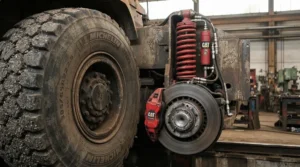
Now we’re firmly in beast-scooter territory. The Kaabo Wolf Warrior 11 pairs dual 1,200W motors (5,400W combined peak) with a 60V 35Ah battery to deliver an official 50 mph top speed — and unlike some manufacturer claims in this space, independent testers have largely corroborated that number in real conditions.
Here’s what the raw wattage doesn’t tell you: the Wolf Warrior 11’s drivetrain is essentially borrowed from the well-regarded Dualtron Thunder, which means the acceleration curve (0-15 mph in roughly 1.9 seconds) is genuinely aggressive rather than a marketing exaggeration. That’s not a scooter for a first ride — it’s a scooter that rewards riders who already respect what fast actually feels like. Front hydraulic shocks styled after motorcycle forks and rear spring suspension mean the Wolf Warrior 11 handles rough terrain about as well as anything on this list, on-road or off.
Aggregated review sentiment across long-term owner reports is largely positive on durability and power, though a recurring theme is that customer support experiences are mixed — some owners report fast resolution, others report frustration. One legitimate mechanical concern worth flagging honestly: a small number of owners have reported hydraulic fork fluid leaks and a loose accessory screw, though these appear to be uncommon given total units sold.
Pros:
- ✅ 50 mph top speed independently corroborated, not just claimed
- ✅ Motocross-inspired suspension handles off-road terrain confidently
- ✅ 93-mile claimed range among the best in the beast-scooter class
Cons:
- ❌ At 101 lbs, this is a two-person lift for stairs or car trunks
- ❌ Scattered reports of hydraulic fork leaks and loose hardware
Priced around $2,000–$2,500, the Kaabo Wolf Warrior 11 delivers genuine 50 mph performance for meaningfully less than several rivals that don’t even match its top speed.
7. Kaabo Wolf King GT — the ultimate top speed electric scooter for adults
At the very top of this list sits the Kaabo Wolf King GT, and the numbers explain why. Dual 2,000W motors (4,000W combined peak) paired with a 72V, 2,520Wh LG battery push this machine to a manufacturer-claimed 61–62 mph, a figure that multiple independent reviewers have backed up in controlled testing — placing it among the fastest production scooters a consumer can actually order and ride.
What separates the Wolf King GT from scooters that merely claim big numbers is the engineering underneath those numbers. Sine wave motor controllers (rather than the cheaper square wave controllers found on lesser scooters) deliver smoother, more linear power, which reviewers consistently describe as far less jarring than older Kaabo models at full throttle. Reviewers who’ve tested it note the added mass in the front forks isn’t a flaw — it’s a deliberate stability upgrade, since more rotational mass at the front wheel measurably reduces speed wobble at 55+ mph.
This is not a scooter for casual buyers, and every credible reviewer says so directly: at 115+ lbs and with acceleration violent enough to catch experienced riders off guard, the Wolf King GT demands full protective gear, a clear stretch of pavement, and genuine riding experience before you approach its top end.
Pros:
- ✅ 61–62 mph top speed places it near the top of consumer scooters
- ✅ Sine wave controllers deliver smoother power than older rivals
- ✅ Added front-end mass genuinely improves high-speed stability
Cons:
- ❌ Extreme weight (115+ lbs) makes it the least portable option here
- ❌ Price and power both demand serious rider experience first
At roughly $3,200–$3,800, the Kaabo Wolf King GT is the answer if the question is simply: what is the fastest electric scooter you can actually buy right now?
Top 7 Fastest Electric Scooters: Full Spec Comparison
| Scooter | Motor | Battery | Weight | Range | Rating (owner-reported) |
|---|---|---|---|---|---|
| Hiboy TITAN | 750W (1,200W peak) | 48V 18Ah | 77 lbs | 46 mi | 4.5/5 |
| Hiboy TITAN Pro | Dual, 2,400W peak | 48V 36Ah | ~90 lbs | 80 mi | 4.5/5 |
| Varla Eagle One | Dual 1,200W (3,200W peak) | 48V+ pack | ~77 lbs | 40–45 mi | 4.6/5 |
| Varla Eagle One Pro | Dual, up to 3,200W peak | Larger LG cell pack | ~88 lbs | 45 mi | 4.5/5 |
| Segway SuperScooter GT2 | Dual, 6,000W combined peak | 1,512Wh | 116 lbs | 55–56 mi | 4.4/5 |
| Kaabo Wolf Warrior 11 | Dual 1,200W (5,400W peak) | 60V 35Ah | 101 lbs | 93 mi | 4.5/5 |
| Kaabo Wolf King GT | Dual 2,000W (4,000W peak) | 72V 2,520Wh | 115+ lbs | 55 mi | 4.6/5 |
This table makes the trade-off curve obvious: weight climbs almost in lockstep with top speed, because the components needed to safely handle 50-60 mph — bigger batteries, heavier suspension, larger brakes — simply weigh more than what a 28 mph commuter scooter needs. If portability matters as much as speed to you, the Hiboy TITAN or Varla Eagle One deliver the best speed-to-weight ratio on this list. If raw range matters more, the Kaabo Wolf Warrior 11‘s 93-mile claim is hard to beat even against scooters costing more.
✨ Don’t Miss These Exclusive Deals!
🔍 Take your ride to the next level with these carefully selected high-speed scooters. Click on any highlighted model to check current pricing and availability — because a scooter this capable deserves a spot in your garage, not just your browser tab.
Practical Usage Guide: Getting the Most From a High-Speed Scooter
Buying the fastest electric scooter you can afford is only step one — actually riding it well takes a bit of technique that Amazon listings never mention. First 30 days matter most: nearly every serious injury reported in scooter forums happens in the first few weeks, usually because a new owner unlocks full throttle before learning how the scooter brakes, turns, and shifts weight at speed.
Start every new scooter in its lowest gear or speed mode, even if that feels painfully slow compared to the number on the box. Spend at least a few rides learning how the throttle responds and how quickly the brakes actually stop you — hydraulic brakes on a Kaabo Wolf Warrior 11 bite far harder than the cable-actuated brakes on a budget commuter scooter, and misjudging that difference is a common cause of over-the-bars accidents.
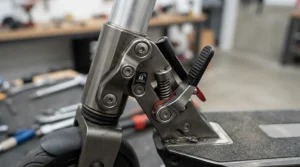
Maintenance-wise, tire pressure is the most overlooked variable. Pneumatic tires (like those on the Varla Eagle One) lose noticeable performance and stability when underinflated — check pressure weekly, not monthly. Battery connections and folding-stem bolts should get a manual check every 2-3 weeks on scooters ridden regularly, since vibration from higher speeds loosens hardware faster than it does on a slow commuter model. A common first-month mistake: charging a high-voltage pack (like the Wolf King GT’s 72V battery) with a non-OEM charger, which can damage cells or void warranties.
Finally, budget real time for the “optimization” most new owners skip: adjusting P-settings (available on Kaabo and Varla models) to match your weight and riding style rather than leaving factory defaults, which are tuned for an average 165-lb rider.
Real-World Scenarios: Which Fast Scooter Fits Your Life
Numbers on a spec sheet only mean something once you match them to an actual person’s actual commute.
If you’re a college student commuting 6 miles across a hilly campus and want speed without a four-figure investment, the Hiboy TITAN hits the sweet spot — fast enough to cut a 25-minute walk down to 12 minutes, light enough to carry into a dorm, and cheap enough that a scratch doesn’t cause a panic attack.
If you’re a suburban commuter covering 15-20 miles round trip on mixed bike lanes and side streets, the Varla Eagle One or Hiboy TITAN Pro make more sense — both offer enough range to skip daily charging and enough speed (33-43 mph) to keep pace with slower car traffic where legal, without the extreme weight of the beast-class scooters.
If you’re a weekend thrill-seeker with access to private land, closed industrial parks, or wide rural roads and genuinely want the fastest electric scooter experience available, the Kaabo Wolf Warrior 11 or Kaabo Wolf King GT deliver motorcycle-adjacent thrills — but only make sense if you already have riding experience, full protective gear, and a legal, safe place to actually use that top end.
High Speed Electric Scooter for Adults: Who Should (and Shouldn’t) Ride One
A high speed electric scooter for adults generally means anything capable of 28 mph or more — fast enough that a fall carries real injury risk, and fast enough that local speed laws frequently come into play. That’s not a reason to avoid the category; it’s a reason to be honest about fit.
Good candidates: experienced cyclists or motorcyclists who already understand braking distance and lean angle, commuters replacing a car for trips under 15 miles, and riders in areas with dedicated bike infrastructure away from heavy vehicle traffic. Less ideal candidates: total beginners to two-wheeled vehicles, riders without safe pavement to build skills gradually, and anyone unwilling to invest in real safety gear (covered in detail below).
Reviewers across nearly every model on this list repeat the same advice in different words: buy the fastest electric scooter your skill level can handle today, not the one you hope to grow into next year. A Kaabo Wolf King GT in inexperienced hands is a liability regardless of how good the components are.
How to Choose a Top Speed Electric Scooter for Adults
Picking the right model from a crowded field of fast scooters comes down to working through a handful of criteria in order, rather than fixating on the single biggest top-speed number.
- Define your realistic top speed need. Most riders never actually use more than 30-35 mph regularly — pick based on your commute, not your imagination.
- Check local speed and classification laws first. Many states treat scooters over 750W or 20 mph differently for registration purposes, so confirm before buying.
- Weigh portability against range. A 115-lb Wolf King GT isn’t going up apartment stairs daily — match weight to your actual storage situation.
- Prioritize brakes over horsepower. Dual hydraulic disc brakes matter more to safety than an extra 5 mph of top speed.
- Match tire type to your roads. Pneumatic tires smooth rough pavement; solid tires eliminate flats but ride harsher.
- Budget for safety gear separately. A genuine helmet, gloves, and pads add $150-300 that shouldn’t be an afterthought.
- Read aggregated owner reviews, not just marketing pages. Real complaints about hardware or support surface in forums long before they show up in official specs.
Motor Power Rating Explained: What the Watts Actually Mean
Every fast scooter listing throws around wattage numbers, but the motor power rating on the box rarely tells the full story. Manufacturers list two figures — “rated” (continuous) power and “peak” power — and the gap between them matters enormously. A scooter listing 1,200W peak but only 500W rated will struggle on sustained climbs even though the headline number looks impressive.
Dual-motor setups, like those found on the Varla Eagle One and Kaabo Wolf King GT, don’t just double top speed — they change how power is delivered. A single motor pushing near its limit tends to feel strained and can slip on wet pavement; splitting that same power across two brushless DC hub motors improves traction and thermal management, since each motor runs cooler than one motor doing all the work alone.
Voltage matters just as much as wattage here. The Wolf King GT’s 72V system delivers power more efficiently at high current draw than a 48V system pushing the same wattage, which is a big reason it can sustain 60+ mph without motors overheating the way a lower-voltage system would under similar load. In practice: when comparing two scooters with similar peak wattage claims, the one with higher voltage and dual motors will almost always deliver more usable, sustained speed on real roads.
Aerodynamic Design and Why It Matters at High Speeds
Below about 20 mph, aerodynamic design is nearly irrelevant to a scooter — rolling resistance and motor efficiency dominate. Above 35-40 mph, air resistance increases with the square of speed, meaning a scooter fighting wind at 50 mph is working dramatically harder than one cruising at 25 mph, even with identical motor output.
This is where scooter design starts borrowing more from motorcycles than bicycles. Models like the Kaabo Wolf King GT and Segway SuperScooter GT2 use wider handlebars and lower stem angles partly for control, but also because rider posture is the single biggest aerodynamic variable on a stand-up scooter — a rider crouched forward at 55 mph experiences meaningfully less drag than one standing bolt upright, directly affecting both top speed and range.
What most buyers overlook is that aerodynamic drag also eats into range at speed far more than most manufacturer estimates admit. A scooter rated for 55 miles of range at a moderate 20 mph pace might only deliver 25-30 miles when consistently ridden near its 45+ mph top end, simply because wind resistance is consuming so much more energy per mile. If range at genuinely high speed matters to your use case, treat manufacturer range figures as best-case numbers, not realistic ones.
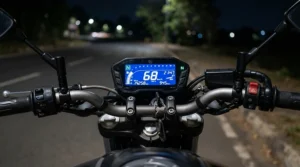
Safety Gear for High-Speed Riding
Safety gear for high speed riding isn’t optional at these speeds — it’s the difference between a scare and a hospital visit. The U.S. Consumer Product Safety Commission recommends a certified helmet along with knee and elbow pads for every e-scooter ride, and that advice becomes far more urgent once top speeds climb past 30-35 mph, where impact forces scale dramatically.
A standard bicycle helmet is genuinely inadequate above roughly 20 mph; independent helmet safety researchers recommend a downhill, BMX, or light motorcycle-rated helmet for anything faster, since those are tested against higher-force impacts. A study published in Pediatrics found that helmet use was tied to meaningfully lower odds of head injury among riders across recreational wheeled-sport accidents, reinforcing that the gear genuinely works — it’s just chronically underused among scooter riders specifically.
Beyond the helmet, gloves with palm padding prevent the road rash that’s almost universal in scooter falls, since instinctively bracing with open hands is the most common reflex in a low-speed tip-over. Knee and elbow pads matter more on beast-class scooters like the Kaabo Wolf Warrior 11, where higher weight means falls carry more momentum. Reflective clothing and supplemental lighting round out the list, especially since several models on this list, including the base Hiboy TITAN, aren’t rated for confident nighttime visibility on their stock lighting alone.
Electric Scooter 40 MPH vs Everyday Commuter Scooters
An electric scooter 40 mph and a typical commuter scooter capped at 15-20 mph aren’t really the same product category, even though they look similar folded up in a garage.
| Factor | 40 MPH+ Performance Scooter | Standard Commuter Scooter |
|---|---|---|
| Typical Motor | Dual, 1,000W+ per motor | Single, 250-500W |
| Braking System | Dual hydraulic disc | Mechanical disc or drum |
| Typical Weight | 75-115+ lbs | 30-45 lbs |
| Tire Size | 10-11 inch, pneumatic | 8-8.5 inch, solid or pneumatic |
| Best For | Experienced riders, longer commutes | New riders, short urban trips |
The practical gap here is bigger than the numbers suggest. A commuter scooter’s lighter mechanical brakes are perfectly adequate at 18 mph but genuinely dangerous if bolted to a motor capable of 40 mph — which is exactly why manufacturers of scooters like the Varla Eagle One invest so heavily in hydraulic systems instead. Weight tells a similar story: the extra 40-70 lbs on a performance scooter isn’t wasted bulk, it’s the suspension, battery, and braking hardware required to make 40+ mph survivable on real roads. If your commute genuinely needs speed and distance, a performance scooter earns its premium; if you’re moving six blocks to a train station, that extra weight and cost buys you nothing.
Common Mistakes When Buying a Fast Electric Scooter
The single most common mistake buyers make is purchasing based purely on the advertised top-speed number without checking whether that number is a manufacturer claim or an independently tested figure — the gap between the two can be 10-15% on some budget brands, though every model featured in this guide has real-world corroboration.
A second frequent error: ignoring weight entirely until delivery day. Buyers who need to carry a scooter up apartment stairs regularly are often blindsided by a 100+ lb Kaabo Wolf Warrior 11 arriving at their door — a scooter that reads great on a spec sheet but becomes a daily frustration in practice.
Third, many buyers underestimate charging time and treat a scooter like a phone that tops up overnight without a thought. Larger batteries, like the Wolf King GT’s 72V pack, can take considerably longer to fully charge, and using a non-OEM fast charger to shortcut that wait is a leading cause of premature battery degradation.
Finally, skipping a test of the return or warranty policy before buying is a mistake that only becomes obvious after something goes wrong — reputable retailers offer clear windows for defects, and it’s worth confirming that before, not after, checkout.
Long-Term Cost & Maintenance: The Real Price of Speed
The sticker price of the fastest electric scooter in your budget is only part of the real cost of ownership. Tires are the most frequent replacement item — pneumatic tires on high-speed models like the Varla Eagle One Pro typically need replacement every 500-1,000 miles of regular riding, running $30-60 per tire depending on size.
Brake pads on hydraulic systems (standard on the Kaabo Wolf Warrior 11 and Kaabo Wolf King GT) last longer than cable brakes but cost more to replace and occasionally require fluid bleeding, a service most owners pay a shop $40-80 to perform unless they’re comfortable doing it themselves. Battery packs represent the largest long-term cost: a quality lithium pack typically holds 70-80% of its original capacity after 500-800 full charge cycles, meaning a daily commuter scooter may need a replacement battery within 2-3 years, at a cost that can run several hundred dollars on higher-voltage models.
| Cost Category | Budget Tier (Hiboy TITAN) | Premium Tier (Wolf King GT) |
|---|---|---|
| Tire replacement (per tire) | $20-35 | $50-70 |
| Brake maintenance | $20-40/year | $60-100/year |
| Battery replacement (est.) | $150-250 | $400-600 |
| Typical usable lifespan | 2-3 years, moderate use | 3-5 years, well-maintained |
Looking at the table above, the value calculation isn’t as simple as “cheaper scooter equals cheaper ownership.” A well-maintained Kaabo Wolf King GT can outlast two budget scooters combined, spreading its higher upfront maintenance costs over a longer usable life. For buyers logging serious daily mileage, the total cost of ownership often favors the pricier, more durable build over repeatedly replacing a budget model.
Buyer’s Decision Framework: Match Your Riding Style to Your Scooter
If you’re short on time, use this simple framework instead of re-reading every spec above.
If you’re brand new to scooters and want to build confidence safely, choose the Hiboy TITAN because its 28 mph ceiling and single motor keep the learning curve manageable without feeling underpowered.
If you commute daily and want the best balance of speed, range, and price, choose the Varla Eagle One or Hiboy TITAN Pro because both deliver genuinely usable 33-43 mph performance without flagship pricing or flagship weight.
If range anxiety is your biggest concern and you don’t mind extra weight, choose the Kaabo Wolf Warrior 11 because its 93-mile claimed range leads this entire list by a wide margin.
If you want the outright fastest electric scooter available and have the experience and safety gear to match, choose the Kaabo Wolf King GT because nothing else here gets close to its 61-62 mph ceiling.
If polish and predictable engineering matter more to you than raw numbers, choose the Segway SuperScooter GT2 because its traction control and suspension are built for confidence at speed, not just bragging rights.

Frequently Asked Questions
❓ What is the fastest electric scooter you can currently buy?
❓ Is a 40 mph electric scooter legal to ride on the street?
❓ What safety gear do I need for a high speed electric scooter for adults?
❓ How much does motor power rating actually affect real-world speed?
❓ Are dual motor scooters worth the extra cost over single motor models?
Conclusion
Choosing the fastest electric scooter for your situation really comes down to being honest about three things: how fast you’ll actually ride regularly, how much weight you’re willing to carry or store, and how much you’re willing to invest in the safety gear that makes speeds like these survivable. The Hiboy TITAN and Hiboy TITAN Pro prove you don’t need flagship pricing to get real speed and range. The Varla Eagle One and Eagle One Pro hit the sweet spot most serious riders actually need. And if you genuinely want the ceiling of what’s available, the Kaabo Wolf Warrior 11 and Kaabo Wolf King GT deliver numbers that were unthinkable on a consumer scooter just a few years ago.
Whichever model you land on, treat the first month as a learning period, invest in real protective gear before your first high-speed ride, and check your local laws before you unlock full throttle. Speed like this is genuinely exhilarating — it’s also genuinely unforgiving if you rush the learning curve.
Recommended for You
- Performance Electric Scooter 2026: 7 Powerful Picks
- Standing Electric Scooter for Tall Riders: 7 Best Picks in 2026
- 7 Best Standing Electric Scooters for Adults in 2026
Disclaimer: This article contains affiliate links. As an Amazon Associate, I earn from qualifying purchases. If you purchase products through these links, we may earn a small commission at no additional cost to you.
✨ Found this helpful? Share it with your friends! 💬🤗
