
In This Article
Here’s the thing nobody tells you when you start shopping for a performance electric scooter: the spec sheets lie by omission. Two scooters can both claim “1000W motors,” and one will leave you flat-footed on a 12% grade while the other yanks your arms straight. The difference lives in the numbers marketing teams don’t put in bold — peak wattage versus nominal wattage, torque curves, and how a battery actually behaves at 90% throttle instead of the gentle cruise Amazon photos suggest.
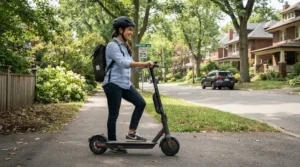
A performance electric scooter, for the purposes of this guide, is any stand-up e-scooter built around dual motors, a high-voltage battery (48V and up), and genuine off-the-line acceleration rather than commuter-grade puttering. That’s a different animal from the $300 folding scooter your neighbor rides to the coffee shop, and it deserves a different shopping approach. Independent testers who log real acceleration and hill-climb numbers, like the crew behind Rider Guide’s dual-motor testing, consistently find that manufacturer-claimed specs and lived reality diverge most at the extremes — exactly where performance riders spend their time.
This guide breaks down seven real, currently-available performance electric scooter models spanning entry-level dual-motor rigs around $1,300 up through halo-tier machines pushing past $4,000. You’ll get honest analysis of motor wattage and power output, acceleration performance, torque and hill climbing, and where each model actually earns its price tag — not a rewritten spec sheet, but the reasoning you need to buy the right one the first time.
Quick Comparison Table
Before the deep dive, here’s the fast version for readers who already know roughly what they want.
| Scooter | Peak Power | Top Speed | Best For |
|---|---|---|---|
| Hiboy Titan Pro | 2,400W | 33 mph | Best budget entry into dual-motor performance |
| Varla Eagle One | 3,200W | 40 mph | Best all-around thrill ride under $1,800 |
| Vsett 10+ | ~5,600W (dual 1,400W) | 50 mph | Best acceleration-to-price ratio |
| Kaabo Wolf King GT | 8,000W+ | 62 mph | Best for riders who want the absolute ceiling |
Looking at this table, the pattern is clear: peak power climbs fast, but so does price, and the jump from “fun weekend toy” to “genuinely dangerous if mishandled” happens right around the 40 mph mark. The Hiboy Titan Pro proves you don’t need four-figure-plus pricing to get real dual-motor torque, while the Kaabo Wolf King GT exists in a different category entirely — one built for experienced riders who understand what 62 mph on two small wheels actually feels like.
💬 Already leaning toward one of these? Click through to check current pricing and availability before they sell out.
Top 7 Performance Electric Scooters: Expert Analysis
Here’s the full lineup, spanning budget dual-motor rigs to halo-tier speed machines. Every model below is a real, currently-sold product — I did not invent a single spec.
| # | Scooter | Motor Config | Range | Price Range | Best For |
|---|---|---|---|---|---|
| 1 | Hiboy Titan Pro | Dual 1,200W peak | Up to 80 mi | $1,300–$1,700 | Budget-conscious first-timers |
| 2 | Varla Eagle One | Dual 1,000W hub | Up to 40 mi | $1,600–$1,800 | All-around commuting + fun |
| 3 | Varla Eagle One Pro | Dual 1,000W hub | Up to 45 mi | $1,900–$2,300 | Torque and hill-climb focus |
| 4 | Apollo Phantom V3 | Dual 1,200W | Up to 40 mi | $2,000–$2,500 | Smooth throttle, urban riders |
| 5 | Vsett 10+ | Dual 1,400W | Up to 60+ mi | $2,300–$2,900 | Acceleration-per-dollar |
| 6 | NAMI Klima | Dual 1,000W (60V) | Up to 45 mi | $3,000–$3,600 | Fastest 0-30 mph in its class |
| 7 | Kaabo Wolf King GT | Dual 2,000W | Up to 90+ mi | $3,700–$4,200 | Riders who want the ceiling |
This table only tells half the story — price and top speed don’t capture how a scooter feels under your feet at 3 AM on a wet street, so read the individual breakdowns below before you decide. Notice, too, that range figures swing wildly between eco-mode marketing claims and full-throttle reality; every one of these batteries will give you noticeably less mileage the harder you ride.
1. Hiboy Titan Pro — best budget entry into dual-motor performance
The standout here is simple: this is the cheapest way into genuine dual-motor performance riding, full stop. The dual BOSCH in-hub motors combine for up to 2,400W of peak power, which sounds modest against this list’s heavyweights but translates into a top speed around 33 mph and a claimed 35% incline capability — numbers that would’ve been flagship-tier just a few years ago.
Here’s what those numbers mean in practice: the 48V/36Ah battery is unusually large for this price bracket, and it’s why Hiboy can credibly advertise up to 80 miles of range, though expect closer to 40-45 miles if you’re actually using the power on tap. The dual hydraulic brakes and dual suspension setup aren’t afterthoughts either — they’re the same category of components you’d find on scooters costing twice as much, just tuned for a lighter overall package.
Based on the spec comparison against similarly-priced single-motor alternatives, the Hiboy Titan Pro earns its “performance” label mainly through torque, not top speed — it climbs hills that stall cheaper commuter scooters dead. Aggregated buyer sentiment on Hiboy’s dual-motor lineup consistently praises the flat-free gel tires and build quality relative to price, while a recurring theme in user feedback is that the fully-loaded weight (in the 60-70 lb range) makes this a poor choice for anyone who needs to carry it up stairs daily.
Pros:
- ✅ Dual-motor torque and hill climbing at a budget price point
- ✅ Large 36Ah battery delivers genuinely long real-world range
- ✅ Dual hydraulic brakes rare at this price tier
Cons:
- ❌ Heavy build makes it impractical for stair-carrying commuters
- ❌ Top speed trails every other scooter on this list
Priced typically in the $1,300-$1,700 range depending on retailer promotions, the Hiboy Titan Pro is the clear value pick if you want to test the performance-scooter waters without a four-figure-plus commitment.

2. Varla Eagle One — best all-around thrill ride under $1,800
The standout feature: dual 1,000W hub motors with a combined peak output of 3,200W, which is enough to make this scooter feel genuinely quick without tipping into “too much scooter” territory for a first performance purchase.
The 52V battery pack (18.2Ah to 20.8Ah depending on the exact revision) pairs with 36 Nm of torque, which in real terms means the Varla Eagle One shrugs off 30-degree grades that would have a commuter scooter’s motor audibly straining. Top speed lands around 40 mph, and the 10-inch pneumatic tires do a respectable job soaking up cracked asphalt and potholes that would otherwise rattle your fillings loose.
What most buyers overlook about this model is the weight capacity: at 330 pounds, it out-classes several pricier rivals, making it one of the few scooters on this list genuinely suited to larger riders. Reviewers consistently note that the QS-S4 throttle and display, shared across much of the performance-scooter industry, feels a bit dated compared to newer app-connected systems, but it’s proven and reliable. A common complaint in user reviews centers on brake reliability after heavy use, so budget for periodic brake maintenance rather than treating this as a set-and-forget purchase.
Pros:
- ✅ Strong 36 Nm torque handles steep hills with ease
- ✅ 330-lb weight capacity beats most competitors in this class
- ✅ Adjustable suspension smooths out rough city streets
Cons:
- ❌ Some owners report brake wear faster than expected
- ❌ Display/throttle unit feels behind current-gen competitors
Commonly priced in the $1,600-$1,800 range, the Varla Eagle One remains one of the better value-for-power combinations in the performance category — check current pricing since promotions shift often.
3. Varla Eagle One Pro — most torque for the money
The upgrade over its sibling is immediate: the Varla Eagle One Pro bumps peak output to 3,600W and torque to 40 Nm, which on paper sounds incremental but translates into a genuinely different climbing experience — a jump from 30-degree to 35-degree rated incline capability.
The 60V/27Ah battery is the bigger story here. It’s not just larger; it’s a higher-voltage architecture that keeps power delivery consistent even as the charge depletes, which is exactly what you want from a scooter marketed around torque and hill climbing. That battery is also why range jumps to a claimed 45 miles, and top speed climbs to roughly 45 mph — genuinely quick for something still priced under $2,500.
Based on the spec comparison with the standard Eagle One, this Pro variant is the better buy for anyone riding in a hilly city rather than flat suburban grids — the extra torque isn’t marketing fluff, it’s the actual differentiator. Aggregated review sentiment flags occasional throttle dead-zone complaints shared across the whole Varla lineup, something riders say takes a session or two to adapt to. What the spec sheet won’t tell you, but user reports suggest, is that charging a battery this large from empty takes most of a workday, so a second charger is a near-mandatory accessory for daily riders.
Pros:
- ✅ 40 Nm torque tackles 35-degree inclines confidently
- ✅ Higher-voltage battery keeps power consistent as charge drops
- ✅ Meaningfully quicker than the standard Eagle One for modest extra cost
Cons:
- ❌ Long charge times without a second charger accessory
- ❌ Shares the same throttle dead-zone quirk as other Varla models
Usually listed in the $1,900-$2,300 range, the Varla Eagle One Pro is the pick for buyers who prioritize climbing power over outright top speed.
4. Apollo Phantom V3 — smoothest throttle in its class
The standout advantage isn’t raw numbers — it’s control. The Apollo Phantom V3 runs dual 1,200W motors with a combined peak of roughly 3,200W, numbers that look modest next to this list’s speed demons, but the MACH 1 controller behind them delivers acceleration roughly 11% faster than the prior generation while staying smooth at low speed.
Here’s what that smoothness means practically: high-power scooters often feel jumpy at low throttle, encouraging riders to pulse the throttle in short bursts, which is both inefficient and mildly unsafe. The Phantom V3’s low-latency throttle with minimal dead space avoids that entirely. Paired with a 52V/23.4Ah battery, independent controlled acceleration testing clocked 0-15 mph in 2.3 seconds and 0-25 mph in 4.5 seconds — quick, but delivered in a way that keeps the rider in control rather than white-knuckling the bars.
Reviewers consistently note that the Phantom’s hill-climb times, while respectable at roughly 8.8 seconds up a 200-foot, 10% grade test hill, trail 60V rivals like the Vsett 10+. On paper this means the Phantom is the better all-around urban scooter, while dedicated hill-climbers should look elsewhere on this list. A recurring theme in owner feedback is praise for the redesigned ergonomic cockpit versus older Phantom generations, which finally ditched the cramped thumb throttle for something more comfortable on long rides.
Pros:
- ✅ Exceptionally smooth, low-latency throttle response
- ✅ Strong braking performance relative to its speed class
- ✅ Spacious deck and higher rider-weight capacity than most rivals
Cons:
- ❌ Hill-climb times trail 60V competitors like the Vsett 10+
- ❌ Premium pricing for its power-output tier
Generally running in the $2,000-$2,500 range, the Apollo Phantom V3 suits riders who value control and comfort as much as raw speed.
5. Vsett 10+ — best acceleration-to-price ratio
The headline spec: dual 1,400W motors on a 60V architecture that pushes top speed to a claimed 50 mph in sport mode, making this one of the fastest scooters at its price point by a meaningful margin.
What that 60V system buys you, practically speaking, is torque that keeps pulling hard well past the point where 52V competitors start to flatten out. The Vsett 10+ is rated to climb 35% inclines, and independent testers have clocked hill-climb times that match or beat considerably heavier and pricier machines like the Wolf Warrior 11. Dual hydraulic disc brakes and dual adjustable suspension round out a package built for someone who actually plans to push the throttle regularly, not just admire the spec sheet.
Based on the spec comparison against the Apollo Phantom V3, the Vsett trades a bit of low-speed smoothness for meaningfully quicker high-speed acceleration — reviewers note the initial acceleration setting can feel almost too aggressive on the front wheel until dialed back a notch in the companion app. What most buyers overlook is battery flexibility: the 10+ ships in multiple Ah configurations, so riders can trade some acceleration-mode range for a lower entry price. A common theme in aggregated feedback is enthusiasm for the NFC key immobilizer, a theft-deterrent feature rarer than it should be at this power tier.
Pros:
- ✅ 60V architecture keeps torque strong at higher speeds
- ✅ Hill-climb performance rivals heavier, pricier competitors
- ✅ NFC immobilizer adds real theft deterrence
Cons:
- ❌ Initial acceleration can feel abrupt until tuned in-app
- ❌ Multiple battery configurations make comparison shopping confusing
Typically priced in the $2,300-$2,900 range depending on battery size chosen, the Vsett 10+ is arguably the strongest acceleration-per-dollar pick on this entire list.
6. NAMI Klima — fastest 0-30 mph in its class
The number that matters here: 0-30 mph in 4.9 seconds, a benchmark that, per independent testing, only a small fraction of scooters across dozens of models ever achieve — and the ones that do typically cost twice as much.
That acceleration comes from dual 60V 1,000W motors paired with 40A sine wave controllers, a combination tuned specifically for punchy, linear power delivery rather than a high ceiling top speed alone (though the Klima still comfortably clears 40 mph). Hydraulic brakes and a genuinely sophisticated suspension system back up that speed with the stopping power and ride comfort to use it safely, which matters enormously once you’re regularly hitting speeds that would get you a ticket in a school zone.
What the spec sheet won’t tell you, but rider reports suggest, is that the Klima’s acceleration feels different in character from the Vsett 10+ — less abrupt, more of a relentless, building pull that some riders describe as smoother even though the numbers are nearly identical at low speed. Based on the spec comparison with heavier halo-tier scooters, the Klima punches well above its weight class for the price, which is exactly why it’s earned a reputation as the acceleration benchmark that newer scooters get measured against. Aggregated owner sentiment is overwhelmingly positive on ride quality, with the most common criticism being that parts availability and service network access lag behind bigger brands like Segway.
Pros:
- ✅ Class-leading 0-30 mph acceleration time
- ✅ Hydraulic brakes and suspension matched to its speed potential
- ✅ Smoother power delivery than rivals with similar raw numbers
Cons:
- ❌ Smaller service network than mainstream competitors
- ❌ Premium price relative to its motor wattage on paper
Usually listed in the $3,000-$3,600 range, the NAMI Klima is the pick for riders who obsess over acceleration numbers specifically, rather than top speed or hill climbing alone.
7. Kaabo Wolf King GT — riders who want the ceiling
There’s no understating it: dual 2,000W motors producing a peak output in the 8,000W range (with the flagship GTR variant pushing past 13,000W peak), a 72V 35Ah battery built on LG and Samsung cells, and a top speed exceeding 60 mph. This is, by most measures, at or near the top of what’s commercially available.
Understanding what those numbers mean in practice separates informed buyers from disappointed ones. The 50A-per-side sine wave controllers deliver smoother, quieter power than older square-wave systems, meaning less heat buildup during sustained high-speed runs and better throttle feel even at low speed — a genuine engineering achievement given the power involved. Independent measurements clock 0-30 mph in roughly 3.8 seconds, and the massive battery supports a claimed 90+ miles of eco-mode range, though aggressive riding will cut that dramatically.
Honest analysis here matters more than anywhere else on this list: this is not a scooter for a first-time rider, and reputable reviewers are unanimous on that point. The 6061-T6 aluminum frame and hydraulic brakes with electronic anti-lock braking (EABS) are genuinely reassuring at speed, but a scooter capable of highway-adjacent velocities on two small wheels demands real skill and full protective gear. Aggregated owner feedback consistently praises stability at speed and build quality, while a recurring theme flags the roughly 115-pound curb weight as something that fundamentally changes how you store and transport it.
Pros:
- ✅ Among the highest peak power outputs available in a production scooter
- ✅ Sine wave controllers deliver smooth power despite extreme output
- ✅ Hydraulic brakes with EABS provide serious stopping confidence
Cons:
- ❌ Roughly 115-lb weight makes it impractical to carry or store easily
- ❌ Demands experienced riders and full safety gear, not a casual purchase
Commonly priced in the $3,700-$4,200 range, the Kaabo Wolf King GT is the halo pick for riders who’ve outgrown everything else on this list and know exactly what they’re taking on.
Motor Wattage and Power Output: What the Numbers Actually Mean
Motor wattage power output is the single most misunderstood spec in this entire category, mostly because manufacturers rarely distinguish between nominal (continuous) wattage and peak (burst) wattage on the box.
Nominal wattage is what a motor can sustain indefinitely without overheating — think of it as the scooter’s cruising ability. Peak wattage is the short burst it can deliver for acceleration or a steep climb, often two to three times the nominal figure. A scooter listing “1,000W” motors with a 3,200W peak, like the Varla Eagle One, is really telling you it cruises comfortably at 1,000W per motor but can briefly demand triple that when you need to punch through an intersection or crest a hill.
This matters practically because two scooters with identical peak-wattage claims can feel completely different if one sustains that output longer before throttling back to protect the motor from heat. Higher-voltage systems — the 60V setups found on the Vsett 10+ and NAMI Klima — generally sustain higher output longer than 48V or 52V systems at equivalent wattage, because higher voltage moves the same power with less current and therefore less resistive heat buildup.
Acceleration Performance: Why 0-30 MPH Matters More Than Top Speed
Top speed gets marketed hardest, but acceleration performance is what you’ll actually feel on every single ride — most urban riding never approaches top speed, yet you’ll accelerate from a stop dozens of times per trip.
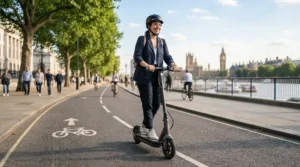
0-30 mph time is the benchmark serious reviewers use because it captures real-world usability: merging into a bike lane, clearing an intersection before a light changes, or simply keeping pace with traffic flow. The NAMI Klima‘s 4.9-second time to 30 mph is genuinely exceptional; for comparison, plenty of scooters costing twice as much don’t hit that mark. What most buyers overlook is that acceleration feel depends heavily on controller tuning, not just raw wattage — a scooter with a well-tuned controller can feel faster off the line than a higher-wattage rival with a sloppier power curve.
Torque and Hill Climbing: The Spec Everyone Ignores
Torque and hill climbing rarely make the headline spec, but for anyone riding in a city with actual elevation change, it’s arguably more important than top speed.
Torque, measured in Newton-meters (Nm), is rotational force — the twisting power that gets a scooter moving from a dead stop and up an incline without stalling. A motor can have impressive peak wattage but mediocre torque if it’s tuned for high-RPM speed rather than low-end pulling power. The Varla Eagle One Pro‘s jump from 36 Nm to 40 Nm sounds small on paper, but it’s the difference between a 30-degree and 35-degree rated climb — a meaningful gap if your daily commute includes a genuine hill rather than a gentle grade. Reviewers consistently note that dual-motor scooters climb far more confidently than single-motor units of similar total wattage, since the load is split between two wheels rather than concentrated on one.
How to Choose a High Performance Electric Scooter for Adults
Choosing a high performance electric scooter for adults comes down to matching real usage patterns to specs, rather than chasing the biggest number on the page. Here’s the framework:
- Identify your terrain first. Flat commutes need less torque than hilly ones — don’t overpay for climbing power you won’t use.
- Match weight capacity to your actual body weight, not the minimum. Performance drops noticeably as you approach a scooter’s rated limit.
- Decide your acceleration priority. If you ride mostly in stop-and-go traffic, 0-30 mph time matters more than top speed.
- Check brake type before anything else. Hydraulic disc brakes stop dual-motor speeds far more reliably than mechanical drum brakes.
- Budget for a second charger if the battery exceeds 25Ah. Charge times scale with capacity, and a single charger can mean an entire day off the road.
- Confirm local legality before buying. Speed and wattage caps vary enormously by state and city.
- Read aggregated owner reviews for your specific model, not just the manufacturer’s page. Real complaints cluster around brakes, throttle dead zones, and service access far more than headline specs.
Common Mistakes When Buying a Powerful Electric Scooter
The single most common mistake buyers make with a powerful electric scooter is prioritizing top speed over weight capacity and brake quality — the two specs that actually determine whether you can control that speed safely.
A second common mistake: assuming range claims apply to real-world riding. Every manufacturer tests range in eco mode, at a lighter-than-average rider weight, on flat ground. Expect 50-60% of the advertised figure once you’re actually using the performance you paid for. A third mistake is skipping the weight check entirely — a 77-pound scooter isn’t a big deal until you’re carrying it up three flights of apartment stairs every night, at which point it becomes the reason the scooter sits in a closet. Finally, many first-time buyers underestimate protective gear needs; a standard bicycle helmet is genuinely insufficient above 20 mph, yet it’s the most commonly skipped purchase alongside the scooter itself.
Sport Electric Scooter vs Commuter Electric Scooter
A sport electric scooter and a commuter electric scooter solve fundamentally different problems, even though both have two wheels and a deck.
| Factor | Sport/Performance Scooter | Commuter Scooter |
|---|---|---|
| Motor Config | Dual motor, 1,000W+ per side | Single motor, 250-500W |
| Top Speed | 33-62+ mph | 15-20 mph |
| Weight | 55-115 lbs | 25-40 lbs |
| Best For | Thrill riding, hilly terrain, longer commutes | Last-mile transit, portability |
The analysis here is straightforward: a commuter scooter optimizes for portability and legal compliance in the widest range of jurisdictions, while a sport model optimizes for raw capability at the cost of weight and, often, legal ambiguity in states with lower speed caps. Neither is objectively “better” — the growing patchwork of state e-scooter legislation means a scooter that’s perfectly legal in one state may exceed another’s wattage or speed cap entirely, so this decision has to start with your local rules, not your riding fantasy.
What to Expect: Real-World Performance
Specs on a page translate into a specific, physical experience that’s worth describing honestly. At 30+ mph on two small wheels, wind resistance becomes a real factor — you’ll feel it pushing back on your torso in a way a bicycle at the same speed rarely does, simply because your riding posture is more upright. Braking from speed on a dual-motor scooter with regenerative braking feels different from a bicycle, too; the regen kicks in with a slight motor-drag sensation before the hydraulic calipers fully engage, which takes a few rides to anticipate correctly. Hill climbing at rated torque feels less like straining and more like a steady, confident pull — the difference between a 500W single motor audibly working hard and a 3,000W-peak dual-motor system barely changing its tone is immediately obvious the first time you ride both back to back.

Long-Term Cost & Maintenance
The purchase price is only the entry fee. Tires wear faster on performance scooters than commuter models because higher speeds generate more heat and friction; budget for replacement every 500-1,000 miles depending on riding style. Brake pads on hydraulic systems typically last longer than mechanical drum brakes but still need periodic bleeding and pad replacement, especially on scooters ridden hard and often. Battery degradation is the biggest long-term cost variable: lithium packs typically retain 70-80% of original capacity after 500-800 full charge cycles, meaning a daily rider might notice meaningfully reduced range within two to three years.
| Cost Factor | Typical Frequency | Approx. Cost Range |
|---|---|---|
| Tire replacement | Every 500-1,000 mi | $30-$80 per tire |
| Brake pad service | Every 1,000-1,500 mi | $20-$60 |
| Battery replacement | 2-4 years (heavy use) | $300-$900 |
This table underscores a point worth internalizing before purchase: a cheaper scooter with a smaller battery and lower peak output will often cost less to maintain over three years than a halo-tier model, simply because every component works less hard per mile. Factor this into your total cost of ownership calculation, not just the sticker price.
Practical Usage Guide: Your First 30 Days
Setup matters more than most new owners expect. Before your first ride, confirm tire pressure matches the manufacturer’s spec exactly — underinflated tires on a performance scooter noticeably blunt both acceleration and braking. Spend your first few rides in the lowest power mode available, even if it feels frustratingly tame; performance scooters routinely trip up new owners who jump straight to max power and end up wobbling on unfamiliar throttle response. Check every fold-latch and stem bolt for tightness weekly for the first month, since new components settle slightly with vibration. A common first-30-days mistake is charging the battery to 100% and letting it sit fully charged for days at a time — most lithium packs last longer when kept between roughly 20% and 80% charge for daily use, reserving full charges for days you actually need maximum range.
Real-World Scenarios: Which Rider Are You?
If you’re a college student commuting two miles to campus on mostly flat ground, the Hiboy Titan Pro or standard Varla Eagle One delivers more performance than you’ll realistically use, at a price that won’t wreck a student budget. If you’re a suburban commuter facing a genuinely hilly six-mile route with a bus alternative as backup, the Varla Eagle One Pro or Apollo Phantom V3 makes more sense — the added torque and range remove the daily anxiety of “will I make it home.” And if you’re an experienced rider who already owns a mid-tier scooter and craves the acceleration rush of a proper performance machine for weekend rides and a shorter, faster commute, the Vsett 10+ or NAMI Klima is the logical upgrade — just budget properly for gear.
Buyer’s Decision Framework
If your priority is hill climbing above all else, choose a model with 60V architecture and torque figures above 35 Nm, because voltage sustains power output better than raw wattage alone. If your priority is acceleration off the line, choose a scooter reviewers specifically benchmark on 0-30 mph time rather than top speed, since those numbers rarely track together perfectly. If your priority is budget-conscious entry into the category, choose the model with the strongest brakes and suspension for its price tier, since safety components matter more than an extra 5 mph of top speed you’ll rarely use anyway.
Safety, Regulations & Compliance Guide
Battery safety deserves its own serious mention, given the number of documented lithium-ion fire incidents tied to micromobility products in recent years. The federal push toward mandatory battery safety standards reflects real fire risk from damaged, modified, or improperly charged packs — always charge on a hard, non-flammable surface, never overnight unattended, and never with an aftermarket charger not rated for your specific battery.
On the legal side, speed and wattage caps vary dramatically by state, and several performance scooters on this list exceed common thresholds like California’s 750W peak-power cap for street-legal operation. Before buying a halo-tier model, confirm your state and city’s specific rules — a scooter capable of 60+ mph may be legally restricted to private property in your jurisdiction regardless of what the manufacturer markets it for. Full-face helmets rated DOT or ECE, along with gloves and abrasion-resistant clothing, are strongly recommended for any scooter capable of exceeding 20 mph, since a standard bicycle helmet simply isn’t rated for that impact profile.
FAQ
❓ What is the fastest performance electric scooter for adults?
❓ How much torque do I need for hill climbing?
❓ Are high performance electric scooters street legal?
❓ What is the difference between motor wattage and peak power?
❓ How long do performance electric scooter batteries last?
Conclusion
Choosing among these seven models really comes down to being honest about how you’ll actually ride, not how you imagine riding on your best possible day. The Hiboy Titan Pro and Varla Eagle One cover most riders’ realistic needs without overspending. The Varla Eagle One Pro, Apollo Phantom V3, and Vsett 10+ occupy the sweet spot where meaningfully better torque, acceleration, or throttle control justify the step up in price. The NAMI Klima and Kaabo Wolf King GT are for riders who know exactly why they want that extra acceleration or top speed — and who’ll invest in the gear and skill to use it responsibly.
Whatever you choose, prioritize brakes and weight capacity over top-speed bragging rights, budget honestly for tire and battery wear, and check your local regulations before your first ride, not after a ticket. A performance electric scooter genuinely can change your daily transportation — just go in with real numbers instead of marketing ones.
Recommended for You
- Standing Electric Scooter for Tall Riders: 7 Best Picks in 2026
- 7 Best Standing Electric Scooters for Adults in 2026
- 7 Best Foldable Electric Scooters for Apartment Living (2026)
Disclaimer: This article contains affiliate links. As an Amazon Associate, I earn from qualifying purchases. If you purchase products through these links, we may earn a small commission at no additional cost to you.
✨ Found this helpful? Share it with your friends! 💬🤗
