

In This Article
Pavement is boring. That’s the whole pitch behind an off road electric scooter, and if you’ve ever watched a standard commuter scooter buckle over a curb or shudder across gravel, you already understand why. An off road electric scooter is a heavier-duty version of the ride-share scooter you’re used to seeing on city sidewalks — built with bigger motors, knobby pneumatic tires, and real suspension so it can handle dirt trails, gravel roads, and steep grades without rattling your teeth loose. That’s the whole definition in one breath, but the category itself is a lot messier than marketing copy makes it sound, because “off-road” gets slapped on scooters that can barely survive a pothole.

We spent time digging through 2026’s crop of dual-motor beasts, budget dirt-runners, and everything in between — cross-referencing manufacturer specs against real rider feedback from forums and owner communities — to land on seven models worth your money. As the E-scooter entry on Wikipedia notes, the category has ballooned in complexity since 2017, and the off-road subset has splintered even further into budget trail-runners, mid-range all-rounders, and genuine hyper-scooters that cost as much as a used motorcycle.
This guide breaks all of that down. You’ll get a quick comparison table if you’re in a hurry, deep dives on all seven scooters if you want the full picture, and dedicated sections on the specs that actually separate a real off road electric scooter from a commuter model wearing knobby tires for show — suspension travel, tread pattern, ground clearance, and the rest. Whether you’re shopping for weekend trail rides, a rougher-than-average commute, or you just want the biggest dual-motor rig your garage can hold, there’s a section here built for you.
Quick Comparison Table: Off Road Electric Scooters at a Glance
Before the deep dives, here’s the fast version. This table pulls the numbers that matter most for off-road capability — motor power, suspension type, tire size, and range — so you can shortlist before reading further.
| Scooter | Motor Power | Suspension | Tire Size | Range | Best For |
|---|---|---|---|---|---|
| Segway ZT3 Pro | 1,600W peak | Dual spring | 11-inch tubeless | ~43.5 miles | Brand reliability + all-around trail use |
| AONIU M4 | Single motor | Front spring | 10-inch pneumatic | ~31 miles | Tightest budget under $400 |
| CUNFON RZ1000 | 3,200W peak dual | Air-hydraulic dual | 10.5-inch pneumatic | 40-50 miles | Maximum power, hyper-scooter buyers |
| Sttkle J11 MAX | Single motor, 34 mph | Dual spring | 11-inch off-road | Mid-range | Fastest single-motor value pick |
| Hapali A16 | 1,200W | Dual | 11-inch fat tire | Mid-range | Budget-conscious dual suspension |
| isinwheel GT4 | 2,400W combined dual | Dual | Pneumatic off-road | Up to 50 miles | Longest range on a dual-motor rig |
| GoTrax GX3 | Dual motor | Dual | Pneumatic off-road | Long-range | Everyday all-rounder, dirt and pavement |
Reading across the table, the pattern that jumps out is how much suspension quality tracks with price rather than motor size alone — the CUNFON RZ1000 and isinwheel GT4 both lean on genuinely engineered dual suspension, while budget entries like the AONIU M4 trade suspension travel for a lower price tag. Range numbers are also less predictable than they look on paper; manufacturer claims for the CUNFON RZ1000‘s 40-50 mile range assume Eco mode and a lighter rider, so treat every figure here as a ceiling, not a guarantee. If your priority is raw capability over budget, the Segway ZT3 Pro and GoTrax GX3 balance the widest range of terrain types without demanding hyper-scooter money.
💬 Found a favorite already? Bookmark this table and scroll down for the full breakdown on each pick.
Top 7 Off Road Electric Scooters: Expert Analysis
Here’s the deep dive. Each of these seven made the cut for a specific reason — budget capability, raw power, all-around balance, or a spec sheet that outperforms its price bracket. We’ve grouped them loosely from value-driven to premium, but read the “who it’s for” logic in each entry rather than assuming higher price automatically means better fit for you.
1. Segway ZT3 Pro — best all-around brand reliability
The Segway ZT3 Pro earns its reputation the unglamorous way: by being consistently good rather than spectacular in any one category. Its 1,600W peak motor isn’t the biggest number on this list, but paired with 11-inch tubeless tires and genuine dual suspension, it’s tuned for composure rather than drag-strip acceleration. The claimed 43.5-mile range and a 4-hour flash charge mean you’re not stuck waiting around after a long trail session, and the adjustable handlebar accommodating riders from roughly 5-foot-2 to 6-foot-6 solves a fit problem most scooter brands ignore entirely.
What most buyers overlook about the ZT3 Pro is that Segway’s brand backing translates into something harder to quantify than watts: parts availability, warranty support, and a company that will likely still exist to service your scooter in three years.
Riders across owner forums consistently flag the traction control system as the standout feature for loose gravel and wet pavement, where cheaper scooters tend to spin out the rear wheel. It’s the pick for someone who wants one scooter that handles a dirt trail on Saturday and a rainy commute on Monday without drama.
Pros:
- ✅ Dual suspension with traction control for loose surfaces
- ✅ Strong brand warranty and parts support
- ✅ Adjustable handlebar fits a wide range of rider heights
Cons:
- ❌ Not the fastest or most powerful in this lineup
- ❌ Premium pricing compared to similarly specced competitors
Expect the Segway ZT3 Pro to land in the four-figure range, typically hovering around $1,000-$1,300 depending on retailer promotions — always check current pricing, since it fluctuates. For riders who value dependability over bragging rights, it’s one of the stronger value propositions here.

2. AONIU M4 — best budget pick under $400
If your budget is the primary constraint, the AONIU M4 is where this category starts. Its 10-inch pneumatic tires and front suspension won’t tame a rocky descent, but for gravel paths, packed dirt, and grass, they do the job most casual riders actually need.
The claimed 31-mile range is respectable for the price point, and the removable seat is a small but genuinely useful touch — it turns a stand-up scooter into something closer to a mini e-moped for longer rides, which matters if your “off-road” use case is really a bumpy half-mile driveway rather than a mountain trail.
Based on the spec comparison against pricier rivals, the trade-off is obvious and honest: you’re sacrificing suspension travel and top-end power to hit a price most other scooters on this list don’t touch. Owner discussion around budget scooters in this class tends to flag the same theme — solid value for light-duty off-road use, with the caveat that steep hills and rough rock gardens will expose the single motor’s limits faster than on dual-motor competitors.
Pros:
- ✅ Lowest price point in this entire lineup
- ✅ Removable seat adds comfort for longer rides
- ✅ Pneumatic tires handle grass and packed dirt fine
Cons:
- ❌ Front-only suspension struggles on rougher terrain
- ❌ Single motor limits performance on steep grades
Pricing on the AONIU M4 typically sits under $400, making it one of the only genuinely budget-friendly entries with real pneumatic tires. At that price, it’s less a trail scooter and more a rugged errand-runner — know which one you’re actually buying before you check out.
3. CUNFON RZ1000 — most powerful dual-motor hyper scooter
This is the scooter you buy when “off-road capable” isn’t aggressive enough and you want “off-road dominant.” The CUNFON RZ1000 pairs twin 1,600W motors into a combined 3,200W peak output, launching from 0 to 31 mph in roughly 8 seconds — numbers that put it closer to a small motorcycle than a commuter scooter.
What the spec sheet won’t tell you outright is how much that power depends on the 1,152Wh battery pack, which is also what drives its class-leading 40-50 mile range claim. The 10.5-inch pneumatic off-road tires paired with air-hydraulic damping suspension are genuinely adjustable, letting you stiffen the ride for pavement or soften it for washboard dirt roads — a feature that budget scooters simply can’t replicate with basic spring suspension.
Here’s what to weigh before buying: this level of power comes with a learning curve and a weight penalty, so first-time riders should approach the throttle with real caution. Rider discussion around high-power dual-motor scooters consistently notes that hill-climbing and loose-sand performance are where the extra wattage pays off most obviously compared to single-motor alternatives.
Pros:
- ✅ Class-leading 3,200W peak power output
- ✅ Adjustable air-hydraulic suspension for varied terrain
- ✅ Longest realistic range in this comparison
Cons:
- ❌ Steep learning curve for inexperienced riders
- ❌ Heaviest scooter on this list, hurting portability
The CUNFON RZ1000 commands premium pricing, generally landing in the $1,800-$2,200 range at the time of research — treat that as a ballpark, since hyper-scooter pricing shifts often. For serious off-road enthusiasts who’ve outgrown mid-range scooters, it’s arguably the most complete power package here.
4. Sttkle J11 MAX — fastest single-motor value pick
Dual-motor scooters get all the attention, but the Sttkle J11 MAX makes a compelling case that a well-tuned single motor still has a place in serious off-road conversations. At a 34 mph top speed, it’s the fastest single-motor scooter in this roundup, and it pairs that speed with 11-inch off-road tires and genuine dual suspension — a combination budget scooters usually skip in favor of cheaper components.
Based on the spec comparison, what makes the J11 MAX stand out isn’t raw wattage; it’s that Sttkle didn’t cut suspension corners just because it’s a single-motor build, which is exactly the corner most competitors in its price bracket do cut. Reviewers consistently note that the ride quality on washboard gravel feels closer to scooters costing several hundred dollars more, largely thanks to that dual suspension setup.
It’s the pick for someone who wants speed and comfort without paying the dual-motor traction tax, understanding they’ll trade some hill-climbing torque for it.
Pros:
- ✅ Fastest single-motor scooter in this comparison
- ✅ Dual suspension rare at this price bracket
- ✅ Strong value-to-performance ratio
Cons:
- ❌ Single motor means less traction on steep or loose terrain
- ❌ Less powerful hill-climbing than dual-motor rivals
Expect the Sttkle J11 MAX to sit in the mid-range price bracket, generally somewhere in the $600-$800 range depending on promotions. For budget-conscious riders who still want real suspension, this is one of the smarter value plays on this list.
5. Hapali A16 — best budget dual-suspension all-rounder
The Hapali A16 occupies a sweet spot that’s surprisingly hard to find: genuine dual suspension and 11-inch fat tires without hyper-scooter pricing. During real-world use on uneven asphalt and gravel paths, the fat tires do a noticeably better job absorbing surface vibration than the thinner tires found on cheaper competitors, and the dual suspension keeps the deck stable rather than letting the frame telegraph every bump straight into your wrists.
The 1,200W motor won’t set speed records, but it delivers enough torque for steep residential hills and mixed surfaces without straining — What most buyers overlook here is that Eco Mode isn’t just a battery gimmick; it meaningfully extends range on longer weekend rides where you’re not chasing top speed anyway.
Aggregated owner feedback on mixed-terrain riders in this price class tends to praise the comfort-per-dollar ratio specifically, which tracks with the spec sheet. It’s a strong pick for someone who rides gravel paths and broken pavement regularly but doesn’t need dual-motor power to get there.
Pros:
- ✅ Genuine dual suspension at a below-premium price
- ✅ 11-inch fat tires absorb vibration well
- ✅ Eco Mode meaningfully extends weekend-ride range
Cons:
- ❌ 1,200W motor caps performance on the steepest grades
- ❌ Less brand recognition than Segway or GoTrax
Pricing on the Hapali A16 typically falls in the $700-$900 range, positioning it squarely between budget and mid-tier competitors. For mixed-terrain commuters who want comfort more than speed, it punches above its price bracket.

6. isinwheel GT4 — longest range on a dual-motor rig
Built for riders who expect steeper grades and longer sessions, the isinwheel GT4 pairs dual 1,200W motors into a combined 2,400W setup that claims a 45 mph top speed on paper. What actually matters more for most buyers is the claimed range of up to 50 miles, which — if it holds anywhere close to real-world conditions — makes the GT4 one of the few dual-motor scooters that doesn’t force a choice between power and endurance.
Based on the spec comparison against similarly powered rivals, dual motors typically eat into range fast under load, so a scooter claiming both strong wattage and long range deserves a healthy dose of skepticism until independently verified on your specific terrain and rider weight. That said, the underlying logic checks out: bigger battery capacity paired with efficient dual-motor torque distribution is exactly how manufacturers close that gap.
This is the scooter for taller or heavier riders who routinely ride on inconsistent terrain and don’t want to plan their route around a charging outlet.
Pros:
- ✅ Strong claimed range for a dual-motor scooter
- ✅ 2,400W combined output handles steep grades
- ✅ Suited to taller and heavier riders
Cons:
- ❌ Real-world range likely falls short of the 50-mile claim
- ❌ Higher weight makes it less portable
The isinwheel GT4 generally lands in the $1,300-$1,600 range at the time of research. For riders prioritizing range alongside real dual-motor power, it’s one of the more compelling mid-premium options here.
7. GoTrax GX3 — everyday all-rounder for dirt and pavement
Rounding out the list, the GoTrax GX3 earns its “best overall value” reputation by refusing to specialize too hard in any one direction. Dual motors and real suspension give it enough off-road credibility for gravel paths and moderate trails, while its overall usability — ergonomics, braking feel, and daily-use practicality — keeps it comfortable as a regular commuter, too.
Here’s what to weigh: the GX3 isn’t chasing the horsepower numbers of the CUNFON RZ1000 or the ultra-budget pricing of the AONIU M4; it’s aiming for the widest usable middle ground, and largely hitting it. What most buyers overlook is that “big range for the price” claims on dual-motor scooters are easy to write and hard to verify, so factor in rider weight and terrain when estimating your real mileage rather than trusting the headline number outright.
Owner discussion around the GX3 frequently highlights daily usability — comfortable deck size, predictable braking — as the differentiator over flashier but less livable competitors.
Pros:
- ✅ Balanced performance across pavement and dirt
- ✅ Comfortable daily-use ergonomics
- ✅ Strong reputation for value relative to features
Cons:
- ❌ Not a specialist for extreme off-road conditions
- ❌ Pricing rises close to premium territory during peak demand
Pricing on the GoTrax GX3 commonly sits in the $1,600-$1,800 range, occasionally dipping lower during promotions — always verify current pricing before buying. As an everyday all-rounder that still handles real off-road electric scooter duty on weekends, it’s a genuinely smart middle-ground pick.
Practical Usage Guide: Your First 30 Days Off-Road
Buying the scooter is the easy part. The first month is where most riders either build good habits or develop expensive ones. Start by riding your new off road electric scooter on familiar, low-stakes terrain — an empty parking lot or a flat gravel path — before pushing into steeper grades or rougher trails. This lets you learn throttle response and brake feel without surprises. Check tire pressure weekly if you’re running pneumatic tires; under-inflated tires increase rolling resistance and rob range, while over-inflated tires transmit more impact straight through to the suspension.
Maintenance in month one should include checking that every bolt on the stem and folding mechanism is torqued properly — vibration from rough terrain loosens hardware faster than smooth pavement ever will. Charge the battery after every ride rather than letting it sit depleted, and avoid charging immediately after a hard ride while the battery pack is still warm. The most common mistake new off-road riders make is treating suspension settings as “set and forget” — most dual suspension systems have at least basic preload adjustment, and dialing that in for your weight and typical terrain meaningfully improves both comfort and control within the first few rides.
Real-World Scenarios: Who Should Buy Which Scooter
Sometimes it’s easier to see yourself in a use case than to compare spec sheets. If you’re a college student commuting two miles across a mixed-surface campus with the occasional grass shortcut, something like the AONIU M4 or Sttkle J11 MAX covers your needs without overspending on power you’ll never use. If you’re a weekend trail rider who wants to explore fire roads and packed-dirt paths outside a mid-size town, the Hapali A16 or Segway ZT3 Pro balance comfort and capability without hyper-scooter pricing.
If you’re a heavier or taller rider — say, over 220 pounds — routinely riding inconsistent terrain with real elevation change, the isinwheel GT4 or GoTrax GX3 offer the torque and range headroom that lighter-duty scooters lack. And if you’re an experienced rider who wants genuine off-road performance on loose gravel, sand, or steep unpaved grades and treats speed as a feature rather than a risk, the CUNFON RZ1000 is built specifically for that scenario — just budget time to learn its throttle before pushing it hard.
Problem → Solution: Fixing Common Off-Road Scooter Headaches
Even a well-chosen off road electric scooter runs into predictable problems. Here’s how to handle the most common ones. Loss of traction on loose gravel or wet grass usually comes down to tire pressure or tread wear rather than motor power — dropping pressure slightly on pneumatic tires increases the contact patch and often solves it immediately. Reduced range in cold weather is a battery chemistry issue, not a defect; lithium batteries lose 15-20% capacity below freezing, so plan shorter routes in winter rather than assuming something’s broken.
Harsh, jarring rides on rough trails despite having suspension usually mean the preload or damping hasn’t been adjusted for your weight — most dual suspension systems ship tuned for an average rider and need dialing in. Finally, brake fade on long descents is common on cheaper mechanical disc brakes; if you’re regularly riding hilly, unpaved terrain, prioritize a scooter with hydraulic brakes or ride the descent in shorter controlled bursts rather than one continuous brake application.
How to Choose an Off Road Electric Scooter
Cutting through spec-sheet noise comes down to a handful of criteria that actually predict real-world performance:
- Motor power matched to terrain, not ego. 800W handles gravel and grass fine; steep hills, mud, and sand genuinely need 1,200W or dual-motor setups.
- Suspension type and travel. Dual suspension outperforms front-only setups on anything rougher than packed dirt, and hydraulic damping beats basic spring suspension on sustained rough terrain.
- Tire size and tread pattern. Larger pneumatic tires (10-11 inches) with aggressive knobby tread absorb impacts better and grip loose surfaces more predictably than smaller street-oriented tires.
- Realistic range, not marketing range. Subtract roughly 20-30% from any manufacturer claim to estimate real-world mileage under load.
- Weight capacity and rider fit. Check the stated weight limit against your actual riding weight plus gear, not just your body weight alone.
- Safety certification. Look for UL 2272 compliance, which the CPSC’s voluntary standards program references specifically for battery-powered scooters and hoverboards.
- Brand support and parts availability. A slightly higher price from an established brand often beats a cheaper scooter you can’t get replacement parts for in six months.
Common Mistakes When Buying an Off Road Electric Scooter
The single most common mistake is buying based on top speed alone. A 45 mph scooter with weak suspension and small tires will feel worse on real dirt than a 25 mph scooter with proper dual suspension — speed on a spec sheet doesn’t translate to control on loose gravel. A close second is ignoring weight capacity margins; buying right at your body weight limit, with no room for a backpack or cargo, quietly shortens both range and component lifespan.
Buyers also frequently underestimate charging time versus their actual riding schedule, ending up with a scooter that needs an 8-hour charge when they only have evenings free. And per federal safety data on micromobility injuries, brake-related incidents are disproportionately common — meaning brake quality deserves far more buying attention than it typically gets relative to motor wattage or top speed.
All Terrain Electric Scooter vs Standard Commuter Scooter
The gap between an all terrain electric scooter and a standard commuter scooter isn’t cosmetic — it’s structural. Standard commuter scooters use small, hard, or semi-pneumatic tires optimized for smooth pavement, paired with minimal or no suspension because sidewalks and bike lanes don’t demand it. An all terrain electric scooter flips every one of those priorities: larger pneumatic tires with aggressive tread, real suspension travel, and typically a more powerful motor to maintain speed against the extra rolling resistance that comes with rougher ground.
The trade-off is real, though. All terrain electric scooters are heavier, often 5-15 pounds more than commuter equivalents, which matters if you’re carrying yours up apartment stairs daily. They also tend to sacrifice some top-end pavement efficiency — that aggressive tread pattern creates more rolling resistance on smooth asphalt than a slick commuter tire would. If 90% of your riding is smooth bike lanes with the occasional gravel patch, a commuter scooter with decent tires might genuinely serve you better than an all terrain electric scooter you’re overpaying to underuse.

Off Road Electric Scooter for Adults: What to Expect
Marketing aside, an off road electric scooter for adults behaves differently than the kid-oriented scooters most people picture. Weight capacities typically run from 220 to 350+ pounds depending on the model, and adult-oriented builds prioritize a wider deck, taller handlebar range, and considerably more powerful motors — often 800W to 3,200W peak, compared to the sub-250W motors found on children’s models. Expect a genuine learning curve in the first few rides: adult off-road scooters carry real momentum, and braking distances on loose gravel are longer than intuition suggests.
Physically, adults riding regularly on rough terrain should expect more fatigue through the legs and core than commuter-scooter riding produces, since absorbing bumps even with good suspension still requires active knee-bend and weight-shifting. Safety gear matters more here, too — helmets, wrist guards, and closed-toe shoes aren’t optional accessories for serious off-road use, they’re the difference between a minor spill and a genuine injury on unpaved terrain.
Features That Actually Matter (And Those That Don’t)
Marketing copy loves top speed and motor wattage because they’re easy numbers to headline. The features that actually determine whether an off road electric scooter with suspension performs well on real terrain are quieter but far more important.
Dual suspension systems are the single biggest performance differentiator in this entire category. A front-only suspension setup leaves the rear wheel — where most of a rider’s weight sits — fully exposed to impact, which is exactly where fatigue and control loss happen first on rough terrain. A genuine dual suspension system, whether basic coil spring or premium air-hydraulic damping, keeps both wheels independently absorbing impact, which translates directly into better traction and a less bone-jarring ride on washboard gravel or root-covered trails.
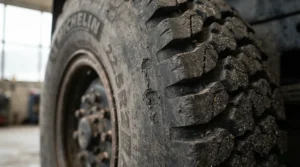
Pneumatic tire tread pattern matters more than tire size alone. A smooth or lightly-grooved pneumatic tire performs fine on packed dirt but slips on loose gravel or wet grass, while an aggressive, widely-spaced knobby tread pattern bites into loose surfaces the way a mountain bike tire does — at some cost to efficiency and noise on pavement. If your riding mixes pavement and trail, look for a moderate tread pattern rather than the most aggressive option available.
Ground clearance is the quietly underrated spec. A scooter with low ground clearance will bottom out on rocks, roots, and rutted trails regardless of how strong its motor or suspension is — the deck simply can’t clear the obstacle. Most genuine off-road models sit noticeably higher off the ground than commuter scooters specifically to avoid this, and it’s worth checking this figure directly rather than assuming “off-road” branding guarantees it.
✨ Ready to compare specs side by side? Scroll back up to the comparison table before you decide!
Long-Term Cost & Maintenance
The purchase price is only the starting number. Pneumatic tires need periodic replacement — expect $30-$60 per tire depending on size, more often if you ride aggressive terrain regularly, since knobby tread wears faster on abrasive surfaces than on pavement. Suspension components on cheaper spring-based systems typically last the life of the scooter, while premium air-hydraulic dampers may need occasional seal servicing after a couple of years of heavy use.
Battery degradation is the biggest long-term cost variable. Lithium battery packs on scooters typically retain 70-80% of original capacity after 500-800 full charge cycles, meaning a scooter ridden daily could see noticeable range loss within two to three years. Factor in brake pad replacement, occasional bolt and hardware tightening, and — for dual-motor scooters — the higher cost of specialized replacement motors compared to single-motor equivalents, and the true cost of ownership on a premium off road electric scooter can run meaningfully higher than the sticker price alone suggests.
Safety, Regulations & Compliance Guide
Off-road use doesn’t exempt a scooter from safety standards, and lithium battery safety has become a genuine regulatory focus. The CPSC’s Micromobility Information Center recommends always using the charger that shipped with your device, never charging unattended overnight, and confirming your scooter meets applicable voluntary safety standards before riding it regularly. Battery-related fires, while statistically rare, are disproportionately serious when they happen, so treating charging habits with real caution isn’t excessive — it’s basic risk management.
State and local laws on where you can legally ride an off road electric scooter vary significantly, especially regarding sidewalks, bike lanes, and unpaved public trails, so check your specific municipality before assuming your dirt-capable scooter is legal on the trails near you. Helmet requirements, minimum age limits, and speed caps also differ by state, and none of that changes just because your scooter is technically capable of handling rougher ground.

Frequently Asked Questions
❓ What is the best off road electric scooter for beginners?
❓ Can a regular electric scooter handle off-road terrain?
❓ How much ground clearance does an off road electric scooter need?
❓ Is dual suspension worth the extra cost on an off road electric scooter?
❓ What tire tread pattern is best for off-road electric scooters?
Conclusion
There isn’t one universal best off road electric scooter — there’s a best one for your terrain, budget, and risk tolerance. The Segway ZT3 Pro and GoTrax GX3 make the most sense if you want one dependable scooter for both trails and daily commuting. The AONIU M4 covers light-duty off-road needs without the premium price tag, while the CUNFON RZ1000 exists for riders who’ve genuinely outgrown mid-range power and want a dual-motor hyper-scooter that treats loose terrain as a non-issue.
What separates a good decision from a regretted purchase here usually isn’t the motor wattage — it’s whether the suspension, tire tread, and ground clearance actually match the terrain you’ll ride most often. Buy for your actual weekend, not the aspirational one, and any of these seven off road electric scooters should serve you well for years of trail rides, gravel commutes, and everything rougher than a sidewalk in between.
Recommended for You
- Fast Electric Scooter Street Legal: 7 Ultimate 2026
- Fastest Electric Scooter 2026: 7 Top Speed Picks That Fly
- Performance Electric Scooter 2026: 7 Powerful Picks
Disclaimer: This article contains affiliate links. As an Amazon Associate, I earn from qualifying purchases. If you purchase products through these links, we may earn a small commission at no additional cost to you.
✨ Found this helpful? Share it with your friends! 💬🤗
